
June 20, 2026
5 Signs Your Ridglea Hills Home Has a Slab Leak
5 Signs Your Ridglea Hills Home Has a Slab Leak, practical local guidance from Shield Plumbing Fort Worth, Fort Worth's trusted plumbing tea…
Read More




A parking lot that holds water two days after a normal Fort Worth thunderstorm is not a minor drainage quirk. Water pools several inches deep against the curb line, a brown sediment ring stains the grate, and the catch basin smells like a stagnant pond instead of clean rain runoff. Every hour that water sits on asphalt raises slip-and-fall exposure, and tenants notice long before a property manager does.
The clay under Fort Worth swells when it rains and shrinks hard in drought, and that movement does not stop at a building's foundation. The same expansive clay that swells with rain and shrinks in drought, moving slab foundations enough to shear copper supply lines and separate drain joints under a house, works the same way on storm sewer laterals running under a parking lot. Joints pull apart a fraction of an inch at a time, fines and roots migrate into the gap, and a line that once carried water cleanly starts backing up on itself after every storm.
Older strip centers and office parks near Wedgwood and Ridglea Hills run storm sewer lines and catch basins installed decades before current parking layouts and landscaping went in. Grates collect leaves, mulch, cigarette butts and fast food cups. Loading dock area drains take on cardboard pulp and grease runoff that never comes near a kitchen interceptor. Left alone, sediment builds a shelf along the invert of the pipe and cuts usable flow capacity long before anyone sees standing water at the surface. Regular parking lot drain repair and storm sewer maintenance keep that shelf from forming in the first place.
Wait through another wet season and the sediment shelf becomes a full blockage. Water backs up past the grate, saturates the base rock under the pavement, and the asphalt starts to heave or settle at the low point. A slow-draining catch basin becomes a parking lot depression, a slip-and-fall claim, or a section of pavement and buried pipe that has to come out together instead of a routine cleaning call.
Our page on diy vs. professional drain cleaning covers that side of the work in more depth.
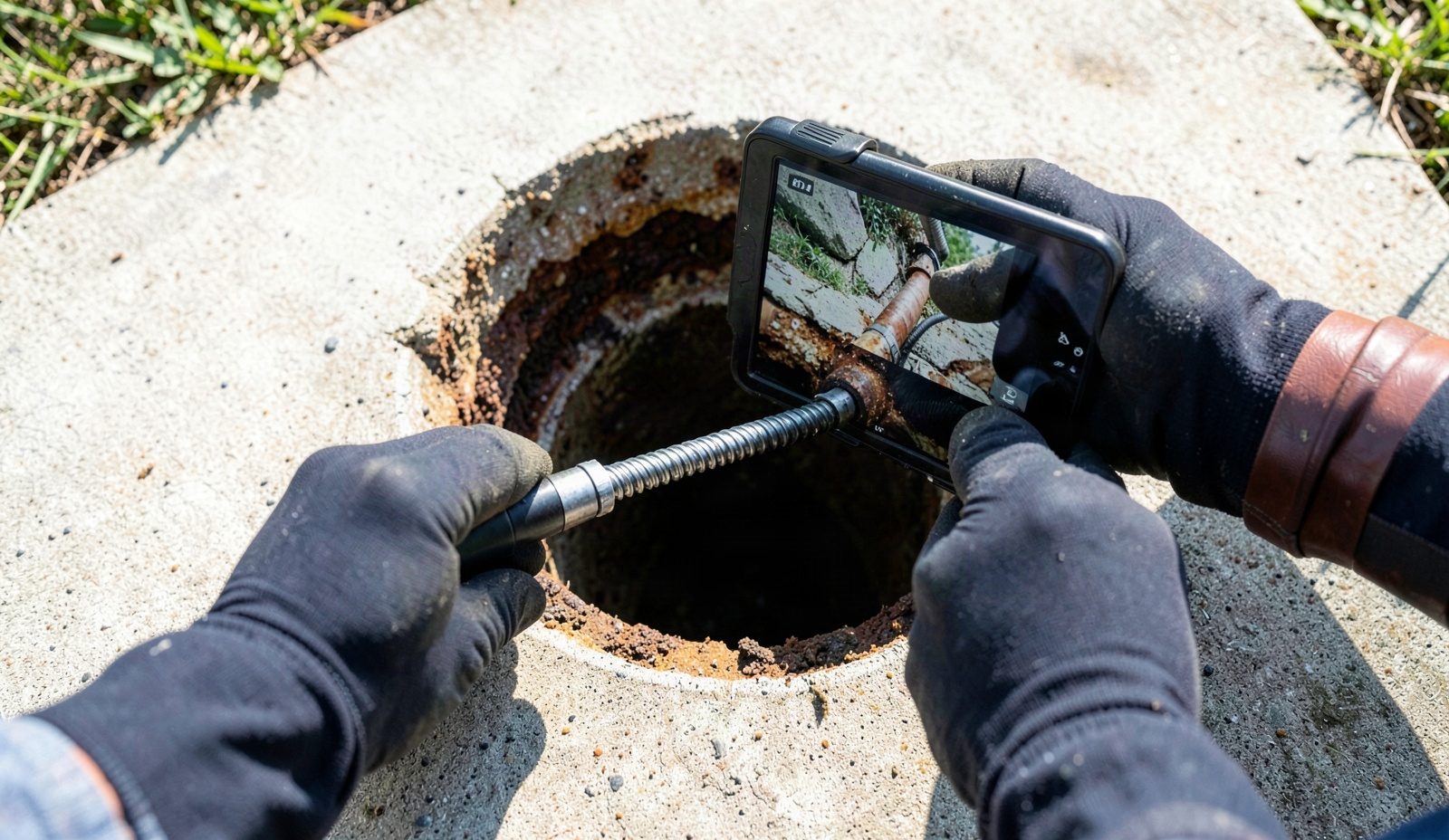
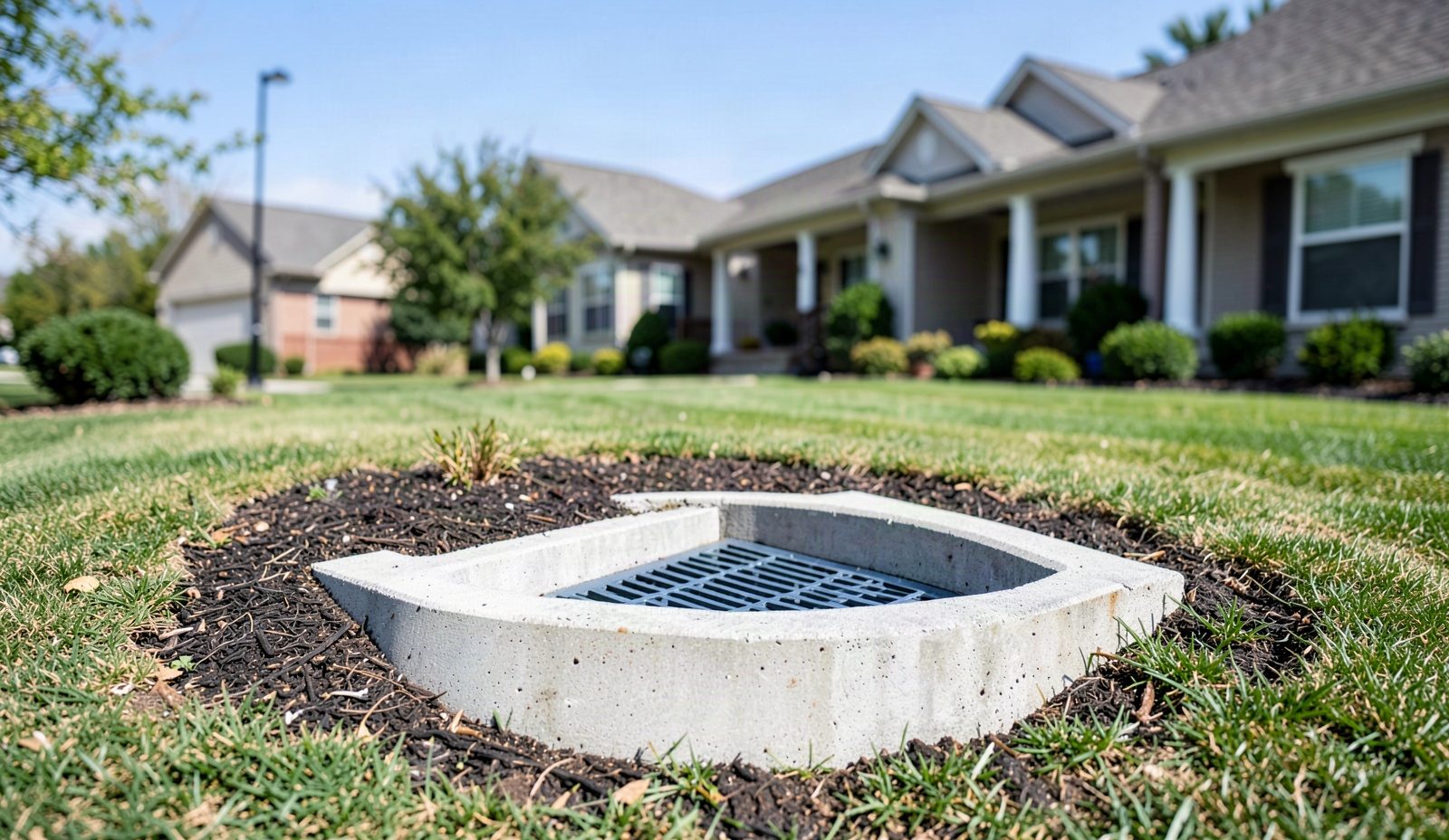
Every storm drain cleaning service call starts with a camera, not a guess. A push camera with a footage counter travels the line from the nearest catch basin, and we read three things off the monitor: standing water depth against the pipe invert, root intrusion at joints, and any belly where the line has sagged out of grade. A sag deeper than the pipe's own diameter tells us the line needs point repair, not just a cleaning pass, because sediment will keep collecting there no matter how often it gets jetted.
Cleaning itself follows the same logic the city applies to grease interceptors, which get pumped before they reach 25 percent capacity under the local FOG-program threshold. We treat catch basin sumps the same way. Once sediment climbs close to the outlet pipe invert, the basin gets pulled with a vacuum truck before it chokes flow, rather than waiting for a visible backup at the surface. A hydro-jet nozzle rated in the thousands of PSI then clears grease film and root hair from the pipe walls, and the camera runs the line again to confirm the invert is clean, not just the top half of the pipe.
When a section needs replacement, the pipe material matters as much as the cleaning. ADS N-12 dual-wall HDPE handles soil movement in Fort Worth's clay better than rigid pipe because its corrugated exterior and smooth interior flex slightly instead of cracking at the joint. PVC SDR-35 costs less and installs faster on shallow runs, but its solvent-welded joints have less give under the same clay movement that separates older lines. Reinforced concrete pipe still carries the highest load rating for runs under active drive lanes rated for heavy truck traffic, and we spec it where cover depth and axle loads call for it rather than defaulting to whichever material is on the truck.
If this sounds close but not quite your situation, safe drain cleaning products may be the better starting point.
A call to (817) 710-3766 starts with a short set of questions about the property, the drainage problem and access points. On site, the technician walks the lot or building perimeter, locates every catch basin and area drain tied to the complaint, and runs a camera through the line to check sediment depth against the pipe invert. The property manager sees the live camera feed and gets a plain explanation of what the footage shows before any tool beyond the camera comes out of the truck.
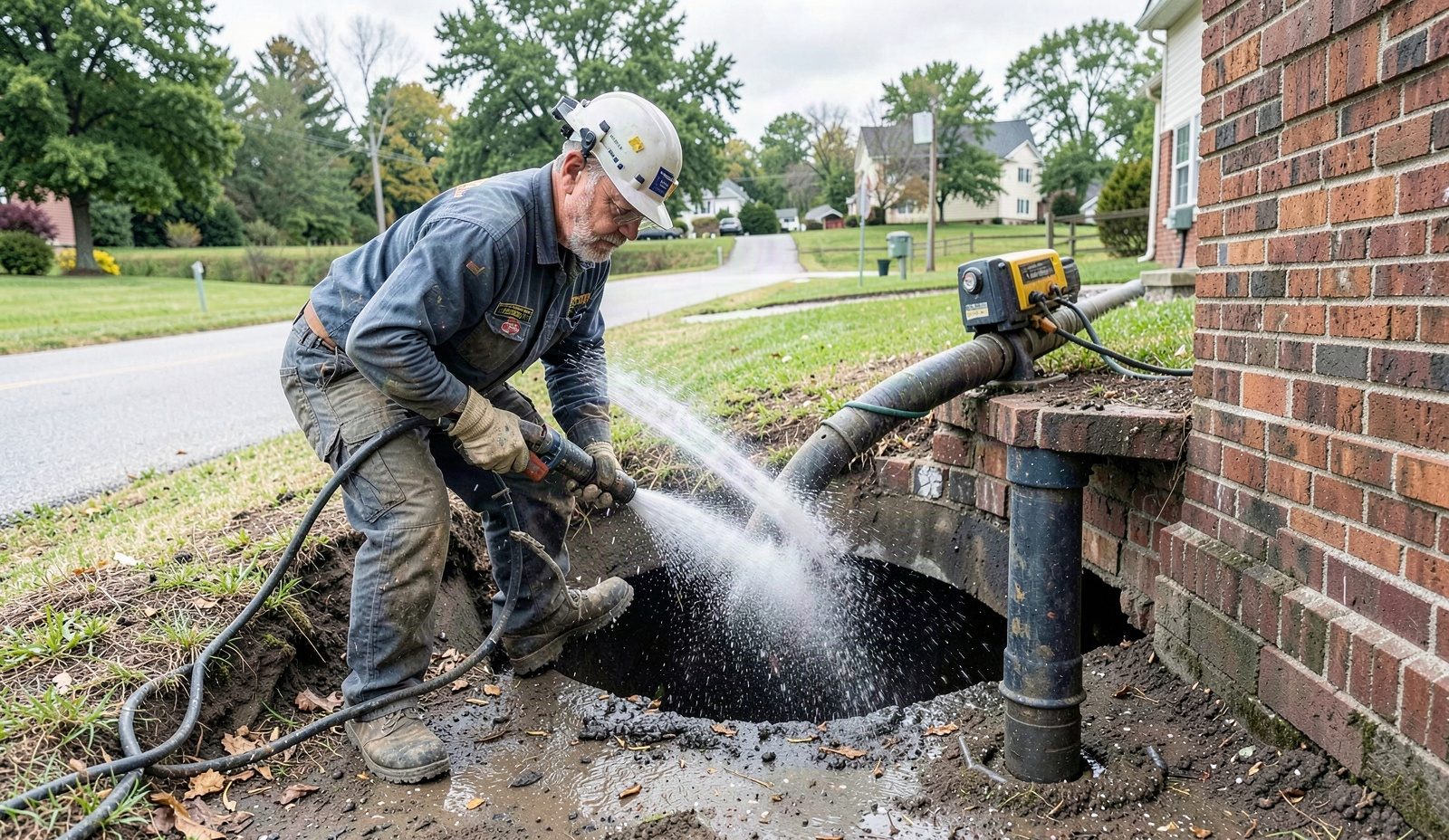
Once the written quote is approved, the vacuum truck clears catch basin sediment and the hydro-jet nozzle works root intrusion and grease film off the pipe walls section by section. If the camera pass found a sagged or offset joint, that section gets cut out and replaced with HDPE, PVC or reinforced concrete pipe matched to the traffic load above it. Trench plates go down over any open cut in a drive lane, and the property manager approves each material decision before it happens, not after.
A final camera pass confirms water moves cleanly past every point that was cleaned or repaired, with the footage saved and handed over for your property file. The technician walks the site with the manager, points out each grate that was serviced, and notes any basin worth watching on a shorter cleaning interval going forward. That documentation becomes part of the record an insurer or lender might ask to see later.
Commercial storm drain work in Fort Worth falls under the 2021 International Plumbing Code as adopted by the City of Fort Worth for commercial occupancies, which sets requirements for pipe material, cleanout access and joint methods on any structural repair. A crew that does not work under this code daily will miss a cleanout spacing requirement or a material substitution that fails inspection, and that failure lands back on the property owner's schedule and file, not the contractor's.
Building stock matters just as much as code knowledge. Commercial properties near Fairmount and Arlington Heights include structures built before 1970, when cast iron drains were standard for site plumbing. Those lines are now at or past the end of their service life, and cast iron that has spent decades under Fort Worth clay develops scale ridges and hairline cracks that a jetter can find and a camera can confirm, but that an unfamiliar crew often mistakes for a simple clog.
Hiring an out-of-area operator for storm sewer maintenance on a commercial site carries real risk. A crew unfamiliar with North Texas grading and clay behavior tends to under-spec bedding material or skip the joint restraint a shifting subgrade requires, and the repair fails again within a season. For a property manager who has to hand documentation to an insurer, a lender or a board, the paper trail from a camera inspection and a written scope matters as much as the repair itself. Call (817) 710-3766 to talk through what your site's history calls for before work starts.
Your local utility, Payment options, publishes service and water-quality information every Fort Worth homeowner should know.
Commercial calls get a defined arrival window, not a vague half-day promise. Booking starts with a call to (817) 710-3766, where we ask about traffic patterns, tenant hours and any active leaks so the crew arrives with the right truck already loaded. Property managers running retail centers or loading docks can request early morning or after-hours slots to keep drive lanes clear during business hours. If a prior call runs long, the office calls ahead with a revised window rather than leaving a site manager guessing when the crew will show.
Open catch basins get cones and barricades before a single grate comes off, and any trench across a drive lane gets a steel plate rated for vehicle traffic during the workday. The vacuum truck pulls sediment and debris directly into a sealed tank instead of staging it on the pavement, so there is no mud track toward entrances or tenant parking. Grates get reset and torqued down before the crew leaves, and any cut pavement gets swept and hauled clear the same day, not left for a return trip.
Scope drives the number more than anything else, meaning linear footage of line, the count of catch basins and area drains involved, and depth of cover at the point of repair. Access matters too. A line under a loading dock costs more labor to reach than an open grate in a landscaped island. Pipe condition from the camera pass, whether it needs cleaning alone or a section replaced, sets the material list. You get a written quote itemizing each of these before any excavation or jetting begins, and nothing proceeds past the diagnostic pass without your approval.
Technicians shadow a senior crew member through camera reads, jetter operation and pipe material selection before they run a commercial storm drain call alone. Training gets refreshed as the plumbing code cycle updates, so a tech reading a line under a Fort Worth parking lot knows the current material and joint requirements, not a version from years ago. Field competence gets checked through supervised test digs and camera interpretation reviews, where a senior tech confirms the newer technician read the invert and the sag correctly before signing off.
Duration depends on scope, running from a few hours for a straightforward catch basin cleaning to a full day or more for pipe replacement under a drive lane. Cleaning and camera diagnostics on a typical commercial catch basin and its connected line usually wrap up in a single visit. A pipe section replacement adds excavation, backfill and a final camera pass, which extends the timeline and may require a trench plate to keep traffic moving overnight.
Estimates start with a camera inspection that shows the actual condition of your line, not a guess from the surface. Shield Plumbing Fort Worth builds the written quote around linear footage of pipe, number of catch basins and area drains, access difficulty and the pipe material the repair calls for. You review and approve that written scope before any jetting, excavation or pipe replacement begins, and the quote stays fixed to that scope unless the camera reveals something new mid-job.
It depends on the scope of work. Routine catch basin cleaning and like-for-like joint repair typically do not require a permit, while full pipe replacement, rerouting or grading changes usually do. The City of Fort Worth Development Services Department makes the final call on what a given scope requires for Fort Worth addresses, and Shield Plumbing Fort Worth documents the work scope clearly enough to support that determination either way.
Clearing leaves and debris off a surface grate is reasonable for a property maintenance team to handle on its own. Diagnosing what is happening inside the pipe or repairing a joint under a parking lot is not, since it requires a push camera, hydro-jetting equipment and traffic control most facilities teams do not carry. Attempting a pipe repair without confirming the sediment depth and joint condition first usually means redoing the work once the real problem surfaces again.
A drain smells bad with no blockage when a dry trap or bad seal leaks gas. A kitchen drain in particular can smell bad from grease and food film coating the pipe past the trap, a problem a snake clears but a chemical drain opener rarely reaches. A floor drain in a garage or utility room dries out fastest of all fixtures, since it may go months without water running through it. Pouring a quart of water down any rarely used drain once a month keeps its trap sealed and prevents this exact complaint.
Permit needs depend on the scope of the repair rather than the stain itself. Cutting out a small patch of drywall and swapping a fitting like-for-like usually does not require a permit, but a full re-pipe or new drain line typically does. The City of Fort Worth Development Services Department makes that call for any Fort Worth address, and we pull the permit ourselves when the scope crosses that line.
North Texas thunderstorms drop a large share of their rainfall in short, intense bursts rather than a steady soak, and a lot of commercial storm sewer infrastructure across the metro was sized for lighter, older parking layouts. As retail centers add parking, additions and impervious surface over the decades, the same catch basins and area drains built decades ago now handle more runoff volume in a shorter window than their original design anticipated. Heavy clay soil compacts around older pipe runs and slows infiltration at the surface, which pushes more water toward the same undersized grates instead of letting some of it soak in. That combination of intense rainfall and aging capacity is why storm sewer maintenance on a fixed schedule matters more here than in a market with lighter, steadier rain patterns.
Site work on storm drains, including grading changes and new pipe runs, falls under review by the City of Fort Worth Development Services Department, which is the permitting authority for Fort Worth addresses and expects documentation matching the scope of work performed. Redevelopment projects near the Near Southside and the Cultural District often uncover storm laterals that predate current flow requirements, and getting that work signed off cleanly depends on a crew that already knows what a Fort Worth inspector checks. A contractor with no history in these permitting patterns tends to submit incomplete documentation, which delays occupancy and inspection sign-off on a redevelopment timeline that a lender or tenant is already watching.
Explore our service area and locate Shield Plumbing Fort Worth with ease. We're proudly local and serve the surrounding neighborhoods with fast response and honest pricing. Use the map to check our coverage area, or call us and we'll confirm in seconds.
Address:
Shield Plumbing Fort Worth, 210 W 7th St, Fort Worth, TX 76102
5 Signs Your Ridglea Hills Home Has a Slab Leak, practical local guidance from Shield Plumbing Fort Worth, Fort Worth's trusted plumbing tea…
Read More
What Wedgwood Residents Should Know Before a Whole-Home Repipe, practical local guidance from Shield Plumbing Fort Worth, Fort Worth's trust…
Read More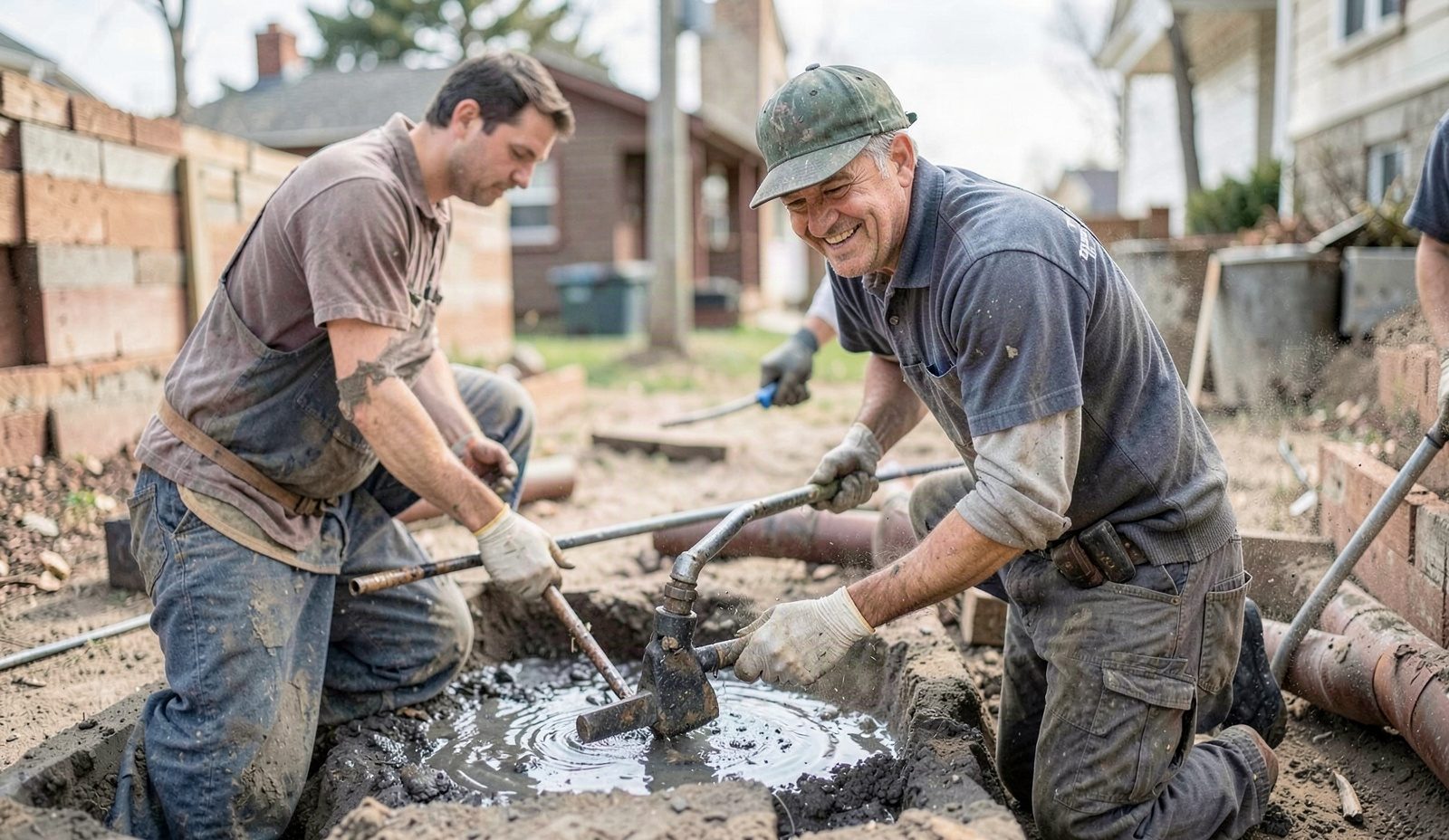
How Fort Worth's Hard Water Is Quietly Destroying Your Water Heater, practical local guidance from Shield Plumbing Fort Worth, Fort Worth's …
Read More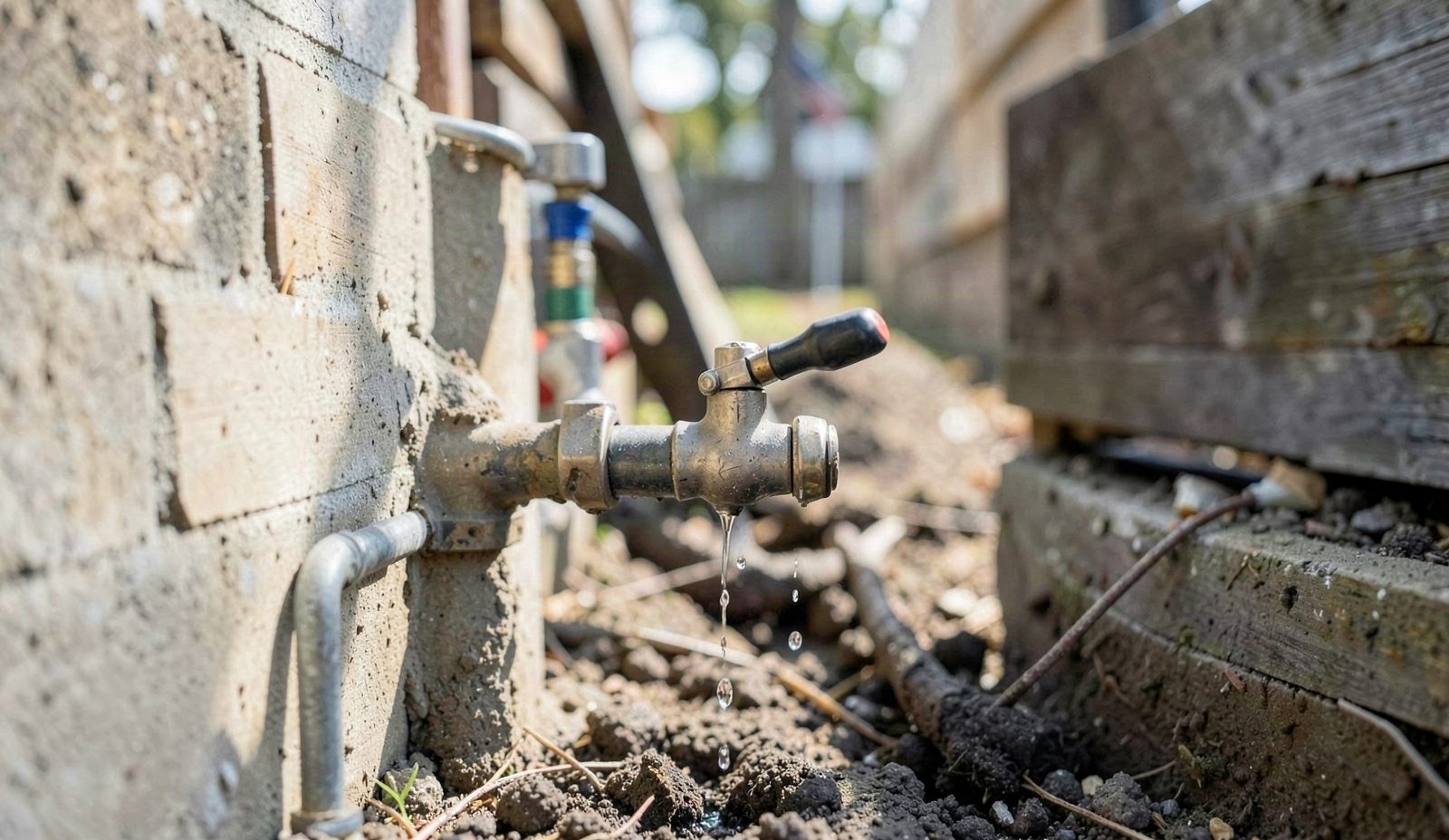
The Hidden Cost of Ignoring a Dripping Faucet in Fort Worth, practical local guidance from Shield Plumbing Fort Worth, Fort Worth's trusted …
Read More