June 20, 2026
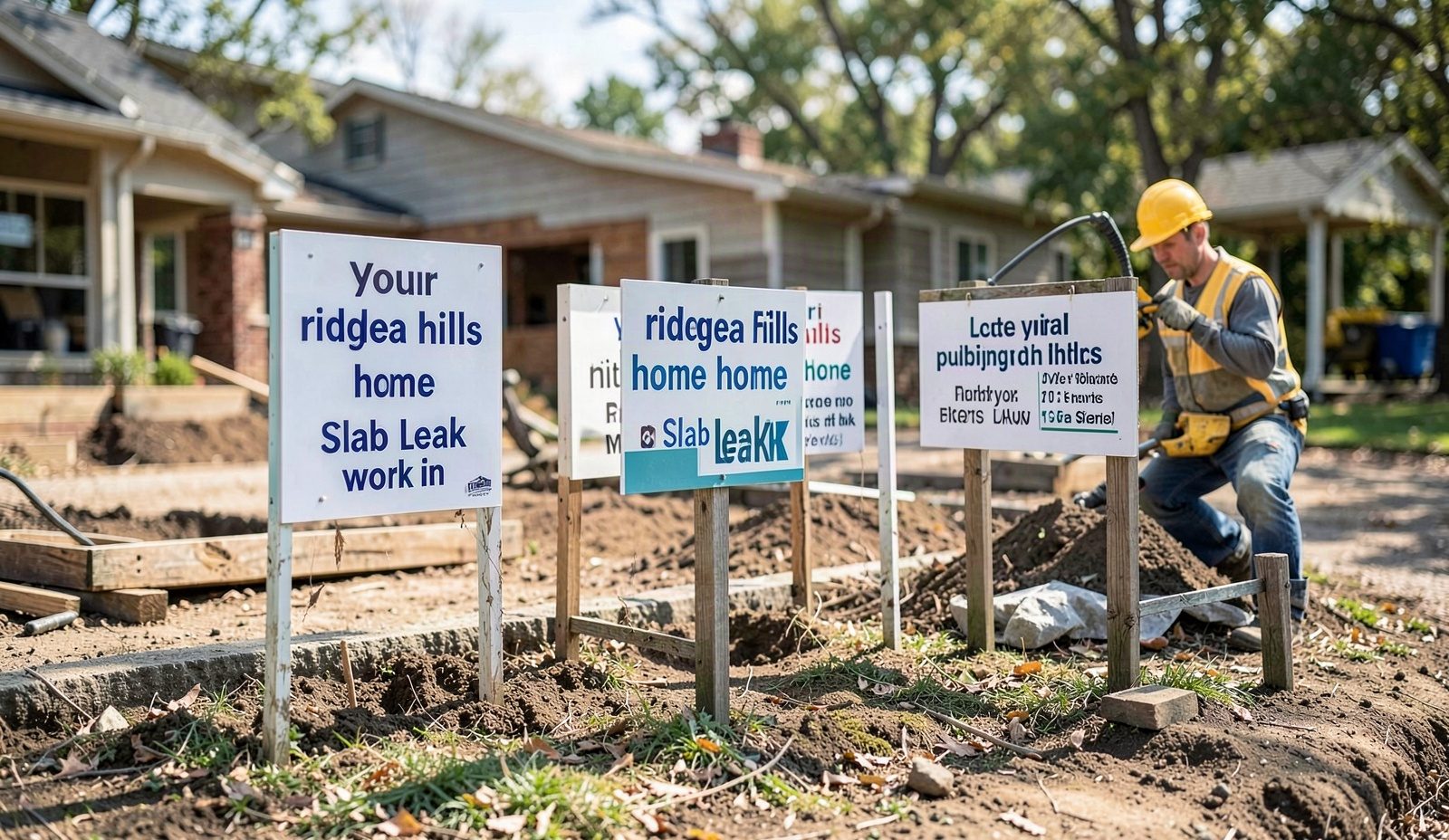
5 Signs Your Ridglea Hills Home Has a Slab Leak
5 Signs Your Ridglea Hills Home Has a Slab Leak, practical local guidance from Shield Plumbing Fort Worth, Fort Worth's trusted plumbing tea…
Read More



A single slow drain in a back-of-house sink rarely stays a single problem. When the main line feeding your building starts failing, every fixture tied to it backs up at once. Floor drains gurgle. A sewage smell settles into the dining room or lobby. Toilets in a multi-tenant building overflow on the lowest floor first, because that is where the sewer gas and standing water go when the line downstream cannot keep up. Health inspectors treat any of this as an immediate violation, not a maintenance note.
Two conditions drive most commercial main line failures across Fort Worth. The first is the ground itself. North Texas expansive clay swells with rain and shrinks in drought, and that constant movement shifts the slab and the soil around it enough to separate drain joints and shear connections running beneath the building. A parking lot that floods after one storm and cracks open after the next dry spell is often telling you the soil under it is doing the same thing to the pipe below.
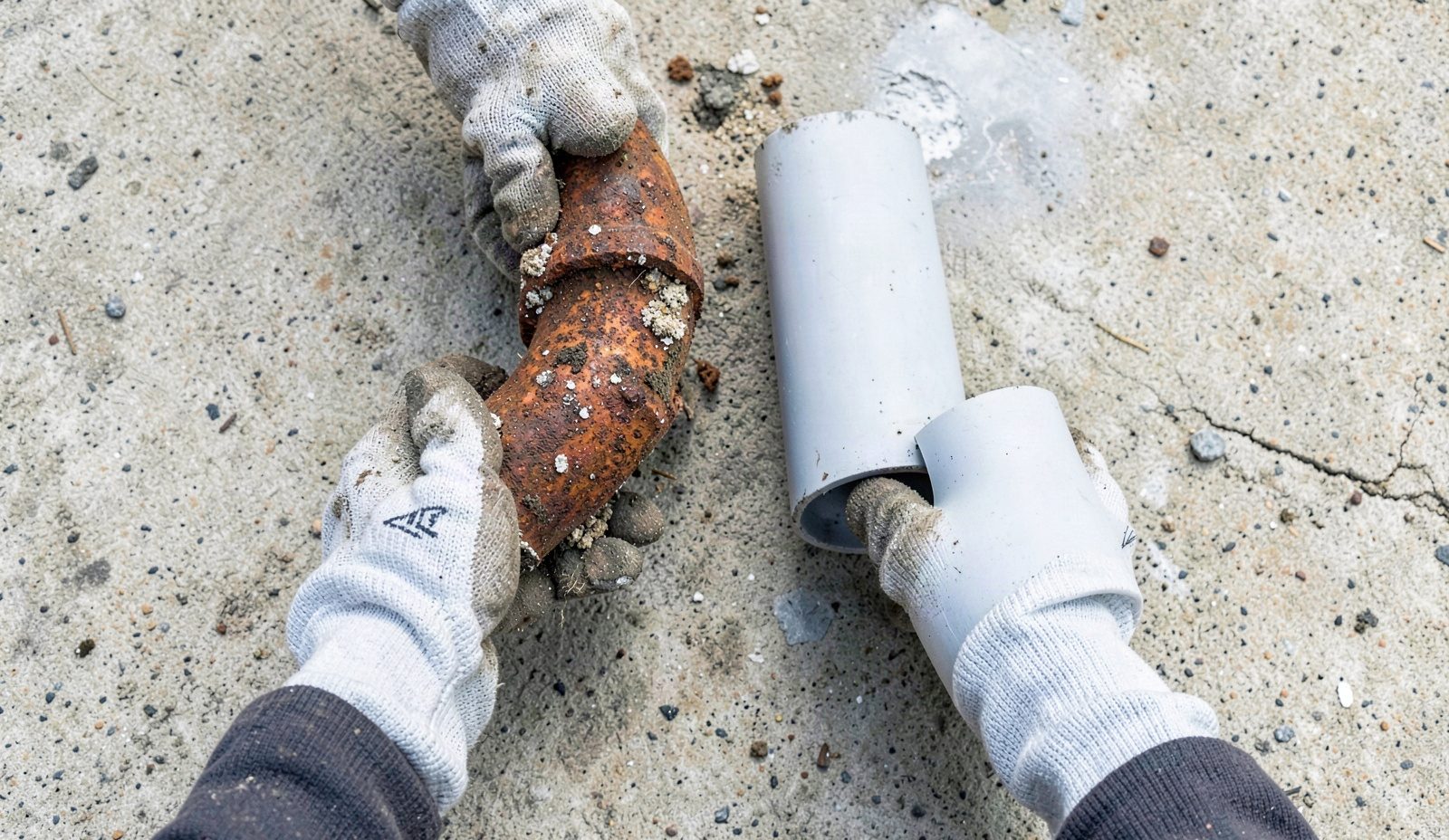
The second condition is age. Commercial buildings that went up before 1970, common in corridors near Fairmount and Arlington Heights, were plumbed with cast iron drain lines that are now at or past the end of their service life. Cast iron corrodes from the inside out. The pipe looks solid from a curb inspection while the interior wall thins to the point of collapse or root intrusion through a hairline crack nobody can see without a camera.
Waiting rarely buys time. A partial blockage becomes a full stoppage. A hairline crack becomes a sinkhole under a loading dock or a saturated subgrade under a slab. Every day a commercial main line stays compromised, the sewage load keeps finding the weakest point in the system, and that point gets closer to your building's foundation, not farther from it.
Our page on commercial kitchen plumbing covers that side of the work in more depth.
Every commercial sewer camera inspection starts the same way: a self-leveling color camera head on a push rod, paired with a sonde locator that lets us mark the exact depth and position of any defect from the surface, not a guess based on where the cleanout happens to sit. We log footage counts at every offset joint, root mass, and belly, that low spot in the line holding standing water between uses. A pipe with a consistent quarter inch per foot slope drains itself; a belly holding water on camera tells us the line needs correction, not just clearing, before it fails again in six months.
For commercial kitchens, the diagnostic extends past the pipe to the grease interceptor. The FOG program standard calls for pumping before the trap reaches 25 percent capacity. When we open a interceptor and find scale and grease already above that line, it explains a slow main line that looked like a pipe problem but was actually a maintenance gap upstream. We document the reading before recommending anything downstream.
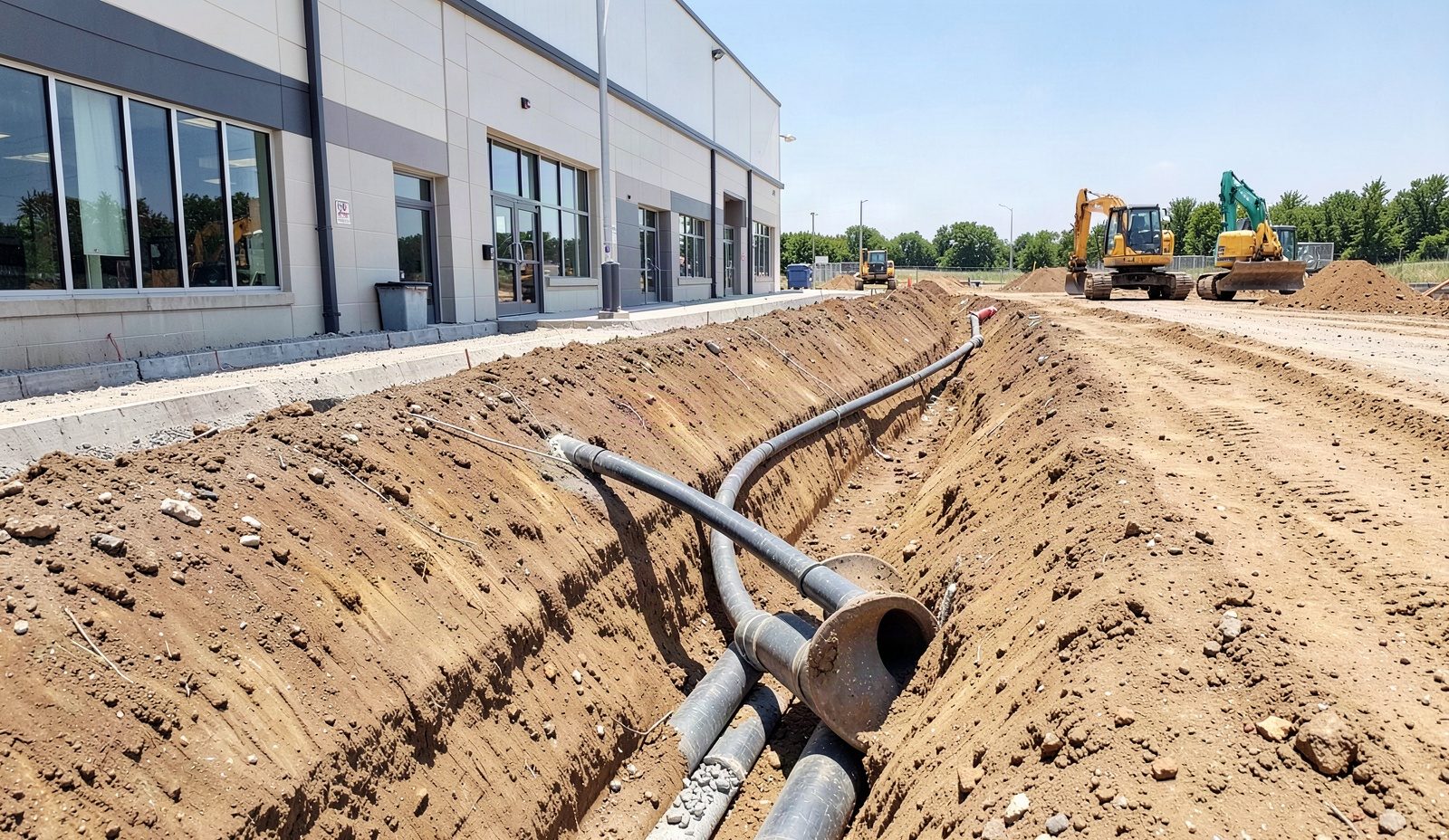
Once we know what is wrong, the repair method depends on what the camera and the manometer readings showed. Cured-in-place pipe lining works when the host pipe still holds its shape and the defect is corrosion or minor cracking, it seals the interior wall without excavation but reduces the inside diameter by the thickness of the liner. Pipe bursting replaces the line entirely by fracturing the old pipe outward while pulling new HDPE through the same path, better for lines with significant offset or collapse but it needs pulling pits at each end. Open trench replacement is still the right call when a line runs shallow under a parking lot with easy equipment access, or when the deterioration is bad enough that lining or bursting would not hold a hydrostatic test afterward. We choose based on pipe condition, not on which method is fastest to bill.
See sewer line repair & replacement for how the related work is scoped and priced.
Your local utility, Payment options, publishes service and water-quality information every Fort Worth homeowner should know.
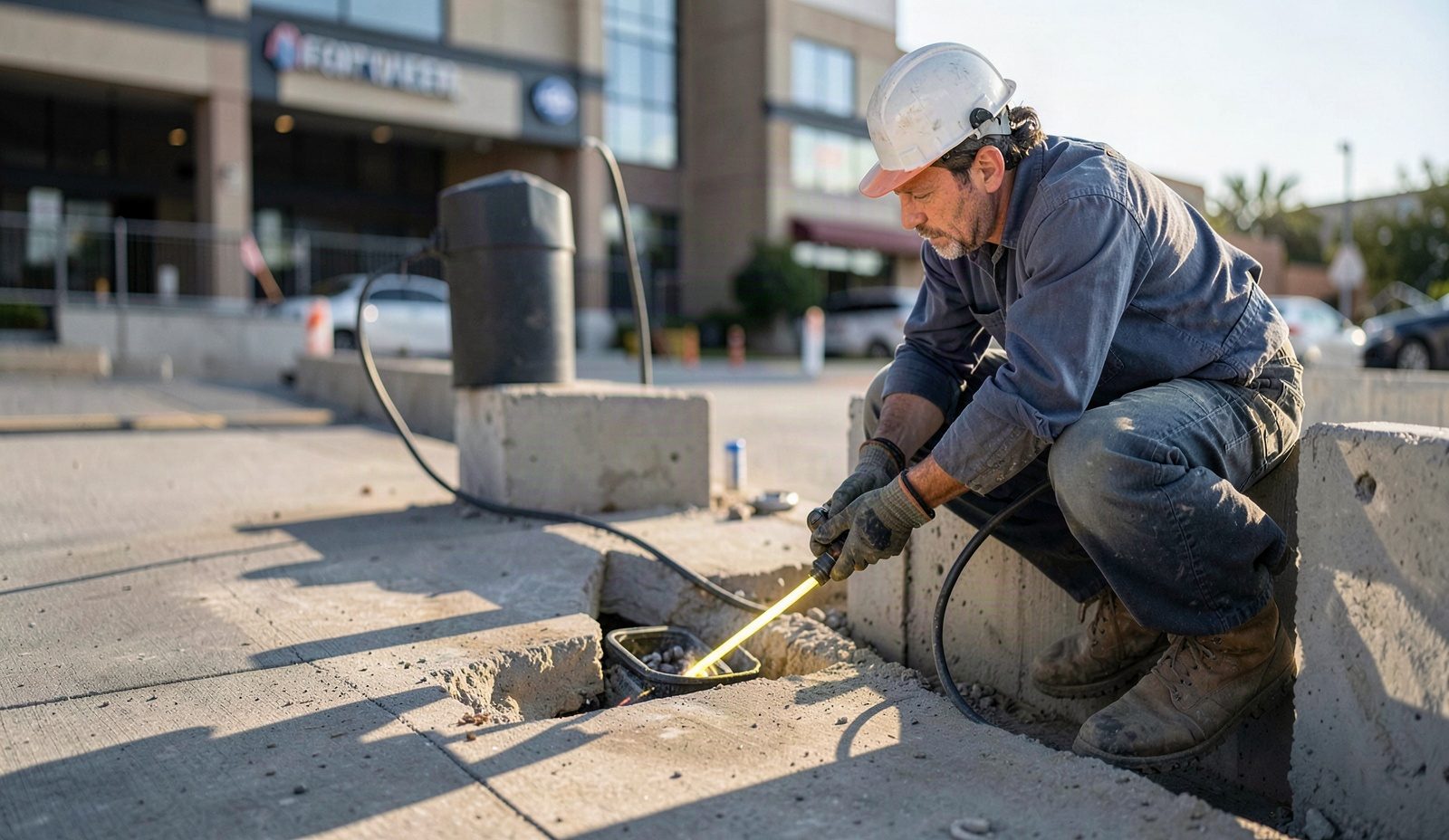
You call and describe what you are seeing, backups, odor, slow drains across multiple fixtures. We schedule a technician to run a full camera inspection of the affected line, recording footage and marking defect locations with the sonde locator. You get to watch the footage on a monitor in real time, and the technician explains what each defect means before recommending a repair path, so the diagnosis is not something you have to take on faith.
Once you approve the written scope, the crew protects the work area, floor coverings inside, containment fencing outside, and begins the repair method matched to what the camera showed: lining, bursting, or open trench replacement. Any change in scope, like discovering a second defect once the line is exposed, gets flagged to you before work continues past the approved boundary. Materials get selected against pipe diameter and depth specified in the scope, not swapped mid-job.
Before backfill or final cleanup, we run a hydrostatic test on the repaired section and a follow-up camera pass to confirm slope and confirm no belly remains in the line. We walk the completed work with you, show the post-repair footage against the original diagnosis, and confirm the area is restored, floors clean, ground leveled. Any permit-required inspection gets scheduled and documented so you have a record for your files.
Commercial sewer work in Fort Worth falls under the 2021 International Plumbing Code as adopted by the City of Fort Worth for commercial occupancies, and that code governs everything from cleanout spacing to backflow prevention on a restaurant's grease line. A crew that does not work here regularly will not know which inspections the City of Fort Worth Development Services Department requires before backfill on a replacement, or how the local health authority reviews grease interceptor sizing for a new tenant buildout. Getting that sequence wrong means a failed inspection, an open trench sitting exposed for an extra week, and a business that stays closed longer than the repair itself required.
We pull permits for full replacements and structural line work because that is what the permit authority requires for anything beyond a like-for-like repair, and we coordinate that paperwork against your operating schedule instead of the health inspector's. Out-of-area operators who skip that step, or who do not know that a multi-tenant strip center needs sign-off from every affected tenant's lease terms before a shared main gets cut, create liability that lands back on the building owner months later.
Fort Worth's commercial building stock ranges from converted early-century storefronts to newer retail pads built over the same expansive clay covered earlier. Knowing which corridor you are working in, and what era of pipe and permit history comes with it, changes the repair plan before a single tool comes out of the truck. That local familiarity is the difference between a repair that clears inspection the first time and one that gets flagged and delayed.
More detail on commercial backflow prevention & testing is on its own page.
Our technicians follow the workmanship standards promoted by the Plumbing-Heating-Cooling Contractors Association.
We book commercial sewer line repair around your operating hours, not ours. Most jobs get a defined arrival window confirmed the day before, and we call ahead when a technician is on the way so front-of-house staff can plan around it. If a prior job runs long or a parking lot excavation hits unexpected rock, we call immediately with a revised window rather than let you find out by watching the clock. For active restaurants and retail spaces, we can also schedule the disruptive phase of excavation or lining work during closed hours when the scope allows it.
We lay down surface protection at every entry point before equipment comes inside, floor runners through hallways and kitchens, plastic sheeting around fixtures being opened up. Excavation sites outside get fenced or coned off from customer and employee traffic for the duration of the cut. Spoil from a trench goes straight into a truck or a covered container, never left piled against a wall or door. Before we leave, floors get swept and mopped where we tracked through, and the excavation area gets backfilled and leveled so it is not a trip hazard overnight.
Your quote depends on pipe material, depth, access, and what the camera inspection actually found, not a flat rate guess. A cast iron line under a loading dock costs more to reach than a shallow PVC lateral under landscaping. Lining versus bursting versus open trench each carry different equipment and labor loads. We walk the camera footage with you, point to the defect on screen, and write the scope against what we saw before you approve anything. No work starts on a commercial line until you have signed off on that written scope.
Every technician on a commercial crew passes a background check before stepping onto your property. New hires shadow a lead tech through full commercial sewer jobs, camera inspections included, before they run a job alone. We run internal code refreshers whenever the locally adopted plumbing code updates a commercial requirement, so the crew on your site knows the current cleanout, venting, and interceptor rules, not the ones from a decade ago.
Coverage depends entirely on your specific policy language and the cause of the failure. Many commercial property policies exclude gradual deterioration, like corroded cast iron or root intrusion, while covering sudden events such as a line collapse from ground shift. Ask your carrier directly and keep the camera footage and written scope we provide, since adjusters typically require documented evidence of the failure mechanism before approving a claim.
Commercial sewer line repair is not a practical do-it-yourself project. Main line diagnosis requires camera equipment and a sonde locator to find defects accurately, and any structural repair or replacement under city code requires a permit pulled through the local permit authority. Attempting repairs without that verification risks a failed inspection, reopened trenches, and continued business disruption.
Cost depends on pipe material, depth, access, and which repair method the camera diagnosis calls for, not a flat number we can quote over the phone. A shallow PVC lateral repair under landscaping costs far less to reach than a deep cast iron main under a loading dock. We provide a written scope tied to your building's actual condition after the inspection, before any work begins.
Estimates come after a camera inspection identifies the specific defect and its location in your line. We walk the footage with you on screen, explain what each defect means, and write the scope against that evidence before you approve anything. Call (817) 710-3766 to schedule the inspection that starts the process.
Same-day scheduling is often available depending on current job load and the scope once diagnosed. A camera inspection can typically happen the same day you call, and if the defect is a single accessible repair, work can sometimes start immediately after you approve the scope. Larger replacements needing permits take longer to sequence properly.
A background-checked technician trained specifically on commercial camera diagnostics and trenchless repair methods shows up, not a general laborer. New technicians shadow a lead tech through full commercial jobs before working solo, and the crew stays current on the locally adopted plumbing code's commercial requirements through ongoing internal training.
Commercial corridors near the Near Southside and the Cultural District mix new construction directly against decades-old strip centers, and that mix creates a specific problem underground: a newer building's four-inch lateral often ties into a shared main sized and pitched for a much smaller tenant load decades ago. Heavy delivery truck traffic over shallow laterals in older retail lots near Wedgwood and Ridglea Hills compacts soil unevenly, which accelerates the joint separation that already threatens aging pipe. Sizing a repair correctly here means checking not just the failed section but the capacity of everything it ties into downstream.
Every commercial sewer replacement or structural repair inside city limits needs sign-off from the City of Fort Worth Development Services Department, and inspectors expect the final trench open for review before backfill covers the work. Grease interceptor installations tied into a repaired main get an additional look from the local health authority reviewing FOG compliance. A crew unfamiliar with that sequence risks a failed inspection that reopens a filled trench, costing a business days it does not have. Local experience means scheduling those inspections into the job from the first call, not discovering the requirement mid-excavation.
Explore our service area and locate Shield Plumbing Fort Worth with ease. We're proudly local and serve the surrounding neighborhoods with fast response and honest pricing. Use the map to check our coverage area, or call us and we'll confirm in seconds.
Address:
Shield Plumbing Fort Worth, 210 W 7th St, Fort Worth, TX 76102
5 Signs Your Ridglea Hills Home Has a Slab Leak, practical local guidance from Shield Plumbing Fort Worth, Fort Worth's trusted plumbing tea…
Read More
What Wedgwood Residents Should Know Before a Whole-Home Repipe, practical local guidance from Shield Plumbing Fort Worth, Fort Worth's trust…
Read More
How Fort Worth's Hard Water Is Quietly Destroying Your Water Heater, practical local guidance from Shield Plumbing Fort Worth, Fort Worth's …
Read More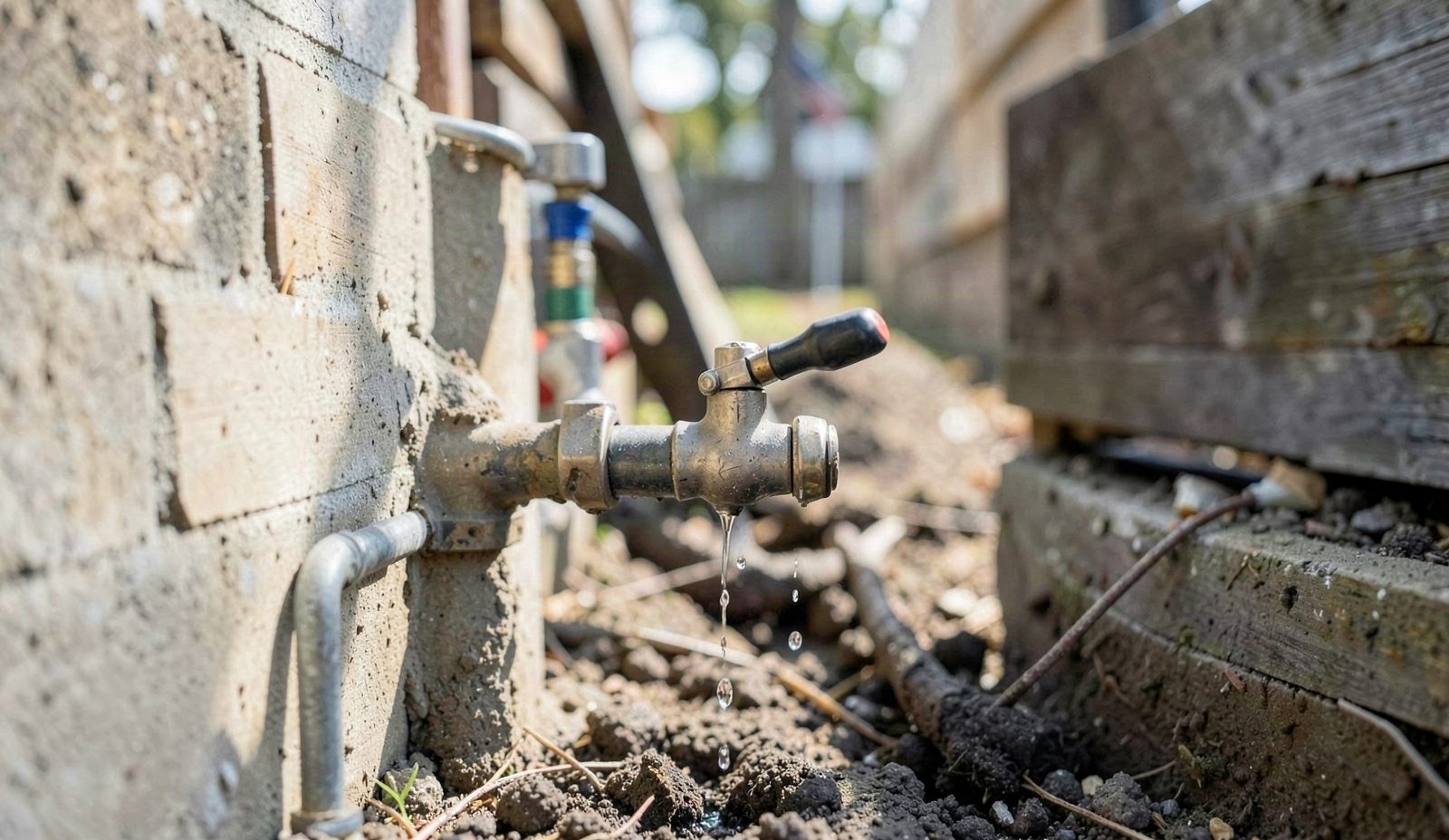
The Hidden Cost of Ignoring a Dripping Faucet in Fort Worth, practical local guidance from Shield Plumbing Fort Worth, Fort Worth's trusted …
Read More