
June 20, 2026
5 Signs Your Ridglea Hills Home Has a Slab Leak
5 Signs Your Ridglea Hills Home Has a Slab Leak, practical local guidance from Shield Plumbing Fort Worth, Fort Worth's trusted plumbing tea…
Read More




A tenant on the third floor calls about brown water. Another reports a sewage smell rising from the courtyard drain. A third says the shower barely trickles at 7 a.m. when everyone showers before work. These calls rarely arrive one at a time. In a building serving forty or eighty units, the fixtures share the same risers, the same main stack, and the same soil underneath the slab, which is why these systems demand a multi unit plumbing contractor who thinks in shared stacks and common risers, well beyond single-unit fixture repair.
North Texas expansive clay swells with rain and shrinks in drought, and that movement does not stop at a single foundation. Under a multifamily slab spanning several hundred feet, the same clay shifts unevenly across the footprint, shearing copper supply lines at their transitions and separating drain joints under the building. Complexes near Fairmount and Arlington Heights, built when slab-on-grade construction was standard, show this wear first: hairline cracks that run straight down to a slow leak below the floor.
The February 2021 freeze burst pipes across Tarrant County by the tens of thousands, and most of the failures were supply lines run through attics and exterior walls, exactly where multifamily construction routes hot and cold lines to stacked units above breezeways and covered parking. A single frozen line in a mechanical chase can shut off hot water to six or eight units at once, which is why apartment building plumbers treat every attic and exterior wall run as a repeat-failure point.
Fort Worth water is moderately hard, and the scale it leaves on heating elements is a leading reason local water heaters fail years before their rated life, a cost multiplied across a property with a dozen tanks instead of one. Property management plumbing budgets that skip regular apartment plumbing maintenance on anodes and elements end up replacing units in clusters. Waiting past the first warning sign, a rust tint in the hot water or a popping sound from the tank, ends with a burst unit flooding the apartment below it and the leasing office fielding two complaints instead of one.
If this sounds close but not quite your situation, commercial kitchen plumbing may be the better starting point.
Communities like r/Plumbing are full of homeowners comparing notes on exactly this problem, worth a read before a major project.
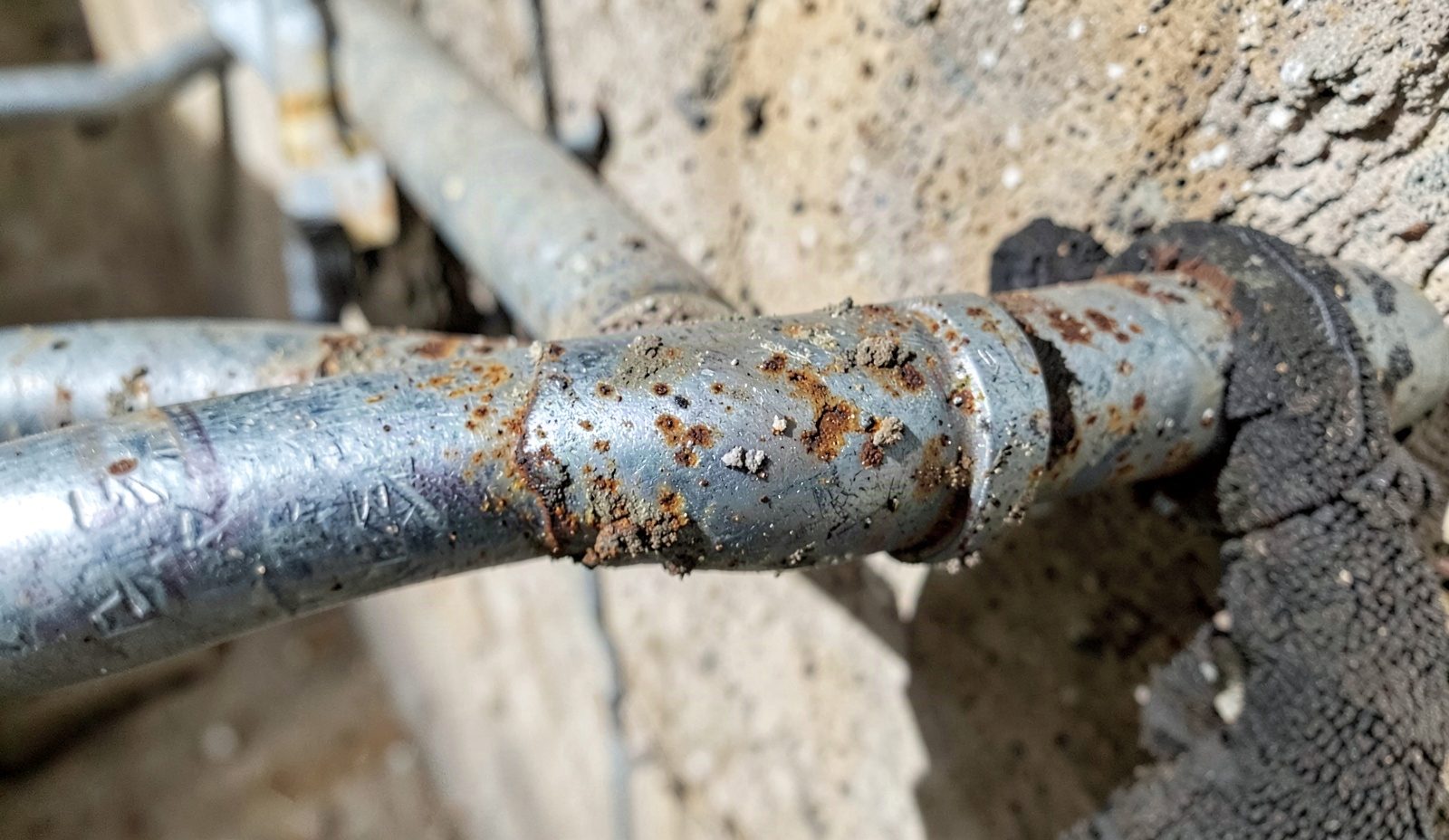
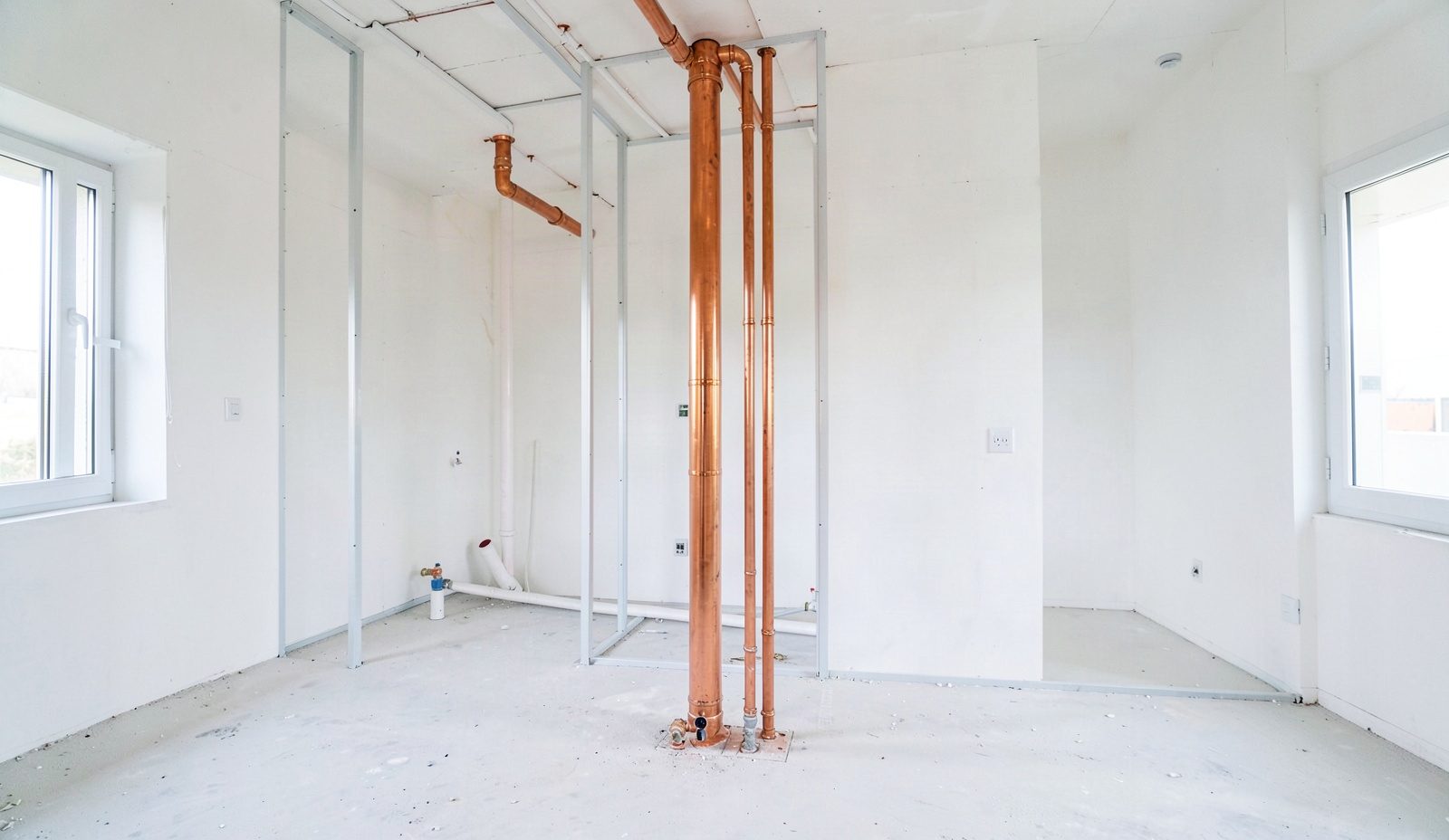
Every apartment call starts with tracing the shared system before touching a fixture. A motorized sewer camera with a self-leveling head runs the main stack to locate the exact joint or root intrusion causing a backup, and a static pressure gauge threaded onto a hose bib at the top-floor unit gives a number: a reading under 40 psi at that fixture points to a main riser restriction or a failing pressure-reducing valve, while a normal reading at the meter but a low reading upstairs isolates the problem to one branch. A thermal imaging camera sweeps slab areas where tenants report warm spots on the floor, a common tell for a hot water line leaking below grade.
Riser and branch replacement in an occupied building comes down to three real material choices, and each behaves differently under the conditions this metro produces. Copper Type L conducts heat well but scales fastest in moderately hard water and work-hardens at every bend, making it the first to crack after repeated freeze cycles in an exterior chase. Charlotte Pipe FlowGuard Gold CPVC resists scale better than copper and holds up to hot water recirculation loops, but it is rigid and can split under a hard freeze if a line sits in an unheated space. Uponor PEX-A flexes and returns to shape under freeze pressure instead of splitting, and its smooth bore resists scale buildup, which is why it has become the default for repiping risers behind finished walls where access for a repeat repair is expensive.
For properties with a clubhouse kitchen, leasing office break room, or on-site café, the grease interceptor gets its own protocol. Grease interceptors are pumped before they reach 25 percent capacity, the standard FOG-program threshold, checked with a dip-stick measurement against the baffle depth rather than a guess at how full the tank looks. Skipping that threshold is how a shared kitchen line backs up into three units at once during a Friday dinner rush, and it is the single most preventable multifamily plumbing services failure on this page.
See commercial plumbing contractors for how the related work is scoped and priced.
We install and service equipment from major manufacturers like Rheem to manufacturer specifications.
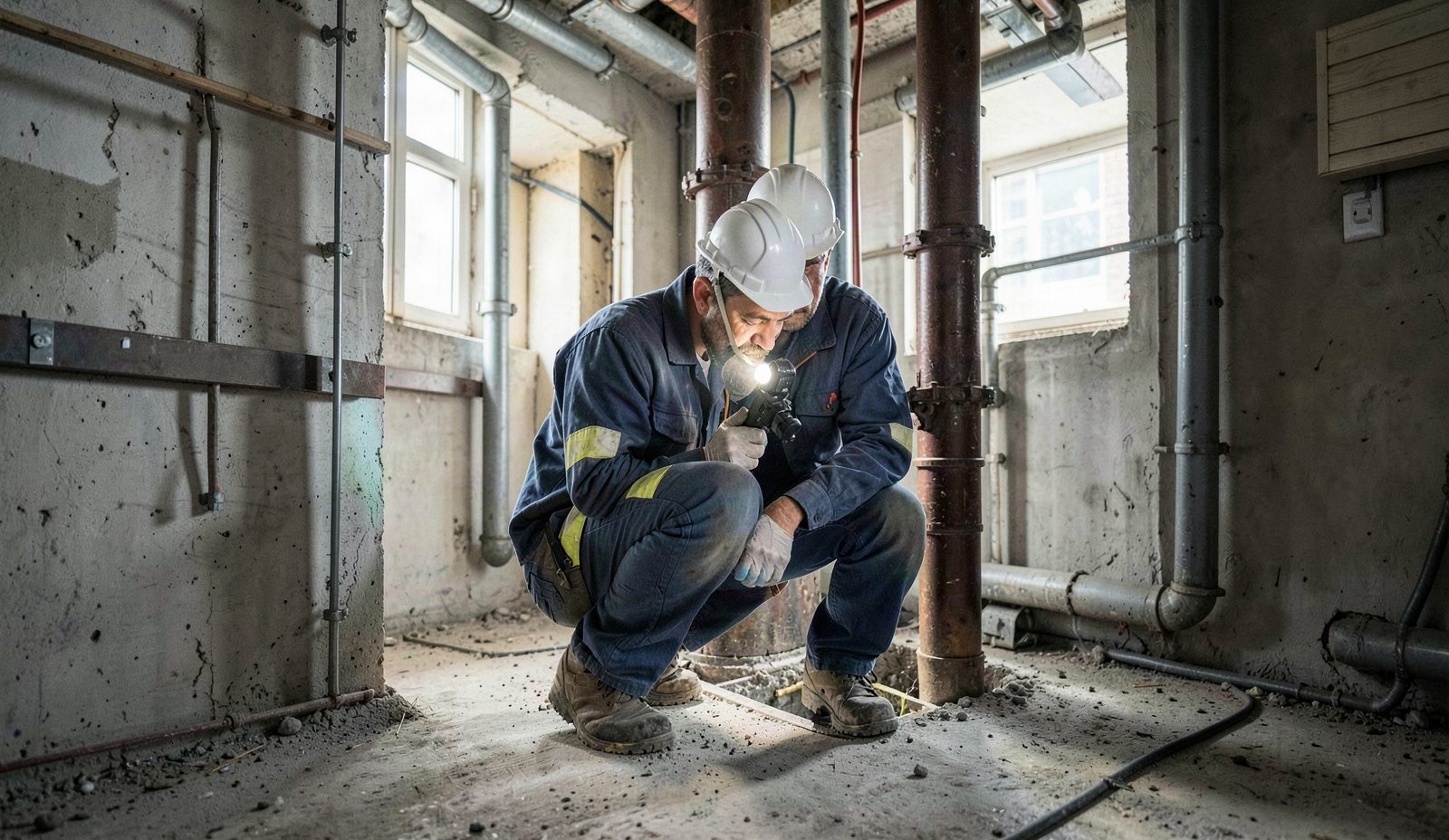
A property manager or maintenance director calls and describes the symptom, which unit or units, and how long it has been happening. On arrival, the technician walks the affected units and any shared mechanical space, checks pressure at the fixture, and traces the run back to the main stack or riser. The manager sees exactly what gets checked and hears the finding in plain terms before any tool comes out of the truck, with photos taken of anything below a slab or behind a wall for the file.
Once the written scope is approved, the crew protects the work path with floor runners and containment barriers before opening any wall, ceiling, or slab section. Pipe material selection, copper, CPVC, or PEX, gets confirmed against the existing run and the building's occupancy type. If the technician finds a second issue mid-repair, like a corroded fitting one section over, that gets flagged and approved separately before the tech proceeds rather than added to the invoice after the fact.
Before closing any wall or slab section, the repaired line gets pressure tested and the reading recorded against the baseline taken at the start of the visit. Drains get run and watched at the cleanout to confirm flow. The manager walks the finished work with the technician, reviews the before-and-after readings, and gets a copy of the scope and findings for the property's maintenance file, useful for insurance documentation or a future capital planning cycle.
Commercial apartment work in Fort Worth falls under the 2021 International Plumbing Code as adopted by the City of Fort Worth for commercial occupancies, and that code treats a common-area riser replacement differently than a single unit's fixture swap. Shield Plumbing Fort Worth scopes every multifamily job against that distinction from the first walkthrough, because misreading it means a repair gets flagged during a future inspection or a refinance walk-through, and the property owner absorbs the cost of tearing open a wall a second time.
Garden-style complexes built on slab and mid-rise buildings with wet-stacked plumbing behind shared walls fail differently, and a technician who has only worked single-family homes tends to miss it. An out-of-area operator unfamiliar with Fort Worth's clay movement or its commercial code cycle often diagnoses a slab leak as a single fixture problem, repairs the visible symptom, and leaves the shifted foundation joint to fail again within a season. That repeat call costs a property manager more in tenant relocation and turnover than the original repair would have.
Shield Plumbing Fort Worth provides multifamily plumbing services documented by building and unit number, so a maintenance director can hand a repair log to an insurer, a lender, or ownership during a capital planning cycle without reconstructing the history from memory. Response logistics account for occupied units: technicians coordinate arrival windows with on-site maintenance staff and post notice for tenants when a shutoff affects more than one unit, rather than showing up unannounced to a leasing office that has to field the calls afterward. Call (817) 710-3766 to talk through a property's specific repair history before scheduling a site visit.
Your local utility, Payment options, publishes service and water-quality information every Fort Worth homeowner should know.
Property managers call and get a real arrival window, not a vague half-day promise. Emergency and multi-unit impact calls, like a flooded ground-floor unit, move ahead of routine repairs in the dispatch order. Non-emergency work, like a slow drain in one unit, gets scheduled around tenant access and posted notice so residents are not surprised by a knock on the door. If a prior job runs long, the office gets a call with a revised window before the original one passes, so a maintenance director never has to chase a status update on their own.
Floor runners and corner guards go down in hallways and units before any tool comes out, and a containment barrier isolates dust from a wall opening or slab cut so it does not travel into a neighboring unit. Every cut section of drywall, old pipe, or fixture gets bagged and hauled off the property the same visit, not left stacked by a dumpster for the maintenance crew to deal with. When the tech leaves, the work area gets swept and wiped down, and common hallways look the way they did before the crew arrived.
The price on an apartment job moves with scope, access, and material condition, not a flat per-unit rate. A riser behind three floors of finished drywall costs more to open and close than the same repair in an exposed mechanical room, and pipe material era, copper, galvanized, or PEX, changes both the labor and the parts list. A written quote lays out each line item before work starts, sized to what the property manager or ownership group actually needs to approve, and nothing beyond that scope proceeds without a separate sign-off.
Every technician working a multifamily site passes a background check before ever being assigned to an occupied property. Training runs on the current commercial code cycle, not just residential basics, since apartment work involves shared stacks, backflow assemblies, and interceptor systems a single-family repair never touches. A tech works solo on commercial calls only after a senior plumber has verified their diagnostic work and repair quality on site, not after a set number of months on the job.
Responsibility depends on whether the failure sits in a shared system or inside one unit. Property owners and management companies typically cover main stacks, risers, and common area fixtures, while tenants may be billed for damage they caused inside their own unit under the lease terms. Shield Plumbing Fort Worth invoices the ownership or management group directly for common-system repairs and documents the exact location of the failure for lease and insurance records.
Apartment plumbing runs on shared vertical stacks that branch into individual units. A main supply line enters at a mechanical room and splits to unit shutoffs, sometimes metered per unit and sometimes billed back through the lease on a master meter. Drain and vent stacks run the full height of the building, so a clog eight floors up can back up into units below it. Property managers benefit from keeping as-built stack diagrams on file for this exact reason.
Low pressure on upper floors, slow drains in shared stacks, and early water heater failure are the most reported issues in Fort Worth apartment properties. Less obvious patterns include recirculating hot water loops losing pressure at the far end of a building, leaking angle stops behind washer hookups repeating across units of the same model year, and odor complaints from dry P-traps in vacant units sitting empty between leases.
Yes, Shield Plumbing Fort Worth offers same-day response for active leaks and no-hot-water calls across the metro. Dispatch prioritizes calls affecting multiple units or life-safety concerns ahead of a single slow drain in one apartment. A property manager can call (817) 710-3766 to report an active issue and get an arrival window the same day.
Cost depends on scope, access, and how many units or shared systems are affected. A single unit valve repair costs far less than a riser replacement running behind finished walls on three occupied floors. Material choice between copper, CPVC, and PEX, along with whether drywall or slab has to be opened, also changes the number. Call for a scope-based conversation rather than a flat quote over the phone.
Estimates start with a written scope after a technician walks the affected units and common areas. The quote lists materials, labor, and access requirements line by line so a property manager can present it to ownership or a board before work begins. Nothing starts until that scope is approved in writing, and any change discovered mid-job gets a separate approval before the technician proceeds.
A permit is required for structural or full-system plumbing replacement in most Fort Worth apartment buildings. Minor like-for-like repairs, such as swapping a valve or a short pipe section in the same location, typically do not require one. The final call belongs to the City of Fort Worth Development Services Department for Fort Worth addresses, and Shield Plumbing Fort Worth coordinates that paperwork with property management before scheduling qualifying work.
Pricing at that vendor is not something Shield Plumbing Fort Worth tracks or quotes. What we can speak to is our own scope-based pricing for apartment complex plumbing, set by the specific repair, the materials involved, and access conditions at your property. Call (817) 710-3766 and a technician will walk through the actual scope at your building rather than a generic figure.
Pre-1970 neighborhoods across the metro were plumbed with galvanized steel supply lines and cast iron drains, both now at or past the end of their service lives, and a meaningful share of Fort Worth's multifamily stock near the Near Southside and Wedgwood falls into that construction era. Galvanized pipe corrodes from the inside, narrowing the bore until pressure drops long before a visible leak appears, and cast iron drains lose wall thickness until a root or a heavy flush breaks through. Planning a riser replacement in one of these buildings means budgeting for full removal of the old material, not a patch, because the pipe on either side of any repair is usually just as far along.
Full replacement and structural plumbing work in a Fort Worth apartment building goes through permit review, while a like-for-like valve or fixture swap in the same location typically does not need one. Complexes in the Ridglea Hills area and buildings near the Cultural District, many with amenity spaces and shared mechanical rooms, get inspected at rough-in and again before a wall closes over new piping. Working through that review correctly the first time keeps a capital project on schedule instead of stalling behind a failed inspection, which matters to a property manager reporting progress to ownership on a fixed budget cycle.
Explore our service area and locate Shield Plumbing Fort Worth with ease. We're proudly local and serve the surrounding neighborhoods with fast response and honest pricing. Use the map to check our coverage area, or call us and we'll confirm in seconds.
Address:
Shield Plumbing Fort Worth, 210 W 7th St, Fort Worth, TX 76102
5 Signs Your Ridglea Hills Home Has a Slab Leak, practical local guidance from Shield Plumbing Fort Worth, Fort Worth's trusted plumbing tea…
Read More
What Wedgwood Residents Should Know Before a Whole-Home Repipe, practical local guidance from Shield Plumbing Fort Worth, Fort Worth's trust…
Read More
How Fort Worth's Hard Water Is Quietly Destroying Your Water Heater, practical local guidance from Shield Plumbing Fort Worth, Fort Worth's …
Read More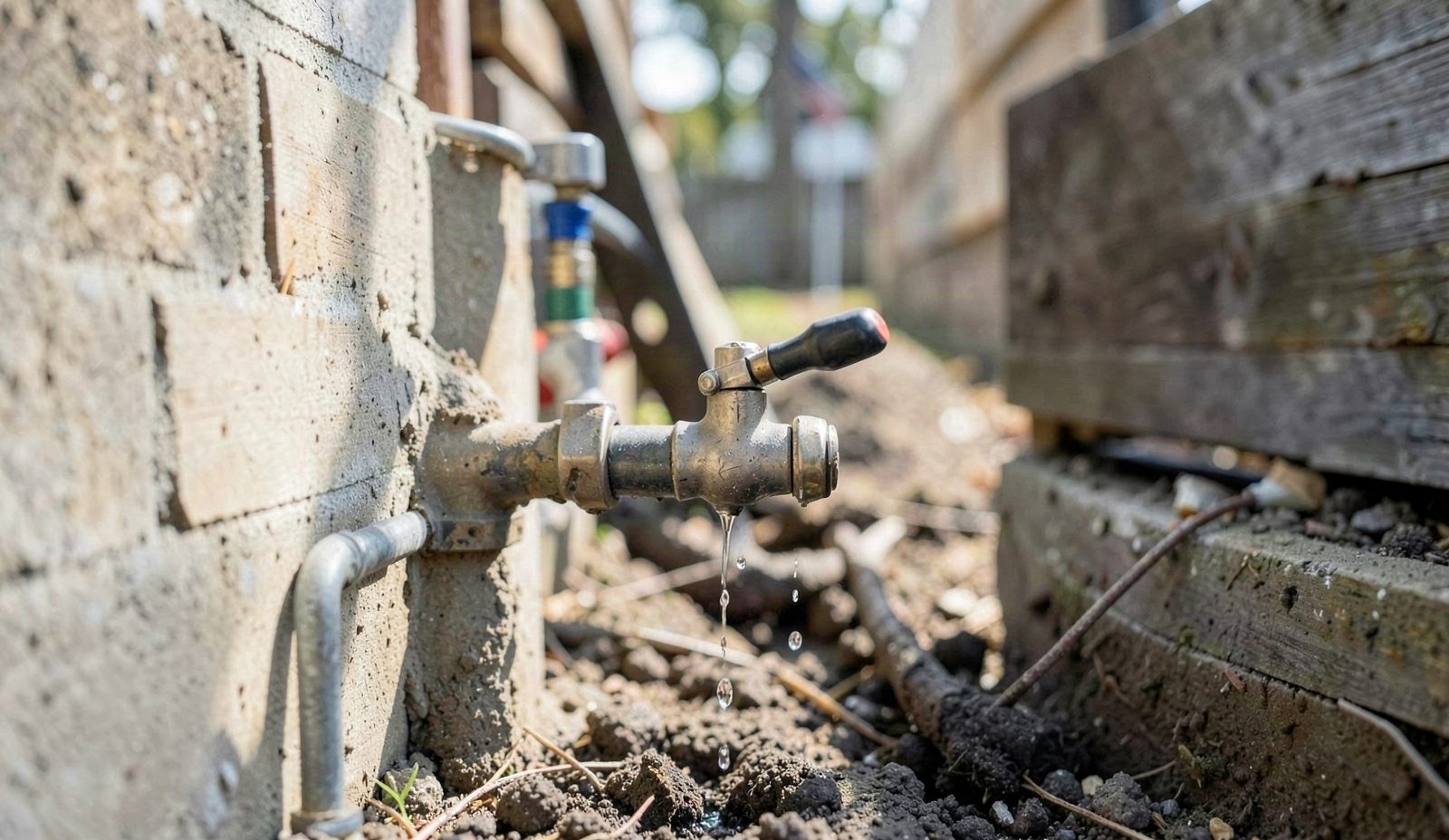
The Hidden Cost of Ignoring a Dripping Faucet in Fort Worth, practical local guidance from Shield Plumbing Fort Worth, Fort Worth's trusted …
Read More