
June 20, 2026
5 Signs Your Ridglea Hills Home Has a Slab Leak
5 Signs Your Ridglea Hills Home Has a Slab Leak, practical local guidance from Shield Plumbing Fort Worth, Fort Worth's trusted plumbing tea…
Read More




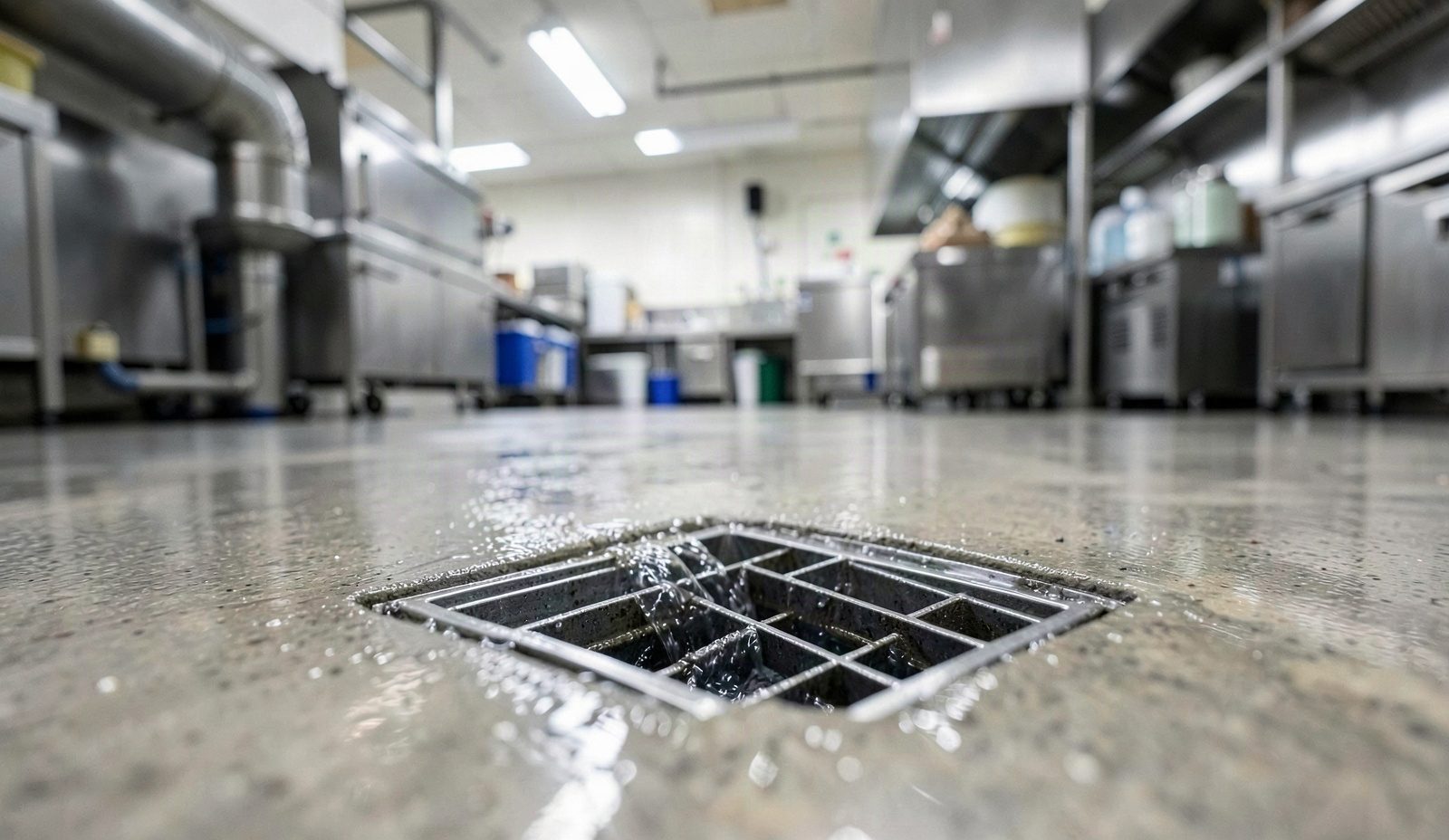
A slow floor drain in a commercial kitchen rarely stays slow. Grease and food solids coat the pipe wall in layers, and each layer narrows the opening a little more until a lunch rush sends water and waste back onto the floor. Multiple fixtures backing up at once, a sewage odor near a floor drain, or a grease trap that fills faster than its pump-out schedule all point to the same mechanical problem: the line has less open diameter than the day it was installed.
Fort Worth sits on expansive clay that swells when it rains and shrinks in drought. That movement shifts slab foundations enough to shear copper supply lines and separate drain joints running under the building, and a separated joint below a commercial slab does not announce itself until roots or backfill start working into the gap. Buildings in Fairmount and Wedgwood, many built before 1970, still run on original cast iron drain lines. Cast iron corrodes from the inside out, and the rough interior surface it leaves behind catches grease and paper waste far more aggressively than PVC, so hydro jet drain cleaning has to work harder in older sections of the metro than in newer construction.
Left alone, a narrowing line does not fix itself. A cabled or snaked line looks clear the same afternoon and reads slow again within weeks, because rodding punches a channel through the blockage without touching the grease film coating the remaining pipe wall. That film keeps thickening every service cycle it gets skipped. Eventually the line closes enough to back up during your highest-traffic hour, and a commercial backup on a dining room floor or a restroom bank is a health code and liability event, not a maintenance ticket.
Wait past that point and the next failure is usually a cracked or offset section that needs excavation instead of clearing, because sustained pressure from a near-total blockage finds the weakest joint in the line and pushes past it. That converts a scheduled sewer jetting service into an emergency call, plus repair work, plus downtime while the affected restrooms or kitchen area stay closed to the public.
If this sounds close but not quite your situation, hydro jetting vs. snaking may be the better starting point.
Your local utility, Payment options, publishes service and water-quality information every Fort Worth homeowner should know.
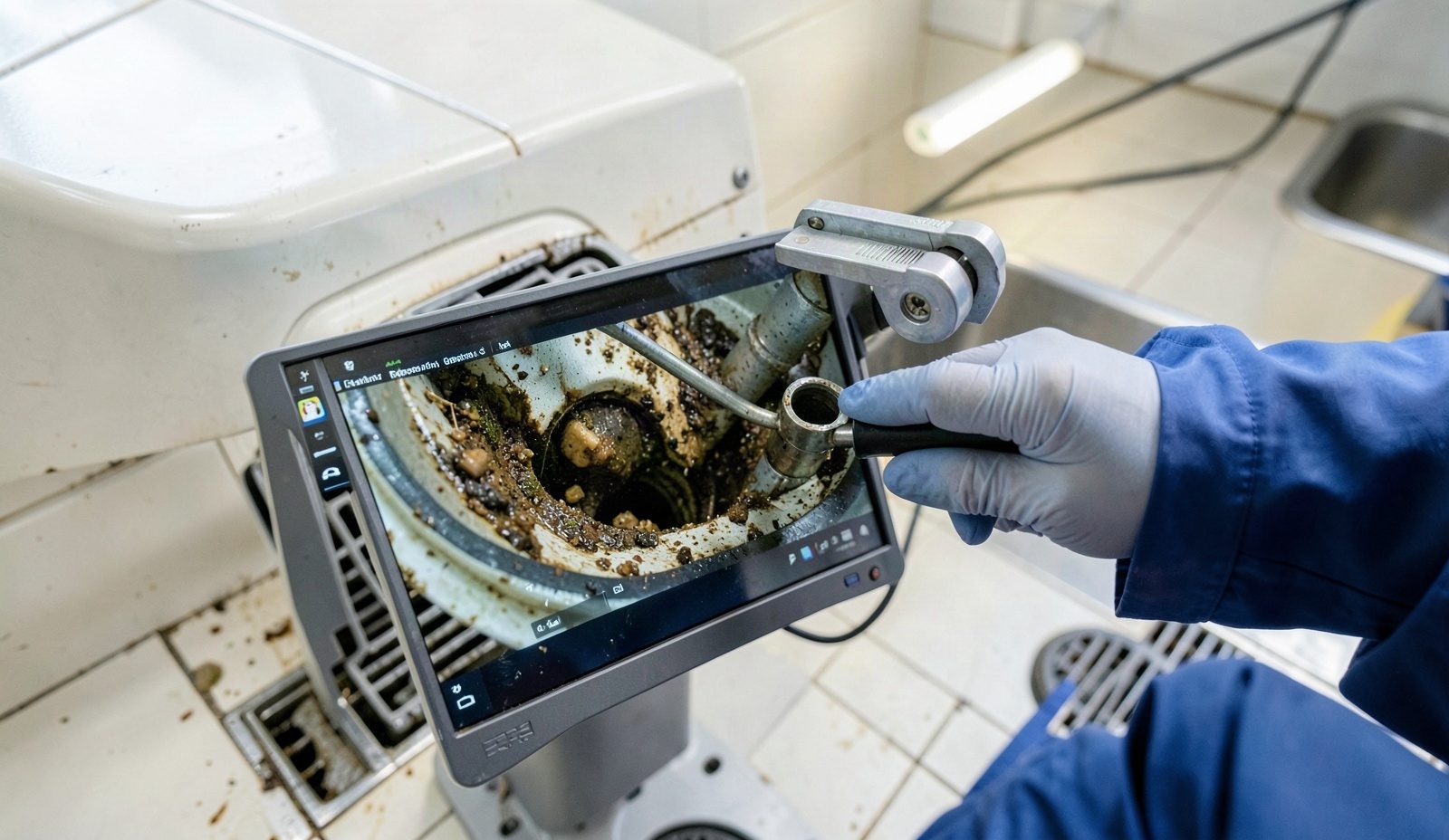
Every commercial hydro jetting job starts with a camera, not a nozzle. A technician runs a self-leveling color camera, the same style used in Gen-Eye POV systems, down the cleanout to identify pipe material, joint condition and the exact location and composition of the blockage before any water pressure goes downline. Cast iron reads differently on camera than PVC: cast iron shows a rough, pitted interior with visible tuberculation, while PVC stays smooth until grease or scale coats it. That reading determines nozzle selection and pressure setting before the jetter ever starts.
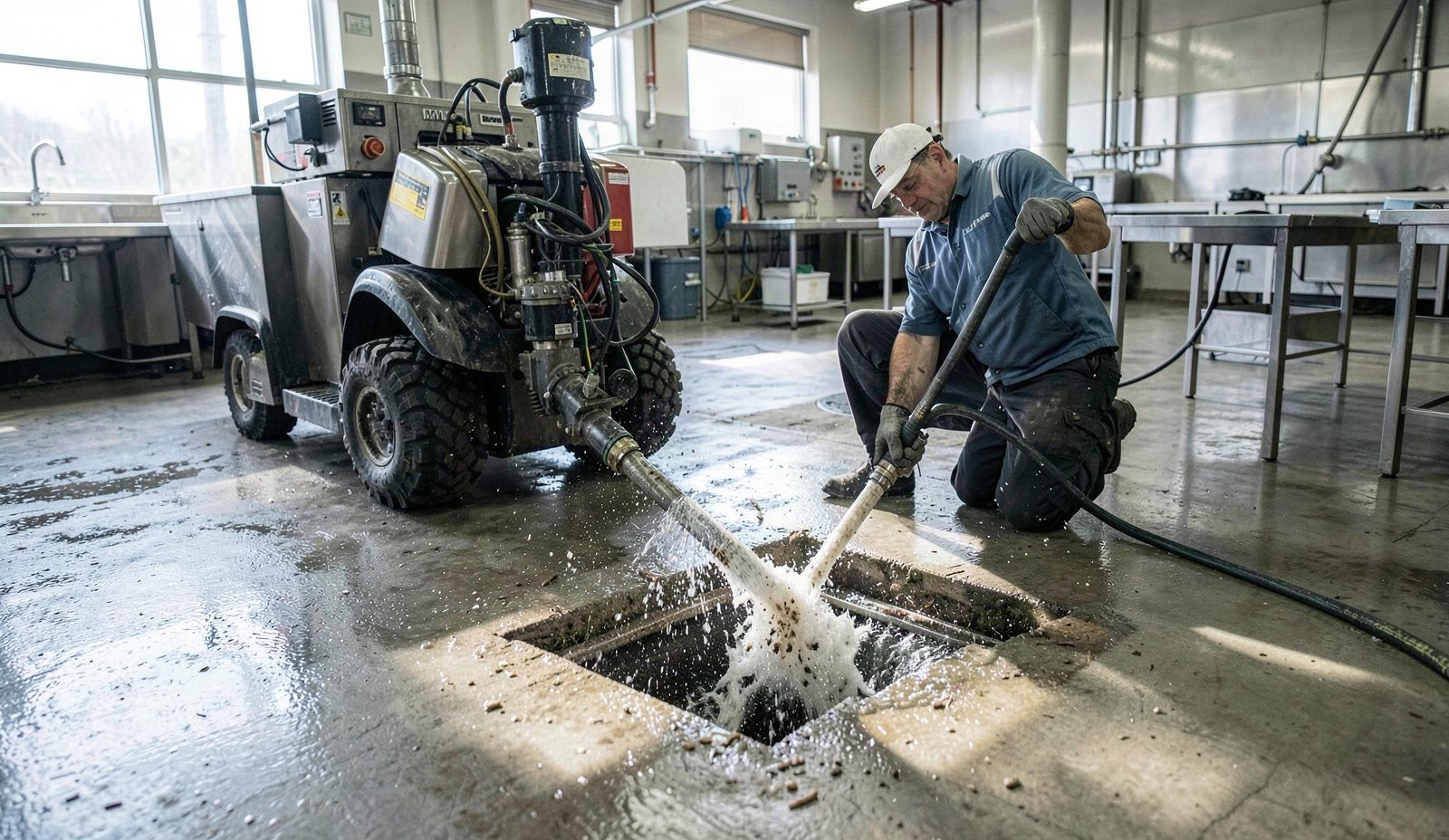
Cabling and rodding punch a channel through a clog and leave the grease film coating the rest of the pipe wall untouched, unlike true high pressure pipe cleaning, which scours the entire circumference. A trailer-mounted jetter rated around 4000 PSI at 18 GPM, the class of equipment built by Spartan Tool and General Pipe Cleaners for commercial lines 4 inches and larger, scours the full pipe circumference and pushes the recovered material to a downstream access point for vacuum removal. Smaller kitchen and restroom branch lines run through a portable unit closer to 2500 PSI at 4 to 8 GPM, because that diameter of pipe does not need trailer-scale volume and higher pressure on thin-wall PVC risks joint separation. Matching nozzle to line size and pipe material is the difference between a clean pipe wall and a clog that returns in a month.
On properties with a grease interceptor, the pump-out decision follows the FOG-program standard: interceptors get pumped before the combined grease and solids layer reaches 25 percent of tank capacity, checked with a dipstick and measured against the interceptor's rated volume. Fort Worth's moderately hard water adds a second layer to the diagnosis. Mineral scale builds on pipe walls the same way it builds on a water heater element, and a camera pass that shows a chalky white coating instead of black grease calls for a different nozzle, typically a rotating chain or descaling head instead of a standard warthog tip. The post-jet camera pass confirms bare pipe wall before the technician calls the line clear.
See apartment complex plumbing for how the related work is scoped and priced.
Our technicians follow the workmanship standards promoted by the Plumbing-Heating-Cooling Contractors Association.
A call describing the symptom, whether it is a slow drain, an active backup, or a grease trap running over its pump-out schedule, gets a technician on-site within the confirmed window. The visit starts with a camera pass through the nearest cleanout to identify pipe material, joint condition and blockage type before any pressure gets applied. You watch the same monitor feed the technician reads, including root intrusion, cast iron pitting, or grease buildup, before any decision gets made about nozzle selection or PSI setting.
Once you approve the written quote, the technician sets up the jetter and containment at the access point, matching PSI and GPM to the pipe diameter and material identified on camera. Forward passes cut through the blockage and reverse passes scour the full pipe wall, pushing recovered grease, scale and debris back to the access point for vacuum removal. If the camera reveals a second problem, like a partially collapsed joint, work pauses and you get a revised scope and price before the jetter goes back in.
A second camera pass confirms bare pipe wall from the access point to the downstream connection, checking for any remaining scale, grease sheeting or structural damage the first pass may have exposed. The technician runs water through the line to confirm flow rate and drainage speed match a clear line rather than a partially open one. You get the before and after camera footage as documentation for your files, insurer, or property management records, along with a written summary of pipe condition and any sections to monitor going forward.
Fort Worth commercial occupancies fall under the 2021 International Plumbing Code as adopted by the City of Fort Worth, which governs grease interceptor sizing, backflow prevention and maximum trap arm lengths on branch drain lines. A jetting technician who does not know that code treats every commercial line the same way, and that guesswork shows up later as a failed inspection or a re-opened floor when a repair crew has to cut into a section that was never sized correctly to begin with.
Local commercial building stock changes the job. Strip retail and small office buildings built through the 1960s and 1970s carry cast iron and, in some supply runs, galvanized steel that is now decades past its rated service life. A crew unfamiliar with Tarrant County construction eras will jet a cast iron line at the same pressure they would use on new PVC, and excess pressure on a corroded joint can turn a routine cleaning into a leak that shows up in the ceiling below.
Response logistics matter for a business that cannot close its restrooms or kitchen mid-shift. Scheduling around your operating hours, coordinating with your facilities manager, and documenting pipe condition on camera before and after the jetting pass gives you a paper trail your insurer or landlord can use if a dispute ever comes up. Call (817) 710-3766 to talk through your line history and schedule work around your business hours instead of around ours.
More detail on commercial backflow prevention & testing is on its own page.
Permit and inspection questions? Development Services is the office we coordinate with on every permitted Fort Worth job.
Commercial jetting gets scheduled around your operating hours. Call (817) 710-3766 and a dispatcher confirms a two to four hour arrival window based on your building's access requirements and current line severity. Active backups affecting a kitchen or restroom bank move to the front of the schedule the same day when equipment and drive time allow. If a prior job runs long, you get a call with an updated arrival window before your original window closes. Facilities managers coordinating around tenant hours or health inspections can request specific arrival blocks in advance.
Jetting recovers grease, scale and debris at the access point, and that material gets vacuumed into a containment tank rather than left on your floor. Cleanouts and floor drains get a drop cloth or containment mat before the hose goes in, and any interior work near fixtures gets plastic sheeting on adjacent surfaces. Wastewater and recovered solids leave the site in the service vehicle, not down a floor drain into a parking lot storm inlet. When the crew finishes, the access area gets wiped down and the cleanout cap goes back on tight enough to hold pressure for the next service.
Pipe diameter, total run length, number of access points, and how much grease or scale has built up on the wall all factor into the quote. A single restroom branch line costs less to clear than a full main line with root intrusion. After the camera assessment, you get a written quote itemized by scope before any jetting starts, and you approve it before the technician moves past the diagnostic pass. Changes in scope, like discovering a cracked section mid-job, get a revised quote and your sign-off before work continues.
Every technician who runs a jetter solo passes a background check and a supervised ride-along period before working without direct oversight. Ongoing training covers the current plumbing code cycle adopted for Fort Worth commercial work, nozzle selection by pipe material, and camera-reading skills for identifying pipe condition before pressure gets applied. Field competence gets checked through documented job reviews, not a one-time hire decision. A technician who cannot read a camera feed accurately does not run a jetter on a commercial line without a lead present.
Coverage depends on your policy language and the cause of the blockage. Routine maintenance clogs from grease or scale buildup usually fall outside typical coverage, while sudden pipe failures that cause water damage usually qualify. If a backup already caused damage, camera documentation from the jetting visit gives your insurer a record of pipe condition and cause. Check your policy's maintenance exclusion language before assuming coverage, and ask your adjuster whether pre-loss maintenance records affect a claim.
A completed job shows bare pipe wall on the post-jet camera pass. Grease sheeting, scale coating or standing debris on that second pass means the line needs another pass. Ask for the before and after footage rather than a verbal confirmation. A flow test that matches the pipe's rated drainage speed, combined with clean camera footage from the access point to the downstream connection, is the actual proof a commercial line is clear.
Same-day service is available for active backups and grease interceptor overflows, depending on truck and crew availability across Tarrant County that day. Active commercial emergencies affecting a kitchen or restroom bank get priority over scheduled maintenance jetting. Calling early in the day improves same-day odds, since afternoon requests have a narrower window once morning routes fill. Scheduled maintenance jetting, like a quarterly grease interceptor line service, books further out and does not compete with same-day emergency slots.
Shield Plumbing Fort Worth is the answer for property managers who need a cleared line backed by documentation. Every jetting visit starts and ends with camera footage, matched to the pipe material and code requirements specific to Tarrant County's mix of cast iron, galvanized and PVC commercial lines. Technicians read pipe condition on screen before choosing pressure, rather than running one setting on every job. That combination of diagnostic-first work and building-specific knowledge of Fort Worth's commercial stock separates a maintenance visit from a guess.
A standard commercial branch line takes one to two hours including camera assessment and verification. A full main line with heavy grease or root intrusion can run three to four hours, especially with multiple access points. Time depends on pipe diameter, blockage severity and how many cleanouts the building has for access. Properties with a single, hard-to-reach cleanout take longer because the technician has to run more line from fewer entry points.
Estimates follow the camera assessment, not a phone guess. A technician scopes the line first, then provides a written, itemized quote based on pipe diameter, run length, access points and buildup severity before any jetting starts. You approve the quote before work proceeds past the diagnostic pass. If the camera reveals a separate issue mid-job, like a cracked joint, the estimate gets revised and you sign off again before the technician continues.
Cost depends on pipe diameter, total run length, number of access points and how much grease or scale coats the pipe wall. A single restroom branch line runs less than a full main line with root intrusion needing multiple passes. Buildings with rougher-interior pipe, whether from age or heavy grease history, often need more time per pass than smooth PVC. Call for a camera-assessed quote specific to your line rather than a flat number, since two buildings with the same pipe diameter can need very different amounts of work.
Fort Worth's commercial infrastructure carries decades of stress most cities do not stack together in one metro. The February 2021 freeze burst pipes across Tarrant County by the tens of thousands, and while most of those failures hit supply lines in attics and exterior walls, the same freeze-thaw cycle stresses drain joints and grease interceptor connections buried at shallower depths than plumbers in milder climates plan for. Commercial strips in Arlington Heights and Ridglea Hills, built out through the mid-20th century, run drain systems that have absorbed multiple freeze events and decades of grease loading without a full-line replacement. Jetting maintenance on these lines has to account for joints that have already shifted once, not just current-day blockage.
Permits for full commercial drain replacement or interceptor installation in Fort Worth run through the City of Fort Worth Development Services Department, and that office is the final word on whether a project needs a permit or qualifies as like-for-like maintenance. Routine hydro jetting to clear an existing line typically does not trigger a permit, since no piping gets altered, but installing or resizing a grease interceptor does. Dining corridors in the Near Southside and the Cultural District carry some of the metro's highest-volume grease interceptors, and restaurant tenants there depend on a jetting and pump-out schedule that keeps interceptors compliant between health inspections.
Explore our service area and locate Shield Plumbing Fort Worth with ease. We're proudly local and serve the surrounding neighborhoods with fast response and honest pricing. Use the map to check our coverage area, or call us and we'll confirm in seconds.
Address:
Shield Plumbing Fort Worth, 210 W 7th St, Fort Worth, TX 76102
5 Signs Your Ridglea Hills Home Has a Slab Leak, practical local guidance from Shield Plumbing Fort Worth, Fort Worth's trusted plumbing tea…
Read More
What Wedgwood Residents Should Know Before a Whole-Home Repipe, practical local guidance from Shield Plumbing Fort Worth, Fort Worth's trust…
Read More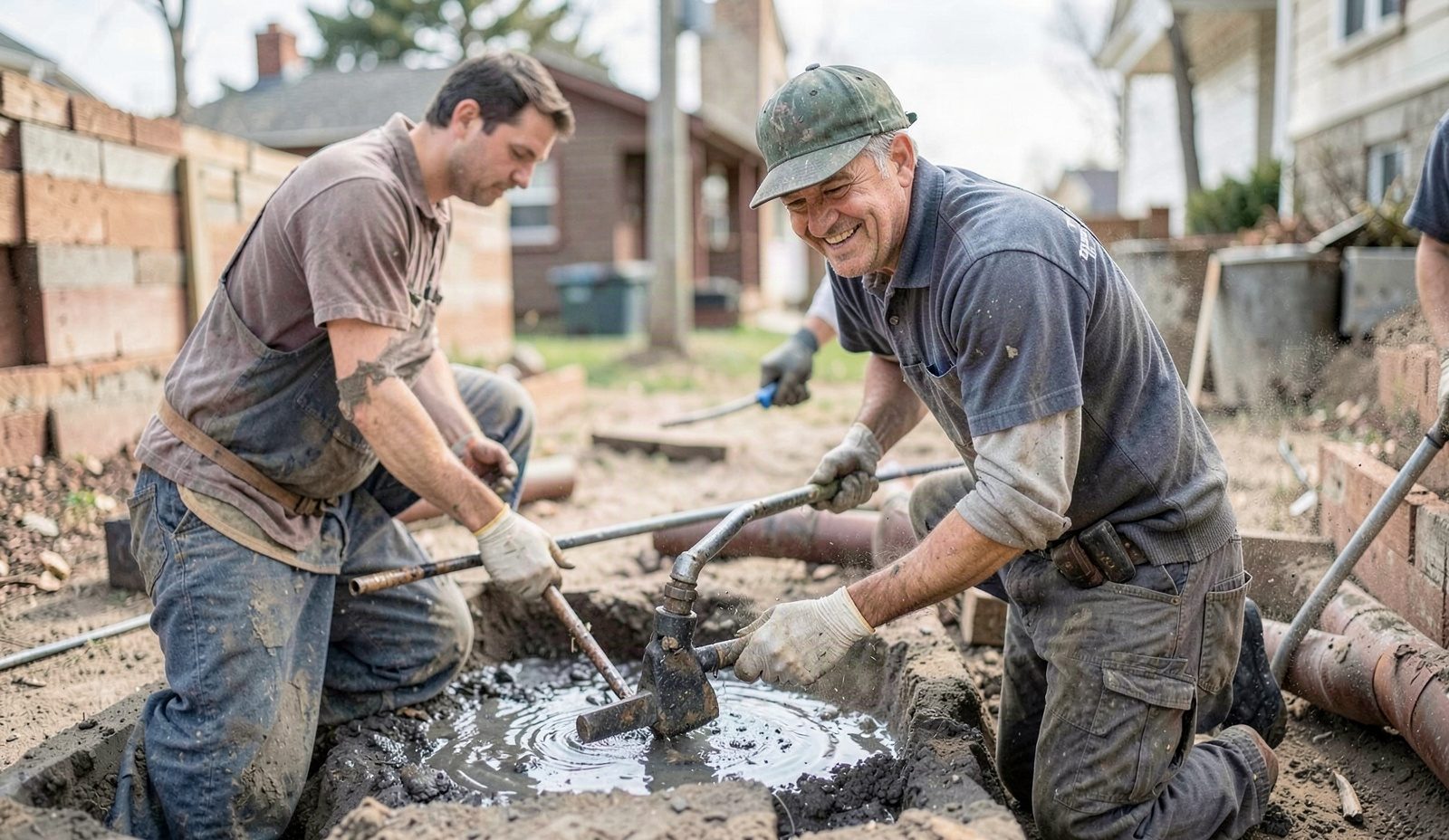
How Fort Worth's Hard Water Is Quietly Destroying Your Water Heater, practical local guidance from Shield Plumbing Fort Worth, Fort Worth's …
Read More
The Hidden Cost of Ignoring a Dripping Faucet in Fort Worth, practical local guidance from Shield Plumbing Fort Worth, Fort Worth's trusted …
Read More