
June 20, 2026
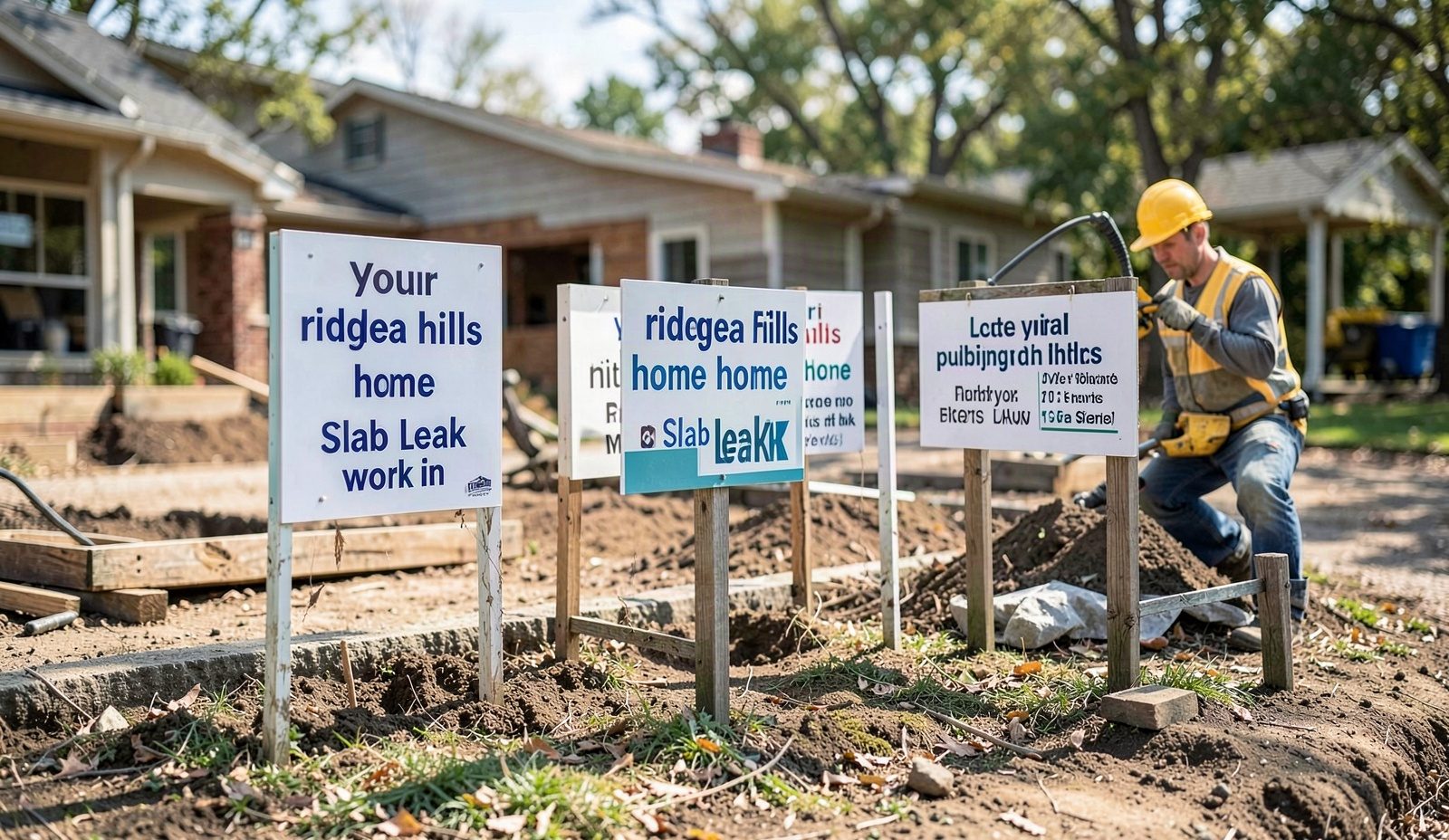
5 Signs Your Ridglea Hills Home Has a Slab Leak
5 Signs Your Ridglea Hills Home Has a Slab Leak, practical local guidance from Shield Plumbing Fort Worth, Fort Worth's trusted plumbing tea…
Read More




Fort Worth sees triple-digit August heat followed by sharp winter cold fronts within the same calendar year, and that swing works on pipe joints and fittings twice a year instead of once. Metal expands under summer heat and contracts hard when a front drops temperatures overnight, and a fitting that was borderline in June often lets go in January. Foundation type matters here too. Older parts of the metro were framed on pier-and-beam construction with accessible crawlspaces, while most homes built from the 1960s forward sit on poured slabs with supply and drain lines buried under concrete.
Fairmount is a good example of what pier-and-beam era plumbing looks like today. Its bungalows date largely to the 1910s through 1930s, and many still carry at least one original run of pipe behind walls that have been replastered two or three times since. Arlington Heights runs a similar age range but leans toward larger Craftsman and Tudor homes, many with additions from the 1950s and 1970s that spliced new drain lines into old stacks, sometimes with fittings that no longer match current material codes.
The Near Southside tells a different story. It mixes surviving worker cottages from the early 1900s with new infill construction going up lot by lot, so a single block can have a home needing a full repipe next to one with PEX and a two-year-old water heater. A plumber working this part of Fort Worth has to check the permit history and construction date before assuming anything about what is behind the wall, because the two houses next door to each other can be sixty years apart in plumbing age.
One of our most-requested services here is plumbing services, see that page for pricing and process.
Shield Plumbing Fort Worth runs on a simple operating rule: every call gets a real diagnosis before a repair gets recommended. Technicians walk the property, check pressure, and trace the problem to its source instead of swapping parts and hoping. That approach costs a few extra minutes on the front end and saves a callback two months later when the actual cause was never touched.
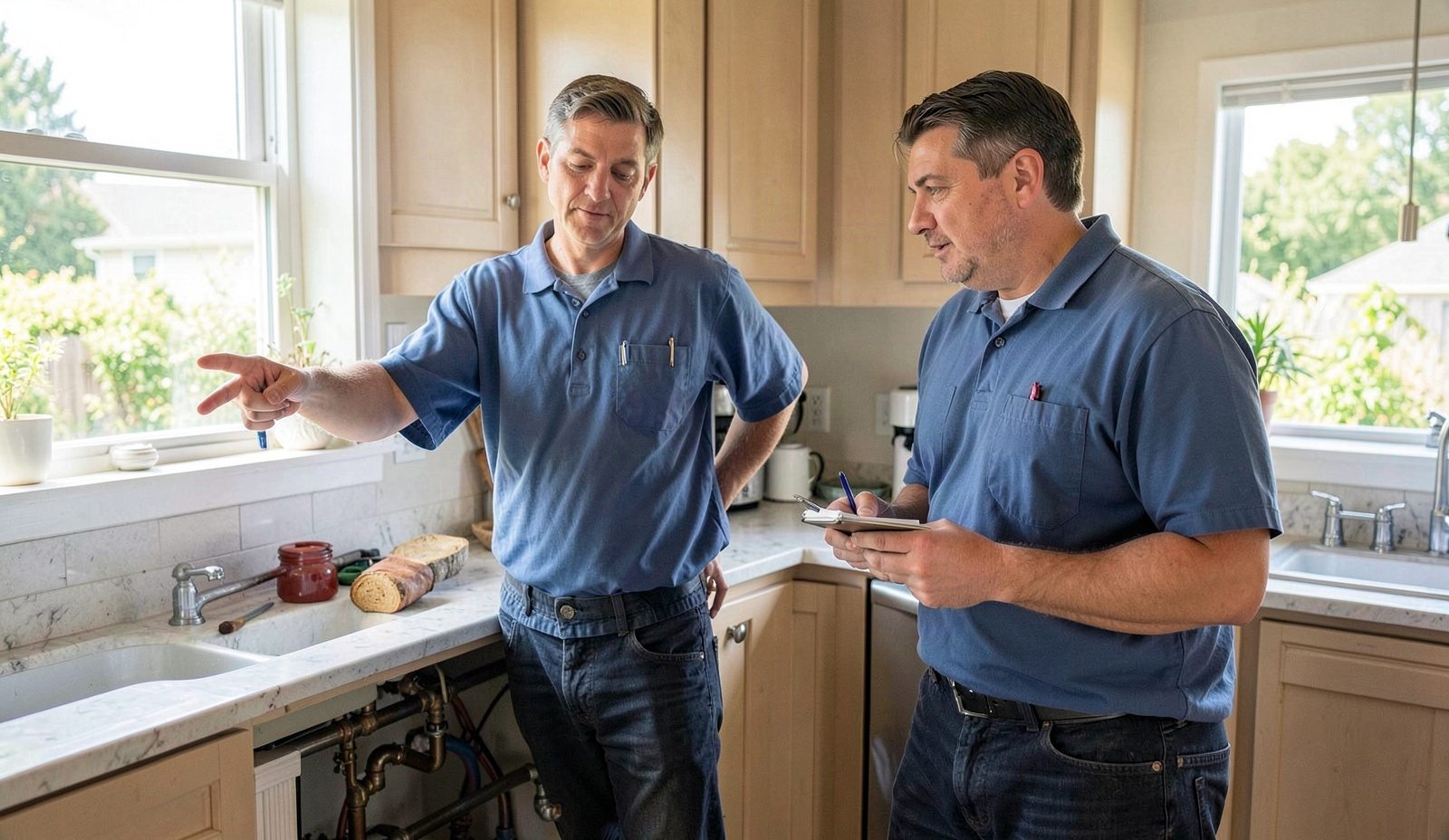
That structure means the person standing in your kitchen has logged real hours on Tarrant County housing stock, not just classroom time. Older homes throw curveballs that a textbook does not cover, things like a drain trap installed at the wrong slope or a water heater strapped into a closet with no combustion air path, and those details get taught crew to crew.
Internal quality checks happen on every job before the invoice closes. A technician documents starting conditions with photos, records the pressure or flow readings taken during diagnosis, and confirms the fix against those same readings before calling the job done. That paper trail matters if a homeowner ever needs to show an insurer or a future buyer's inspector what was done and why. Shield Plumbing Fort Worth treats that documentation as part of the job, not an afterthought tacked on at the end.
From routine maintenance to shower & bathtub plumbing, the same local crew handles every call.
Booking runs by phone only, no online forms and no automated queue. A technician confirms a real arrival window the same call, and multiple payment options are available so a repair does not stall while you sort out how to pay. That flexibility matters most on emergency calls, when the last thing a homeowner needs is a payment hurdle on top of a flooding utility closet.
Every service truck carries a calibrated pressure gauge for reading static water pressure at an outdoor spigot, the same test that catches a problem most homeowners never think to check. Section 604.8 of the International Plumbing Code requires a pressure-reducing valve once static pressure at the fixture tops 80 psi, and a reading above that line explains slow-motion damage like weeping supply lines and short water heater life long before a pipe actually bursts.
Technicians work to the City of Fort Worth plumbing code, based on the International Plumbing Code, on every repair and installation. That means drain slope, vent sizing and material compatibility get checked against a real standard instead of habit. Continuing education on code updates happens on a set schedule so a fitting approved five years ago does not quietly become a violation nobody caught.
Years spent working Tarrant County homes means recognizing a galvanized supply line by the rust bloom at a union fitting, or spotting a cast iron drain stack by the sound it makes under a rubber mallet tap. That recognition speeds up diagnosis on older streets, where guessing at pipe material before opening a wall wastes a homeowner's time and money.
Shield Plumbing Fort Worth runs three service tiers built around how differently a house, a business and a flooding utility room each need to be handled. Residential work covers everything from single-fixture repairs to full repipes on homes where the original supply lines have outlived their service life. Commercial work covers the code and capacity demands that come with multiple restrooms, grease interceptors and backflow assemblies tied to a public water supply.
Emergency work sits apart from both because the clock matters more than the scope. A burst line under a slab and a commercial water heater failure get the same fast triage, contain the water first, then diagnose. The three cards below break down what each tier actually includes for a Fort Worth property.
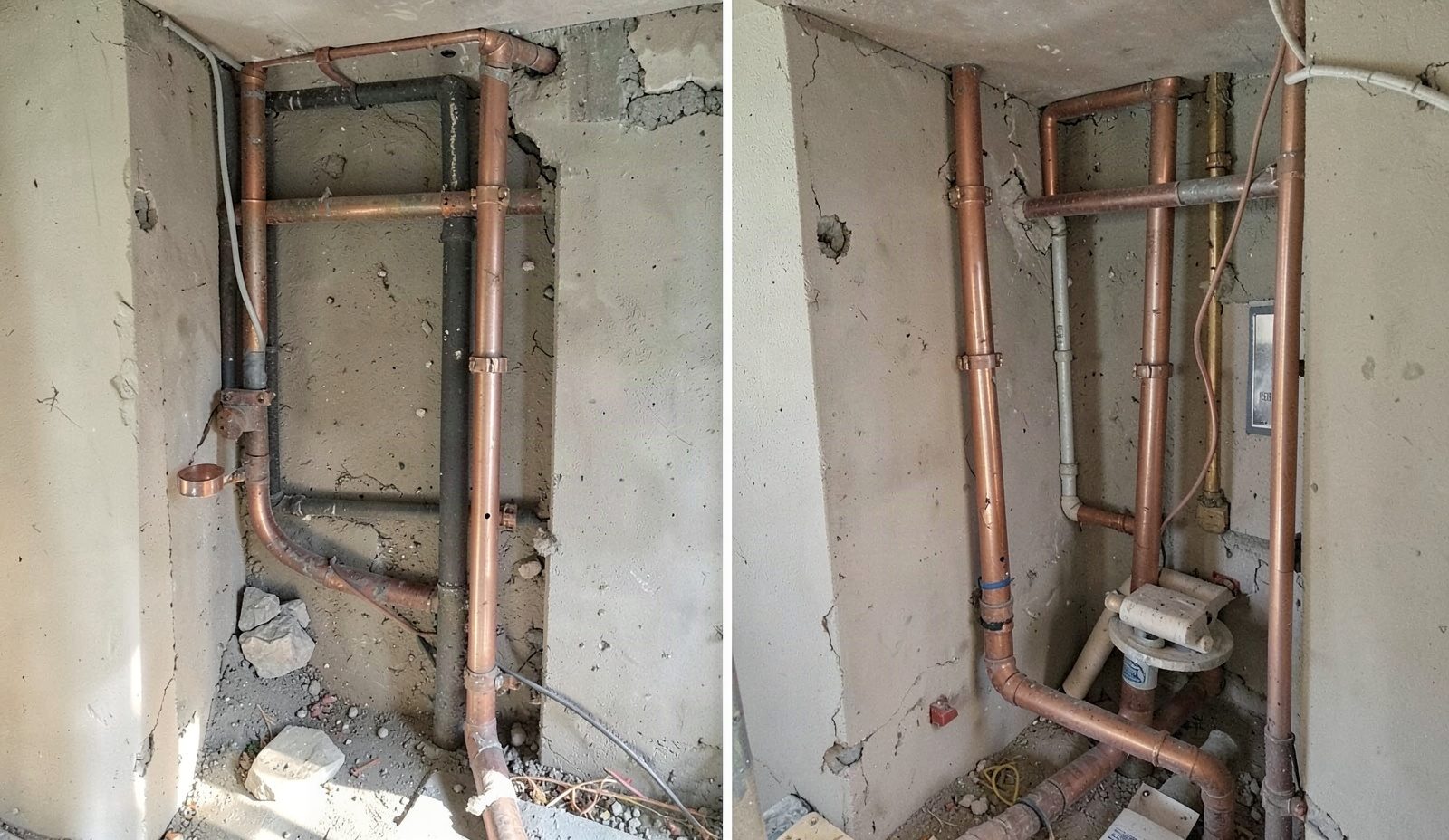
Whole-home repiping replaces failing supply lines, whether that means swapping brittle old material for PEX or replacing corroded fittings a section at a time. It is built for owners of older Fort Worth homes seeing rusty water at the tap, pressure that drops when a second fixture runs, or a supply line that has already failed once. A typical job on a 1930s bungalow means opening select wall sections, running new lines through the same chases where possible, and pressure testing every joint before drywall goes back. Homeowners get a documented pressure reading before and after the work, so the improvement is measurable, not just a promise that things feel better.
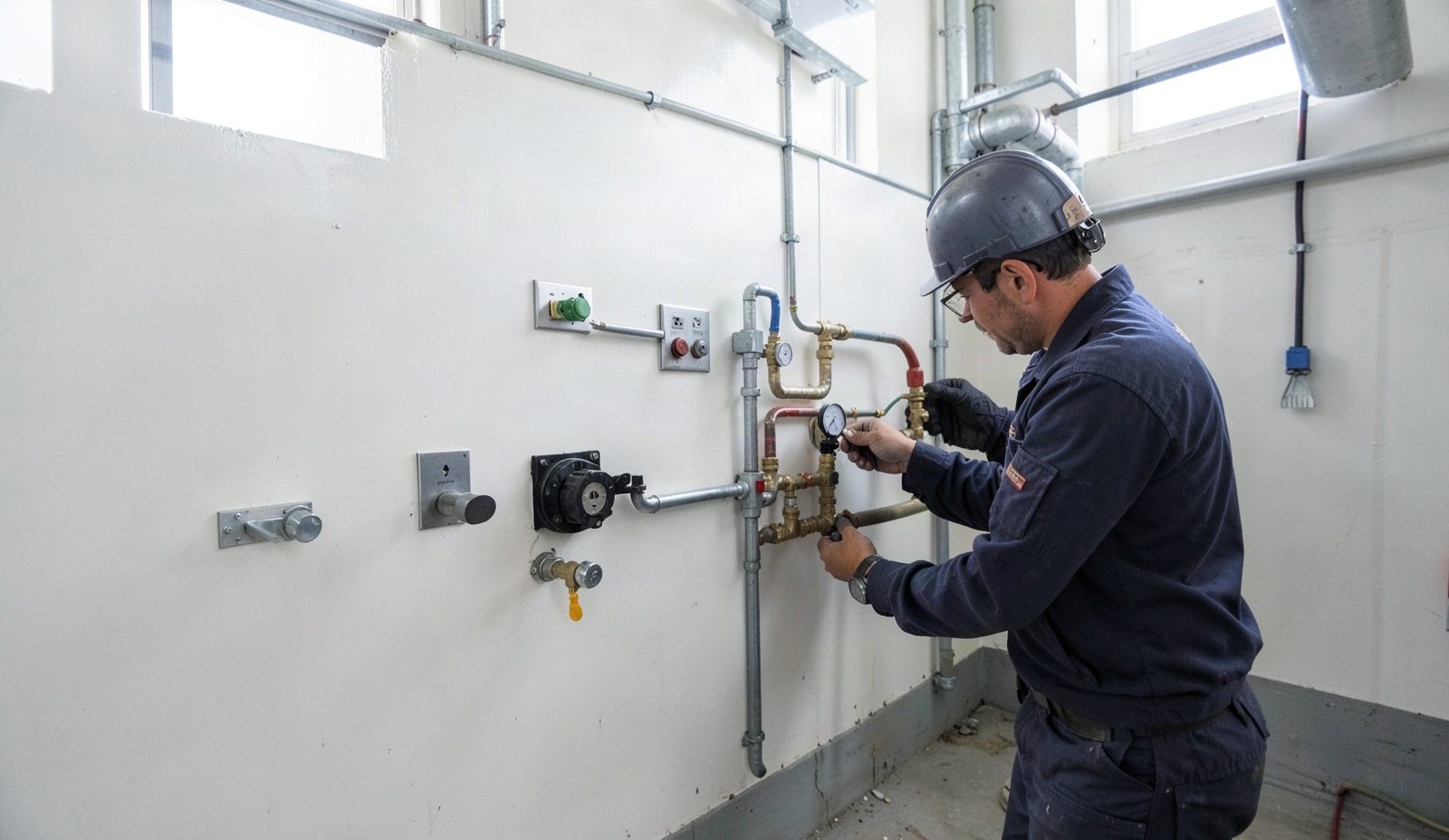
Commercial plumbing work centers on keeping a business's water system compliant and its restrooms and kitchens running without unplanned closures. Backflow prevention assemblies on a public water connection need periodic testing to stay compliant, and a failed test can hold up an occupancy inspection or trigger a utility notice. A restaurant with a grease interceptor nearing capacity is a common example, where a scheduled pump-out and a line inspection prevent a Friday-night backup that shuts the kitchen down mid-service. Commercial jobs get scheduled around business hours whenever the scope allows, so downtime stays contained to a documented window instead of an open-ended repair.
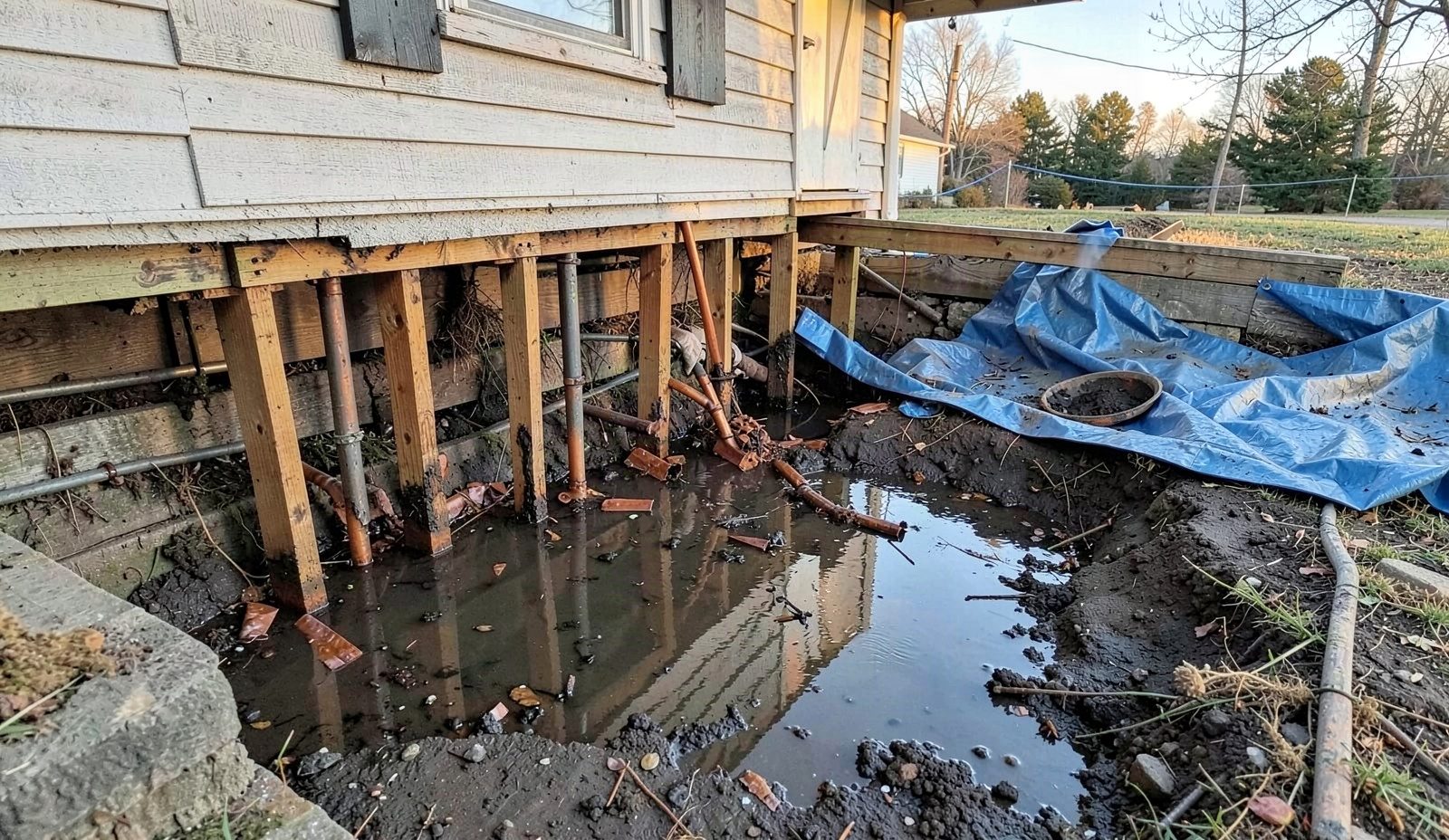
Overnight and weekend response covers the calls that cannot wait for a normal appointment window, a burst supply line spraying inside a wall, a water heater failure flooding a laundry room at two in the morning, a main line backup with no working drain in the house. The first priority on arrival is stopping active water flow at the nearest shutoff, then containing what has already spread before diagnosing the failure itself. A homeowner who shuts off the main and moves valuables off the floor before the truck arrives limits the damage a restoration crew has to deal with later.
Four problems account for most of the emergency and near-emergency calls Shield Plumbing Fort Worth takes across the metro, and each one traces back to a specific local condition rather than bad luck. Recognizing the early signal on each one is usually the difference between a contained repair and a flooded floor.
Catching these early matters more in Fort Worth than in places with newer, uniform housing stock, because so much of the metro mixes very old plumbing with recent remodels on the same street. A signal that looks minor on a newer system can mean something more serious on a house with original 1940s drain lines still in place.
Need something specific? Our 24/7 emergency plumbing services page breaks down exactly how we handle it in Fort Worth.
The February 2021 freeze burst pipes across Tarrant County by the tens of thousands, and most of those failures were supply lines run through attics and exterior walls with little insulation. Any hard freeze forecast for the area puts those same runs at risk again. A faucet that suddenly delivers no water and no drip during a cold snap is the signal to shut off the main and call before the thaw reveals a burst line inside a wall.
Pre-1970 neighborhoods across the metro were plumbed with galvanized steel supply lines and cast iron drains, and both materials are now at or past the end of their rated service life. Galvanized pipe corrodes from the inside out, narrowing the passage long before a visible leak shows up. Rust-colored water at a single tap, especially after the house sits unused for a day, is the early signal that a galvanized line is closing in on failure.
North Texas expansive clay swells with rain and shrinks in drought, moving slab foundations enough to shear copper supply lines and separate drain joints under the house. That movement happens slowly, so damage often shows up as a small, persistent problem long before a visible break. A warm patch on the slab floor, a spike in water usage with no obvious cause, or a drain that gurgles for no reason are all signals worth a camera inspection under the slab.
Fort Worth water is moderately hard, and the scale it leaves on heating elements is a leading reason local water heaters fail years before their rated life, especially in tanks that never get flushed. Sediment builds on the tank bottom, insulating the burner or element from the water above it and forcing it to work harder for less heat. A water heater that takes noticeably longer to deliver hot water, or that rumbles and pops when it runs, is overdue for a flush before it fails outright.
A first visit starts with the technician asking what you have already tried and where the problem seems worst, then checking water pressure and visible fixtures before opening anything up. Most diagnostic visits run under an hour unless the problem calls for a camera inspection. Have the water shut off location handy and clear access to the affected area, whether that is a water heater closet or an under-sink cabinet, so the technician can get to the source right away.
Your local utility, Payment options, publishes service and water-quality information every Fort Worth homeowner should know.
Every call gets a confirmed arrival window before you hang up, not a vague callback promise. The technician assigned to your job calls or texts when they are on the way, so you are not stuck waiting by a window all afternoon. If a job runs longer than expected on the call ahead of yours, dispatch calls to update the window rather than letting you find out by watching the clock.
The technician who arrives introduces themselves and walks the affected area with you before touching a tool, asking you to point out anything you have noticed, sounds, timing, past repairs. Floor coverings go down in any work path through the house, and shoes come off or get covered at the door on request. You see the actual problem, whether that is a pressure reading, a section of corroded pipe, or camera footage from inside a line, before any repair gets recommended.
Before the truck leaves, the technician walks you through what was found, what was repaired, and the test readings that confirm the fix, whether that is a restored pressure number or a clear camera pass through a drain line. Work areas get wiped down and any access panels or fixtures get reset. You get a written summary of the work performed, useful later for insurance records or a future buyer's inspection.
The process from first call to finished repair runs the same way on every job, whether it is a same-day emergency or a scheduled repipe. Dispatch logs the problem in detail on the first call so the technician arrives already knowing what to expect, not starting from zero on the doorstep. Scheduling windows run in blocks rather than an all-day guess, and cleanup happens before the technician calls the job complete.
Three stages carry the job from problem to done, and each one has a specific deliverable attached to it rather than a vague status update.
Call (817) 710-3766 and describe the symptom, when it started, and what you have already tried. Dispatch logs the fixture, the location in the house, and any safety concern like standing water or a gas smell near a water heater, then confirms an arrival window before the call ends.
The technician tests, measures and traces the problem to its actual source, then presents a written quote covering the repair scope before any work starts. You approve the quote in writing before a single fitting gets cut or a slab gets penetrated, so there is no surprise scope creep mid-job.
Work proceeds to the standard covered in the approved quote, checked against the governing plumbing code as it goes rather than at the end. The technician tests the finished repair, documents the readings, and walks you through the results before packing up and leaving the work area clean.
Plumbing work inside Fort Worth city limits follows the City of Fort Worth plumbing code, based on the International Plumbing Code, which governs everything from drain slope minimums to material compatibility between old and new pipe sections. That code is not a suggestion. An inspector checking a permitted repipe or water heater swap is verifying the same standard a technician should already be building to, which is why documentation during the job matters as much as the repair itself.
Static water pressure is one of the most common code triggers homeowners never know about until it causes damage. Section 604.8 of the International Plumbing Code requires a pressure-reducing valve where static pressure at the fixture exceeds 80 psi, a threshold plenty of Fort Worth homes quietly cross without anyone noticing until a water heater or supply line fails early. Verifying compliance means taking an actual pressure reading at an outdoor spigot, not estimating from how hard the shower feels.
Permits separate the routine from the regulated. Full replacements and structural plumbing work typically require a permit, while minor like-for-like repairs, such as swapping a failed faucet cartridge or replacing a section of drain trap, often do not. The City of Fort Worth Development Services Department is the authority that makes the final call on what needs a permit for Fort Worth addresses, and a technician who pulls permits when required protects the homeowner from problems that surface later during a sale or insurance claim.
Independent standards matter too, the EPA's WaterSense program sets the efficiency benchmarks we use when recommending replacement fixtures.
Slab leaks and shifted drain joints usually get located with acoustic listening equipment or a camera run through a cleanout before any concrete gets touched. That step narrows the repair to a specific section of slab instead of an exploratory demolition, which keeps both the disruption and the finished patch smaller.
Access is usually the biggest factor, a crawlspace repair costs less labor time than a slab penetration for the same length of pipe. Material choice, PEX versus copper, and the number of fixtures tied into the affected line also shift the scope, along with how much of the existing system is original versus already updated.
A single fixture repair typically finishes in one visit. A partial repipe on an older home often runs multiple days once wall sections need to be opened and closed back up. Quality gets measured with a post-repair pressure or flow test compared against the reading taken at diagnosis, not by how the fixture merely looks when the job wraps.
The City of Fort Worth Development Services Department handles permitting for Fort Worth addresses, while the local building department or Tarrant County handles other jurisdictions in the metro. Structural work and full replacements generally need a permit and inspection sign-off. Small like-for-like repairs usually do not, but the permit authority makes that final determination, not the contractor.
The lowest quote is not always the cheapest job once callbacks and re-work get counted. Fort Worth's mix of very old and newer plumbing means an accurate diagnosis upfront often saves more than a discounted rate on a repair that misses the actual cause. Ask any plumber for a written quote before work starts, and compare what is actually included, not just the number at the bottom.
Hourly rates vary widely across Texas and depend on region, job complexity, and whether the call is after-hours. Shield Plumbing Fort Worth quotes by the job after a diagnosis, not by an hourly meter, so the number you approve covers the whole scope. Call (817) 710-3766 to describe the problem and get a specific quote for your situation.
Top plumbing companies in Fort Worth get judged on response speed, code compliance and how clearly they explain a repair before starting it. Shield Plumbing Fort Worth builds its reputation on written quotes approved before work begins, technicians trained to the locally adopted plumbing code, and diagnostic testing documented with pressure readings on every visit rather than guesswork.
Yes, same-day service is available for most Fort Worth calls depending on current dispatch load. Emergency situations like active flooding or a burst line get priority routing ahead of scheduled work. Call (817) 710-3766 and describe what is happening so dispatch can confirm the fastest available window.
Plumbing repair time depends entirely on the scope of the job. A single fixture swap often finishes in under an hour, while a partial repipe on an older home can run several days once wall sections need to be opened, replaced and closed back up. Diagnosis time is usually separate from repair time and gets estimated at the first visit.
Plumbing costs in Fort Worth depend on scope, access, and how much of the existing system needs to be replaced versus repaired. A slab penetration costs more labor time than a crawlspace repair for the same length of line, and older galvanized or cast iron systems often add scope once one section is opened up. Call for a written quote after a real diagnosis.
Explore our service area and locate Shield Plumbing Fort Worth with ease. We're proudly local and serve the surrounding neighborhoods with fast response and honest pricing. Use the map to check our coverage area, or call us and we'll confirm in seconds.
Address:
Shield Plumbing Fort Worth, 210 W 7th St, Fort Worth, TX 76102
5 Signs Your Ridglea Hills Home Has a Slab Leak, practical local guidance from Shield Plumbing Fort Worth, Fort Worth's trusted plumbing tea…
Read More
What Wedgwood Residents Should Know Before a Whole-Home Repipe, practical local guidance from Shield Plumbing Fort Worth, Fort Worth's trust…
Read More
How Fort Worth's Hard Water Is Quietly Destroying Your Water Heater, practical local guidance from Shield Plumbing Fort Worth, Fort Worth's …
Read More
The Hidden Cost of Ignoring a Dripping Faucet in Fort Worth, practical local guidance from Shield Plumbing Fort Worth, Fort Worth's trusted …
Read More