
June 20, 2026
5 Signs Your Ridglea Hills Home Has a Slab Leak
5 Signs Your Ridglea Hills Home Has a Slab Leak, practical local guidance from Shield Plumbing Fort Worth, Fort Worth's trusted plumbing tea…
Read More




A floor drain that gurgles during the lunch rush is not a small thing. It means solids and fat are already narrowing the pipe behind it. A sour, standing-water smell near the three-compartment sink means the trap has lost its seal or the grease line is holding a slug of cooling fat that will not move on its own. Slow drainage at the prep sink that gets worse by Friday, then clears itself over the weekend, points to a grease line filling up faster than your interceptor can handle it.
Fort Worth's expansive clay soil adds a failure mode most kitchen operators never think about. The clay under buildings in Fairmount and Wedgwood swells hard after a wet spring and shrinks back during summer drought. That movement shifts the slab enough to shear copper supply lines and separate drain joints running under the building. A kitchen that never had a drainage problem can develop one overnight after a wet-dry cycle, with no warning beyond a slow backup that everyone blames on the last catering event.
Restaurant grease line service gets ignored until it fails, and failure in a commercial kitchen looks different than it does in a house. You get a backup at the floor sink during service, a health inspector asking about your FOG log, or a main line clog that backs up into every fixture on that branch at once. Commercial sink installation done without correct venting compounds the problem, because undersized vents let negative pressure pull trap seals dry, and dry traps let sewer gas into the dining room.
Waiting costs more than the plumber's visit. A partially blocked grease line under load turns into a full stoppage during your busiest shift. A slab crack from soil movement that isn't caught early lets water intrude under flooring, which means tear-out instead of a line repair. Commercial kitchen drain cleaning deferred past the point of slow drainage usually ends with an emergency call, a shut kitchen, and a health department follow-up you did not want.
See apartment complex plumbing for how the related work is scoped and priced.
Independent standards matter too, the EPA's WaterSense program sets the efficiency benchmarks we use when recommending replacement fixtures.
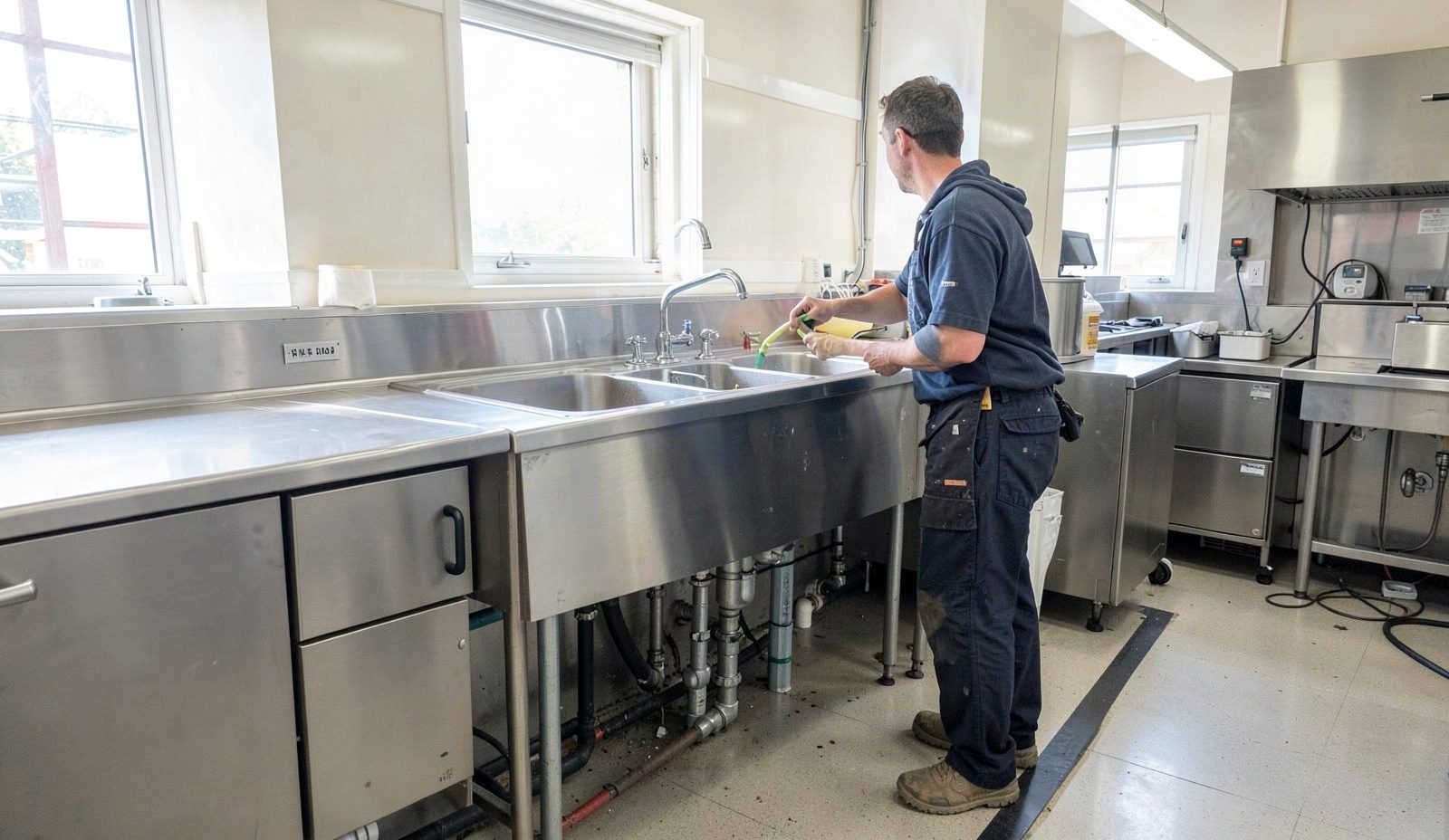
Every visit starts with a camera, not a guess. We run a self-leveling sewer camera through the branch line first, because a visual read tells us whether we are dealing with a grease deposit, a root intrusion, or a broken cast iron joint, and that decision changes the entire scope. If the footage shows a soft, tan buildup narrowing the pipe wall, that is grease. If it shows a sharp offset at a joint, that is settlement, and no amount of jetting fixes it.
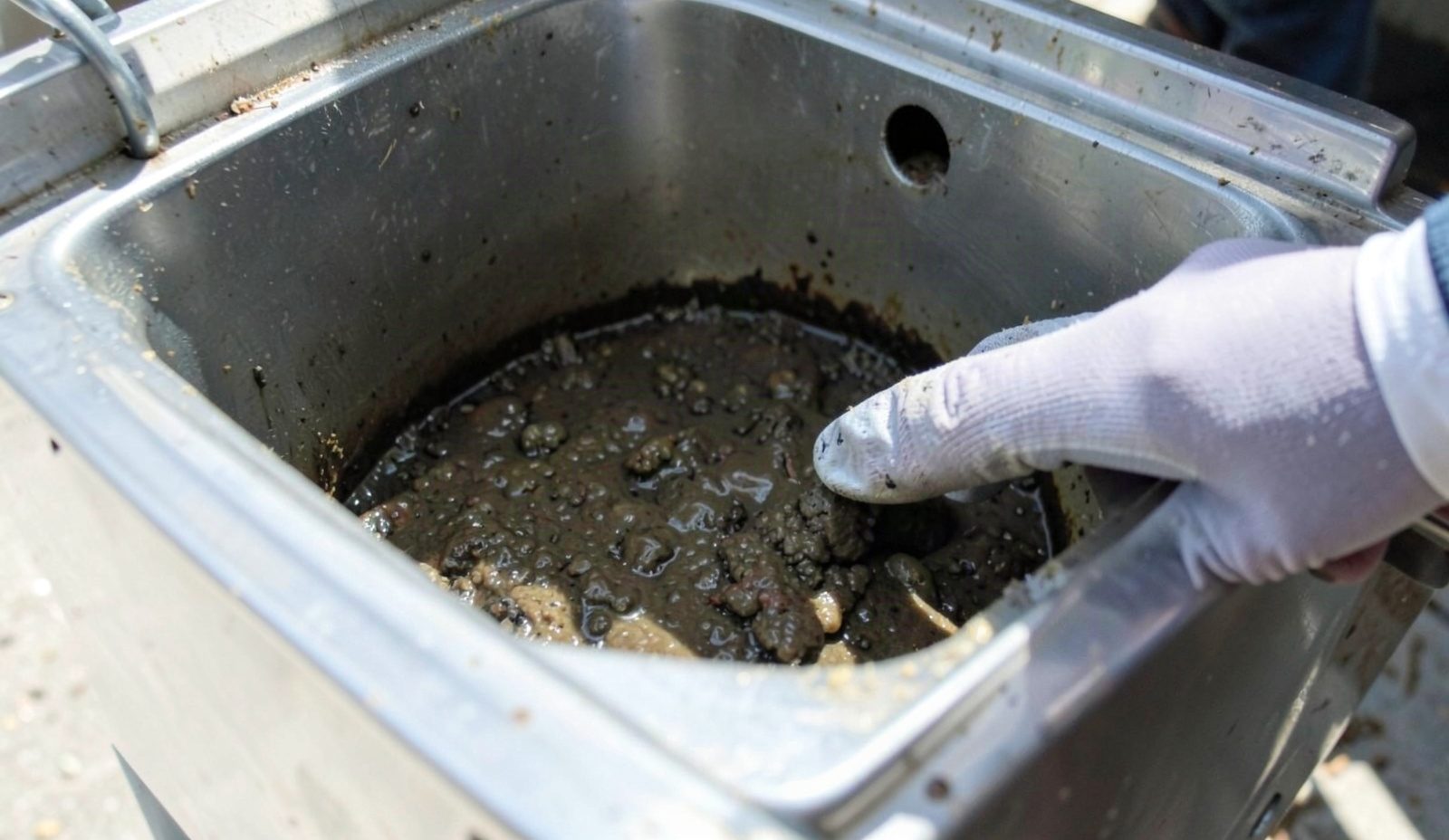
For grease lines, we jet at pressures in the 3,000 to 4,000 PSI range depending on pipe diameter and material, which clears fat deposits that a cable machine only punches a hole through. A cabled snake reopens a channel through the clog and buys you a week. A jetter scours the pipe wall back to bare material and buys you months. On the interceptor itself, we dip the tank with a grease stick and measure the combined depth of the floating fat cap and the settled solids against the tank's total liquid depth. The FOG program standard calls for pumping before that combined layer reaches 25 percent of capacity, and we log the reading on every visit so you have a documented pump-out history if a health inspector or your landlord asks for one.
On the water heater side, kitchens push more recovery demand through their units than almost any other commercial space, and Fort Worth's moderately hard water accelerates scale buildup on heating elements faster than the equipment's rated life accounts for. We check delta-T across the tank, look at recovery time against the manufacturer's spec, and pull the anode rod on gas units to check consumption. For grease interceptor hardware itself, a hydromechanical interceptor like a Thermaco Big Dipper suits a single-fixture pot sink under counter, while a gravity interceptor like a Zurn in-ground unit handles multiple fixture branches on a full-service kitchen, and the sizing decision comes from your fixture count and flow load, not a guess at what fits under the floor.
More detail on commercial backflow prevention & testing is on its own page.
Our technicians follow the workmanship standards promoted by the Plumbing-Heating-Cooling Contractors Association.
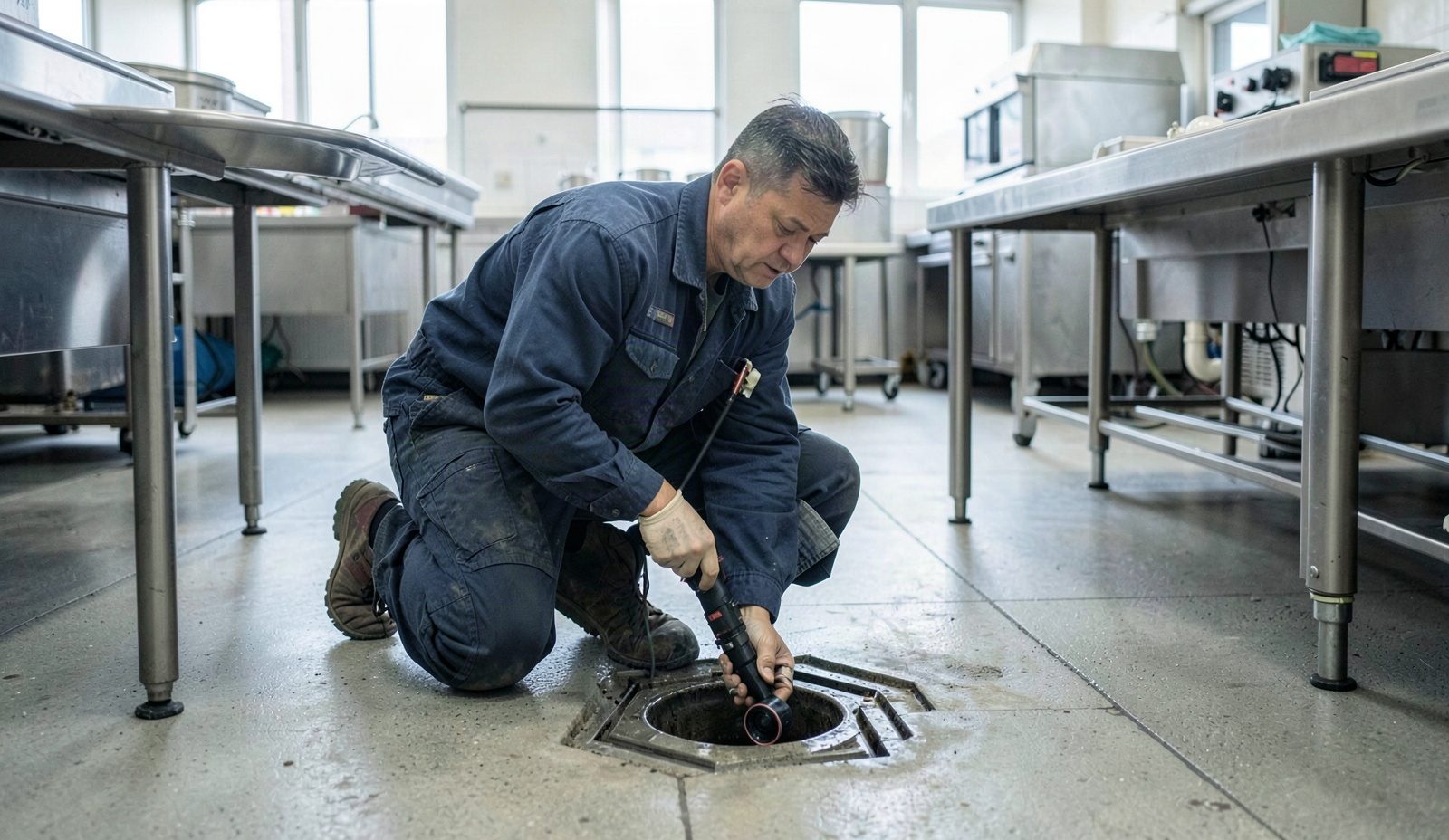
You describe the symptom on the call, whether it is a slow drain, a backup, or a fixture issue, and we schedule a technician for the confirmed window. On arrival, the technician walks the affected fixtures, runs the camera through the branch line if drainage is the complaint, and checks pressure and flow at nearby fixtures. You see the camera footage or the pressure reading on site, and the technician explains what it shows before any work is proposed. This diagnosis happens before any billable repair work begins.
Once you approve the written quote, the technician sets up floor protection and containment, then proceeds with the scoped work, whether that is hydro-jetting a grease line, pumping and servicing an interceptor, or swapping a fixture. Any change to scope discovered mid-job, such as a cracked joint found behind a clog, gets flagged to you with a revised quote before work continues on that portion. Materials used match the existing pipe standard where a full re-pipe is not part of the approved scope.
Before the technician leaves, drain lines get run under load to confirm flow, and any fixture worked on gets checked for leaks at the supply and waste connections. Grease interceptor levels get logged with the measurement taken that visit, giving you a dated record for your FOG compliance file. The technician walks the finished area with you, confirms the original complaint is resolved, and leaves documentation of the diagnostic readings and work performed for your maintenance records.
Commercial kitchen work in Fort Worth falls under the 2021 International Plumbing Code as adopted by the city for commercial occupancies, and that code governs everything from grease interceptor sizing to indirect waste connections on dish machines. An out-of-area crew that does not work under this code regularly will miss requirements a local inspector checks every time, and a failed inspection means reopening finished walls or floors to correct it. We pull permits through the City of Fort Worth Development Services Department for structural work and full fixture replacements, because a kitchen operating on unpermitted plumbing work carries risk in a health inspection and in a lease compliance review.
Building age changes the job as much as the code does. Commercial spaces built before 1970 across the metro were plumbed with galvanized steel supply lines and cast iron drains, and both materials are now past or at the end of their rated service life. Galvanized pipe corrodes from the inside, narrowing the bore and dropping pressure at every fixture on the line, which shows up first as weak flow at hand sinks during peak hours. Cast iron drains develop scale ridges and hairline cracks at the joints that a camera inspection catches long before a full failure does.
Hiring a crew unfamiliar with these conditions means paying twice, once for a repair that does not account for the building's actual pipe material, and again for the correction. We document every diagnostic reading, every pump-out level, and every permit on a job so you have a paper trail for a lender, an insurer, or a health department follow-up. Call (817) 710-3766 to talk through what your building's age and history mean for the scope of work.
If this sounds close but not quite your situation, commercial plumbing contractors may be the better starting point.
Your local utility, Payment options, publishes service and water-quality information every Fort Worth homeowner should know.
We book around your service windows, not the other way around. Most commercial kitchen calls get a same-week appointment, and true stoppages get priority scheduling ahead of routine work. You get a two-hour arrival window on the day of the visit, confirmed by a call before the technician leaves the prior stop. If a job ahead of yours runs long, we call and give you a revised window instead of leaving you guessing. Off-hours appointments before opening or after close are available for work that would otherwise interrupt cooking line access during operating hours.
Floor protection goes down before any tool touches the drain line, covering the path from the entry point to the work area. Camera and jetting equipment stay contained on drop cloths, and any water pulled during clearing gets vacuumed, not mopped toward a drain that is already part of the problem. Removed grease and debris leave the building in sealed containers, never down another fixture. When we finish, the work area gets wiped down and floor mats go back where they were, so the space is ready for inspection or for cooking to resume without a cleanup delay on your staff.
Scope drives the estimate: whether the job is a line clearing, an interceptor pump-out, a fixture swap, or a full re-pipe changes the labor and material significantly. Access matters too, since a grease line running under a slab costs more to reach than one exposed in a chase. Pipe material and current condition factor in, because cast iron and galvanized lines often need more preparation than PVC. You get a written quote itemizing scope, materials and labor before any billable work starts, and you approve it before the crew proceeds past diagnosis.
Every technician who works on your kitchen passes a background check before being assigned to a commercial account. Field training covers the current plumbing code cycle adopted by the city, updated whenever the local code changes, plus manufacturer specs for the grease interceptor and water heater equipment used in commercial settings. New technicians shadow a senior tech on commercial jobs and complete a documented set of supervised calls before working a kitchen alone. Ongoing training happens on real fixtures, not just classroom material, so field judgment matches what the code actually requires on site.
Slow drainage at prep sinks, gurgling floor drains, and a sour smell near the three-compartment sink are the earliest signs of a grease line or trap problem. In Fort Worth kitchens, these symptoms often get worse after heavy rain, when soil movement can shift drain joints under the slab. Catching them early means a line clearing instead of an emergency shutdown. Shield Plumbing Fort Worth checks these signs with a camera on the first visit rather than waiting for a full backup.
Coverage depends entirely on your specific policy and whether the damage stems from a sudden failure or gradual wear the policy excludes. Most commercial property policies distinguish between a burst pipe, which is often covered, and long-term neglect of a grease line or aging fixture, which typically is not. Review your policy language with your insurer directly, and keep documentation of any plumbing maintenance, since a documented pump-out and repair history supports a claim if damage occurs.
Cost depends on the scope, the pipe material involved, and how accessible the affected line is. A grease line clearing costs less than an interceptor replacement, and a slab-level repair costs more than a fixture swap because of the excavation involved. Older buildings with galvanized or cast iron plumbing generally run higher because more of the system needs attention at once. Call (817) 710-3766 for a written quote based on your building's actual condition rather than a general estimate.
Estimates start with an on-site diagnosis, since scope for kitchen plumbing varies too much for a phone quote to mean anything. A technician inspects the fixture or line, sometimes with a camera, and provides a written quote itemizing labor and materials before any billable work begins. You approve that quote before work proceeds, and any scope change discovered mid-job gets a revised quote before continuing.
Duration depends on the job type: a grease line clearing or interceptor pump-out typically finishes within a single service window, while a fixture replacement or partial re-pipe takes longer depending on access and pipe material. Jobs scheduled around your operating hours, such as before opening or after close, get planned to finish within that window whenever the scope allows it. Complex slab or structural repairs take longer and get communicated upfront during the quote.
Neither method is universally better, it depends on the blockage and the pipe's condition. Jetting scours the full pipe wall, which makes it the stronger choice for grease buildup or mineral scale coating an older line. Snaking punches through a specific obstruction fast, which makes it the safer first move on a root-packed or fragile cast iron line where full jetting pressure could open a hidden crack. Many Fort Worth jobs use snaking to break through, then jetting to clean what the cable left behind on the pipe wall.
Commercial kitchen plumbing in Fort Worth has to account for weather that most building codes elsewhere do not plan for. The February 2021 freeze burst pipes across Tarrant County by the tens of thousands, and most of the failures traced back to supply lines run through attics and exterior walls, exactly where kitchen equipment lines and backflow preventers on exterior grease traps often sit. That freeze exposed how many commercial buildings had supply and waste lines routed with no protection against a hard freeze. Any exterior-run line serving your kitchen, from a mop sink hose bib to an outdoor grease interceptor connection, needs insulation or heat trace sized for that risk, not a standard build sized for a mild winter.
Local code oversight matters more in a commercial kitchen than in almost any other occupancy type, because a plumbing failure can trigger a health department closure on top of the repair itself. Inspectors checking kitchens in districts like the Near Southside and around the Cultural District look for correct grease interceptor sizing, proper indirect waste connections on dish machines, and documented FOG compliance, not just a working drain. Buildings in older commercial corridors near Ridglea Hills and Arlington Heights often carry plumbing from multiple renovation eras, which means an inspector may ask about work done decades ago that current ownership never documented. Working with a crew that pulls permits and documents readings protects your ability to answer those questions on the spot.
Explore our service area and locate Shield Plumbing Fort Worth with ease. We're proudly local and serve the surrounding neighborhoods with fast response and honest pricing. Use the map to check our coverage area, or call us and we'll confirm in seconds.
Address:
Shield Plumbing Fort Worth, 210 W 7th St, Fort Worth, TX 76102
5 Signs Your Ridglea Hills Home Has a Slab Leak, practical local guidance from Shield Plumbing Fort Worth, Fort Worth's trusted plumbing tea…
Read More
What Wedgwood Residents Should Know Before a Whole-Home Repipe, practical local guidance from Shield Plumbing Fort Worth, Fort Worth's trust…
Read More
How Fort Worth's Hard Water Is Quietly Destroying Your Water Heater, practical local guidance from Shield Plumbing Fort Worth, Fort Worth's …
Read More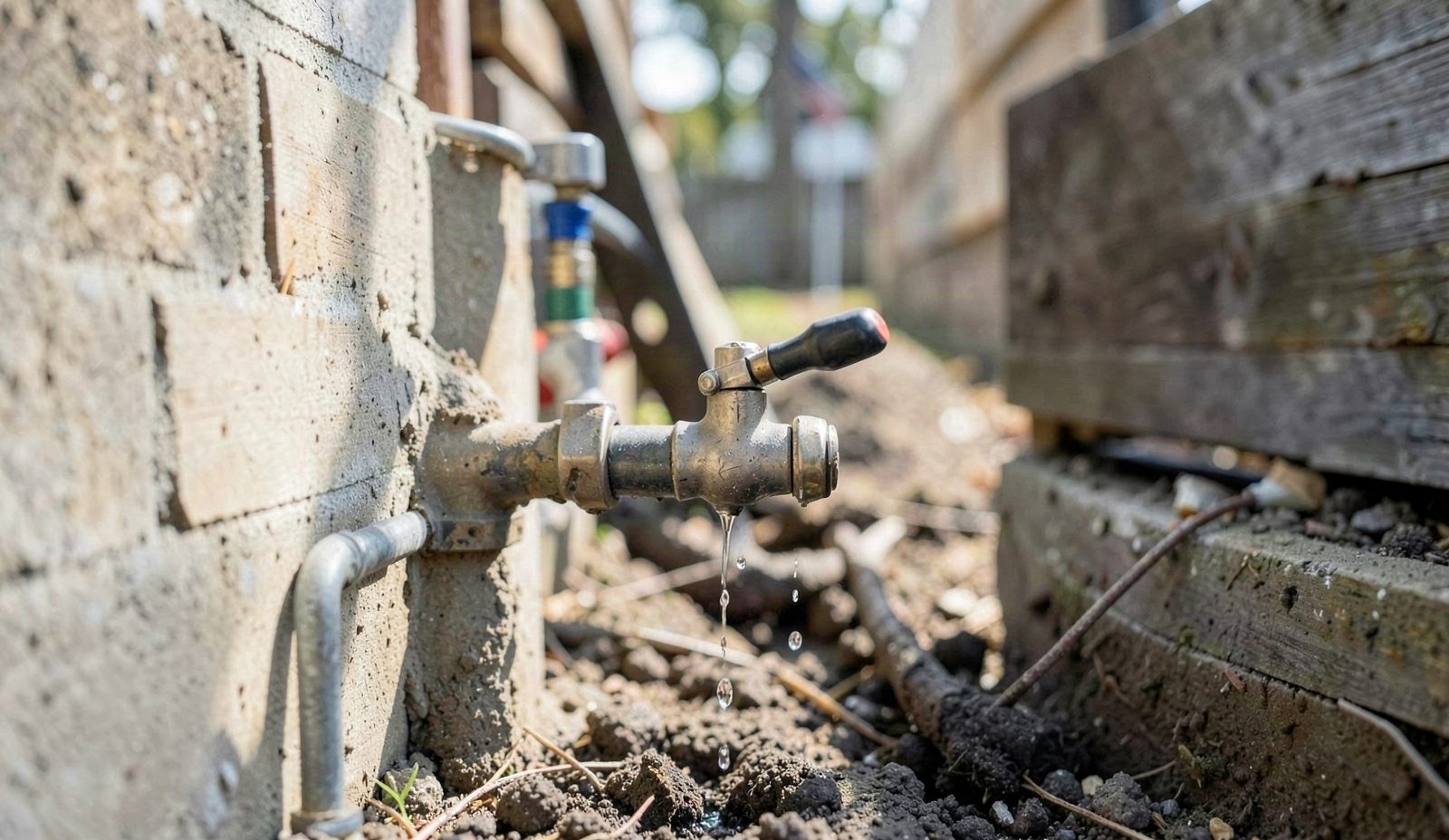
The Hidden Cost of Ignoring a Dripping Faucet in Fort Worth, practical local guidance from Shield Plumbing Fort Worth, Fort Worth's trusted …
Read More