
June 20, 2026
5 Signs Your Ridglea Hills Home Has a Slab Leak
5 Signs Your Ridglea Hills Home Has a Slab Leak, practical local guidance from Shield Plumbing Fort Worth, Fort Worth's trusted plumbing tea…
Read More




Commercial tenants notice plumbing failures long before facility managers do. A slow floor drain in a back kitchen, a faint sewage smell near a floor sink, a hot water tap that takes forty seconds instead of ten to warm up. These are not nuisances. They are the early language of a system under stress, and in Fort Worth that stress usually starts underground.
North Texas expansive clay swells with rain and shrinks in drought, moving slab foundations enough to shear copper supply lines and separate drain joints under the building. A storefront kitchen near Fairmount can run for years on a slab that has shifted a quarter inch, until a joint finally separates under a walk-in cooler and grey water backs into the kitchen mid-shift. The soil does the damage. The plumbing just reports it.
Add hard freeze to that soil movement and the risk compounds. The February 2021 freeze burst pipes across Tarrant County by the tens of thousands, and most of the failures were supply lines run through attics and exterior walls, exactly where retrofit HVAC and tenant buildouts route pipe in older commercial buildings near the Near Southside. A building that survived that freeze without a burst pipe did not necessarily survive it without damage. Hairline cracks in copper elbows can hold pressure for months before they let go.
Skip a round of scheduled plumbing maintenance and the next failure rarely announces itself at a convenient hour. A slow leak behind a wall becomes a saturated stud and a mold remediation problem. A grease interceptor running past capacity backs solids into the main line and shuts down a kitchen mid-service. A backflow assembly that fails its annual test without anyone noticing puts the property out of compliance and the owner on notice from the water utility. None of these get cheaper to fix the longer they sit.
See commercial kitchen plumbing for how the related work is scoped and priced.
We install and service equipment from major manufacturers like Rheem to manufacturer specifications.
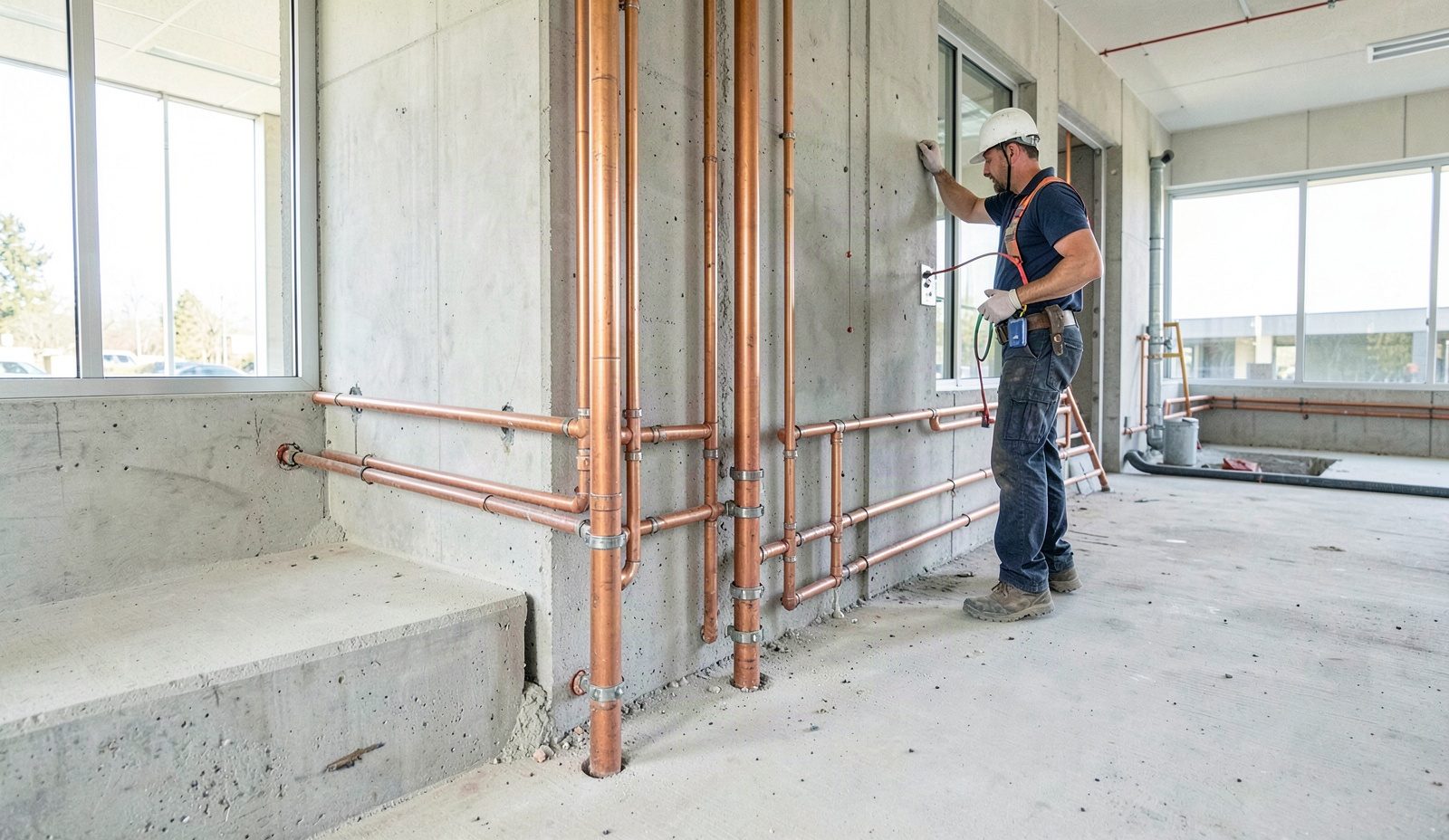
Every maintenance visit starts with the same instrument-driven walk. A technician runs a pressure gauge on the domestic supply at the building's main, checking for a static reading that holds steady rather than one that drifts under load, which signals a hidden leak or a failing pressure-reducing valve. A sewer camera runs the horizontal branch lines during commercial plumbing inspections, looking for bellied pipe, root intrusion and the dark shadow of a failed cast iron joint. On buildings with commercial kitchens, the visit includes a stick reading on the grease interceptor: our protocol calls for pump-out before the FOG layer reaches 25 percent of interceptor capacity, the threshold most local FOG programs use to keep solids out of the main and keep the kitchen open on inspection day instead of the day after a backup.
Kitchens built before the 2000s commonly run a gravity hydromechanical interceptor, which needs that manual stick measurement on a fixed schedule. Newer buildouts more often use an automatic grease removal device rated by flow at the fixture, which skims continuously and needs a shorter service interval on the collection container rather than a full pump-out. We size the maintenance interval to the equipment actually installed rather than a generic quarterly default, because a gravity interceptor undersized for a busy line kitchen can fill past that 25 percent threshold in weeks, not months.
Every property enrolled in one of our plumbing service contracts gets a maintenance plan that lists each fixture, valve and interceptor with its last service date and its next due date, so a facilities manager can hand the log to an insurer or a lender during due diligence without reconstructing it from memory. Backflow prevention assemblies get their own line, tested and tagged as part of a preventive plumbing program built around that document trail, not caught by surprise at annual renewal. The log is the deliverable as much as the wrench work is.
More detail on commercial plumbing contractors is on its own page.
Your local utility, Payment options, publishes service and water-quality information every Fort Worth homeowner should know.
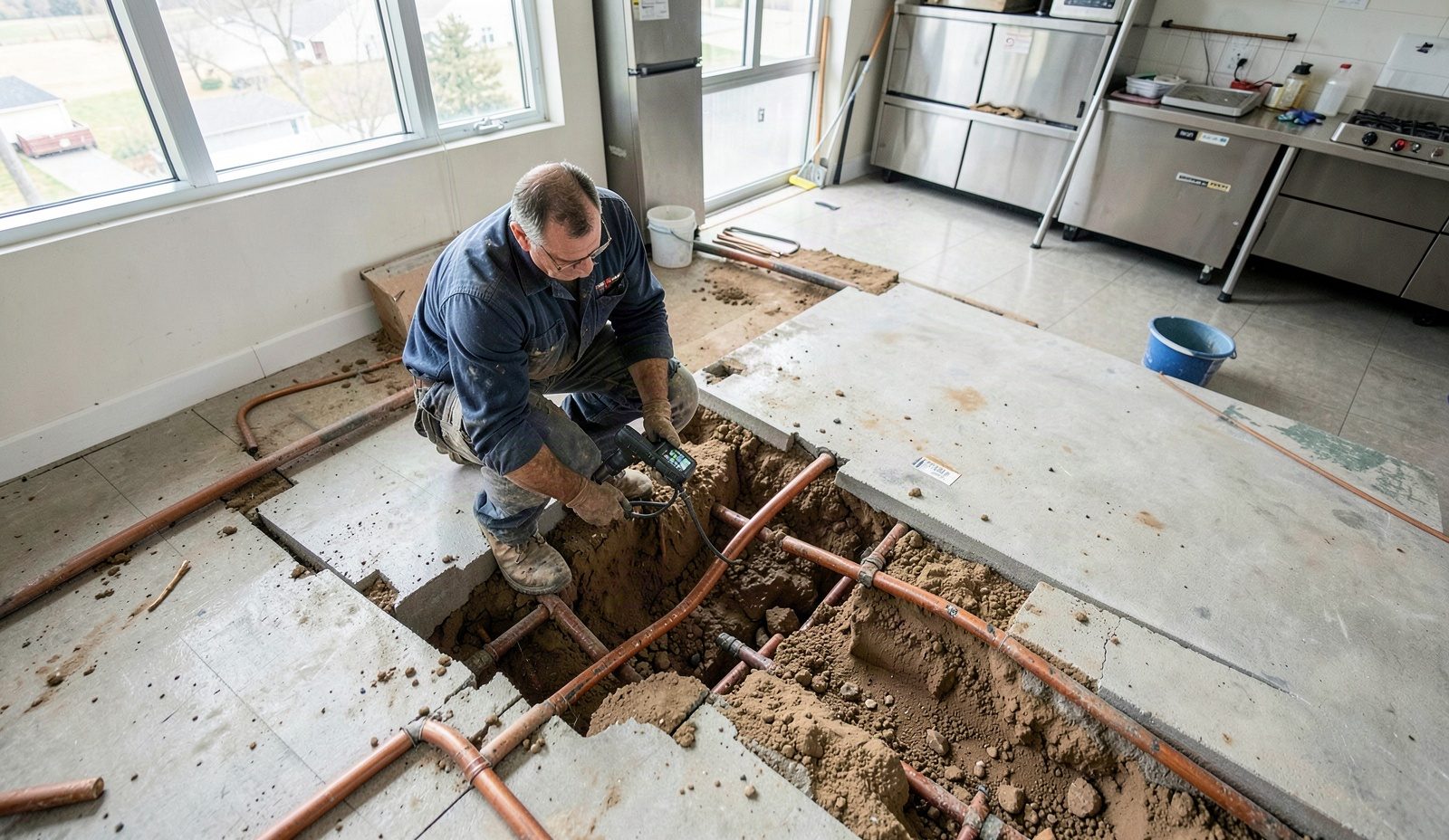
A facilities manager calls (817) 710-3766 or emails to set up an account or schedule a visit under an existing plan. On site, the technician walks the property with whoever is available, kitchen manager, maintenance staff or facilities contact, checking every fixture, valve and interceptor on the property log against its physical condition. Static water pressure gets checked at the main, drain lines get camera scoped where the schedule calls for it, and any grease interceptor gets a stick reading. The technician notes anything outside normal range, photographs it, and reviews the findings out loud before leaving.
Findings from the walkthrough get written into a line-item quote with photos attached, sent by email before any repair work begins. The facilities manager approves what gets done that day and what gets scheduled for a follow-up visit, especially work that needs a permit or after-hours access. During approved work, the technician protects floors and equipment, isolates the affected line, and replaces or repairs only what is specified in the approved scope, whether that is a pressure-reducing valve, a section of galvanized supply line, or an interceptor pump-out.
Before the technician packs up, every repaired line gets pressure tested and every drain gets run with water to confirm flow and check for leaks at the joint. Backflow assemblies get tested and tagged if that is part of the scope. The technician walks the facilities manager through what was done, updates the property's maintenance log with the current date and the next due date for each item, and leaves a copy of the written report. Any deferred item goes on the calendar for the next scheduled visit.
Commercial plumbing work in Fort Worth falls under the 2021 International Plumbing Code as adopted by the City of Fort Worth for commercial occupancies, and that code governs everything from backflow assembly placement to grease interceptor sizing on a new tenant buildout. A crew that does not work under that code daily will miss a required air gap or size an interceptor to a residential standard that fails inspection. Pre-1970 neighborhoods across the metro were plumbed with galvanized steel supply lines and cast iron drains, both now at or past the end of their service lives, and a maintenance plan on one of these older buildings has to account for tuberculation inside the pipe wall long before a fixture ever shows a symptom.
Storefronts and converted warehouses across the metro carry plumbing installed under permits that predate the current code cycle, which means a repair on a shared drain stack can trigger questions about grandfathered fixtures the moment a permit reviewer looks at the paperwork. We flag those conditions during the first inspection instead of discovering them mid-repair. Response logistics matter too: a facilities manager covering multiple sites across Tarrant County needs a crew that moves between properties on a fixed maintenance calendar, not a one-off dispatch that reshuffles every time a technician calls in from another part of the metro.
An out-of-area crew unfamiliar with local soil behavior and the current code cycle tends to treat every leak as an isolated repair instead of a symptom of foundation movement or line-material age, so the same joint fails again within a year. We document what we find, note it against the code section it touches, and hand the property owner a maintenance plan built around the building's actual materials and history. Call (817) 710-3766 to walk through what that plan looks like for a specific Fort Worth property.
If this sounds close but not quite your situation, commercial backflow prevention & testing may be the better starting point.
Permit and inspection questions? Development Services is the office we coordinate with on every permitted Fort Worth job.
Preventative maintenance visits get scheduled around your building's operating hours, not ours. Most commercial accounts run on a quarterly or semiannual calendar, set at enrollment and confirmed by a call or email the week before each visit. Arrival windows run two hours, and the dispatcher calls when the technician is thirty minutes out so a facilities manager can clear kitchen equipment or unlock a mechanical room. If a scope change, a locked gate or a tenant emergency pushes a visit, we reschedule within the same week rather than bumping the property to the next quarter. Multi-site accounts get one point of contact for every stop on their calendar.
Every technician carries drop cloths and rubber floor protection for kitchen and mechanical room work, laid down before any tool touches a fixture. Camera cable and pump-out hose get routed through a designated path, never dragged across a dining room or retail floor. Removed sediment, old gaskets and grease samples go into sealed containers and leave the property the same day, never into a dumpster shared with tenants. Before the technician leaves, the work area gets wiped down and equipment covers get replaced, so a kitchen can go back into service without a mid-shift cleaning crew following behind.
Cost on a maintenance visit, or a repair found during one, depends on access, the age and material of the pipe involved, and whether the fix is a component swap or a section replacement. A cast iron stack behind a finished ceiling costs more to reach than an exposed line in a mechanical room, and that access difference shows up on the quote before any work starts. Every finding gets written up with photos and a line-item quote, and nothing beyond the scheduled inspection happens until the facilities manager approves it, by phone or email, in writing.
Every technician completes a background check before being assigned to a commercial account, and every technician sits through annual training on the current plumbing code cycle as it applies to backflow, grease interceptors and water heater installations. New hires ride with a senior technician on live commercial calls until they can independently run a camera inspection, read a pressure test and complete a service log without correction. Field supervisors spot check completed maintenance visits against the written log to confirm the work matches what got billed and reported.
Cost depends on your building's fixture count, kitchen equipment and current pipe condition. A single-tenant office with a small restroom core costs less to maintain than a full-service kitchen with a grease interceptor and multiple backflow assemblies. Visit frequency, quarterly versus semiannual, also changes the plan's scope. Call and describe your property's fixtures and square footage, and a technician can outline what a plan for that specific building would cover before any commitment.
Permits are rarely required for the maintenance visit itself. Routine tasks like interceptor pump-outs, valve swaps and backflow testing typically fall under like-for-like maintenance. Larger repairs found during a visit, replacing a section of drain line or changing an interceptor's size, often do trigger a permit review. The city's permitting office makes that determination case by case, and we pull the permit and handle inspection scheduling whenever the scope calls for one.
Estimates start with a walkthrough of your fixtures, kitchen equipment and backflow devices to scope the plan. From there, we quote visit frequency and what each visit covers, quarterly interceptor checks, annual backflow testing, water heater flushes, as line items you can adjust up or down. The written plan gets emailed for approval before the first scheduled visit, and it gets revised anytime your building's equipment or occupancy changes.
Cost depends on pipe material, blockage location, access difficulty, and whether the fix is a clear-and-clean or a section replacement. A clog cleared with a cable machine or jetter costs less than an excavation to replace a collapsed cast iron section. A technician gives you the specific cost factors for your line after the camera inspection, in writing, before any work starts.
Duration depends on the specific repair, a faucet swap takes under an hour while a slab leak repair can run a full day once the concrete is cut and the line exposed. Access is the biggest variable in Fort Worth homes: a line running under a finished floor or through a brick exterior wall adds time a technician cannot know until it's opened. Most standard plumbing repair services, water heater swaps, toilet reseals, drain clears, finish within a single visit. Anything requiring a permit or an inspection adds a second visit for city sign-off.
It depends on the scope of the work, not the fact that a backflow device is involved. Routine annual testing and like-for-like rebuilds of an existing device typically do not require a permit, but a new backflow preventer installation or a change in device location or classification usually does. The final call belongs to the City of Fort Worth Development Services Department for Fort Worth addresses, and a technician confirms which category your job falls into before starting.
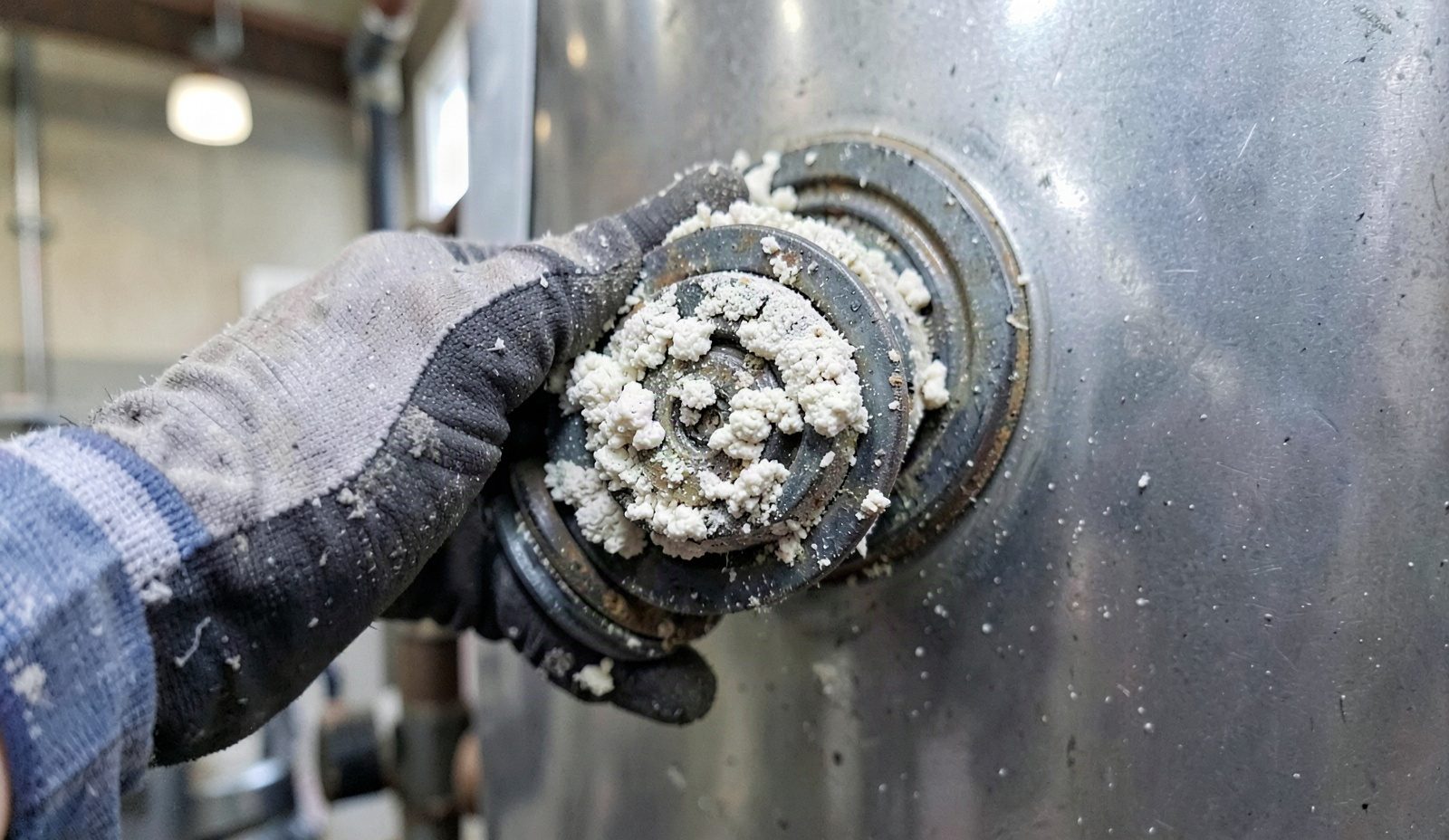
Fort Worth water is moderately hard, and the scale it leaves on heating elements is a leading reason local water heaters fail years before their rated life, especially in commercial buildings running tank-type heaters continuously for kitchen and restroom demand. Properties in Wedgwood and Ridglea Hills built with older tank units show scale buildup on the lower heating element within a few years of install, cutting recovery rate long before the tank itself fails. Buildings in the Cultural District running higher fixture counts for retail and event space see that same scale accelerate valve and softener wear, which is why a maintenance plan for this metro checks anode rods and flushes sediment on a shorter interval than a similar plan would run in a market with softer water.
Permit requirements for commercial plumbing work in Fort Worth run through the City of Fort Worth Development Services Department, which reviews plans for backflow assembly installation, grease interceptor replacement and any repair that changes pipe sizing or routing. Straightforward like-for-like repairs, swapping a failed valve or resealing a joint, typically do not need a permit pulled, but the department makes that call, not the contractor. We pull permits when the scope calls for one and keep the paperwork with the property's maintenance log, so a facilities manager has a clean record if an insurer, lender or new tenant's attorney asks for it during due diligence. That paper trail is part of what separates a documented maintenance program from a string of unrelated service calls.
Explore our service area and locate Shield Plumbing Fort Worth with ease. We're proudly local and serve the surrounding neighborhoods with fast response and honest pricing. Use the map to check our coverage area, or call us and we'll confirm in seconds.
Address:
Shield Plumbing Fort Worth, 210 W 7th St, Fort Worth, TX 76102
5 Signs Your Ridglea Hills Home Has a Slab Leak, practical local guidance from Shield Plumbing Fort Worth, Fort Worth's trusted plumbing tea…
Read More
What Wedgwood Residents Should Know Before a Whole-Home Repipe, practical local guidance from Shield Plumbing Fort Worth, Fort Worth's trust…
Read More
How Fort Worth's Hard Water Is Quietly Destroying Your Water Heater, practical local guidance from Shield Plumbing Fort Worth, Fort Worth's …
Read More
The Hidden Cost of Ignoring a Dripping Faucet in Fort Worth, practical local guidance from Shield Plumbing Fort Worth, Fort Worth's trusted …
Read More