
June 20, 2026
5 Signs Your Ridglea Hills Home Has a Slab Leak
5 Signs Your Ridglea Hills Home Has a Slab Leak, practical local guidance from Shield Plumbing Fort Worth, Fort Worth's trusted plumbing tea…
Read More




A commercial water heater rarely fails all at once. It fails in stages your staff notices first: dish machines running lukewarm at the second seating, a hand sink that takes ninety seconds to warm up, a popping or rumbling sound from the tank room as sediment layers boil and crack. In office and retail buildings, tenants report tepid restroom taps by mid-afternoon because the recovery rate can't keep pace with demand. These are not maintenance quirks. They are the early signal that the unit, the venting, or the gas or electrical supply feeding it is undersized or degrading.
The ground under Fort Worth drives a lot of this. North Texas expansive clay swells with rain and shrinks in drought, and that movement shifts slab foundations enough to shear copper supply lines and separate drain joints running under the building. A commercial property on a slab that shifted even a fraction of an inch can develop a slow leak at a union fitting feeding the water heater, and that leak shows up as a pressure drop long before anyone sees standing water. Add the aftermath of the February 2021 freeze, which burst pipes across Tarrant County by the tens of thousands, mostly in supply lines run through attics and exterior walls, and you get commercial buildings still running on temporary freeze repairs that were never rated for continuous commercial hot water demand.
Older commercial stock compounds the problem. Buildings in Fairmount and the Near Southside that started as houses or small warehouses and were converted to restaurants or offices often carry residential-grade gas lines and vent stacks feeding what is now a commercial-capacity water heater or tankless bank. That mismatch shows up as inconsistent temperature, nuisance shutdowns, or a flame that won't hold at full BTU input during a full kitchen rush.
Waiting rarely buys time, it burns capacity. A tank that's already cycling on marginal recovery will drop further behind every time demand spikes, a Friday dinner rush, a full office building on a Monday morning. Left alone, a corroding tank eventually ruptures, and a ruptured commercial tank means flooded storage, ruined stock, and a kitchen or restroom bank shut down mid-service. A tankless bank running on a fouled heat exchanger will trip on high-limit lockouts more often until it stops holding a cascade at all. The fix gets more disruptive and the downtime gets longer the longer the underlying cause goes undiagnosed.
If this sounds close but not quite your situation, water heater maintenance tips may be the better starting point.
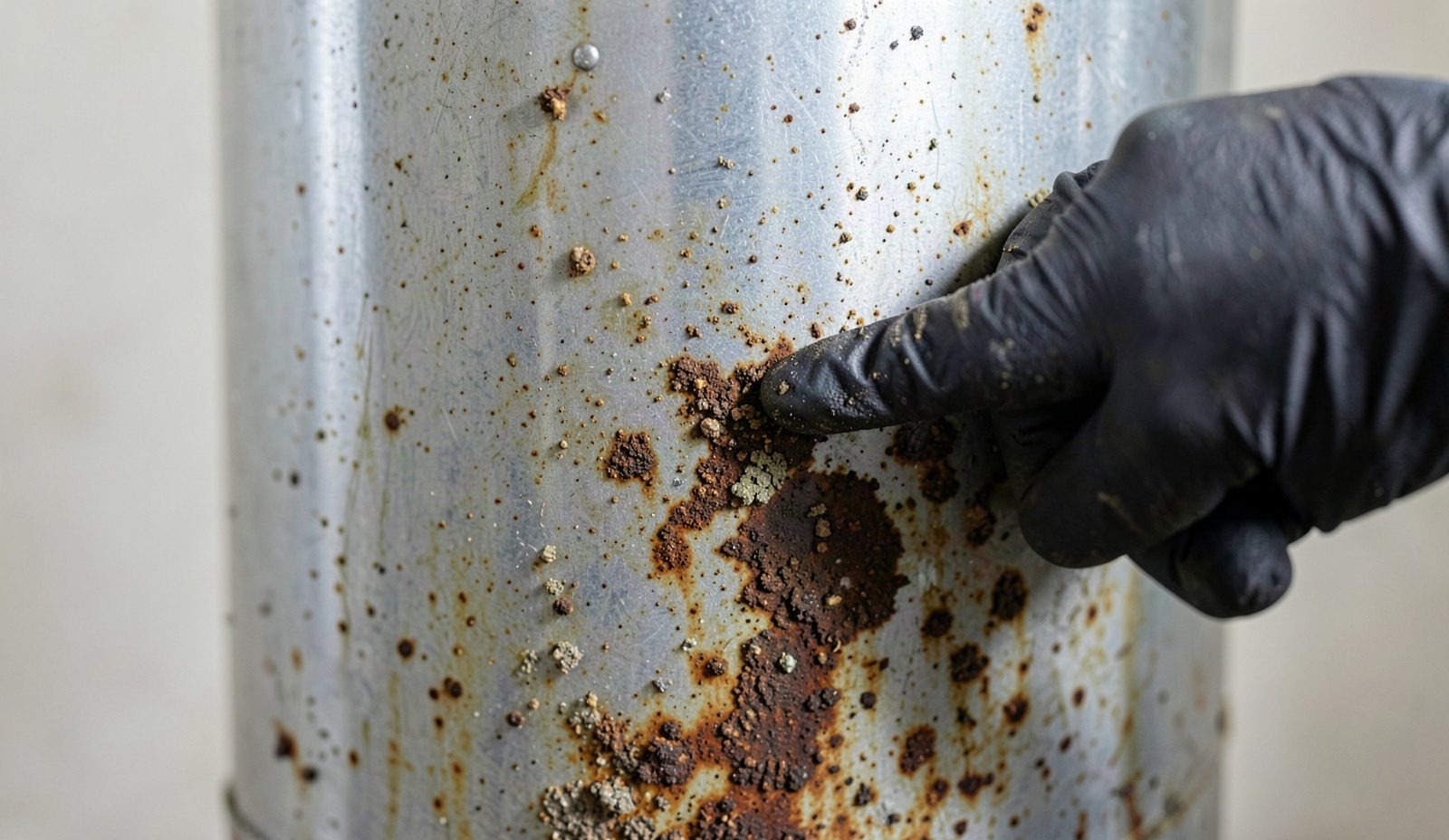
The first instrument out of the truck on a commercial hot water repair call is a water hardness test kit, not a wrench. Fort Worth water is moderately hard, and the scale it deposits on heating elements and tank walls is a leading reason local water heaters fail years before their rated life. A reading above roughly 7 grains per gallon tells us to expect element fouling on electric units and heat exchanger scaling on tankless systems, and it changes whether we recommend a straight replacement or a replacement paired with a scale-inhibiting treatment loop. On gas-fired units, we run a combustion analyzer to check flue gas temperature and CO output against the manufacturer's commissioning spec, because a unit that's short-cycling on a dirty burner reads high on both.
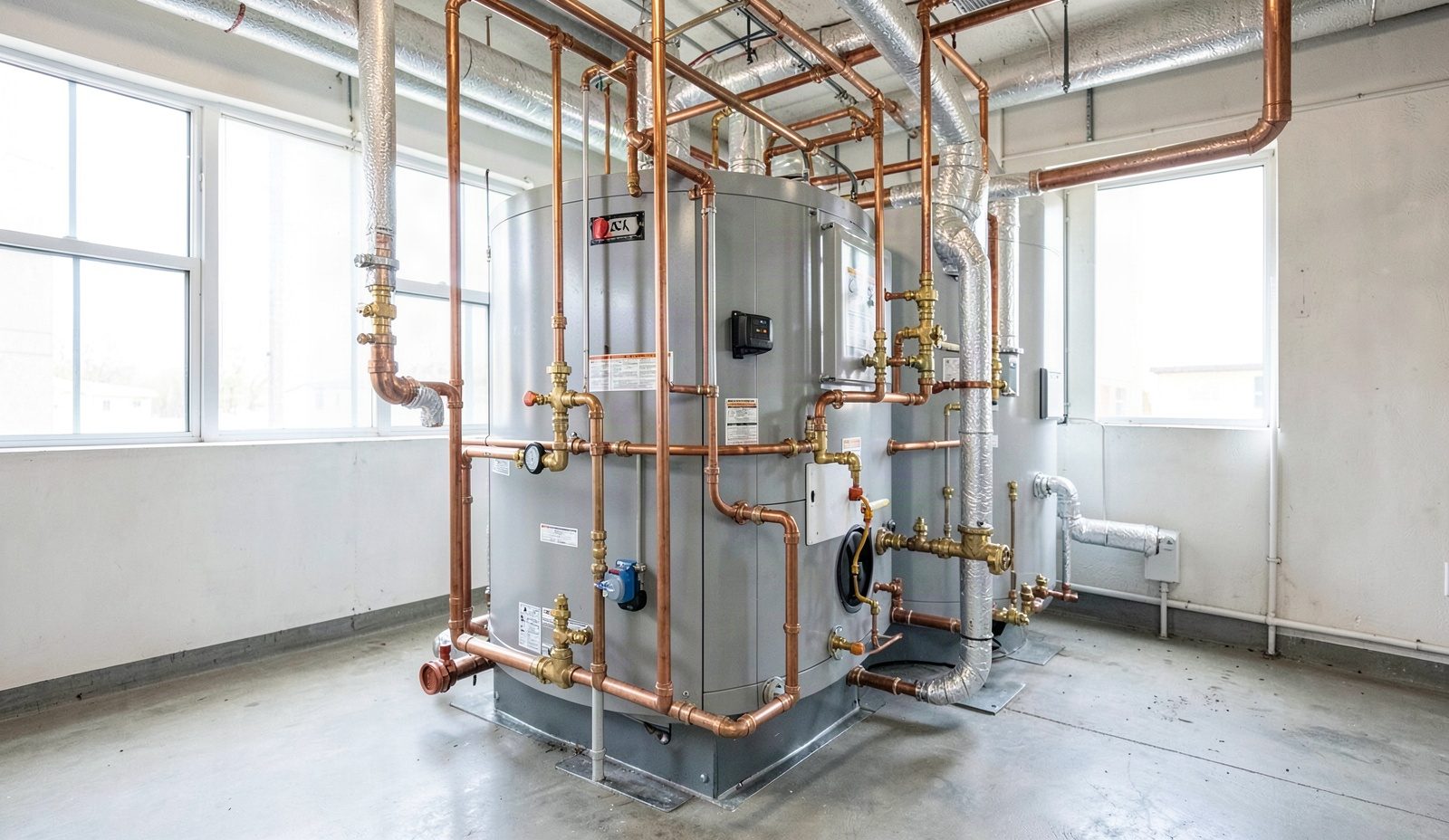
Sizing is where commercial jobs diverge hardest from residential swaps. We calculate first-hour rating and recovery rate against your building's actual peak draw, not a generic square-footage guess. For high-volume kitchens and laundry operations, we compare storage-tank lines like the A.O. Smith Cyclone Xi against the Bradford White eF Series on recovery rate at a 100 degree rise, because a 2 to 3 gallon-per-hour gap between models decides whether a three-tank bank or a two-tank bank meets a lunch rush without dropping temperature. For tankless commercial installations, we weigh Rinnai's cascade-capable commercial units against Navien's NPE series on BTU input and how many units can stage together, since a building that needs 400,000 BTU of simultaneous output handles that very differently on each platform.
On any job in a building with a food-service kitchen, we also check the grease interceptor while we're under the hood, because we recommend it get pumped before it reaches 25 percent capacity, the standard FOG-program threshold, and a heavy interceptor backs up the drain line the water heater's recirculation loop depends on to purge sediment. We pressure-test the cold supply at the heater's inlet valve, because a static reading under 40 psi points to a building-side supply problem no new water heater will fix. Every diagnostic reading gets written down before a scope of work goes on paper, so the repair or replacement decision is based on numbers, not a guess made standing in front of the tank.
More detail on emergency water heater repair is on its own page.
Your local utility, Payment options, publishes service and water-quality information every Fort Worth homeowner should know.
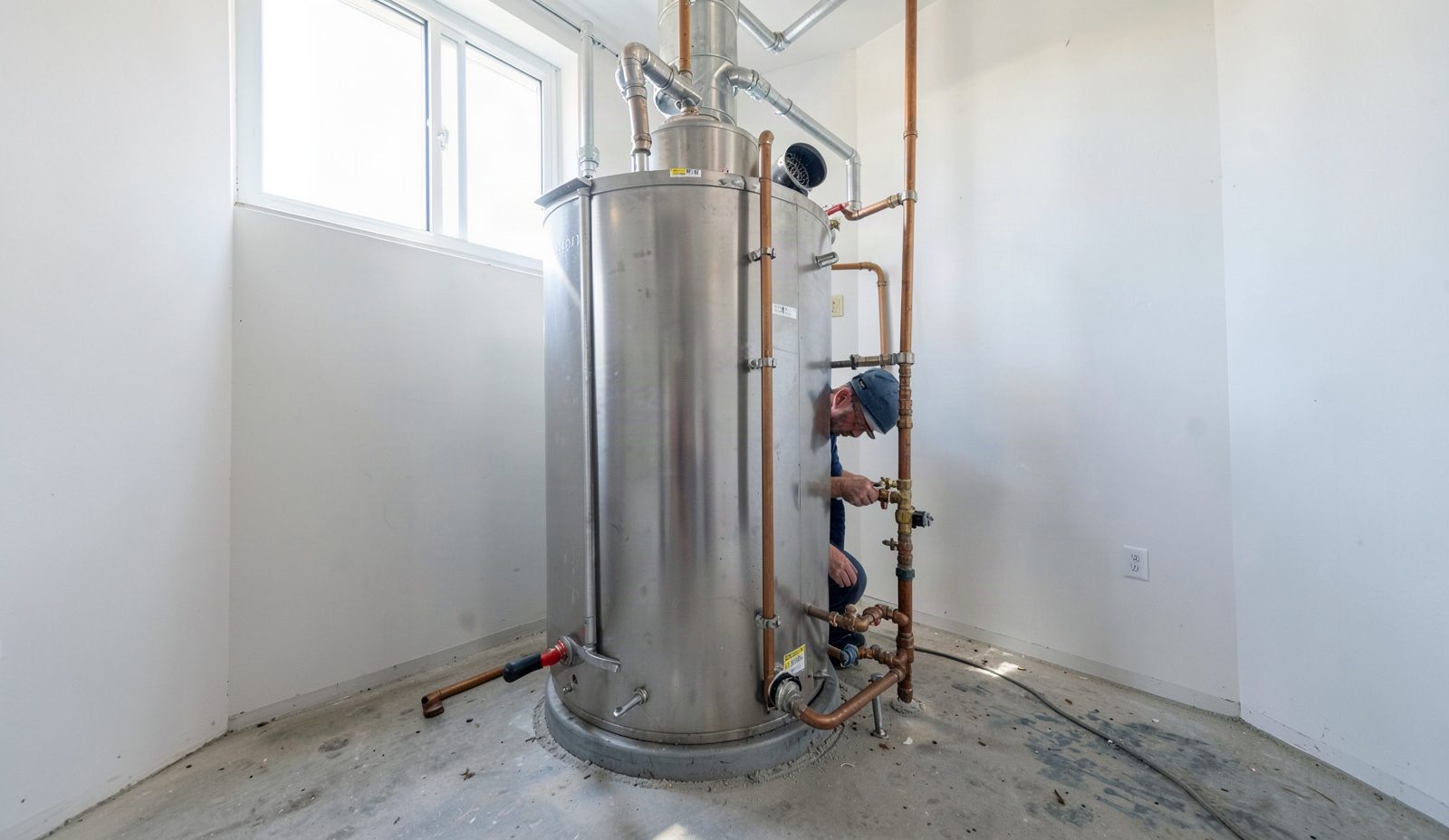
You describe the symptom on the phone, cold taps at peak hours, a popping tank, an error code on a tankless display, and we schedule a technician to the building. On arrival, the technician checks inlet pressure at the heater, tests water hardness, inspects the tank or heat exchanger for visible scale or corrosion, and reviews the existing gas or electrical connection against the unit's rated draw. You get the readings explained in plain terms before any equipment recommendation, including whether the problem sits in the heater itself or in the building's supply line.
Once you approve the written quote, the technician protects the work area, shuts off and tags out gas or electrical supply, and disconnects the existing unit. Repairs proceed with manufacturer-spec parts matched to the model on record. Replacements involve setting the new unit, running vent pipe to code clearance, connecting supply and recirculation lines, and installing any required backflow or expansion device. Any scope change discovered mid-job, like a corroded shutoff valve, gets a call to you and a price before work continues past that point.
Before the technician leaves, they run the unit through a full heating cycle and measure outlet temperature against the thermostat setpoint, check every joint and connection with a pressure gauge for drop over time, and, on gas units, verify combustion readings meet the commissioning spec. You walk the mechanical room with the technician, who explains what was replaced, what was tested, and what to watch for. Any permit-required inspection gets scheduled with the technician's contact left on file for the inspector.
Commercial water heater work in Fort Worth falls under the 2021 International Plumbing Code as adopted by the City of Fort Worth for commercial occupancies, and that code governs venting clearances, backflow prevention, and combustion air requirements that a residential-focused plumber may not check correctly on a commercial-scale install. A vent run that clears code on a 40-gallon residential tank does not automatically clear it on a commercial power-vent unit with a larger diameter flue, and getting that wrong means a failed inspection and a torn-out install.
Full replacements and structural gas or vent work typically require a permit through the City of Fort Worth Development Services Department, while minor like-for-like element or thermostat repairs often do not, with the department making the final call on borderline cases. We pull permits on qualifying jobs and schedule the inspection instead of leaving that step for the property manager to chase down later, which matters when a lender, insurer, or lease auditor eventually asks for documentation on mechanical work.
Building age changes the job as much as code does. Commercial spaces in Arlington Heights that occupy pre-1970 storefronts often still carry galvanized steel supply lines and cast iron drains, both now at or past the end of their service life, and both restrict flow enough to starve a new high-capacity water heater of the volume it needs to perform at its rated output. An out-of-area contractor unfamiliar with that housing stock will spec a unit sized to the fixture count and miss that the supply line itself is the bottleneck. Call (817) 710-3766 to have a technician walk the mechanical room and the supply line together before any equipment gets ordered.
Our page on tankless water heater services covers that side of the work in more depth.
Booking starts with a phone call to (817) 710-3766, where we ask about your operating hours before we ask about the unit itself. Restaurants and clinics get windows scheduled around service hours, not around our convenience, and we confirm the arrival window the day before with a call or text. If parts availability shifts a commercial-capacity unit's delivery date, we call before the scheduled window, not after a missed appointment, and we offer the next available slot along with an honest estimate of the delay. Emergency loss-of-hot-water calls at active food service locations get priority routing over routine maintenance visits.
We lay floor protection from the entry point to the mechanical room before any tool comes out, and we containment-tape off kitchen prep areas so dust and metal shavings from cutting old vent pipe never reach a food surface. Old tanks and disconnected piping go straight into a covered haul-away bin, not left staged in a hallway or loading dock. Once a new unit is set and tested, we wipe down the work area, sweep any debris from cutting or soldering, and remove our equipment and packaging before we call the job complete. The mechanical room looks the way we found it, minus the old unit.
Your written quote reflects unit capacity and recovery rate, venting type, whether the gas line or electrical feed needs upsizing, and the condition of the existing supply and drain lines we find during the walkthrough. Standard power-vent access costs less than a rooftop or long horizontal vent run through a finished ceiling. Water treatment add-ons for scale mitigation, backflow devices required by code, and any permit fees factor in separately and get itemized, not bundled. You see every line item before a technician touches equipment, and nothing gets added to the scope mid-job without a call to you first for approval.
Every technician passes a background check before being scheduled on a commercial account, and every technician completes ongoing training tied to the current plumbing code cycle rather than a one-time orientation. New hires shadow a senior technician on commercial water heater installs and repairs for a defined period before they're cleared to run a job alone, and that clearance is based on a supervisor signing off on completed diagnostic checks, not tenure. Field skills get re-checked periodically against current manufacturer specs for the storage-tank and tankless product lines we install most often in Fort Worth commercial buildings.
It depends on scope, but a single tank swap on an accessible unit is often operational within a half day. Larger jobs, like a multi-tank bank replacement or a tankless cascade requiring new venting and an upsized gas line, can run several days once permitting and inspection scheduling with the City of Fort Worth Development Services Department are factored in. Restaurants and buildings with continuous occupancy get phased scheduling so hot water service is never fully offline longer than necessary.
Choosing well means checking that a plumber understands local code, local building stock, and commercial-scale equipment sizing, not just general plumbing repair. Ask whether they pull permits through the correct authority, whether they test water hardness and combustion readings before recommending equipment, and whether they've worked on buildings like yours, older Fort Worth commercial stock with aging gas lines and vent stacks. Shield Plumbing Fort Worth answers yes to all three and puts those findings in writing before a job starts.
Cost depends on unit capacity, venting complexity, and the condition of your building's existing gas, electrical, and water supply lines, not a flat per-unit rate. A property with pre-1970 galvanized supply piping often needs line upgrades alongside the new heater, which adds scope beyond the unit itself. A technician gives you an itemized written quote after inspecting your specific building, so you see exactly what's driving the number before approving any work.
We can't speak to another company's pricing since every provider sets its own rates and scope. What we can tell you is that Shield Plumbing Fort Worth prices commercial water heater work based on an on-site inspection of your specific unit, venting, and supply lines, with every line item shown before you approve anything. Call (817) 710-3766 and we'll walk your building and give you a number based on your actual conditions, not a generic quote.
Estimates start with an on-site walkthrough where a technician tests water pressure, checks hardness, and inspects the existing unit and its connections. From those readings, you get an itemized written quote covering equipment, labor, venting or line work, and any permit fees tied to the City of Fort Worth's requirements for your scope of work. Nothing proceeds until you approve that quote, and any change discovered once work begins gets a separate call before it's added.
Coverage depends on the cause, not the fixture type. Most commercial property policies cover sudden, accidental damage like a burst supply line during a freeze event, but they typically exclude gradual wear, mineral scale buildup, or aging galvanized and cast iron piping that simply reached the end of its service life. A property manager should check the policy's water damage exclusions before assuming coverage, and Shield Plumbing Fort Worth can document the failure cause on the invoice for a claim.
Commercial buildings across Fort Worth carry very different hot water demands depending on how they were built and what fills them now. Strip retail centers in Wedgwood and Ridglea Hills often run several small tenant spaces off a single shared water heater installed decades ago for a different mix of businesses, and adding a salon or a food-service tenant to that lineup can outstrip the unit's recovery rate overnight. Mixed-use buildings in the Cultural District, where museums, theaters, and restaurants sit close together, see sharp demand spikes tied to event schedules rather than steady daily use, which changes whether a storage-tank or a cascading tankless bank makes more sense for that address.
Commercial water heater replacements and any gas or vent modification typically require a permit through the City of Fort Worth Development Services Department, and the department's inspector checks the finished work against the adopted plumbing code before it gets signed off. Minor repairs, like swapping a thermocouple or a heating element, usually fall outside that requirement, but the department makes the final determination on anything borderline. Property managers and lease holders who need documentation for an insurer or a lender benefit from a contractor who pulls the permit and schedules the inspection as part of the job, not as an afterthought once the equipment is already running.
Explore our service area and locate Shield Plumbing Fort Worth with ease. We're proudly local and serve the surrounding neighborhoods with fast response and honest pricing. Use the map to check our coverage area, or call us and we'll confirm in seconds.
Address:
Shield Plumbing Fort Worth, 210 W 7th St, Fort Worth, TX 76102
5 Signs Your Ridglea Hills Home Has a Slab Leak, practical local guidance from Shield Plumbing Fort Worth, Fort Worth's trusted plumbing tea…
Read More
What Wedgwood Residents Should Know Before a Whole-Home Repipe, practical local guidance from Shield Plumbing Fort Worth, Fort Worth's trust…
Read More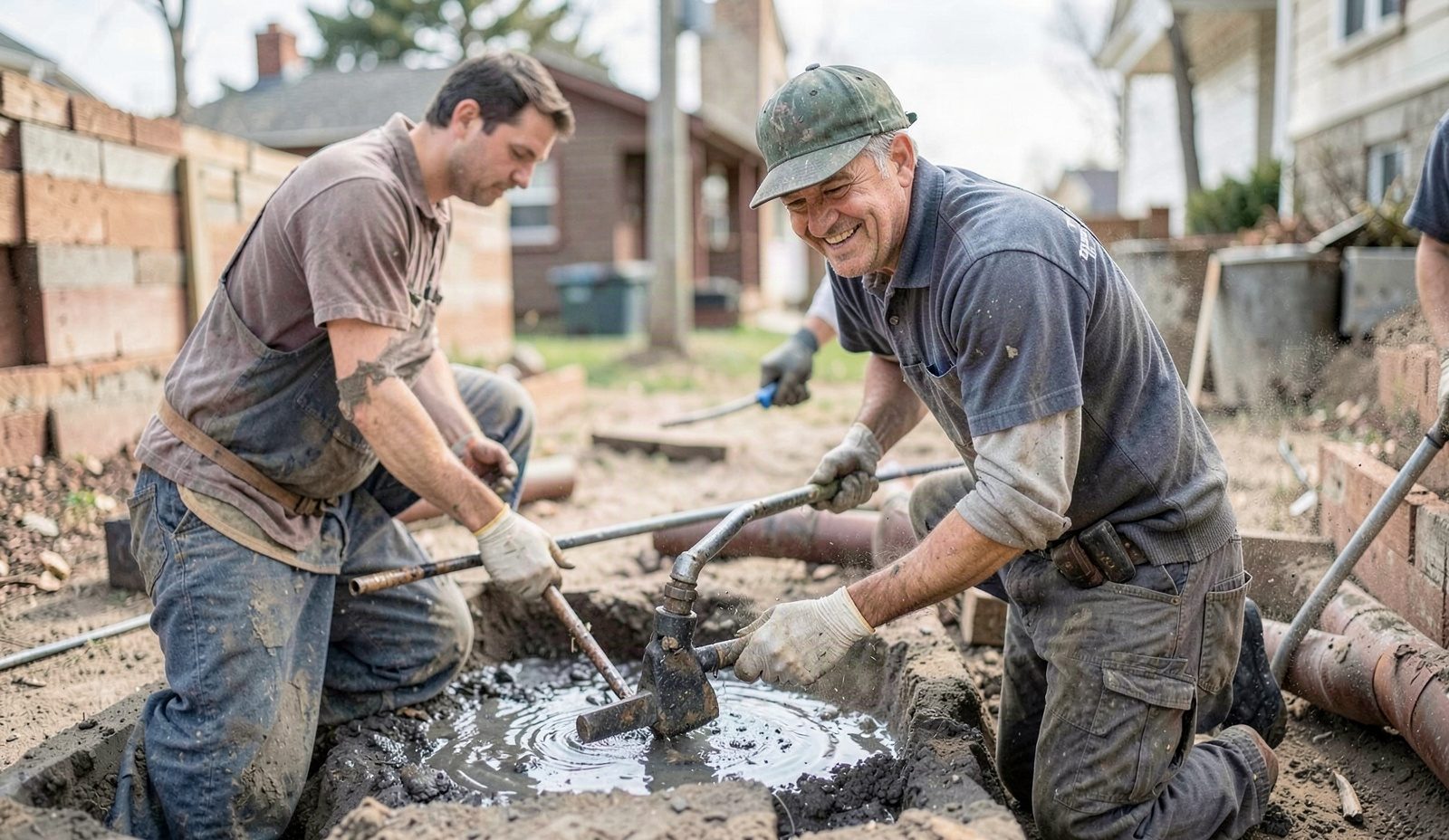
How Fort Worth's Hard Water Is Quietly Destroying Your Water Heater, practical local guidance from Shield Plumbing Fort Worth, Fort Worth's …
Read More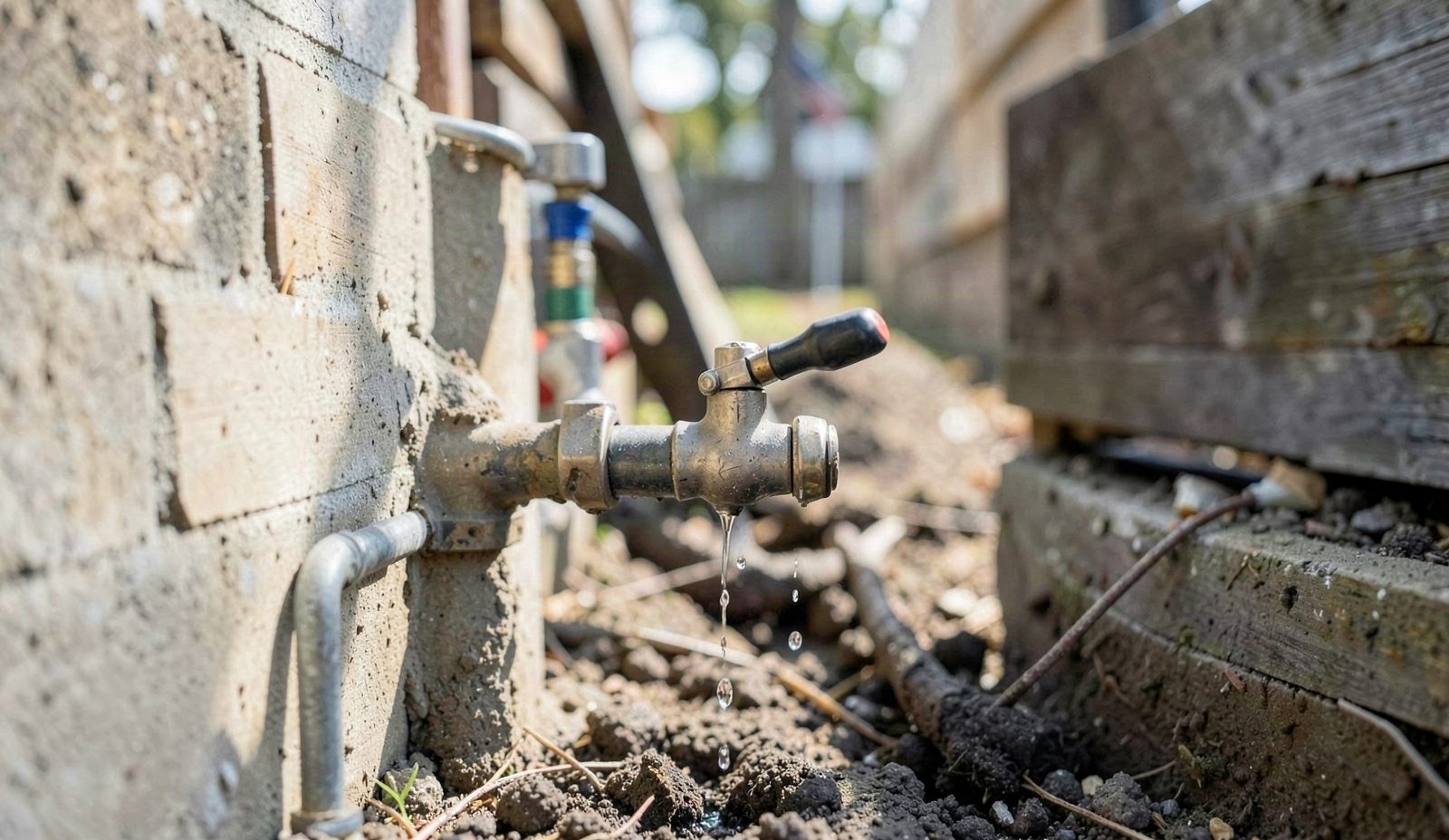
The Hidden Cost of Ignoring a Dripping Faucet in Fort Worth, practical local guidance from Shield Plumbing Fort Worth, Fort Worth's trusted …
Read More