
June 20, 2026
5 Signs Your Ridglea Hills Home Has a Slab Leak
5 Signs Your Ridglea Hills Home Has a Slab Leak, practical local guidance from Shield Plumbing Fort Worth, Fort Worth's trusted plumbing tea…
Read More




A water heater in trouble sounds like popcorn popping inside the tank. That rumbling or crackling comes from water boiling under a layer of hardened sediment sitting on the burner or heating element. Homeowners in Fairmount and Wedgwood, where many houses still run their original 40 or 50 gallon tanks, often notice it first as a longer wait for hot water at the shower, then a rotten egg smell from the tap, then rust-colored water when they fill a white bathtub.
Fort Worth water is moderately hard, and the mineral scale it leaves on heating elements is a leading reason local water heaters fail years before their rated life. Scale acts like a blanket. It forces the burner or element to run longer to heat the same gallon of water, which stresses the tank lining and shortens the anode rod's working life. Skipping a flush water heater schedule for three or four years lets that layer harden into something closer to concrete than sediment, and at that point a garden hose flush barely moves it.
The ground under the tank causes a second, unrelated failure. North Texas expansive clay swells with rain and shrinks in drought, moving slab foundations enough to shear copper supply lines and separate drain joints under the house. That same movement stresses the rigid copper or CPVC connections at the water heater's inlet and outlet fittings. A slow drip at a union fitting after a wet spring followed by a dry August is often foundation movement, not a bad gasket.
Waiting past the first warning signs moves the failure from a fifteen minute anode rod replacement to a full tank swap. A cracked glass lining lets rust migrate into the water supply. A saturated drain pan under an attic-mounted unit stops catching overflow. What starts as a maintenance call to extend water heater life becomes a same-day flood response, and the water heater care guide advice that would have prevented it no longer applies.
Our page on water conservation tips covers that side of the work in more depth.
Permit and inspection questions? Development Services is the office we coordinate with on every permitted Fort Worth job.

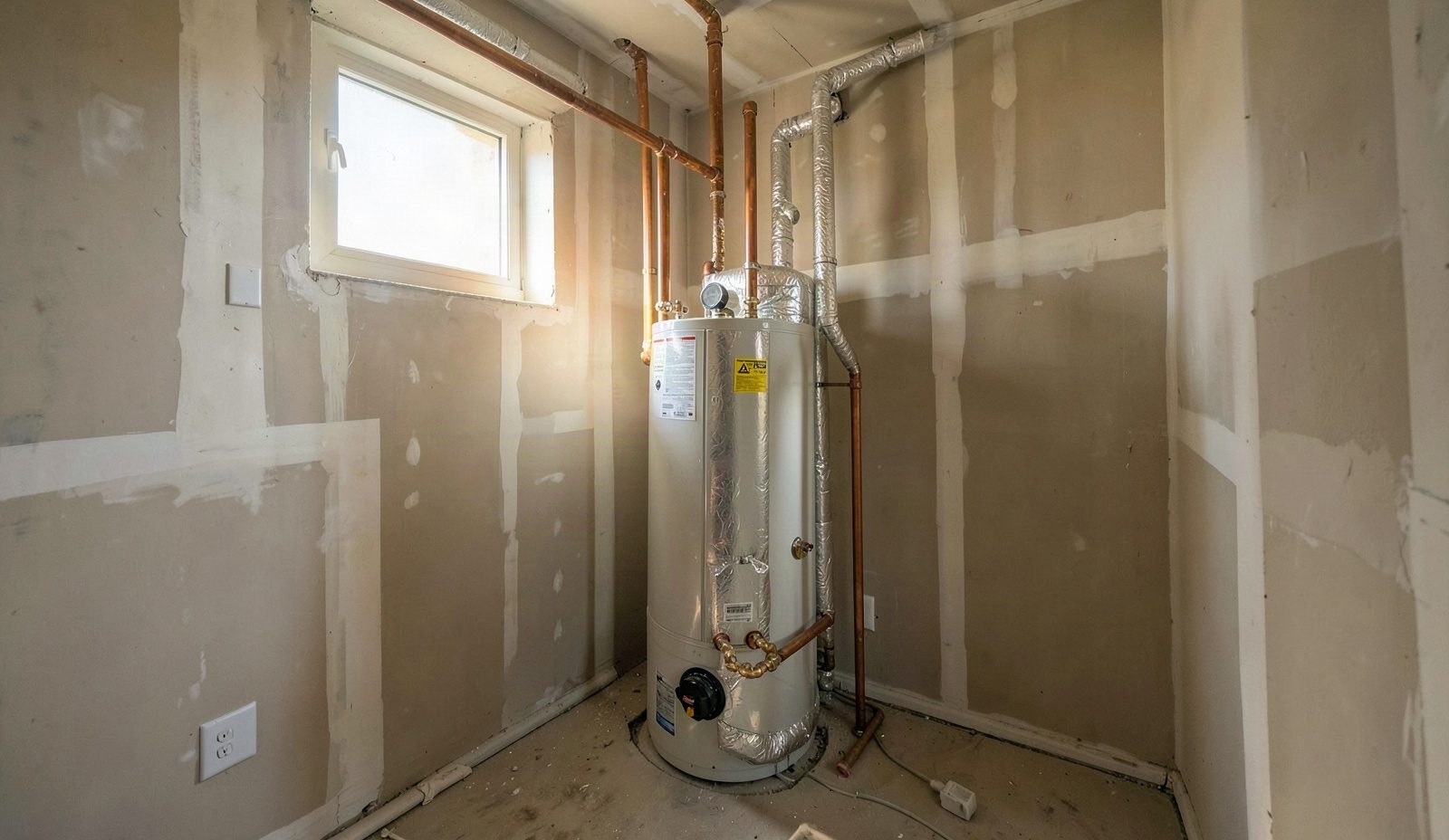
Every maintenance visit starts with the tank powered down and the static water pressure checked at an outdoor spigot with a screw-on gauge. Anything reading above 80 psi triggers a straight conversation about a pressure-reducing valve, because Section 604.8 of the International Plumbing Code requires one at that threshold, and constant overpressure is what tears T&P valves and swells tank seams from the inside. The lever on the temperature and pressure relief valve gets lifted by hand to confirm it snaps shut clean, with no weeping afterward.
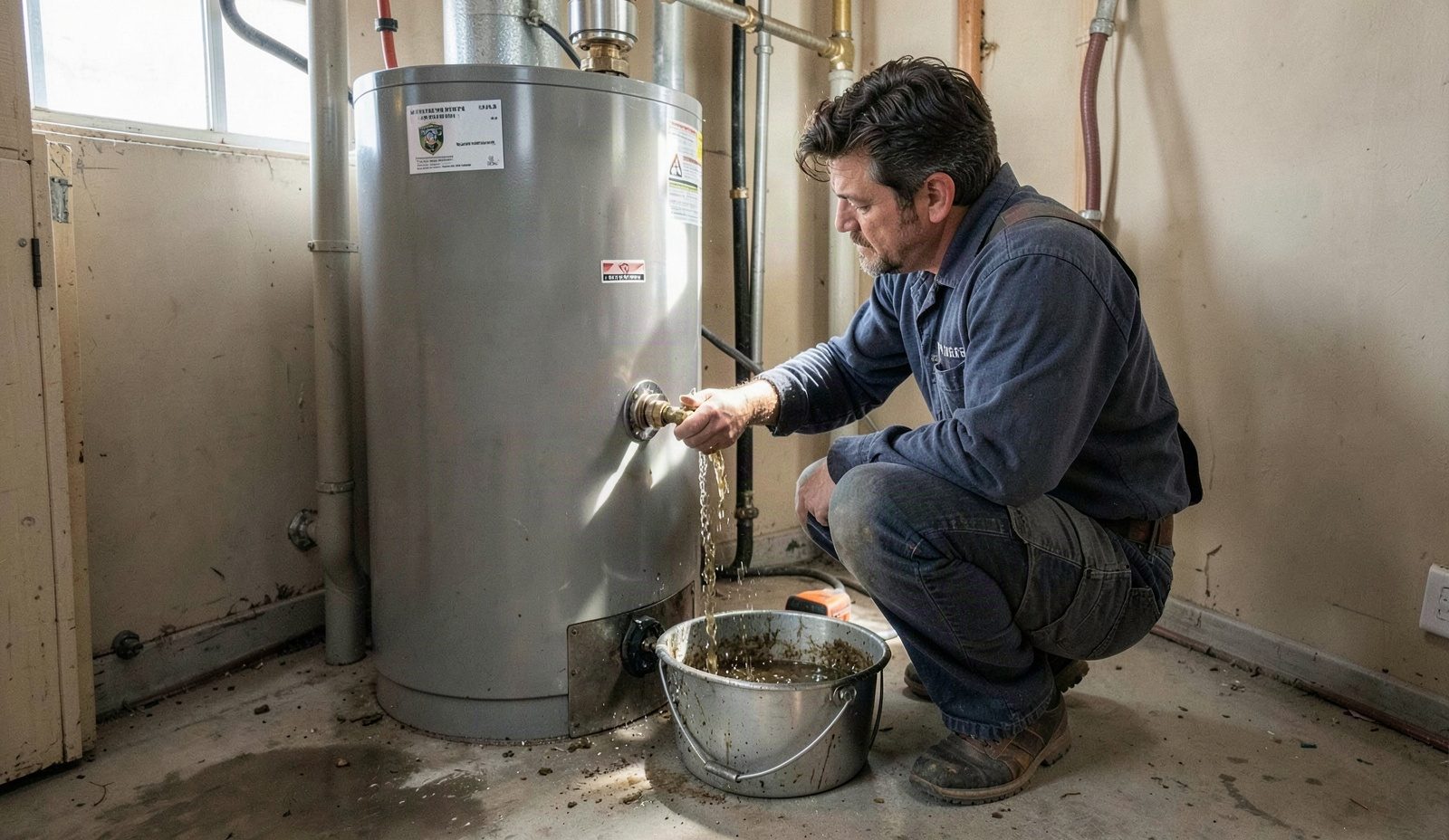
The flush itself is a diagnostic, not just a chore. A hose runs from the drain valve to a floor drain or bucket, and the tank drains until the discharge runs clear. Cloudy gray water after the first five gallons signals light sediment from routine mineral scale. Brown, gritty discharge that keeps flowing past ten or fifteen gallons signals a tank that has gone too long between visits, and it changes the water heater tune up from a quick service into a longer job with element or burner inspection added.
Anode rod material decides how long the tank lasts after that. A standard magnesium rod gives the strongest cathodic protection and is the right call for most Fort Worth homes, but it corrodes fastest in harder water and needs checking at the two to three year mark. An aluminum or aluminum-zinc rod lasts longer against scale-heavy water but produces more sediment as it breaks down. A powered anode rod carries no sacrificial metal at all, never needs replacement, and eliminates the sulfur smell some households get from a magnesium rod reacting with bacteria in the tank. A rod pulled down to a bare steel core wire, or under half an inch of magnesium remaining on the caliper, gets replaced on the spot rather than left for the next visit.
If this sounds close but not quite your situation, commercial water heater systems may be the better starting point.
We install and service equipment from major manufacturers like Rheem to manufacturer specifications.
You call (817) 710-3766 and describe what the water heater is doing, whether it is a routine tune up or a unit already showing rust or noise. A technician arrives inside the scheduled window and starts with the tank powered down, the pressure and relief valve checked, and a visual look at the tank base, fittings and drain pan for existing moisture. You get a plain-language rundown of what the inspection found before any work begins, including whether the anode rod or sediment level needs attention that visit.
Once you approve the written line items, the technician lays down floor protection and connects the drain hose before draining and flushing the tank. Sediment volume and color get checked as the tank empties, which confirms whether a full flush resolves the noise and heating delay or whether the anode rod needs pulling and measuring with calipers. Any parts replacement, whether a T&P valve, drain valve or anode rod, happens with the water and gas or power still isolated, and you are told before anything beyond the approved scope gets touched.
Before power or gas gets restored, the technician checks the tank for leaks at every fitting touched during the visit and confirms the relief valve reseats without weeping. The unit gets brought back up to temperature and the technician checks recovery time and outlet temperature at a nearby fixture. You get a walkthrough of what was found, what was replaced, and what to watch for before the next scheduled flush, along with any parts pulled from the tank left for you to see.
Fort Worth plumbing work runs under the City of Fort Worth plumbing code, based on the International Plumbing Code, and a technician who does not work this market daily misses details that code adopts specifically for aging housing stock. That matters most in areas like Ridglea Hills, where mid-century construction means the water heater often ties into supply lines the original builder never expected to still be in service seven decades later.
Pre-1970 neighborhoods across the metro were plumbed with galvanized steel supply lines and cast iron drains, both now at or past the end of their service lives. Tying a new water heater into galvanized pipe without a dielectric union invites galvanic corrosion at the joint within a couple of years, a mistake an out-of-town crew unfamiliar with this housing stock makes more often than a technician who works these streets every week. Cast iron drain stubs near a water heater's pan also need a different fitting approach than the PVC most new-construction crews expect.
Hiring a plumber who does not know these local conditions risks a repair that fails again inside a year or draws a stop-work notice for skipping a required permit on structural or gas line work. A technician who understands Fort Worth's mix of postwar galvanized systems and newer PEX retrofits catches the mismatch before it becomes a callback, not after.
See emergency water heater repair for how the related work is scoped and priced.
Call (817) 710-3766 and a technician books your maintenance visit into a two-hour arrival window, morning or afternoon, based on what fits your day. Dispatch calls or texts about thirty minutes before arrival so you are not stuck waiting by the window all afternoon. If a prior job runs long, dispatch reaches out with an updated window instead of leaving you guessing. Routine flush and tune up visits typically book within the same week. A failing tank that is actively leaking moves ahead of scheduled maintenance stops already on the board that day.
A floor runner goes down between the entry and the water heater closet or attic access before any tools come out. The technician sets a drain pan liner and hose routing before draining the tank, so sediment water goes straight to a floor drain or bucket, not across your flooring. Old anode rods, worn valves and any packaging come out with the crew, not left in a pile for you to bag up. Surfaces the technician touches, door handles, closet shelving, get wiped down before the visit ends.
Cost on a maintenance visit depends on tank size, how hard the unit is to access, how much sediment has built up, and whether parts like an anode rod, T&P valve or drain valve need replacing. After the inspection, the technician writes out each line item on site, in plain language, before touching anything beyond the initial diagnostic. Nothing gets replaced or added to the job without you seeing the line and approving it first. If the flush uncovers a bigger issue, like a cracked dip tube, that gets priced separately for you to decide on.
Every technician who reaches your door has passed a background check before ever being sent to a home. Ongoing training tracks the current plumbing code cycle, so techs stay current on requirements like pressure relief thresholds and venting rules rather than working off what they learned years ago. New technicians shadow an experienced tech through a set number of live maintenance calls, and a supervisor signs off on field competence before that technician works a job alone. That process runs in the background, not as a sales pitch at your door.
Basic maintenance is flushing sediment from the tank, testing the pressure relief valve, checking the anode rod and keeping the thermostat near 120 degrees Fahrenheit. That last step slows mineral scale buildup on the heating element significantly in Fort Worth's water conditions. Homeowners who skip the thermostat check often see scale form faster than the flush schedule accounts for. Shield Plumbing covers all of these in a single tune up visit and points out anything close to needing replacement.
Cost depends on the tank's age, size, sediment level and whether parts like a valve or anode rod need replacing. There is no flat number that fits every visit because access alone, a closet unit versus an attic platform, changes the labor involved. A technician inspects the unit first and writes out each cost driver before any work starts. Call (817) 710-3766 to get a written estimate for your specific tank.
Most water heaters need a flush and inspection once a year at minimum. In Fort Worth's water, twice a year keeps scale from insulating the heating element enough to shorten the tank's life. Shield Plumbing typically times the second annual visit around when the anode rod hits its heaviest wear point, roughly the two to three year mark on a magnesium rod, rather than on a fixed calendar date.
A water heater needs cleaning when the first gallon out of the drain valve runs milky gray or gritty instead of clear. Popping sounds during the heating cycle and a noticeably longer wait for hot water at the tap both point to sediment insulating the element or burner. Brown or orange discharge instead of gray signals corrosion starting inside the tank lining, which moves the job past a simple flush into a fuller inspection.
Estimates get written on site after a technician inspects the tank, checks pressure and pulls the anode rod for a look. You see each line item, parts and labor, before any work beyond the initial inspection begins. If the flush uncovers something unexpected, like a failing dip tube, that gets priced as a separate approval rather than added to the bill automatically.
Coverage depends on your policy's specific language, and most standard homeowners policies exclude routine drain clearing as maintenance. A policy is more likely to cover damage from a sudden pipe burst or backup than the clog-clearing service itself. If a backup caused water damage to flooring or drywall, that portion may fall under your dwelling coverage even if the drain cleaning charge doesn't. Checking your policy's exclusions for sewer backup or drain maintenance before the visit clarifies what's covered.
Water heater work in Fort Worth carries the weight of the metro's building history. The February 2021 freeze burst pipes across Tarrant County by the tens of thousands, and most of those failures hit supply lines running through attics and exterior walls, the same unconditioned spaces where a lot of local water heaters sit today. That history changes how a maintenance visit is planned near the Near Southside, where older bungalows and converted duplexes often route the water heater's cold feed through an uninsulated attic run. A tune up visit in this area includes a look at that exposed line, not just the tank itself, because a heater that survives a freeze on an insulated line fails on one left bare.
Permitting stays straightforward for maintenance work itself. Routine flushing, anode rod swaps and valve replacement generally do not require a permit, while a full tank replacement or any gas line modification falls under review by the City of Fort Worth Development Services Department, which is the authority that makes the final call on Fort Worth addresses. Homeowners near the Cultural District, where a mix of historic homes and newer infill sits close together, benefit from a technician who already knows which jobs need that sign-off and which do not, rather than guessing after the work is done.
Explore our service area and locate Shield Plumbing Fort Worth with ease. We're proudly local and serve the surrounding neighborhoods with fast response and honest pricing. Use the map to check our coverage area, or call us and we'll confirm in seconds.
Address:
Shield Plumbing Fort Worth, 210 W 7th St, Fort Worth, TX 76102
5 Signs Your Ridglea Hills Home Has a Slab Leak, practical local guidance from Shield Plumbing Fort Worth, Fort Worth's trusted plumbing tea…
Read More
What Wedgwood Residents Should Know Before a Whole-Home Repipe, practical local guidance from Shield Plumbing Fort Worth, Fort Worth's trust…
Read More
How Fort Worth's Hard Water Is Quietly Destroying Your Water Heater, practical local guidance from Shield Plumbing Fort Worth, Fort Worth's …
Read More
The Hidden Cost of Ignoring a Dripping Faucet in Fort Worth, practical local guidance from Shield Plumbing Fort Worth, Fort Worth's trusted …
Read More