
June 20, 2026
5 Signs Your Ridglea Hills Home Has a Slab Leak
5 Signs Your Ridglea Hills Home Has a Slab Leak, practical local guidance from Shield Plumbing Fort Worth, Fort Worth's trusted plumbing tea…
Read More




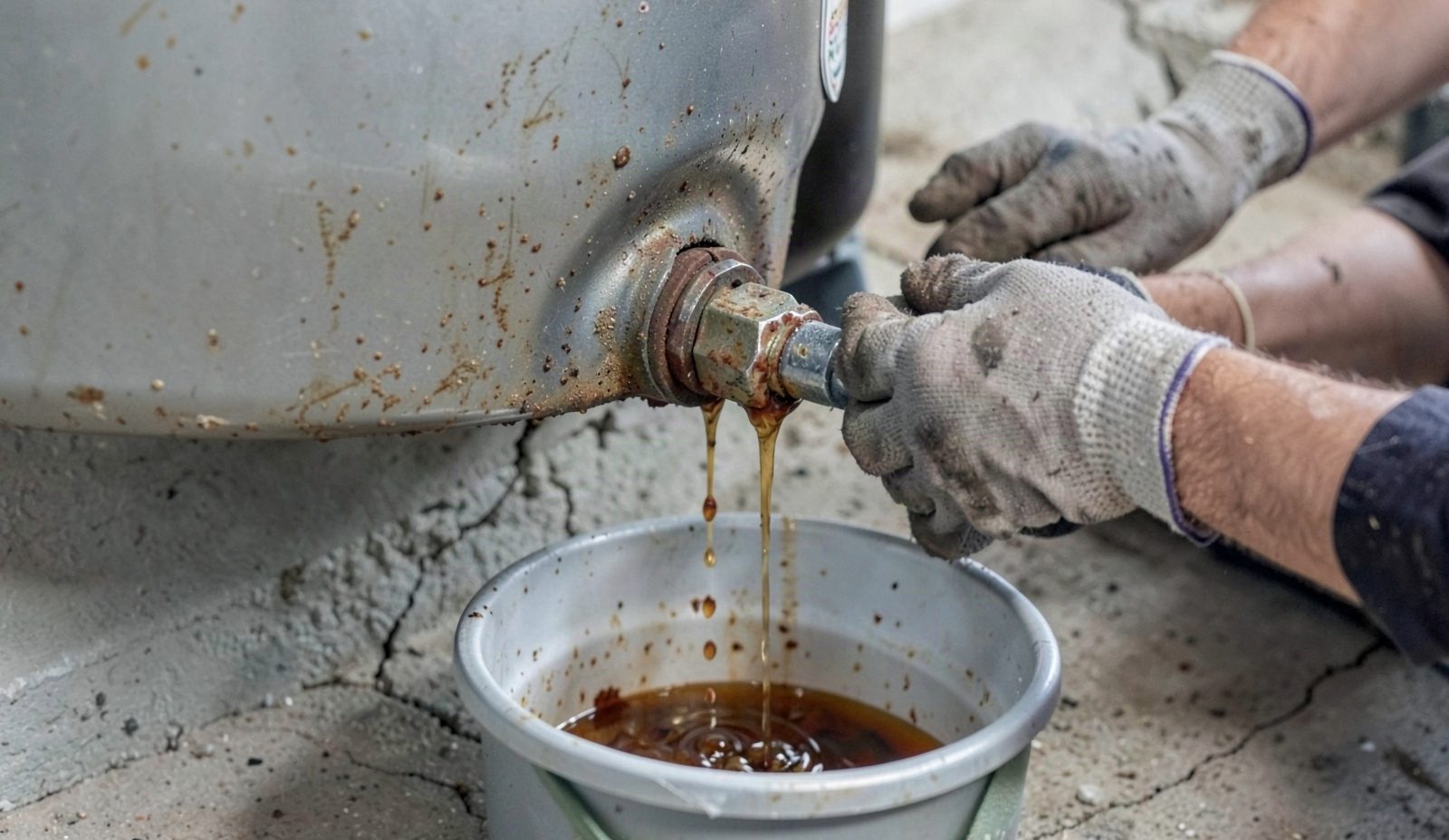
A tank that used to deliver twenty minutes of hot water now runs cold in eight. You hear popping or rumbling from the bottom of the unit, like gravel shifting in a can. The water coming out of the tap carries a faint metallic smell or a rust tint. Any of these means the heating element or burner is fighting through sediment it was never built to handle. A tankless unit shows a different set of complaints: a flashing error code, a delay of several seconds before hot water arrives, or a unit that shuts down mid-shower because flow dropped below its minimum activation rate.
Every homeowner researching tankless water heater pros cons in Fort Worth eventually hits the same wall: hard water. Fort Worth water is moderately hard, and the scale it leaves on heating elements is a leading reason local water heaters fail years before their rated life. In a storage tank water heater, that scale settles as sediment on the tank floor and insulates the lower element, forcing it to run longer for the same temperature rise. In a tankless unit, the same minerals coat the narrow heat exchanger passages, choking flow until the flow sensor cuts the unit off.
Neighborhoods like Wedgwood and Ridglea Hills were built with 40 and 50 gallon tanks sized for mid-century household habits, and a lot of those original units, or their second-generation replacements, are now well past a decade of service. Homeowners in these areas who swap to tankless without checking gas line capacity often get a unit that cannot reach its rated temperature rise during a cold snap, because the existing half-inch gas line was sized for a furnace and a water heater together, not a tankless unit's higher burner demand.
Ignoring either symptom set gets expensive in stages, not all at once. A scaled tank element burns out, then the tank itself corrodes through at a weld seam and drops thirty to fifty gallons onto a slab or into a second-floor closet. A struggling tankless unit derates its output further each month, until a house that once ran two showers at once cannot supply one without temperature swings. Both paths end at total replacement, just on different timelines.
Your local utility, Payment options, publishes service and water-quality information every Fort Worth homeowner should know.
The honest answer to which water heater is best depends on household hot water demand, gas line capacity, and vent access, not brand loyalty. We start every visit with a static water pressure reading at an outdoor spigot using a calibrated gauge. Anything above 80 psi triggers a code requirement, not a suggestion: Section 604.8 of the International Plumbing Code requires a pressure-reducing valve at that threshold, and high inlet pressure shortens the life of both tank and tankless units by stressing the T&P relief valve and the heat exchanger welds.
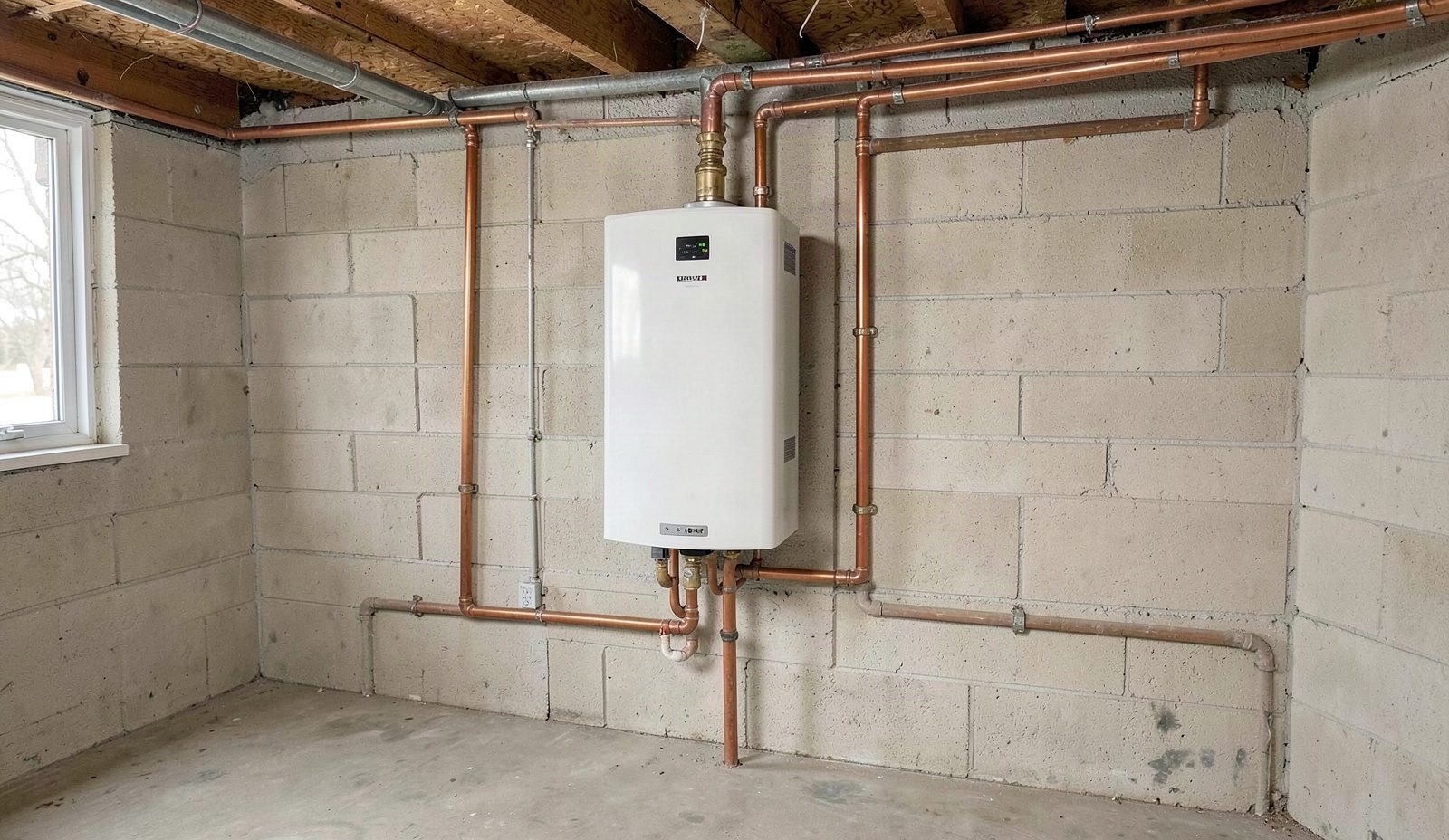
This tankless vs tank comparison gets concrete once we're on site. A 50 gallon AO Smith Signature Premier tank recovers roughly 40 gallons per hour on a standard 40,000 BTU burner and typically lasts 10 to 12 years in Fort Worth's water. A Rinnai RUC98i tankless unit delivers up to 9.8 gallons per minute on demand, runs 18 to 20 years with proper descaling, but needs a dedicated Category III stainless vent and, in most Fort Worth retrofits, a gas line upgraded from half-inch to three-quarter-inch to feed its larger burner. We measure existing gas line diameter and run length against the new unit's BTU draw before we ever write a quote, because an undersized line will starve a tankless unit exactly when a January cold front pushes incoming water temperature down and demand up.
We also check venting clearance with a tape measure against manufacturer specification, test the temperature-and-pressure relief valve for a clean seal, and calculate gallons-per-minute demand against fixture count using the same simultaneous-use method the equipment manufacturers publish. That is the core of any honest water heater buying guide: match the unit to the house's actual gas supply, water chemistry and fixture load, not to whichever model a big-box store has in stock that week.
More detail on benefits of water softeners is on its own page.
Our technicians follow the workmanship standards promoted by the Plumbing-Heating-Cooling Contractors Association.
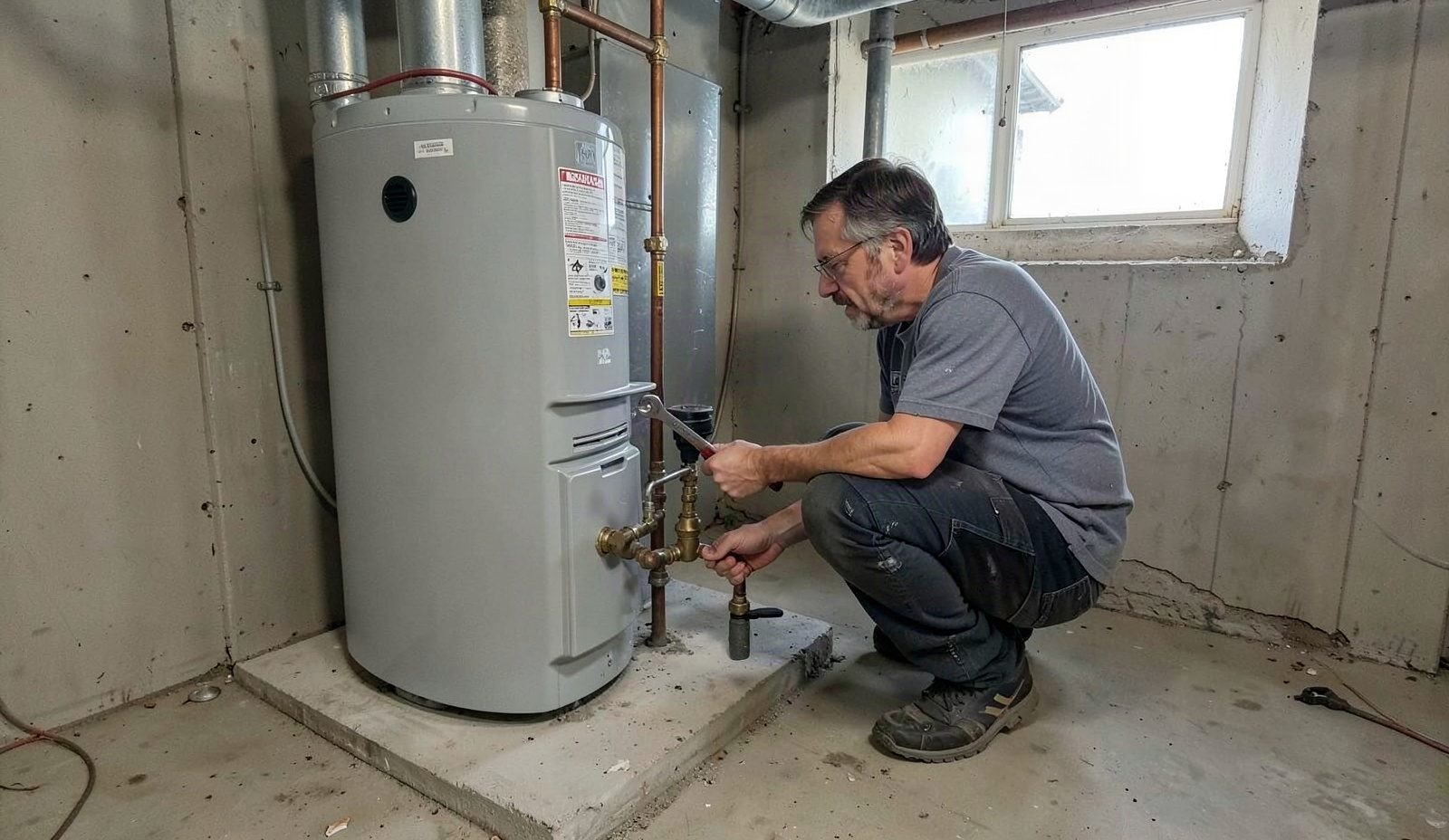
You describe the symptom on the phone, cold water, error codes, or a visible leak, and we schedule a technician with the right parts on the truck. On arrival, the technician checks the existing unit's age and fuel type, tests static water pressure at an outdoor spigot, and inspects the gas line, venting, and supply connections. You get a plain explanation of what's failing and why, in the same room, before any tools come out.
Once you approve the written quote, the technician shuts off water and gas or power, protects the floor path, and removes the old unit. For a tankless conversion, this is where gas line upgrades and new vent runs happen, sized to the manufacturer's BTU chart. For a tank swap, the new unit is set, leveled, and connected to the existing lines unless corrosion requires replacing a section first, which you approve separately.
Before leaving, the technician tests the T&P relief valve, checks for gas leaks at every new connection with a combustible gas detector, and confirms water temperature at a tap reaches a safe, consistent setpoint. You get a walkthrough of the shutoff valve location, the expansion tank if one was added, and basic maintenance intervals. Any paperwork needed for a permit inspection is left with you.
Water heater work in Fort Worth falls under the City of Fort Worth plumbing code, which is based on the International Plumbing Code with local amendments layered on top. A crew that does not know the local amendment history will miss things a Fort Worth inspector checks every time: expansion tank sizing on a closed system, drain pan requirements for a unit set in an attic or over living space, and combustion air volume for a gas unit installed in a small closet.
Housing stock matters just as much as code. Pre-1970 neighborhoods across the metro, including Fairmount and Arlington Heights, were plumbed with galvanized steel supply lines and cast iron drains, both now at or past the end of their service lives. Installing a new water heater, tank or tankless, onto a galvanized supply without addressing the corrosion inside those pipes means feeding the new unit's heat exchanger or tank inlet with rust flakes from day one. We isolate and inspect the supply line at the water heater connection before committing to a model, and we flag when a partial repipe should happen alongside the water heater swap rather than after it fails again.
An out-of-area crew unfamiliar with these two realities, the local code amendments and the age of the housing stock, tends to install the wrong-sized expansion tank or skip the drain pan a Fort Worth inspector will ask about on a permitted job. That produces a failed inspection, a return trip, and a homeowner holding the bill for both. Call (817) 710-3766 to talk through what your specific street and house era mean for the job before any work starts.
Our page on how to shut off main water valve covers that side of the work in more depth.
Price-checking is smart: marketplaces like Thumbtack publish typical cost ranges you can hold any quote against, including ours.
You call and tell us whether it's a no-hot-water emergency or a planned replacement. Emergency calls get a same-day window, usually a two to four hour block confirmed by text once a technician is routed. Planned replacements get scheduled for a specific day with a two-hour arrival window given the morning of the visit. If a prior job runs long, we call before your window closes, not after, and offer the next available slot the same day when possible. You are never left guessing whether someone is still coming.
We lay down floor runners from your door to the water heater location before any tool comes out, and we set a drain pan or containment barrier under the old unit before disconnecting it. Old tanks get drained through a garden hose to the nearest floor drain or exterior grade, not carried dripping through your house. Every fitting, old anode rod, and packaging scrap from the new unit leaves with us the same day. When we're done, the area looks like nobody worked there except for the new equipment.
Your estimate reflects four things: the unit size or capacity you need, access difficulty getting the old one out and the new one in, whether venting or gas line work is required for a tankless conversion, and the condition of the existing supply and drain connections. We write the number down, walk you through what drives it line by line, and you approve it before a single fitting gets loosened. If we find something once the old unit is out, like corroded shutoff valves, we stop and get your approval before adding anything.
Every technician passes a background check before being assigned to a Fort Worth address. New hires work alongside a senior plumber on water heater installs until they can pass a field competence check covering gas line pressure testing, venting clearance verification, and correct expansion tank sizing without supervision. Techs sit through refresher training whenever the locally adopted plumbing code amendments update, so the person at your door is working from the current rule set, not what applied five years ago.
A like-for-like tank swap with no gas or venting changes is within reach for an experienced DIYer, but tankless conversions are not. Tankless installs require a combustible gas leak test on every new joint, correct Category III vent sizing, and often a gas line upgrade, work that carries real carbon monoxide risk if done wrong. Most Fort Worth homeowners call a plumber once they see what the vent and gas line requirements involve.
The estimate depends on unit type, access, and whether venting or gas line work is needed, and you see the full breakdown before work starts. A tank swap into an existing closet costs less to plan than a tankless conversion needing a new stainless vent run through an exterior wall. We write the number down and explain each line before you approve it.
A full water heater replacement or any gas line and venting change typically needs a permit through the City of Fort Worth Development Services Department. A straightforward like-for-like tank swap with no line changes often does not, but the department makes the final determination on any borderline case. We handle the permit application on jobs that require one.
Response time depends on whether it's a no-hot-water emergency or a planned replacement. Emergency calls with zero hot water typically get same-day service, while a planned tank or tankless replacement can usually be scheduled within a day or two depending on parts availability. Call (817) 710-3766 and we'll give you a specific window based on what's happening at your house.
A straightforward tank replacement usually takes two to three hours from shutoff to tested completion. A tankless conversion that requires new venting or a gas line upgrade typically runs a full workday, sometimes spilling into a second day if a wall or attic penetration needs framing repair. Your technician gives you a specific time estimate once the scope is confirmed on site.
Minor tasks like flushing sediment from the drain valve are DIY-safe, but gas line work, venting changes and full tank swaps are not. A misconnected T&P discharge or incorrect vent category creates a scalding or carbon monoxide risk that isn't visible until something goes wrong. Anything touching gas supply, electrical disconnects or venting configuration falls under code requirements that call for a technician who can test and document the result.
North Texas expansive clay swells with rain and shrinks in drought, moving slab foundations enough to shear copper supply lines and separate drain joints under the house. A water heater set on a slab pad that has shifted even a quarter inch can develop a leak at the union fitting within months, which is why we check pad level before any new install. The February 2021 freeze burst pipes across Tarrant County by the tens of thousands, and most of the failures were supply lines run through attics and exterior walls, the same locations where a tankless unit's water lines often run. Near the Near Southside and the Cultural District, where mixed housing ages sit close together, we see both problems on the same block: 1920s foundations moving under older tanks and newer construction with under-insulated exterior wall runs feeding a tankless unit.
Full water heater replacements and any gas line or venting changes typically require a permit through the City of Fort Worth Development Services Department, while a straightforward like-for-like tank swap with no line changes often does not, though the department makes the final call on borderline jobs. An inspector checks expansion tank sizing, drain pan installation, and combustion air clearance on permitted jobs, and failing that inspection means a return trip and a delay before you have reliable hot water again. Homeowners across the metro trust a crew that pulls the permit correctly the first time and can walk an inspector through the installation without a callback, because that inspection record is what protects your home's resale disclosures later.
Explore our service area and locate Shield Plumbing Fort Worth with ease. We're proudly local and serve the surrounding neighborhoods with fast response and honest pricing. Use the map to check our coverage area, or call us and we'll confirm in seconds.
Address:
Shield Plumbing Fort Worth, 210 W 7th St, Fort Worth, TX 76102
5 Signs Your Ridglea Hills Home Has a Slab Leak, practical local guidance from Shield Plumbing Fort Worth, Fort Worth's trusted plumbing tea…
Read More
What Wedgwood Residents Should Know Before a Whole-Home Repipe, practical local guidance from Shield Plumbing Fort Worth, Fort Worth's trust…
Read More
How Fort Worth's Hard Water Is Quietly Destroying Your Water Heater, practical local guidance from Shield Plumbing Fort Worth, Fort Worth's …
Read More
The Hidden Cost of Ignoring a Dripping Faucet in Fort Worth, practical local guidance from Shield Plumbing Fort Worth, Fort Worth's trusted …
Read More