
June 20, 2026
5 Signs Your Ridglea Hills Home Has a Slab Leak
5 Signs Your Ridglea Hills Home Has a Slab Leak, practical local guidance from Shield Plumbing Fort Worth, Fort Worth's trusted plumbing tea…
Read More




A sewer problem rarely announces itself with one clean symptom. It shows up as a chorus: the tub gurgles when the washing machine drains, the toilet bubbles when you run the kitchen sink, and a patch of grass near the cleanout stays greener and softer than the rest of the yard no matter the season. Add a sulfur smell drifting up through a floor drain and you are looking at classic sewer line warning signs, not a simple clog.
The root cause under most Fort Worth homes traces back to the ground itself. North Texas expansive clay swells with rain and shrinks in drought, and that seasonal movement shifts slab foundations enough to shear copper supply lines and separate drain joints running under the house. In older sections of Fairmount and Wedgwood, where lots were graded and plumbed decades before anyone accounted for clay movement this aggressive, that joint separation shows up as a slow, creeping backup that gets worse every time it rains hard, then eases off during a dry August.
A sewer problems checklist worth running before you call anyone: check whether more than one fixture backs up at once, whether the backup follows heavy rain, whether you smell sewage outside near the cleanout or foundation line, and whether a toilet flush pushes air bubbles into a nearby tub. One slow drain usually means a local clog. Multiple fixtures backing up together, tied to weather, points toward a break or offset joint in the main line, and that distinction is exactly what separates a simple auger job from when to replace sewer line sections outright.
Waiting on these sewer damage indicators costs more than a delayed repair. An offset joint lets tree roots and soil into the pipe, which narrows the flow path and turns an intermittent gurgle into a full backup at the lowest fixture in the house, usually a tub or a ground-floor toilet. Left longer, the leaking wastewater saturates the soil under the slab, softening the bearing surface the foundation rests on. What starts as an annoying gurgle becomes a foundation conversation, and that is a far bigger job than resealing a joint.
Our page on sewer line repair & replacement covers that side of the work in more depth.
Communities like r/Plumbing are full of homeowners comparing notes on exactly this problem, worth a read before a major project.
The first instrument on site is a pan-tilt sewer camera fed through the cleanout on a counter-metered cable, so we know the exact footage to any defect the lens finds, not an estimate. A pinpoint locator on the cable head reads depth in feet from the surface, which tells us precisely where to open ground if excavation is needed instead of trenching a ten-foot guess across a yard. We are looking for three things on that feed: a bellied section where the pipe has sagged and holds standing water, an offset joint where two pipe sections no longer line up, and root intrusion narrowing the working diameter of the line.
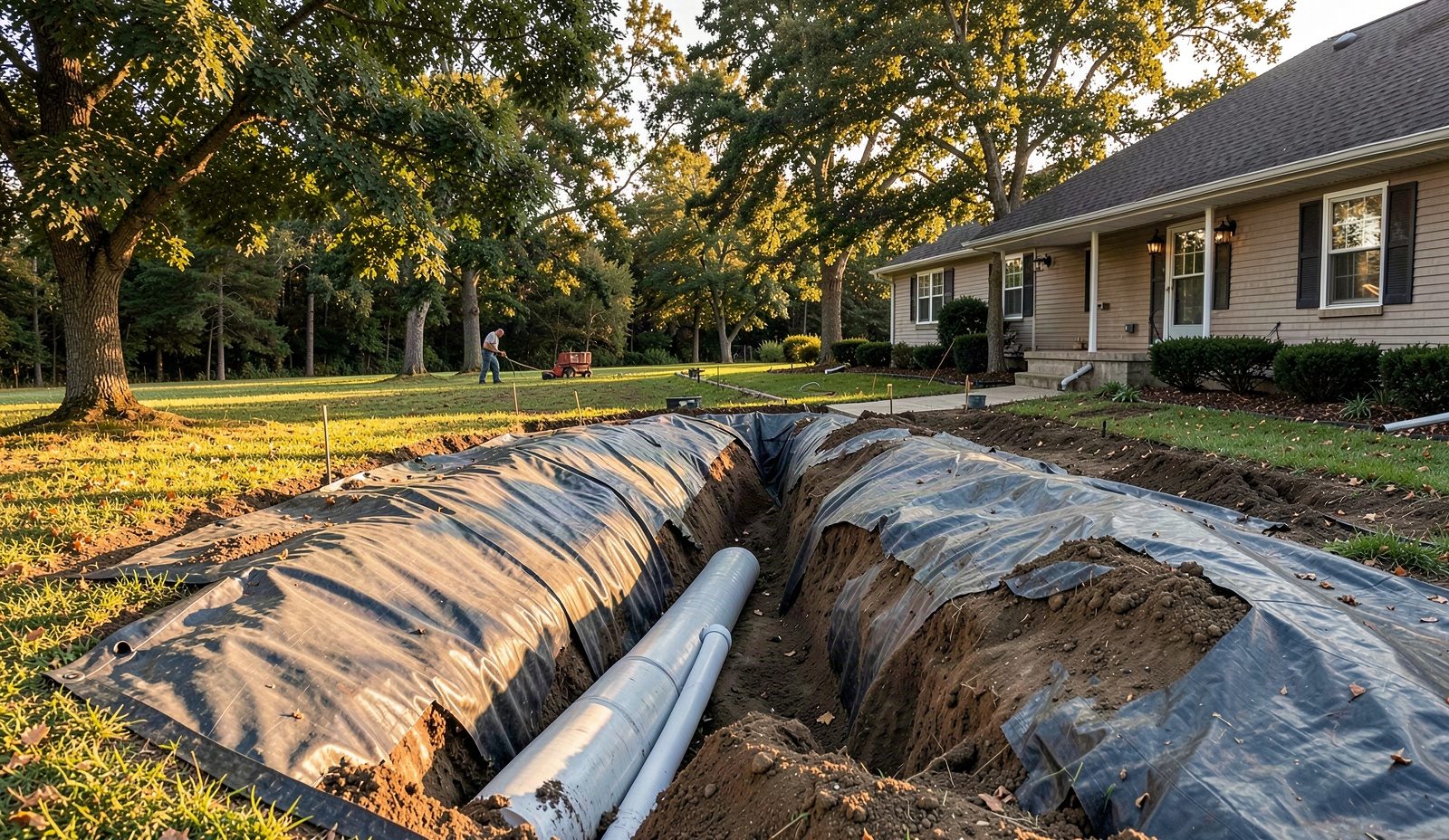
That footage decides the repair path, and the three real options differ a lot on the numbers. Cured-in-place pipe lining works when the host pipe still holds at least half its original round cross-section, since the resin liner cures against the existing wall and needs that shape to bond correctly; it goes in through the existing cleanout with minimal digging and performs close to a new PVC line for decades. Pipe bursting is the move when the old pipe is crushed past what lining tolerates but the trench line itself is clear of other utilities; a bursting head fractures the old cast iron outward while pulling new HDPE pipe in behind it through one or two small access pits. Open trench replacement is what we fall back to when the line has multiple failure points or has shifted out of grade entirely, since lining and bursting both need a continuous, roughly straight host pipe to work through.
Beyond the sewer itself, every service call includes a check of static water pressure at an outdoor spigot with a calibrated gauge. A reading above 80 psi is not a sewer issue, but it is a code issue: Section 604.8 of the International Plumbing Code requires a pressure-reducing valve once static pressure crosses that line, and high pressure accelerates wear on every joint in the house, sewer connections included. Skipping that reading is how a plumber misses a second problem that is sitting right next to the one you called about.
See commercial sewer line repair for how the related work is scoped and priced.
Permit and inspection questions? Development Services is the office we coordinate with on every permitted Fort Worth job.
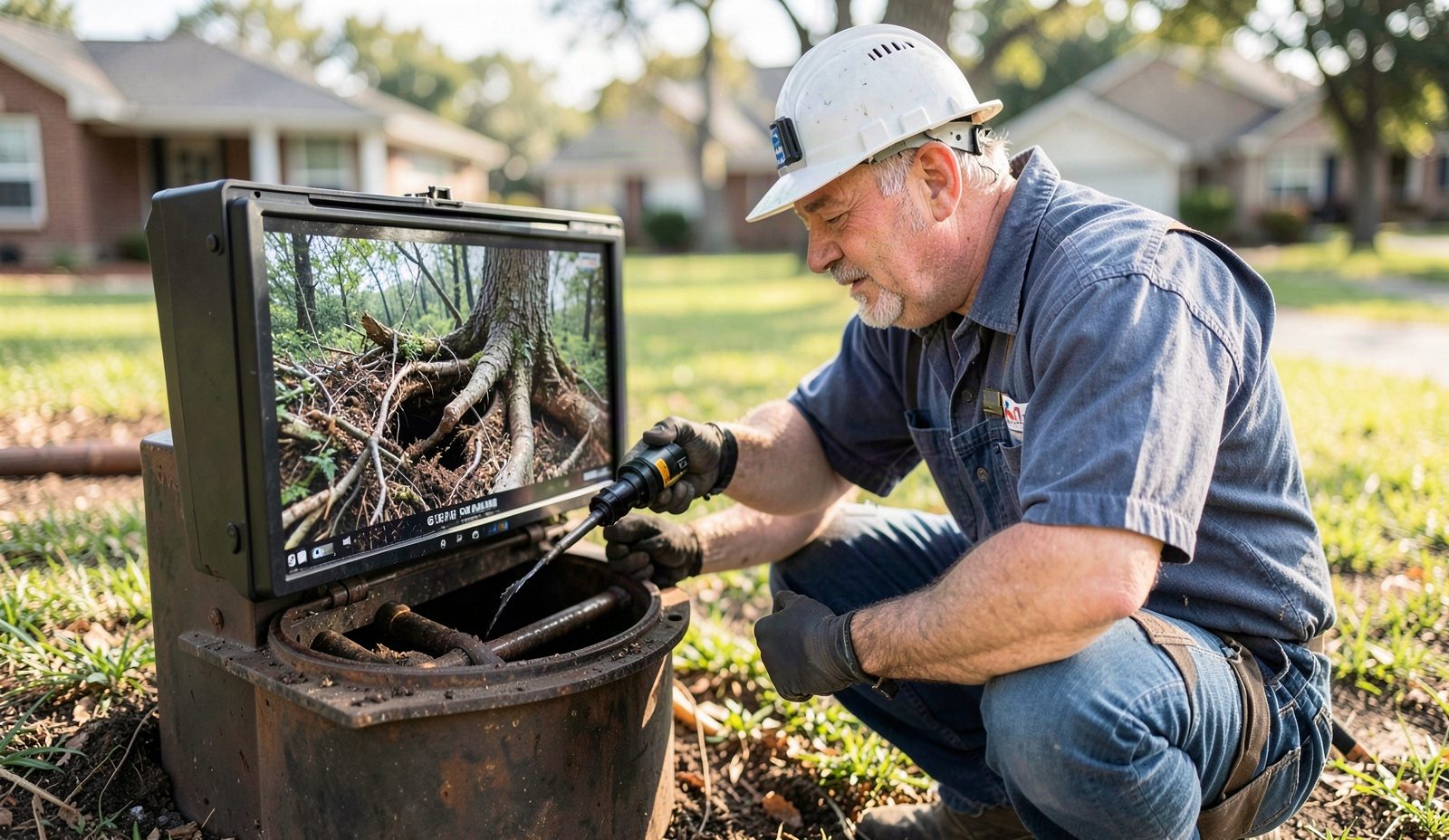
You describe what you are seeing on the phone: which fixtures back up, whether there is odor, whether it follows rain. A technician arrives in the confirmed window and runs the pan-tilt camera through the nearest cleanout first, since that avoids opening walls or floors to find the access point. You can watch the live feed on a monitor while the technician narrates what the lens is showing, footage count, any belly or offset, and whether roots are visible in the line.
Once the camera identifies the defect, you get the written quote for the specific repair path, lining, bursting, or trench replacement, and nothing starts until you approve it. Work areas get protected with runners and containment barriers before any cutting or digging. If the plan changes mid-job, for example a second offset joint turns up two feet past the first one, the technician stops and reviews the change with you before proceeding rather than continuing on the original scope alone.
After the repair, the camera goes back through the line to confirm the defect is gone and the pipe holds a consistent, unobstructed diameter end to end. Any excavated area gets backfilled and compacted before the crew leaves, and a technician walks the site with you to point out what was found, what was fixed, and where the cleanout or access point sits now. You get a written summary of the footage findings and repair method for your records.
Sewer work in Fort Worth runs under the City of Fort Worth plumbing code, based on the International Plumbing Code, and a technician who does not know that code cold will misjudge cleanout spacing, vent sizing, or backfill requirements on a repair that gets reopened by an inspector. Structural work like a full line replacement or a bursting job typically needs a permit pulled before digging starts; a like-for-like joint reseal usually does not. That distinction matters because a permit pulled late or skipped entirely on a job that needed one can stall a home sale months down the road when a title company asks for the paperwork.
Out-of-area operators who roll a truck into Fort Worth for a single job do not carry the local memory that matters here. They have not spent years pulling camera footage out of clay-shifted lines near the Near Southside, and they do not automatically check the slab for the secondary movement damage that expansive clay tends to leave behind everywhere else in the house. A crew that works this metro every week reads a camera feed differently: an offset joint six inches from grade in Fort Worth clay is a different repair calculus than the same offset in sandy soil somewhere else, because the ground here keeps moving after the repair is done.
Response logistics matter too. A homeowner with sewage backing into a tub does not have days to wait on a callback. Reaching a technician who already knows which Fort Worth neighborhoods run on original clay pipe and which run on newer PVC cuts the diagnostic time in half before the camera even goes in the line. Call (817) 710-3766 to talk through what you are seeing before it gets worse.
More detail on emergency sewer backup cleanup is on its own page.
Independent standards matter too, the EPA's WaterSense program sets the efficiency benchmarks we use when recommending replacement fixtures.
You get a scheduled arrival window when you call, not a vague morning-or-afternoon guess. Dispatch confirms the window by text once a technician is routed, and if a prior job runs long you get a call with an updated time before the window closes, not after. Sewer symptoms that sound active, standing water in a tub, sewage odor outside, or a backup in more than one fixture, get moved ahead of routine maintenance calls on the schedule. You are told on the phone whether your situation qualifies for that faster slot.
Floor runners go down from the entry point to the work area before any tool comes out, and the cleanout or access pit gets a containment barrier if the job involves digging. Excavated soil is staged on tarps, never dumped straight on grass or landscaping, and hauled off once backfill is complete. Inside the house, any camera or snake work through a cleanout gets a drop cloth and a wet-vac on standby for backflow. When the crew leaves, the work area looks like nobody dug or ran a camera through it that day.
Scope drives the estimate first: a joint reseal costs less than a lined section, which costs less than a full replacement. Access matters next, a cleanout in an open yard is cheaper to reach than a line running under a slab or a mature tree root system. Pipe material and depth factor in too, since cast iron under an older Fairmount lot behaves differently than PVC under newer construction. You get a written, itemized quote after the camera inspection, before any digging or cutting starts, and you approve it line by line before work begins. No verbal estimate turns into a surprise invoice.
Every technician passes a background check before being scheduled into a home, and nobody works a sewer call solo until a senior technician has signed off on their camera reading and joint diagnosis in the field, not just in a classroom. Ongoing training tracks the current plumbing code cycle adopted locally, so field crews are not working off rules that changed two code cycles ago. Competence gets checked again anytime a technician's repair gets a callback for the same defect, which is tracked and reviewed internally.
Same-day service is available for active backups and confirmed line breaks. Calls describing sewage odor, multiple fixtures backing up together, or standing water get moved ahead of routine scheduling. Call (817) 710-3766 and describe what you are seeing so dispatch can gauge how urgent your situation is and slot a technician accordingly.
Cost depends on scope, access, and pipe material, not a flat rate. A joint reseal reached through an existing cleanout costs less than a line running under a slab or through root-heavy soil near mature trees. You get a written, itemized quote after the camera inspection identifies the specific defect, before any work begins, so there is a clear number tied to a clear scope.
Estimates come after the camera inspection, not before it. The technician pulls footage through the cleanout, identifies the exact defect and its distance from the access point, then puts together an itemized written quote broken out by scope, materials, and labor. You get a copy by email and approve it before any cutting or digging starts, so there is no verbal number that shifts once work begins.
It depends on the scope of the work, not a blanket rule. Full line replacement, bursting, or any structural work typically needs a permit pulled through the City of Fort Worth Development Services Department for Fort Worth addresses, while a minor like-for-like joint repair often does not. The final call on what needs a permit belongs to that permitting authority, and a technician who works this area regularly knows which repairs cross that line.
Cost for a sewer odor repair depends on what failed and how hard it is to reach. A simple trap refill or wax ring swap costs far less than opening a wall to reach a cracked vent stack or excavating a section of drain line under a slab. Access is the biggest driver: a cleanout in the yard is a quick fix, while a joint separated under a bathroom in the center of the house means cutting through flooring or a slab first. A written scope after the camera inspection lays out exactly what drives the number for your specific repair.
Whole house repipe cost depends mainly on square footage, pipe material and wall or slab access. A single story slab home with easy attic access costs less to repipe than a two story pier and beam house with finished ceilings below the crawlspace. Ask for a written scope walking your specific home before comparing any number, since two quotes for the same address can differ once access and fixture count get measured on site.
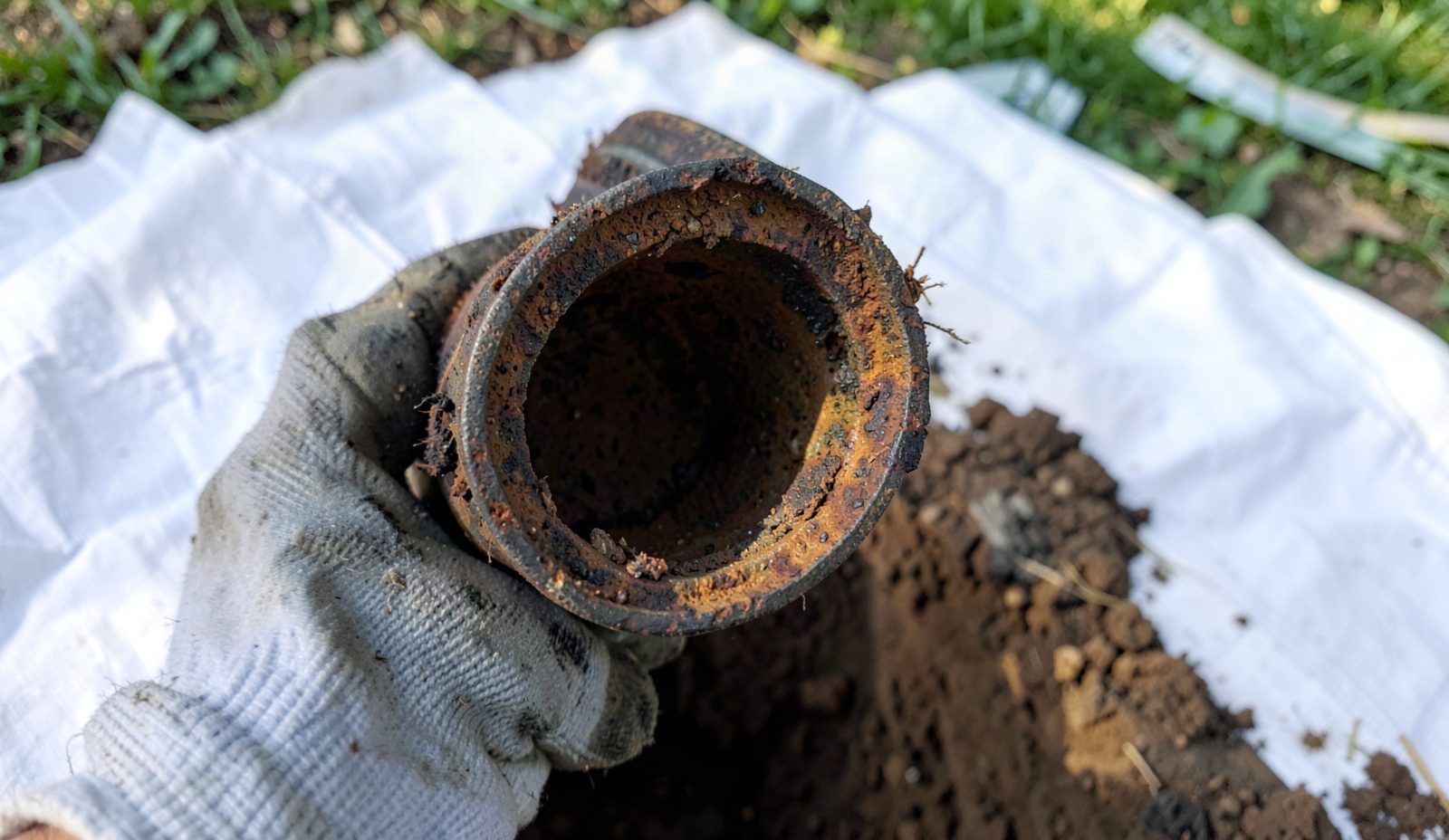
Pre-1970 neighborhoods across the metro were plumbed with galvanized steel supply lines and cast iron drains, and both materials are now at or past the end of their service lives. In Ridglea Hills and Arlington Heights, homes built on that original cast iron are far more likely to show interior pipe scaling and joint corrosion on camera than a home with a PVC line installed in the last twenty years, which changes the repair math before a technician ever pulls a camera through the cleanout. A cracked cast iron joint under a mature tree canopy also invites root intrusion faster than a tight PVC joint would, since roots follow moisture seeping from even a hairline separation.
Sewer repairs that involve excavation or a full line replacement get an inspection from the city before backfill closes the trench, checking depth, slope, and bedding against the adopted plumbing code. That inspection step is not a formality here; a trench backfilled before sign-off in Fort Worth clay can settle unevenly as the soil cycles through its next wet-dry swing, undoing bedding work that looked fine the day it was covered. A technician who plans for that inspection window and compacts backfill correctly the first time avoids a callback that a rushed out-of-area crew would not think twice about.
Explore our service area and locate Shield Plumbing Fort Worth with ease. We're proudly local and serve the surrounding neighborhoods with fast response and honest pricing. Use the map to check our coverage area, or call us and we'll confirm in seconds.
Address:
Shield Plumbing Fort Worth, 210 W 7th St, Fort Worth, TX 76102
5 Signs Your Ridglea Hills Home Has a Slab Leak, practical local guidance from Shield Plumbing Fort Worth, Fort Worth's trusted plumbing tea…
Read More
What Wedgwood Residents Should Know Before a Whole-Home Repipe, practical local guidance from Shield Plumbing Fort Worth, Fort Worth's trust…
Read More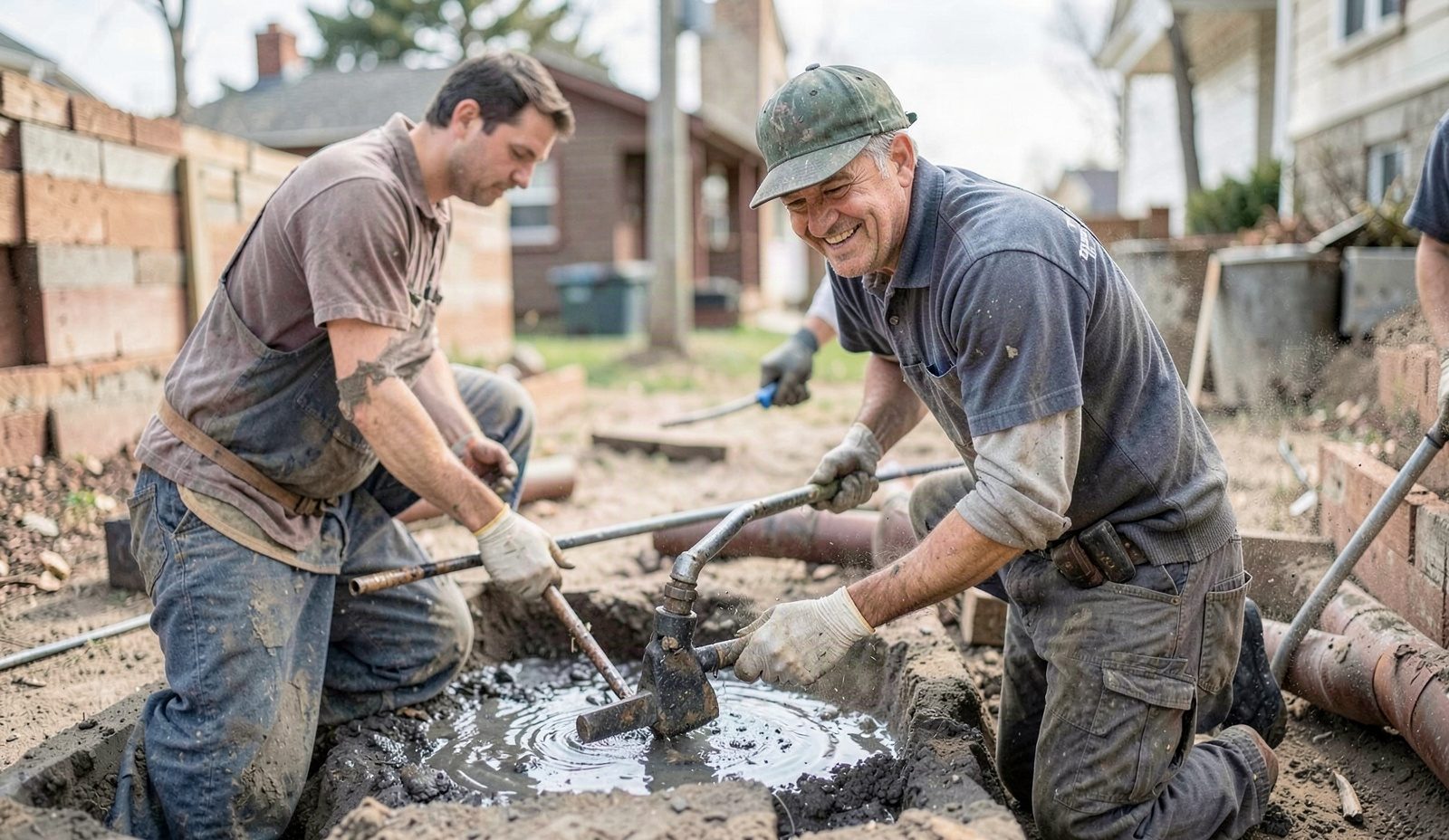
How Fort Worth's Hard Water Is Quietly Destroying Your Water Heater, practical local guidance from Shield Plumbing Fort Worth, Fort Worth's …
Read More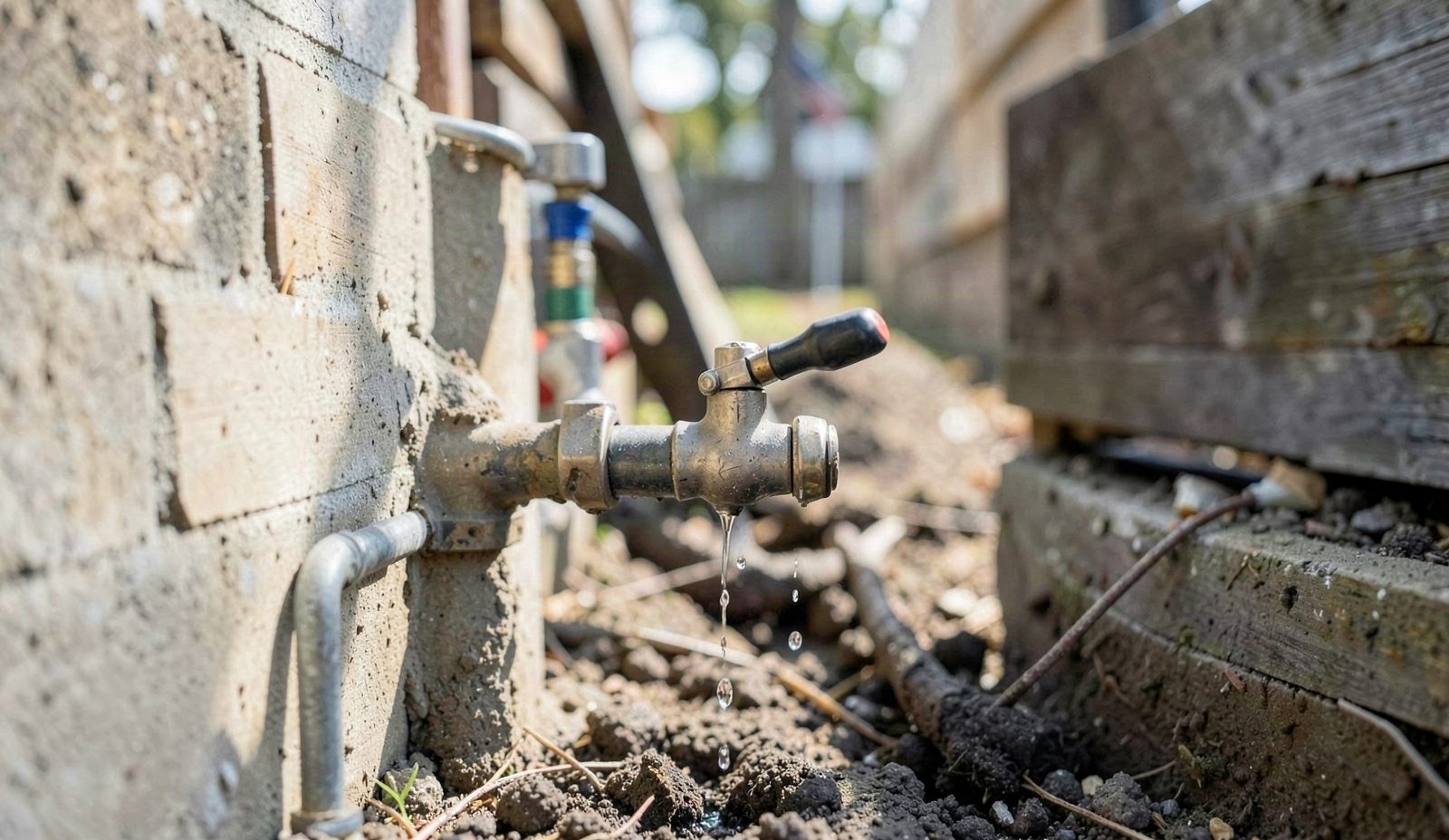
The Hidden Cost of Ignoring a Dripping Faucet in Fort Worth, practical local guidance from Shield Plumbing Fort Worth, Fort Worth's trusted …
Read More