
June 20, 2026
5 Signs Your Ridglea Hills Home Has a Slab Leak
5 Signs Your Ridglea Hills Home Has a Slab Leak, practical local guidance from Shield Plumbing Fort Worth, Fort Worth's trusted plumbing tea…
Read More




A sewer line problem rarely announces itself with a flood. It starts smaller. Multiple drains gurgle when the washing machine empties. The toilet on the lowest floor bubbles when you run the kitchen sink. A patch of yard over the lateral stays soggy and green even in August, or sinks into a shallow trench you can feel underfoot. Inside, a sulfur smell near a floor drain that was never there before means gas is escaping a broken joint, not just a slow clog.
North Texas expansive clay swells with rain and shrinks in drought, and that constant movement is doing the damage under your house. As the slab shifts a fraction of an inch at a time across the season, it separates drain joints and shears rigid connections at the point where the lateral leaves the foundation. Homes in Fairmount, Arlington Heights, and the Near Southside sit on some of the oldest, most reactive clay lots in the metro, and their owners see this pattern more than most: a hairline foundation crack near the plumbing wall shows up the same season as a slow kitchen drain.
Age compounds the soil problem. Pre-1970 neighborhoods across the metro were plumbed with cast iron drains that are now at or past the end of their service life, and cast iron does not fail gracefully. The interior corrodes into a rough, narrowed channel that snags paper and grease, then a joint finally gives and roots from a mature tree find the gap. A camera run through one of these lines often shows a bellied section holding standing water and a root mass thick enough to stop a cable auger cold.
Waiting past the first backup rarely buys you anything but a bigger job. A hairline separation becomes a full collapse under slab load. Standing wastewater under the foundation accelerates the same clay movement that caused the crack in the first place, and a lateral repair you could have scheduled becomes an emergency excavation through a bathroom floor. Each cycle of backup and reabsorption also pushes contaminated water closer to the crawlspace or slab, turning a plumbing repair into a moisture and structural conversation.
If this sounds close but not quite your situation, commercial sewer line repair may be the better starting point.
Permit and inspection questions? Development Services is the office we coordinate with on every permitted Fort Worth job.
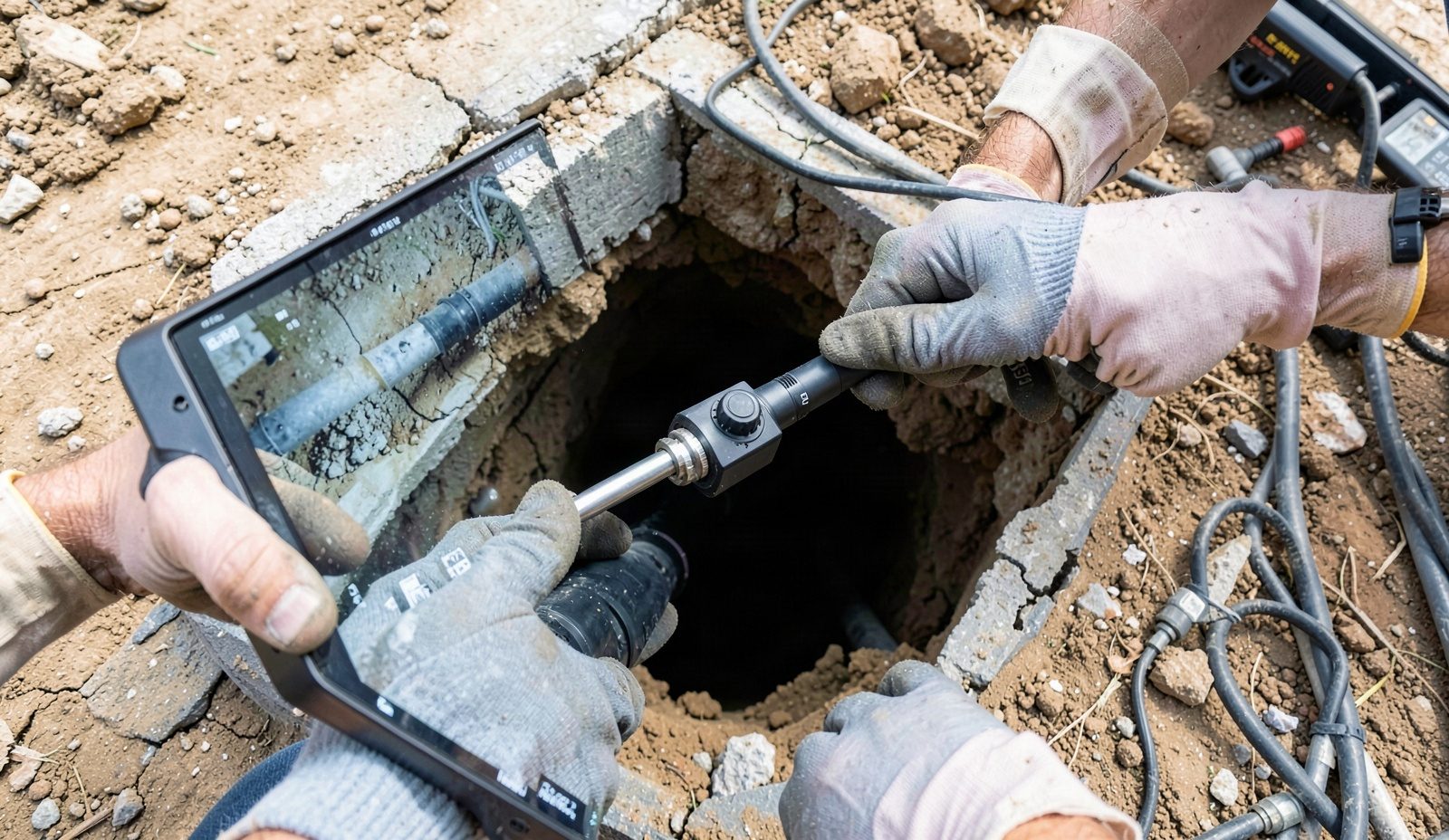
Every sewer call starts with a camera, not a guess. A self-leveling color camera head goes down the cleanout on a push-rod or crawler, and a sonde locator on the surface marks the exact depth and horizontal position of any defect within a few inches. That footage becomes the record we hand you: the belly holding water, the offset joint, the root ball, the exact point where cast iron gives way to a prior repair in PVC. You see what we see before any decision on repair method gets made.
While the line is open, we also read the system's static water pressure at an outdoor spigot, because a lateral under constant high pressure backflow stresses every joint it passes. Under Section 604.8 of the International Plumbing Code, a reading above 80 psi requires a pressure-reducing valve, and we flag that on the same visit rather than making you schedule a second one. On the drain side, a manometer or a simple bucket-and-stopwatch flow test tells us whether a partial blockage is really a capacity problem or a slope problem, since a lateral with less than the quarter-inch-per-foot fall code expects will hold solids no matter how clean the pipe is.
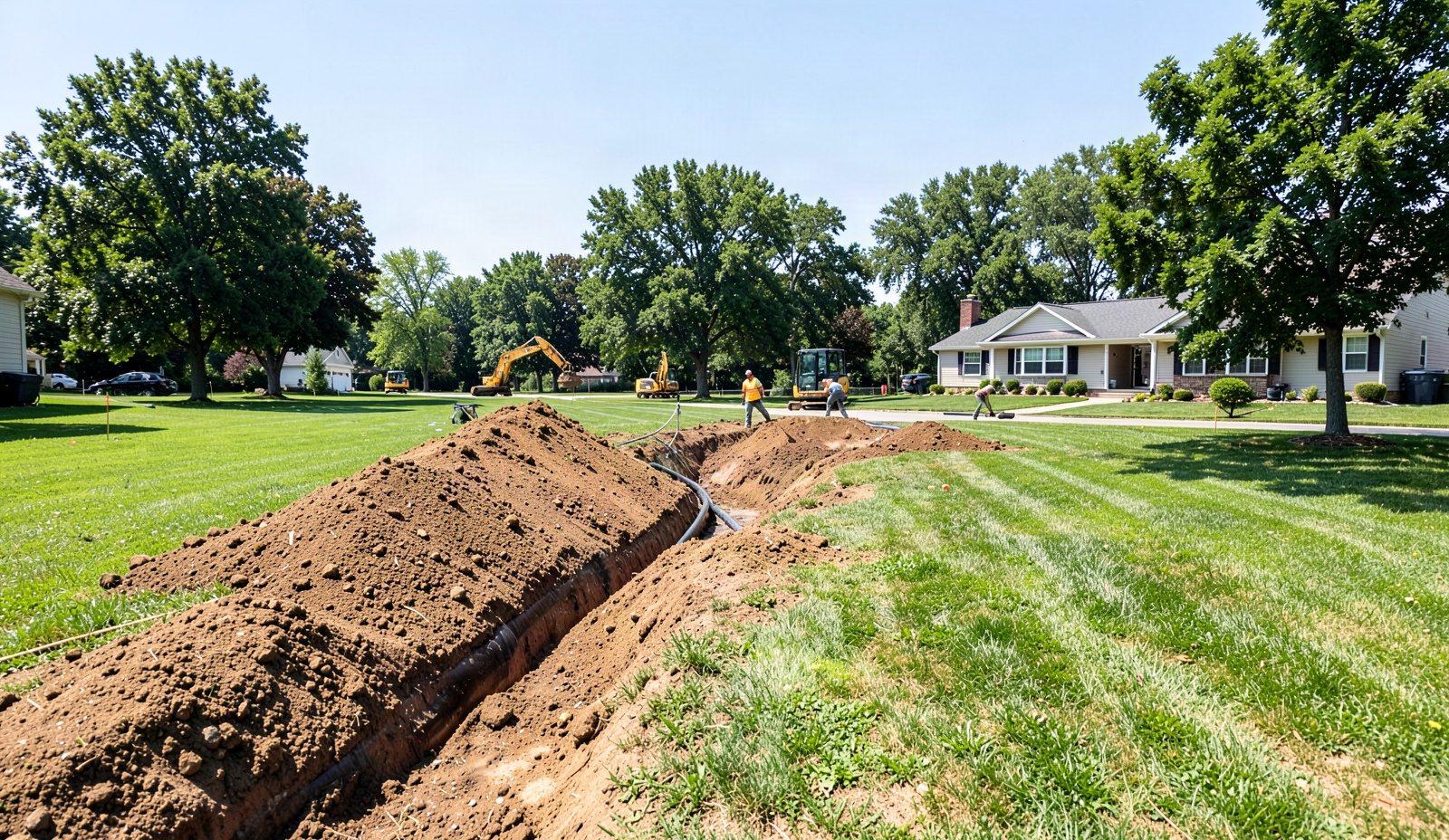
Repair method depends on what the camera shows, not on what is easiest to sell. A short, isolated defect with good surrounding pipe is a strong candidate for trenchless cured-in-place lining, using systems like Perma-Liner or NuFlow, where a resin-saturated felt tube is inverted through the existing pipe and cured to form a jointless liner rated for decades of service with one or two access pits instead of a trench. A line with multiple bellies or a severely undersized cast iron main is a better fit for pipe bursting, which pulls a new SDR35 or Schedule 40 PVC line through the old one's path and upsizes diameter in the same pass. A collapsed section under a slab, by contrast, still calls for traditional open excavation and PVC replacement, because no liner or burst head can bridge a gap that no longer holds its shape.
See gas line repair & installation for how the related work is scoped and priced.
Independent standards matter too, the EPA's WaterSense program sets the efficiency benchmarks we use when recommending replacement fixtures.
You describe the symptoms on the phone: slow drains, backup location, any smell or wet spot in the yard. A technician arrives in the scheduled window and runs a color camera with a locator through the nearest cleanout to see the actual condition of the line, not just guess from surface symptoms. You watch the footage on a monitor as it happens, and the technician points out the belly, offset, or root intrusion in real time before recommending anything.
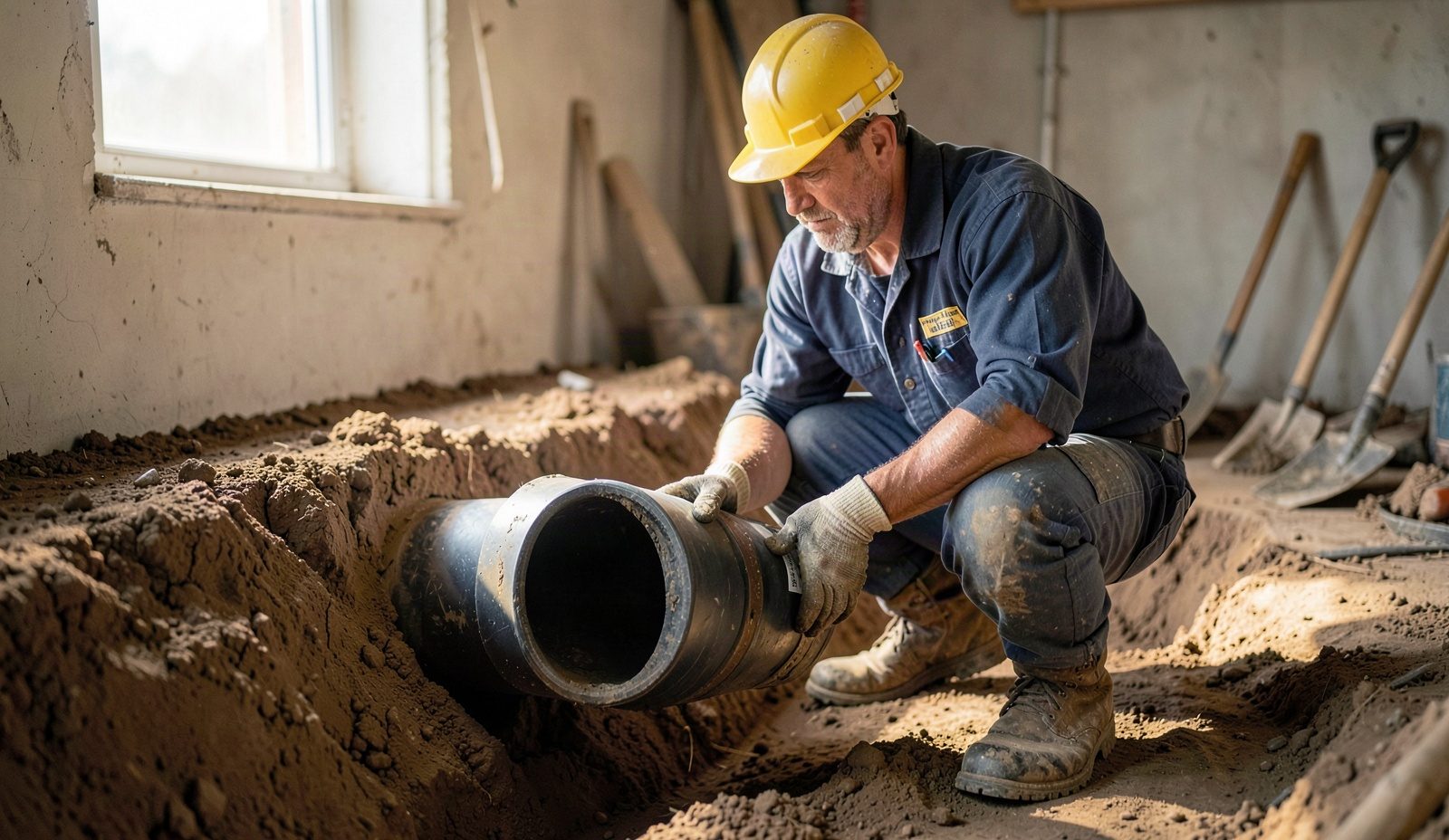
Once you approve the written scope, the crew protects the work path with track boards and tarps, then opens access at the cleanout or excavation point as planned. For trenchless repairs, the liner or burst head goes in through minimal access pits. For traditional replacement, the old cast iron or clay pipe comes out and new SDR35 PVC goes in at the correct slope. Any condition the camera missed gets a phone call and your sign-off before work continues past that point.
Before backfill closes the trench, the technician runs a hydrostatic or air test on the new section to confirm it holds pressure with no leaks at the joints, and a final camera pass verifies slope and a clear bore end to end. You get a walkthrough of what was done, the footage from both the original and final inspection, and a copy of any permit documentation filed with the city so you have a record if it comes up during a future sale or insurance review.
Sewer work in Fort Worth falls under the City of Fort Worth plumbing code, based on the International Plumbing Code, and any full lateral replacement or structural repair gets permitted through the City of Fort Worth Development Services Department before excavation starts. Minor like-for-like spot repairs often do not require a separate permit, but the call belongs to that office, not to the crew doing the digging, and we pull permits on every job that requires one rather than hoping an inspector never asks.
Crews who worked through the tens of thousands of pipe failures Tarrant County saw during the February 2021 freeze learned something about this ground that no manual teaches: a slab that has already shifted from frozen, then thawed, soil does not settle back into its original position. That same freeze-thaw stress adds to the ongoing clay movement described earlier, and a lateral repaired without accounting for continued foundation drift often reopens within a year or two. We plan bedding and pipe material selection around that reality, not around whatever is fastest to install.
Out-of-area operators unfamiliar with Fort Worth soil and permitting routinely make two mistakes: they bed new pipe in native clay instead of proper granular fill, which lets the same swelling that caused the original break start the cycle again, and they skip the permit inspection step entirely, leaving the homeowner liable if the work surfaces during a future sale or insurance claim. A crew that works this city every week knows which neighborhoods carry cast iron, which carry clay tile, and which permit reviewers want a compaction report before they sign off.
More detail on emergency sewer backup cleanup is on its own page.
Booking starts with a phone call, not a queue. We give you a two-hour arrival window tied to the day you call, not a vague morning-or-afternoon guess, and the technician calls thirty minutes out so you are not waiting around all day. If a prior job runs long and the window is going to slip, we call before the window closes, not after, and we offer the next available slot the same day when one exists. Sewer calls involving active backup get priority scheduling ahead of routine repairs.
Excavation and trenchless access both make a mess if nobody controls it. We lay down plywood track boards over lawns before equipment crosses them, tarp any interior access point like a cleanout in a closet or under a sink, and stage spoil dirt on a containment tarp instead of directly on grass or pavers. Cast iron and PVC offcuts, old fittings, and packaging go into the truck at the end of the day, not into your trash cans. When we finish, the yard gets backfilled, tamped, and raked level, and any disturbed sod is reset.
What drives the number on your estimate is depth of the line, distance from cleanout to city tap, access obstacles like mature trees or a driveway crossing the lateral, and whether the camera shows a spot repair or a full lateral replacement. You get a written scope before any digging starts, itemized by material and labor, and nothing changes once work begins unless the technician finds a condition the camera could not see and calls you to approve the change first. You decide before the crew breaks ground, not after.
Every technician passes a background check before being scheduled into a customer's home, and continuing education on the current plumbing code cycle happens on a set schedule, not only when a rule changes. New hires run supervised camera inspections and trenchless installs alongside a senior technician for a set number of jobs before taking a sewer call solo, and that sign-off is documented, not assumed. Field supervisors spot-check completed jobs on a rotating basis to confirm slope, bedding, and connection work meet the standard we set internally.
Cost depends on depth, distance to the city tap, access obstacles, and whether the fix is a spot repair or a full replacement. A short trenchless liner section costs far less than a full lateral replacement under a driveway. Fort Worth's clay soil adds cost when a line sits deeper than usual to escape frost and slab movement. We give you an itemized written scope after the camera inspection so every cost driver is visible before you approve anything.
Coverage depends on your specific policy and the cause of the failure. Most standard policies exclude gradual wear like root intrusion or aging cast iron, but many cover sudden collapse or backup damage inside the home, sometimes through a separate sewer line endorsement. Camera footage and a written scope from the inspection give you documentation an adjuster can review. Check your policy language before assuming either way, and ask your adjuster which endorsement applies.
Yes, trenchless methods repair many sewer lines without a full trench. Cured-in-place lining and pipe bursting both work through one or two small access pits instead of an open trench, and they suit lines with isolated defects or manageable diameter increases. A collapsed section or a severely offset joint under a slab still needs traditional excavation, because no liner can bridge a gap that no longer holds its original shape. The camera inspection determines which method fits your line.
Fort Worth homeowners can legally do their own plumbing work on their own property in many cases, but a full sewer replacement still needs a permit from the City of Fort Worth Development Services Department and a passed inspection. Getting the slope, bedding material, and joint connections wrong on clay soil leads to repeat failures within a year or two. Most homeowners find the excavation equipment, camera gear, and code knowledge required make this a job worth calling a technician for.
Estimates start with a camera inspection to see the actual condition of the line, then move to a written scope covering material, labor, and access requirements. You review and approve that scope before any excavation or trenchless work begins. If the crew finds a condition the camera missed once work starts, they call you and get approval before continuing. Nothing on the invoice should surprise you if the process is followed in that order.
Diagnosing and fixing a broken sewer line yourself is possible but carries real risk on Fort Worth's expansive clay soil. Getting the slope wrong by even a small margin causes solids to sit in the pipe and reclog within months, and connecting new pipe to old cast iron without the right transition fitting creates a joint that fails again quickly. Camera equipment and locators needed to diagnose the problem accurately are not typical homeowner tools, which is why most DIY sewer attempts end up calling a technician anyway.
Mature tree canopy in older sections of the metro sends roots toward any source of moisture and nutrients, and a leaking joint underground is exactly that. Neighborhoods like Wedgwood and Ridglea Hills were built out with substantial street trees decades ago, and their laterals show root intrusion at rates that newer, treeless subdivisions rarely see. Around the Cultural District, mixed commercial and residential development means some laterals run longer distances to reach the city main, which changes both the excavation math and how many access points a trenchless repair needs. Pipe material selection accounts for this: PVC resists root intrusion far better than the cast iron or clay tile it typically replaces, which matters more here than in newer parts of the county.
Full lateral replacement and any structural repair on a sewer line in Fort Worth goes through the City of Fort Worth Development Services Department, which reviews scope and typically requires inspection before backfill covers the new pipe. Minor spot repairs that do not change the line's material or path often skip that step, but the department makes that determination, not the plumber. Working this permitting process regularly, rather than occasionally, means fewer delays between camera inspection and shovel-in-ground, and it means the paperwork exists later if a buyer's inspector or an insurance adjuster asks whether the work was done to code.
Explore our service area and locate Shield Plumbing Fort Worth with ease. We're proudly local and serve the surrounding neighborhoods with fast response and honest pricing. Use the map to check our coverage area, or call us and we'll confirm in seconds.
Address:
Shield Plumbing Fort Worth, 210 W 7th St, Fort Worth, TX 76102
5 Signs Your Ridglea Hills Home Has a Slab Leak, practical local guidance from Shield Plumbing Fort Worth, Fort Worth's trusted plumbing tea…
Read More
What Wedgwood Residents Should Know Before a Whole-Home Repipe, practical local guidance from Shield Plumbing Fort Worth, Fort Worth's trust…
Read More
How Fort Worth's Hard Water Is Quietly Destroying Your Water Heater, practical local guidance from Shield Plumbing Fort Worth, Fort Worth's …
Read More
The Hidden Cost of Ignoring a Dripping Faucet in Fort Worth, practical local guidance from Shield Plumbing Fort Worth, Fort Worth's trusted …
Read More