
June 20, 2026
5 Signs Your Ridglea Hills Home Has a Slab Leak
5 Signs Your Ridglea Hills Home Has a Slab Leak, practical local guidance from Shield Plumbing Fort Worth, Fort Worth's trusted plumbing tea…
Read More




A sewage backup emergency rarely stays quiet. You hear gurgling in the tub when the toilet flushes. You smell it before you see it, a heavy, sour odor rising from the lowest drain in the house. Then black or gray water starts pooling on the bathroom floor or, in the older Fairmount-style homes with a below-grade utility room, a full sewer backup in basement conditions that can reach several inches deep within an hour.
North Texas expansive clay swells with rain and shrinks in drought, moving slab foundations enough to shear copper supply lines and separate drain joints under the house. In Wedgwood and Ridglea Hills, where slab homes sit on that same clay, a half-inch of seasonal soil movement is enough to pull a drain joint apart six feet under the yard, and every flush after that pushes waste into the gap instead of toward the street. Homes near the Cultural District built before municipal sewer upgrades often tie into a main that already runs at capacity during heavy rain, so a partial clog upstream turns into a full sewage overflow removal situation the moment the washing machine drains.
The smell tells you part of the story. Sewage carries bacteria, viruses and parasites that regular household cleaners do not neutralize, which is why raw sewage cleanup calls for extraction equipment and disinfectant protocols, not a mop and a fan. Standing contaminated water also wicks into drywall and baseboards within two to four hours, and once it reaches the paper facing on drywall, that material has to come out, not dry out.
Waiting past that first hour raises the stakes fast. Every additional flush, load of laundry, or dishwasher cycle adds more contaminated water to a system that is already backing up, and once it reaches electrical outlets or HVAC returns near the floor, cleanup shifts from a plumbing job to a full remediation job with rooms of flooring and drywall on the list.
More detail on emergency sump pump failure is on its own page.
The U.S. Department of Energy's water heating guide is a solid primer on operating costs if you want to dig into the numbers yourself.
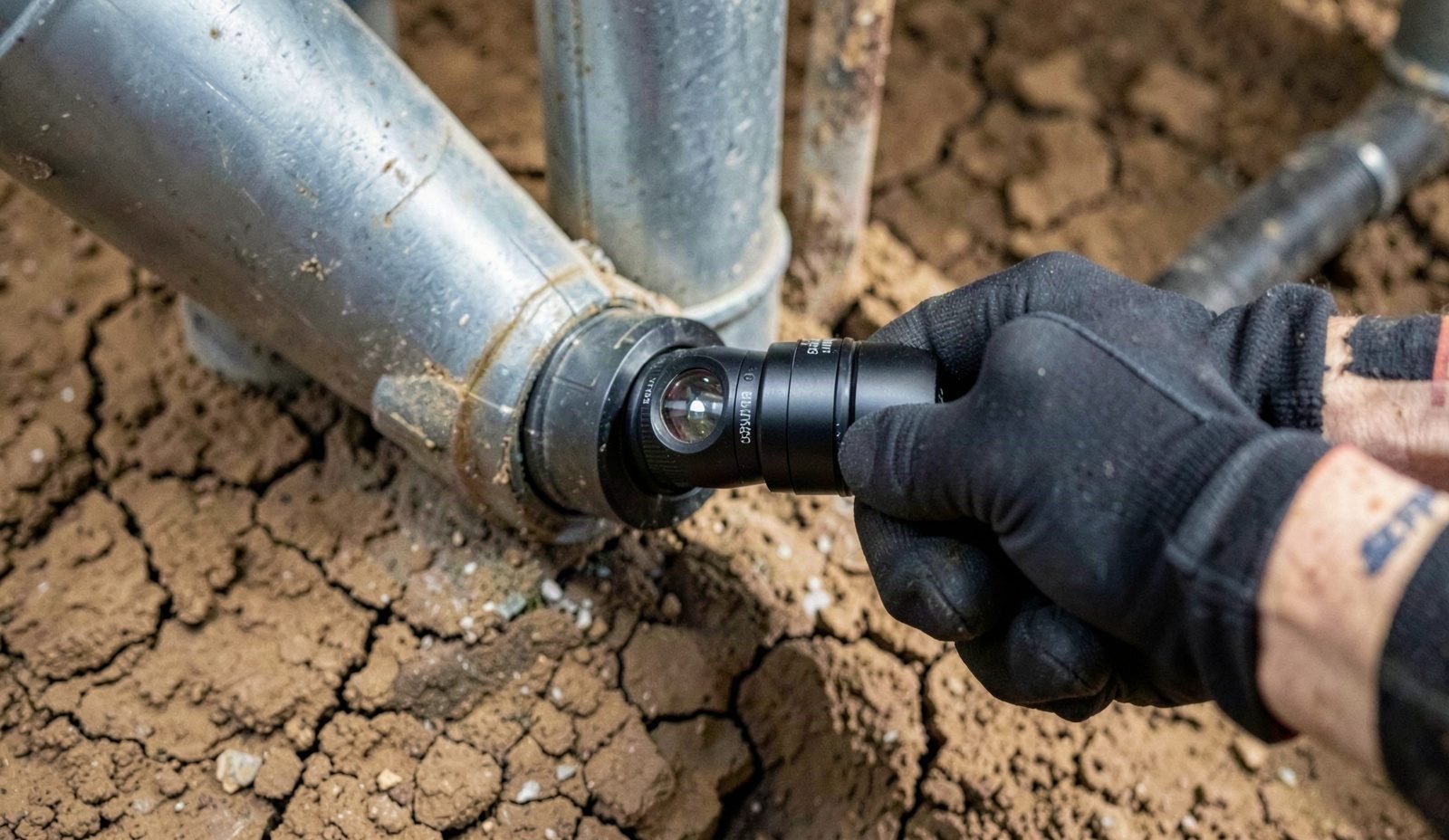
The first tool on site is a RIDGID SeeSnake camera, fed through the nearest cleanout to see exactly what the blockage looks like before anyone touches a wrench. A grease clog reads as a soft, tan buildup narrowing the pipe wall. A root intrusion shows as dark, hair-like strands filling the frame at a joint. A bellied cast iron line shows standing water sitting in the pipe even when nothing has been run for an hour. A built-in sonde locator then reads the exact depth and distance of the problem from the cleanout, so we know before digging whether the failure sits four feet or forty feet out.
Clearing the line depends on what the camera shows. A Spartan Tool sectional cable machine with a cutting head punches through roots and hardened debris mechanically, useful for a localized blockage in a four-inch cast iron main. A hydro-jetter running water at roughly 3,500 to 4,000 psi through a rotating nozzle scours the entire pipe wall instead of just punching a hole through the clog, which matters on grease-lined kitchen lines where cabling alone leaves residue that reclogs within weeks. We choose jetting over cabling whenever the camera shows buildup coating more than a few feet of pipe wall rather than one isolated obstruction.
Every service call also includes a static water pressure reading at the outdoor spigot with a calibrated gauge, because pressure above 80 psi stresses aging joints and accelerates the same kind of drain separation that causes backups in the first place. Under Section 604.8 of the International Plumbing Code, a reading above that threshold requires a pressure-reducing valve, and we flag it on the spot rather than leaving a homeowner to find out the hard way after the next repair fails.
Our page on emergency water heater repair covers that side of the work in more depth.
You call (817) 710-3766 and describe what you are seeing, gurgling drains, standing water, or the smell of sewage. Dispatch gives you an arrival window and asks you to stop running water in the meantime. On arrival, the technician runs a camera through the nearest cleanout to locate the blockage or break, reads pipe condition and material, and checks the outdoor spigot pressure gauge before recommending a fix.
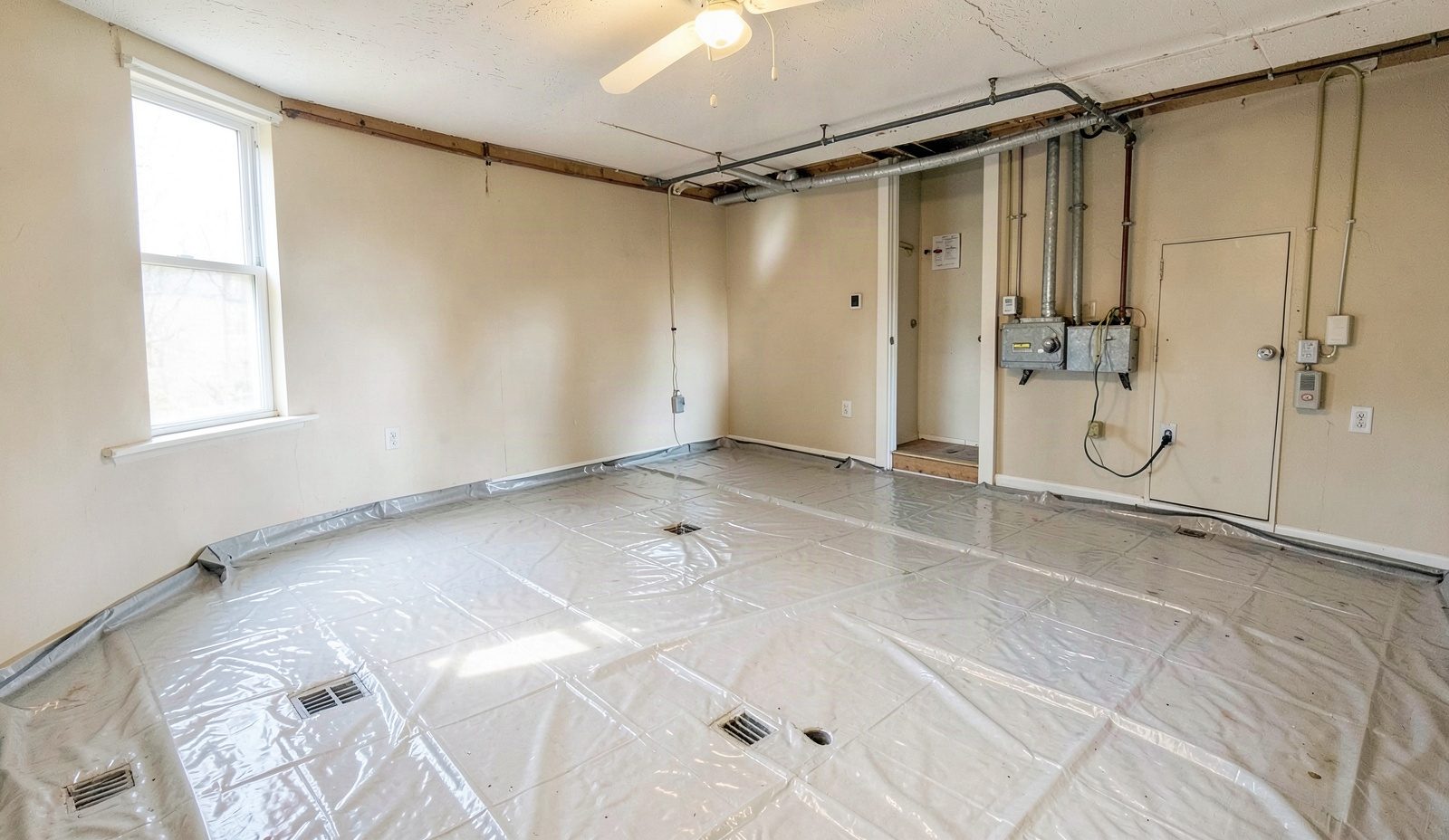
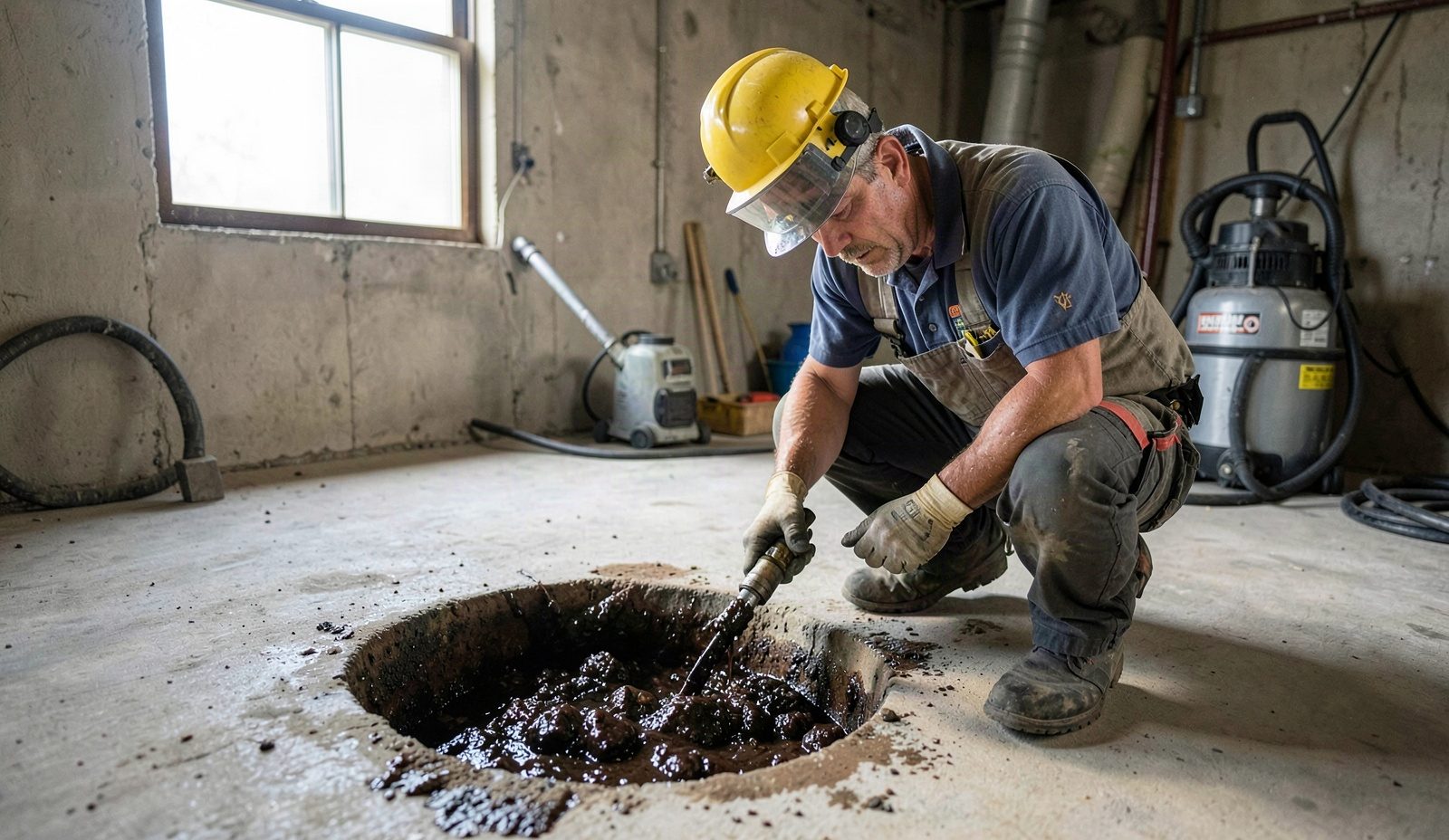
Once you approve the written scope, the crew lays containment sheeting and starts extracting standing sewage with dedicated pumps. Depending on what the camera showed, the technician runs a sectional cable machine to punch through roots and debris or a hydro-jetter to scour the full pipe wall. Any spot repair on a cast iron or clay line gets excavated and replaced to match the existing pipe diameter and material.
Before the crew leaves, the technician runs the camera back through the cleared line to confirm the blockage is gone and water flows freely to the connection point. Fixtures upstream get flushed and timed to confirm normal drain-down speed. You get a walkthrough of what was found, what was repaired, and photo documentation of the cleared line and treated areas for your own records.
Fort Worth plumbing work falls under the City of Fort Worth plumbing code, based on the International Plumbing Code, and that code treats drain, waste and vent work differently depending on the age and material of what is already in the ground. Pre-1970 neighborhoods across the metro were plumbed with galvanized steel supply lines and cast iron drains, both now at or past the end of their service lives, and a technician who does not recognize a cast iron hub joint on sight will misdiagnose a repair every time.
An out-of-area crew unfamiliar with that housing stock tends to treat every clog the same way, cabling a line that actually needs a spot repair, or missing a bellied section entirely because they have never worked on a sixty-year-old cast iron main before. That mistake costs a homeowner a second service call and, worse, a second morning of standing sewage.
Every technician who works a call alone has already logged supervised field hours on real Fort Worth drain lines, not a training video. Field leads walk the current code cycle with the crew each year, so a tech standing in your hallway knows the difference between a repair the plumbing code allows without a permit and a full line replacement that requires one. That distinction protects you if you ever need to document the work for an insurance claim or a home sale.
Response logistics matter too. A crew dispatched for a sewage backup emergency carries extraction pumps, a camera, and both a cable machine and a jetter on the truck, because guessing which tool is needed after arrival wastes time you do not have while water keeps rising.
See 24/7 emergency plumbing services for how the related work is scoped and priced.
Your local utility, Payment options, publishes service and water-quality information every Fort Worth homeowner should know.
Call (817) 710-3766 and dispatch gives you an honest arrival window based on current crew location and call volume, not a vague promise. For an active sewage backup, that window typically tightens to the front of the queue because standing sewage escalates fast. If traffic or a prior call runs long, dispatch calls you directly with an updated time rather than leaving you guessing. You get a name and a callback number for the technician heading your way, so you know exactly who is walking through your door.
Before extraction starts, the crew lays down containment barriers and plastic sheeting to keep contaminated water off unaffected flooring and out of hallways. Standing sewage gets pumped out with dedicated extraction equipment, never a shop vac used elsewhere in the home. Affected surfaces get treated with a disinfectant labeled for sewage contamination, and soaked porous materials that cannot be sanitized get bagged and hauled out, not left to dry in place. You get photos of the affected area before and after, useful documentation if you file an insurance claim.
The estimate reflects what the camera inspection actually finds: pipe material and diameter, how far the damaged section runs, whether the cleanout is accessible or buried under landscaping, and whether the fix is a spot repair or a full line replacement. You see the written scope and sign off on it before extraction equipment or cutting heads touch your line. If the camera reveals something worse mid-job, like a second break the initial inspection could not reach, we stop and walk you through the updated scope before continuing.
Every technician passes a background check before riding a truck alone to a customer's home. New hires spend a set number of weeks working alongside a field lead on real backup calls, cabling, jetting, and camera work, before dispatch clears them to run solo calls. Field leads run refresher sessions each time the locally adopted plumbing code updates, covering what changed and how it affects a repair decision on site. A supervisor reviews camera footage from complex jobs after the fact to confirm the diagnosis matched what actually got fixed.
Handling it yourself is not recommended once sewage has entered living space. The IICRC S500 standard classifies sewage as Category 3 water, meaning it carries bacteria and pathogens that regular gloves and a mop do not neutralize. Homeowner-grade shop vacs also lack the sealed extraction systems needed to move contaminated water without spreading it further. Clearing the actual blockage often requires a cable machine or jetter most households do not own.
It depends on scope, not on the fact that it is an emergency. Clearing a clog with a cable machine or jetter typically does not need a permit, since nothing about the pipe changes. Replacing a bellied line or excavating a full section under a slab does, and the city's permitting office has final say on where that line falls for your specific repair.
Estimates come from what the camera finds, delivered as a written scope before any repair work starts. The technician inspects the line first, identifies pipe material, blockage location, and access conditions, then writes up the recommended fix for you to approve. If the scope changes once excavation is underway, you see the updated plan before work continues rather than after the invoice arrives.
Yes, same-day dispatch is standard for an active sewer backup. Call (817) 710-3766 and describe what you are seeing, standing water, gurgling drains, or a sewage smell, and dispatch prioritizes that call ahead of routine scheduling. A technician arrives with extraction pumps, a camera, and both a cable machine and jetter already loaded, so the diagnosis and the fix can happen in the same visit.
Shield Plumbing Fort Worth is built around the specific way Fort Worth homes fail, clay soil movement pulling drain joints apart and cast iron laterals from the pre-1970 building era reaching the end of their service life. Technicians train on those exact conditions before working solo, and every truck carries the camera, cable machine, and jetter needed to diagnose and fix a backup in one visit instead of scheduling a second trip for the right equipment.
Cost depends on pipe material, blockage location, access difficulty, and whether the fix is a clear-and-clean or a section replacement. A clog cleared with a cable machine or jetter costs less than an excavation to replace a collapsed cast iron section. A technician gives you the specific cost factors for your line after the camera inspection, in writing, before any work starts.
The February 2021 freeze burst pipes across Tarrant County by the tens of thousands, and while most of those failures hit supply lines in attics and exterior walls, the same hard freeze also stresses buried drain joints as the ground itself contracts and heaves. Fairmount and the Near Southside carry some of the oldest sewer laterals in the metro, tied into city mains that predate most of the neighborhood's current housing. Mature trees lining streets in Arlington Heights send roots toward those aging clay and cast iron laterals looking for moisture, and a root intrusion that starts as a trickle-through crack widens every year until the line collapses under its own weight.
Full sewer line replacement and any structural excavation work in Fort Worth typically requires a permit, while minor like-for-like repairs, clearing a clog or replacing a short section of pipe with matching material, often do not. The City of Fort Worth Development Services Department makes the final call on which category a given repair falls into, and an inspector may want to see the excavation before it gets backfilled on larger jobs. Crews that skip that step leave homeowners exposed if a lender or buyer's inspector later asks for documentation that the work was done to code. Knowing which side of that line a repair falls on before digging saves a second trip and a second disruption to your yard.
Explore our service area and locate Shield Plumbing Fort Worth with ease. We're proudly local and serve the surrounding neighborhoods with fast response and honest pricing. Use the map to check our coverage area, or call us and we'll confirm in seconds.
Address:
Shield Plumbing Fort Worth, 210 W 7th St, Fort Worth, TX 76102
5 Signs Your Ridglea Hills Home Has a Slab Leak, practical local guidance from Shield Plumbing Fort Worth, Fort Worth's trusted plumbing tea…
Read More
What Wedgwood Residents Should Know Before a Whole-Home Repipe, practical local guidance from Shield Plumbing Fort Worth, Fort Worth's trust…
Read More
How Fort Worth's Hard Water Is Quietly Destroying Your Water Heater, practical local guidance from Shield Plumbing Fort Worth, Fort Worth's …
Read More
The Hidden Cost of Ignoring a Dripping Faucet in Fort Worth, practical local guidance from Shield Plumbing Fort Worth, Fort Worth's trusted …
Read More