
June 20, 2026
5 Signs Your Ridglea Hills Home Has a Slab Leak
5 Signs Your Ridglea Hills Home Has a Slab Leak, practical local guidance from Shield Plumbing Fort Worth, Fort Worth's trusted plumbing tea…
Read More




Shut off the water at the main valve first. Find it at the meter box near the curb, or at the shutoff valve where the line enters the garage wall. Turn the handle clockwise until it stops moving. Keep kids and pets away from the wet, eroded ground near the leak. Photograph the flooded yard, any cracked pavement, and the meter reading for your insurance file. Call (817) 710-3766 once the valve is off and the water stops climbing.
A broken water main rarely announces itself with a geyser you can see from the street. Most homeowners notice a soft, soggy patch of lawn that never dries out, even after three sunny days in a row. Others hear a faint gurgling or trickling sound under the slab, especially at night when the house is quiet. Inside, faucets sputter, the water heater takes longer to fill, and the water bill jumps well past a normal month with no new appliance or leak in sight. You might also catch a faint chlorine smell near the wet spot, since municipal water carries a heavier dose of chlorine than groundwater and releases it as it surfaces. A yard water line leak this size can waste hundreds of gallons a day before anyone connects the dots.
Fort Worth sits on expansive clay that swells several inches after a heavy rain and shrinks back during a dry August, movement strong enough to shear copper supply lines and pull drain joints apart under a slab. That same cycle stresses buried service lines running between the meter and the house, usually at the stiffest point in the run, right where the pipe crosses under a driveway edge or a foundation footing. Homes in Fairmount, Arlington Heights, and Wedgwood have absorbed decades of that same clay movement, so lines that were already thinning from age finally give way after one more wet spring or one more hard freeze.
Waiting rarely stops the leak, it just relocates the damage. A slow yard water line leak undercuts the soil beneath a driveway or porch slab, and the void it leaves behind can drop a walkway several inches without warning. Left alone, a main line leak repair turns into a full water service line replacement once the corrosion outruns what a coupling can hold, while the water still running underground keeps softening the soil around your foundation footings the entire time. A meter left running against a leak this size can also trigger a high usage flag on your account, and untangling that record after the fact takes longer than fixing the pipe would have.
If this sounds close but not quite your situation, how to shut off main water valve may be the better starting point.
Permit and inspection questions? Development Services is the office we coordinate with on every permitted Fort Worth job.
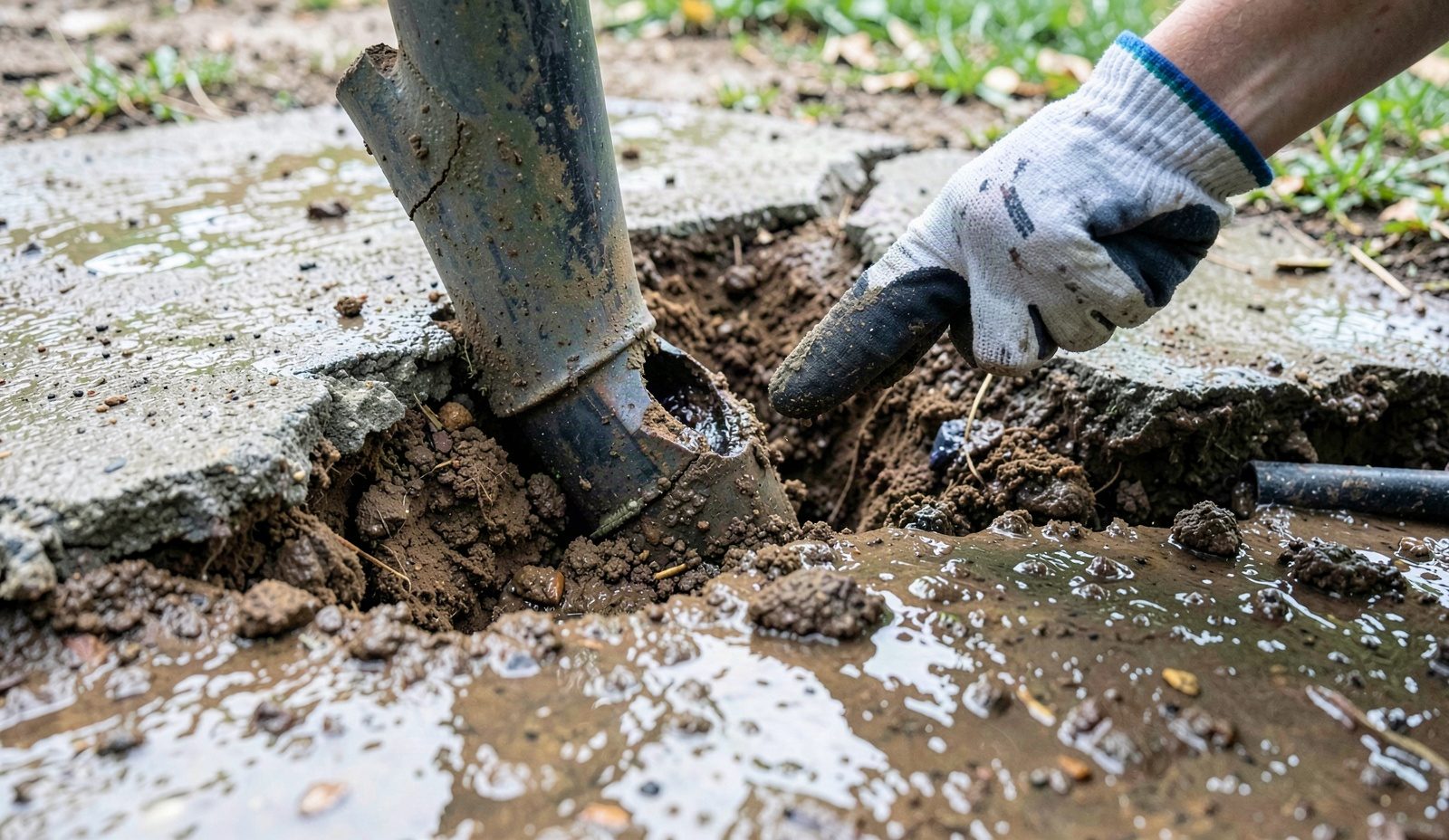
Every call starts with a pressure gauge threaded onto an outdoor spigot. That test takes under five minutes and tells us more about the system than a visual inspection ever could. A static reading above 80 psi confirms a problem the plumbing code already anticipates. Section 604.8 of the International Plumbing Code requires a pressure-reducing valve once static water pressure at the fixture crosses that threshold, and a reading that high often means the leak is masking a bigger pressure problem upstream rather than causing it. A reading sitting in the normal 40 to 60 psi range alongside a visibly flooded yard points straight at a ruptured service line instead.
Next we check the meter itself. With every fixture in the house closed, the small leak indicator dial on the meter face should sit still. If it spins, water is moving somewhere between the meter and the house, confirming a main line leak repair job rather than a problem inside the walls. From there, an acoustic listening disk placed along the suspected run picks up the distinct rushing hiss of pressurized water escaping underground, letting us mark the excavation point within a couple of feet instead of trenching the entire yard on a hunch.
When the line needs full replacement rather than a point repair, material choice matters more in Fort Worth's soil than almost anywhere else. Rigid CPVC and Schedule 40 PVC crack at their fittings when clay soil shifts, the same failure mode already at work on the line that just broke. Soft copper Type K bends with minor ground movement but work-hardens and splits after enough freeze thaw cycles stacked on top of each other. Fused HDPE pipe, joined with a single continuous heat-welded seam and no threaded fittings underground, flexes with the clay instead of fighting it, which is why it has become the standard for water service line replacement under expansive Fort Worth soil. Depth and access decide whether we open trench or bore trenchless, and a line running under an established flower bed or a mature tree's root zone is usually the better candidate for a bored path instead of a stripped-bare yard.
See emergency water heater repair for how the related work is scoped and priced.
Price-checking is smart: marketplaces like Thumbtack publish typical cost ranges you can hold any quote against, including ours.
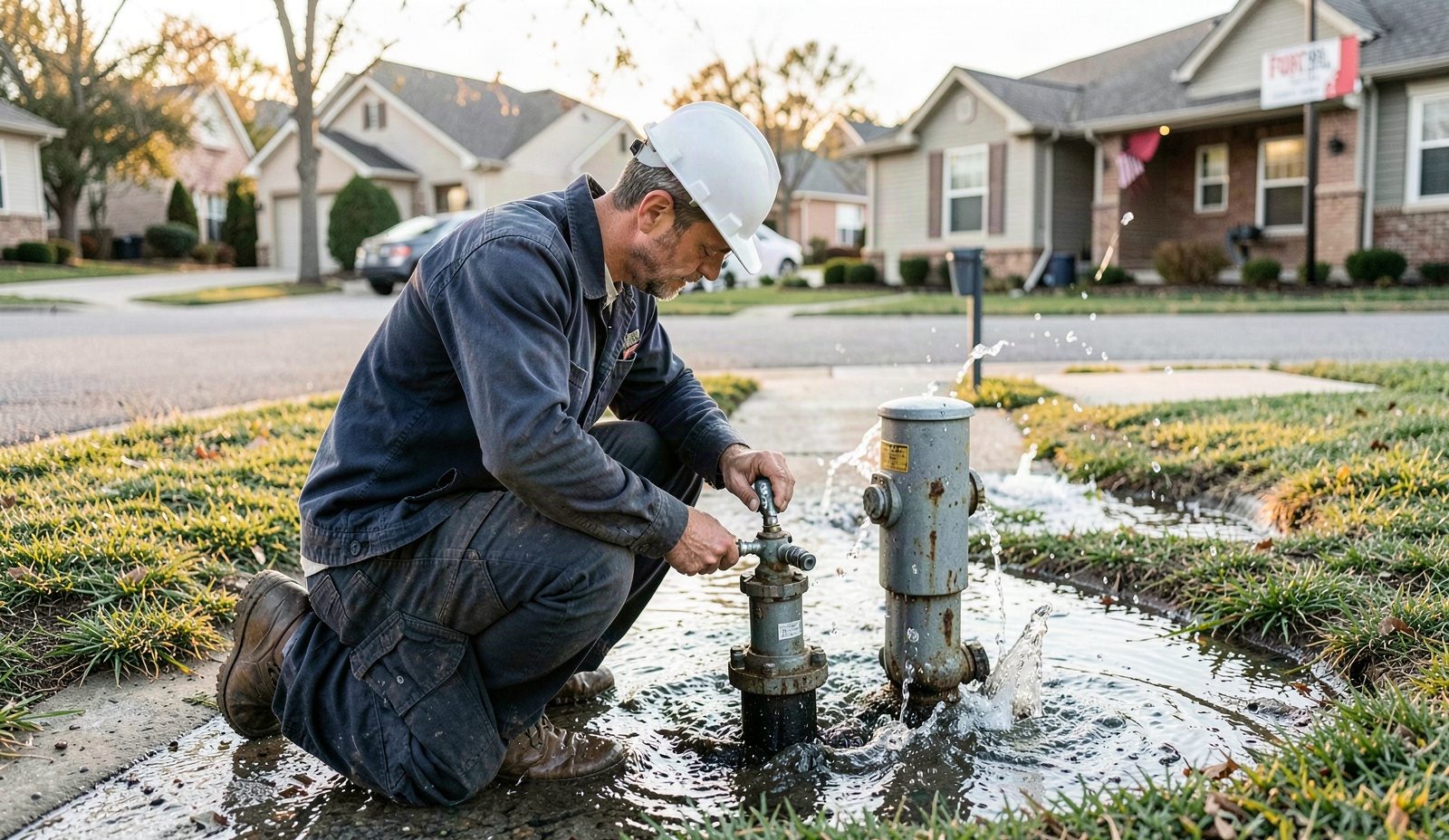
The call starts with a few quick questions about whether water is actively surfacing and where in the yard the wet area sits. Dispatch gives you an arrival window and the technician calls again when about twenty minutes out. On site, the technician walks the property with you, confirms the main shutoff is closed, and runs the same diagnostic checks used to locate any main water line break before marking the excavation point on the ground with paint or flags. You see the marked spot and agree on it before any digging starts.
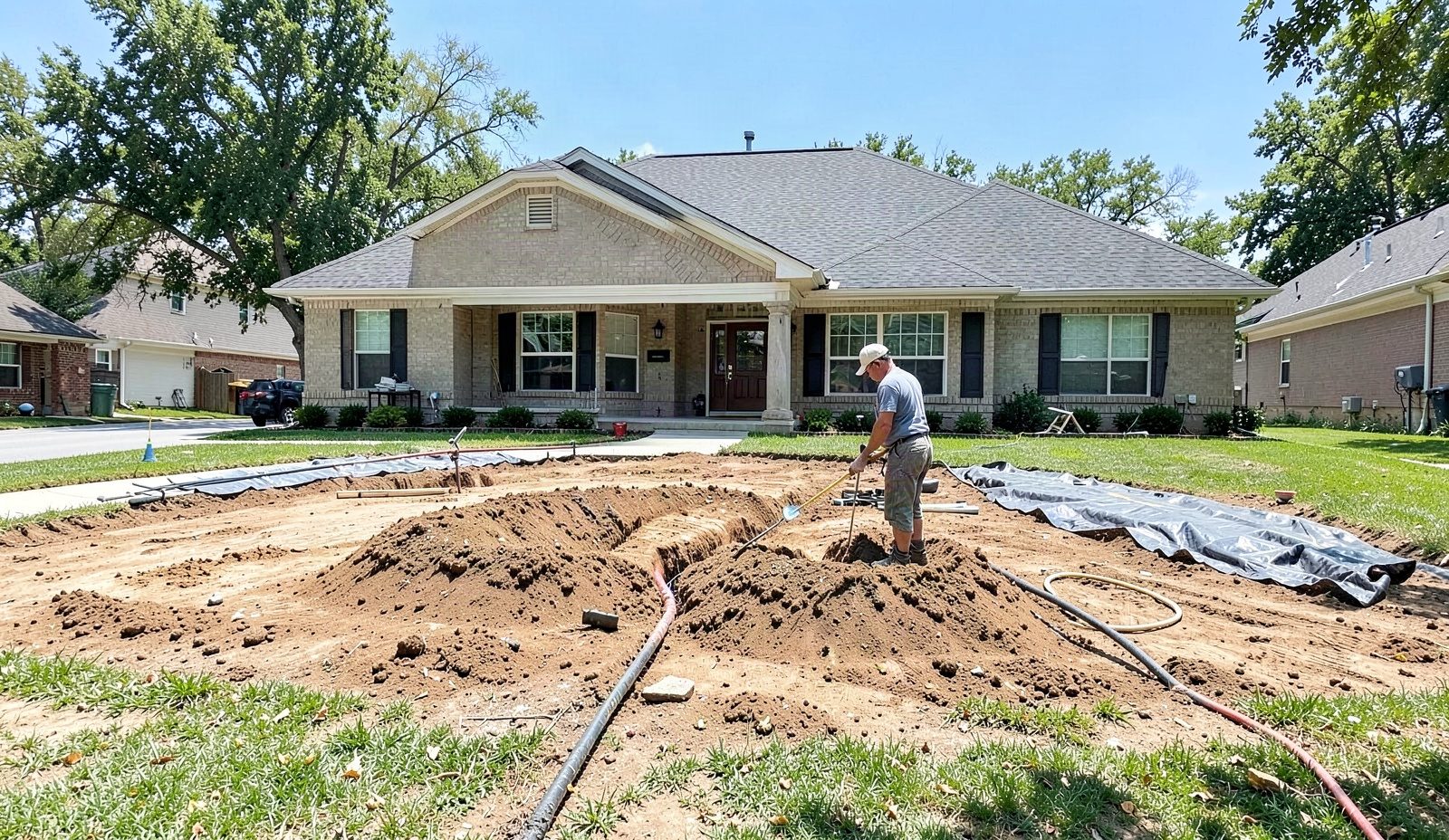
Before any trenching starts, the technician writes down the repair scope, pipe material, and method, and you approve that plan. Ground protection goes down first, plywood over walkways and tarps under the spoil pile, then the crew opens the trench to the marked depth. Exposed pipe gets cut back past any corroded or cracked section, and the new section is joined with fittings or fused seams rated for underground burial. If the dig uncovers a second problem spot, like a corroded coupling farther down the line, the technician stops and reviews the added scope with you before continuing.
Before backfill, the repaired line is pressurized and held for a set period to confirm the coupling or fusion joint holds without dropping pressure. The technician reopens the main valve, runs water through the repaired section, and checks for any weeping at the joint before closing the trench. Backfill goes in compacted layers with sand bedding around the pipe, then topsoil and sod or seed on top. You walk the yard with the technician afterward, review what was replaced, and get documentation of the repair scope and materials for your records.
The City of Fort Worth plumbing code, built on the International Plumbing Code, governs every main water line break repair inside city limits, and it treats a full water service line replacement differently than a spot repair. A straightforward coupling repair on a copper line often qualifies as minor, like for like work, but swapping the whole run to HDPE or rerouting the line's path counts as new construction that needs a permit through the City of Fort Worth Development Services Department, the office with final say over what needs paperwork and what doesn't.
Housing stock across the metro adds another layer to that judgment call. Pre-1970 neighborhoods across the metro were plumbed with galvanized steel supply lines and cast iron drains, both now at or past the end of their service lives, and a crew that doesn't recognize galvanized pipe on sight will thread new copper straight onto corroded steel, a connection that fails again within a year from galvanic corrosion at the joint.
An out-of-area crew that skips the permit step leaves the homeowner holding the liability if the city flags unpermitted work later during a home sale or refinance inspection. A crew unfamiliar with Fort Worth's clay also tends to backfill with whatever spoil came out of the trench, packing rock and clay clumps straight against the new pipe instead of bedding it in sand or select fill, and the next shrink swell cycle finds that shortcut fast.
Response logistics matter just as much as code knowledge on a job where water keeps running underground the whole time a crew is en route. Technicians carry pressure gauges, an acoustic listening disk, and enough trench shoring to open a service line safely the same visit, so the diagnostic step from the phone call turns into an excavation decision without a second appointment stacked days later.
More detail on emergency water shut-off service is on its own page.
Plumbing code in most jurisdictions traces back to the Uniform Plumbing Code maintained by IAPMO, it's the rulebook behind our permit work.
Call (817) 710-3766 and dispatch checks the closest available technician against the day's board. Most yard water line leak calls in Fort Worth get a same-day window, with the dispatcher giving you a two to three hour arrival range rather than a vague morning or afternoon split. If a prior job runs long because of unexpected trenching conditions, dispatch calls ahead to reset your window instead of leaving you guessing. Emergency calls where water is actively surfacing jump ahead of scheduled maintenance work on the board, since a running leak doesn't wait for a slower job to wrap up first.
Plywood ramps go down over any trench that crosses a walkway before foot traffic starts crossing it again. Spoil from the excavation gets piled on tarps, not directly on the lawn, so the grass underneath isn't smothered for the two or three days a repair takes. Once the pipe is tested and buried, the crew tamps the backfill in layers instead of one loose pile, then replaces sod or reseeds the disturbed strip so the repair doesn't leave a permanent scar across the yard. Any broken pavement or hauled-away spoil gets cleared from the property before the truck leaves.
Depth of the line, the pipe material already in the ground, and how much concrete, landscaping, or hardscape sits over the leak all factor into scope before a shovel comes out. A line under an open lawn prices differently than one crossing under a driveway slab or a mature tree's root system. The technician writes the scope, the material choice, and the repair method into a quote you review and approve on site, before any digging starts, so the number you approve matches the work that happens in the ground.
Every technician passes a background check before joining a crew, and each one works alongside a senior tech on real repairs until they can run a pressure test, read a meter, and plan an excavation without supervision. Code updates get covered in ongoing training sessions throughout the year, so a technician working a Fort Worth yard today is working from the current plumbing code cycle, not whatever they learned when they started. That combination of a checked background and a documented field evaluation is what puts someone on your property solo.
Cost depends on how deep the line sits, what material replaces it, and how far the crew has to dig to reach it. A point repair on a shallow copper line costs far less labor than a full water service line replacement that requires trenching two to four feet down across a driveway. Soil conditions matter too, since Fort Worth's clay often needs the trench walls shored to stay open long enough to work safely. Call (817) 710-3766 and a technician will walk the yard and price the actual scope before any digging starts.
Turn off the water at the meter box shutoff using a meter key or pliers, not the handle inside the house, since a yard break keeps flowing past an indoor valve. Note where the water surfaces, whether right at the curb, midway across the lawn, or against the foundation, since that spot narrows down the dig site before anyone arrives. Keep everyone away from pooling water near an outdoor outlet or electrical panel. Then get a crew out before the saturated soil undermines a walkway or the foundation edge.
Run the coldest tap in the house, usually a tub spigot or the lowest fixture, for about ten to fifteen minutes to purge trapped air and clear discolored water from the new section of pipe. Fort Worth water often runs a faint rust or cloudy color right after a repair because the work disturbs sediment sitting in older pipe upstream of the fix. If the water hasn't cleared after that window, or you still hear air knocking in the lines, mention it to the technician before running the dishwasher or washer, since trapped air can hammer against a fixture valve.
Responsibility usually splits at the meter. The city typically owns and maintains the water main up to the meter, while the property owner owns the water service line running from the meter to the house, including the section under the yard where most main line leak repair calls happen. That split means a leak on the street side of the meter usually goes to a city service request, while a leak on the house side is the homeowner's repair to schedule and pay for.
Shield Plumbing Fort Worth answers with a technician who reads the meter, runs a pressure test, and marks the excavation point before any shovel touches the yard, instead of trenching on a guess. The crew works Fort Worth's clay soil regularly enough to know where a coupling will hold and where the ground will just shear it again next spring. Every repair scope gets written down before work starts, so there's no gap between what got quoted and what got dug. That combination of diagnosis first and clear documentation is why homeowners call back for the next plumbing issue too.
A single point repair on an accessible line often finishes in two to four hours once the leak is located. A full water service line replacement, especially one that requires trenching under a driveway or through Fort Worth's dense clay, usually takes a full working day from excavation to backfill and pressure test. Trenchless boring, where the crew pulls new pipe through a bored path instead of open trenching, adds setup time upfront but often finishes in about the same single day.
A technician evaluates the leak on site first, using a pressure test and meter check to confirm the scope, then writes down the repair plan and price before any excavation starts. That written scope spells out pipe material, trench depth, and backfill method, so you're approving a specific plan rather than an open ended hourly rate. Work begins only after you sign off on that plan. Call (817) 710-3766 to schedule that on-site evaluation.
Elevation changes across the city change how a main line leak repair job gets planned. Ground near the Near Southside and the Cultural District sits lower along the river drainage, so a broken water main there often surfaces fast, pooling across a yard within hours of the pipe failing. Ridglea Hills sits higher and drains slower, so the same size leak can run underground for weeks, softening soil under a driveway before anyone notices the water bill climbing. The February 2021 freeze burst pipes across Tarrant County by the tens of thousands, and while most of those failures were supply lines run through attics and exterior walls, the same hard freeze stressed corporation stops and saddle taps on buried mains that had never faced cold like that, damage still surfacing as failures years later.
A repair that crosses into full replacement still falls under city inspection, and an inspector confirms trench depth, bedding material, and backfill compaction before the ground gets closed for good. That step exists because a buried line that fails again months later usually failed the first time from a shortcut nobody could see once the dirt went back in, a coupling rated for the wrong pressure class, or backfill packed straight against bare pipe with no bedding sand. That local familiarity matters more than it sounds, since a crew that has pulled permits across the metro before knows which documentation the inspector wants on site and which details get flagged on a first pass, shaving days off a process that stalls when a first-time applicant has to redo paperwork.
Explore our service area and locate Shield Plumbing Fort Worth with ease. We're proudly local and serve the surrounding neighborhoods with fast response and honest pricing. Use the map to check our coverage area, or call us and we'll confirm in seconds.
Address:
Shield Plumbing Fort Worth, 210 W 7th St, Fort Worth, TX 76102
5 Signs Your Ridglea Hills Home Has a Slab Leak, practical local guidance from Shield Plumbing Fort Worth, Fort Worth's trusted plumbing tea…
Read More
What Wedgwood Residents Should Know Before a Whole-Home Repipe, practical local guidance from Shield Plumbing Fort Worth, Fort Worth's trust…
Read More
How Fort Worth's Hard Water Is Quietly Destroying Your Water Heater, practical local guidance from Shield Plumbing Fort Worth, Fort Worth's …
Read More
The Hidden Cost of Ignoring a Dripping Faucet in Fort Worth, practical local guidance from Shield Plumbing Fort Worth, Fort Worth's trusted …
Read More