
June 20, 2026
5 Signs Your Ridglea Hills Home Has a Slab Leak
5 Signs Your Ridglea Hills Home Has a Slab Leak, practical local guidance from Shield Plumbing Fort Worth, Fort Worth's trusted plumbing tea…
Read More




Get out of the house first. Leave the doors open behind you. Do not flip a light switch. Do not light a match or start a car in the garage. Call the gas utility's emergency line from outside, then call Shield Plumbing Fort Worth for emergency gas shut off and gas leak detection service once everyone is clear.
A gas leak emergency rarely stays quiet for long. Homeowners in Wedgwood and Ridglea Hills often describe a rotten egg smell near the water heater closet first. Others hear a faint hiss behind the range or notice a dead brown patch in the yard where a buried line runs underneath. Utility companies add mercaptan to natural gas on purpose, because the fuel itself has almost no smell at all. If you smell gas in house air near an appliance connector, a meter riser, or a crawlspace vent, treat it as real. Do not wait to see if it fades on its own.
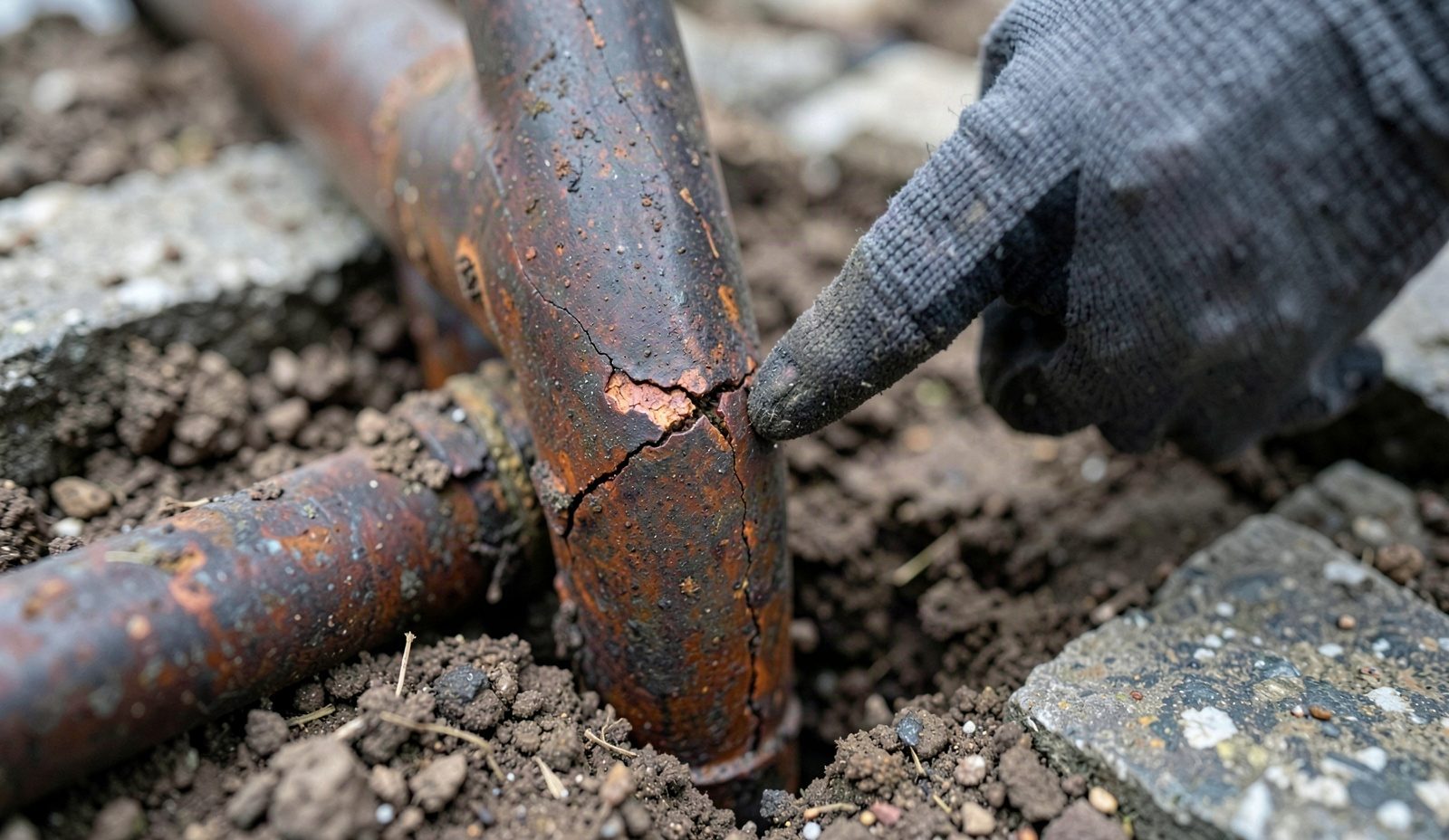
North Texas expansive clay swells with rain and shrinks hard in drought. That seasonal movement does not stop at your water lines. The same soil pressure that shears copper supply pipe also stresses the threaded joints on black steel gas lines and the fittings on flexible gas tubing running through the attic. A joint that sealed fine in August can start weeping gas by February, once the clay under the slab pulls the pipe sideways by half an inch or more. Aging regulators and rusted meter risers add a second failure point, especially where the drop leg was never protected from a mower or a parked trailer.
Wait on a confirmed gas line leak repair and the problem never stays small. A pinhole at a fitting turns into a split seam under vibration from an AC compressor or routine yard work. Gas pools in enclosed spaces like a water heater closet or a crawlspace, and it only takes a spark, a pilot light re-ignition, or static electricity to set it off. Slower leaks run up the meter for months unnoticed and starve appliances of the pressure they need to burn clean, which shows up as a yellow flame tip instead of a steady blue one. None of those outcomes get cheaper by putting off the call.
Our page on slab leak detection & repair covers that side of the work in more depth.
Your local utility, Payment options, publishes service and water-quality information every Fort Worth homeowner should know.
Every gas leak detection service call starts with an electronic combustible gas detector, not a guess. The sensor reads in parts per million, and we walk it along the meter riser, every union, every appliance connector, and the flex line behind the range and dryer. A reading above roughly 20 percent of the lower explosive limit at any fitting stops the walk-through immediately and moves the job straight to shut-off and ventilation. Below that threshold, we still map every reading on a diagram of the house so nothing gets missed on the second pass.
Confirming a suspected joint means capping the line and pressurizing it with a manometer, typically to several inches of water column, then watching the gauge hold steady over a set number of minutes. Any drop confirms a leak somewhere in that isolated section. To find the exact point without opening a wall or trenching a yard, we brush a soap bubble solution across every joint in that section and watch for the telltale foam. Instrument first, bubble test second, finds the leak in one visit instead of three exploratory ones.
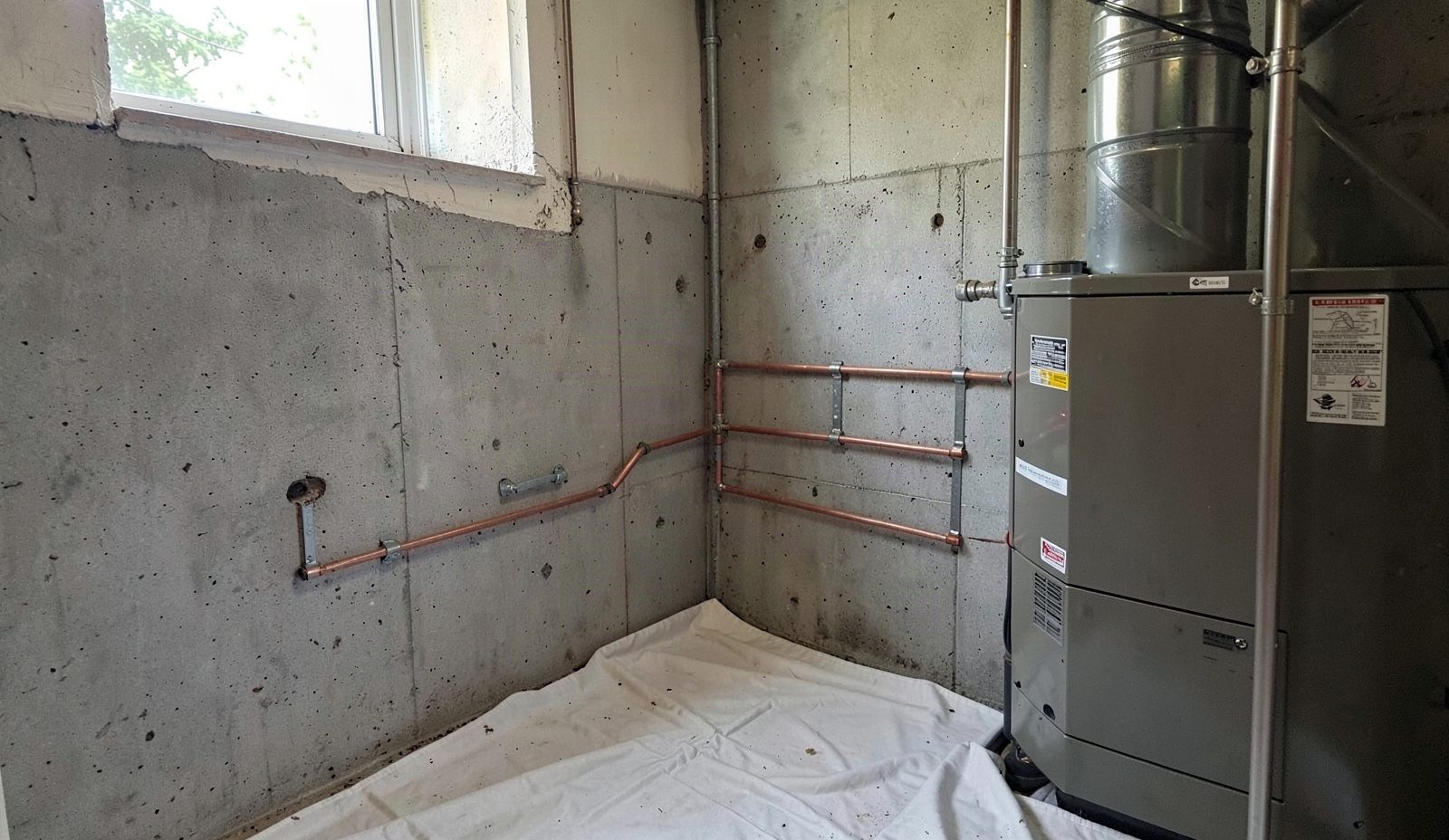
What we install afterward depends on what failed and how it is routed. Black steel threaded pipe still shows up in older Fort Worth homes with a run through the attic, and a 30 to 40 foot run like that often carries six to eight threaded joints, each one a future failure point. Corrugated stainless steel tubing, sold under brand names like TracPipe and Gastite, replaces that same run with two or three mechanical fittings instead of eight threaded ones, which is why it has become the standard for attic and wall-cavity gas repairs. It carries one added code requirement: bonding to the home's electrical grounding system to protect against arcing damage from a nearby lightning strike, and we verify that bond with a multimeter continuity check before closing out any CSST repair. If the pressure drop isolates to one or two feet of pipe, we cut and refit that segment inline. If pulling the meter riser turns up pitting along a longer buried or slab-routed run, patching one spot only buys time before the next failure a few feet down the same line, so we reroute that section overhead instead.
If this sounds close but not quite your situation, rapid response leak repair may be the better starting point.
Plumbing code in most jurisdictions traces back to the Uniform Plumbing Code maintained by IAPMO, it's the rulebook behind our permit work.
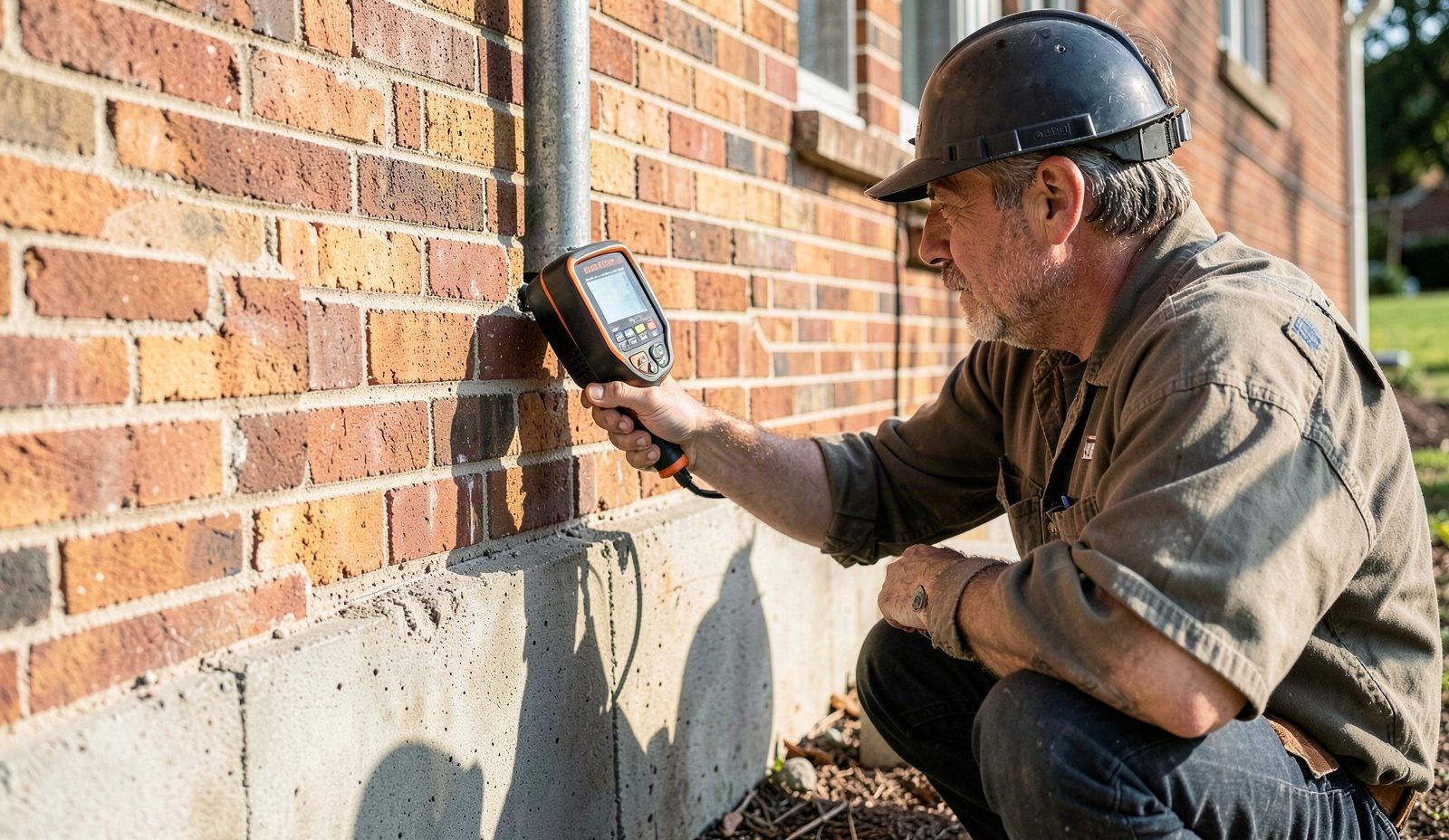
Tell the dispatcher what you smell, where, and whether anyone is still inside. If the house is not clear, that comes first. A technician arrives with a combustible gas detector and manometer already staged, walks the meter riser, appliance connectors, and any exposed piping while reading ppm levels along the way. You see the readings on the detector screen in real time, and the technician marks every fitting checked on a small diagram of the house. By the end of the walk-through you know whether the leak is confirmed, where it sits, and what happens next.
Once the pressure test isolates the leak, the technician writes the scope and price and waits for your yes before cutting anything. Drop cloths go down, ventilation fans run if gas lingered indoors, and the repair proceeds: a fitting swap, a section re-run in corrugated stainless tubing, or a full reroute if the pipe shows pitting further down the line. Any decision that changes the scope midway, like finding a second corroded joint, gets a call and a number before that work continues. You approve every change before it happens.
Before gas gets turned back on, the repaired section gets re-pressurized and held for the same test window as the original diagnosis, watching for any drop on the manometer. Pilots get relit, appliance flames get checked for a steady blue cone instead of a yellow tip, and the gas detector sweeps the area one more time before the technician calls it clear. You get a walkthrough of what was fixed and why, plus a written record of the pressure readings for your file, worth keeping if you sell the house or file an insurance claim later.
Fuel gas piping repairs in Fort Worth fall under the city's locally adopted plumbing and mechanical code, built on the International Plumbing Code framework. A structural gas line reroute, a meter relocation, or a new branch to a pool heater or generator runs through the City of Fort Worth Development Services Department for a permit and an inspection. A like-for-like fitting swap on an exposed line often does not need one. The permit authority makes that call case by case, and that distinction protects you from redoing work that fails inspection later, and keeps the paperwork clean if you sell the house or file an insurance claim.
After the February 2021 freeze put crews from outside Tarrant County into homes by the thousands on burst pipe calls, more than a few of those same trucks stayed on afterward to work gas lines too, without knowing which fittings a Fort Worth inspector actually flags. A CSST run installed without its bonding jumper, a black steel joint sealed with the wrong pipe dope, or an indoor-rated flex connector routed outdoors are the kind of misses a re-inspection catches. None of that shows up on a walkthrough until the gas comes back on, which is exactly when it matters most, and a homeowner ends up paying to correct the same repair twice.
Most gas leak calls turn into a broader look at the house, since a technician standing at the meter riser is already looking at the whole supply side anyway. We read static water pressure at the outdoor spigot on the same visit when it makes sense, because Section 604.8 of the International Plumbing Code requires a pressure-reducing valve once that reading passes 80 psi, and high pressure strains the same aging fittings behind a lot of gas leaks in pre-1970 housing stock. Checking one failure point without looking at what sits next to it leaves the job half finished.
See gas line repair & installation for how the related work is scoped and priced.
Our technicians follow the workmanship standards promoted by the Plumbing-Heating-Cooling Contractors Association.
Gas leak emergency calls get answered any hour, every day. Tell the dispatcher what you smell and where, and a technician gets routed immediately with shut-off and detection equipment already on the truck. Typical arrival for an active leak in the Fort Worth metro runs under an hour, faster inside the loop and slightly longer toward the county line. If a call comes in during severe weather or a run of freeze-related emergencies, you get an honest window instead of a vague promise, and the dispatcher calls back if that window changes by more than fifteen minutes. Non-emergency detection checks can also be scheduled for a same-week appointment.
Work boots come off or get covered before crossing carpet or a slab you specify. Drop cloths go down under any tool bag near the work area, and the technician sets up battery-powered ventilation fans if gas has pooled indoors, running them until the detector reads clear. If a repair requires opening drywall or exposing a buried line, the cut edges get squared and any excavation gets backfilled and tamped the same visit. Every old fitting, corroded pipe section, or coil of scrap tubing leaves in the truck, and the work area gets a final sweep before the technician calls the job finished.
Every quote reflects what the pressure test actually finds on your line. Access matters: a fitting behind a finished wall takes more labor than the same fitting exposed in a crawlspace. Pipe material matters too, since rerouting a section in corrugated stainless tubing prices differently than patching black steel pipe. The technician writes the scope and price on a single page before touching a wrench, walks through what each line covers, and waits for a verbal yes before starting. If the pressure test turns up a second issue mid-repair, you get a call and a revised number before that work starts.
Every technician who drives a truck alone has logged supervised field hours on gas piping specifically, not just general plumbing work, before taking a solo call. Background checks happen before day one. Training gets refreshed as code requirements change, so technicians work from current fitting and bonding rules instead of what they learned years back. A senior technician spot checks pressure test logs and bubble test photos on a rotating basis, so field competence gets verified by the paperwork a repair actually left behind, not just a signature on a form.
Most visits take between one and three hours from arrival to pressure test sign off. A simple fitting swap on an exposed connector can close out in under an hour once the leak is confirmed. A full reroute through the attic in corrugated stainless tubing, or a repair that requires opening drywall, runs longer because the pressure test has to hold for its full window before anything gets closed up. The technician gives you a realistic estimate once the leak is located, not before.
Cost depends on what the pressure test finds on your specific line. A single fitting swap on an accessible line costs far less than rerouting a corroded run through the attic in corrugated stainless tubing. Access matters too: a leak behind finished drywall takes more labor than the same leak in an open crawlspace. The technician writes the full scope and price after the diagnostic walk-through, before any repair work starts, so you approve a number based on your actual house.
Estimates get written after the diagnostic walk-through and pressure test locate the actual leak. The technician explains the scope in plain terms, covering material, access, and labor, and you approve the number before any cutting or fitting work starts. If the repair uncovers a second issue, like a corroded joint further down the line, you get a call and a revised number before that additional work begins. No repair proceeds on a phone quote alone.
Detection is possible with a store-bought sensor, but repair on a fuel gas line is not a do-it-yourself project. A leak detector can tell you gas is present, but confirming the exact failure point requires a pressure test held over a set window. Any mistake on a reconnected fitting or an unbonded corrugated tubing run creates a fire hazard that will not show up again until it fails, often when no one is home to catch it.
Pricing for any specific outside provider is not something we track or quote here. What we can tell you is that commercial repiping costs in Fort Worth move with scope, access, and material, the same variables that shape any written quote. Call (817) 710-3766 for a site-specific walkthrough and a written number for your building instead of a general estimate that will not match your actual pipe condition.
Cost depends on which part failed and how hard it is to access, not a flat rate. A flapper swap runs less than a full fill valve rebuild, and a corroded shutoff valve that won't turn adds labor time. Homes with older galvanized supply lines, common in pre-1970 Fort Worth neighborhoods, sometimes need extra work just to reach the shutoff safely. Shield Plumbing Fort Worth writes the exact scope into a quote after the tank inspection and dye test, before any part is ordered.
Fort Worth's housing stock spans building eras, and that matters more for gas piping than most homeowners expect. Pre-1970 neighborhoods across the metro, including pockets of Fairmount and the Near Southside, were plumbed with galvanized steel supply lines and cast iron drains that are now at or past the end of their service life, and the gas piping installed in the same era carries the same age problem: black steel pipe with threaded joints that were never meant to sit sealed for fifty-plus years. A technician working a leak call in one of these homes checks the meter riser date tag and the pipe wall thickness with a caliper before deciding whether a spot repair makes sense or the whole run needs replacing.
Permits for gas line rerouting, meter relocation, and new appliance branch lines get reviewed locally, and an inspector signs off on the pressure test before the line gets buried or closed behind drywall. That inspection step matters more in dense-lot areas like the Cultural District and Arlington Heights, where a gas line often runs close to a property line or a shared drive, and getting the routing wrong means digging it back up. Homeowners who call around after a leak often hear conflicting advice about whether their repair needs a permit at all. The honest answer is that the permit authority decides that, and a technician who works Fort Worth addresses regularly knows which repairs clear that bar.
Explore our service area and locate Shield Plumbing Fort Worth with ease. We're proudly local and serve the surrounding neighborhoods with fast response and honest pricing. Use the map to check our coverage area, or call us and we'll confirm in seconds.
Address:
Shield Plumbing Fort Worth, 210 W 7th St, Fort Worth, TX 76102
5 Signs Your Ridglea Hills Home Has a Slab Leak, practical local guidance from Shield Plumbing Fort Worth, Fort Worth's trusted plumbing tea…
Read More
What Wedgwood Residents Should Know Before a Whole-Home Repipe, practical local guidance from Shield Plumbing Fort Worth, Fort Worth's trust…
Read More
How Fort Worth's Hard Water Is Quietly Destroying Your Water Heater, practical local guidance from Shield Plumbing Fort Worth, Fort Worth's …
Read More
The Hidden Cost of Ignoring a Dripping Faucet in Fort Worth, practical local guidance from Shield Plumbing Fort Worth, Fort Worth's trusted …
Read More