
June 20, 2026
5 Signs Your Ridglea Hills Home Has a Slab Leak
5 Signs Your Ridglea Hills Home Has a Slab Leak, practical local guidance from Shield Plumbing Fort Worth, Fort Worth's trusted plumbing tea…
Read More




A rotten egg smell near the meter or behind the stove is the mercaptan additive utilities put into natural gas so a leak announces itself before you can see it. Add a faint hissing at a fitting, a dead strip of grass over a buried line, or a pilot light that won't hold on the water heater, and you're looking at a compromised gas line, not a nuisance to live with.
The soil under most Fort Worth homes drives a lot of these failures. North Texas expansive clay swells hard after spring rain and pulls back just as hard in a summer drought, and that seasonal movement doesn't stop at water lines. A rigid black iron gas line run under a slab moves with the same clay, and a threaded joint that sat tight in a wet March can work loose by a dry August. Homes in Fairmount, Arlington Heights, and the Near Southside built during the postwar boom often still carry the original steel piping from meter to furnace, and internal corrosion pits form fastest at the low points where condensation collects inside the pipe.
Newer problems show up too: an undersized flexible connector installed behind a range during a kitchen remodel, a corroded shutoff valve that won't fully seat, or a gas line for a stove tapped into an existing run without checking whether the added BTU load exceeds what that pipe diameter can carry. Any of these can starve an appliance of gas pressure or, worse, let gas escape into a cabinet or wall cavity.
Waiting turns a bar-joint repair into something bigger. Gas migrating into a wall cavity raises fire risk every hour it sits there. Appliances starved of proper pressure burn incomplete, which raises carbon monoxide output at the very units meant to heat the house. And once a utility technician clocks a leak during a routine meter read, they can shut off supply to the whole house until the line is repaired and reinspected, leaving you without gas for cooking or heat until that's resolved.
Our page on sewer line repair & replacement covers that side of the work in more depth.
Permit and inspection questions? Development Services is the office we coordinate with on every permitted Fort Worth job.
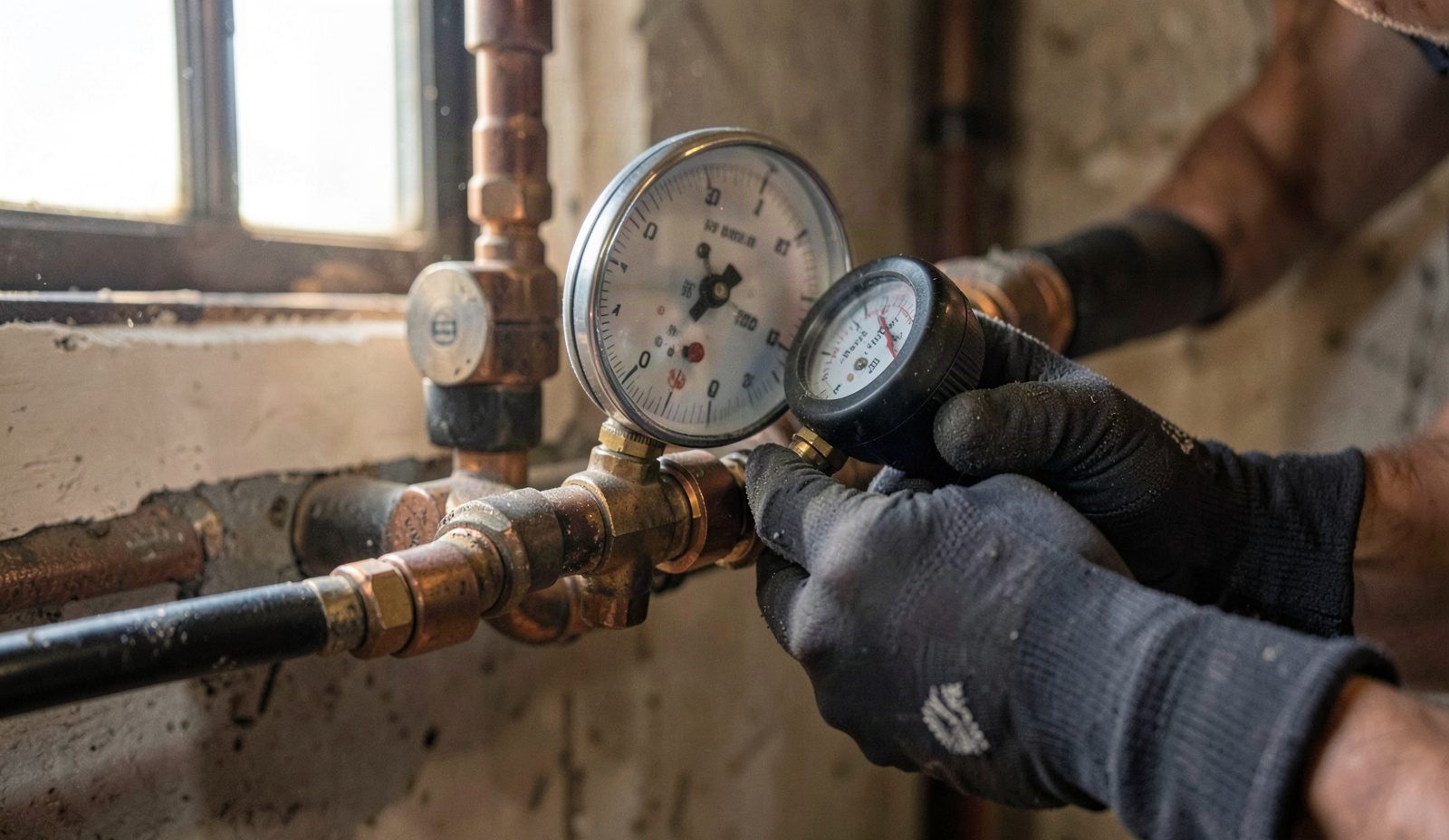
Diagnosis starts at the meter, not the appliance. A technician walks the visible run with a combustible gas detector tuned to flag methane concentrations well below the five percent lower explosive limit, then confirms any suspect joint with a soap-bubble test rather than a sniff test alone, since a small leak under insulation or behind drywall won't always announce itself by smell. At the appliance end, a manometer reads gas pressure in inches of water column at the regulator outlet. Natural gas should sit around 7 inches W.C., propane closer to 11 inches. A reading well outside that band points to a restriction upstream, a bad regulator, or a line sized too small for the load now on it.
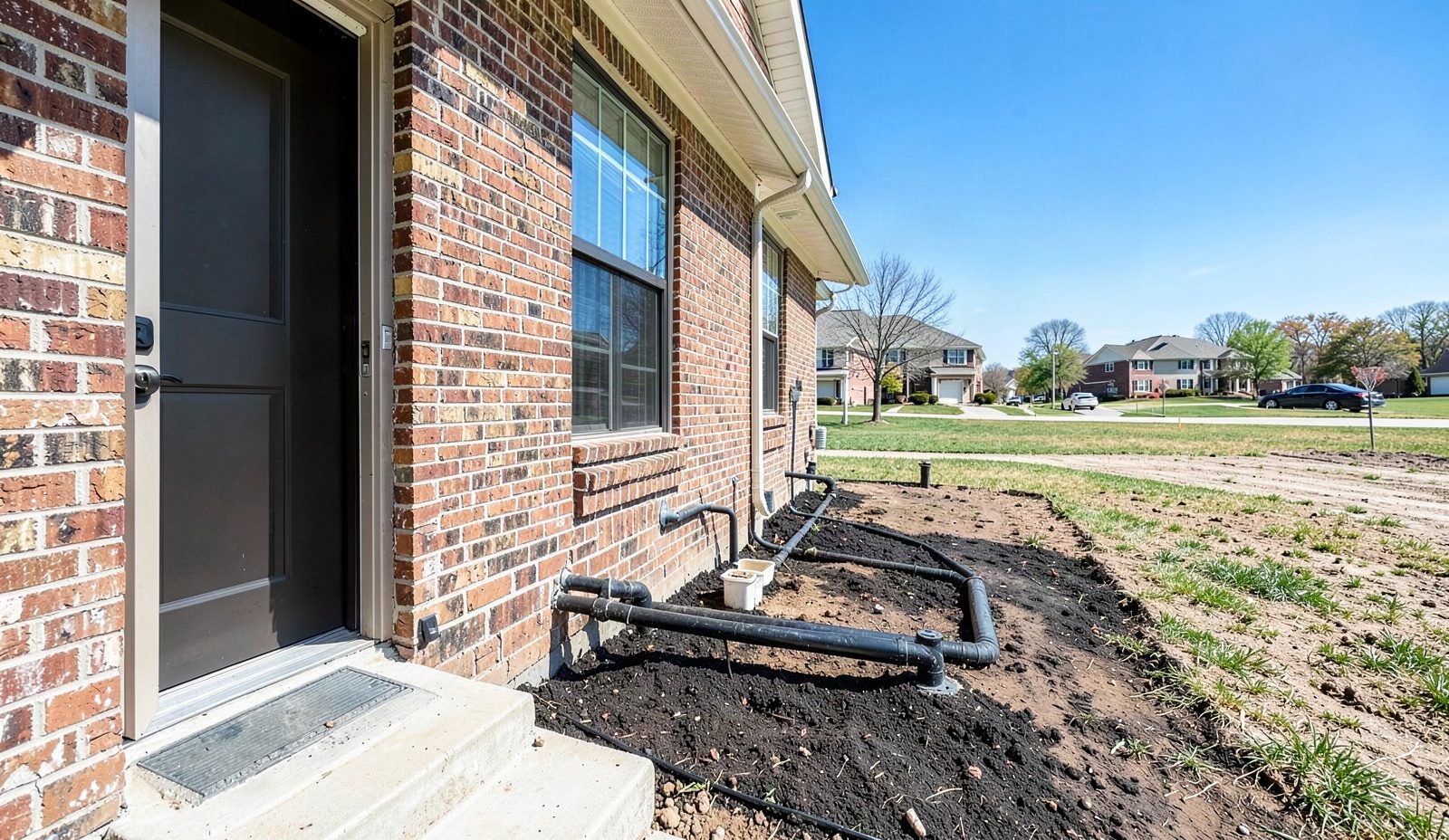
Material choice depends on the run, not habit. Threaded black iron pipe is rigid, needs pipe dope or tape at every joint, and takes longer to fit around obstacles, but it holds up well in exposed basement or utility room runs. Corrugated stainless steel tubing, the kind sold under names like Gastite and TracPipe CounterStrike, snakes through joist bays and wall cavities without cutting and threading a dozen fittings, which cuts labor time on a retrofit substantially. CSST also requires bonding back to the electrical grounding system per the National Fuel Gas Code, a step a lot of DIY installs skip and a lot of unpermitted contractors skip too. We size every new run using the longest-length method from that same code, totaling the BTU demand of every appliance on the line, furnace, water heater, range, dryer, before picking a pipe diameter, rather than assuming the old pipe size still works for a bigger load.
Before any line goes back into service, we pressurize it with air and watch the gauge for any drop over a set holding period, confirming zero loss before gas is restored to the appliances. While we're at the meter and shutoffs, we also read static water pressure at an outdoor spigot. Anything above 80 psi triggers a Section 604.8 recommendation under the International Plumbing Code for a pressure-reducing valve, since that same overpressure stresses the joints and connections on the water side while we're already testing the gas side.
If this sounds close but not quite your situation, commercial sewer line repair may be the better starting point.
The U.S. Department of Energy's water heating guide is a solid primer on operating costs if you want to dig into the numbers yourself.
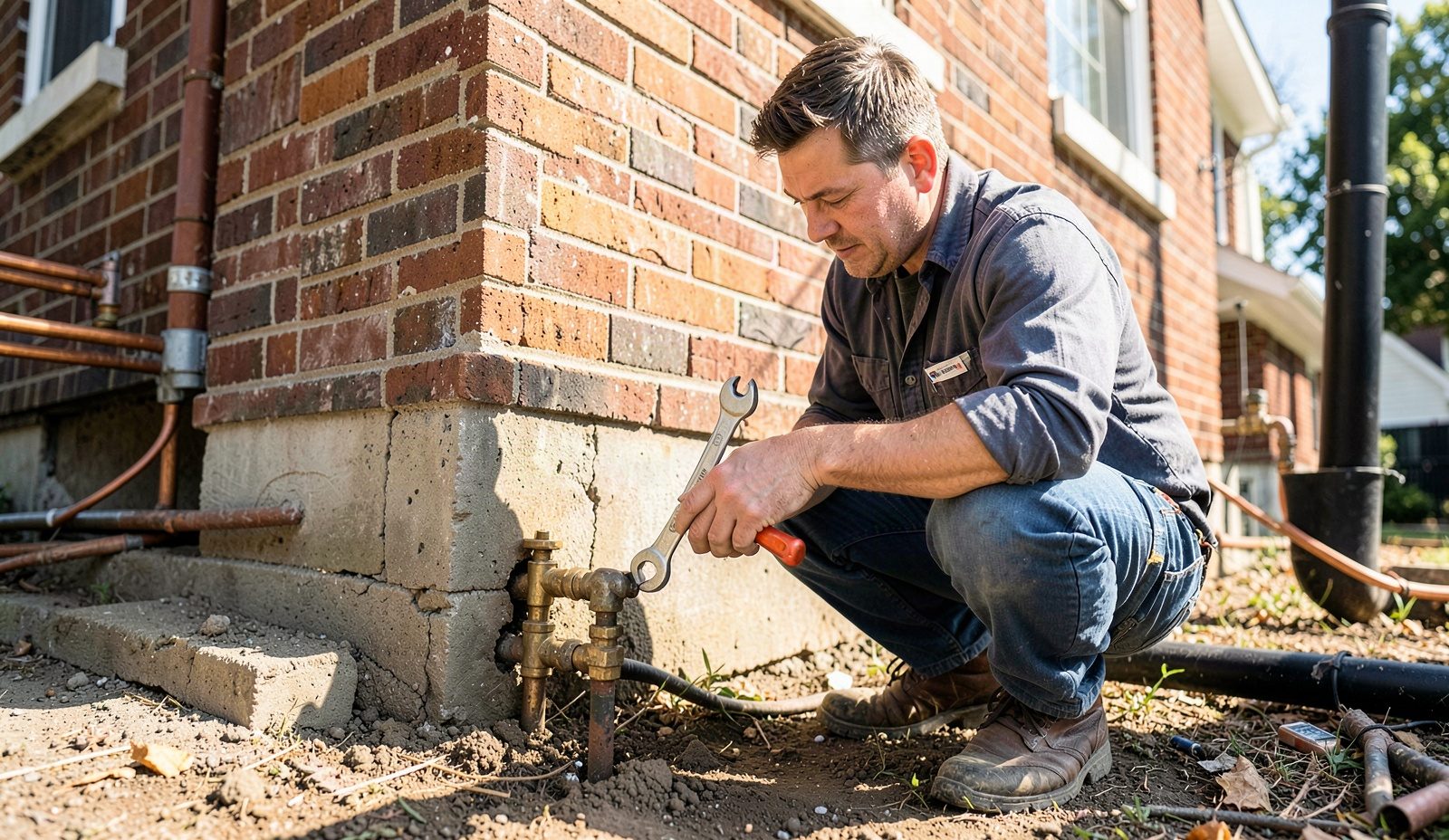
You describe what you're noticing, a smell, a hiss, a pilot that won't stay lit, and get a scheduled arrival window. On arrival, the technician checks the meter, walks the visible run, and tests suspect joints and connections with a combustible gas detector and soap-bubble check. You see the readings as they're taken and get a plain explanation of what's failing and why, before any tool touches a fitting.
Once you approve the written quote, the technician shuts off gas at the meter or an upstream valve and protects the work area with floor runners and containment before opening any wall or cabinet. Repairs proceed using threaded black iron or corrugated stainless tubing depending on the run, sized against the total BTU load of every connected appliance rather than matched to the old pipe by default. Any change in scope, like finding corroded pipe behind the first joint, gets flagged and approved before work continues.
Before gas is restored, the line gets pressurized with air and held while the technician watches the gauge for any drop, confirming a sealed system. Gas is then turned back on at the meter, and every connected appliance gets relit and checked for proper flame and pressure at the regulator. You walk the repaired area with the technician, who documents the work performed and the readings taken, useful if you ever need that record for an inspection or insurance file.
Fort Worth enforces its plumbing requirements through a locally adopted code built on the International Plumbing Code framework, and gas line installation and full line replacement typically require a permit and inspection before the appliance goes back online. Minor like-for-like repairs, such as swapping a corroded union for a new one on an existing run, often fall outside that requirement, but the final call always belongs to the city's permitting authority, not the contractor holding the wrench.
Out-of-area or unfamiliar operators cause real problems here. A crew that doesn't know the local inspection sequence will sometimes button up drywall or pour a slab patch before the rough-in gets signed off, which forces a costly rework when the inspector can't verify the joint. A contractor unfamiliar with CSST bonding requirements might run flexible tubing through a wall without tying it to the electrical ground, a code failure that also becomes a liability if a lightning strike arcs through an unbonded line. And a homeowner who later files an insurance claim tied to a gas incident can find the claim denied outright if the work was never permitted or inspected.
Technicians working on Shield Plumbing gas calls train on the current gas code cycle on a recurring basis, not once at hire, because appliance BTU ratings and connector standards shift as manufacturers update product lines. That training gets checked against real fittings and real pressure readings before a technician handles a gas call without direct oversight. Call (817) 710-3766 to talk through a specific gas line issue with a technician who can speak to your exact piping setup.
See gas leak detection & repair for how the related work is scoped and priced.
Price-checking is smart: marketplaces like Thumbtack publish typical cost ranges you can hold any quote against, including ours.
Booking a gas line call starts with a phone conversation about what you're smelling, hearing, or seeing at the appliance or meter. You get a scheduled arrival window for that day or the next, not a vague afternoon. If a prior call runs long or parts need to be sourced for an odd fitting size, dispatch calls you before the window closes to reset expectations rather than leaving you guessing. Same-day slots fill first-come, so calling as soon as you notice a smell or a pressure drop gets you seen faster than waiting until the pilot light won't stay lit at all.
Any cabinet, wall, or slab section that has to open up for a gas line repair gets floor runners and corner protection down first. Cut drywall and old pipe sections go straight into a lined bin, not onto your floor. If a line runs under a slab and requires a small excavation to reach a sheared joint, the dirt gets tarped and hauled off the same day rather than left in a pile in the yard. When the technician leaves, the work area looks the way it did before the call, minus the leaking line.
What drives a gas line quote is scope, access, and material. A single joint repair on an exposed line costs far less in labor than a new run threaded through finished walls to add a gas line for a stove or an outdoor kitchen. Corroded or galvanized pipe found mid-job sometimes changes the plan once it's exposed. After the on-site diagnosis, you get a written, itemized quote broken out by labor and material before any cutting or fitting starts, and nothing proceeds past that point without your sign-off on the number.
Every technician who works a gas call passes a background check before ever entering a customer's home. Beyond that, techs train on current gas code updates and appliance connector standards on a recurring schedule, not just at hiring. New hires shadow on live gas calls and get evaluated on manometer readings, leak detection technique, and joint work before they're cleared to run a gas line call solo. That field check happens on real fittings under a senior tech's eye, not on a written test alone.
Same-day service is available for most gas line calls in Fort Worth. Once you describe the smell, sound, or appliance symptom over the phone, dispatch works you into the day's schedule when slots are open, and calls placed earlier in the day have a better chance of same-day arrival than calls placed in the evening.
Most single-joint or single-fixture repairs take under two hours once the technician is on site. A full new gas line for a stove, grill, or outdoor kitchen, especially one that requires opening a wall or trenching a short run outside, typically takes a half day to a full day depending on how far the new line has to travel from the existing supply.
Estimates come as a written, itemized quote after the technician completes an on-site diagnosis with a manometer and gas detector. That quote breaks out labor and material by the specific repair or run identified, and no cutting, threading, or excavation starts until you approve the number, so there's no surprise scope creep once the wall is already open.
No, gas line work should not be attempted without training in pressure testing and code-compliant fitting. A joint that looks tight to the eye can still fail a soap-bubble test, and an incorrectly sized DIY run can starve an appliance of pressure without any obvious symptom until the pilot light won't hold weeks later. Permitted gas work also needs sign-off from your local permitting authority before it's considered complete.
Cost depends on pipe material, run length, and how much wall, cabinet, or slab access the job requires. A single exposed-joint repair costs far less in labor than a new run threaded through finished walls for a stove or outdoor kitchen. Calling (817) 710-3766 gets you a specific, written number after a technician sees the actual line and appliance load involved.
Yes, same-day emergency water shut-off service runs every day of the week across Fort Worth and the surrounding Tarrant County area. Calls placed before early afternoon typically get a technician out the same day, and after-hours calls still reach dispatch directly. Call (817) 710-3766 and describe what you are seeing, a stuck valve, a spinning meter, or active flooding, and dispatch gives you a real arrival window instead of a vague callback promise.
Pre-1970 neighborhoods across the metro were plumbed with galvanized steel supply lines and cast iron drains, and a lot of that era's gas piping was black iron run without today's bonding or sizing standards. Homes in Wedgwood, Ridglea Hills, and the Cultural District mix original midcentury construction with decades of additions and remodels, which means a gas line feeding a newer range or tankless unit was often tapped into a pipe sized for a much smaller original load. Planning a repair or new run in these homes starts with tracing the whole system back to the meter, not just the section that's failing, because an undersized upstream section can starve a downstream appliance even after the immediate leak is fixed.
New gas line installation and full replacement runs go through the City of Fort Worth Development Services Department for permitting and inspection, and that inspection confirms pipe sizing, joint work, and bonding before the line goes into permanent service. Homes outside Fort Worth's city limits fall under their own city building department or Tarrant County instead. Knowing which office to file with, and what that specific inspector checks first on a gas rough-in, keeps a project moving instead of stalling on a callback for missing paperwork or an unbonded CSST run.
Explore our service area and locate Shield Plumbing Fort Worth with ease. We're proudly local and serve the surrounding neighborhoods with fast response and honest pricing. Use the map to check our coverage area, or call us and we'll confirm in seconds.
Address:
Shield Plumbing Fort Worth, 210 W 7th St, Fort Worth, TX 76102
5 Signs Your Ridglea Hills Home Has a Slab Leak, practical local guidance from Shield Plumbing Fort Worth, Fort Worth's trusted plumbing tea…
Read More
What Wedgwood Residents Should Know Before a Whole-Home Repipe, practical local guidance from Shield Plumbing Fort Worth, Fort Worth's trust…
Read More
How Fort Worth's Hard Water Is Quietly Destroying Your Water Heater, practical local guidance from Shield Plumbing Fort Worth, Fort Worth's …
Read More
The Hidden Cost of Ignoring a Dripping Faucet in Fort Worth, practical local guidance from Shield Plumbing Fort Worth, Fort Worth's trusted …
Read More