

June 20, 2026
5 Signs Your Ridglea Hills Home Has a Slab Leak
5 Signs Your Ridglea Hills Home Has a Slab Leak, practical local guidance from Shield Plumbing Fort Worth, Fort Worth's trusted plumbing tea…
Read More




A disposal that hums but won't turn is jammed, not dead. A burning smell means the motor windings are stressed and close to failing. Water pooling in the cabinet under the sink usually traces back to a cracked housing seam or a loose mounting ring, and a sink that fills instead of draining while the disposal runs points to a clog past the trap, not the unit itself. Each of these is a distinct failure with its own fix, and treating them the same way is how a five-minute jam turns into a full disposal unit replacement.
Fort Worth's soil drives a lot of this. North Texas expansive clay swells with rain and shrinks in drought, and that constant movement shifts the slab enough to shear copper supply lines and separate drain joints under the house. When a drain joint under a kitchen sink loses its pitch even slightly, water sits in the line instead of clearing, and the disposal ends up grinding against standing water every time it runs. That extra load on the motor is a common reason garbage disposal repair calls cluster in older sections of town, including bungalow blocks in Fairmount and the craftsman-style streets of Arlington Heights, where the original drain runs were never designed for today's disposal loads.
Jams themselves are usually mechanical, not electrical. A spoon, a fruit pit, or a wad of fibrous vegetable peel wedges between the impeller and the grind ring, and the motor's overload protector trips to keep it from burning out. Reset without clearing the actual obstruction, and the jam comes right back, sometimes within the same load of dishes. This is where a jammed disposal fix done wrong causes real damage: repeated resets heat the windings each time, and a unit that could have taken a five-minute clearing ends up needing an InSinkErator repair or a full swap months earlier than it should.
Wait past the first bad smell or the second reset, and the failure gets more expensive to live with, not just to fix. A cracked housing seam keeps weeping into the cabinet floor until the particleboard swells and the shelf sags. A motor that keeps tripping eventually stops resetting at all, usually at the worst possible moment, mid dinner prep with a sink full of dishes. Every week a marginal disposal keeps running is a week it's putting more strain on a drain line that Fort Worth's clay soil is already working against.
More detail on faucet & sink repair is on its own page.
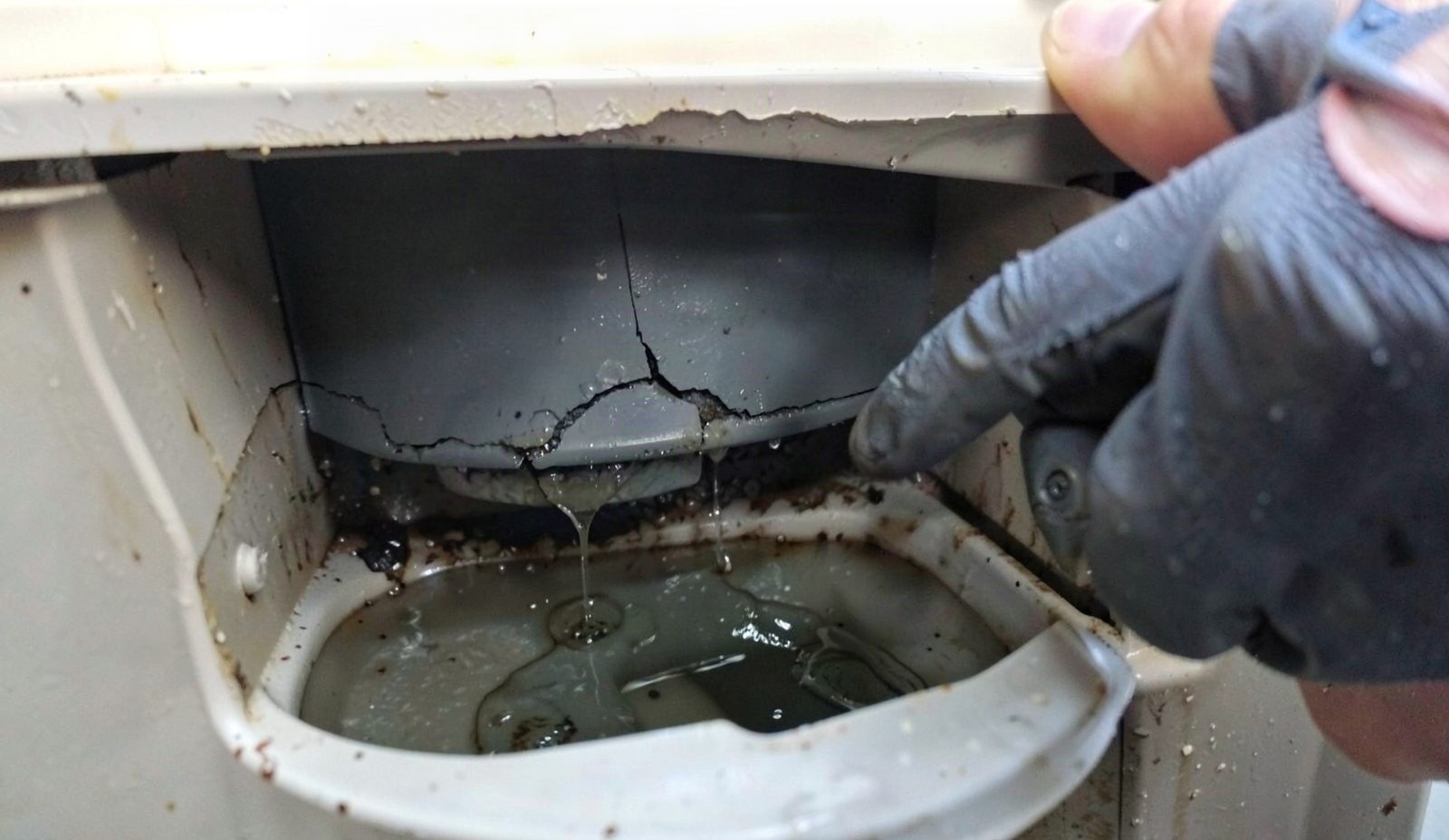
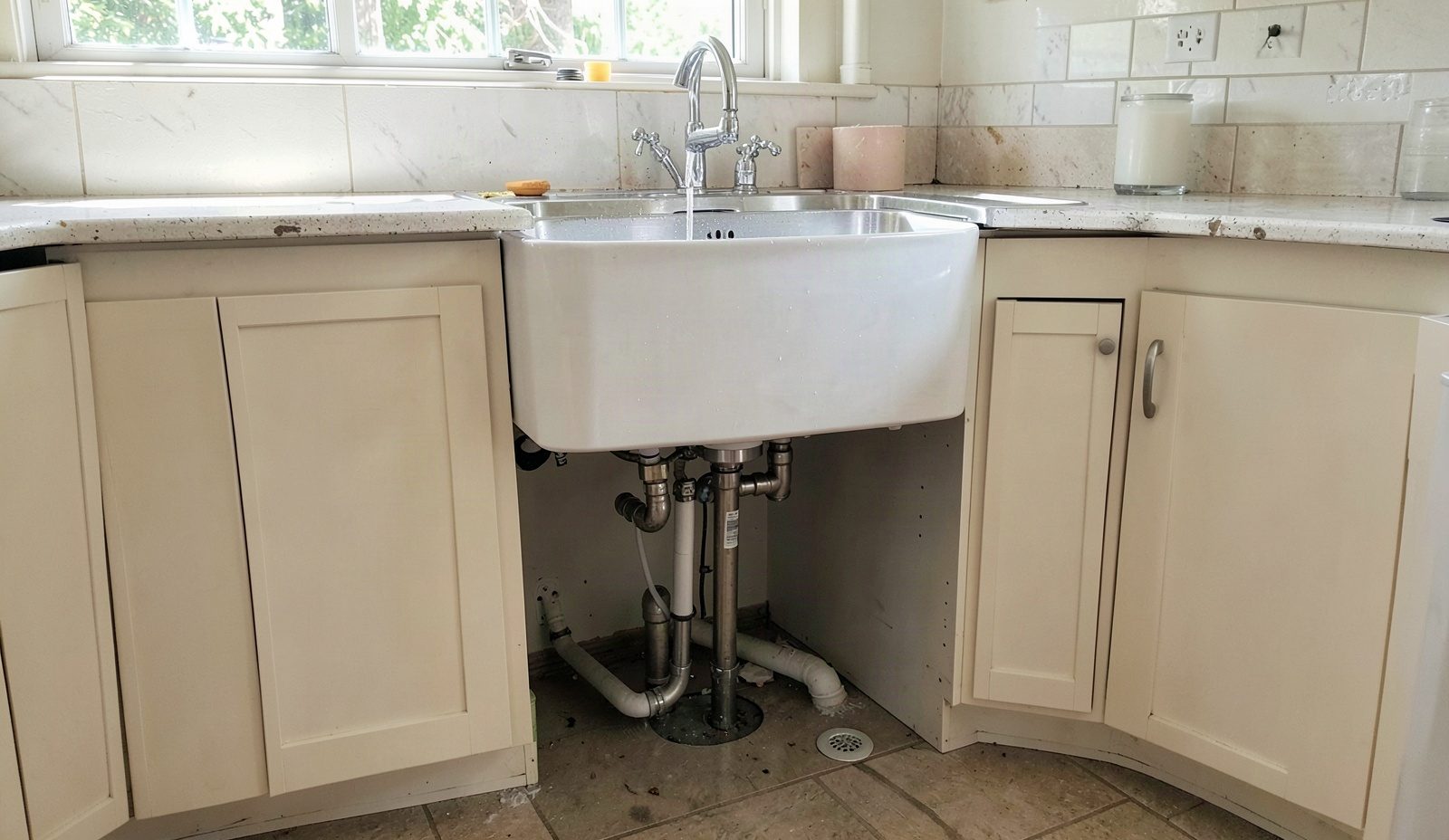
Every disposal call starts under the sink, not with a parts catalog. The first physical test is a hex wrench check: most disposals have a hex socket on the bottom of the housing for exactly this reason, and turning it by hand tells us in seconds whether the impeller spins freely or is genuinely bound. If the wrench turns without resistance, the jam is likely upstream in the drain trap, not in the grind chamber, and that changes the whole repair plan. If it doesn't turn, we know we're clearing debris before we ever touch the reset button.
Fort Worth's moderately hard water plays a role most homeowners never connect to their disposal. The same mineral scale that shortens the life of a water heater's heating element builds up on a disposal's splash guard and impeller shaft over years, adding drag that a clamp meter picks up as elevated amperage draw against the nameplate rating. A unit pulling noticeably more current than its rating, with no visible jam, usually has scale-bound bearings, and that reading is often the difference between recommending a cleaning and recommending a disposal unit replacement outright. We also check static water pressure at an outdoor spigot on any job that involves reconnecting supply or drain lines, because a reading above 80 psi calls for a pressure-reducing valve under Section 604.8 of the International Plumbing Code, and skipping that check is how a new installation ends up with a leak six months later.
When replacement is the right call, the choice of unit matters more than most retail displays suggest. An InSinkErator Badger 5 runs a galvanized steel grind chamber at a third-horsepower motor, fine for light households but slow on fibrous scraps. Step up to an InSinkErator Evolution Excel and you get a full-horsepower motor, a stainless steel grind stage, and sound-dampening insulation that cuts operating noise noticeably compared to the Badger line. A Waste King Legend series unit lands in between on price and horsepower but uses a stainless swivel impeller that resists the same mineral buildup we test for with the clamp meter. We size the choice to your household's actual grinding load and your drain line's condition, not just the number stamped on the box.
If this sounds close but not quite your situation, backflow prevention & testing may be the better starting point.
Your local utility, Payment options, publishes service and water-quality information every Fort Worth homeowner should know.
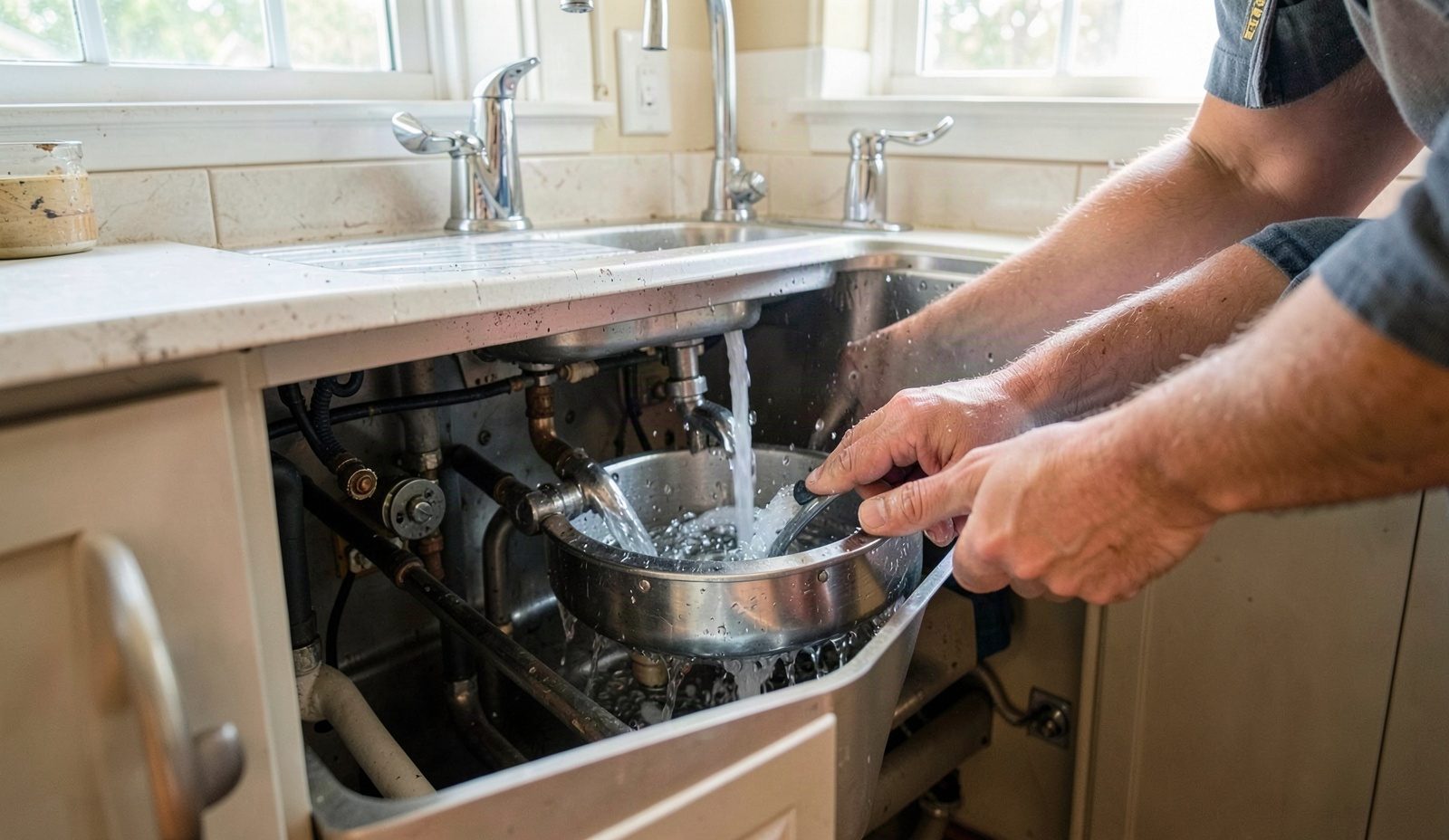
You describe the symptom when you call, humming without spinning, a burning smell, or water pooling under the sink, and that helps the technician bring the right parts on the first trip. On arrival, they run the hex wrench test on the disposal's bottom socket, check the switch and outlet with a multimeter, and inspect the drain trap and slip joints for leaks or corrosion. You see exactly what they find before anything is opened up further, and the diagnosis takes a few minutes, not a guessing game.
Once you approve the written quote, the technician protects the cabinet floor and counter, shuts off the disposal's power at the switch, and either clears the jam and rebuilds the mounting seal or removes the old unit entirely for replacement. New units get seated on the mounting ring with fresh plumber's putty, and drain connections are reassembled with new slip nut washers rather than reused ones, since a worn washer is a common source of a callback-worthy leak. You approve any scope changes, like a corroded drain stub needing a new fitting, before work continues.
Before the technician packs up, they run the disposal under water flow for several minutes, check the amperage draw against the nameplate rating with a clamp meter, and inspect every reassembled joint under the sink with a flashlight for weeping or drips. You get a walkthrough of what was found, what was replaced, and what the readings mean in plain terms. The cabinet gets a final wipe-down, and you're shown where the reset button is in case the unit ever trips again.
Disposal work looks simple until it touches wiring, drain venting, or a switched circuit, and that's where an out-of-area operator's lack of local knowledge shows up. The City of Fort Worth plumbing code governs how a new disposal's drain connection ties into the existing trap and vent arrangement, and a straightforward like-for-like swap usually doesn't need a permit, while adding a new dedicated circuit or a switched outlet for the unit does. The City of Fort Worth Development Services Department is the office that makes that call for Fort Worth addresses, and a crew that doesn't know to ask the question is a crew that leaves you holding the liability if an inspector ever looks at the work.
Housing age changes the job as much as code does. Pre-1970 neighborhoods across the metro were plumbed with galvanized steel supply lines and cast iron drains, both now at or past the end of their service life, and installing a modern disposal on a cast iron drain stub means checking the fitting for corrosion and scaling before assuming a standard slip-nut connection will seal. A tech unfamiliar with cast iron drain transitions will force a plastic fitting onto a corroded iron stub and call it done, and that joint fails within the year.
Response logistics matter too. A disposal jam that floods a cabinet doesn't wait for a convenient afternoon, and a technician who already knows which Fort Worth neighborhoods still run original cast iron drains diagnoses faster because they're not guessing at what's under the sink. Call (817) 710-3766 and describe the symptom, and the technician who answers will already be thinking through the housing-stock variables before the truck leaves.
See drain cleaning & rooter service for how the related work is scoped and priced.
Price-checking is smart: marketplaces like Thumbtack publish typical cost ranges you can hold any quote against, including ours.
You book a time slot when you call, and we give you a real arrival window, not a vague morning or afternoon block. The technician calls or texts when they're on the way, so you're not stuck waiting by the door. If a prior job runs long, dispatch calls you before your window starts to reschedule or adjust, never after you've already been waiting. Same-day slots are available for active leaks or a disposal that's flooded a cabinet, and standard repairs or installs book within a few days depending on the week. You'll know your window before you hang up the phone.
The technician lays down a drop cloth under the sink and on the cabinet floor before removing anything, and any standing water from a leak gets wet-vacuumed before work starts. Old disposal units, mounting rings, and packaging leave with the technician, not in your trash can. Tools stay on the cloth, not on your cabinet shelf or counter. When the job's finished, the cabinet gets wiped down and the area under the sink looks the way it did before we arrived, minus the leak, the smell, or the jam that brought us out.
The estimate depends on a few concrete factors: whether the fix is a jam clearing or a full disposal unit replacement, how the drain lines under your sink are configured, whether the electrical connection needs rework, and the horsepower and grind stage of the unit you choose. The technician writes the quote on site after the hex wrench test and amperage check, and you see the number before any parts are ordered or work begins. Nothing starts until you approve it. If the scope changes once we're inside the cabinet, we stop and walk you through the new number first.
Every technician goes through a background check before working a Fort Worth route alone. Training covers the current plumbing code cycle, including drain sizing and venting rules that apply to kitchen fixtures, and continues with periodic field reviews where a senior tech checks a junior tech's work against code before sign-off. New hires ride alongside an experienced tech on disposal and drain calls for a set period before they're cleared to run solo appointments. That review process, not a sales pitch, is what determines who shows up at your door.
Large item disposal in Fort Worth runs through the city's Solid Waste Services division, not a plumbing contractor. Residents schedule a bulk collection online or by phone for their assigned collection week. If you're replacing a disposal unit, Shield Plumbing Fort Worth hauls away the old unit and its packaging as part of the installation, so that particular item never needs a separate city pickup.
Mattress disposal in Fort Worth goes through the city's bulk waste program or a private junk removal hauler, not a plumbing company. You book a pickup slot the same way you would for other large bulky items. Shield Plumbing Fort Worth doesn't handle mattress removal, but our team can point you to the right city department if you call while we're on-site for a plumbing repair.
Dumpster rental pricing in Fort Worth depends on container size, rental length, and the hauler you choose, so the cheapest option varies by project. Get quotes from a few local roll-off companies and confirm what's included in the weight limit before you commit. This falls outside plumbing work, so Shield Plumbing Fort Worth can't rent one for you, but we're happy to point you toward the question to ask.
Report a missed garbage pickup to the City of Fort Worth's Solid Waste Services as soon as you notice it, usually within a day of your scheduled collection. This is a city service issue, separate from a disposal or drain backing up into your sink, which is where a plumber's involvement actually starts. If the smell you're noticing is coming from under the sink rather than the curb, that's worth a call to us instead.
Shut the cold water valve on top of the tank and cut power at the breaker or gas at the shutoff before doing anything else. Set a bucket or shallow pan under the leak and lay towels to slow water spreading toward drywall or carpet. Do not wrap tape or sealant around a leaking fitting under pressure, it rarely holds and can mask a bigger failure. A technician needs to find the actual source, whether it is the tank shell, a valve, or a fitting, before the unit runs again safely.
No product kills mold instantly on porous material like particleboard or drywall paper, since the roots grow into the surface, not just on top of it. An EPA-registered disinfectant or a diluted hydrogen peroxide solution works on sealed, non-porous surfaces like tile and painted wood. Bleach whitens mold stains on the surface but does not penetrate porous cabinet material, which is why the mold often returns within weeks if the underlying leak is not repaired first.
The February 2021 freeze burst pipes across Tarrant County by the tens of thousands, and most of the failures were supply lines run through attics and exterior walls, but disposal units took damage too. Standing water left in a grind chamber overnight in an unheated garage sink froze solid, and the expansion cracked housings on units that had run fine for years. That kind of cold stress still shows up on service calls in older, poorly insulated kitchens near the Near Southside and around Wedgwood, where original construction didn't account for the region's occasional hard freezes. Homes in Ridglea Hills and along the Cultural District's older residential streets see similar issues when a disposal sits idle over a winter without being drained first.
The City of Fort Worth plumbing code, based on the International Plumbing Code, governs how a disposal's drain connection ties into the trap arrangement and how any new circuit work gets inspected. That code framework exists to keep a kitchen's drain and vent system working as one unit, not a patchwork of whatever fittings were on hand. Homeowners across the metro increasingly ask a technician up front whether a job needs a permit or inspection, and a straight answer builds more trust than a vague one. Knowing the local code family by name, and applying it consistently on every job, is what separates a plumbing outfit that's actually familiar with Fort Worth from one that's just passing through.
Explore our service area and locate Shield Plumbing Fort Worth with ease. We're proudly local and serve the surrounding neighborhoods with fast response and honest pricing. Use the map to check our coverage area, or call us and we'll confirm in seconds.
Address:
Shield Plumbing Fort Worth, 210 W 7th St, Fort Worth, TX 76102
5 Signs Your Ridglea Hills Home Has a Slab Leak, practical local guidance from Shield Plumbing Fort Worth, Fort Worth's trusted plumbing tea…
Read More
What Wedgwood Residents Should Know Before a Whole-Home Repipe, practical local guidance from Shield Plumbing Fort Worth, Fort Worth's trust…
Read More
How Fort Worth's Hard Water Is Quietly Destroying Your Water Heater, practical local guidance from Shield Plumbing Fort Worth, Fort Worth's …
Read More
The Hidden Cost of Ignoring a Dripping Faucet in Fort Worth, practical local guidance from Shield Plumbing Fort Worth, Fort Worth's trusted …
Read More