
June 20, 2026
5 Signs Your Ridglea Hills Home Has a Slab Leak
5 Signs Your Ridglea Hills Home Has a Slab Leak, practical local guidance from Shield Plumbing Fort Worth, Fort Worth's trusted plumbing tea…
Read More




A water heater rarely fails without warning. First the shower runs lukewarm instead of hot. Then the tank starts popping or rumbling, a sound caused by sediment hardening on the bottom of the tank and trapping water underneath that flashes to steam. Rust-colored water at the tap, a rotten-egg smell from the hot side only, or a damp ring on the floor around the base all point to a tank near the end of its life, not a fixable fluke.
Fort Worth water is moderately hard, and the mineral scale it deposits on heating elements and tank walls is the leading reason local units die well before their rated life. On an electric unit, scale insulates the lower element so it cycles longer and burns out faster. On a gas unit, scale on the tank floor acts like a heat shield, forcing the burner to run longer to heat the same forty or fifty gallons. Homeowners searching for a way to fix a hot water heater that just stopped keeping up are usually looking at scale buildup, not a wiring fault.
Older neighborhoods add a second failure path. In parts of Fairmount and Arlington Heights, original slab foundations sit on the same expansive clay found across North Texas, and that clay swells with rain and shrinks in drought. The movement is enough to shear copper supply lines and separate drain joints under the house, and a water heater fed by a stressed or partially crimped line will show pressure problems and inconsistent hot water long before the tank itself is the culprit.
Waiting rarely buys time. A tank that is already rumbling and rusting is close to a seam failure, and a ruptured forty-gallon tank on a second floor or in an attic closet sends water through ceilings and drywall in minutes. What starts as a same-day hot water tank repair becomes a full hot water heater replacement plus flooring, drywall and paint once the tank actually splits.
If this sounds close but not quite your situation, commercial water heater systems may be the better starting point.
The U.S. Department of Energy's water heating guide is a solid primer on operating costs if you want to dig into the numbers yourself.
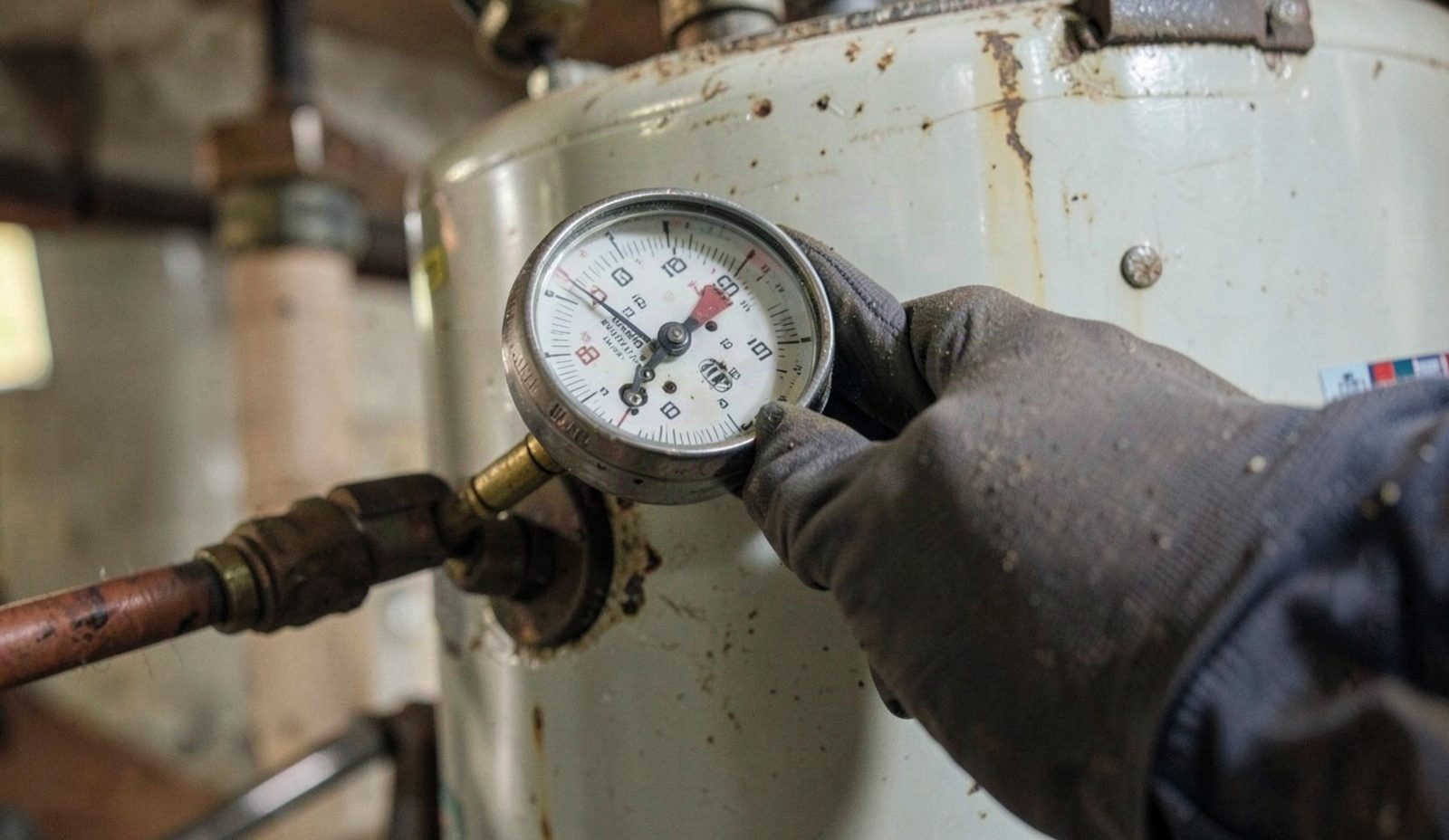
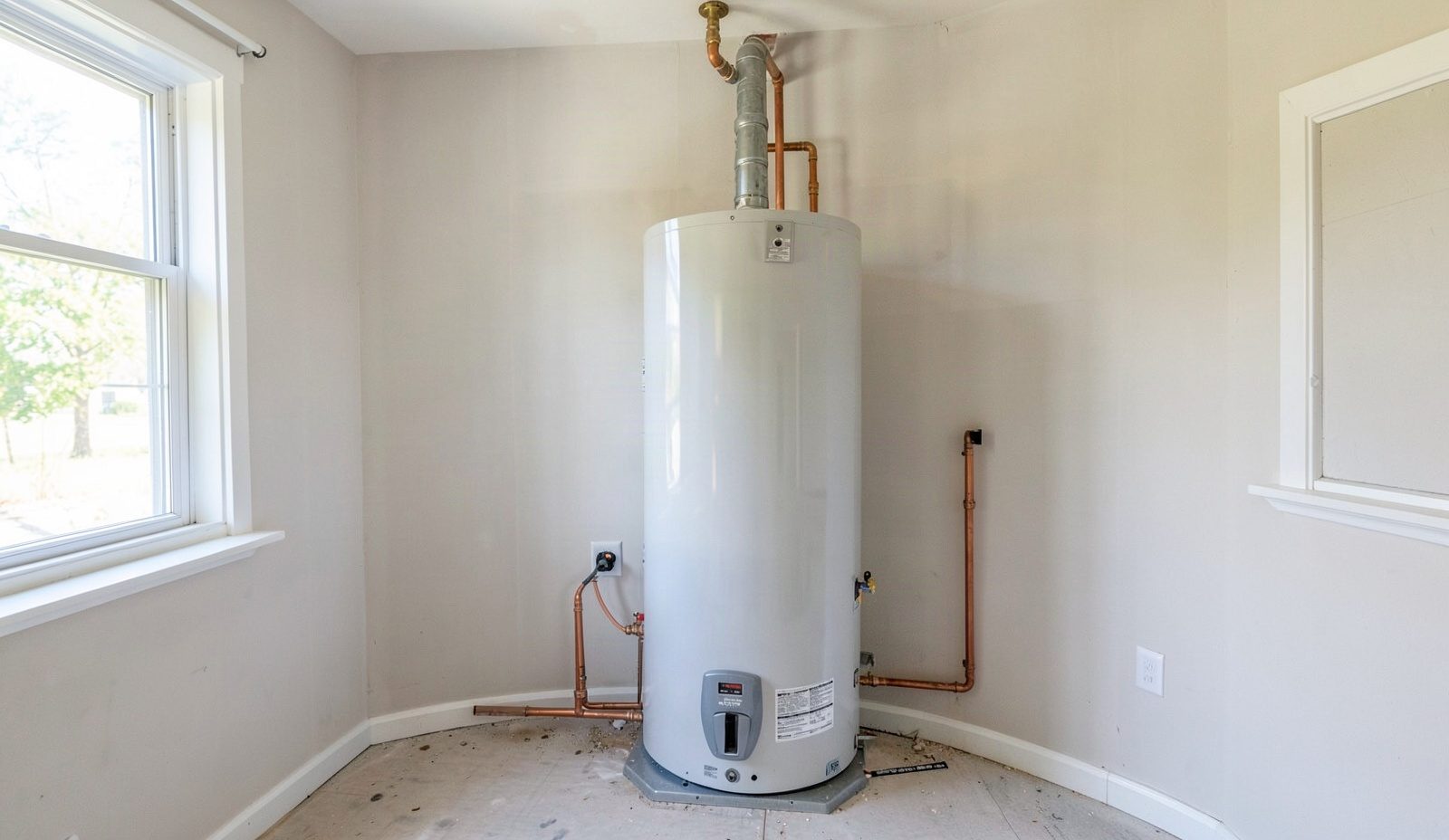
Every call starts with a pressure test, not a guess. A technician connects a gauge to an outdoor spigot and reads static water pressure; a number above 80 psi triggers a pressure-reducing valve requirement under Section 604.8 of the International Plumbing Code, and high pressure that has never been corrected is often what shortened the life of the tank you're calling about in the first place. On gas units we also check flue draft with a smoke pencil and run a combustion check, and on electric units we pull the elements and read resistance with a multimeter before condemning a thermostat.
The repair-versus-replace decision comes down to age, anode condition and what the tank costs to keep running. We pull the anode rod on any tank over four years old; a rod worn down to the steel core means the tank is actively corroding from the inside and a hot water tank repair is a short-term patch. For a straight water heater change out, we compare a standard 50-gallon atmospheric-vent tank like a Rheem Performance or State Select against a power-vent model, and against tankless units such as a Rinnai or Navien. The tank units recover roughly 40 to 50 gallons per hour of usable hot water and run eight to twelve years; a properly sized tankless unit delivers continuous flow at 8 to 10 gallons per minute and typically runs fifteen to twenty years, but it needs a dedicated Category III stainless vent and, on gas models, a larger gas line, which changes the installation scope.
Sizing isn't guesswork either. We size a tank or tankless system to fixture count and simultaneous demand, not just to whatever size sat there before, because a hot water system installation matched to the last century's fixture count runs short in a house that's added a second bathroom or a soaking tub since. Combustion air, venting clearance and the expansion tank requirement on a closed system all get checked before a single fitting gets cut.
See emergency water heater repair for how the related work is scoped and priced.
Communities like r/Plumbing are full of homeowners comparing notes on exactly this problem, worth a read before a major project.
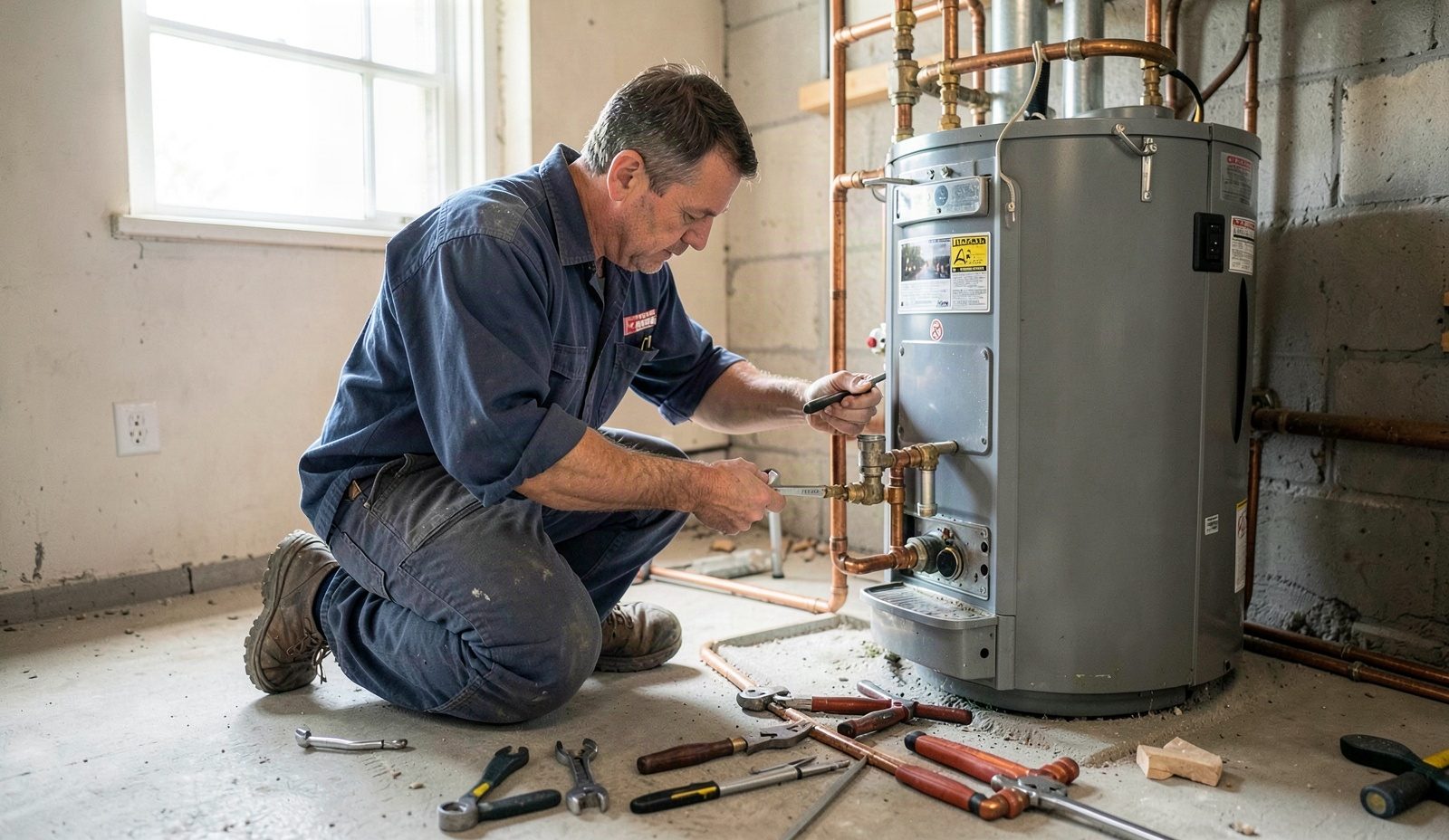
You call (817) 710-3766 and describe what you're seeing, lukewarm water, a rusty tap, a smell or a puddle. A technician arrives in the scheduled window and starts with a pressure gauge at the outdoor spigot, then inspects the tank for corrosion, checks the anode rod on older units, and on gas units checks flue draft and burner condition. You'll see the readings on the gauge and the actual condition of the tank, elements or vent, not just a verbal opinion.
Once the diagnosis is clear, the technician writes an itemized quote covering parts, labor and any code-required additions like a pressure-reducing valve or expansion tank. Work starts only after you approve that number. Floor protection goes down, water and gas supply get isolated, and the repair or change out proceeds, whether that's swapping a thermocouple and anode or disconnecting the old tank and setting a new one with updated venting and connections.
Before the technician packs up, the system gets fired and run through a full heat cycle, gas units get a combustion check and leak test with a gas sniffer, electric units get a load test on the elements, and the T&P valve gets manually tripped to confirm it discharges and reseats. You walk through the install with the technician, get shown the shutoff locations, and receive a written record of the model, settings and readings taken that day.
Water heater work in Fort Worth answers to the City of Fort Worth plumbing code, which is based on the International Plumbing Code, and that code governs venting clearance, combustion air, T&P discharge routing and the drain pan required under any tank installed above a living space. An installer who doesn't know these requirements can leave a T&P line discharging somewhere it will scald a foot instead of draining to daylight, or skip the drain pan under an attic tank, an oversight that turns a slow leak into a ceiling collapse instead of a contained drip.
Housing stock across the metro adds another layer most out-of-area crews miss. Neighborhoods built before 1970 were plumbed with galvanized steel supply lines and cast iron drains, and both are at or past the end of their service life. Connecting a new water heater to galvanized supply lines without inspecting them first is how a homeowner ends up with a brand-new tank and the same rust-colored water they called about, because the rust was coming from the pipe, not the old tank.
An out-of-area or unfamiliar operator working without local code knowledge is a real liability risk: a miswired disconnect, an unpermitted gas line change, or a wrong venting category can fail inspection or, worse, pass unnoticed until there's a carbon monoxide event. We work from the current code cycle on every job and document the model, venting configuration and pressure readings we started with, so there's a record of what was actually installed and why.
Our page on tankless water heater services covers that side of the work in more depth.
Permit and inspection questions? Development Services is the office we coordinate with on every permitted Fort Worth job.
Calls booked before early afternoon usually get same-day service; anything later typically lands a firm next-day window. You get a two-hour arrival window the morning of the visit, plus a call or text when the technician is on the way so you're not sitting by the door all day. If a prior job runs long and pushes your window, dispatch calls you before the window closes, not after, and offers the next available slot instead of leaving you guessing. Emergency tank failures get priority routing ahead of routine repairs.
Floor runners go down from the door to the water heater closet or attic hatch before any tool comes out, and the old tank gets drained and capped before it's moved to avoid a trail through the house. Old units, packaging and any cut pipe or fittings leave with the crew, not in your driveway or trash can. Attic work uses a drop cloth staged at the hatch to catch insulation and debris. Before the technician leaves, the work area gets wiped down and swept, and any furniture moved to reach the unit goes back where it was.
Four things move the number: the scope, whether it's a repair or a full water heater change out, access, whether the unit sits in a garage, closet or attic, materials, code-required items like an expansion tank or new vent, and the condition of what's already there, especially old galvanized supply lines. The technician writes the quote on site after the pressure test and inspection, itemized by task, and nothing gets cut, capped or replaced until you approve that written number.
Every technician goes through a background check before working in a customer's home. Ongoing training covers the current plumbing code cycle, manufacturer specs for the tank and tankless lines we install most, and combustion safety procedures for gas appliances. New hires ride with a senior technician on water heater calls and are checked off on pressure testing, venting inspection and gas line procedure before they're cleared to run a water heater job alone. That sign-off is documented, not assumed.
Choosing a good plumber depends on whether they diagnose with instruments before quoting and know the local plumbing code by name. Ask whether they'll test static water pressure and check the anode rod before recommending a repair or a new tank, and ask how they handle older galvanized supply lines common in pre-1970 homes. A plumber who gives a number over the phone without seeing the tank is guessing. Shield Plumbing tests first and writes the quote from what's actually found.
Shield Plumbing Fort Worth stands out because every visit starts with a pressure gauge and a physical anode inspection, not a phone estimate. Technicians work from the current plumbing code cycle and know how pre-1970 galvanized lines and attic-run supply pipe common across the metro change an installation plan. The written quote is itemized before any part gets replaced, and the crew documents the model, readings and vent configuration left behind, giving you a real record instead of a verbal promise.
Estimates come after a technician tests your system on site, not before. The technician checks water pressure, tank condition and, on gas units, venting and combustion, then writes an itemized quote covering parts, labor and any code-required additions. You review and approve that number before any work starts. There's no charge to have the technician diagnose the issue and walk you through the options.
It depends on scope: a like-for-like repair, such as replacing a thermocouple or heating element, usually doesn't need one, while a full tank change out or new gas and vent line work generally does. The permit authority makes the final call on borderline cases, and Shield Plumbing handles that filing as part of a full installation so the completed work has an inspection record tied to the address.
Minor tasks like flushing sediment from the drain valve are DIY-safe, but gas line work, venting changes and full tank swaps are not. A misconnected T&P discharge or incorrect vent category creates a scalding or carbon monoxide risk that isn't visible until something goes wrong. Anything touching gas supply, electrical disconnects or venting configuration falls under code requirements that call for a technician who can test and document the result.
A straightforward element or thermocouple repair usually takes one to two hours from diagnosis to test. A full tank change out with existing venting reused typically runs three to five hours, longer if the vent, gas line or expansion tank need updating to current code, or if the unit sits in a tight attic space that slows access and removal of the old tank.
Fort Worth's infrastructure age works against water heaters in ways a newer metro doesn't see. The February 2021 freeze burst pipes across Tarrant County by the tens of thousands, and most of those failures were supply lines run through attics and exterior walls, the same attics where many Wedgwood and Ridglea Hills homes still keep their water heater today. A tank fed by a line that froze and was patched once already is a different job than a straightforward swap, because the technician has to check that upstream repair before trusting the new connection. Mid-century homes near the Cultural District often combine that attic placement with tight clearances that limit which replacement units will physically fit without reworking the vent run.
Full replacements and any new gas or vent line routing typically require a permit through the City of Fort Worth Development Services Department, while a like-for-like element or thermocouple repair usually does not, and the department makes the final call on borderline scope. Homes in the Near Southside range from converted early-1900s bungalows to newer infill construction, so the permit picture on the same block can differ block to block depending on when the plumbing was last touched. Working within that system, rather than skipping it, is what keeps an inspection from stalling a job halfway through and what gives a homeowner a documented record if the property sells later.
Explore our service area and locate Shield Plumbing Fort Worth with ease. We're proudly local and serve the surrounding neighborhoods with fast response and honest pricing. Use the map to check our coverage area, or call us and we'll confirm in seconds.
Address:
Shield Plumbing Fort Worth, 210 W 7th St, Fort Worth, TX 76102
5 Signs Your Ridglea Hills Home Has a Slab Leak, practical local guidance from Shield Plumbing Fort Worth, Fort Worth's trusted plumbing tea…
Read More
What Wedgwood Residents Should Know Before a Whole-Home Repipe, practical local guidance from Shield Plumbing Fort Worth, Fort Worth's trust…
Read More
How Fort Worth's Hard Water Is Quietly Destroying Your Water Heater, practical local guidance from Shield Plumbing Fort Worth, Fort Worth's …
Read More
The Hidden Cost of Ignoring a Dripping Faucet in Fort Worth, practical local guidance from Shield Plumbing Fort Worth, Fort Worth's trusted …
Read More