
June 20, 2026
5 Signs Your Ridglea Hills Home Has a Slab Leak
5 Signs Your Ridglea Hills Home Has a Slab Leak, practical local guidance from Shield Plumbing Fort Worth, Fort Worth's trusted plumbing tea…
Read More




A flooded Fort Worth basement rarely announces itself as flooding. It starts as a smell, wet cardboard and mildew rising from a floor drain hours before you see a drop of standing water on the slab. By the time you're standing in an inch of gray water that squishes under your shoes, the flood water extraction job already got bigger than it needed to be. Carpet pad soaks up water like a sponge and holds it against the subfloor. Drywall wicks moisture upward along the paper facing well above the visible waterline. A sump pump alarm chirping at two in the morning means the window for simple standing water removal just closed down to minutes, not hours.
Foundation movement causes more basement flooding in Fort Worth than storm runoff does. The expansive clay soil under homes in Fairmount and Wedgwood swells several inches after a heavy rain and shrinks back hard during a dry August stretch. That swelling and shrinking flexes the slab enough to shear copper supply lines running under the house and pull cast iron or PVC drain joints apart at the hub. The leak starts underground, out of sight, and shows up in the basement days or weeks later as a damp baseboard, a musty corner, or a puddle that returns no matter how many times you mop the floor. By the time it's visible, the pipe has usually been leaking for a while.
A failed water heater is the other frequent trigger for an emergency water pump out call. Fort Worth's moderately hard water leaves mineral scale on heating elements, and that scale is a leading reason local water heaters fail years before their rated life runs out. Once the tank shell corrodes through, forty to fifty gallons drain out fast, and if that unit sits on a basement pad, the water has nowhere to go but across the floor toward the nearest outlet or storage box. A garage wet vac can't move that volume before it reaches electrical components or anything stored on the floor.
Every additional hour of standing water raises the basement flood cleanup bill. Drywall paper starts feeding mold colonies within one to two days in Fort Worth's humid summer air, even with the air conditioning running. Fiberglass insulation loses its usable R-value once saturated and almost never dries back to spec in place. Electrical boxes mounted low on basement walls corrode from the inside out, a hazard a home inspector will flag on any future sale. What starts as a same-day pump-out and dry-out turns into a demolition and rebuild job for anyone who waits through the weekend to call.
See 24/7 emergency plumbing services for how the related work is scoped and priced.
The U.S. Department of Energy's water heating guide is a solid primer on operating costs if you want to dig into the numbers yourself.
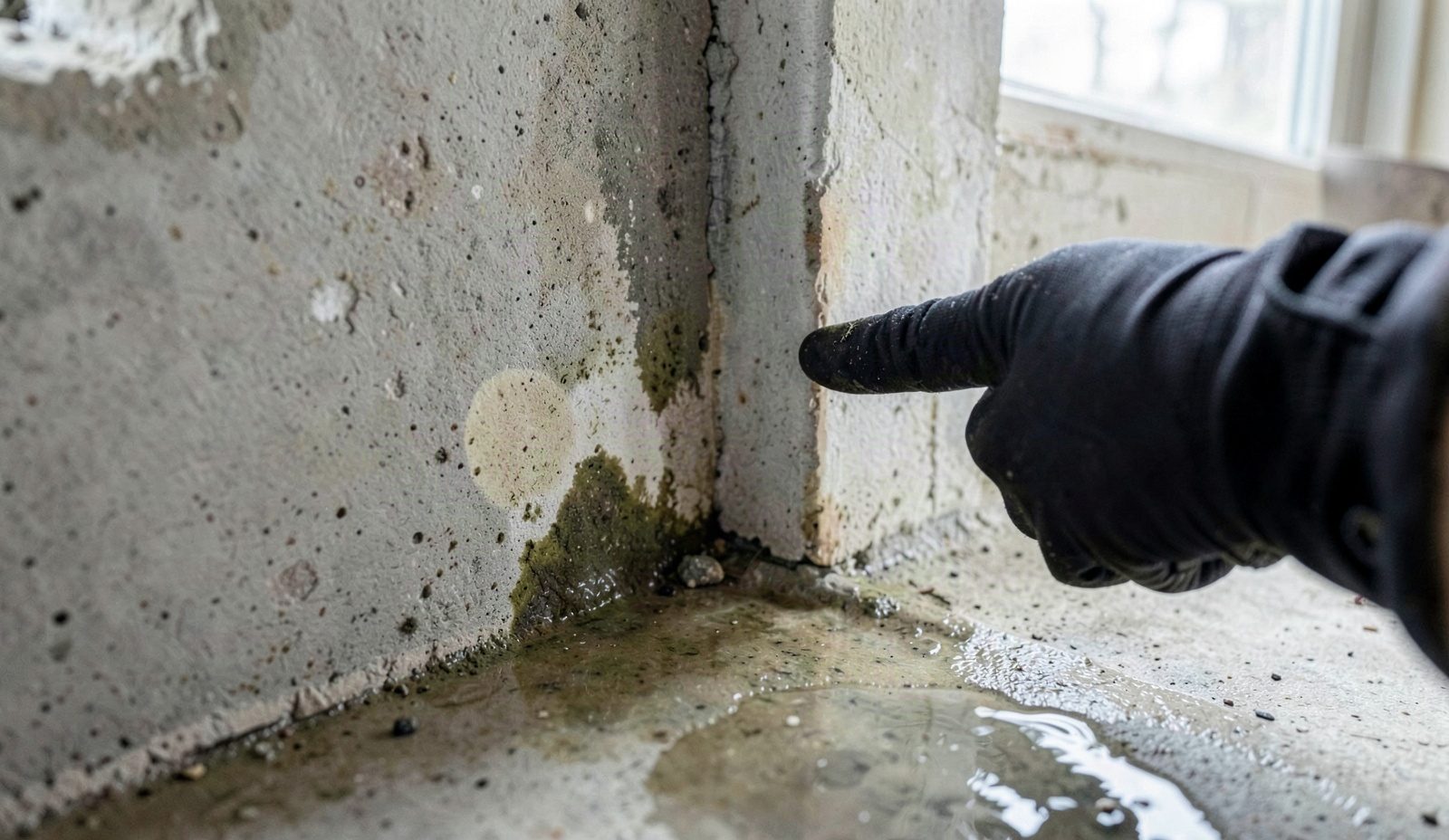
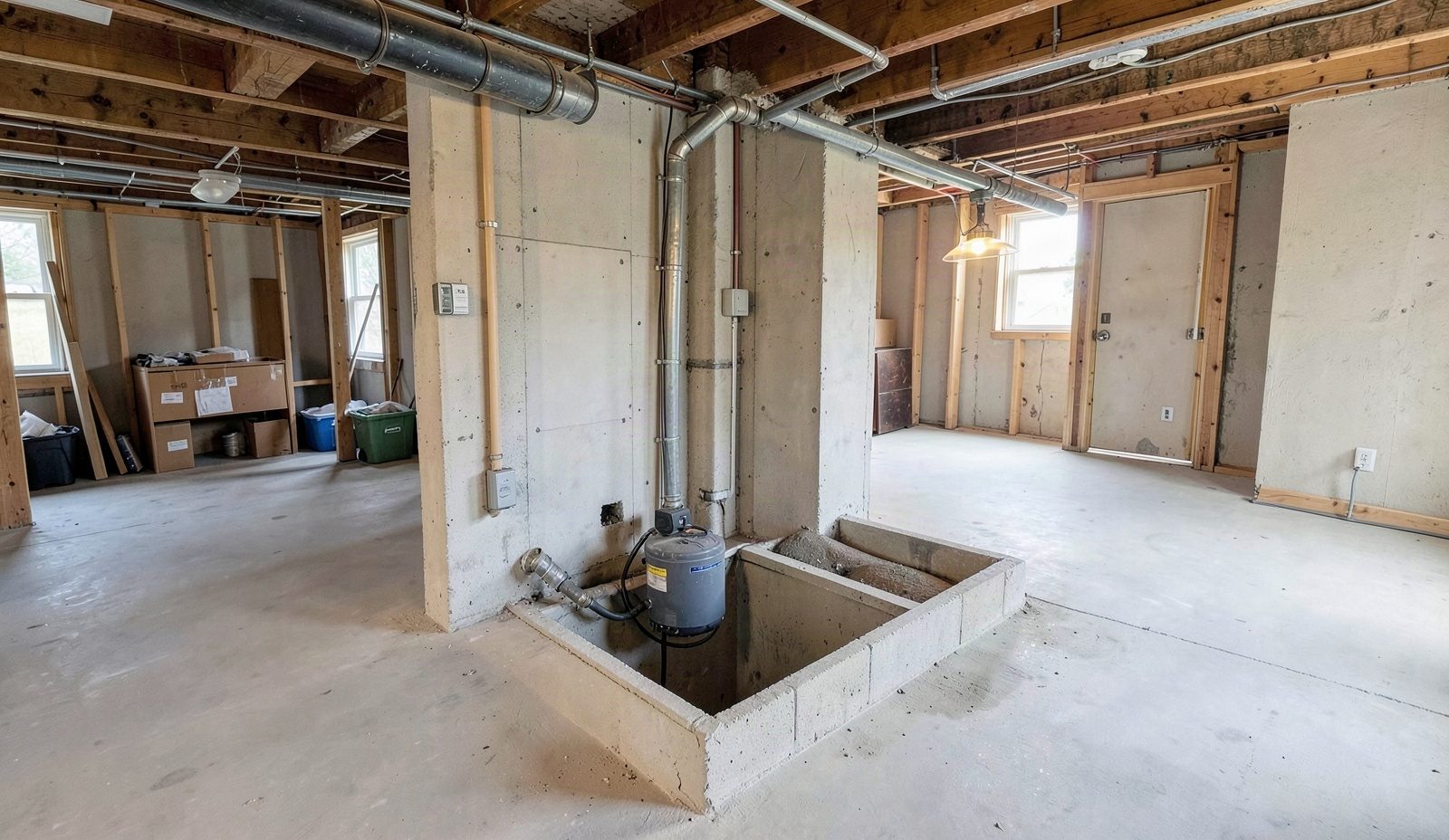
Before a pump gets wet, we find out why the basement flooded in the first place. A technician threads a calibrated gauge onto the outdoor spigot and reads static water pressure with the main valve open and no fixtures running inside. Anything above 80 psi trips Section 604.8 of the International Plumbing Code, which requires a pressure-reducing valve on the service line. Sustained high pressure like that is often the reason a supply line burst or a fitting sheared apart under the house, and it explains why some Fort Worth basements flood again within a year if nobody addresses the pressure and only patches the pipe. We also check the drain line under the slab with a flashlight and inspection camera where access allows, since a separated joint downstream behaves differently under drying equipment than a supply-side leak does, and calling it correctly the first time changes which repair gets scoped afterward.
Extraction equipment gets matched to depth and volume instead of guessed at. A 1/3-horsepower submersible sump pump, rated around 40 gallons per minute at zero head, handles seepage and shallow flooding under an inch or two just fine. Once water sits 3 to 4 inches deep across a basement floor, that same pump takes hours to catch up to the volume. A 2-inch gas-powered trash pump moves closer to 150 gallons per minute and clears that same footprint in well under half an hour. That's why the truck carries both classes of pump rather than one general-purpose unit sized for the average call. Portable electric pumps run fine off house power for a single unit, but once two or three units run at once, on breakers that also feed sump pumps and dehumidifiers already fighting the flood, we switch the trash pump to a small generator to avoid tripping the panel mid-extraction.
Removing standing water is only half the job. The framing underneath often still holds enough moisture to rot within weeks if left alone. We check exposed studs, sill plates, and subfloor with a pinless moisture meter, working from the drying benchmarks in the IICRC S500 water damage restoration standard. Framing reading above the dry standard for that wood species and thickness gets air movers and a dehumidifier sized to the room's cubic footage, not a single box fan running over a weekend. We log readings on the first visit and the last one, giving you a documented record that the material dried to standard instead of just looking dry on the surface. That log also becomes useful later, since an insurance adjuster or a contractor handling structural repair wants proof the space dried to standard rather than a verbal assurance.
Your local utility, Payment options, publishes service and water-quality information every Fort Worth homeowner should know.
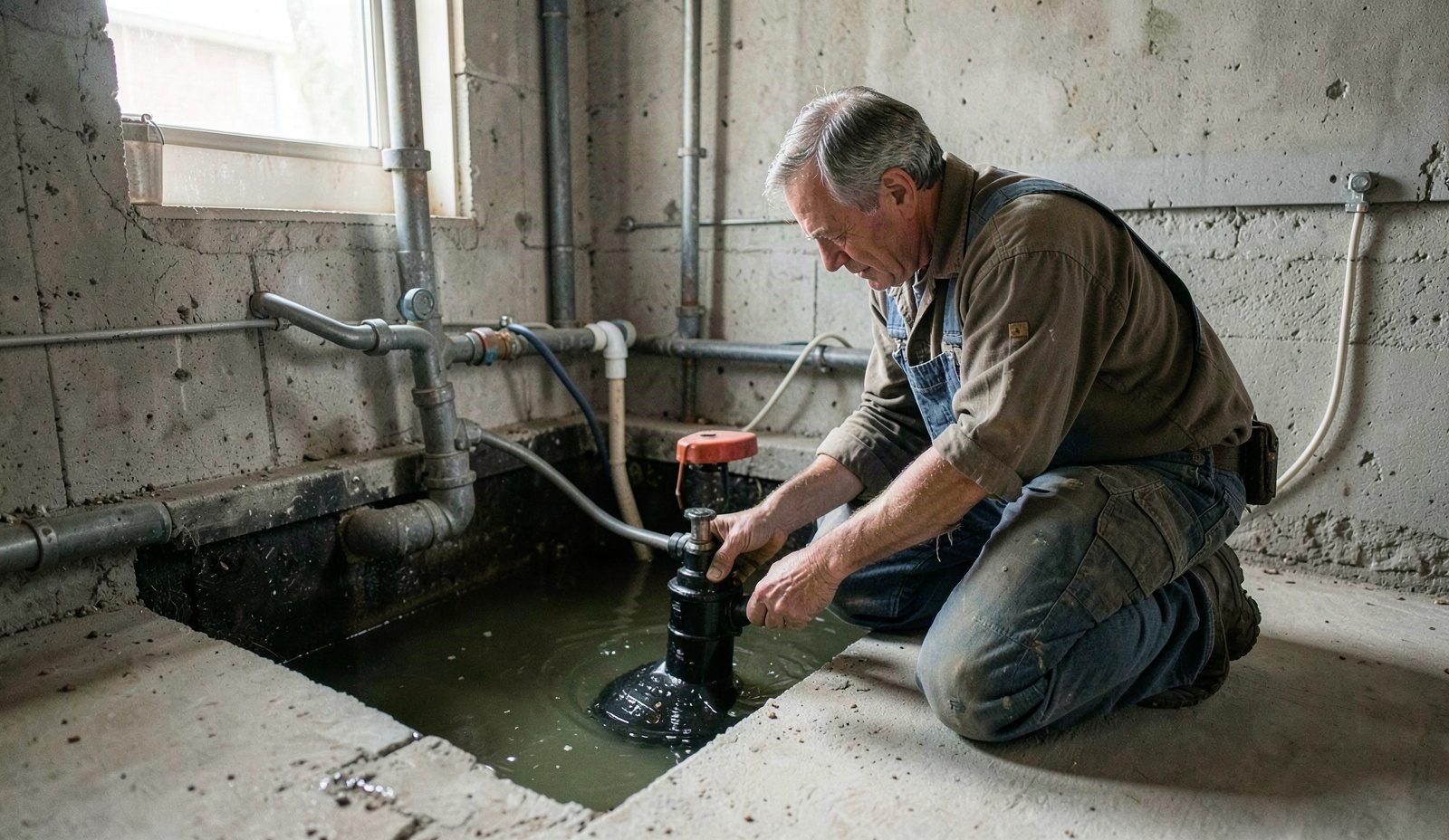
Calling us connects you to a dispatcher who asks about water depth, source, and whether power is still on near the flooding. That information decides which pump and truck get sent. On arrival, the technician checks the electrical panel and any submerged outlets first, then traces the water back to its source, whether that's a burst supply line, a backed-up floor drain, or a failed water heater. You get a plain description of what's happening and what the technician plans to do next before any equipment gets carried inside.
Once you approve the written scope, the crew protects the path to the flooded area, sets up the pump matched to the water depth, and starts extraction. Submersible pumps handle standing water while a wet vac clears the last inch pumps can't reach. Anything waterlogged and unsalvageable, carpet pad, wet insulation, ruined drywall below the flood line, gets pulled and bagged as extraction finishes. Air movers and a dehumidifier go in immediately after, sized to the square footage of the space rather than guessed at, so drying starts the same visit.
Before the crew leaves, the technician rechecks moisture readings on framing and subfloor with the same meter used at the start, confirming levels have dropped toward dry standard rather than just eyeballing the surface. You get a walkthrough of what was removed, what's drying in place, and which repairs, like a burst supply line or a separated drain joint, still need scheduling. Photos and moisture logs from the visit go with the invoice, giving you documentation for insurance or for a contractor handling the structural repair afterward.
Fort Worth plumbing work falls under the City of Fort Worth plumbing code, based on the International Plumbing Code. That code governs everything from pipe sizing to the pressure-reducing valve requirement, and it applies the same way whether the flood happened in a 1940s pier-and-beam house or a slab home built last decade. That same code section also dictates cleanout spacing on drain lines, which matters when a cast iron run under an older basement gets opened up for repair. A technician who doesn't work Tarrant County jobs regularly won't know which repairs need a permit pulled before drywall closes back up and which like-for-like fixes don't, and guessing wrong on that point creates a real problem later, when a buyer's inspector asks for permit records during a home sale and none exist.
Out-of-area crews that roll through Fort Worth after a storm often carry equipment sized for a different climate and different housing stock entirely. They don't expect galvanized steel supply lines or cast iron drains, both common in neighborhoods built before 1970 across the metro and both now at or past the end of their service life. Cutting into old galvanized pipe with a fitting meant for copper or PVC creates a leak that shows up weeks later, long after the out-of-town truck has left the area and stopped answering the phone. Repairing a cast iron drain also means matching hub-and-spigot fittings correctly, since a mismatched coupling on old cast iron can leak again within months under normal use, not just during a flood event.
Local familiarity also changes response logistics. A crew that knows Fort Worth street patterns and typical basement access points, walkout doors versus a single interior stairwell, brings the right pump size and hose length on the first trip instead of making a second run back for equipment that should have come along the first time. Dispatch routes get planned around typical Fort Worth traffic patterns during storm events, when several calls come in from the same flooding event at once, so crews already carrying flood-specific equipment reach more homes in the same window instead of returning to restock between calls.
If this sounds close but not quite your situation, emergency sump pump failure may be the better starting point.
Price-checking is smart: marketplaces like Thumbtack publish typical cost ranges you can hold any quote against, including ours.
Call (817) 710-3766 and a dispatcher gets a crew moving the same day, day or night, for active basement flooding pump-out calls in Fort Worth. Most homes see a technician within a defined arrival window confirmed on the call, not a vague afternoon guess. If road conditions or a prior emergency push that window, we call ahead with a new estimated time rather than let you sit wondering. Scheduling a pump-out is never a callback queue. The person who answers the phone books the job and tells you what to do with electrical breakers and standing water until the truck arrives.
Crews lay down floor runners and plastic sheeting from the entry point to the flooded area before any equipment comes inside, keeping mud and debris off floors that are still dry. Ruined carpet pad, waterlogged insulation, and unsalvageable drywall get bagged and hauled to the truck rather than left in a pile on the curb. Tools and hoses get wiped down between uses to avoid tracking contamination from a sewage-related flood into a clean part of the basement. When the crew leaves, the work area is swept, wet-vacced of loose debris, and staged for drying equipment.
The estimate for a basement flooding pump-out depends on square footage under water, depth, how far the water traveled into finished space, and whether the source is clean supply water or contaminated drain backup. Access matters too. A walkout basement clears faster than one reached only through a narrow interior stairwell that limits pump and hose size. A technician measures the space, checks the source, and writes the scope before any extraction work starts, so you approve the plan and the price before a pump runs. Nothing gets added to that scope without a call to you first.
Every technician who runs a solo pump-out call has logged supervised field hours on real flood jobs first, not just a classroom session. Techs review supply line and drain code changes as they roll out regionally, so the crew on your job works from current pressure and venting rules, not outdated ones. Field leads spot-check completed jobs, checking moisture readings and drain reassembly against the written scope before the truck leaves the route. That internal check happens on every job, not just the ones that look complicated walking in.
Cost depends on square footage flooded, water depth, and whether the source is clean water or contaminated drain backup. A shallow seepage job costs far less than clearing several inches of water across a finished basement with soaked drywall and carpet pad. Access matters too, since a walkout basement clears faster than one reached through a narrow stairwell. A technician measures the space and checks the source before writing the price, so you approve the scope before extraction starts.
Removing standing water starts with cutting power to any submerged outlets or the breaker feeding the basement, since water and live electricity don't mix. Next, identify the source, whether it's a burst supply line, a failed water heater, or a backed-up floor drain, and stop it if a shutoff valve is reachable. A submersible sump pump handles shallow seepage, while several inches of standing water needs a higher-volume trash pump to clear it before mop-up. A wet vac finishes the last inch neither pump can pick up.
The best pump depends on depth and volume, not one model that fits every flood. A half-horsepower submersible on a dedicated circuit clears shallow seepage in a finished basement without tripping a breaker. Several inches of standing water across an open slab calls for a higher-capacity trash pump running off a generator instead of house power, since it moves far more volume per minute than a household sump unit. Running the wrong pump for the depth just means standing in water longer.
Two inches of standing water sits below the intake height of most sump pumps, so a wet vac or floor squeegee pass usually comes first. Most sump pump intakes sit an inch and a half to two inches off the floor, which means shallow flooding needs to be pushed toward a floor drain or collected manually before an automatic pump can trigger. Once the bulk is gone, a shop vac with a wet pickup attachment clears the remaining film before drying equipment goes in.
Estimates get written on site after a technician measures the flooded area and checks the water source, and you approve the price before extraction begins. There's no online form or automated quote, since flood conditions vary too much for a number generated without seeing the space. The estimate covers extraction, debris haul-away, and initial drying equipment, with any structural repair, like a drain joint or supply line fix, scoped separately once the water is gone and the damage is visible.
Small amounts of seepage are manageable with a wet vac and a household sump pump, but several inches of standing water usually outpaces equipment most homeowners own. Electrical risk is the bigger issue, since water reaching an outlet or panel below the flood line makes DIY pumping dangerous until power is confirmed off. Hidden moisture behind drywall and inside wall cavities also goes undetected by a wet vac and a nose, which is why professional moisture meter checks catch problems a homeowner would miss until mold sets in weeks later.
Basement flooding in Fort Worth rarely happens in isolation from the plumbing above it. The February 2021 freeze burst pipes across Tarrant County by the tens of thousands, and most of those failures were supply lines run through attics and exterior walls, not the basement itself. Water traveled down through wall cavities and floor joists before it ever reached the slab, which means a pump-out call near the Cultural District or the Near Southside often starts two floors above where the water is standing. That history changes how we plan the job. We check attic runs and exterior wall penetrations for repeat failure points before we close up any wall we open, because a basement that flooded once from a frozen supply line upstairs will flood again the next hard freeze if that line never gets rerouted or insulated properly.
Any repair that follows a basement flood, from rerouting a burst supply line to replacing a section of cast iron drain, gets evaluated against the same permitting rules as new construction. Full replacements and structural repairs typically need a permit. Minor like-for-like fixes often don't, and the final call belongs to the City of Fort Worth Development Services Department for addresses inside city limits, or the local building department or Tarrant County for homes elsewhere in the county. Pulling that permit protects you at resale, since a buyer's inspector can ask for the record and an unpermitted repair becomes a negotiating point against you. We treat the permit step as part of the pump-out job, not an afterthought billed separately once the water is already gone.
Explore our service area and locate Shield Plumbing Fort Worth with ease. We're proudly local and serve the surrounding neighborhoods with fast response and honest pricing. Use the map to check our coverage area, or call us and we'll confirm in seconds.
Address:
Shield Plumbing Fort Worth, 210 W 7th St, Fort Worth, TX 76102
5 Signs Your Ridglea Hills Home Has a Slab Leak, practical local guidance from Shield Plumbing Fort Worth, Fort Worth's trusted plumbing tea…
Read More
What Wedgwood Residents Should Know Before a Whole-Home Repipe, practical local guidance from Shield Plumbing Fort Worth, Fort Worth's trust…
Read More
How Fort Worth's Hard Water Is Quietly Destroying Your Water Heater, practical local guidance from Shield Plumbing Fort Worth, Fort Worth's …
Read More
The Hidden Cost of Ignoring a Dripping Faucet in Fort Worth, practical local guidance from Shield Plumbing Fort Worth, Fort Worth's trusted …
Read More