
June 20, 2026
5 Signs Your Ridglea Hills Home Has a Slab Leak
5 Signs Your Ridglea Hills Home Has a Slab Leak, practical local guidance from Shield Plumbing Fort Worth, Fort Worth's trusted plumbing tea…
Read More




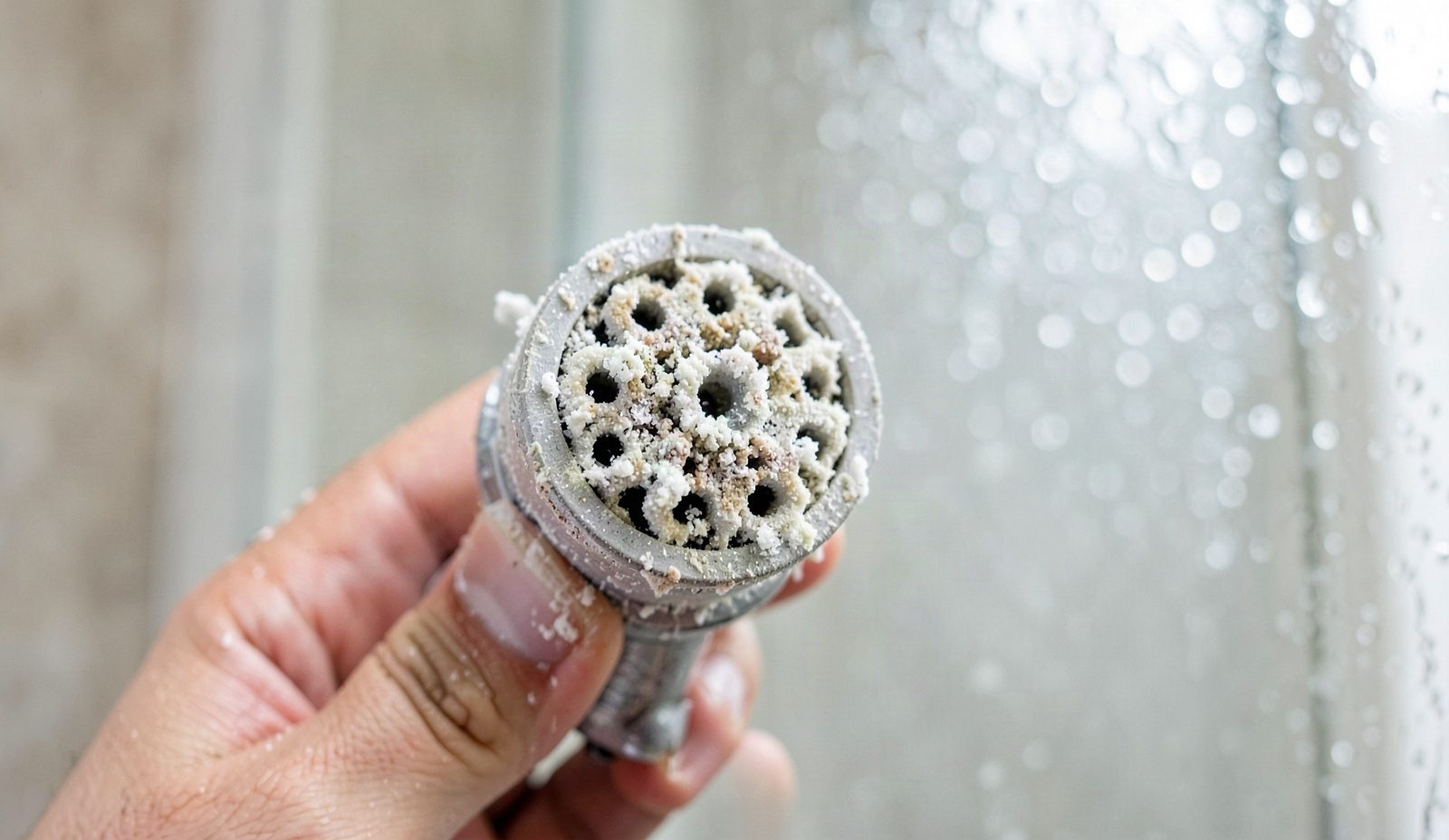
Look at any showerhead in a Fort Worth home more than a few years old and the pattern repeats: white crust ringing the nozzle holes, a cloudy film on the shower glass no squeegee fully clears, and glassware that comes out of the dishwasher hazy no matter how much rinse aid gets added. Soap barely foams at the kitchen sink. Skin feels tight and dry after a shower even in humid weather. These physical signs are the reason homeowners start asking why install a water softener in the first place, and the answer sits in what is dissolved in the water itself.
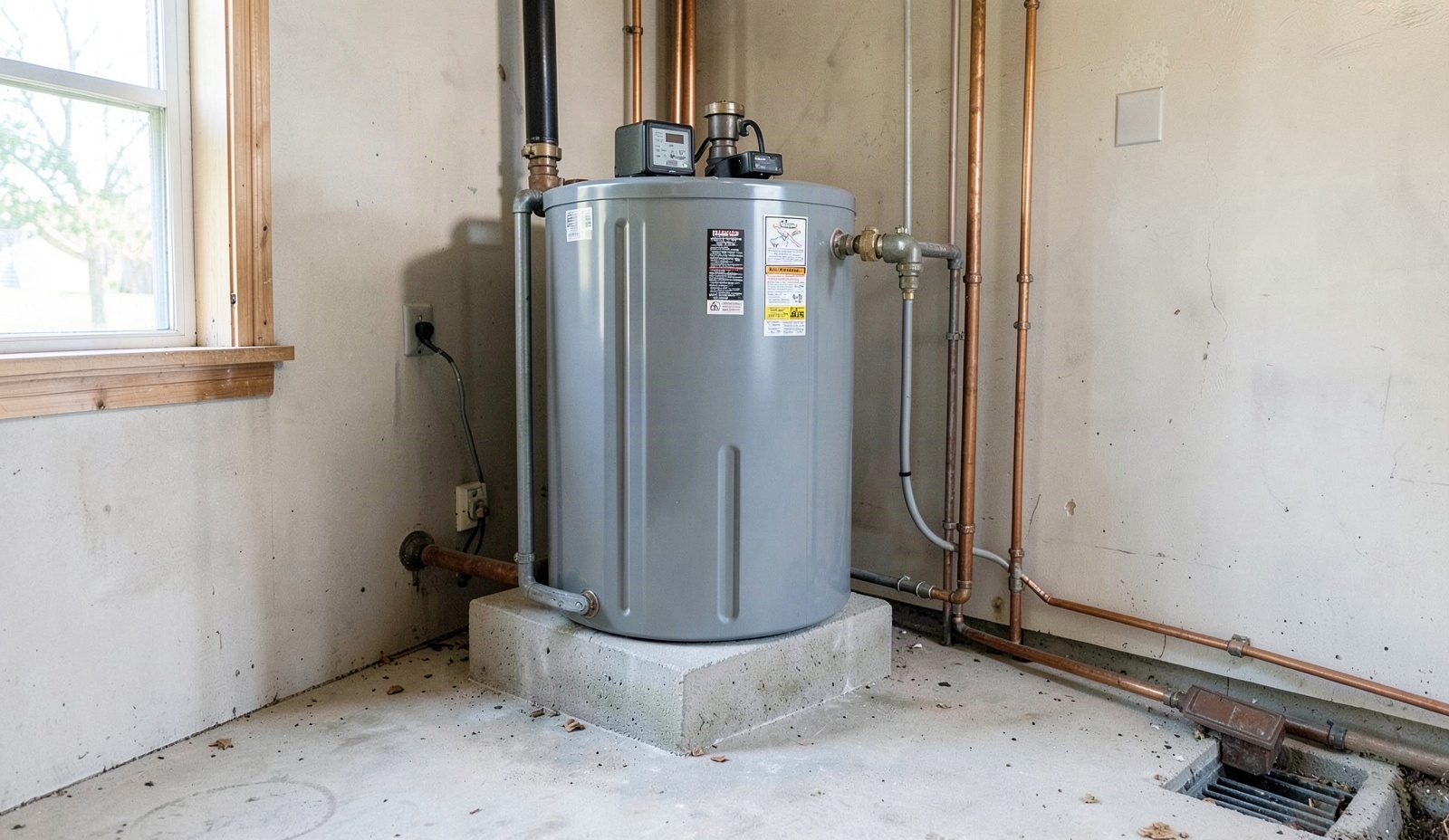
Fort Worth water is moderately hard, and the scale it leaves on heating elements is a leading reason local water heaters fail years before their rated life. Inside a tank water heater, that mineral load bakes onto the lower heating element every time the thermostat cycles, insulating it from the water it is supposed to heat. The element works harder, draws more current, and burns out early. In older sections of Fairmount and Arlington Heights, where original branch lines already narrow the inside pipe diameter, that scale layer builds on top of existing pipe corrosion and chokes flow even faster than in a newer build.
The soft water benefits show up first in appliances, which is where most hard water solutions conversations should start. Dishwashers develop a cloudy glass etching that no amount of rinse aid reverses once it sets in. Washing machines need more detergent to reach the same clean, and the extra suds residue attracts more soil over each cycle. Ice makers clog with mineral flake that breaks off inside the line. None of this is a sign of poor upkeep. It is dissolved calcium and magnesium riding through every fixture in the house.
Skip that conversation long enough and the failures start compounding. A water heater element that would have lasted well over a decade fails at roughly half that span. A dishwasher spray arm clogs solid and stops turning. Aerators need monthly disassembly instead of an annual cleaning. And the softener conversation that could have happened before any of this became a repair call instead, with a failed appliance already sitting in the kitchen waiting on a replacement part.
More detail on tank vs. tankless water heaters is on its own page.
Before recommending a system size, the technician runs two separate tests on site. A digital titration kit at the kitchen cold tap reads the water in grains per gallon, giving a hardness number specific to that address rather than a citywide average. A pressure gauge threaded onto the outdoor spigot reads static line pressure during the same visit. Static water pressure above 80 psi triggers a real code requirement: Section 604.8 of the International Plumbing Code calls for a pressure-reducing valve at that threshold, and skipping it means a new softener's control valve and O-rings absorb pressure spikes they were never rated for. That reading also shows whether the home's existing plumbing can handle the added restriction a resin bed introduces to flow. When the gauge reads high, the PRV gets addressed in the same visit rather than surfacing later as a change order.
Grain capacity gets calculated from household size, average daily water use, and the hardness number pulled from the titration test. A single-tank ion exchange unit, the kind sold under the GE or WaterBoss name, typically runs in the 30,000 to 40,000 grain range and suits a smaller household on a standard lot. A twin-tank system, the Kinetico non-electric line being the common example, keeps one resin tank in reserve so the house never runs on hard water during a regeneration cycle, which matters on a single-bathroom morning schedule. Salt-free conditioners using template-assisted crystallization, the Pelican NaturSoft line being a common brand, alter mineral structure instead of stripping it out through ion exchange. They skip the brine discharge question but do not lower the hardness number the way true ion exchange resin does, so a house already fighting heavy scale on its water heater still needs the resin bed to see a real drop in grains per gallon. Resin itself typically holds its capacity for ten to fifteen years before the beads need replacing, a service interval worth planning around when budgeting for the unit's lifespan.
The bypass valve gets mounted with enough clearance to service the resin tank without cutting into the main line again, and the drain line for the brine discharge ties into a standpipe or floor drain through an air gap, avoiding any direct connection that could siphon backward into the resin tank. Brass or dielectric fittings go in at every transition to galvanized pipe to stop the galvanic corrosion that raw copper-to-steel contact causes. Before the crew leaves, a second titration reading at the same tap confirms the treated water reads soft, backed by a number rather than a visual guess.
Permit and inspection questions? Development Services is the office we coordinate with on every permitted Fort Worth job.
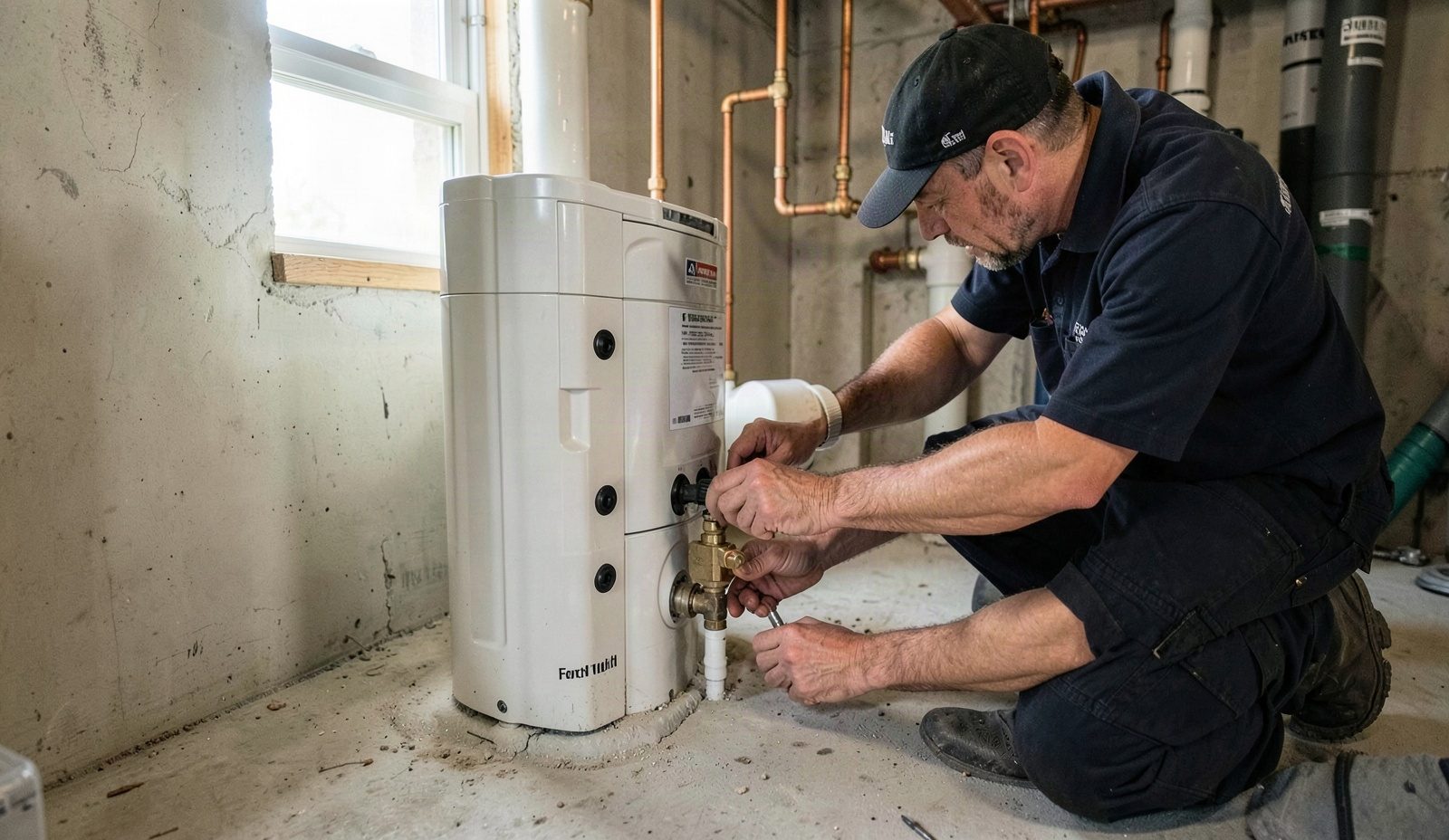
The call starts with a few questions: house age, number of bathrooms, and whether you have noticed scale on fixtures or a water heater acting up. On site, the technician runs the titration hardness test at the kitchen tap and the pressure gauge at the outdoor spigot, checks the main shutoff location, and looks at the water heater's drain valve for existing scale buildup. You get the grains per gallon number and the pressure reading on the spot, plus a straight answer on whether your home needs anything beyond the softener itself, like a pressure-reducing valve or a fitting swap at an old galvanized joint.
Once you approve the written quote, the crew protects the install path with floor runners and drop cloths, then shuts down the main to tie in the bypass valve. The resin tank and brine tank get set level, the drain line for backwash discharge connects through an air gap to a standpipe or floor drain, and any galvanized to copper transition gets a dielectric or brass fitting to stop corrosion. If the earlier pressure test flagged high static pressure, the pressure-reducing valve goes in during this same visit so the softener's control valve never sees a spike it was not built for.
Before the crew packs up, a second titration reading at the same kitchen tap confirms the treated water reads soft, backed by a number rather than a visual guess, and a flow check at two fixtures confirms pressure held steady. The technician walks you through the bypass valve location, how to check the salt or media level, and when the first regeneration cycle should run. You get a written record of both hardness readings, the pressure reading, and the unit's model and serial number for your own file.
Fort Worth plumbing work falls under the City of Fort Worth plumbing code, and softener installs that involve cutting and reconnecting supply piping fall under the permitting authority of the City of Fort Worth Development Services Department. Straightforward bypass tie-ins on an existing line sometimes stay outside that requirement, but full repiping or a new dedicated line to a softener location typically calls for a permit and inspection. An out-of-area crew that skips that call, or cannot tell the difference between a permit-exempt fixture swap and permit-required line work, leaves the homeowner holding the liability if an inspector ever asks about the work later.
Housing stock across the metro adds another layer many out-of-town companies miss entirely. Pre-1970 neighborhoods across the metro were plumbed with galvanized steel supply lines and cast iron drains, both now at or past the end of their service lives. Tying a modern softener bypass into a galvanized branch line that is already narrowing from internal rust means the install accounts for reduced flow before sizing the unit, avoiding a callback about weak shower pressure later. A crew unfamiliar with that era of construction sizes for a nominal pipe diameter that has not existed inside that wall in decades, and the softener ends up undersized for the flow the house can actually deliver. That kind of undersizing shows up months later as a softener that never seems to keep up, when the real cause was pipe condition the sizing calculation never accounted for.
Local response also means knowing which streets flood during heavy spring rain, which subdivisions still run original branch lines from the 1950s and 1960s, and which additions already replaced their supply piping during a remodel. That knowledge shortens the diagnostic time on a first visit and keeps the sizing conversation grounded in what is behind the wall rather than what a generic spec sheet assumes. Response logistics matter too: a technician who already knows the pressure profile of a given block can often confirm sizing over the phone before the visit, saving a second trip for something a first call could resolve.
See how to shut off main water valve for how the related work is scoped and priced.
Booking starts with a phone call to (817) 710-3766, not a queue. Softener installs get scheduled in a two-hour arrival window, morning or afternoon, and the office calls the day before to confirm. If a prior job runs long because of an unexpected galvanized fitting or a slab access issue, you get a call with a revised window before your window even opens, instead of a text after you have already been waiting an hour. Most single-unit softener installs finish inside one appointment, so the crew that arrives is the crew that turns your water soft before they leave. Same-day requests get worked into the schedule when a slot opens, and the technician who answers the phone can tell you honestly whether that is realistic for your address that day.
Before any cutting starts, the technician lays down floor runners from the entry point to the install location, whether that is a garage corner or a utility closet, and drop cloths go under the work area itself. Old fittings, cut pipe sections, and the retail box the new unit shipped in all go into a job bag or bucket that leaves with the crew. Any sawdust or pipe shavings get vacuumed off the floor before the final pressure test. When the crew backs out of the driveway, the only sign a softener went in that day is the unit itself and a clean valve assembly.
The written quote accounts for four variables: the grain capacity the hardness test calls for, how far the unit sits from the main line and drain access, whether a pressure-reducing valve needs adding alongside the softener, and whether any galvanized fittings at the tie-in point need swapping to brass first. The technician walks the install location with you, points out each variable as they check it, and writes the number before touching a wrench. You approve that written quote before any cutting starts, and if something behind a wall changes the scope once work is underway, that change gets priced and approved separately before it proceeds.
Every technician passes a background check before being assigned to a homeowner's address, and softener specific training covers the current plumbing code cycle the City of Fort Worth has adopted, not just factory literature from one manufacturer. New hires shadow a set number of installs, sizing calculations included, before they run a solo appointment. Field competence gets checked on real jobs: a supervisor reviews the titration readings, the pressure gauge readings, and the final photos from a sample of each technician's installs on a rolling basis, keeping sizing decisions consistent from one address to the next across the metro.
No, homeowners insurance typically does not cover a water softener install. Insurance covers sudden damage, like a burst pipe or a failed water heater tank, rather than equipment you add ahead of a failure. Some policies do cover the appliance failure a softener helps prevent, such as an early burned water heater element, but the softener itself counts as a home improvement.
Estimates for water softener work in Fort Worth start with an on-site hardness and pressure check. The technician walks the install path with you, points out any galvanized fittings or drain access issues that affect scope, and writes a quote you approve before work begins. If something behind a wall changes the job once it is underway, that change gets priced and approved as a separate step.
No, testing has to be performed with a calibrated differential pressure gauge kit and the results filed in a format the water utility's cross-connection control program accepts. A property owner without that gauge and without a way to submit an accepted test report cannot self-certify a device, even if the assembly is working fine. Attempting the test without the right equipment risks a false pass that leaves an actual failure undetected until the next inspection cycle.
An enzyme or bacteria-based drain cleaner is the safest option available. These formulas use live bacterial cultures that consume grease, soap film, and organic waste over an overnight dwell, without the heat reaction that damages pipe walls. Unlike sodium hydroxide gels, enzyme treatments stay close to a neutral pH, so they won't soften PVC cement joints or accelerate corrosion in galvanized or cast iron lines. Shield Plumbing Fort Worth uses enzyme-based products as the default first treatment on any drain that shows organic buildup rather than a structural break.
Same-day scheduling is often available depending on the day's booking load. Water waste and leak-related calls get priority slotting ahead of routine fixture upgrades. Call (817) 710-3766 and describe what you are seeing, a spiking bill or a running toilet, and the scheduler will confirm the soonest realistic window for your address.
No, trenchless sewer repair is not a do-it-yourself project. The equipment, resin inversion drums, hydraulic bursting rigs, camera locators, is specialized and expensive to rent correctly. A botched liner cure can leave a partially collapsed pipe worse off than before, and commercial sewer work in Fort Worth also involves permitting and inspection through the local building authority. Shield Plumbing Fort Worth handles the diagnosis, the method selection and the permit process as one job.
North Texas expansive clay swells with rain and shrinks in drought, moving slab foundations enough to shear copper supply lines and separate drain joints under the house. That ground movement matters when planning a softener install, because the bypass valve and drain tie-in need to sit on a section of pipe that is not already stressed from seasonal shift. In slab foundation neighborhoods like Ridglea Hills and Wedgwood, where many homes still run original branch lines under a poured foundation, a technician checks for existing pipe movement before cutting in a new tie-in point, since a joint that already has slack needs support before it carries new fittings. Combine that soil movement with decades of mineral scale narrowing older pipe, and a straightforward softener tie-in on a 1960s slab home takes more planning than the same job on a newer build with accessible copper in a crawlspace.
Community trust here comes from knowing which repairs already happened in a given neighborhood. The February 2021 freeze burst pipes across Tarrant County by the tens of thousands, and most of the failures were supply lines run through attics and exterior walls, which means a large share of homes near the Near Southside and the Cultural District already had emergency repiping done in sections rather than as a whole house replacement. A technician working in those areas checks which segments were already replaced before assuming the whole supply system matches, because a softener tied into a mix of new PEX and decades old galvanized pipe needs different fittings at each transition point. That kind of site specific knowledge comes from working the same streets year over year.
Explore our service area and locate Shield Plumbing Fort Worth with ease. We're proudly local and serve the surrounding neighborhoods with fast response and honest pricing. Use the map to check our coverage area, or call us and we'll confirm in seconds.
Address:
Shield Plumbing Fort Worth, 210 W 7th St, Fort Worth, TX 76102
5 Signs Your Ridglea Hills Home Has a Slab Leak, practical local guidance from Shield Plumbing Fort Worth, Fort Worth's trusted plumbing tea…
Read More
What Wedgwood Residents Should Know Before a Whole-Home Repipe, practical local guidance from Shield Plumbing Fort Worth, Fort Worth's trust…
Read More
How Fort Worth's Hard Water Is Quietly Destroying Your Water Heater, practical local guidance from Shield Plumbing Fort Worth, Fort Worth's …
Read More
The Hidden Cost of Ignoring a Dripping Faucet in Fort Worth, practical local guidance from Shield Plumbing Fort Worth, Fort Worth's trusted …
Read More