
June 20, 2026
5 Signs Your Ridglea Hills Home Has a Slab Leak
5 Signs Your Ridglea Hills Home Has a Slab Leak, practical local guidance from Shield Plumbing Fort Worth, Fort Worth's trusted plumbing tea…
Read More




White crust builds around your faucet aerators within weeks of cleaning them. Shower doors fog with a filmy haze no squeegee removes. Dishes come out of the washer with cloudy spots, and your skin feels tight and dry after a shower even with lotion. These are not cosmetic annoyances. They are the visible signs of hard water treatment your home has been missing for years.
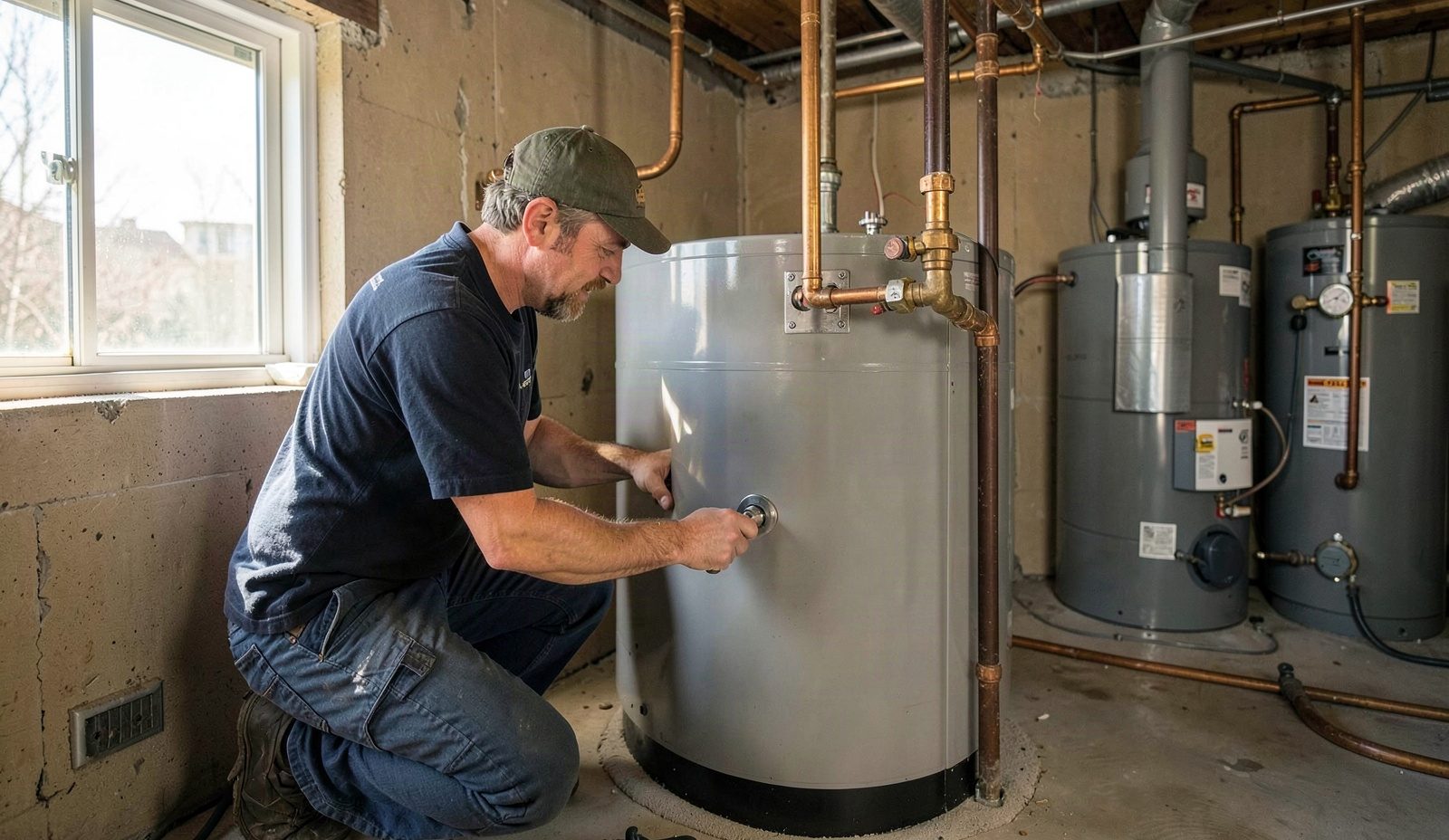
Fort Worth water is moderately hard, and the mineral content in it, mostly calcium and magnesium carbonate, does not stay in the water. It plates out onto any hot surface it touches. That scale is a leading reason local water heaters fail years before their rated life, because a quarter inch of buildup on a heating element forces it to work harder and burn out faster. The same scale narrows pipe interiors, chokes shower head flow, and leaves soap unable to lather properly, which is why you use more shampoo and detergent than the bottle says you should need.
Older housing stock compounds the problem. In craftsman bungalows around Fairmount and Arlington Heights, and in the brick ranch homes common through Ridglea Hills, decades of mineral scale have already narrowed the interior diameter of supply lines that were tight to begin with. A whole house water filter strips out chlorine taste, sediment, and odor before water ever reaches a softener, and a reverse osmosis installation at the kitchen sink handles what municipal treatment leaves behind for drinking water. Skipping filtration and running straight into a softener just means sediment fouls the resin bed faster.
Ignore the chalky buildup and the failures escalate in order. The water heater goes first, usually years ahead of schedule. Dishwasher and washing machine solenoid valves clog next, then ice makers stop filling properly. Faucet cartridges seize from mineral deposits and need replacing on a cycle that has nothing to do with normal wear. Every month without a hard water treatment plan adds another layer of scale to fixtures that get more expensive to service the longer that layer sits.
More detail on tankless water heater services is on its own page.
Independent standards matter too, the EPA's WaterSense program sets the efficiency benchmarks we use when recommending replacement fixtures.
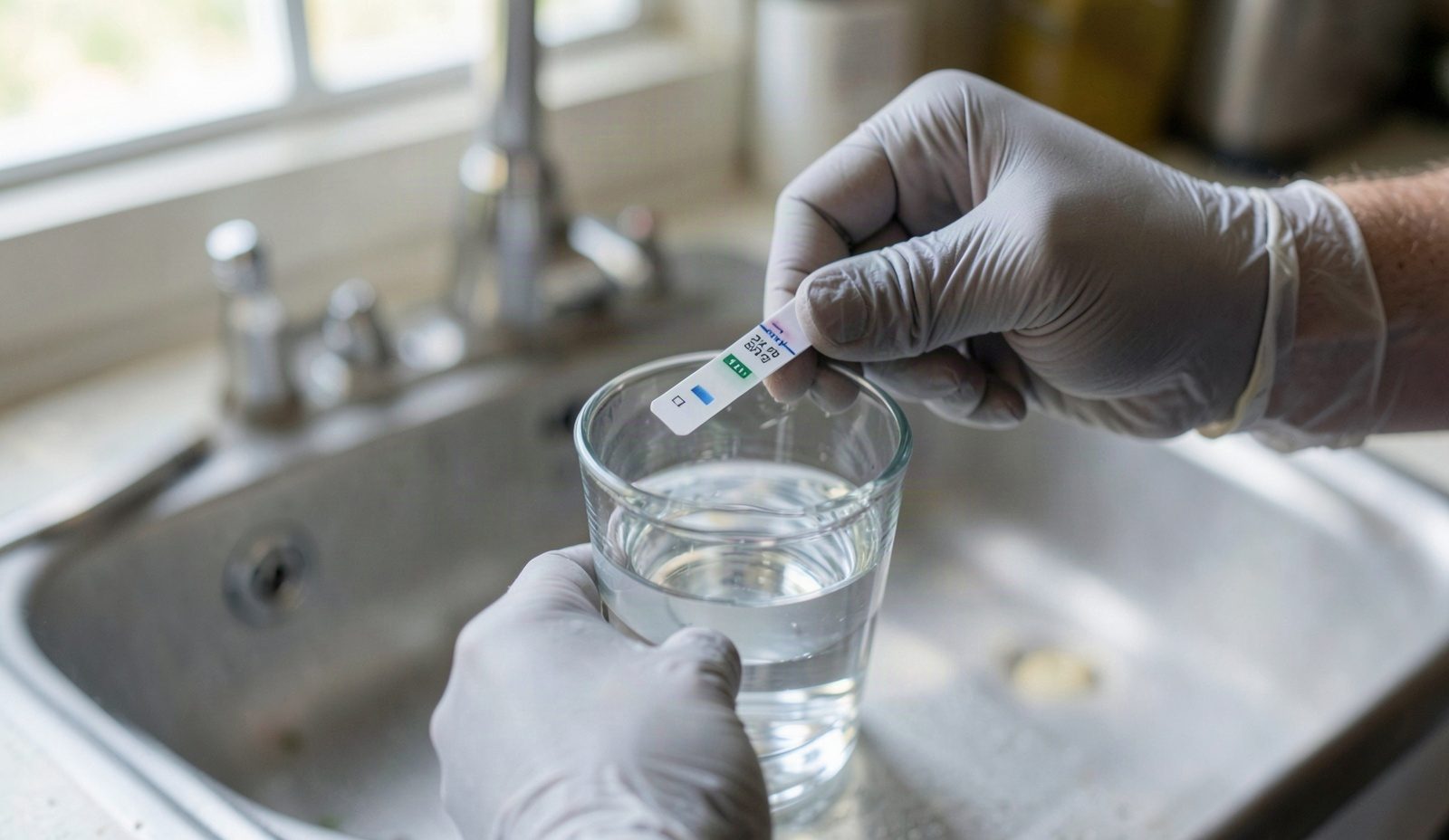
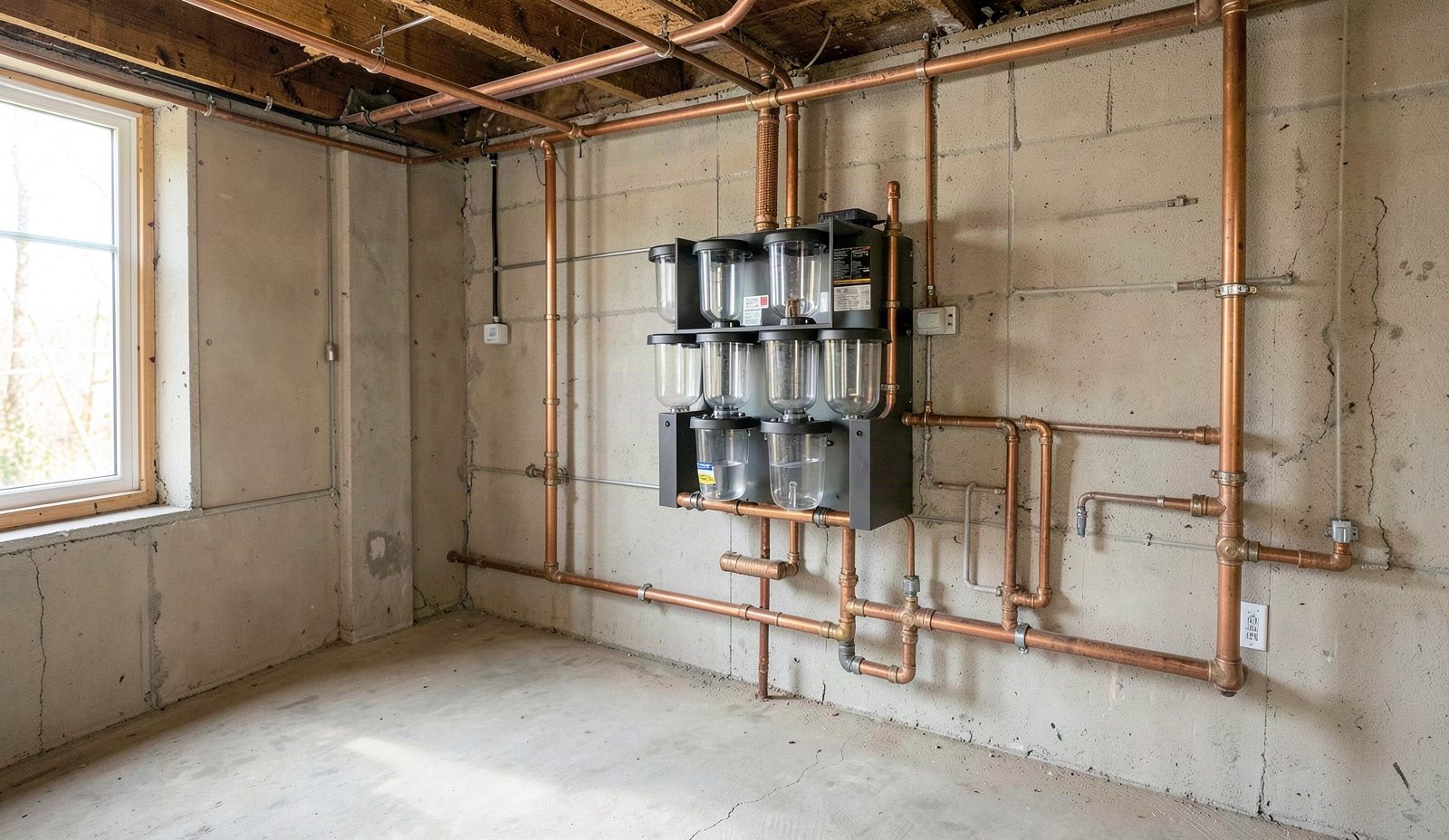
Every job starts with a water sample, not a sales pitch. A digital hardness meter gives a grains per gallon reading right at your kitchen tap, and a TDS meter confirms total dissolved solids. We check for iron staining, sulfur odor, and chlorine taste separately, because each of those calls for a different filtration stage before water ever reaches a softening tank. A sediment test using a turbidity reading tells us whether a whole house water filter needs a 5 micron sediment stage ahead of a carbon block, or whether a single combination cartridge will do the job.
The screwdriver test on this job is a pressure gauge threaded onto your outdoor spigot. Static water pressure above 80 psi requires a pressure reducing valve under Section 604.8 of the International Plumbing Code, and it is not optional paperwork. High static pressure blows out softener bypass valves and shortens the life of reverse osmosis membranes within months instead of years. If the gauge reads high, the PRV gets installed ahead of any treatment equipment, not after something fails.
Equipment choice comes down to real numbers, not brand loyalty. A Kinetico twin tank system regenerates on demand with no electricity and no scheduled downtime, typically rated between 32,000 and 48,000 grains depending on household size, while a Culligan digital metered softener uses a single tank and a timer or usage sensor to trigger regeneration, which costs less upfront but leaves you without soft water during the regen cycle. For whole house filtration, a Pentair carbon block system rated at 1 micron removes finer particulate than a standard 5 micron sediment cartridge, at a lower flow rate tradeoff you feel in shower pressure. For drinking water, a 4-stage reverse osmosis installation from a line like APEC typically rejects around 95 to 99 percent of dissolved solids, and a 6-stage system adds remineralization but does not meaningfully change that rejection number.
Our page on water heater repair & installation covers that side of the work in more depth.
You call and describe what you are seeing, chalky buildup, low pressure, bad taste, or a water heater failing early. A technician arrives in the scheduled window with a hardness meter, TDS meter, and pressure gauge. They test your water at the kitchen tap and check static pressure at an outdoor spigot. You see the actual readings on the meters, not a verbal estimate, and those numbers determine what equipment size and filtration stages your home actually needs.
Once you approve the written quote, the crew protects the install area with drop cloths and containment mats. They set the softener or filtration housing, plumb the bypass loop required under the local code, and install a pressure reducing valve first if the earlier reading called for one. Any section of galvanized pipe too corroded to accept a new bypass fitting gets flagged and replaced before final connections go in, with your approval at each decision point.
Before the crew leaves, they re-check static pressure, run a hardness test on treated water at the tap, and confirm the bypass valve isolates cleanly for future servicing. You get a walkthrough covering how to add salt or change a filter cartridge, where the shutoff valves sit, and what the readings on your new equipment mean. Photos of the finished install and the before and after water test results go with your paperwork.
Installing a water softener or a whole house water filter in a Fort Worth home means working inside the local plumbing code, not a generic national standard. The City of Fort Worth plumbing code, based on the 2021 International Plumbing Code, governs how treatment equipment connects to your main line, where a backflow prevention device is required, and how a bypass loop has to be plumbed so you can service the unit without shutting off water to the whole house. Full system installations that tie into main supply lines typically require a permit through the City of Fort Worth Development Services Department, while swapping a resin tank or filter cartridge like-for-like usually does not.
Housing stock age changes the install itself. Neighborhoods built before 1970 across the metro were plumbed with galvanized steel supply lines and cast iron drains, and both are now at or past the end of their service life. Threading a modern softener bypass valve onto galvanized pipe without a dielectric union invites galvanic corrosion at the joint within a year. A technician who has not worked on Fort Worth's older housing stock will not catch that detail until the joint is already leaking.
Out of area operators unfamiliar with Fort Worth's plumbing code and permit authority tend to undersize equipment for the actual grain hardness of local water, skip the pressure check that Section 604.8 requires, or connect new equipment to old galvanized pipe the wrong way. Every install we run follows the same water test, pressure check, and code review, whether the home is a 1940s bungalow or a new build.
See commercial water heater systems for how the related work is scoped and priced.
Permit and inspection questions? Development Services is the office we coordinate with on every permitted Fort Worth job.
You get a scheduled arrival window when you call, not a vague morning or afternoon split. A technician calls or texts when they leave the previous job, so you can plan your day instead of sitting by the door. If a prior job runs long because of an unexpected pressure or corrosion issue, we call ahead with an updated time rather than let you find out by waiting. Call (817) 710-3766 to check current openings for water softener installation or filtration work, and we will walk you through what timeframe fits your week before anything gets booked.
We lay down drop cloths from your entry point to the install location, whether that is a garage, utility closet, or under a kitchen sink. Any cutting or soldering happens over a containment mat, and shop vacuums pull metal shavings and pipe dust before they settle on your floor. Old softener tanks, filter housings, and packaging leave with the crew the same day, not stacked at your curb. When we finish, the work area looks the way it did when we arrived, minus the old equipment.
Your quote reflects the water test results, the equipment sizing those results call for, and the physical access to your install location. A cramped crawlspace connection costs more labor time than an open utility room. Older galvanized supply lines sometimes need a short section replaced before a softener bypass valve can seat properly, and that gets called out as a separate line item, not buried in the total. You see the full written quote and approve it before any equipment gets uncrated or any pipe gets cut.
Every technician passes a background check before working in your home. Ongoing training covers the current plumbing code cycle adopted locally, including backflow prevention and bypass loop requirements specific to water treatment equipment. New technicians work paired jobs under a senior tech until they can run a full water test, pressure check, and equipment install to the same standard on their own, and that competence gets verified on real jobs before anyone works solo in your house.
Your estimate is built from a water test and a pressure check, not a phone quote. A technician measures hardness, TDS, and static pressure on site, then writes a quote based on the equipment those readings call for and how accessible your install location is. You review and approve that written quote before any equipment gets installed. Call (817) 710-3766 to schedule a test.
Homeowners insurance generally does not cover installing new water treatment equipment, since it is an upgrade rather than storm or accident damage. Insurance sometimes covers water damage caused by a failed connection or burst supply line feeding a treatment system, depending on the cause and your specific policy. Check your policy language directly and ask your adjuster how they classify equipment failure versus sudden pipe failure before assuming either way.
Ignoring hard water lets scale keep building on every heated surface in your home, shortening your water heater's service life year over year. Fixture cartridges seize, dishwasher and washing machine solenoid valves clog, and softened water becomes harder to get without a dedicated fix. The narrowing of pipe interiors from continued scale buildup eventually reduces flow throughout the house, not just at one fixture.
A standard water softener installation takes a few hours in one visit, once the water test and quote approval are done. Whole house filtration adds time depending on how many stages your water test calls for. Jobs that require replacing a corroded section of galvanized pipe before the bypass valve can seat properly run longer, and that gets flagged during the on-site assessment, not discovered mid-install.
It depends on the scope of the work. A whole house system that ties into your main supply line or requires a new backflow device typically needs a permit and inspection, while swapping a resin tank or filter cartridge like-for-like usually does not. The local permitting authority makes the final call on any borderline case, and Shield Plumbing Fort Worth pulls permits whenever the scope of your job requires one.
Basic filter cartridge changes are within reach for most homeowners, but full water softener installation and whole house filtration tie into your main supply line and require code-compliant bypass loops and backflow prevention. Getting the connection wrong on older galvanized pipe risks a leak that surfaces weeks later inside a wall. A professional water test also tells you what equipment your specific water actually needs, which guesswork at a big box store cannot replicate.
North Texas expansive clay swells with rain and shrinks in drought, and that movement shifts slab foundations enough to shear copper supply lines and separate drain joints running underneath a house. A softener or filtration system tied rigidly into a line that has already moved once will crack at the connection the next time the clay shifts, so every install uses flexible connectors at the main tie-in point instead of hard-soldered joints. The February 2021 freeze burst pipes across Tarrant County by the tens of thousands, and most of those failures hit supply lines run through attics and exterior walls. Homes repiped after that freeze often have PEX runs feeding a treatment location that older copper never reached, which changes where a whole house filter can physically sit.
Inspection and permitting exist to catch exactly the mistakes an out of area installer is most likely to make, an unsecured bypass loop, a missing backflow device, a bypass valve threaded onto corroded galvanized pipe. Homeowners near the Near Southside and Wedgwood, and in the older housing stock around the Cultural District, tend to ask the most specific questions about how a new system ties into plumbing that has already been patched once or twice. Knowing which blocks have already been repiped and which still run original supply lines changes how a technician plans the job before ever opening a toolbox.
Explore our service area and locate Shield Plumbing Fort Worth with ease. We're proudly local and serve the surrounding neighborhoods with fast response and honest pricing. Use the map to check our coverage area, or call us and we'll confirm in seconds.
Address:
Shield Plumbing Fort Worth, 210 W 7th St, Fort Worth, TX 76102
5 Signs Your Ridglea Hills Home Has a Slab Leak, practical local guidance from Shield Plumbing Fort Worth, Fort Worth's trusted plumbing tea…
Read More
What Wedgwood Residents Should Know Before a Whole-Home Repipe, practical local guidance from Shield Plumbing Fort Worth, Fort Worth's trust…
Read More
How Fort Worth's Hard Water Is Quietly Destroying Your Water Heater, practical local guidance from Shield Plumbing Fort Worth, Fort Worth's …
Read More
The Hidden Cost of Ignoring a Dripping Faucet in Fort Worth, practical local guidance from Shield Plumbing Fort Worth, Fort Worth's trusted …
Read More