
June 20, 2026
5 Signs Your Ridglea Hills Home Has a Slab Leak
5 Signs Your Ridglea Hills Home Has a Slab Leak, practical local guidance from Shield Plumbing Fort Worth, Fort Worth's trusted plumbing tea…
Read More




You hear it at 2 a.m., a soft hiss followed by a full refill cycle, even though nobody touched the handle. That's a toilet running randomly, and it means water is leaving your tank faster than the fill valve can top it off, or leaving the tank at all when it should be sealed shut. In older bungalows around Fairmount and the Near Southside, homeowners often describe it as the tank "never really shutting off," a low gurgle running under the bathroom door for minutes at a stretch.
Three parts cause almost every case. The flapper, a rubber or silicone disc at the tank bottom, warps or grows a hairline crack and stops sealing the flush valve, so water trickles into the bowl nonstop. A worn fill valve fails to shut off cleanly, letting water dribble into the overflow tube. Or the float is set too high, keeping the fill valve open past the point it should trip closed. All three show up as the same complaint: toilet keeps running, toilet wasting water, water bill climbing for no obvious reason.
Fort Worth adds a cause a lot of homeowners never consider. The expansive clay under Fairmount and Near Southside homes swells when it rains and shrinks hard in drought, moving the slab enough to shear copper supply lines and separate drain joints under the house. That same movement flexes the toilet's supply line at the shutoff valve and can shift the closet flange just enough to throw the flapper out of true alignment with the flush valve seat. The toilet runs randomly not because a part failed on its own, but because the ground under it moved first.
Ignore it and the failure gets worse, not better. A flapper that seats unevenly erodes faster under constant water flow, and a fill valve straining to keep up eventually cracks at the diaphragm, sending water over the overflow tube and onto your bathroom floor. What starts as a few extra gallons a day on the water meter turns into standing water on subfloor, especially in older homes where the flooring around the toilet base has already taken decades of minor leaks.
More detail on gurgling toilet sounds is on its own page.
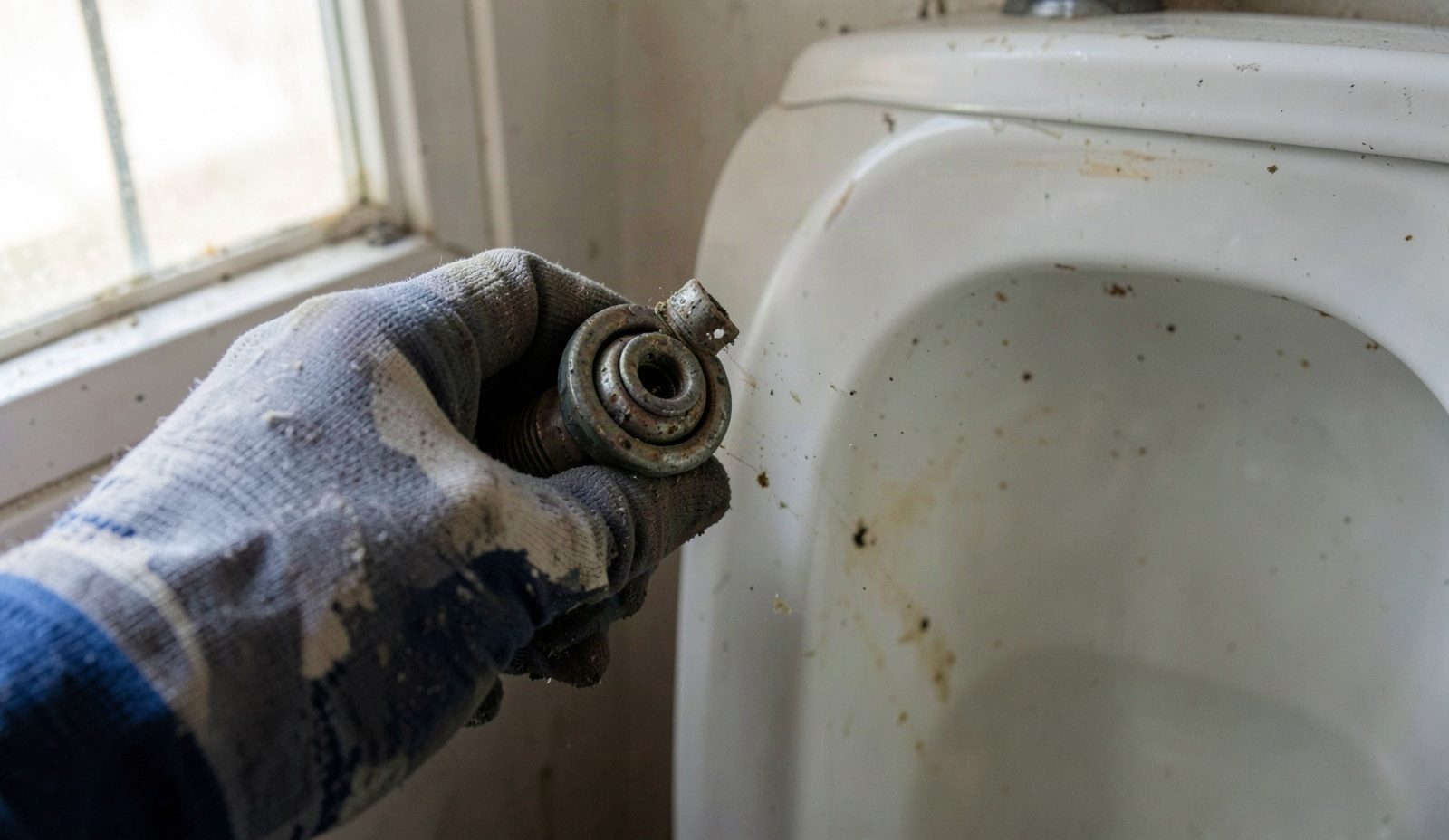
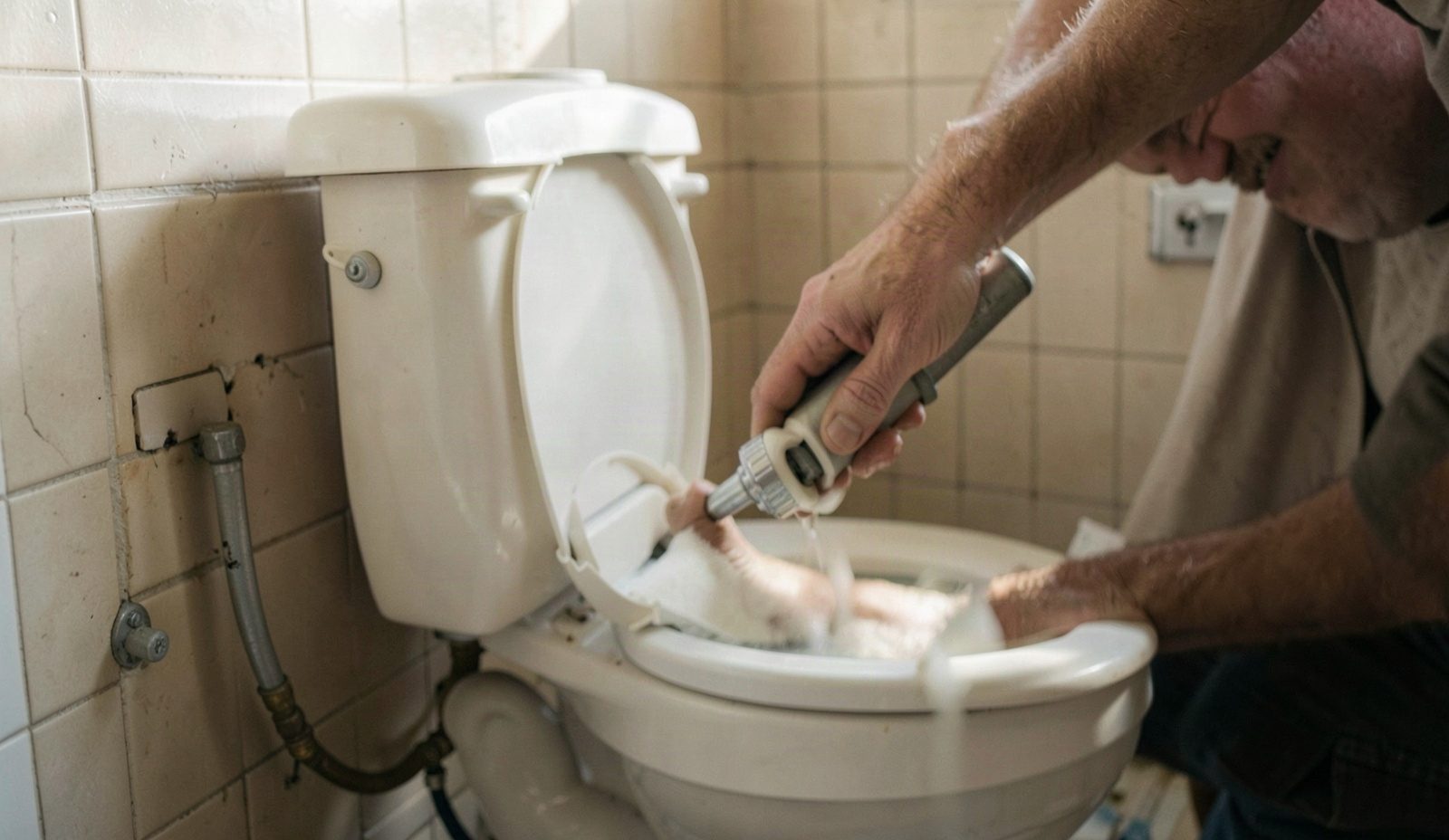
The first ten minutes decide everything. A technician pulls the tank lid, watches the water level against the overflow tube, and drops a dye tablet into the tank. If color shows up in the bowl within ten minutes without a flush, the flapper is leaking, full stop. No dye in the bowl but the fill valve still hisses after the tank refills means the float or fill valve diaphragm is the culprit, not the flapper. This sequence rules out guesswork before any part comes off the tank.
Not every fill valve is interchangeable, and the choice matters. A Fluidmaster 400A style fill valve is the standard rebuild for most tanks built after the 1990s, but pre-1970 homes across the metro still carry older ballcock assemblies that need a shutoff-compatible adapter, not a straight swap. Flapper material matters just as much: standard rubber flappers degrade in three to five years under Fort Worth's treated water and start to warp at the edges, while silicone flappers hold their shape longer and resist the mineral film that builds up on rubber over time. Toilet flapper replacement and toilet fill valve repair are two different jobs with two different failure signatures, and treating them the same is how repeat service calls happen.
Water pressure is the variable most homeowners never check. We read static water pressure at an outdoor spigot with a calibrated gauge, and anything above 80 psi gets flagged. Section 604.8 of the International Plumbing Code requires a pressure-reducing valve once static pressure crosses that threshold, and it's a common reason a brand-new fill valve starts running randomly within months of installation. High pressure hammers the valve seat every time it closes, wearing out seals that should last years in five to eight months. Fixing the flapper without addressing pressure just buys you a shorter repeat visit later.
Our page on commercial toilet & urinal repair covers that side of the work in more depth.
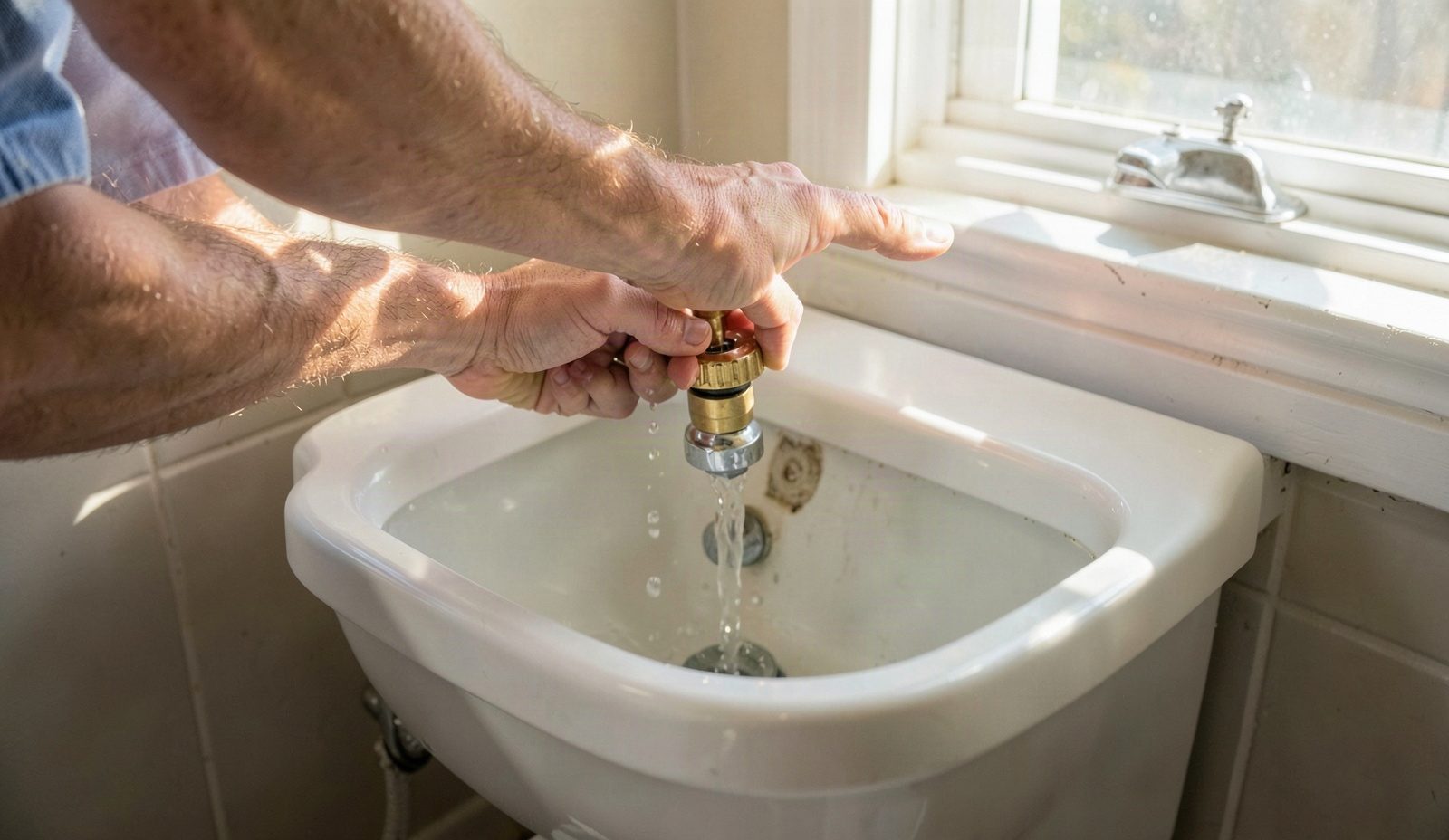
You call and describe what you're hearing, whether it's a constant hiss or a toilet that runs randomly a few times an hour. On arrival, the technician lifts the tank lid, checks the water level against the overflow tube mark, and runs a dye tablet test to isolate whether the flapper, fill valve, or float is the source. You see the dye test result yourself in the bowl. The technician also checks the shutoff valve under the tank for corrosion or seizing, since that affects what the repair will involve.
Once the failing part is confirmed, the technician writes up the fix, whether that's a flapper swap, a fill valve rebuild, or a float adjustment, and you approve the quote before parts go in. A drop cloth protects the floor and vanity while the tank is drained and the old part comes out. New components get matched to your tank's make and shutoff configuration rather than forced to fit. If the pressure test flagged high static pressure, that gets discussed as a separate line item, not bundled in silently.
Before leaving, the technician flushes the toilet several times in a row and watches the refill cycle, confirming the water shuts off at the correct level below the overflow tube every time. Every supply line connection gets checked by hand for drips under running pressure. The technician walks you through what was replaced and why, in plain terms, and leaves the bathroom as clean as it was found. Any pressure reading above the 80 psi threshold gets flagged in writing for you to consider separately.
The City of Fort Worth plumbing code, based on the International Plumbing Code, governs how fixture work gets done here, and knowing it matters even on a job as small as a toilet repair. A straight flapper or fill valve swap is a like-for-like repair and typically doesn't require a permit, but a full toilet replacement or any relocation of the supply or waste line does, and the final call belongs to the City of Fort Worth Development Services Department. A technician who doesn't know that line gets crossed can leave you exposed on a future home sale inspection.
Housing stock changes the job. Homes in Arlington Heights and other pre-1970 neighborhoods across the metro were plumbed with galvanized steel supply lines and cast iron drains, both now at or past the end of their rated service lives. Pulling a corroded galvanized shutoff valve to service a fill valve takes a different touch than working on modern copper or PEX, brittle threads can snap under normal wrench pressure if you don't know to back off and use a strap wrench instead. That's the kind of detail a general contractor from outside the area rarely knows until something breaks in your wall.
Hiring an out-of-area operator on a toilet repair carries real risk beyond the repair itself. Someone unfamiliar with the locally adopted code cycle may skip the pressure check entirely, miss a permit trigger on what looked like a simple swap, or install parts incompatible with your home's era of plumbing. Call (817) 710-3766 and you get a technician who already knows which neighborhoods run older galvanized lines and which fill valve generation your bathroom likely has before ever touching the tank lid.
Permit and inspection questions? Development Services is the office we coordinate with on every permitted Fort Worth job.
Call (817) 710-3766 and we book a same-day appointment window for most running toilet calls, morning or afternoon, based on what's already on the schedule that day. You get a call when the technician is on the way, not a vague all-day wait. If traffic or a prior job runs long, dispatch calls with an updated time rather than leaving you guessing. Emergency situations, like a fill valve that's actively overflowing the tank, jump ahead of standard scheduling. You pick a window that works around your day, and we work to hold it.
A drop cloth goes down before any tool touches the tank, and shoe covers come on at your front door. Old flappers, fill valves, and any mineral scale we scrape off the tank interior go straight into a sealed bucket, never left on your bathroom floor or counter. Tank exterior and floor around the base get wiped down before the technician leaves. If a supply line connection drips during testing, it gets caught and dried immediately, not left to soak into grout or subfloor. The bathroom looks the same, or cleaner, than when we walked in.
What drives the estimate is scope, access, and the condition of what's already installed. A flapper-only swap costs less in labor than a full fill valve rebuild with a pressure check, and a corroded shutoff valve that won't turn adds time nobody can predict from a phone call. After the tank inspection and dye test, the technician writes up exactly what's failing and what it takes to fix it, in plain language, before ordering a single part. You approve that written quote before any work starts. No verbal ballpark, no surprise line items after the fact.
Every technician goes through a background check before ever being dispatched to a home. Training doesn't stop at hire date either, techs review the current plumbing code cycle adopted by the City of Fort Worth on a recurring schedule, not once and done. Before a technician runs solo calls, a senior plumber rides along on live jobs and signs off on diagnostic accuracy, from correctly identifying a flapper leak with a dye test to reading a pressure gauge without guessing. That sign-off happens before, not after, the first unsupervised dispatch.
Cost depends on which part failed and how hard it is to access, not a flat rate. A flapper swap runs less than a full fill valve rebuild, and a corroded shutoff valve that won't turn adds labor time. Homes with older galvanized supply lines, common in pre-1970 Fort Worth neighborhoods, sometimes need extra work just to reach the shutoff safely. Shield Plumbing Fort Worth writes the exact scope into a quote after the tank inspection and dye test, before any part is ordered.
Yes, plumbers fix running toilets by replacing flappers, rebuilding fill valves, or adjusting the float height to correct water level. Most calls resolve in one visit once the failing component is confirmed. Shield Plumbing Fort Worth technicians also check static water pressure while on site, since a fill valve replaced without checking pressure sometimes fails again within months for reasons that have nothing to do with the part itself.
Fixing a running toilet is not hard once the failing part is correctly identified, but identifying it takes a dye test and a look at water level against the overflow tube. A DIY flapper swap that ignores a misaligned flush valve seat, common in homes that have shifted slightly on the slab, often runs again within weeks. That's the part homeowners without plumbing tools tend to miss.
This usually means sediment loosened by the shutoff cycle clogged the fill valve's inlet screen. Turning the supply off and back on stirs up mineral debris sitting in the line, and that debris lodges in the small screen inside the fill valve, restricting flow to a trickle. Older galvanized supply lines, still common across parts of the Fort Worth metro, shed more of this debris than copper or PEX. A technician can clear or replace the screen without swapping the whole valve.
Estimates come after the technician inspects the tank, runs the dye test, and checks water pressure, not as a phone quote sight unseen. The written estimate lists exactly what part is failing and what the fix involves, and you approve it before any work begins. This protects you from surprise costs once a part is already removed.
Most flapper or fill valve repairs take under an hour once the technician confirms which part failed. A rebuild involving a corroded shutoff valve or a pressure-reducing valve installation runs longer, sometimes requiring a second trip if a specialty part isn't on the truck. The technician tells you the expected timeline before starting the repair, not after.
Running toilet repair in Fort Worth isn't just a tank job, it's tied to what's happening under and around the house. The February 2021 freeze burst pipes across Tarrant County by the tens of thousands, and most of those failures were supply lines run through attics and exterior walls, including the small copper or braided lines feeding toilet fill valves. A line that cracked and was patched under pressure during that freeze can still be feeding a fill valve today, running randomly because the repair never got pressure-tested properly. In neighborhoods like Wedgwood and Ridglea Hills, where ranch-style homes still carry their original attic-run plumbing, that history changes what a technician checks first.
Housing eras across Fort Worth carry different toilet hardware, and knowing the difference saves a callback. Two-piece toilets common in Cultural District area homes built midcentury often use flush valve and flapper sizes that don't match the universal kits sold at big box stores, while newer construction elsewhere in the metro standardizes on the common 2-inch flush valve. A technician who knows which era uses which hardware avoids installing a flapper that seats wrong from day one, which is exactly the kind of mismatch that causes a toilet to keep running again within weeks of a repair that looked fine on the surface.
Explore our service area and locate Shield Plumbing Fort Worth with ease. We're proudly local and serve the surrounding neighborhoods with fast response and honest pricing. Use the map to check our coverage area, or call us and we'll confirm in seconds.
Address:
Shield Plumbing Fort Worth, 210 W 7th St, Fort Worth, TX 76102
5 Signs Your Ridglea Hills Home Has a Slab Leak, practical local guidance from Shield Plumbing Fort Worth, Fort Worth's trusted plumbing tea…
Read More
What Wedgwood Residents Should Know Before a Whole-Home Repipe, practical local guidance from Shield Plumbing Fort Worth, Fort Worth's trust…
Read More
How Fort Worth's Hard Water Is Quietly Destroying Your Water Heater, practical local guidance from Shield Plumbing Fort Worth, Fort Worth's …
Read More
The Hidden Cost of Ignoring a Dripping Faucet in Fort Worth, practical local guidance from Shield Plumbing Fort Worth, Fort Worth's trusted …
Read More