
June 20, 2026
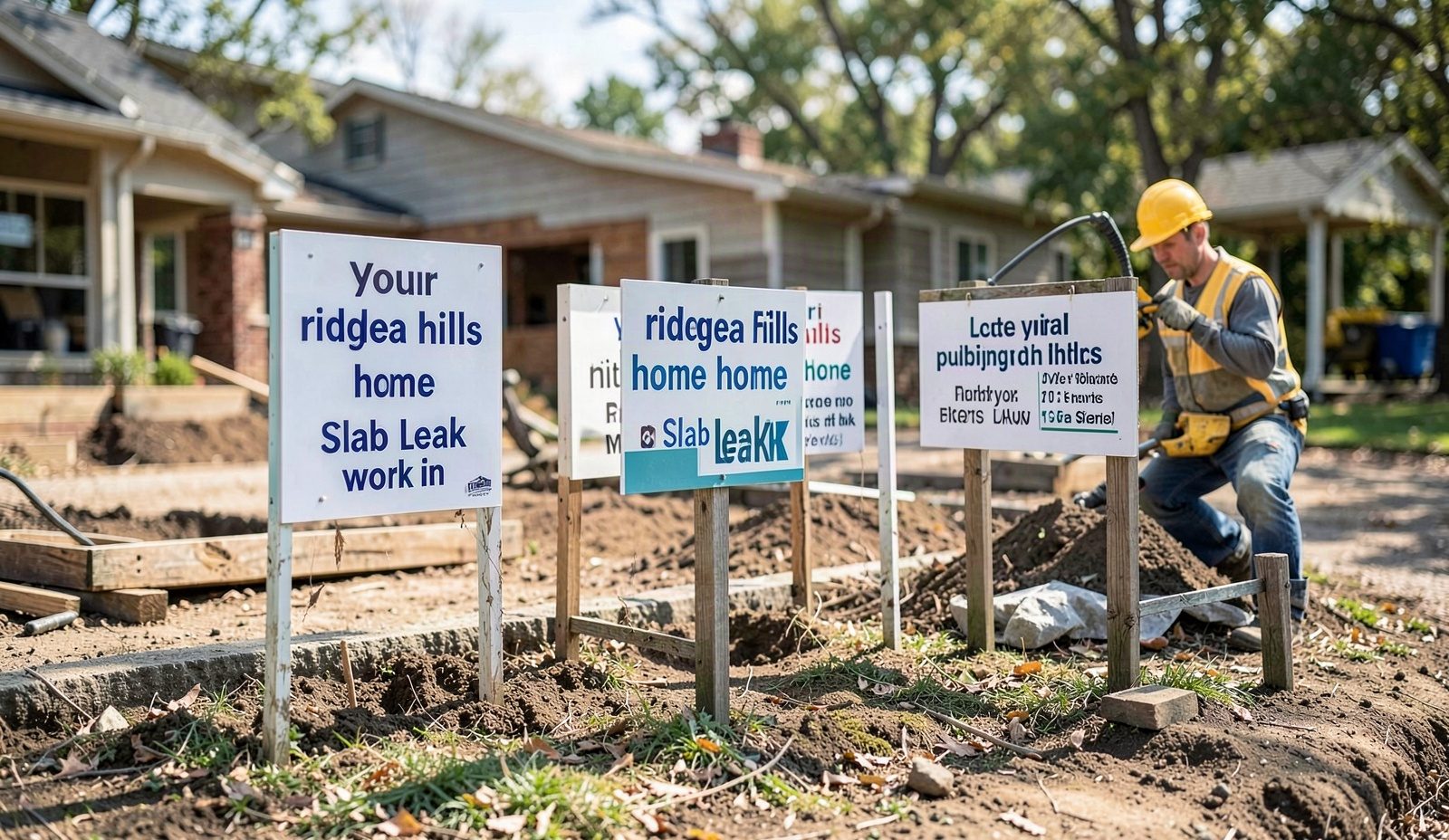
5 Signs Your Ridglea Hills Home Has a Slab Leak
5 Signs Your Ridglea Hills Home Has a Slab Leak, practical local guidance from Shield Plumbing Fort Worth, Fort Worth's trusted plumbing tea…
Read More




A faucet keeps dripping at 2 a.m. and the sound carries through a quiet house until it feels louder than it is. The drip lands on a stained porcelain basin, a green ring forms under a brass spout, and the handle feels loose or squeaks half a turn past where it should stop. Some Fort Worth homeowners notice the sound only after the house settles for the night, when faucet drips at night turn a five-second interval into a countdown that will not stop until morning.
Underneath the sink, the cause is rarely the faucet alone. North Texas expansive clay swells with rain and shrinks in drought, and that seasonal movement shifts slab foundations enough to shear copper supply lines and separate drain joints under the house. In Fairmount and Arlington Heights, where many houses sit on decades-old slabs, that ground movement stresses the supply line feeding the faucet long before the washer or cartridge ever wears out, so a drip that looks like a simple parts problem can trace back to a hairline crack six feet under the slab.
Fort Worth water runs moderately hard, and the mineral scale it leaves behind scores the rubber seats and O-rings inside a faucet cartridge, a main reason a faucet that worked fine in summer starts to weep by winter. Add a house built before 1970 with galvanized steel supply lines, and the scale problem compounds: rough interior pipe walls shed rust and mineral flakes that lodge in the cartridge and hold the valve open just enough to leak. Dripping tap water waste from a single worn cartridge can run for weeks unnoticed at the back of a utility sink or a rarely used bathroom.
Left alone, a fix dripping faucet job today turns into a bigger repair fast. The steady drip keeps the seat and washer wearing against a wet surface, which accelerates the corrosion. Under-sink cabinets swell and delaminate, shutoff valves seize from mineral buildup and stop turning when you need them to, and a slow leak at the supply connection can soften subfloor before the sound ever gets loud enough to demand attention. The leaky faucet cost of waiting shows up in stained cabinets and stuck valves long before it shows up on a water bill.
If this sounds close but not quite your situation, discolored or rusty water may be the better starting point.
Independent standards matter too, the EPA's WaterSense program sets the efficiency benchmarks we use when recommending replacement fixtures.
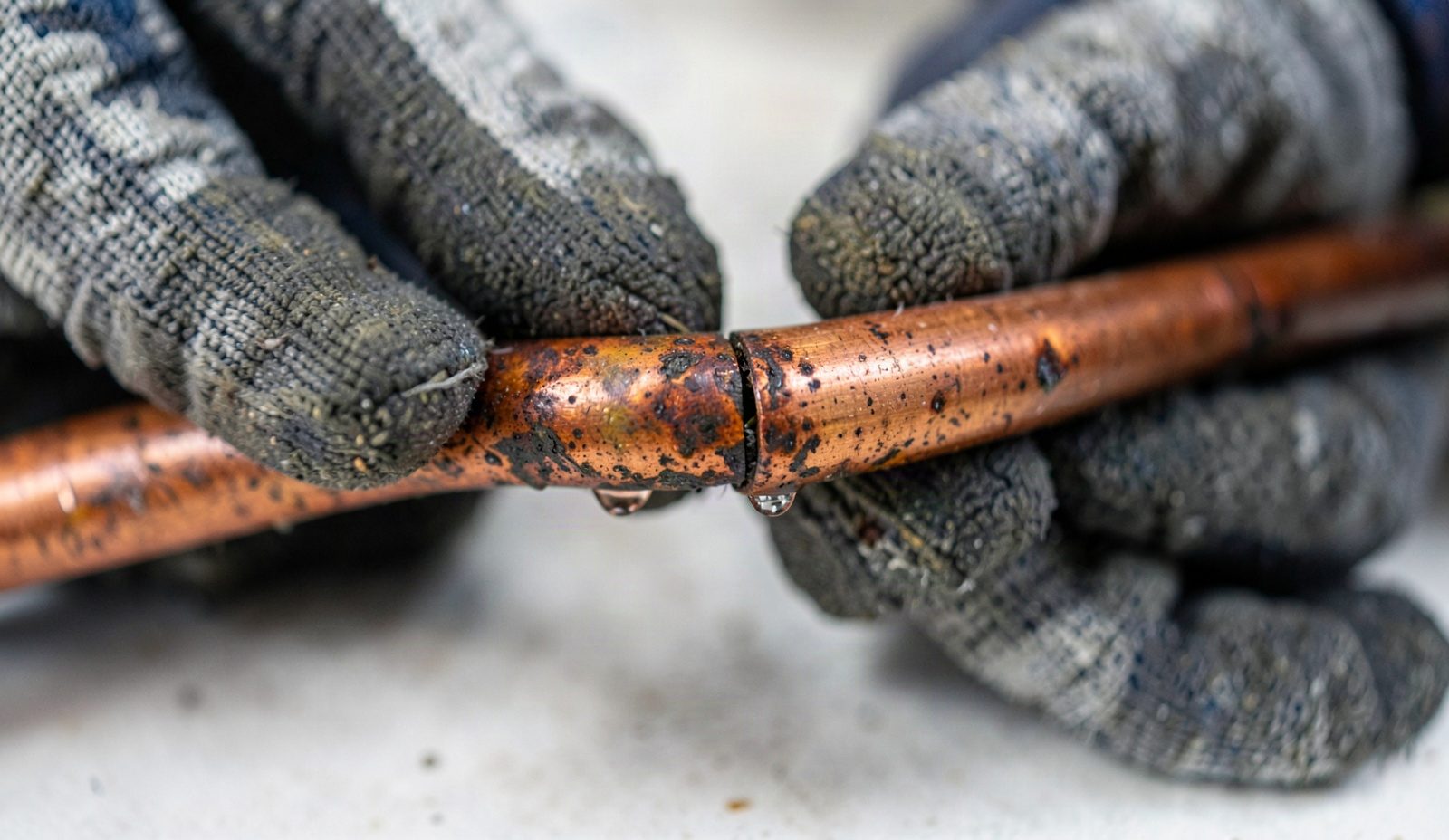
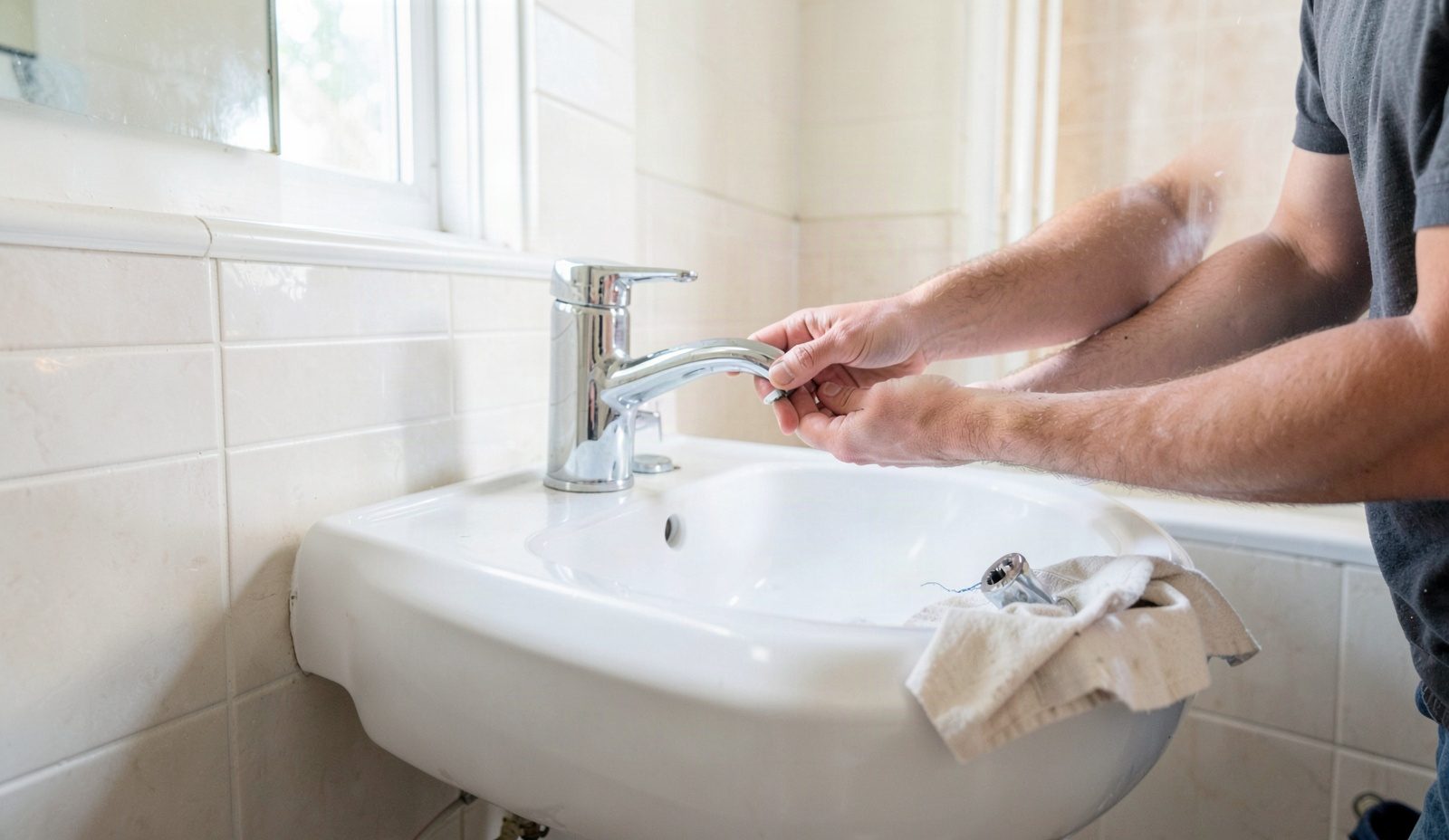
Every dripping faucets & leaks call starts with a pressure reading, not a guess. A technician threads a calibrated gauge onto the outdoor spigot and records the static water pressure before touching a single fixture. A reading above 80 psi means the home is running hotter than the fixtures were built for, and under the plumbing code that number calls for a pressure-reducing valve at the main, because sustained high pressure turns a cheap washer into a recurring drip.
Inside the faucet, the diagnosis depends on what kind of valve is dripping. Compression faucets with rubber washers wear out fastest under Fort Worth's hard water, often within a few years of scale exposure, while cartridge faucets built around a Moen or Delta cartridge hold up longer because the O-rings seal against a smoother ceramic or nylon sleeve instead of a metal seat. Faucets built around a ceramic disc valve, the kind Kohler uses in most single-handle kitchen models, resist scale scoring the longest because the two polished discs shear past each other rather than compressing against a washer, which is why we recommend a disc-valve replacement over a compression rebuild on any fixture more than fifteen years old.
For leaks below the faucet, the check moves to the trap and the supply stops. A moisture meter run along the cabinet floor and back wall flags the true spread of a slow drip before the cabinet liner shows a visible stain, and a flashlight inspection of the P-trap slip joints and supply line ferrules usually finds the actual source, since a faucet that appears to be leaking from the spout is, in a good number of cases, actually weeping from a loose compression nut two inches below. We tighten to hand-tight plus a quarter turn on ferrule connections, the same torque standard used across the plumbing trade, instead of overtightening plastic supply nuts until they crack.
See gurgling toilet sounds for how the related work is scoped and priced.
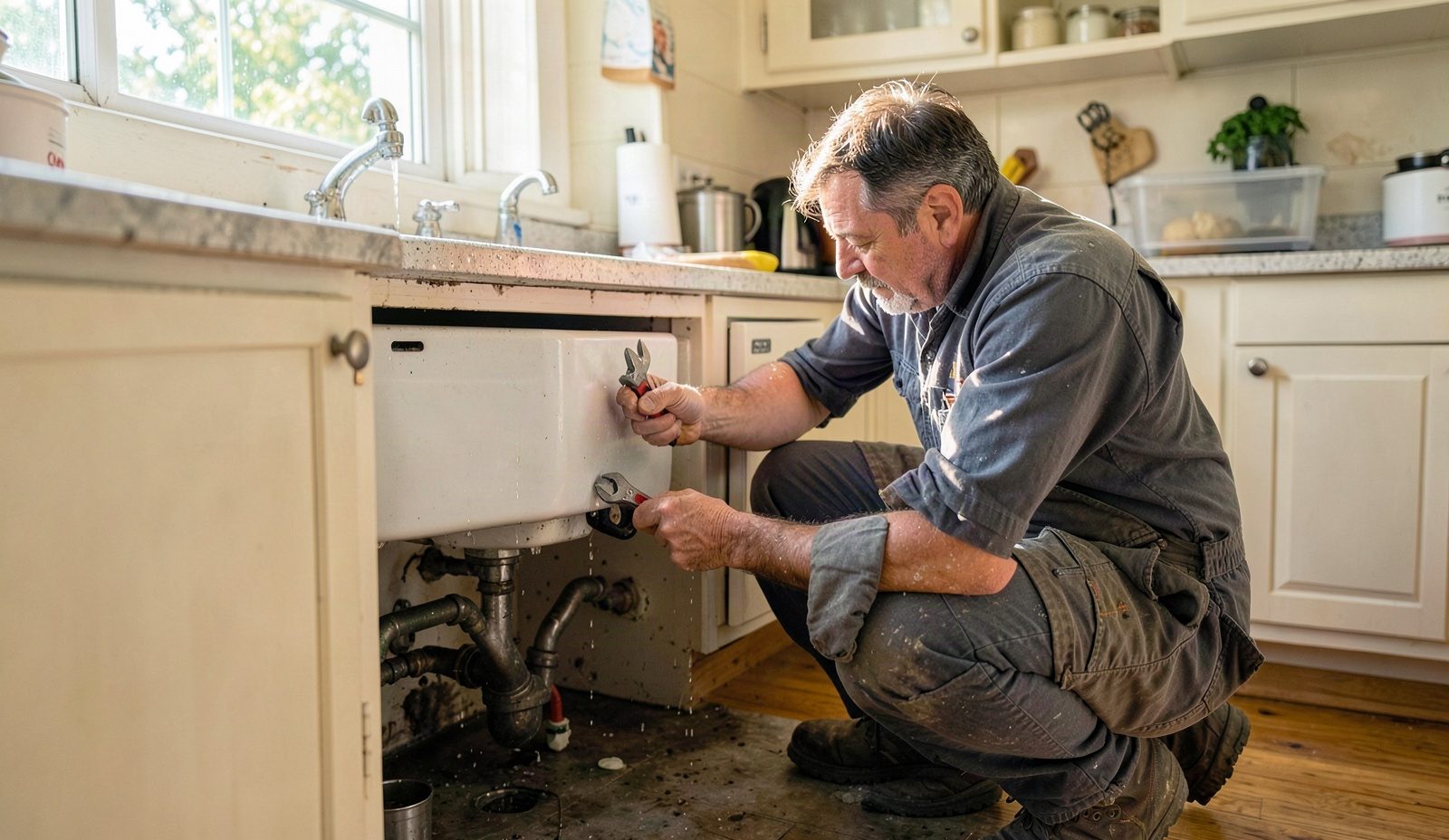
You call (817) 710-3766 and describe which faucet drips, how often, and whether the leak reaches the cabinet floor or backs up into the wall. The technician arrives in the scheduled window and starts at the fixture, watching the drip pattern, feeling for looseness in the handle, and checking the cabinet floor and supply lines for staining or active moisture. A pressure gauge goes on the nearest outdoor spigot to get a static reading before anything is disassembled. You get the diagnosis in plain terms on the spot, whether it is a worn cartridge, a scaled valve seat, or a supply line issue further back in the wall.
Once the cause is confirmed, the technician writes the scope and price and walks you through it before opening anything further. A mat and drop cloth go down first, then the shutoff valve closes and the line drains into a bucket instead of onto the cabinet floor. Cartridge swaps, washer replacements, or supply line sections get matched to the existing pipe material, whether that is copper, PEX, or older galvanized steel found in pre-1970 homes. Any change beyond the fixture itself, like a valve or supply line swap, gets confirmed with you before the tech moves past the point you approved.
Before the tech packs up, the shutoff reopens slowly and the faucet runs through a full hot and cold cycle while the technician watches the spout, the handle base, and every joint under the sink for movement or moisture. A dry paper towel run under each connection catches any residual drip a visual check alone would miss. The technician walks you through what was found, what was replaced, and shows you the shutoff valve location if it was not obvious before. You get a written summary of the work performed for your own records.
Repairs that stay inside the fixture, like a cartridge swap or a washer replacement, do not typically require a permit. Work that changes the supply piping, replaces a section of drain line, or installs a pressure-reducing valve under Section 604.8 of the International Plumbing Code is the kind of structural change the City of Fort Worth Development Services Department expects to review, and for addresses outside city limits, the local building department or Tarrant County makes that call instead. Knowing which side of that line a repair falls on before work starts keeps a homeowner from an inspection headache later.
Fort Worth's plumbing systems shift block by block. A ranch house in Wedgwood built on a post-tension slab needs a different repair approach than a 1930s bungalow in the Near Southside still running on cast iron drains, and a tech who does not know the difference will treat both jobs the same way and miss the real cause. Out-of-area operators who drive in for a single call rarely carry the fittings to transition between galvanized steel and copper or PEX correctly, and a mismatched fitting at that transition point is one of the more common comeback leaks in older Fort Worth homes.
An unqualified repair on a supply line under pressure can fail again within days, and a drain joint resealed without cutting back to sound cast iron will leak again the first time the line runs full. Every technician who works a Shield Plumbing Fort Worth call carries the fittings for copper, PEX and galvanized transitions in the truck, so the repair matches the pipe actually in the wall instead of the pipe a generic parts kit assumes is there. That fitting-matching step is the difference between a repair that lasts and one that gets a callback within the season.
Our page on cold water sandwich effect covers that side of the work in more depth.
Your local utility, Payment options, publishes service and water-quality information every Fort Worth homeowner should know.
Call (817) 710-3766 and describe the drip, the fixture, and how long it has been running. Dispatch gives a two-hour arrival window for the day you book, morning or afternoon, and calls thirty minutes out so you are not waiting at the door. If a prior job runs long, the office calls before the window closes and offers the next open slot the same day when one exists. Same-day and next-day slots are common for a single dripping faucet since the visit is short. Emergency leaks that are actively flooding a cabinet or ceiling get moved ahead of routine cartridge swaps on the day's route.
Under-sink work starts with a rubber mat laid across the cabinet floor and a drop cloth on the surrounding counter, since old shutoff valves sometimes seize and spray when they finally turn. Any water already pooled under the sink gets wet-vacuumed out before parts come off, and a bucket catches the line while the cartridge or trap is open. Old cartridges, corroded nuts, and any cut-out pipe leave the house in a sealed bag rather than the trash can under the sink. Cabinets get wiped down and shutoff valves get labeled before we leave, so the next person who reaches under that sink knows exactly what they are turning.
The pressure reading, the fixture brand, and what the trap and supply lines look like once the cabinet is open set the scope of the job. A worn cartridge in an accessible cabinet is a short repair; a corroded galvanized supply line feeding that same faucet is a different job with different parts. After the diagnosis, the technician writes the scope and the price on the spot, before touching a wrench, and nothing changes on that ticket without a conversation first. You approve the work in writing before it starts, so there is no surprise line item when the invoice comes.
Every technician passes a background check before riding a Shield Plumbing Fort Worth truck, and new hires spend a set stretch of paired jobs alongside a senior tech before touching a solo call. Training continues on the current plumbing code cycle adopted by the City of Fort Worth, covering the fixture and piping changes that show up most in older homes across the metro. Field skills get checked on real jobs, not paperwork alone: a senior tech reviews cartridge swaps, sweat joints, and pressure readings on a rotating basis, and any tech whose work does not hold up in that review goes back to paired jobs until it does.
Cost depends on the cause, not on the drip itself. A cartridge or washer swap in an accessible cabinet is a short job, while a corroded supply line behind a wall or a scaled shutoff valve adds labor and parts. Homes with pre-1970 galvanized piping often need a fitting transition to copper or PEX, which changes the scope. Shield Plumbing Fort Worth writes the price after the diagnosis, once the technician has opened the cabinet and checked the supply lines, so the number reflects the actual repair instead of a phone estimate.
Drip the cold water side on any faucet fed by a line that runs through an attic or an exterior wall, since that line is usually the most exposed to outside air. A slow trickle keeps water moving through the pipe, which resists freezing far better than water sitting still. Leave both handles cracked slightly open on a two-handle faucet if the line configuration is unclear. Open the cabinet doors below sinks on exterior walls too, so warmer room air reaches the pipe. This matters most on nights when the forecast holds below freezing for several hours straight.
Yes, once a drip continues for more than a day, a plumber can usually stop it before it damages the cabinet or valve. A faucet that drips only after the handle is bumped might just need a quarter turn on a loose packing nut, something you can check yourself. A faucet that drips steadily regardless of handle position usually means a worn cartridge or a scored valve seat, which needs the right replacement part matched to the fixture brand. Waiting past that point usually means a wet cabinet floor and a stuck shutoff valve on top of the original leak.
Drip faucets whenever the overnight forecast calls for temperatures below freezing for several hours, which in Fort Worth usually means one or two cold fronts each winter rather than a full season of freezing weather. Start dripping before bedtime and keep it running until the temperature climbs back above freezing the next morning. Fixtures on exterior walls or fed by attic lines need it most, since interior walls stay warmer from the house's own heat. Skip it on interior fixtures fed entirely through conditioned space, since those lines rarely freeze.
Estimates come after a technician inspects the fixture and the supply lines, not from a phone description alone. On site, the tech checks the pressure at the nearest spigot, opens the cabinet, and identifies whether the drip comes from the cartridge, the valve seat, or a line further back. That diagnosis sets the scope, and the price gets written down before any part comes off the faucet. You review and approve that scope before work starts. Call Shield Plumbing Fort Worth at (817) 710-3766 to schedule the visit that starts that process.
Some drips are fixable yourself, especially a loose packing nut or an aerator clogged with mineral scale. Replacing a cartridge or a ceramic disc valve is harder, since the part has to match the exact faucet brand and model, and a wrong part can crack the housing on tightening. Diagnosing a leak that shows up under the sink but actually starts behind a wall needs a pressure gauge and often a look inside the wall cavity, which most homeowners are not set up to do safely. If a straightforward parts swap does not stop the drip, the real cause is usually further upstream.
Most faucet and leak repairs do not need a permit, since swapping a cartridge or a washer counts as a like-for-like repair. A permit becomes necessary once the job replaces a section of supply or drain piping, adds a new valve, or opens a wall or slab to reach a leak, and the final call on what qualifies belongs to the permitting office with authority over your address. For most Fort Worth homes that means city review before the wall gets closed back up. Ask the technician on site which category your repair falls into before work starts.
Fort Worth's plumbing problems rarely start at the faucet handle. The February 2021 freeze burst pipes across Tarrant County by the tens of thousands, and most of those failures were supply lines run through attics and exterior walls, the same runs that feed the faucets in kitchens and baths across the metro. Houses in Wedgwood and Ridglea Hills built through the postwar decades often still carry the original copper or galvanized runs from that era through uninsulated attic space, which means a faucet that started dripping shortly after a hard freeze may be showing the first visible sign of a supply line that cracked months earlier and is only now leaking enough to notice at the fixture. That lag between a freeze event and a visible drip is why we ask, on every call, whether the fixture ever went without water during a winter storm.
Trust in this trade gets built block by block, not city-wide. Homeowners near the Cultural District often ask the same question after a repair: whether the fix needed a permit at all. Fixture-level repairs like a cartridge swap or washer replacement generally do not, while any job that opens a wall, replaces a run of supply piping, or adds a pressure-reducing valve falls under city inspection and gets reviewed the same way any structural plumbing change does. Local inspectors know the difference between a repair that stops at the trap and one that reaches the slab, and a technician who has pulled permits in this city before knows which paperwork a given job actually needs, which keeps a simple faucet call from turning into a compliance problem months later when the house sells.
Explore our service area and locate Shield Plumbing Fort Worth with ease. We're proudly local and serve the surrounding neighborhoods with fast response and honest pricing. Use the map to check our coverage area, or call us and we'll confirm in seconds.
Address:
Shield Plumbing Fort Worth, 210 W 7th St, Fort Worth, TX 76102
5 Signs Your Ridglea Hills Home Has a Slab Leak, practical local guidance from Shield Plumbing Fort Worth, Fort Worth's trusted plumbing tea…
Read More
What Wedgwood Residents Should Know Before a Whole-Home Repipe, practical local guidance from Shield Plumbing Fort Worth, Fort Worth's trust…
Read More
How Fort Worth's Hard Water Is Quietly Destroying Your Water Heater, practical local guidance from Shield Plumbing Fort Worth, Fort Worth's …
Read More
The Hidden Cost of Ignoring a Dripping Faucet in Fort Worth, practical local guidance from Shield Plumbing Fort Worth, Fort Worth's trusted …
Read More