
June 20, 2026
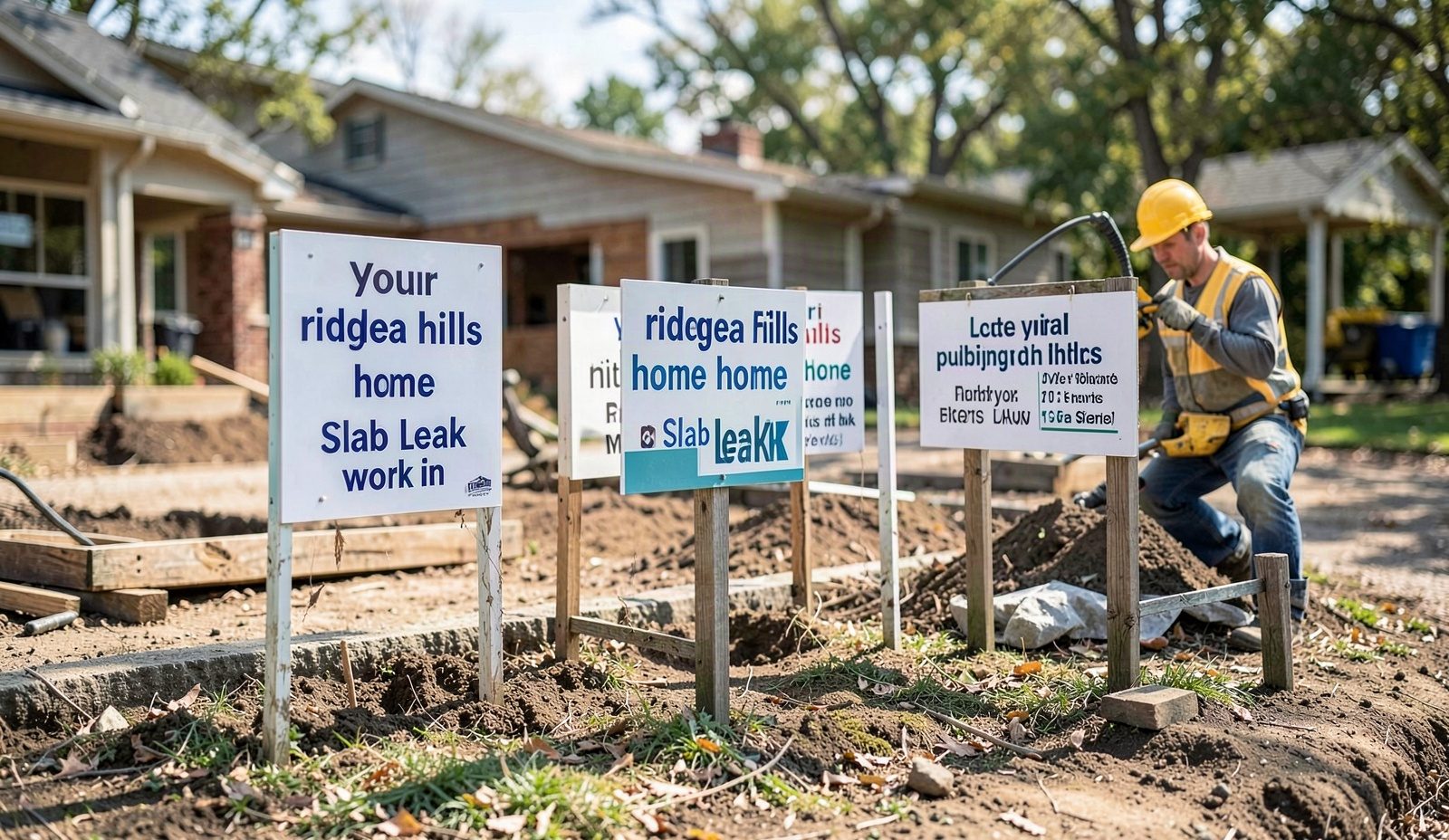
5 Signs Your Ridglea Hills Home Has a Slab Leak
5 Signs Your Ridglea Hills Home Has a Slab Leak, practical local guidance from Shield Plumbing Fort Worth, Fort Worth's trusted plumbing tea…
Read More




Your water bill doubled and nothing at home changed. No new appliance, no teenager taking longer showers, no dripping faucet you can hear. That's the pattern behind most calls we get about high water usage causes in Fort Worth: a bill that jumps 30, 50, even 100 percent with no obvious explanation. Sometimes there's a sound, a faint hiss behind a wall near the water heater closet, or a damp patch on the carpet in a Fairmount bungalow that never dries out. Sometimes there's nothing at all, just a number on the bill that doesn't match how the house is being used. A hidden water leak under a slab or behind a wall almost never announces itself with a puddle first.
North Texas expansive clay is the biggest hidden cause. The clay under Fort Worth swells several inches after a wet spring and shrinks back hard in a dry August, and that movement flexes the slab enough to shear a copper supply line or pull a drain joint apart underneath the house. Homes in Ridglea Hills and similar slab-on-grade neighborhoods built through the 1960s and 70s see this constantly: a hairline crack in a buried copper line leaks a few gallons an hour, invisible above the floor, while the meter never stops turning.
Attic and exterior-wall supply lines carry a second local risk. The February 2021 freeze burst pipes across Tarrant County by the tens of thousands, and most of those failures were exactly these runs, PEX or copper lines stapled to a rafter with no insulation. A pipe that cracked during that freeze and only weeps slowly, instead of spraying, can go unnoticed in an attic for years while it quietly drives your water bill up every month it stays undiscovered. Learning how to find a water leak in a house before it reaches this point starts with watching the bill, not waiting for a puddle.
Wait past the first suspicious bill and the damage stops being invisible. A slab leak that started as a hairline crack erodes the clay support under the foundation, and the soil washout can widen into a settling crack in the drywall. A weeping attic line eventually soaks the insulation, stains the ceiling below, and feeds the kind of mold growth that costs far more to remediate than the pipe itself. Every week you wait, you're paying for water twice: once on the bill, once in repair costs still building underneath your house.
More detail on cold water sandwich effect is on its own page.
Permit and inspection questions? Development Services is the office we coordinate with on every permitted Fort Worth job.

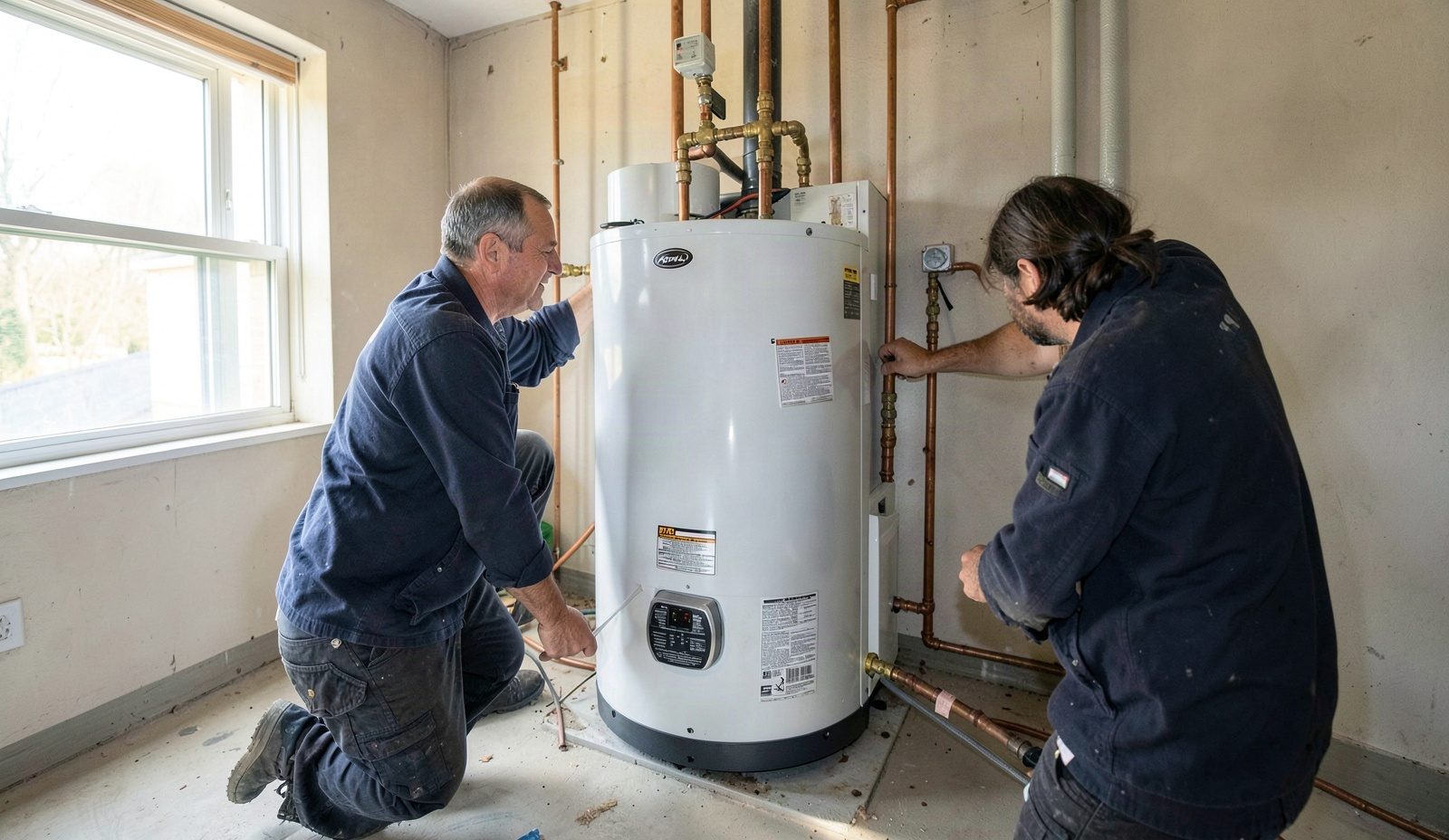
We start every high water bill call the same way: an isolation test at the meter. Every fixture in the house gets shut off, main included, and we watch the low-flow indicator, the small triangle or spinning dial built into the meter face, for fifteen minutes. If it moves at all with nothing running, there's an active leak somewhere between the meter and the fixtures, and the search narrows to slab, wall, or yard line before we ever pick up a tool. We also run a moisture meter along baseboards near bathrooms and the water heater closet, since a pinhole leak inside a wall raises the reading well above the baseline dry drywall holds in Fort Worth's climate.
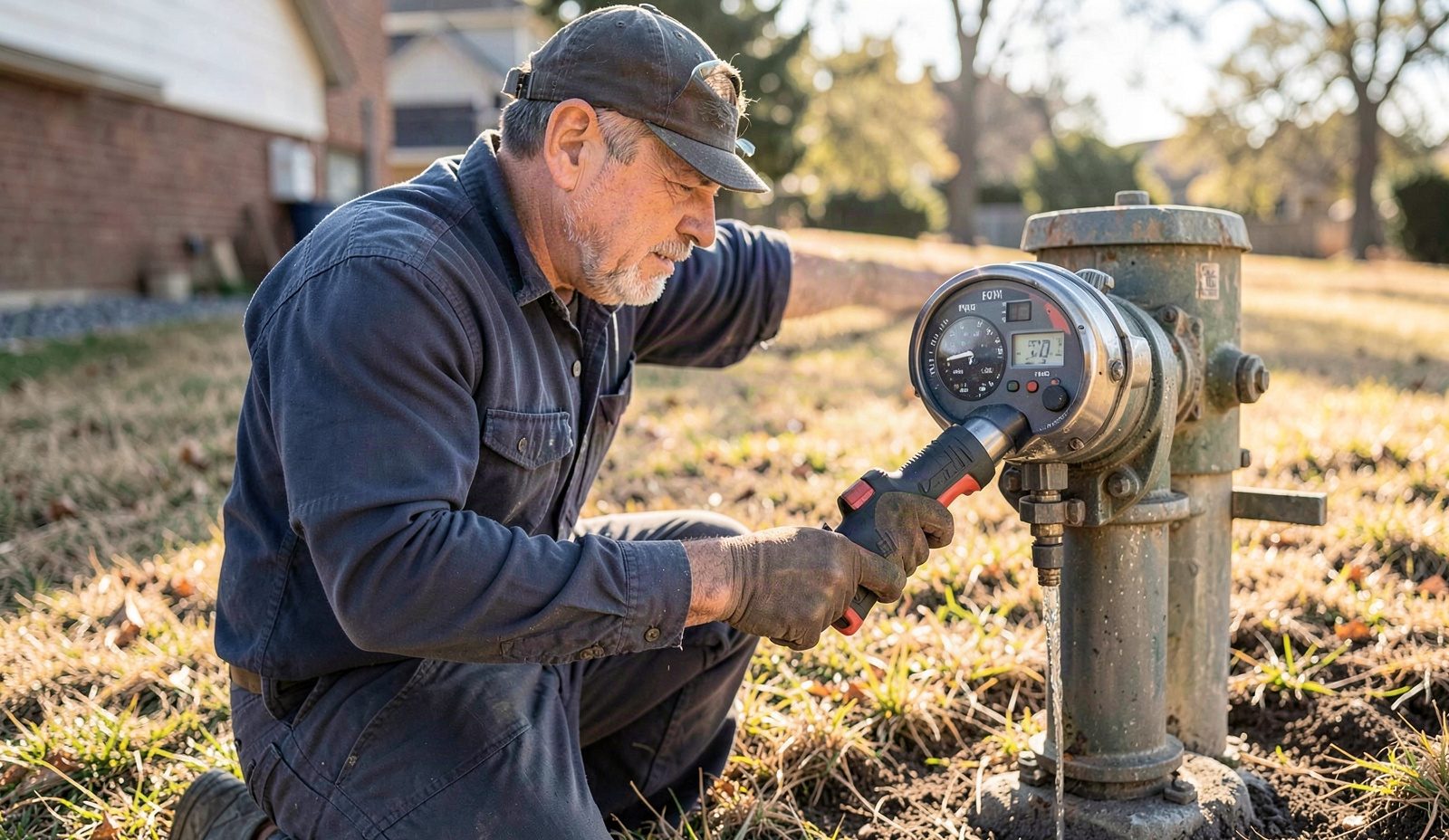
Next we thread a pressure gauge onto an outdoor spigot and read static water pressure. Section 604.8 of the International Plumbing Code, adopted into the City of Fort Worth plumbing code, requires a pressure-reducing valve any time static pressure at the fixture exceeds 80 psi. High pressure doesn't just wear out washers faster, it forces more water through every fixture and drives usage up on every cycle a dishwasher or washing machine runs. When we find pressure north of 80, we're comparing PRV options like the Watts LFN25 and the Wilkins 500XL, both adjustable in roughly the 25 to 75 psi range, and setting the replacement to the pressure the house actually needs.
For leaks that don't show up at a fixture, we move to acoustic detection. A ground microphone amplifies the hiss of water escaping a pressurized copper line, and on a quiet morning we can isolate a slab leak to within a couple of feet without cutting concrete blind. Outdoors, we isolate irrigation by closing zone valves one at a time and watching that same meter indicator, since a stuck solenoid on a single zone can run for hours unnoticed and mimic a slab leak on the bill. Inside, a dye tablet dropped in the toilet tank exposes a worn flapper in under ten minutes, one of the most common high water usage causes we find and one of the cheapest to fix once it's located.
Our page on discolored or rusty water covers that side of the work in more depth.
You call (817) 710-3766 and describe what you're seeing, a bill that doubled, a damp spot, a hissing sound. We schedule the visit and ask you to avoid running large fixtures like the washing machine or dishwasher beforehand, so the meter reading we take on arrival is clean. On site, the technician checks the meter, walks the interior near bathrooms and the water heater, and inspects any exterior spigots or irrigation valves you've flagged. You see every step, where we're looking, what we're checking, and why, before any tool touches a wall or floor.
Once the leak is located, we write up the scope, the pipe section, drain joint, or valve involved and the material we'll use, and you approve it before cutting starts. Drop cloths and containment go up first. For a slab leak, that might mean rerouting the line overhead through the attic instead of tunneling through the foundation, depending on access and the extent of shifting already found. For a fixture, it's a direct swap using code-compliant fittings and, where pressure warrants it, a pressure-reducing valve set to the house's actual demand.
Before we call the job finished, we re-pressurize the line and watch the gauge hold steady for several minutes, then re-check the meter's low-flow indicator with everything off one more time to confirm it's dead still. We walk the repair with you, show you the section that was replaced, and leave an itemized invoice showing exactly what was done. If the fix involved a slab or wall, we note the access point's condition for your records, useful if you're documenting the repair for insurance or a future sale.
Every repair we make on a Fort Worth high water bill call follows the City of Fort Worth plumbing code, built on the International Plumbing Code. That matters most on repipe decisions: a straight swap of galvanized for galvanized might pass a casual glance, but it doesn't meet current material standards, and it leaves the underlying corrosion problem in place. We size and route replacement lines to the standard the inspector will actually check on final walk-through.
Pre-1970 neighborhoods across the metro, including sections of Arlington Heights, were plumbed with galvanized steel supply lines and cast iron drains, both now at or past the end of their service life. Galvanized pipe rusts from the inside out, narrowing the bore until pressure and flow drop even as usage, and the bill, climb from leaks forming at every corroded joint. An out-of-area crew that doesn't recognize galvanized threading on sight, or joins new copper directly to it without a dielectric union, creates a corrosion cell that fails again within months and sends the water bill right back up.
Structural repiping typically requires a permit, while a straightforward flapper or fixture swap usually doesn't. Knowing which side of that line a job falls on before work starts keeps a project moving instead of stalling on a corrected application. We work Fort Worth's older slab and pier-and-beam housing stock daily, which means we recognize a 1960s galvanized tee or a mismatched drain trap on sight. That local familiarity is what keeps a two-hour diagnostic visit from turning into a half-day project.
If this sounds close but not quite your situation, low water pressure issues may be the better starting point.
Call (817) 710-3766 and we'll book a same-day or next-day visit for most Fort Worth addresses, with a two-hour arrival window instead of an all-day wait. You get a text when the technician is on the way, with a name and estimated arrival time. If a prior call runs long, we call ahead and reset the window rather than leave you guessing. High water bill calls that show clear signs of an active leak, a spinning meter or a spreading wet spot, get priority over routine maintenance on the same day.
Every technician lays drop cloths from the door to the work area before touching a wall or crawlspace access panel. Cutting into a slab or drywall for leak access happens inside a containment sheet that catches dust and debris. Old pipe sections, cut drywall and packaging go out in the truck the same visit, hauled away instead of left at the curb. Before we leave, we run a shop vac over the work area and wipe down any surface we touched, so the only sign we were there is the repaired line.
Cost on a high water bill call depends mainly on where the leak sits. A leak at an accessible fixture supply costs less to isolate than one under a slab in a finished room, where flooring has to come up first. Pipe material matters too: soldering copper takes longer than a mechanical fitting on PEX. You get a written, itemized quote after the diagnostic, listing exactly what's being repaired and why, before any cutting starts. You approve a specific scope up front, with nothing added later without a new signed quote.
Every technician who works a Fort Worth call passes a background check before being added to the schedule, and rides with a senior tech on high water bill diagnostics until they can run a full meter and pressure test unsupervised. Code refreshers happen whenever plumbing code requirements update, so field crews aren't working from what they learned five years ago. A technician doesn't go solo on slab leak calls until a supervisor has signed off on a set number of successful isolations in the field.
High water bills usually mean a leak is running somewhere in the line. In Fort Worth, common sources beyond an obvious fixture leak include a water softener stuck mid-regeneration or an irrigation controller running a zone longer than programmed, both of which push thousands of gallons through the meter with no visible sign at the house. A stuck check valve on an outdoor hose bib does the same thing on a smaller scale. Shield Plumbing Fort Worth isolates the source with a meter test before assuming which fixture is to blame.
Average water bills vary by household size and usage tier across Fort Worth. The number that matters more than any citywide average is your own usage history, compared to the same month last year on your utility account. Lot size, irrigation, and household size shift the baseline more than location does. If this cycle's usage jumps well past your own history with no explanation, that gap is the signal to check for a leak, not the raw total on the page.
A bill that spikes with no warning almost always means a leak started recently. An ice maker supply line pinhole or a failed wax ring under a toilet, letting water seep into the subfloor with every flush, are two causes that show no puddle for weeks. Both push water through the meter continuously, unlike a dripping faucet you'd notice and fix right away. Check behind the refrigerator and around the base of every toilet for a soft or discolored spot on the floor before assuming the meter itself is wrong.
A doubled bill points to a leak running continuously for an entire billing cycle. A pool autofill valve stuck open, a broken sprinkler head buried in the yard, or a main shutoff valve packing that's failing and seeping into the yard box are common Fort Worth causes that run non-stop without ever showing water indoors. Because these sit outside the house, homeowners often check every indoor fixture first and find nothing. Shield Plumbing Fort Worth checks yard valves and irrigation zones as part of the same visit.
Diagnosis typically takes one visit, and repair timing depends on where the leak sits. A fixture-level leak, like a flapper or supply line, gets fixed the same visit once found. A slab leak needs the reroute or access work approved first, which can add a second scheduled visit if flooring or drywall has to come up. Most Fort Worth calls resolve within one to two visits total, with the meter test on day one telling us which outcome to expect.
You can rule out a few simple causes yourself, but locating a hidden leak usually needs equipment you won't have at home. Read the meter before bed and again the next morning without running any water. Any change means a leak is active somewhere in the line. Beyond that first check, a slab leak or a buried irrigation break needs acoustic equipment and a pressure gauge to locate without tearing up the yard or the floor guessing.
Fort Worth's water is moderately hard, and the scale it deposits inside a water heater tank is a leading reason local units fail years before their rated life. That scale coats the heating element, forces it to run longer to reach the same temperature, and on some tanks eventually blocks the temperature-and-pressure relief valve just enough that it weeps instead of sealing, a slow drip that adds up over a billing cycle without ever pooling on the floor. Housing stock adds a second layer: the mix of slab-on-grade homes built from the 1960s onward in areas like Wedgwood sit right on top of their supply lines, while older pier-and-beam houses near the Near Southside give a technician crawlspace access most slab homes never offer. That difference changes whether a leak gets found by an acoustic check from above or a flashlight from below.
Permit oversight in Fort Worth runs through the City of Fort Worth Development Services Department, and the same office handles inspections for addresses outside city limits by way of the local city building department or Tarrant County. A full repipe or any work that changes the line's routing typically needs a permit and a signed-off inspection, while a like-for-like fixture swap usually doesn't. That distinction matters more in areas with older or historic structures, including buildings in and around the Cultural District, where a repair has to account for existing wall assemblies and finishes an inspector will look at directly. Homeowners in these areas tend to ask the most pointed questions about what code requires versus what's optional, and a straight answer, backed by the actual code section, builds the kind of trust that gets a company called back for the next problem instead of a stranger pulled from an online search.
Explore our service area and locate Shield Plumbing Fort Worth with ease. We're proudly local and serve the surrounding neighborhoods with fast response and honest pricing. Use the map to check our coverage area, or call us and we'll confirm in seconds.
Address:
Shield Plumbing Fort Worth, 210 W 7th St, Fort Worth, TX 76102
5 Signs Your Ridglea Hills Home Has a Slab Leak, practical local guidance from Shield Plumbing Fort Worth, Fort Worth's trusted plumbing tea…
Read More
What Wedgwood Residents Should Know Before a Whole-Home Repipe, practical local guidance from Shield Plumbing Fort Worth, Fort Worth's trust…
Read More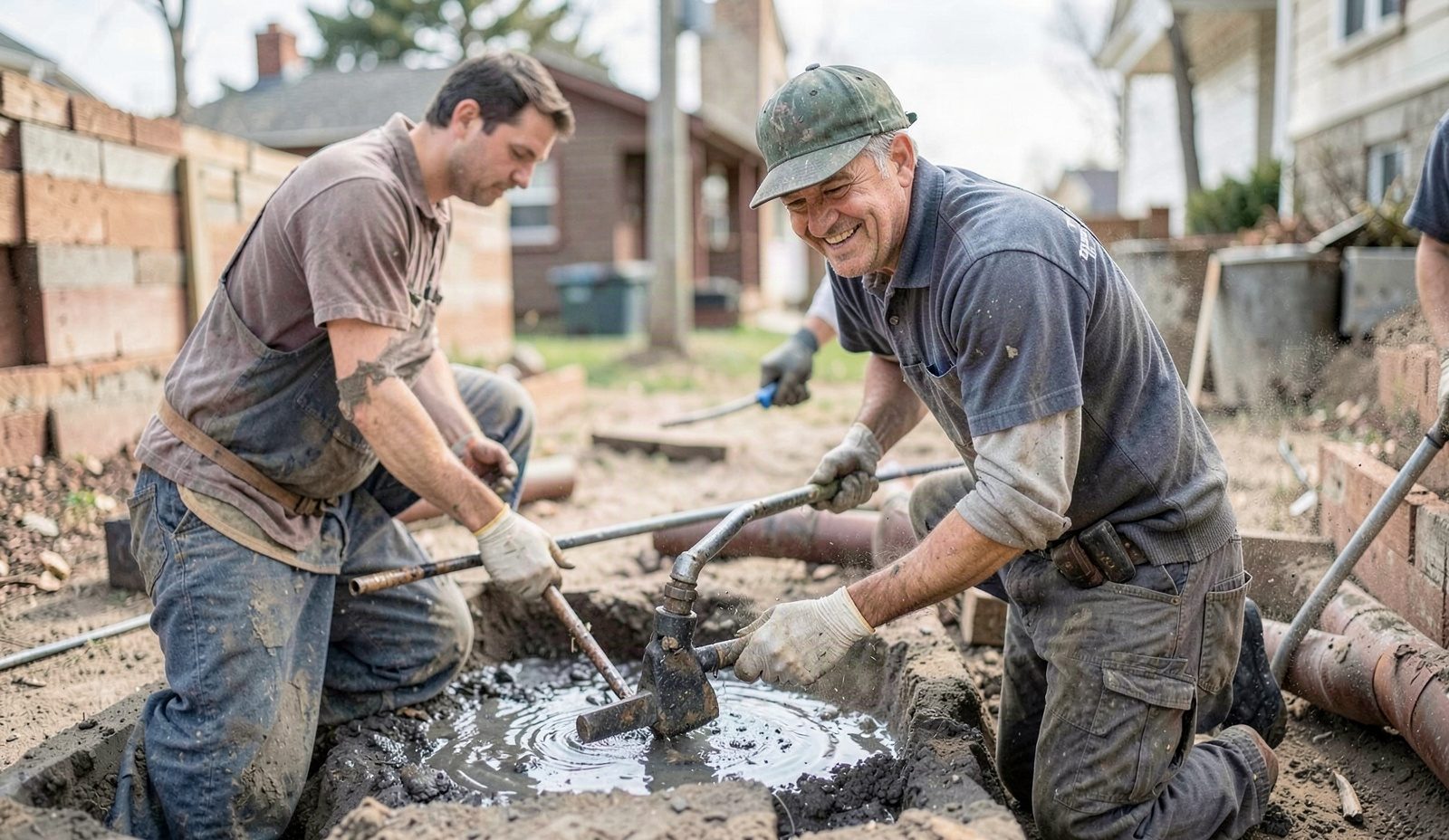
How Fort Worth's Hard Water Is Quietly Destroying Your Water Heater, practical local guidance from Shield Plumbing Fort Worth, Fort Worth's …
Read More
The Hidden Cost of Ignoring a Dripping Faucet in Fort Worth, practical local guidance from Shield Plumbing Fort Worth, Fort Worth's trusted …
Read More