
June 20, 2026
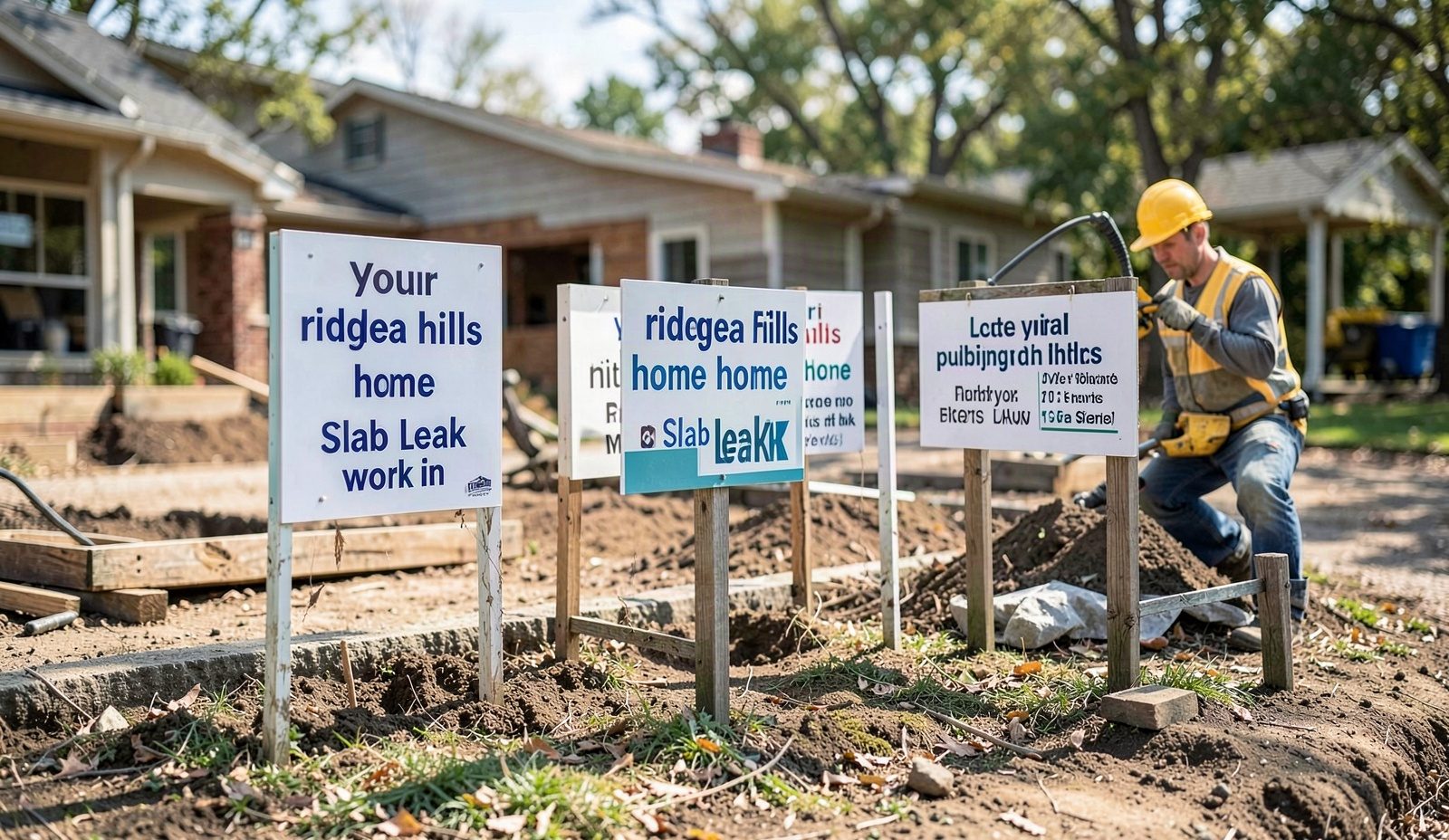
5 Signs Your Ridglea Hills Home Has a Slab Leak
5 Signs Your Ridglea Hills Home Has a Slab Leak, practical local guidance from Shield Plumbing Fort Worth, Fort Worth's trusted plumbing tea…
Read More


You step into the shower, adjust the handle, and the water runs warm within seconds. Then, without warning, a blast of cold water hits your skin for three or four seconds before the heat returns. This is the tankless cold water sandwich, and it is one of the most common complaints Shield Plumbing Fort Worth hears from homeowners who switched from a tank-style water heater expecting endless hot water and instead got inconsistent shower temperature every time someone flushes a toilet or starts the dishwasher mid-shower.
The mechanism behind hot water goes cold then hot is about timing inside the unit. A tankless heater has to sense flow, ignite its burner, and ramp the heat exchanger up to temperature before it can deliver hot water. Whatever water was already sitting in the pipe between the heater and your fixture, cooled since the last draw, gets pushed out first. If a second fixture opens and closes fast enough, the unit can drop out of ignition and repeat the whole startup sequence, sending another cold slug down the line. Long pipe runs in larger Fort Worth homes stretch that startup gap even further.
Fort Worth's climate and housing stock make the problem worse in specific ways. Supply lines rerouted through attics after the February 2021 freeze, when burst pipes hit Tarrant County by the tens of thousands, still sit in spaces that swing forty degrees or more between morning and afternoon in summer, changing how fast standing water in the line loses heat before your next draw. In older sections of Wedgwood and Ridglea Hills, tankless retrofits often feed long branch runs from a single point of entry, stretching the distance cooled water has to travel before hot water reaches the fixture. Fort Worth's moderately hard water adds another layer: scale builds on the heat exchanger fins over time, slowing how fast the unit can modulate output, so the burst of true hot water arrives later and the cold gap that precedes it lasts longer.
Ignoring tankless water heater cold bursts costs more the longer the unit fights them. Repeated short-cycling to chase a moving temperature target stresses the ignition control board and flow sensor, both of which fail sooner under that strain. Scale keeps building on the exchanger with every cycle, until the unit throws an error code and leaves the house with no hot water at all during peak use, usually on a cold morning when everyone needs the shower at once. At that point the fix moves from a service call to a heat exchanger replacement, and sometimes a full unit swap.
See high water bills for how the related work is scoped and priced.
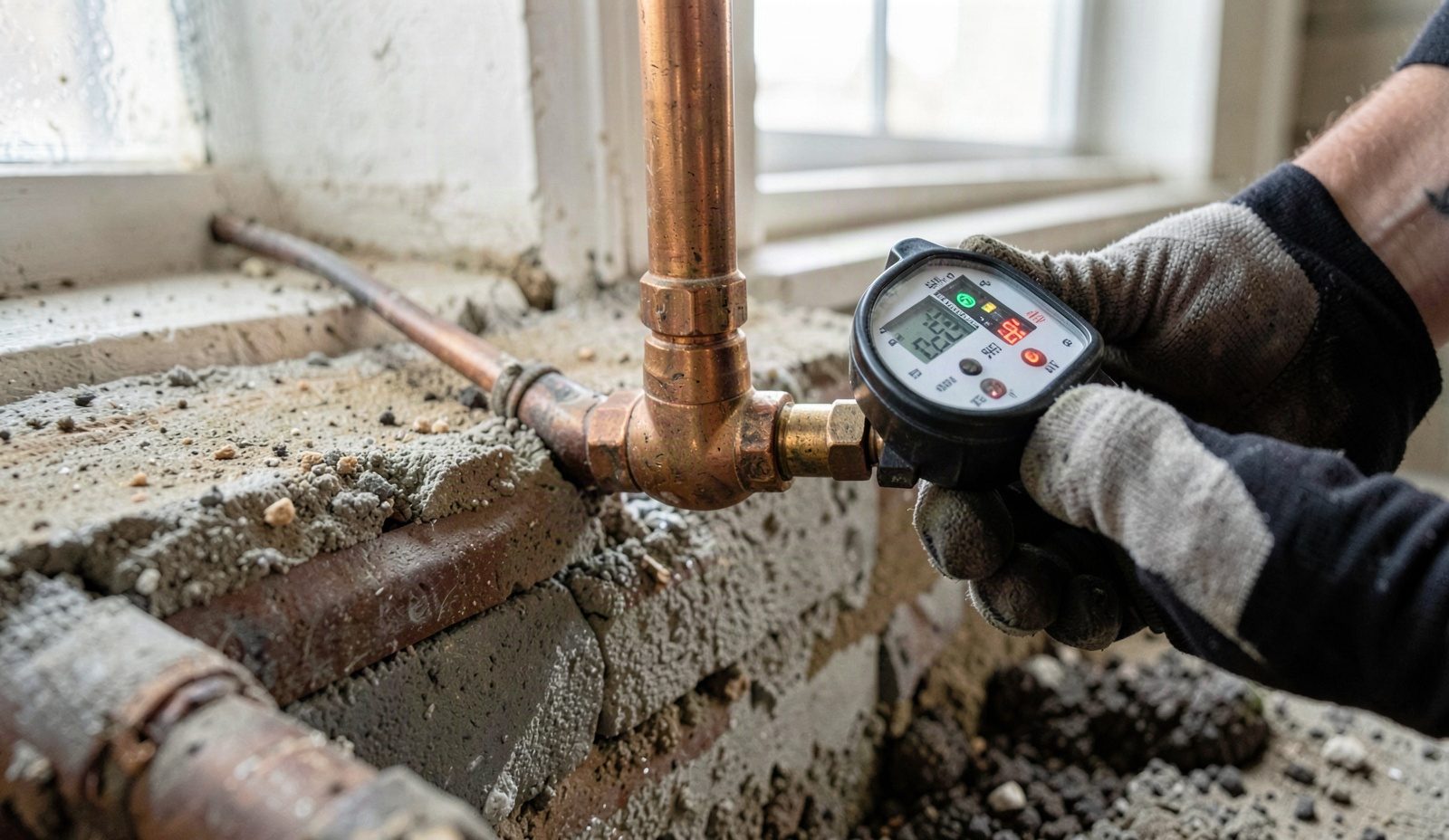
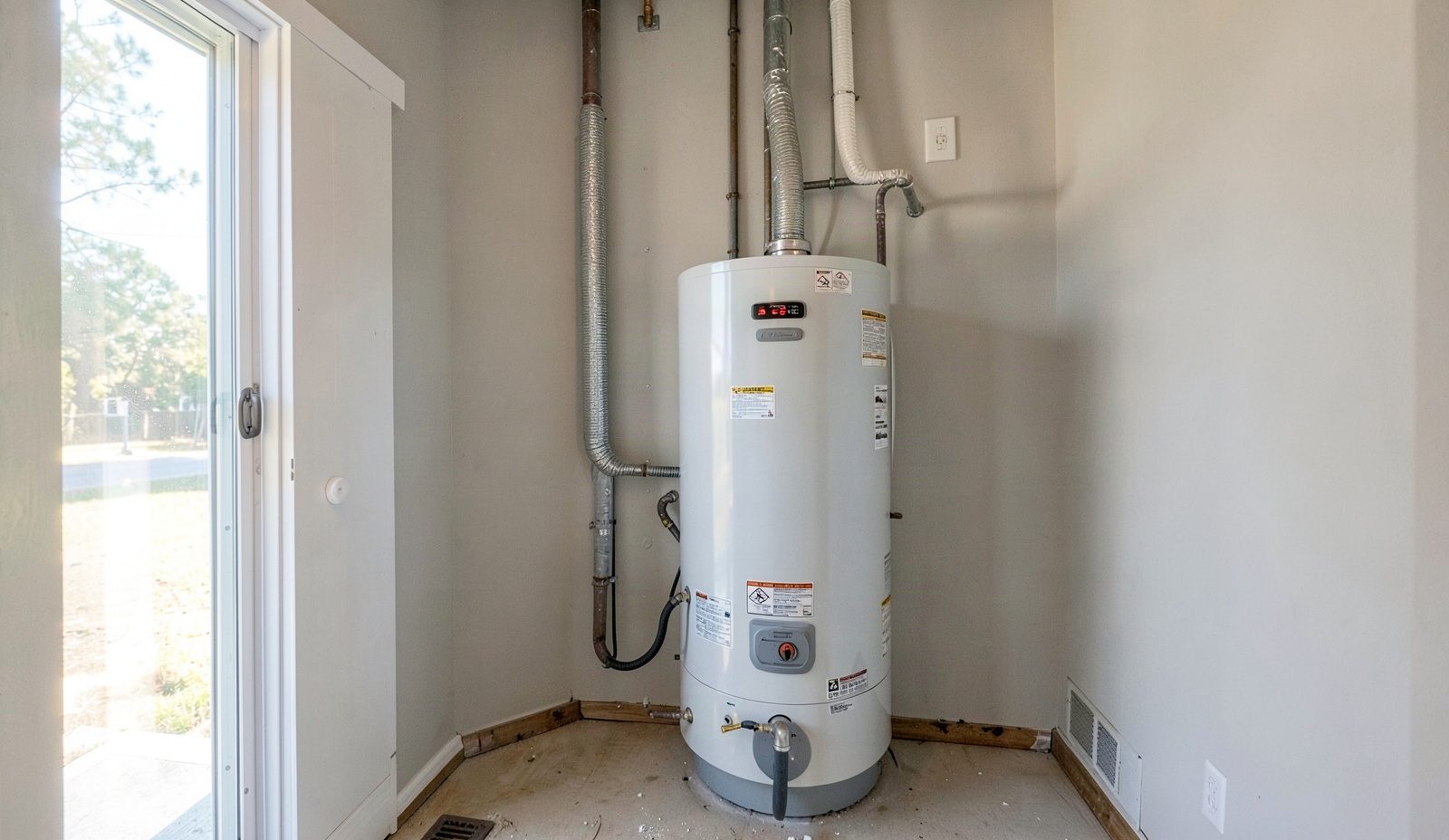
On a cold water sandwich call, the first thing a Shield Plumbing Fort Worth technician does is time the problem instead of guessing at it. We open the fixture farthest from the water heater and start a stopwatch the moment the handle turns. A digital flow meter clipped to the line shows the exact gallons per minute reaching the fixture, and two calibrated thermometers, one at the heater outlet and one at the fixture, track any water temperature fluctuation as it happens in real time instead of relying on the homeowner's description alone. We record all three readings on the work order before recommending a fix, so the repair addresses the actual timing problem instead of swapping parts on a guess.
Water pressure changes how forceful that cold slug feels, so every diagnostic includes a static pressure reading at an outdoor spigot. Anything above 80 psi calls for a pressure-reducing valve under Section 604.8 of the International Plumbing Code, and high static pressure without one pushes the cooled water in the line out faster and harder, making the sandwich feel more like a slap than a fade. We also check the recirculation loop, if one exists, for a stuck check valve or a dip tube that has slipped out of position, both of which let hot water bypass the fixture entirely and feed the sandwich instead of solving it.
Not every tankless platform handles this the same way. Navien's NPE series ships with a small internal buffer tank that holds a reserve of preheated water, closing much of the ignition-delay gap before it ever reaches the fixture, which is why Navien owners tend to notice a shorter, milder dip rather than a full temperature drop. Rinnai's standard lineup relies on an external recirculation loop instead of a buffer tank, so it only smooths out temperature on fixtures actually plumbed into that loop, leaving anything outside it exposed to the full sandwich. We check the recirculation pump's aquastat setting and run timer on both platforms, since a pump cycling on too late or shutting off too early recreates the same cold gap the loop was installed to prevent. If the buffer tank or loop is already functioning correctly and the sandwich still shows up on the thermometers, the fix usually points to undersized gas supply or a scaled heat exchanger instead of the recirculation hardware.
Your local utility, Payment options, publishes service and water-quality information every Fort Worth homeowner should know.
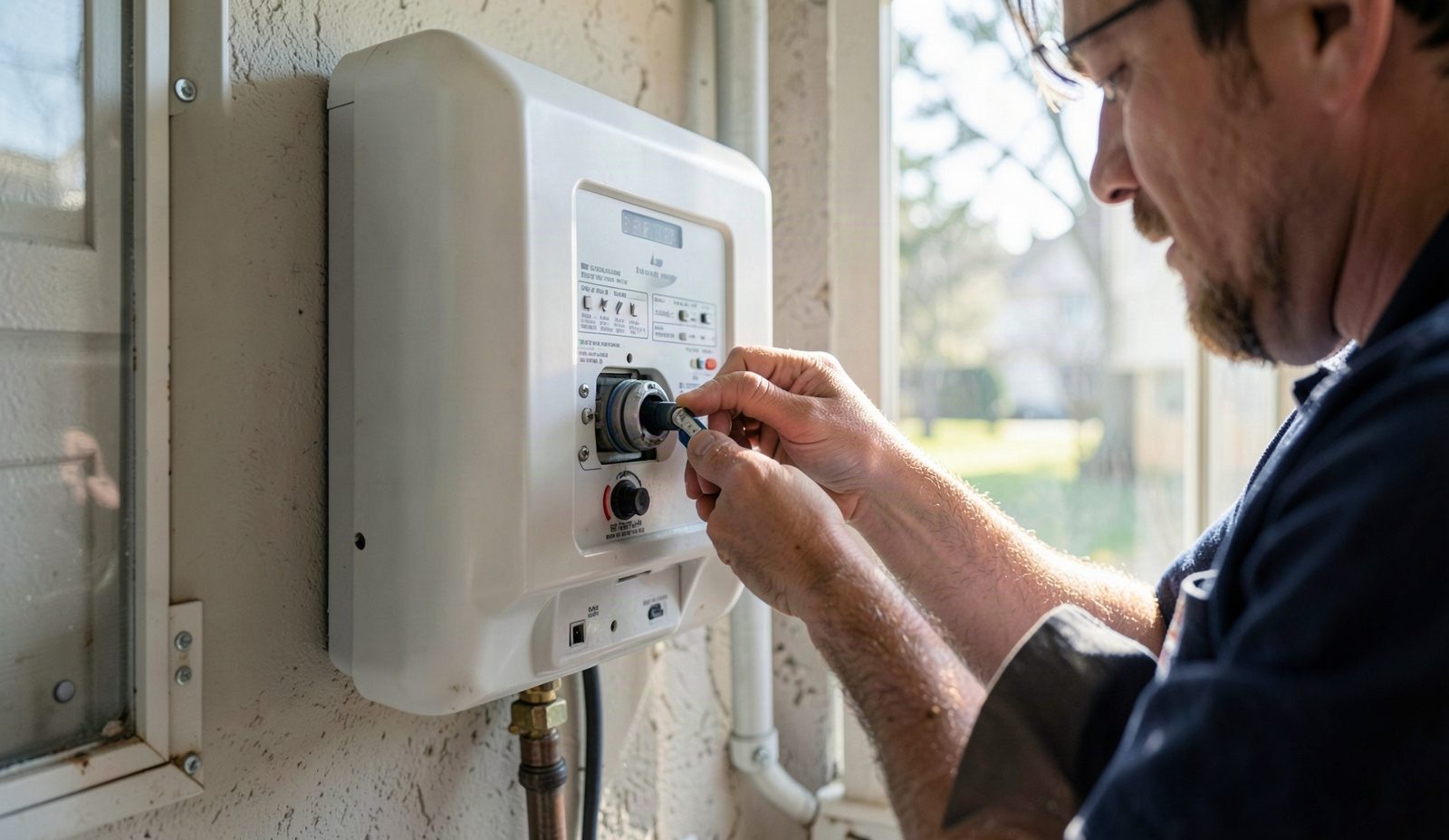
When you call to schedule, we ask what you are noticing: how many seconds the cold water lasts, which fixtures it hits, and whether it started after a freeze repair or a new appliance install. On site, the technician runs the flow and temperature tests at the fixture you flagged and at the water heater itself, checking gas pressure and the unit's error log for stored codes. You see the actual readings on the work order, not just a verbal diagnosis, and the technician explains what each number means for your unit before moving to any repair option.
Once the readings point to a cause, the technician writes a quote listing the exact parts, whether that is a flow sensor, a recirculation pump, a descaling service for the heat exchanger, or a pressure-reducing valve, and nothing gets ordered or installed until you approve it. Drop cloths go down at the work area before any fitting is loosened, and the water supply gets isolated at the nearest shutoff so the rest of the house keeps running water while the unit is open. For a heat exchanger descale, the technician circulates a cleaning solution through the coil with a pump kit rather than pulling the exchanger, which keeps the job inside a single visit.
Before closing out the visit, the technician re-runs the same flow and temperature test from the first visit at the same fixture, so you see the corrected curve next to the original readings on the work order. Static pressure gets a final check if a pressure-reducing valve went in, confirming the reading sits under the threshold that triggered the install. The technician walks the fixture with you, running the tap long enough to reproduce the original complaint scenario, whether that was a toilet flush mid-shower or a dishwasher start. You get a copy of the readings for your records before the technician leaves.
Shield Plumbing Fort Worth works inside the City of Fort Worth plumbing code, based on the International Plumbing Code, on every tankless service call, which matters most when a repair crosses the line from a swap-in-kind fix into work that changes venting, gas line sizing, or the water supply configuration. Structural changes like relocating a unit or resizing a gas line typically require a permit filed with the city's permitting office, while a like-for-like control board or flow sensor replacement usually does not. An out-of-area company that does not track which side of that line a repair falls on either skips a permit that should have been pulled or pulls one that was not needed, and either mistake shows up at resale.
Pre-1970 sections of the metro were plumbed with galvanized steel supply lines and cast iron drains, both now well past their intended service life, and a tankless retrofit tied into that older piping needs different fittings and different pressure expectations than a repair in a house built in the last twenty years. Cutting into brittle galvanized pipe with the wrong approach can crack a fitting three feet away from where you started, turning a water heater call into a slab leak. Technicians who do not work in Fort Worth regularly do not carry the dielectric unions, transition fittings, and pipe stock sized for that older infrastructure, and they discover the mismatch on the kitchen floor, not before they arrive.
Every technician we send carries a stocked truck with the flow meters, thermometers, and pressure gauges the diagnostic actually requires, not a generic parts kit assembled for whatever the last call happened to be. That matters on a cold water sandwich call specifically, because the fix depends on which reading is out of range, and a technician without the right instrument on the truck ends up guessing or making a second trip. Call (817) 710-3766 to schedule a technician who diagnoses the actual cause before recommending a repair.
If this sounds close but not quite your situation, discolored or rusty water may be the better starting point.
Communities like r/Plumbing are full of homeowners comparing notes on exactly this problem, worth a read before a major project.
Call (817) 710-3766 and describe what you are noticing, whether it is a cold water sandwich at one shower or every fixture in the house. We schedule a technician in a set arrival window the same day in most cases, not an all-day wait. If a prior job runs long, we call ahead with an updated window instead of leaving you checking the driveway. Weekend and after-hours calls for a home with no working hot water get priority over routine maintenance visits, since a family without hot water cannot wait until Monday.
Every technician lays down a drop cloth or floor runner from the door to the water heater location before touching a tool, whether that is a hallway closet, a garage corner, or an attic access point common in older Fort Worth homes. Old fittings, scale flushed from the heat exchanger, and packaging go into a bucket and leave with the truck, not into your trash can. If the job requires cutting into a wall or ceiling for pipe access, we mask the opening and vacuum drywall dust before the job is finished. You get your space back looking the way it did before we arrived, minus the cold water sandwich.
The estimate for a cold water sandwich repair depends on what the diagnostic finds, not a flat rate for the visit. A control board or flow sensor swap costs less than descaling a heat exchanger, and both cost less than adding a recirculation pump where none existed. Access matters too: a unit in an open utility closet takes less labor than one mounted in a cramped attic space. Before any tool touches the unit, you get a written quote listing the specific parts and labor involved, and nothing proceeds until you approve it.
Every technician completes a documented ride-along period working tankless calls alongside a senior tech before taking a cold water sandwich call solo, and each one sits for a background check before being assigned a route. We run internal refreshers each time the locally adopted plumbing code updates a section touching water heater installation, venting, or gas sizing, so field decisions match current requirements instead of what applied five years ago. A field supervisor spot-checks completed jobs on a rotating schedule, comparing the flow and temperature readings the technician recorded against what the fix actually resolved.
The cold water sandwich effect is a burst of cold water between two waves of hot water. It happens in the few seconds a tankless unit needs to sense flow and reignite between draws, so water already cooling in the line gets pushed out first. Fort Worth homeowners notice it most on mornings when a toilet refill or washing machine pulls water mid-shower, since that second draw forces the unit to restart and repeat the gap.
Common tankless water heater problems include ignition failure, venting blockages, and the cold water sandwich effect. In Fort Worth, undersized gas piping shows up often in homes where a tank heater was swapped for a tankless unit without upsizing the line to match higher instantaneous demand. That undersizing shows up as a unit that fires weak on cold mornings and cannot keep pace once two fixtures draw at once.
Navien tankless units reduce the cold water sandwich effect but do not remove it in every Fort Worth home. Navien models with an A in the model number include a built-in recirculation pump, while models without it need an external loop added at install to get a similar benefit, and a unit installed without that loop still produces a noticeable dip on long pipe runs. A technician checks which Navien configuration is installed before assuming the brand alone solved the problem.
Eliminating a cold water sandwich usually means fixing whichever reading came back abnormal on the diagnostic. That might mean adjusting or adding a recirculation pump, resizing an undersized gas line, descaling the heat exchanger, or shortening the pipe run to the fixture that complains most. Some Fort Worth homes get a small point-of-use buffer tank added near the farthest bathroom instead of running a full recirculation loop across the house, which solves the dip at that fixture without touching the rest of the plumbing.
Estimates for cold water sandwich repairs depend on the diagnostic findings for your unit. A technician records flow, temperature, and pressure readings first, then lists the exact parts and labor the fix requires on a written quote you review before anything is ordered. Call (817) 710-3766 to schedule that diagnostic visit and get a specific number for your home instead of a generic range.
Fixing a cold water sandwich typically takes a single visit lasting two to four hours. The cold blast itself, what you actually feel in the shower, usually lasts only a few seconds per occurrence, but confirming the fix means reproducing that exact scenario, toilet flush or dishwasher start included, before the technician calls the job finished. Homes needing a recirculation pump added take longer since that work involves running a return line back to the unit.
Shield Plumbing Fort Worth accepts standard payment methods, including major cards and checks. Payment is arranged once you approve the written quote for your cold water sandwich repair, and it happens after the work is complete and the technician has verified the fix on site. Call (817) 710-3766 before your visit if you have questions about which method fits your situation.
North Texas sits on expansive clay that swells when rain soaks it and shrinks hard during drought, and that seasonal movement shifts slab foundations enough to shear rigid copper supply lines and separate drain joints running underneath the house. In neighborhoods like Fairmount and Arlington Heights, where many homes still sit on original 1930s and 1940s slabs, that ground movement has already stressed the supply lines feeding a tankless unit long before the cold water sandwich shows up as a symptom. A technician working a sandwich complaint in one of these homes checks for slab movement signs, hairline cracks near the slab edge, a supply line with a fresh solder repair, before assuming the tankless unit itself is the problem. Repiping through a slab that keeps moving calls for flexible connectors at the transition points instead of rigid runs that will only shear again the next dry summer.
Fort Worth homeowners in the Near Southside and around the Cultural District live with a mix of decades-old rental conversions and new infill construction, and inspectors from the City of Fort Worth Development Services Department see both extremes on tankless installs: units retrofitted into a laundry closet built for a tank heater, and units installed correctly in new construction from day one. A permit gets filed with that department when a repair changes venting, gas line sizing, or relocates the unit, and skipping that step on a retrofit shows up fast at a home inspection during resale. Technicians who work this metro regularly know which cold water sandwich fixes cross that line and which stay inside routine maintenance, and they file the paperwork before the work starts instead of scrambling after an inspector flags it.
Explore our service area and locate Shield Plumbing Fort Worth with ease. We're proudly local and serve the surrounding neighborhoods with fast response and honest pricing. Use the map to check our coverage area, or call us and we'll confirm in seconds.
Address:
Shield Plumbing Fort Worth, 210 W 7th St, Fort Worth, TX 76102
5 Signs Your Ridglea Hills Home Has a Slab Leak, practical local guidance from Shield Plumbing Fort Worth, Fort Worth's trusted plumbing tea…
Read More
What Wedgwood Residents Should Know Before a Whole-Home Repipe, practical local guidance from Shield Plumbing Fort Worth, Fort Worth's trust…
Read More
How Fort Worth's Hard Water Is Quietly Destroying Your Water Heater, practical local guidance from Shield Plumbing Fort Worth, Fort Worth's …
Read More
The Hidden Cost of Ignoring a Dripping Faucet in Fort Worth, practical local guidance from Shield Plumbing Fort Worth, Fort Worth's trusted …
Read More