
June 20, 2026
5 Signs Your Ridglea Hills Home Has a Slab Leak
5 Signs Your Ridglea Hills Home Has a Slab Leak, practical local guidance from Shield Plumbing Fort Worth, Fort Worth's trusted plumbing tea…
Read More




A shower that turns into a dribble the moment someone runs the kitchen faucet is not a plumbing mystery, it is a pattern. Low water pressure in house situations usually show up the same way: weak shower pressure that fades to almost nothing by the second rinse, a kitchen tap that hisses more than it flows, and a dishwasher cycle that stalls mid fill. Some homeowners hear the pipes rattle inside the wall right before the flow narrows. Others notice no water pressure in kitchen only when the water heater kicks on, a sign the trouble sits on the hot side of the line.
Under Fort Worth, the ground itself is often the first suspect. North Texas expansive clay swells with rain and shrinks in drought, and that repeated movement shifts slab foundations enough to shear copper supply lines and separate drain joints running beneath the house. In the pier and beam bungalows of Fairmount and the craftsman homes of Arlington Heights, that same soil movement racks the crawl space piping instead, pulling joints apart a fraction of an inch at a time until a fitting finally gives way and pressure bleeds off underground where nobody can see it.
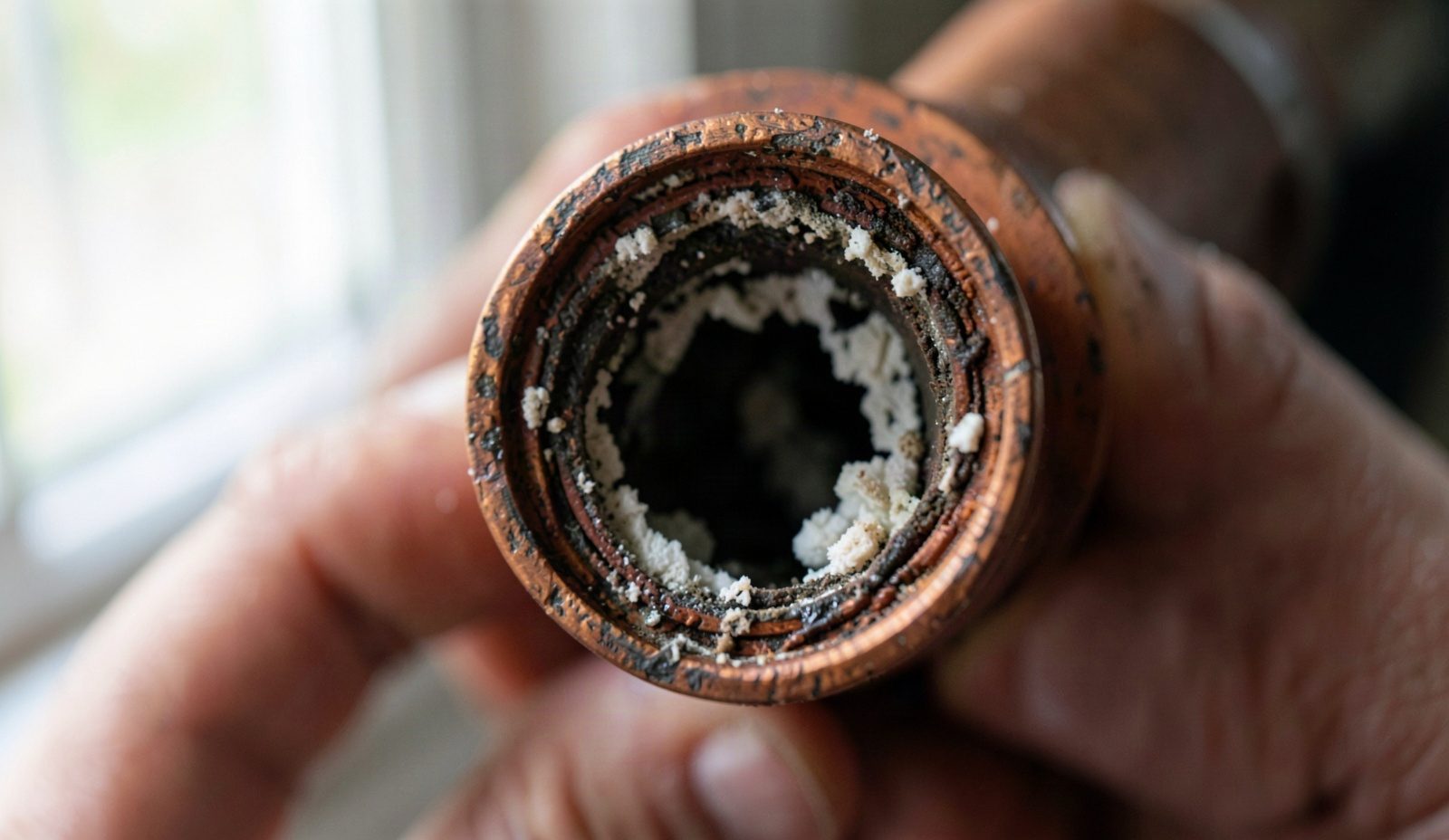
Sudden, house-wide pressure drops trace back just as often to a hidden freeze scar. The February 2021 freeze burst pipes across Tarrant County by the tens of thousands, and most of those failures were supply lines run through attics and exterior walls, the coldest, least-insulated runs in the house. Some of those hairline cracks never got properly repaired. They wept slowly for years, and the mineral buildup around each crack narrows the pipe a little more every season, which reads to the homeowner as water pressure drops that get worse each summer.
Ignoring a slow pressure drop rarely fixes itself. What starts as a weak shower becomes a pinhole leak inside a wall cavity, then warped baseboards, then a water heater working overtime against restricted flow until its element burns out early. A hairline slab crack under a bathroom left unaddressed can widen with the next hard rain, turning a five-minute fitting repair into a section of foundation that has to be broken out. The lower the pressure drops, the harder it becomes to isolate which fixture, or which foot of pipe, is actually failing.
Our page on cold water sandwich effect covers that side of the work in more depth.
Your local utility, Payment options, publishes service and water-quality information every Fort Worth homeowner should know.
On every low water pressure issues call, we start outside, not at the fussy fixture. A technician threads a glycerin-filled pressure gauge onto the outdoor spigot closest to the main and takes a static reading with every fixture in the house closed. That number decides everything that happens next. Under Section 604.8 of the International Plumbing Code, any reading above 80 psi calls for a pressure-reducing valve, while a reading under 40 psi points toward a supply-side restriction, a partially closed main valve, or a leak bleeding pressure off somewhere between the meter and the house. We write that number down before touching anything else, because it is the baseline every later measurement gets compared against.
If the static reading looks normal but a specific tap still runs weak, we isolate the branch. We time how long it takes to fill a one-gallon container at full open at the kitchen tap, the shower valve, and the hose bib, then convert seconds to gallons per minute. A code-compliant kitchen aerator should flow around 1.5 gallons per minute and a showerhead around 2.0, so a shower running at half that rate with normal static pressure at the spigot means the restriction sits inside that one line, often a corroded galvanized elbow or a scaled cartridge, not a citywide supply issue. That distinction decides whether the fix is a fifteen-minute cartridge swap or a re-pipe.
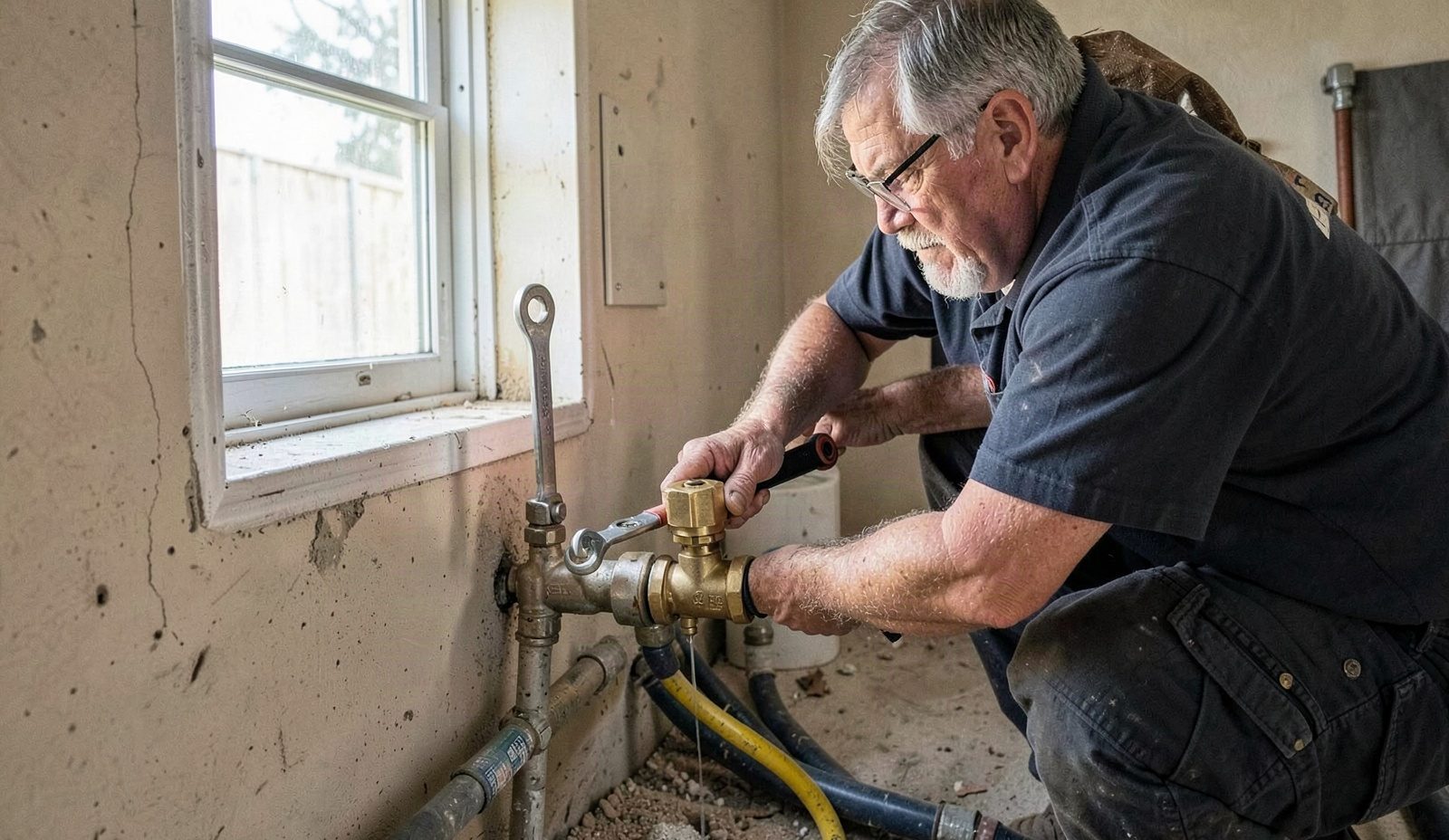
When the fix is a regulator, brand and adjustment range matter more than most homeowners assume. A Watts N45B lead-free bronze PRV adjusts across a 25 to 75 psi range and holds tighter under fluctuating demand than many big-box brass substitutes, while a Wilkins 600XL gives a wider adjustment band favored on larger service lines with bigger static swings. We set the valve to bring the house into a working range, typically 50 to 60 psi, enough to increase home water pressure at every fixture at once without redlining the gauge again next summer. Every reading, before and after, goes on the invoice so the number is never a guess.
If this sounds close but not quite your situation, discolored or rusty water may be the better starting point.
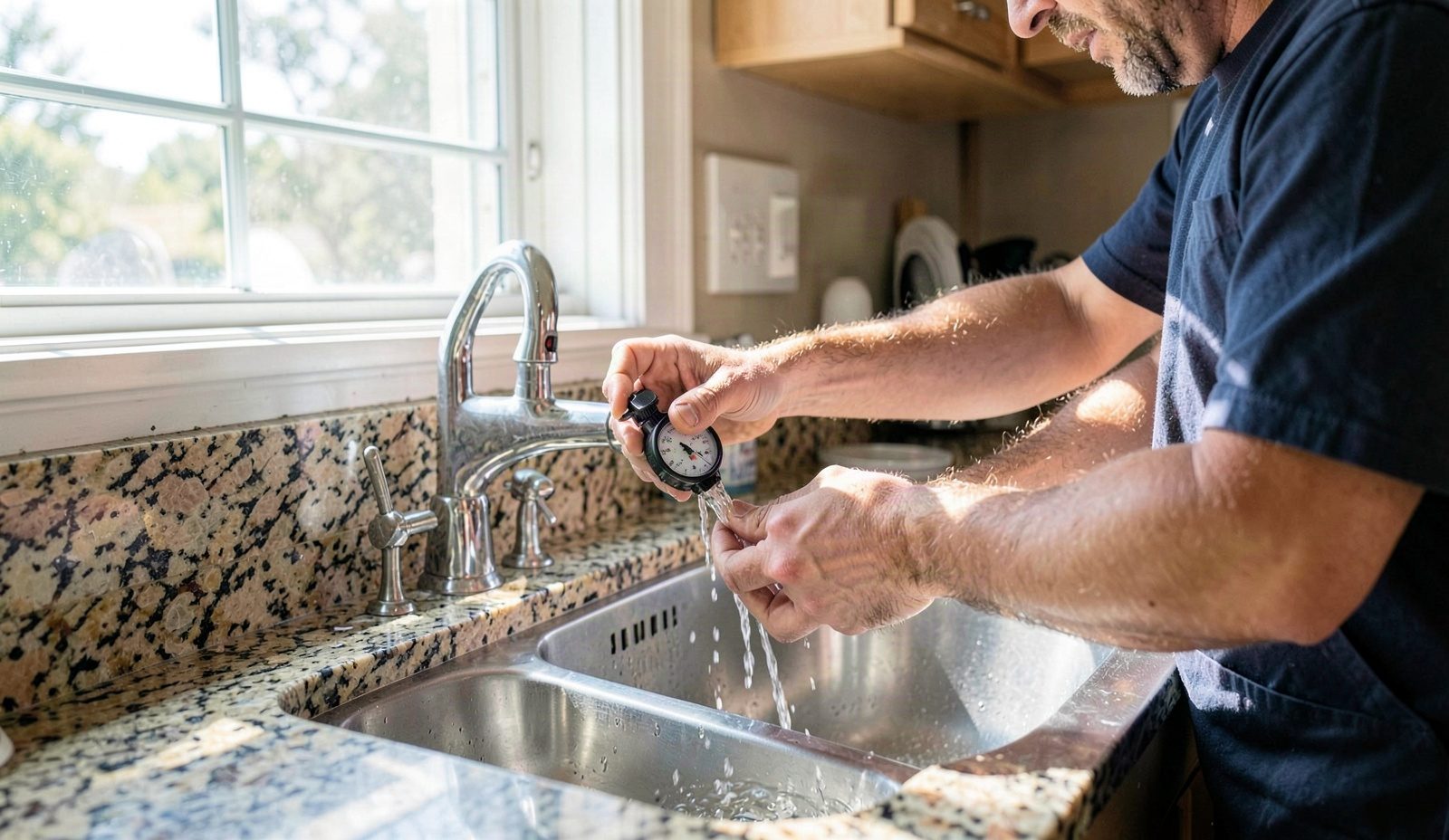
The call starts with a few questions: which fixtures are affected, whether the drop happened suddenly or gradually, and how old the house is. On arrival, the technician takes a static pressure reading at the outdoor spigot with every fixture closed, then checks the main shutoff valve and, if present, the existing pressure regulator. The homeowner sees the gauge reading directly and hears the working theory before any tool touches a wall or a fixture comes apart.
Once the written quote is approved, the technician protects the work path, shuts down the isolated section of line, and makes the repair, whether that is swapping a cartridge, replacing a corroded fitting, or setting a new pressure-reducing valve to the target range. Flooring and cabinetry near the work get covered first. Any decision that changes scope, like finding a second bad joint once a wall is open, gets called in for approval before work continues.
Before leaving, the technician re-checks static pressure at the same outdoor spigot used in the first reading and runs each affected fixture to confirm flow matches the code-expected rate. The before and after numbers get written on the invoice for the homeowner's records. A short walkthrough covers what was found, what was replaced, and what to watch for, then the work area gets a final check before the technician leaves.
Any pressure-reducing valve installation or repipe in Fort Worth falls under the City of Fort Worth plumbing code, based on the International Plumbing Code, and that code is specific about backflow prevention, pipe sizing, and where a PRV has to sit relative to the water meter. Full replacements and structural repiping typically require a permit pulled through the City of Fort Worth Development Services Department, while a like-for-like fixture swap or single cartridge replacement often does not, though the department makes that call, not the plumber standing in your hallway.
Housing stock across the metro is not uniform, and that changes the fix. A 1950s ranch in Ridglea Hills was plumbed differently than a townhome going up near the Cultural District, and a technician who does not know the difference between pier-and-beam framing and slab construction will misjudge where a line runs before ever picking up a wrench. Out-of-area crews that treat every Fort Worth address the same tend to guess at pipe routing, cut into the wrong wall cavity, or install a regulator without pulling the permit the address actually requires, which creates problems at resale inspection years later.
We work from the static pressure reading and the branch flow numbers, not a flat-rate price sheet built for a different city's housing stock. The repair matches the pipe material actually in the wall, whether that is copper, CPVC, or older steel still running behind plaster in some sections of the metro, and the paperwork matches what the permitting authority actually requires for that scope of work, which matters if the house sells within a few years and an inspector checks for unpermitted plumbing changes.
See high water bills for how the related work is scoped and priced.
Booking starts with a phone call to (817) 710-3766, where a dispatcher asks about the symptoms so the right technician and tools show up the first time. Most low water pressure issues calls get a same-day or next-day arrival window of a few hours, not an all-day wait. If a job runs long or a part needs sourcing, the technician calls ahead before the window closes, so nobody is left checking the driveway. Emergency-style total pressure loss gets priority routing over routine drop-in service.
Before any wall gets opened or a crawl space accessed, the technician lays down drop cloths and shoe covers on the path from the entry point to the work area. Cut drywall, old pipe sections, and packaging go straight into a job bucket, not the yard. If a slab or wall repair kicks up dust, a containment barrier goes up around the opening before the saw starts. When the job wraps, the work area gets swept and wiped down, and any furniture that was moved goes back where it was.
The estimate reflects what the pressure test actually finds, not a guess made from the driveway. Scope, access to the pipe run, pipe material, and how much of the line has already corroded all move the number up or down. A written quote itemizes labor and parts before anything gets cut into, and the technician walks through it line by line so you know what you are approving. Work only starts after you say go, and any change in scope gets a revised number before it proceeds.
Every technician who drives to a job alone has already passed a background check and logged supervised field hours on real pressure diagnostics before working solo. Ongoing training keeps the crew current on the locally adopted plumbing code as it gets updated, covering changes to PRV placement, pipe sizing, and backflow rules. A senior technician periodically reviews closed jobs and gauge readings to confirm the diagnosis matched the fix, not just that the customer stopped complaining.
A sudden drop usually means a mechanical failure, not a citywide supply problem. A failed pressure-reducing valve diaphragm can collapse house pressure from normal to under 20 psi within hours, and a partially closed main shutoff valve after any nearby work does the same thing instantly. Water hammer from a fast-closing valve can also dislodge sediment that lodges in an aerator or cartridge. A static pressure reading at the outdoor spigot tells us within minutes which of these it is.
Low pressure on a single day often traces to something temporary rather than a failing pipe. Nearby municipal main work, a neighbor's irrigation system pulling heavy flow, or a stuck check valve on a recently serviced water heater can all cause a same-day drop that clears on its own. If it persists past a day, the cause has moved from temporary to mechanical, and a gauge reading at the spigot separates the two quickly.
An area-wide drop usually points to the water main, not your plumbing. Checking pressure at a neighbor's outdoor spigot during the same drop confirms whether the issue sits upstream of your meter or inside your own supply line. If your neighbor's pressure reads normal while yours does not, the problem is on your side of the meter, and no amount of waiting for the utility to fix it will help.
Statewide low pressure often ties back to aging infrastructure and expansive soils found across much of Texas, not a single cause. Texas public water systems operate under minimum pressure standards set by the state's environmental regulators, so a persistent low reading inside one house is almost always a property-side issue like a restricted line or failing regulator rather than a statewide utility shortfall.
Same-day appointments are available across the Fort Worth metro in most cases. Availability depends on call volume and how far a technician has to travel that day, so calling (817) 710-3766 early in the day gives the best chance at a same-day window rather than next-day.
Some causes are DIY-friendly, but most are not. Cleaning a clogged aerator or showerhead with vinegar solves a single-fixture problem in minutes, and anyone can check whether the main shutoff valve is fully open. Diagnosing a failing pressure-reducing valve, a slab leak, or corroded galvanized pipe requires a gauge reading and often cutting into a wall or foundation, which is where a homeowner attempt usually causes more damage than it fixes.
Coverage depends on the cause, not the symptom itself. A sudden pipe burst, like the kind common after a hard freeze, is typically covered as sudden water damage, while gradual pressure loss from age, corrosion, or scale buildup is usually treated as a maintenance issue insurers exclude. A written diagnosis with before and after pressure readings gives you documentation either way if you file a claim.
Cost depends on the cause, the pipe material involved, and how much access the repair needs, not a flat rate. A cartridge swap or aerator cleaning costs far less than a section of galvanized line replaced behind plaster. Call (817) 710-3766 to get a technician out with a gauge first, so the number reflects what is actually wrong rather than a phone estimate.
Fort Worth water is moderately hard, and the scale it leaves on heating elements is a leading reason local water heaters fail years before their rated life, which shows up first as weak hot-side pressure at showers and the kitchen sink. That mineral load also narrows the inside diameter of older pipe over time. Pre-1970 neighborhoods across the metro were plumbed with galvanized steel supply lines and cast iron drains, both now at or past the end of their service lives, and homes in and around Near Southside and Wedgwood built in that era are the ones most likely to show pressure loss from corrosion narrowing the pipe rather than a single isolated leak. Material choice on a repair in these areas has to account for that scale buildup continuing downstream of any single fix.
Street pressure is not uniform across the metro either. Elevation changes and the layout of pumping infrastructure mean some pockets of Fort Worth run naturally higher supply pressure than others, so a regulator setting that works fine on one block can leave a house two streets over either starved or redlined. A technician who works across the metro regularly, rather than one job in an unfamiliar area, recognizes those local pressure zones and sets the valve accordingly instead of applying one generic number everywhere. That local pattern recognition, built from repeat calls in the same pockets of the city, is what keeps a pressure fix from needing a second visit six months later.
Explore our service area and locate Shield Plumbing Fort Worth with ease. We're proudly local and serve the surrounding neighborhoods with fast response and honest pricing. Use the map to check our coverage area, or call us and we'll confirm in seconds.
Address:
Shield Plumbing Fort Worth, 210 W 7th St, Fort Worth, TX 76102
5 Signs Your Ridglea Hills Home Has a Slab Leak, practical local guidance from Shield Plumbing Fort Worth, Fort Worth's trusted plumbing tea…
Read More
What Wedgwood Residents Should Know Before a Whole-Home Repipe, practical local guidance from Shield Plumbing Fort Worth, Fort Worth's trust…
Read More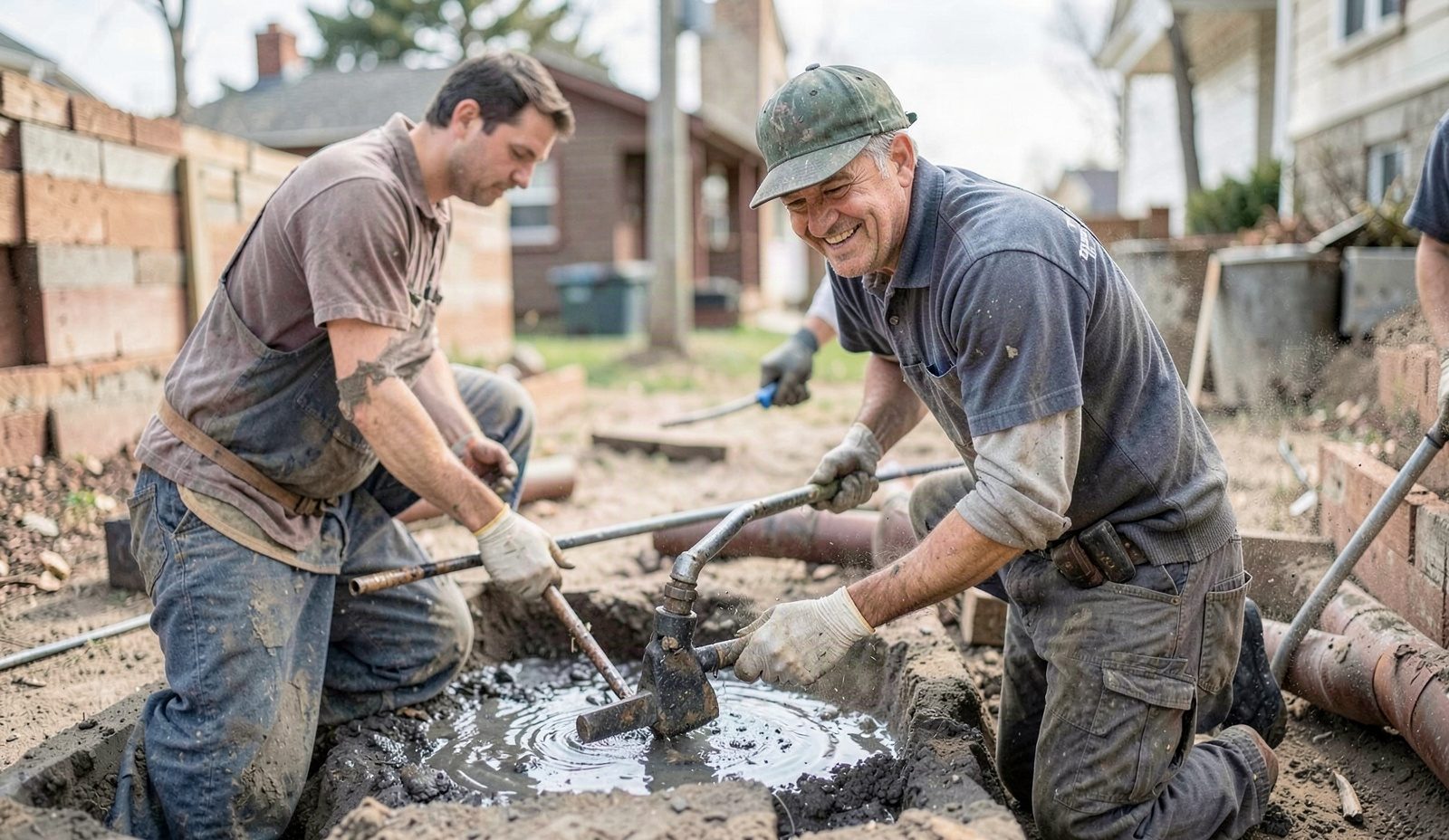
How Fort Worth's Hard Water Is Quietly Destroying Your Water Heater, practical local guidance from Shield Plumbing Fort Worth, Fort Worth's …
Read More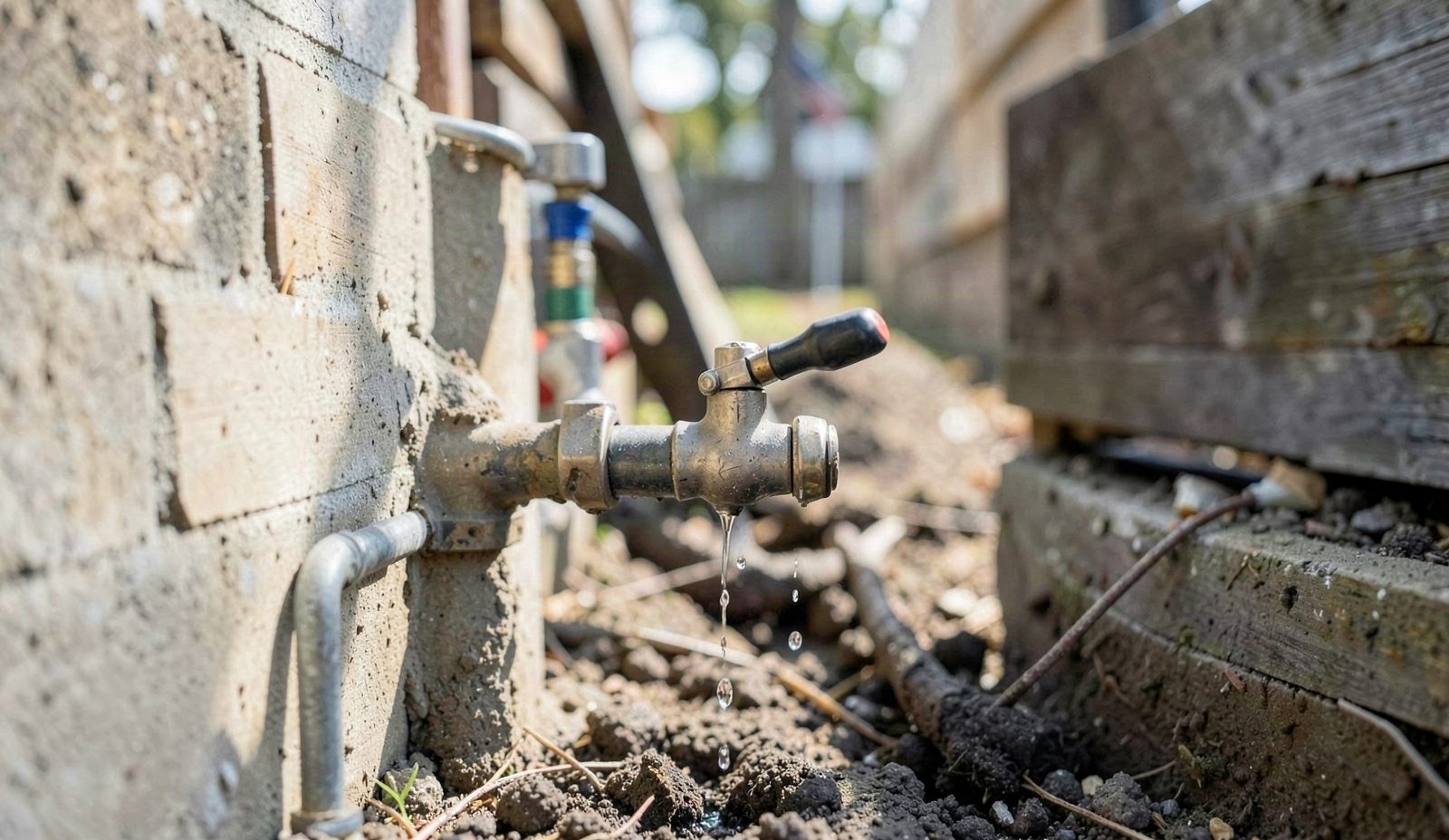
The Hidden Cost of Ignoring a Dripping Faucet in Fort Worth, practical local guidance from Shield Plumbing Fort Worth, Fort Worth's trusted …
Read More