

June 20, 2026
5 Signs Your Ridglea Hills Home Has a Slab Leak
5 Signs Your Ridglea Hills Home Has a Slab Leak, practical local guidance from Shield Plumbing Fort Worth, Fort Worth's trusted plumbing tea…
Read More




A faucet that sputters before it flows, a shower that loses pressure halfway through, ice cubes with a gritty film on them. These are the calling cards of sediment in water lines, and they show up in kitchens and bathrooms across the metro long before anyone calls it a plumbing problem. Homeowners usually notice the water heater first: a low rumble or popping sound from the tank, hot water that runs out faster than it used to, or a burning smell when the burner cycles longer to push heat through a layer of scale.
Fort Worth water is moderately hard, carrying dissolved calcium and magnesium that stay invisible in cold water but crystallize the moment they hit a hot surface. That process is what leaves the white, crusty ring inside a kettle, and it is exactly what forms on a water heater's heating element or gas burner tube. The same calcium deposits narrow aerator screens on faucets and showerheads, which is why a fixture that flowed fine last year now trickles. This is the leading reason local water heaters fail years short of their rated life.
The pipe itself matters as much as the water running through it. In older sections of Fairmount and Wedgwood, many houses still carry the original galvanized steel supply lines and cast iron drains installed before 1970. The zinc coating inside galvanized pipe breaks down with age, and the exposed steel underneath rusts from the inside out, shedding flakes that mix with mineral scale to form a rough, narrowing crust along the pipe wall. That combination of rust and calcium buildup is coarser and more abrasive than mineral scale alone, and it clogs clogged aerators and cartridge filters faster than newer copper or PEX lines will.
None of this reverses on its own. A pipe that has lost even a quarter of its inside diameter to scale keeps losing more, because the rough surface gives mineral crystals something to grip. Water heaters run hotter and longer to compensate, which shortens element and burner life. Left long enough, sediment settles into low points and valve seats, and a fixture that once needed a simple aerator cleaning ends up needing a valve or water heater replacement instead.
If this sounds close but not quite your situation, cold water sandwich effect may be the better starting point.
We install and service equipment from major manufacturers like Rheem to manufacturer specifications.
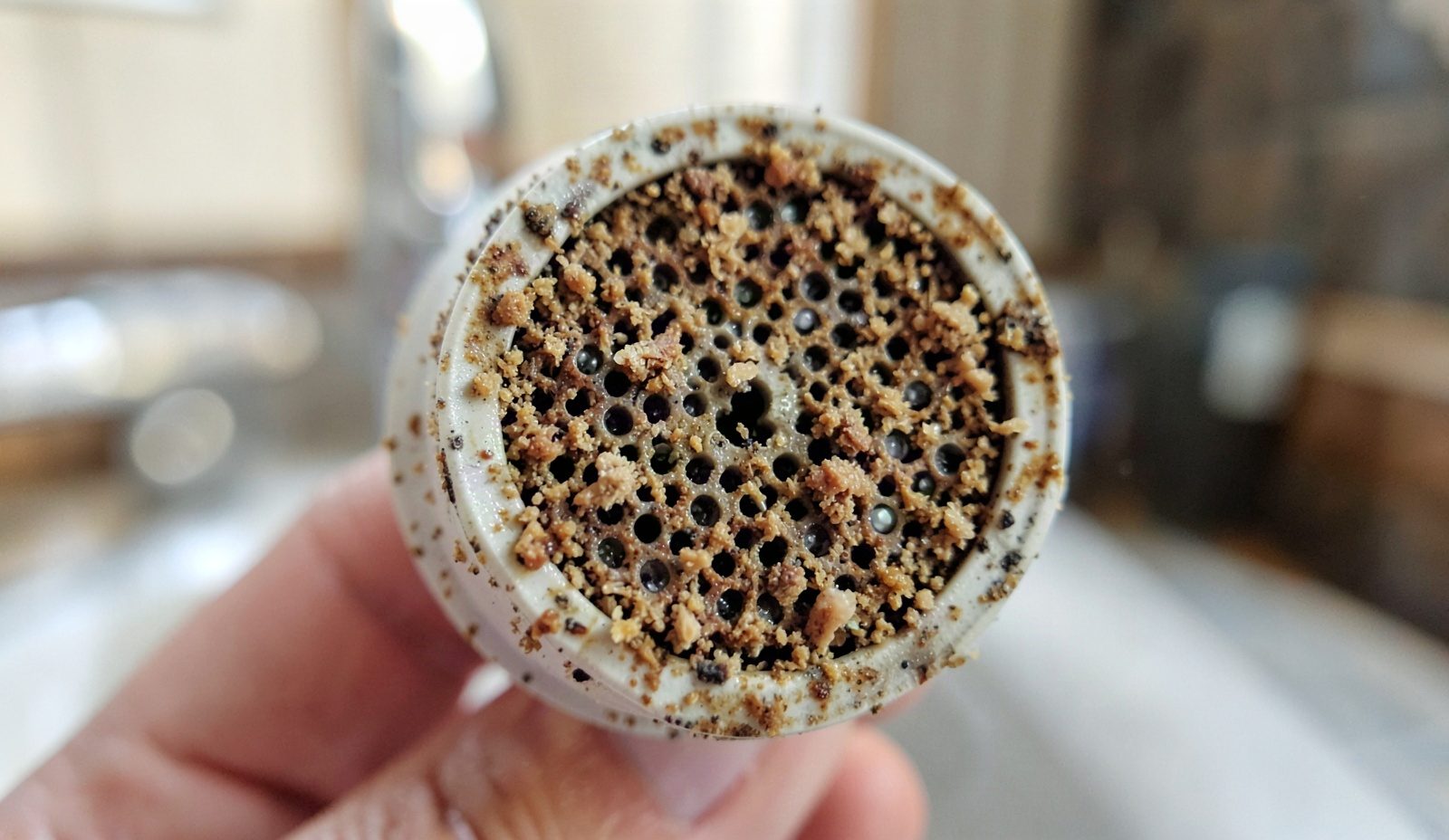
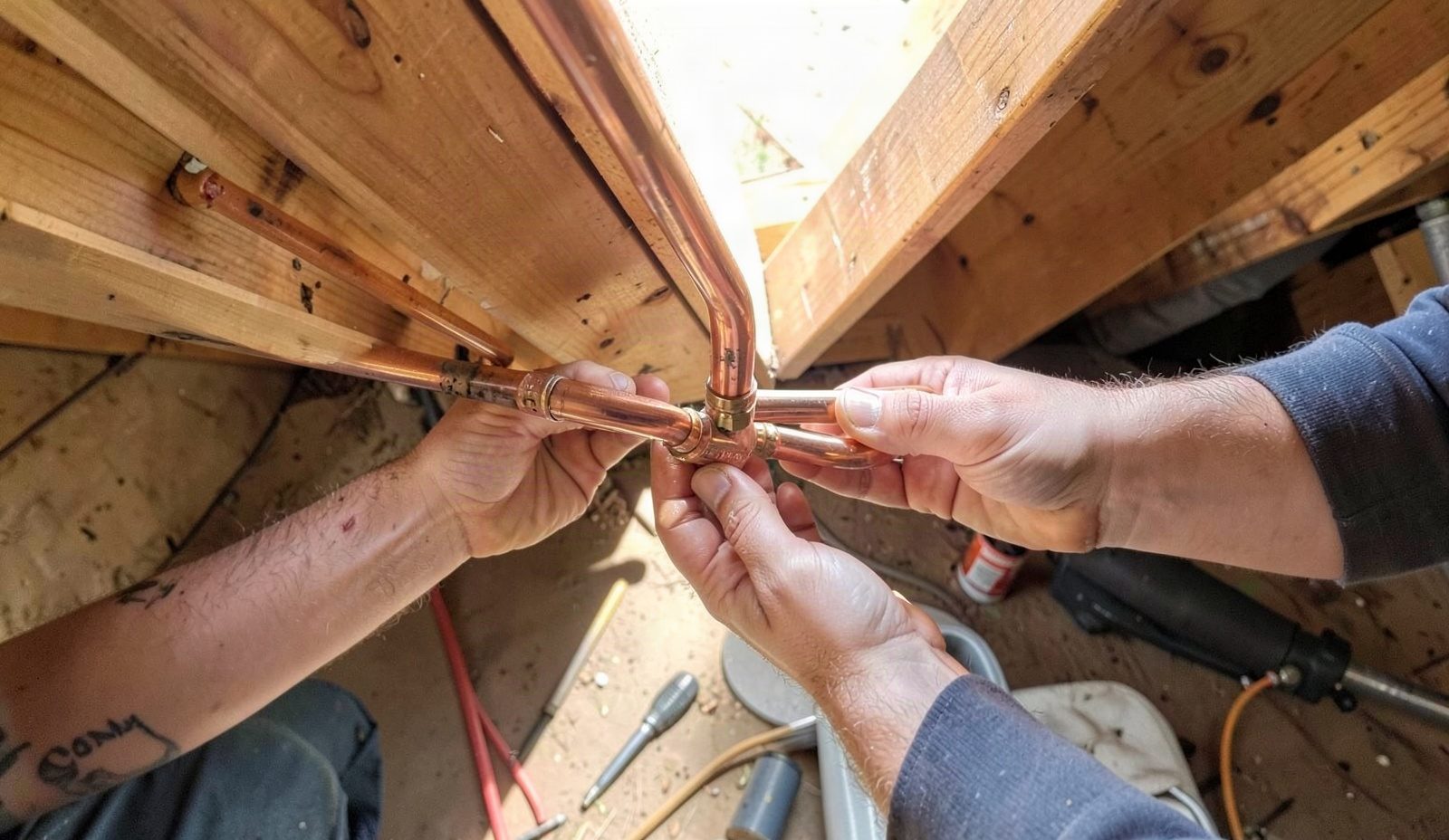
The first reading we take on a sediment call is static water pressure at an outdoor spigot, using a screw-on gauge. Anything above 80 psi triggers action under Section 604.8 of the International Plumbing Code, which requires a pressure-reducing valve at that threshold. High static pressure does not cause mineral scale, but it does drive water through fixtures and valve seats faster, which accelerates wear on aerators and cartridges already narrowed by calcium deposits. If the gauge reads high, we talk through a PRV before touching anything downstream, because fixing sediment symptoms without correcting pressure just means faster reclogging.
Water heater diagnostics come next. We open the drain valve and run the discharge into a clear bucket to see the sediment itself, not just infer it. Cloudy runoff with fine gray or white grit points to standard mineral scale; rust colored flakes point to a failing anode rod or corrosion migrating in from galvanized supply lines. We check recovery time against the unit's rated output, because a tank that takes noticeably longer to reheat is usually carrying enough scale on the burner or lower element to insulate it from the water above.
For ongoing protection, the comparison that matters is filtration type, not brand names alone. A spin-down sediment filter, rated around 100 mesh, catches coarse grit and rust flakes and can be flushed in seconds without replacing a cartridge, which suits homes with galvanized or cast iron lines still shedding particles. A pleated cartridge filter rated near 5 microns catches finer calcium crystals that a spin-down screen lets through, but it clogs faster on Fort Worth's harder water and needs a replacement cartridge on a set interval. On the softening side, a traditional salt-based ion exchange system strips hardness fully and needs periodic regeneration with brine, while a template-assisted crystallization unit uses no salt and no drain line but only conditions hardness rather than removing it, so scale can still form, just adheres less. We size the choice to the home's pipe material and water use, not a default recommendation.
More detail on noisy pipes is on its own page.
Your local utility, Payment options, publishes service and water-quality information every Fort Worth homeowner should know.
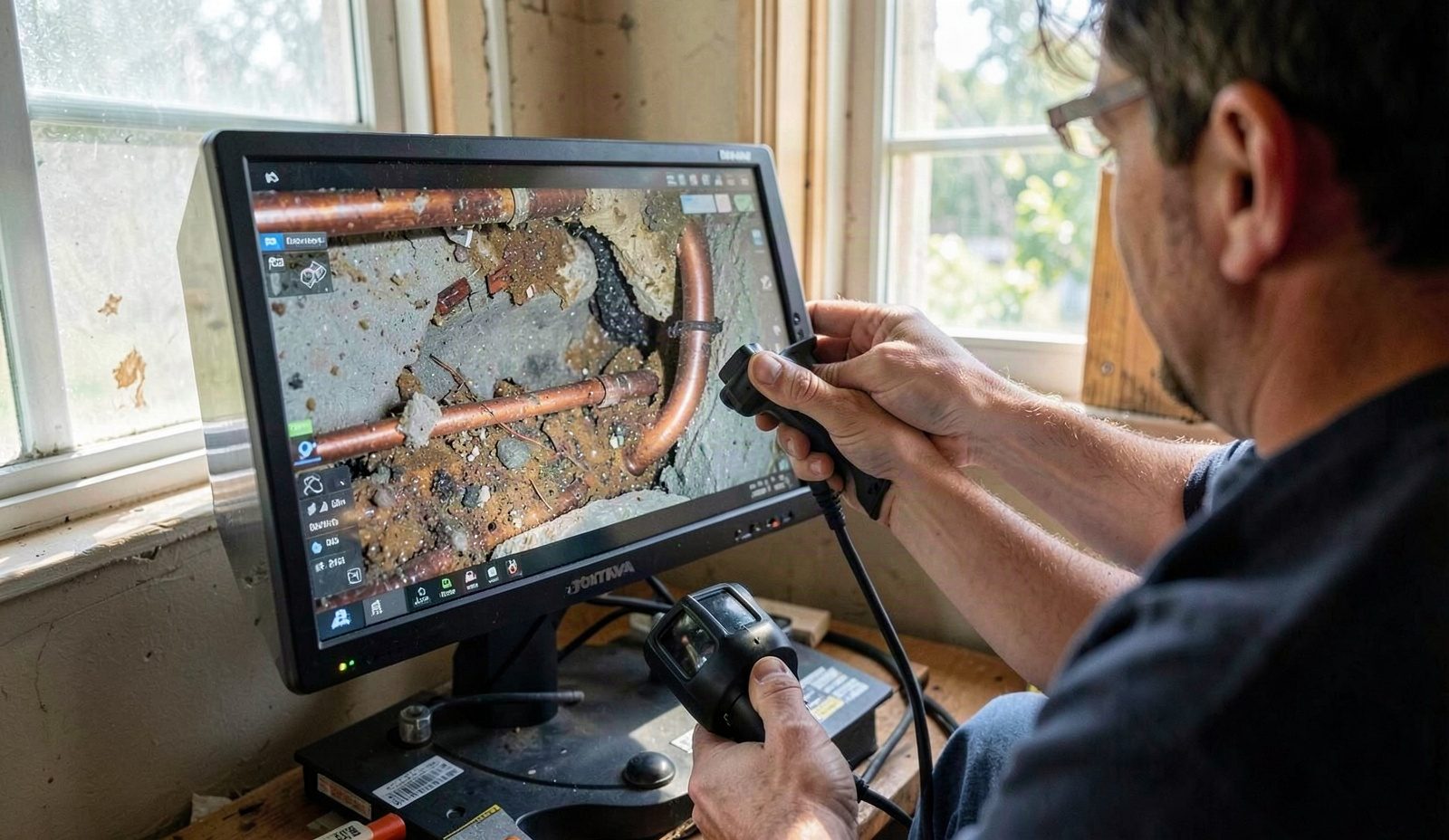
The call starts with a few questions: which fixtures are affected, how old the water heater is, and whether the home has had any recent pipe work. On site, the technician checks static pressure at an outdor spigot, inspects aerators and showerheads for grit, and opens the water heater drain valve to see what comes out. You get to see the sediment yourself, in a clear container, along with a plain explanation of whether it is mineral scale, rust, or both, before any work is proposed.
Once you approve the written scope, work proceeds in the order that protects the rest of the system first: pressure correction if needed, then tank flush or line clearing, then filtration or softening installation if that was part of the plan. Fixtures get isolated with shutoff valves so the rest of the home keeps running water. Any pipe section found to be too corroded to keep gets cut back to sound material and rejoined per code, with you signing off on that added step before it happens.
Before the technician packs up, every affected fixture gets run to confirm flow and clarity, and the water heater recovery time gets timed against its rated output to confirm the flush worked. Pressure gets rechecked at the same outdoor spigot used for the original reading, so you have a before and after number, not just an opinion. The technician walks the work area with you, points out anything installed, and leaves contact information for follow up questions about maintenance intervals.
Plumbing work in Fort Worth falls under the City of Fort Worth plumbing code, and a technician who does not know its pressure, venting, and material requirements can pass a repair that fails inspection or, worse, fails inside a wall. Sediment jobs look simple from the outside, a filter here, a flush there, but the decision to open a wall, replace a section of galvanized line, or swap a water heater touches code requirements on backflow prevention, drain sizing, and pressure control that an out-of-area operator unfamiliar with local stock will miss.
North Texas expansive clay adds a variable that has nothing to do with water chemistry. This clay swells with rain and shrinks in drought, and that seasonal movement shifts slab foundations enough to shear copper supply lines and pull drain joints apart under the house. A technician who has not worked this soil can mistake a slab-related leak for simple pipe failure and chase the wrong problem entirely, cutting into scale-fouled pipe when the real fault is a sheared joint six feet away. Recognizing the difference between corrosion, mineral buildup, and foundation-driven joint separation is a judgment call that comes from repeated exposure to this specific soil and this specific housing stock, not a general plumbing background.
That local pattern recognition is what separates a competent diagnosis from a guess. A technician who knows which decades of construction in this metro used galvanized supply lines, which neighborhoods still run cast iron drains, and how local slab movement behaves under wet and dry cycles brings information to your door that a generic service call cannot. Call (817) 710-3766 to talk through what your home's plumbing history suggests before any work starts.
Our page on how to prevent frozen pipes covers that side of the work in more depth.
Our technicians follow the workmanship standards promoted by the Plumbing-Heating-Cooling Contractors Association.
Booking starts with a phone call, not a form, so you talk to a person who asks what the water is doing before setting an arrival window. Most Fort Worth appointments land within a two to three hour window on the day scheduled, not an all-day guess. If a prior job runs long or parts availability shifts the plan, you get a call updating the window before it passes, not after. Same-week scheduling is standard for sediment diagnostics and flushes; full water heater or pipe section replacement may run a day or two out depending on material availability and access to the unit.
Every job starts with floor protection under the work area, drop cloths from the entry point to the fixture or water heater, and towels staged at any valve we open. Draining a tank or flushing a line always produces some sediment-laden water, so we run discharge hoses to a drain or outside rather than a bucket relay through the house. Removed parts, old cartridges, and any pipe sections we cut out leave with us. When we finish, the work area looks the way it did before we arrived, minus the problem.
Cost on a sediment job tracks four things: how much of the system needs flushing versus replacing, how accessible the water heater or pipe run is, whether filtration or softening equipment gets added, and the condition of the existing pipe once we can see inside it. A technician writes the scope and price on site after the diagnostic, before any cutting or draining starts, so you approve the plan with real numbers in hand. If the scope changes once work is underway, for example a galvanized fitting that crumbles on contact, we stop and confirm the revised price before continuing.
Every technician who works alone on a Fort Worth home has passed a background check and logged supervised field hours on a working crew before taking solo calls. Training continues on the current plumbing code cycle, including the pressure and backflow requirements that come up on sediment and water heater jobs, so a technician knows why a pressure reading matters, not just how to read the gauge. Field skills get checked periodically against a real job, not a written test alone, before a tech is cleared for jobs involving cut pipe or gas connections.
Clearing sediment requires flushing the affected lines and water heater, then descaling or replacing fixtures the buildup has already damaged. For a clogged aerator, soaking the screen in vinegar for about thirty minutes usually dissolves the calcium enough to rinse clean. For a whole water heater tank, a full drain and flush removes loose sediment, though heavily scaled elements sometimes need replacement rather than cleaning. Shield technicians confirm the sediment type first, mineral or rust, before choosing a method, since the two respond to different treatments.
Pricing for national drain and plumbing chains depends on job scope, access, and after-hours timing, not a flat published rate. Costs climb with dispatch distance, weekend or overnight timing, and how much of the system needs work versus a single fixture. Shield Plumbing Fort Worth prices sediment and drain jobs the same way, by scope rather than a generic rate, and gives you a written estimate on site after the diagnostic so you know the number before anything gets cut or drained.
Plumbing companies generally detect leaks using acoustic listening equipment, moisture meters, and pressure drop testing rather than guesswork. A pressure drop test isolates the system, holds a gauge on it, and watches for a drop over several hours, a falling reading points to a leak somewhere in that isolated section. Shield technicians use that same isolate-and-monitor method on Fort Worth calls, since it works whether the leak is behind drywall or under a slab.
What dissolves a clog depends on what is causing it, mineral scale and organic debris need different treatments entirely. A mix of hot water and food-grade descaling acid breaks down calcium deposits inside a water heater tank without damaging copper lines, while grease and hair clogs respond better to enzymatic treatment or mechanical clearing. Using a scale remover on an organic clog, or vice versa, wastes time and can damage fixtures, so identifying the blockage type first matters more than the product used.
Gradual sediment buildup is typically not covered by homeowners insurance because insurers classify it as a maintenance issue, not a sudden event. A pipe that ruptures suddenly due to scale-driven corrosion may qualify for coverage if the failure itself was sudden and accidental, but the slow clogging that led there usually is not. Keeping photos of visible corrosion or sediment discharge from a drain valve helps if you need to make that case to an adjuster later.
Estimates start with an on-site diagnostic, since sediment scope cannot be priced accurately over the phone. A technician checks the water heater, tests pressure, and inspects affected fixtures, then writes a scope and price you review before any draining or cutting begins. If the diagnostic reveals more corrosion than expected once a fitting is opened, the technician stops and confirms the revised number with you before continuing, rather than proceeding on the original figure.
Plumber pricing in Fort Worth depends on job scope, fixture access, and whether parts like a water heater or pipe section need replacing. A simple aerator cleaning or single-fixture flush costs far less than a water heater flush with filtration installed, and a full repipe of galvanized line costs more still. Shield Plumbing Fort Worth quotes each job individually after a technician sees the actual condition on site, so call (817) 710-3766 for a number specific to your home rather than a general range.
Fort Worth's plumbing problems compound each other in ways a generic service call misses. The February 2021 freeze burst pipes across Tarrant County by the tens of thousands, and most of those failures were supply lines in attics and exterior walls, patched or replaced under time pressure during a statewide emergency. Many of those repairs disturbed years of settled rust and scale inside older galvanized lines, pushing sediment downstream to aerators and valves that had been running clean for years. Homes in the Near Southside and Arlington Heights that saw freeze repairs often show sediment symptoms that trace back to that disturbance rather than new scale formation, a distinction that changes whether the fix is a filter or a line replacement.
Permitting matters more on sediment jobs than most homeowners expect, because the line between a repair and a replacement decides who signs off on the work. A tank flush or filter installation typically does not require a permit, but replacing a section of galvanized supply line or swapping a water heater often does, and the City of Fort Worth Development Services Department makes that call for Fort Worth addresses. Neighborhoods like Ridglea Hills and the Cultural District mix pre-1970 housing stock with newer construction on the same block, so the permit question genuinely varies house to house. Working within that oversight, rather than around it, is what keeps a repair from becoming a dispute at resale.
Explore our service area and locate Shield Plumbing Fort Worth with ease. We're proudly local and serve the surrounding neighborhoods with fast response and honest pricing. Use the map to check our coverage area, or call us and we'll confirm in seconds.
Address:
Shield Plumbing Fort Worth, 210 W 7th St, Fort Worth, TX 76102
5 Signs Your Ridglea Hills Home Has a Slab Leak, practical local guidance from Shield Plumbing Fort Worth, Fort Worth's trusted plumbing tea…
Read More
What Wedgwood Residents Should Know Before a Whole-Home Repipe, practical local guidance from Shield Plumbing Fort Worth, Fort Worth's trust…
Read More
How Fort Worth's Hard Water Is Quietly Destroying Your Water Heater, practical local guidance from Shield Plumbing Fort Worth, Fort Worth's …
Read More
The Hidden Cost of Ignoring a Dripping Faucet in Fort Worth, practical local guidance from Shield Plumbing Fort Worth, Fort Worth's trusted …
Read More