
June 20, 2026
5 Signs Your Ridglea Hills Home Has a Slab Leak
5 Signs Your Ridglea Hills Home Has a Slab Leak, practical local guidance from Shield Plumbing Fort Worth, Fort Worth's trusted plumbing tea…
Read More




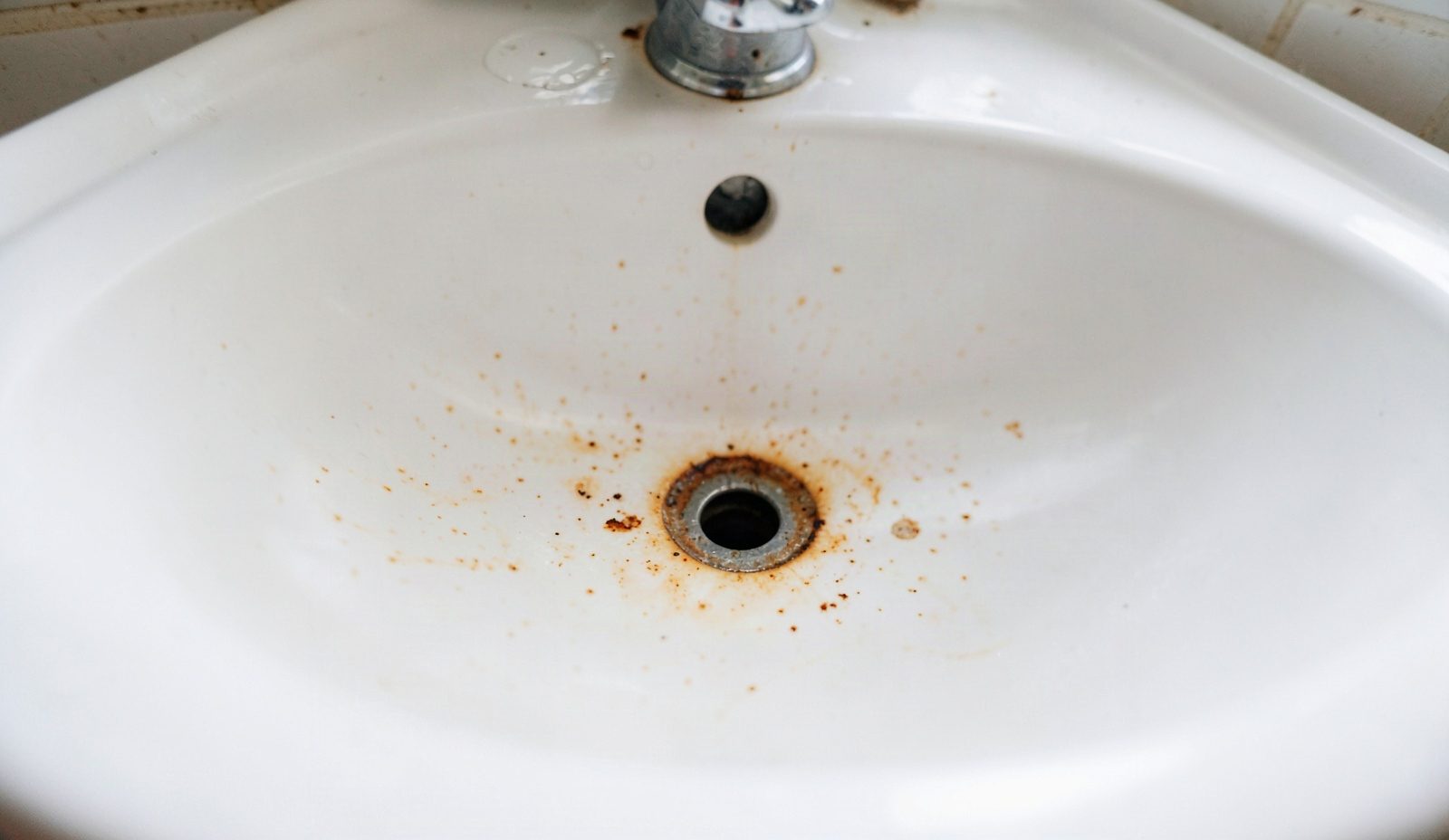
Rusty tap water rarely shows up gradually. It hits you at the kitchen sink first thing in the morning: a burst of orange-brown water that clears after thirty seconds, or doesn't clear at all. Some homeowners describe it as tea-colored. Others see a distinct yellow water from faucet fixtures only after the hot side has run for a minute. Either way, the stains left behind on white porcelain, in the toilet tank, or on laundry are the real tell. That discoloration is metal, not dirt, and it means something upstream is corroding.
Fort Worth sits on expansive clay that swells when it rains and shrinks hard during drought. That movement shifts slab foundations enough to shear copper supply lines and pull drain joints apart under the house. When a joint separates even slightly, it introduces air and turbulence into the line, and turbulence knocks loose scale and rust that had been sitting quietly on the pipe wall for years. You get a rusty pulse of water every time the ground shifts, not just once.
Housing stock matters just as much as soil. Neighborhoods like Fairmount and Arlington Heights carry a heavy share of homes built before 1970, and those homes were commonly plumbed with galvanized steel supply lines and cast iron drains. Both materials are now at or past the end of their rated service life across the metro. Galvanized pipe corrodes from the inside out, and the zinc coating that once protected the steel wears thin in patches, leaving exposed iron in water pipes that rust every time water sits in the line overnight.
Ignoring brown water from tap fixtures does not make the problem hold steady. Corrosion inside a galvanized line narrows the pipe's inside diameter, which drops your water pressure gradually, then not so gradually. A pipe that's rusting from the inside is also a pipe that's thinning from the inside, and thinning pipe eventually pinholes, usually inside a wall or under a slab where you won't see it until the drywall or flooring shows water damage. What starts as a cosmetic annoyance in a glass of water becomes a structural repair if the corroded section keeps working unnoticed.
More detail on low water pressure issues is on its own page.
We install and service equipment from major manufacturers like Rheem to manufacturer specifications.
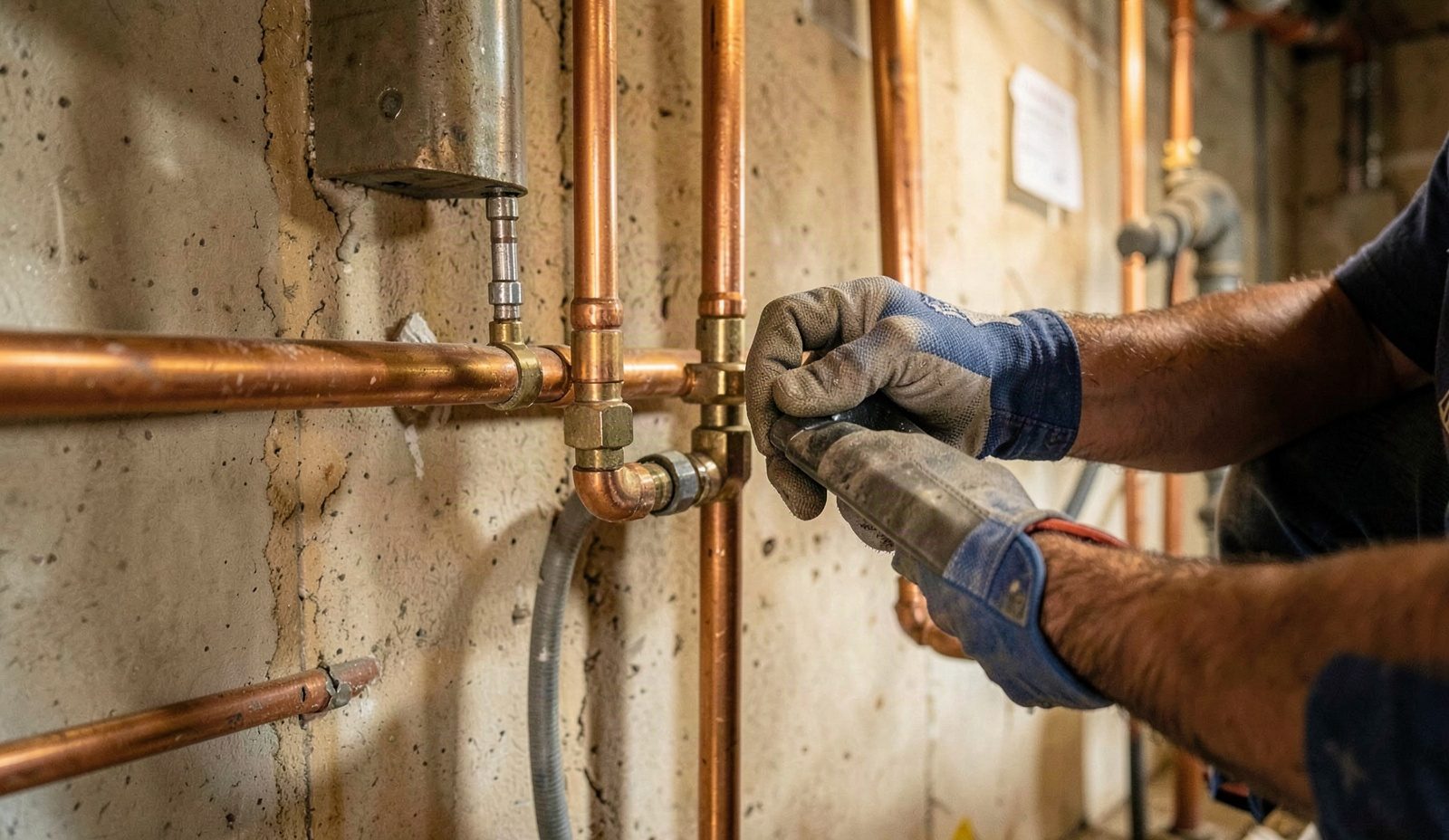
Diagnosis starts with a sequence, not a guess. A technician runs cold water at the fixture farthest from the water heater first, checking whether discoloration clears in under a minute, holds steady, or worsens. That single test separates a localized problem, like one corroding fixture supply line, from a whole-house issue sitting at the main or the water heater. Only discolored hot water, with the cold side running clear at every fixture, points almost every time to the tank itself rather than the supply piping.
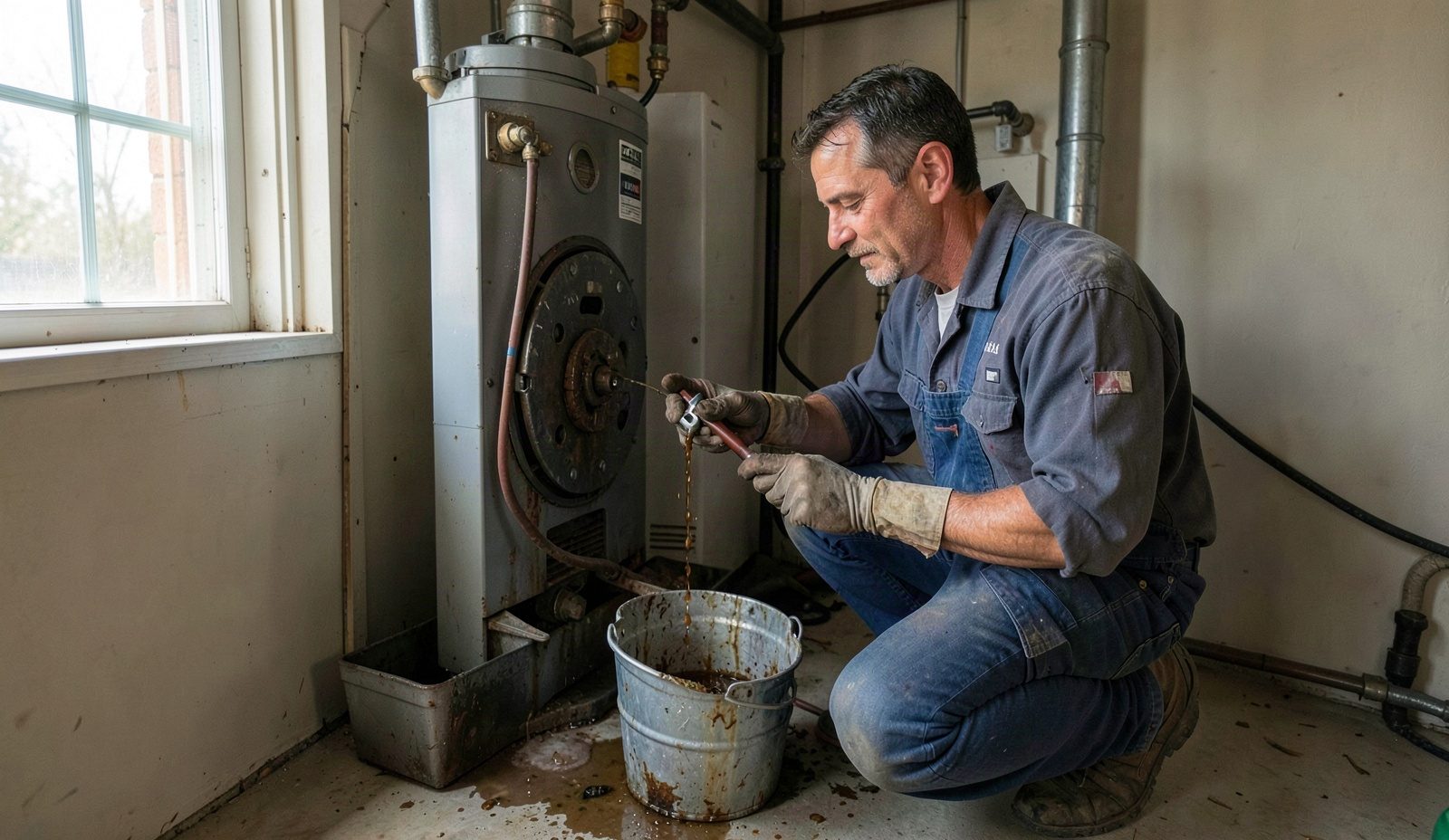
Fort Worth water runs moderately hard, and the mineral scale it deposits on a heating element is a leading reason local water heaters fail years before their rated life. Inside the tank, that scale flakes off the element and mixes with rust shedding from a spent anode rod, and both travel out through the hot line together. We pull the anode rod as part of that inspection. A magnesium anode, standard on most Rheem and State tanks, typically lasts several years in this water before it's consumed down to a thin wire core. Aluminum-zinc anodes resist consumption longer but can add a faint odor some homeowners notice before they notice the color. A powered titanium anode, like the Corro-Protec unit, never depletes and stops feeding rust into the tank at all, which matters most in a house that's already replaced two tanks in a decade.
On the supply side, the Screwdriver Test is a pressure gauge threaded onto an outdoor spigot. A static reading above 80 psi requires a pressure-reducing valve under Section 604.8 of the International Plumbing Code, and high pressure accelerates corrosion inside older steel pipe by driving more water past exposed iron surfaces every time a fixture opens. We also run an iron test strip on a sample drawn after the line sits idle overnight, since a reading meaningfully above the EPA's secondary guideline of 0.3 mg/L confirms iron is coming from the pipe itself rather than a one-time disturbance from municipal line work nearby.
If this sounds close but not quite your situation, cold water sandwich effect may be the better starting point.
Permit and inspection questions? Development Services is the office we coordinate with on every permitted Fort Worth job.
You call and describe the color, which fixtures show it, and whether it's cold, hot, or both. A technician arrives in the scheduled window and runs the fixture sequence: cold water at the farthest fixture first, then a hot-only check, then a pressure reading at an outdoor spigot. You watch the water run with them and see exactly which taps clear and which don't, so the diagnosis isn't something reported to you secondhand after the fact.
Once the source is identified, whether it's a corroded fixture line, a spent anode rod, or a section of galvanized pipe, you get a written quote before any cutting, capping, or tank draining starts. Work surfaces get covered first. The technician replaces or repairs the identified section using materials matched to the existing line where code allows, and flags anything else found along the way, like a second corroded joint, before touching it, so you decide on scope changes as they come up.
Before the crew packs up, the repaired line or new anode gets run under full pressure and the technician rechecks the static pressure reading at the spigot to confirm it sits within a safe range. Water runs at the originally affected fixture until it's visibly clear. You walk the work area together, confirm cleanup, and get documentation of what was replaced, useful if you're filing anything with an insurer or preparing the house for sale.
Fort Worth enforces its own plumbing code, adopted locally and based on the International Plumbing Code, and that adoption shapes decisions a crew makes on site every day, from pipe sizing to backflow prevention to when a pressure-reducing valve becomes mandatory rather than optional. A technician who doesn't work this code daily can misjudge a repair that passes inspection elsewhere but fails here.
Foundation type changes the job as much as code does. Slab-on-grade homes common across the metro route supply lines through the slab or the attic, which means a rusting line often has no accessible middle section, only two ends. Older pier-and-beam homes give a crawlspace path to the same pipe, which changes both the diagnostic approach and how much of the line can be inspected visually before any cutting starts. A crew unfamiliar with which construction era sits where in Fort Worth wastes time guessing at access before the real work begins.
Permit determination on a repiping job or a water heater swap belongs to the local permitting authority, not to the crew doing the work, and that determination hinges on scope. A full repipe or a structural repair almost always needs a permit and an inspection; a like-for-like fixture supply line swap often does not. Out-of-area operators who skip that step, or who don't recognize when a repair crosses from minor to structural, leave homeowners holding an uninspected repair that can complicate a future sale or an insurance claim. We plan every discolored-water repair against that line before work starts, not after.
See high water bills for how the related work is scoped and priced.
Communities like r/Plumbing are full of homeowners comparing notes on exactly this problem, worth a read before a major project.
You call (817) 710-3766, describe what the water looks like and which fixtures are affected, and get a same-day or next-available arrival window, not a vague morning-or-afternoon guess. If a prior call runs long, you get a text or call updating the window before you're left wondering. Rusty water rarely needs a true emergency dispatch unless it's paired with a pressure drop or a visible leak, so most calls get scheduled within the current or next business day, with the technician confirming access needs, like a crawlspace key or a locked water heater closet, before rolling out.
Drop cloths go down before any tool touches a wall, floor, or water heater closet. If a line runs through drywall, the cut opening is kept as small as the repair allows and the debris goes into a sealed bag, not left in a pile. Water heater flushes get contained with a hose run straight to a drain or outside, never dumped across a garage floor. Before the crew leaves, the work area gets wiped down and swept, and any moved furniture or stored items go back where they were found.
Cost on a rusty water call depends on what the diagnostic finds: a single corroded supply line costs less to address than a whole-house repipe, and a water heater anode swap costs less than a full tank replacement. Access matters too, since a line run through open crawlspace costs less labor than one buried in a slab. You get a written quote after diagnosis, itemized by material and labor, and nothing gets cut into or replaced until you approve that quote. No work proceeds on a verbal estimate alone.
Every technician passes a background check before being scheduled into a customer's home, and every technician trains on the current plumbing code cycle Fort Worth has adopted, not whatever code they last worked under somewhere else. New hires shadow on live rusty-water and repipe calls before they're cleared to run a job solo, and that clearance comes from a supervisor watching them complete the full diagnostic sequence correctly, not from tenure alone. Field skills get rechecked periodically as code updates roll out.
Rusty water is corroded iron or steel shedding into the water inside a pipe or your water heater tank. In Fort Worth, that's most often aging galvanized supply line, a spent anode rod in the water heater, or scale knocked loose after ground movement shifts a joint. The exact source determines the fix, so a technician runs a fixture-by-fixture check before recommending anything.
It depends on whether the discoloration is a plumbing issue in your own home or a citywide water main event. Rust from your own galvanized pipe or water heater is a plumbing problem, not usually a health emergency, but persistent discoloration should get tested rather than ignored, especially if it's paired with a metallic smell or taste.
Yes, brief exposure to rust-discolored water during a shower is not typically harmful, though it can stain light-colored bathtubs and grout over time. Avoid it on open cuts or if you have a compromised immune system, and run the water a few minutes to see if it clears before deciding whether to wait for a repair visit.
Fort Worth's municipal water supply uses chloramine as part of its treatment process, which is standard practice for many Texas municipal systems. Chloramine itself doesn't cause rust-colored water, but it does not slow corrosion inside old galvanized pipe either, so a chloramine-treated supply and an aging pipe can still produce the same brown water from tap fixtures you're seeing now.
It depends on the scope of the fix, not the symptom itself. A full repipe or structural repair typically requires a permit, while a minor like-for-like fixture line swap often does not. The City of Fort Worth Development Services Department makes the final call for Fort Worth addresses, and we confirm which category a job falls into before quoting the work.
Diagnosis usually takes under an hour once a technician is on site running the fixture sequence and pressure check. The repair itself ranges from a same-visit fix, like an anode rod swap, to a multi-day project if a full section of galvanized line needs replacement. We give you a time estimate as part of the written quote, before work starts.
Estimates come after diagnosis, not before, since the fix depends entirely on what's causing the discoloration. A technician identifies the source, then provides a written, itemized quote covering materials and labor for that specific repair. Nothing gets cut, capped, or replaced until you approve that quote, and you can ask questions about any line item before signing off.
A completed repair should run clear water at the affected fixture immediately, hold a stable pressure reading at the outdoor spigot, and come with documentation naming exactly what was replaced or repaired. Ask for that written record before the technician leaves. It's useful for insurance purposes and gives you a reference point if any discoloration returns later.
The February 2021 freeze burst pipes across Tarrant County by the tens of thousands, and most of those failures hit supply lines run through attics and exterior walls, the same lines already weakened by years of mineral buildup and clay-driven shifting. Homes repaired after that freeze often got a patched section spliced into an otherwise aging line, and that patch point becomes a place where pressure changes and temperature swings knock loose rust that had been undisturbed for years. A rusty pulse showing up years after a freeze repair usually traces back to that exact splice, not a new failure elsewhere.
Housing age varies block by block across the metro, and that variation changes what a technician expects to find before ever touching a wrench. The Near Southside carries a mix of early-1900s bungalows alongside newer infill construction, Wedgwood and Ridglea Hills run heavier to 1950s and 1960s ranch homes, and the Cultural District mixes historic structures with recent multi-family builds. A crew that knows which era sits in which neighborhood walks in already narrowing down whether they're looking at galvanized steel, early copper, or modern PEX, which cuts diagnostic time before the first pipe is even opened.
Explore our service area and locate Shield Plumbing Fort Worth with ease. We're proudly local and serve the surrounding neighborhoods with fast response and honest pricing. Use the map to check our coverage area, or call us and we'll confirm in seconds.
Address:
Shield Plumbing Fort Worth, 210 W 7th St, Fort Worth, TX 76102
5 Signs Your Ridglea Hills Home Has a Slab Leak, practical local guidance from Shield Plumbing Fort Worth, Fort Worth's trusted plumbing tea…
Read More
What Wedgwood Residents Should Know Before a Whole-Home Repipe, practical local guidance from Shield Plumbing Fort Worth, Fort Worth's trust…
Read More
How Fort Worth's Hard Water Is Quietly Destroying Your Water Heater, practical local guidance from Shield Plumbing Fort Worth, Fort Worth's …
Read More
The Hidden Cost of Ignoring a Dripping Faucet in Fort Worth, practical local guidance from Shield Plumbing Fort Worth, Fort Worth's trusted …
Read More