
June 20, 2026
5 Signs Your Ridglea Hills Home Has a Slab Leak
5 Signs Your Ridglea Hills Home Has a Slab Leak, practical local guidance from Shield Plumbing Fort Worth, Fort Worth's trusted plumbing tea…
Read More




A patch of grass that stays dark green and mushy while the rest of the lawn browns out is not a drainage quirk. It is usually water pooling in yard soil from a source below the surface. Step on it and water rises around your shoe. Walk past it at dusk and you smell sulfur or sewage instead of cut grass. Mosquitoes cluster there because standing moisture never fully evaporates, even during a dry August week.
Two separate mechanisms cause most of these spots. The first is a supply line leak feeding an underground water leak yard patches, usually where a copper line has been pulled apart or kinked. The second is a sewer leak in yard soil, where wastewater seeps upward through a cracked joint and the smell gives it away before the wet ground does. North Texas expansive clay swells with rain and shrinks in drought, and that seasonal movement shifts the slab enough to shear copper supply lines and pull drain joints apart under the house, sometimes years before a homeowner ever sees a wet spot.
Homes in Fairmount and Wedgwood carry this risk in a specific way. Mature trees along these older streets send roots toward any joint that sweats even a little moisture, and root intrusion widens a hairline crack into a full separation over a season or two. What starts as wet ground near house foundation can travel ten or fifteen feet along a root path before it ever breaks the surface as a visible spot.
Waiting rarely shrinks the problem. A slow supply leak erodes the soil bed under a slab foundation, and that voided soil is what eventually shows up as interior floor cracks or a door that stops closing. A slow sewer leak keeps saturating the same six square feet of yard until the ground can no longer support foot traffic, and what was a damp patch becomes a soft depression that swallows a sprinkler head or a fence post footing. The water bill keeps climbing the entire time, quietly, long before the yard tells the full story.
See cold water sandwich effect for how the related work is scoped and priced.
Permit and inspection questions? Development Services is the office we coordinate with on every permitted Fort Worth job.

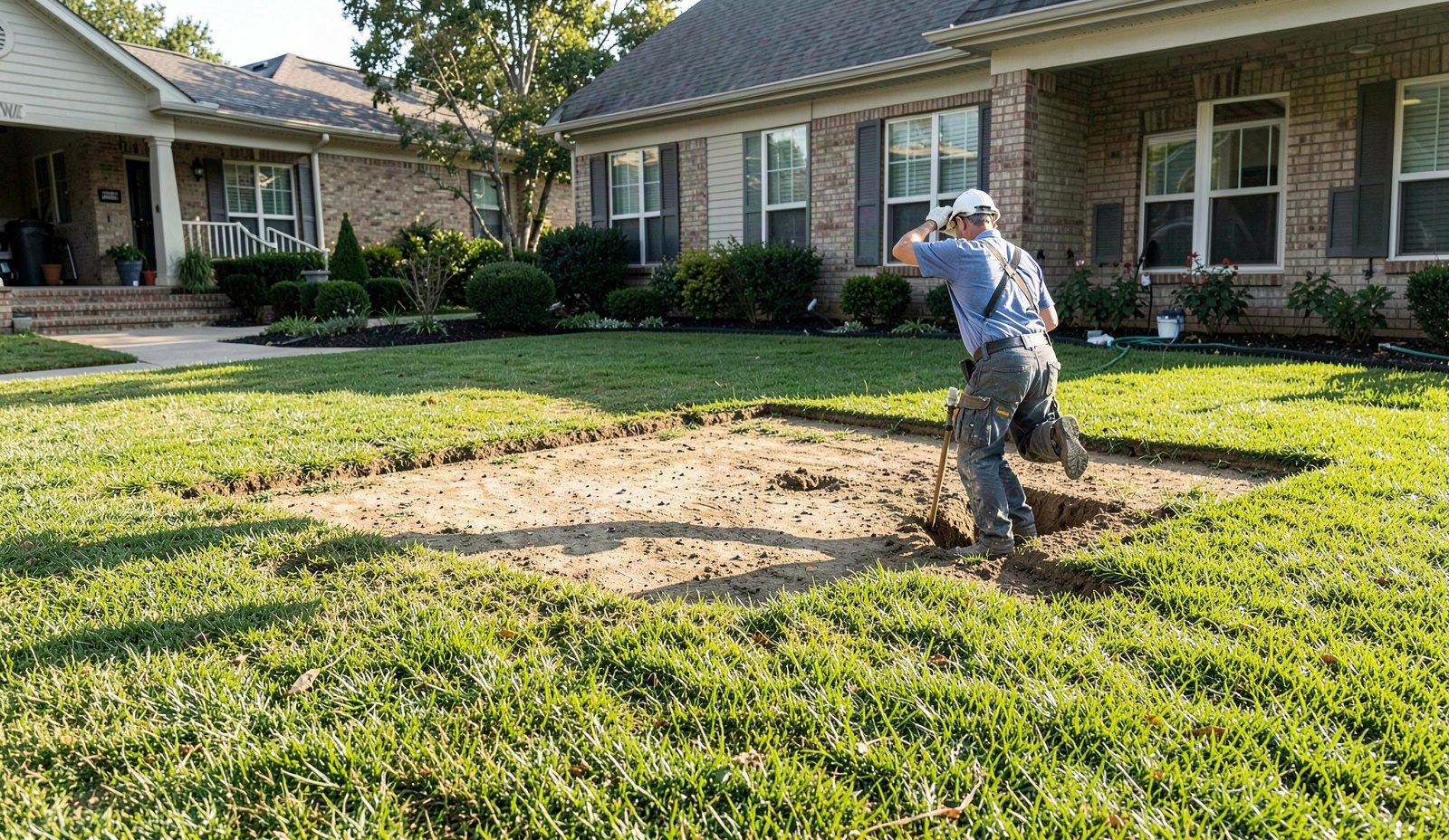
The first test happens before anyone touches a shovel. We shut off every fixture in the house and watch the water meter dial for movement, confirming an active leak exists somewhere in the system rather than a one-time overflow. From there we read static water pressure at an outdoor spigot with a calibrated gauge. A reading above 80 psi violates Section 604.8 of the International Plumbing Code, and that same excess pressure is what turns a pinhole in a copper line into the kind of failure that produces a yard full of standing water. A high reading moves a pressure-reducing valve to the top of the repair plan, not just a patch on the line that failed.
Locating the exact point comes next. An acoustic ground microphone picks up the distinct hiss of pressurized water escaping underground, and we walk the yard in a grid until the signal peaks. For sewer leak in yard cases, we run a push camera down the cleanout and pair it with a dye test, watching for color surfacing in the wet patch within a few minutes. On lines we suspect run under a slab or driveway, we introduce a nitrogen tracer gas and sweep the surface with a sniffer, which finds a joint separation without excavating the whole run.
Repair method depends on what the camera and pressure data show. A cured-in-place epoxy liner, the kind marketed under names like Perma-Liner, restores a cracked line from the inside, cures in under two hours, and carries a rated service life near 50 years, with only a few small access pits instead of a trench across the yard. Open trench replacement with SDR-26 PVC is the right call when the pipe has collapsed or shifted out of grade, since a liner cannot fix a line that no longer holds its shape. We choose between the two based on the camera footage, not on which one is faster to sell.
More detail on discolored or rusty water is on its own page.
Independent standards matter too, the EPA's WaterSense program sets the efficiency benchmarks we use when recommending replacement fixtures.
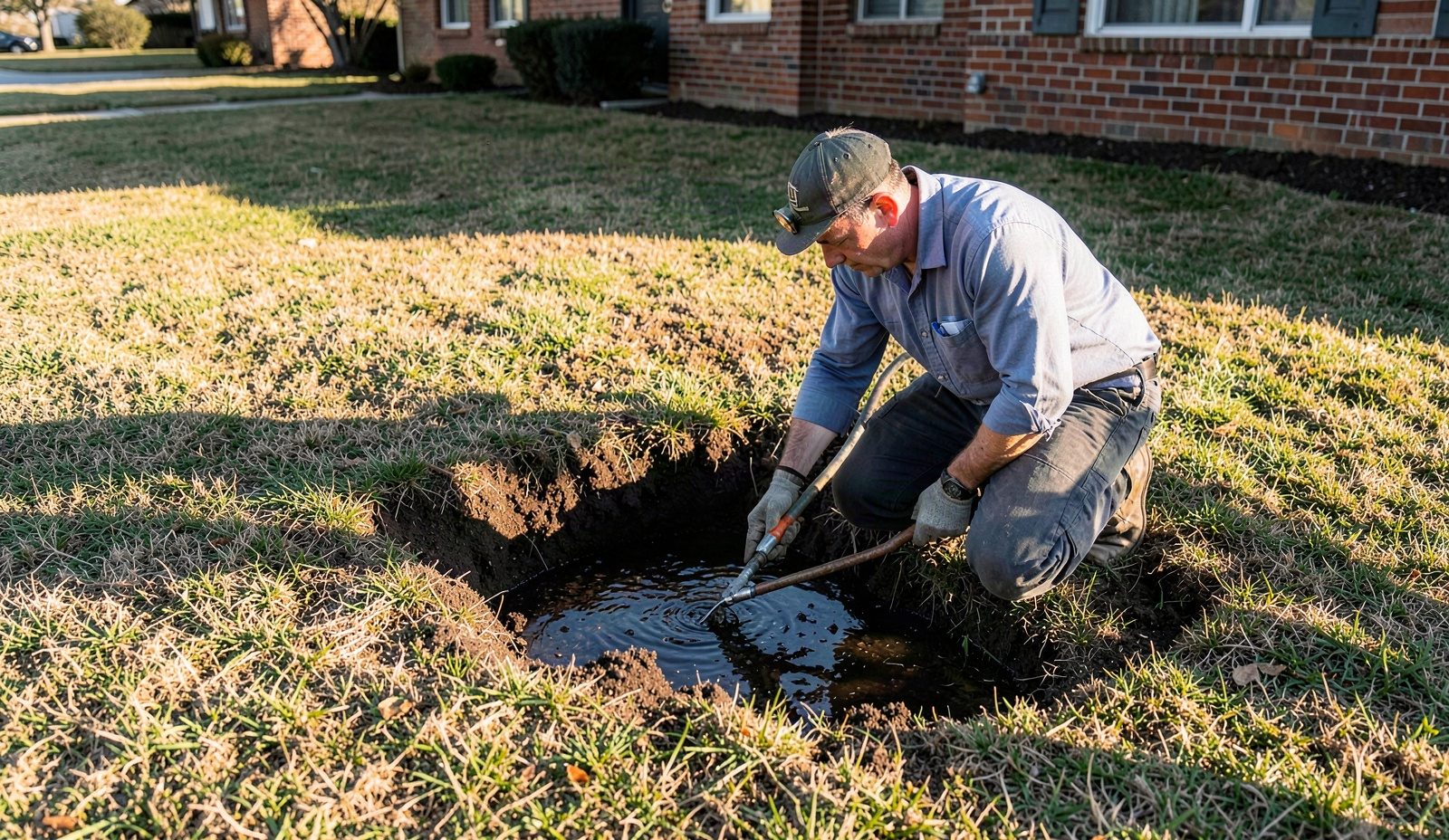
You describe the wet spot, when it appeared, and any smell or sound you have noticed, and we schedule a visit around that urgency. On arrival, the technician walks the yard first, checks the water meter for movement with fixtures off, and reads static pressure at an outdoor spigot. If the spot smells like sewage, a camera goes down the nearest cleanout before any pressure testing. You see the readings on the gauge and the camera footage on a tablet, not a verbal guess.
Once the acoustic or tracer gas sweep pinpoints the failure, you get a written quote covering the repair method, whether that is a cured-in-place liner or open trench replacement, before any digging starts. Sod gets cut and set aside, access points get marked, and the crew works the smallest footprint the repair method allows. You approve the scope at each decision point, including whether adjacent aging pipe gets addressed in the same visit.
Before backfilling, the technician pressure-tests the repaired line and confirms the meter shows no movement with fixtures off, verifying the leak is gone rather than just relocated. The yard gets restored, sod replaced, and soil tamped level with the surrounding grade. You walk the site with the technician, review the pressure and camera readings that documented the repair, and get paperwork you can hand to an insurer or keep for your own records.
Fort Worth plumbing work runs under the City of Fort Worth plumbing code, which is based on the International Plumbing Code, and any repair we scope gets measured against that standard before a shovel goes in the ground. That matters more in this metro than most homeowners realize. Pre-1970 neighborhoods across the area were plumbed with galvanized steel supply lines and cast iron drains, and both materials are now at or past the end of their rated service life. A technician who has not worked these systems will misread a corroded galvanized fitting as a simple leak repair when the surrounding ten feet of pipe is just as compromised.
An out-of-area operator unfamiliar with Tarrant County soil conditions tends to make two costly mistakes. The first is excavating deeper than needed because they do not expect expansive clay to have already shifted the pipe grade off its original line. The second is repairing a single failure point on a cast iron drain without checking the adjacent joints, which fail on the same timeline because they were installed at the same time under the same house.
Knowing the local code also means knowing when a permit changes the timeline. A full line replacement typically requires review, while a like-for-like spot repair often does not, and the call belongs to the local permitting authority, not to the crew doing the digging. A technician who treats every job the same way, permit or no permit, is a technician who has not worked enough Fort Worth yards to know the difference. Call (817) 710-3766 and describe what you are seeing, and we can talk through what your situation actually needs before anyone shows up.
Our page on dripping faucets & leaks covers that side of the work in more depth.
Communities like r/Plumbing are full of homeowners comparing notes on exactly this problem, worth a read before a major project.
Booking starts with a phone call, not a form, and the person on the line asks about the wet spot's location, smell, and how long it has been there before setting an arrival window. Same-day slots are available for active leaks that are worsening the yard or threatening a slab. If a prior job runs long, dispatch calls ahead with an updated window rather than leaving you watching the driveway. You get a name and an estimated arrival time before the truck ever leaves for your address, and confirmation the morning of the visit.
Excavation gets marked and photographed before any digging starts, and sod is cut in sections and set aside on tarps rather than tossed. Access pits for trenchless repairs stay small, usually just enough to fit the liner equipment, and get backfilled and tamped the same visit. Sprinkler lines and low-voltage wiring get flagged before the trench opens, not discovered by cutting through them. Excess soil and old pipe sections leave the property the same day. When we finish, the yard looks disturbed only where the repair actually happened, not across the whole lawn.
Cost depends on depth of the line, how far the leak sits from an access point, and whether the repair calls for trenchless lining or open trench replacement. Older cast iron or galvanized systems add scope because adjacent joints often need attention at the same time, not just the failure point. Access matters too. A leak under a driveway or mature tree root system costs more to reach than one under open lawn. You get a written quote after the leak is located and before any repair starts, and nothing proceeds past diagnosis without your approval.
Every technician who arrives at your home has passed a background check and completed hands-on training on the plumbing code cycle currently in force in Fort Worth. New hires shadow a senior technician through a set number of yard leak diagnoses, from meter testing to camera work, before they run a job solo. Field supervisors spot-check completed repairs on a rotating basis, reviewing camera footage and pressure readings against what the paperwork claims. Competence gets checked with documentation, not assumed from a resume.
It depends on the scope of the repair, not the symptom itself. A full water or sewer line replacement typically needs review from Fort Worth's permitting office, while a like-for-like repair on a single joint or short section often does not. The final decision belongs to that office, not to the crew doing the work, and Shield Plumbing Fort Worth flags which category your repair falls into once the camera and pressure data confirm the scope.
Cost depends on how deep the line sits, how far the leak is from an access point, and whether the repair uses trenchless lining or open trench replacement. Older cast iron or galvanized systems typically add scope because nearby joints often need attention at the same time. Access under a driveway or mature root system also raises labor time. A written quote follows the leak location visit, once the actual scope is known rather than guessed.
Coverage depends on your specific policy and what caused the leak. Sudden, accidental pipe failures are often covered under standard homeowners policies, while gradual leaks that built up over months are frequently excluded as a maintenance issue. Camera footage and pressure readings from the diagnosis give you documentation to submit with a claim either way, and Shield Plumbing Fort Worth provides that paperwork as part of the completed job record.
Not always, though it can be one cause among several. A break at the main sewer line usually gurgles at the lowest fixture in the house too, like a basement floor drain or the lowest-elevation shower, not the toilet alone. A camera run through the main line settles the question directly, showing a break, a root intrusion, or a clear pipe within the same visit.
Same-day service is available for most gas line calls in Fort Worth. Once you describe the smell, sound, or appliance symptom over the phone, dispatch works you into the day's schedule when slots are open, and calls placed earlier in the day have a better chance of same-day arrival than calls placed in the evening.
Cost depends on how deep the line sits, what material replaces it, and how far the crew has to dig to reach it. A point repair on a shallow copper line costs far less labor than a full water service line replacement that requires trenching two to four feet down across a driveway. Soil conditions matter too, since Fort Worth clay often needs the trench walls shored to stay open long enough to work safely. Call (817) 710-3766 and a technician will walk the yard and price the actual scope before any digging starts.
The February 2021 freeze burst pipes across Tarrant County by the tens of thousands, and while most of those failures hit supply lines in attics and exterior walls, a fair number of hairline cracks from that week did not show up until the ground thawed and pressure returned to normal, months later, as a wet spot nobody could explain. Housing stock changes the picture too. Post-tension slab homes common in newer construction move differently under a foundation than the pier-and-beam construction found in older sections near the Near Southside and Ridglea Hills, and that difference changes where a supply line is likely to shear first and how deep a repair crew needs to dig to reach it.
Permit review in Fort Worth runs through the City of Fort Worth Development Services Department, and the distinction that matters most for a yard leak is scope. A full sewer or water line replacement typically requires that review, while a like-for-like spot repair on a single joint often does not, though the department makes the final call on any specific project. Homeowners near the Cultural District and Arlington Heights, where lot lines sit close together and utility easements run tight, benefit from a crew that already knows how those easements affect where a trench can legally open, rather than one figuring it out on the day of the dig.
Explore our service area and locate Shield Plumbing Fort Worth with ease. We're proudly local and serve the surrounding neighborhoods with fast response and honest pricing. Use the map to check our coverage area, or call us and we'll confirm in seconds.
Address:
Shield Plumbing Fort Worth, 210 W 7th St, Fort Worth, TX 76102
5 Signs Your Ridglea Hills Home Has a Slab Leak, practical local guidance from Shield Plumbing Fort Worth, Fort Worth's trusted plumbing tea…
Read More
What Wedgwood Residents Should Know Before a Whole-Home Repipe, practical local guidance from Shield Plumbing Fort Worth, Fort Worth's trust…
Read More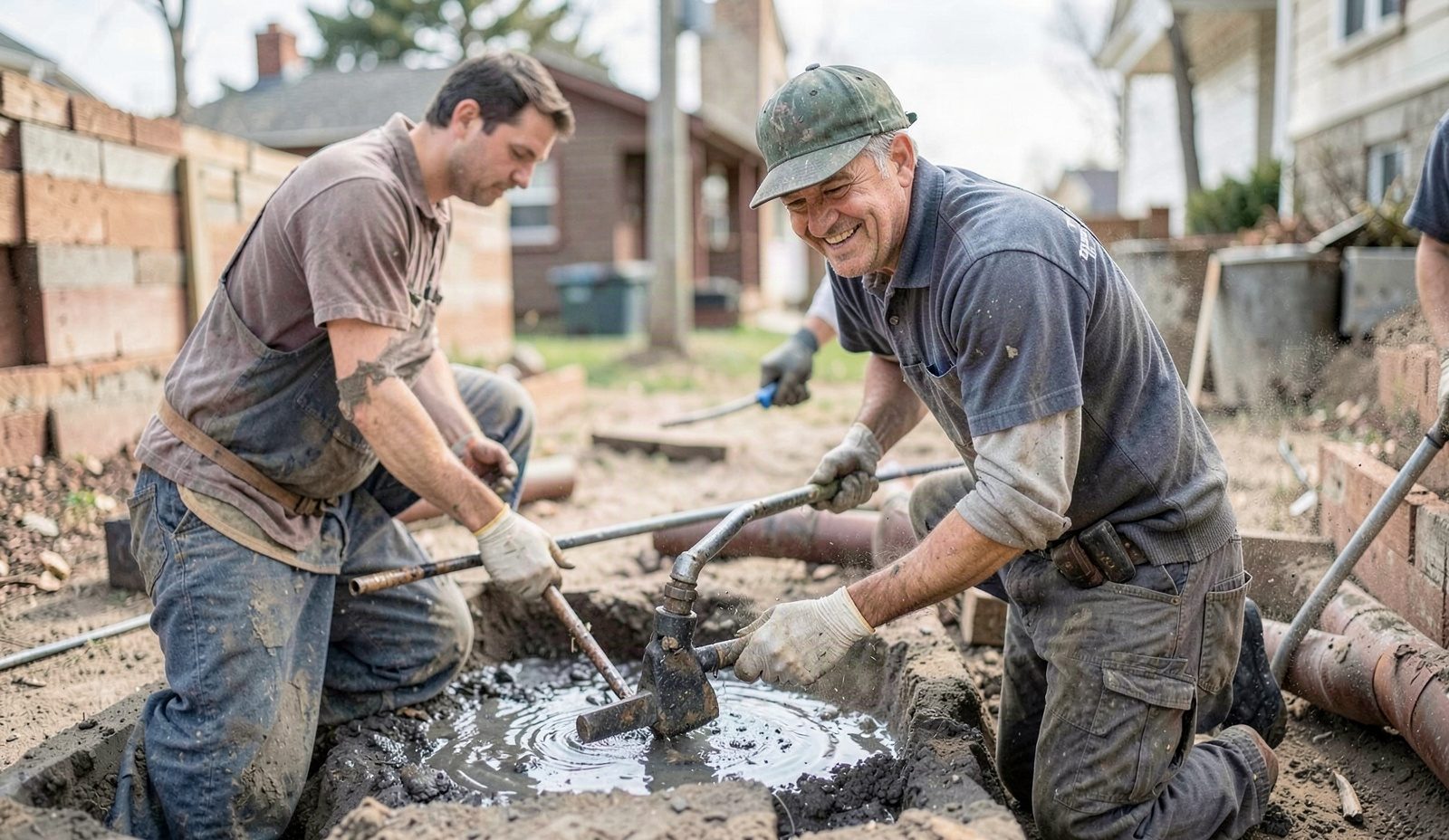
How Fort Worth's Hard Water Is Quietly Destroying Your Water Heater, practical local guidance from Shield Plumbing Fort Worth, Fort Worth's …
Read More
The Hidden Cost of Ignoring a Dripping Faucet in Fort Worth, practical local guidance from Shield Plumbing Fort Worth, Fort Worth's trusted …
Read More