
June 20, 2026
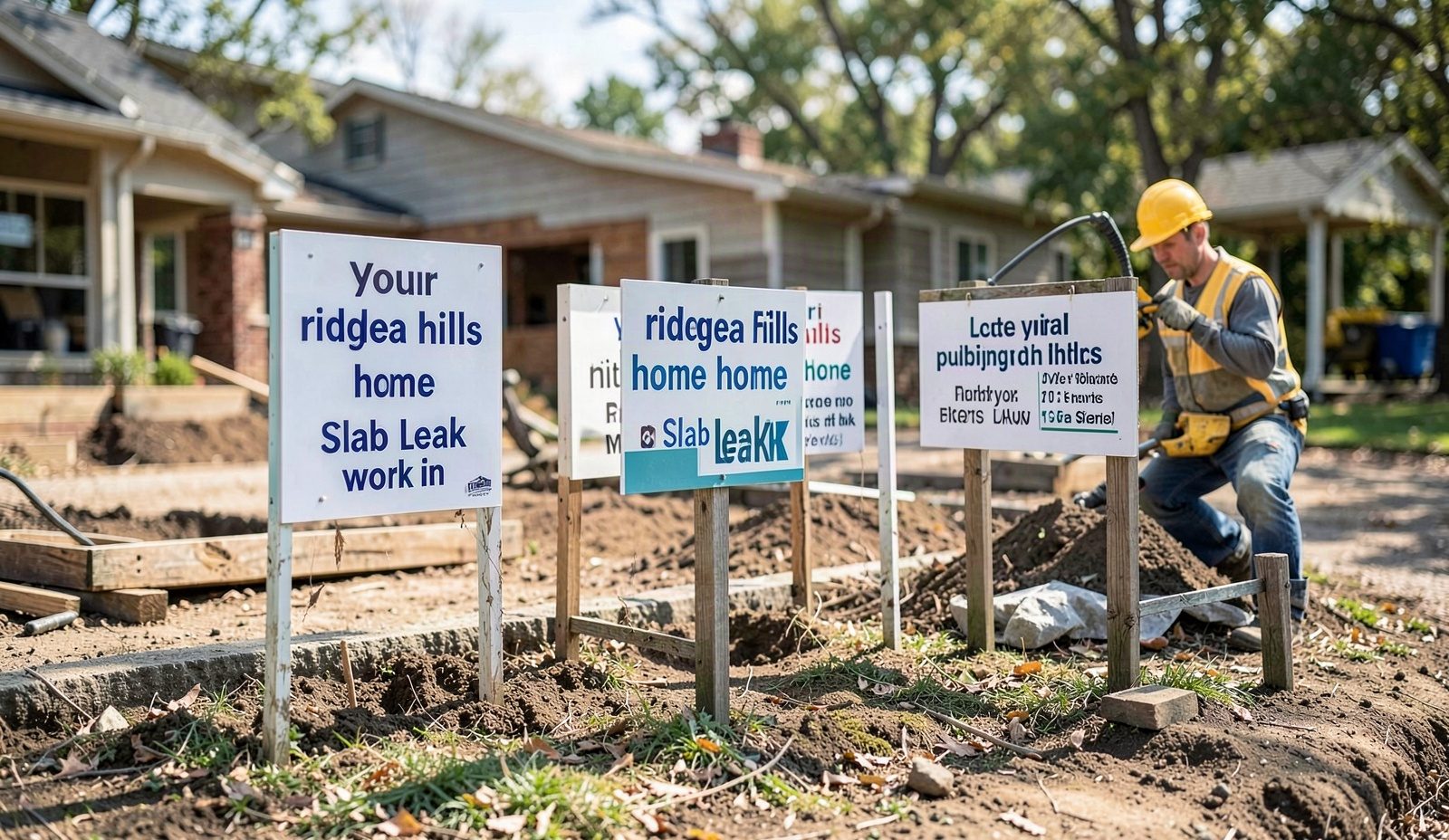
5 Signs Your Ridglea Hills Home Has a Slab Leak
5 Signs Your Ridglea Hills Home Has a Slab Leak, practical local guidance from Shield Plumbing Fort Worth, Fort Worth's trusted plumbing tea…
Read More




A water stain on ceiling drywall starts as a faint yellow halo, then darkens into brown spots on ceiling paint within a week or two as the paper facing absorbs more moisture. Press a fingertip against the center and the board gives instead of springing back. Some homeowners notice a flat, mineral smell before they see any discoloration at all, the paper and gypsum core already wicking water sideways into the joist bay above.
Most of the calls we get start over a bathroom. A ceiling leak from bathroom fixtures traces to a wax ring that failed at the toilet flange, a shower pan liner cracked at the corner, or a supply fitting that seeped for months behind tile before the first ring showed up on the ceiling below. By the time the stain is visible, the subfloor under that shower has often been wet for weeks.
Wall water damage in Fort Worth frequently starts underground, not upstairs. North Texas expansive clay swells with rain and shrinks in drought, and that seasonal movement flexes the slab enough to shear a copper supply line or separate a drain joint under the house. Homes in Fairmount and Arlington Heights, built when copper and cast iron ran directly through and under the original slab, show this pattern often: a stain blooms on an interior wall nowhere near a bathroom or kitchen, because the leak behind wall framing is traveling sideways from a slab penetration yards away.
The February 2021 freeze burst pipes across Tarrant County by the tens of thousands, and most of those failures were supply lines running through attics and exterior walls. Some of those repairs got patched fast and rough during the crisis, and the joints are still weeping years later, showing up now as a slow stain nobody connects to a freeze from years back. Left alone, a ceiling stain stops being cosmetic fast. Saturated drywall loses its screw-holding strength, joists and top plates start to rot, and mold colonizes the paper facing within a couple of days of sustained moisture. Waiting turns a drywall patch into a framing repair.
If this sounds close but not quite your situation, high water bills may be the better starting point.
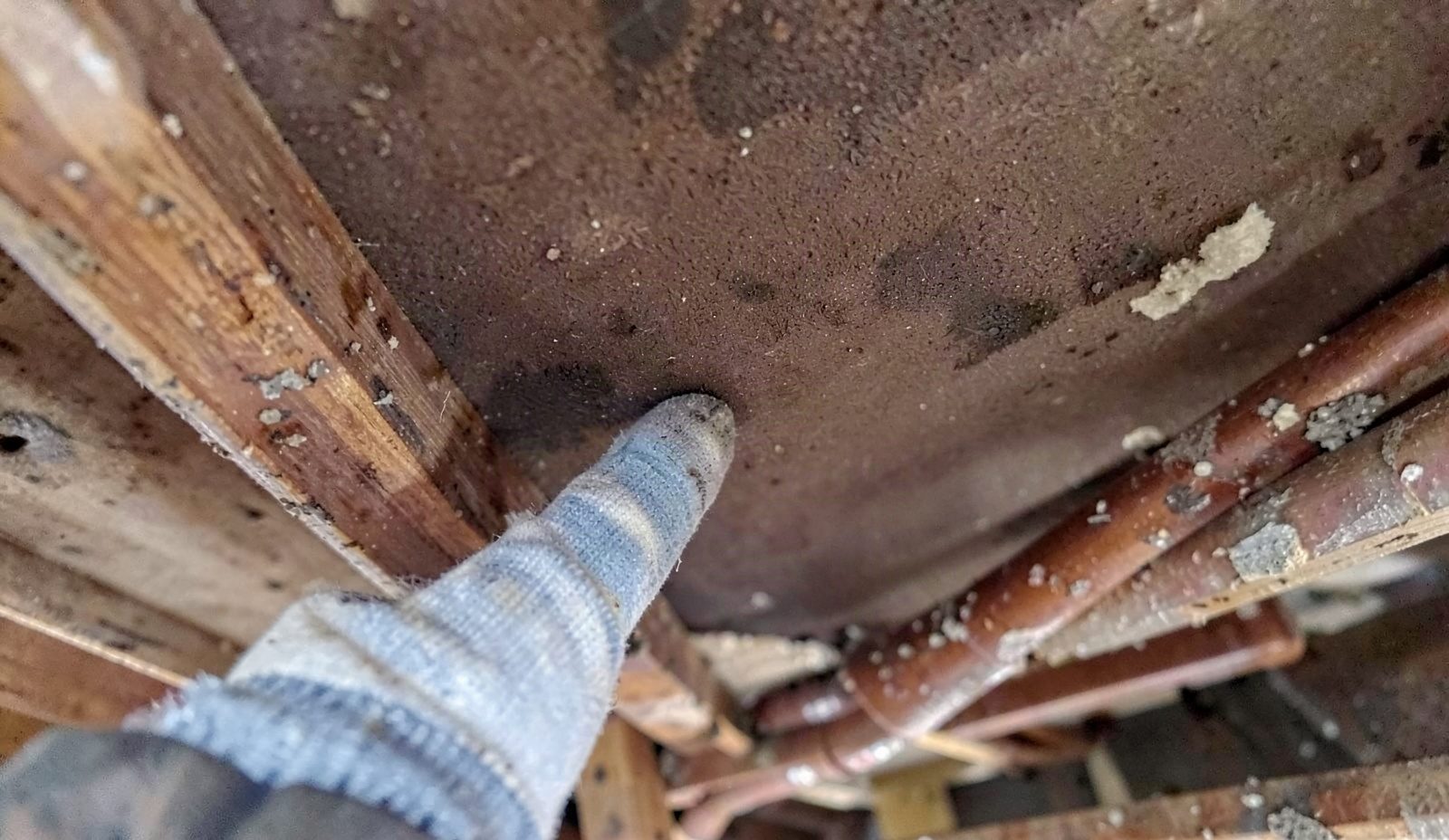
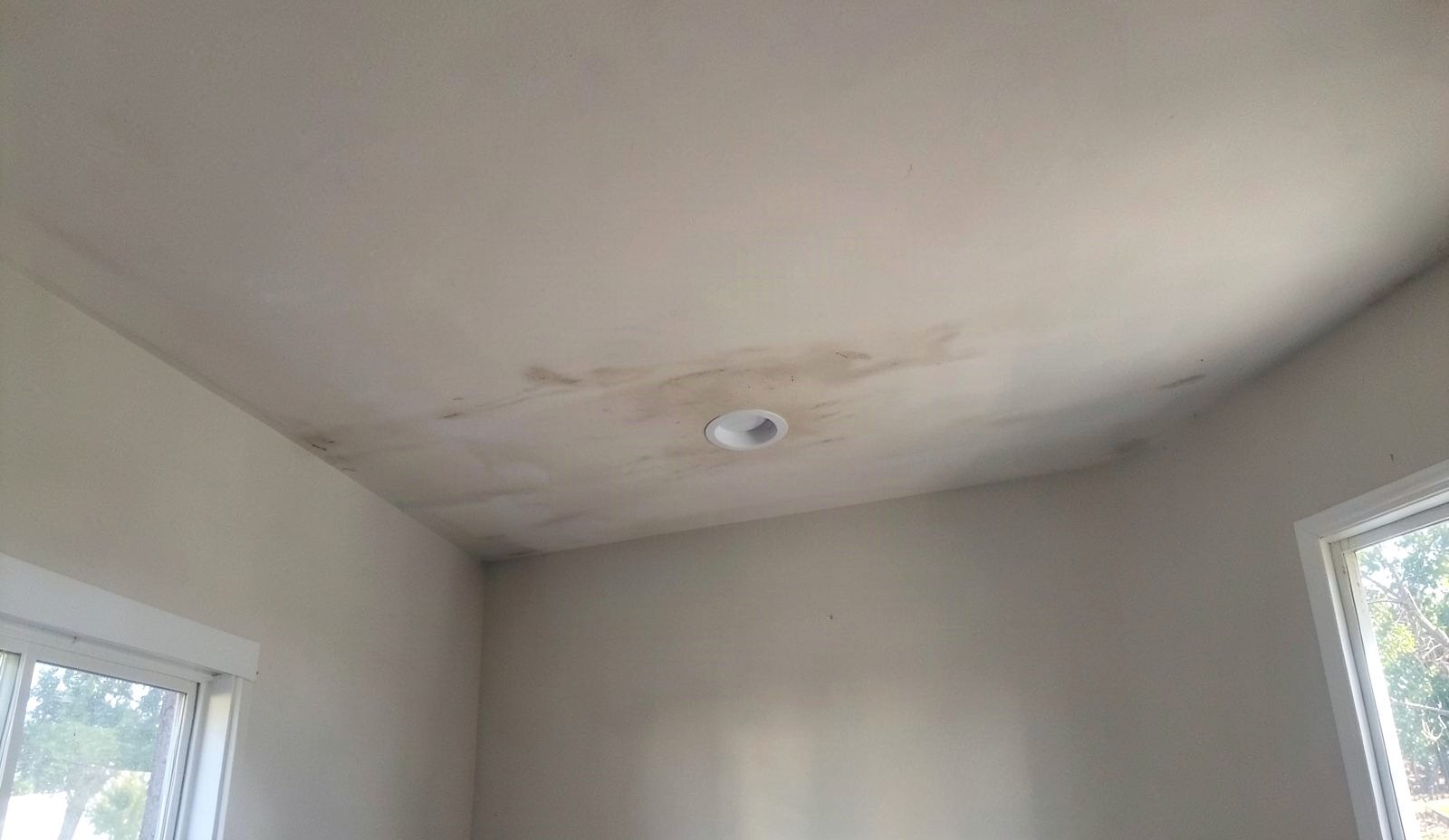
We do not patch the stain and call it done. Every water stains on ceiling or walls call starts with a moisture meter swept across the ceiling and adjacent studs, mapping the wet perimeter in a grid so we know whether the water traveled two feet or twenty from its source. A reading that climbs steadily as we move toward one corner points straight back to the leak; a reading that stays flat across a wide area usually means the water spread along a joist or duct run before it ever dripped through.
Once we find the wet zone, we open a small inspection hole, no bigger than a coffee can lid, and run a borescope camera into the cavity to look at the pipe or drain directly instead of guessing from the stain shape. If the source is a supply line, we check static water pressure at an outdoor spigot with a gauge, because pressure above 80 psi stresses every joint in the house, and Section 604.8 of the International Plumbing Code requires a pressure-reducing valve once that reading is confirmed. A house running high pressure keeps producing new leaks in new spots even after we fix the one you can see.
For the repair itself, we match what is already in the wall. Copper Type L, with a 0.045-inch wall thickness, still solders into older systems without a fight, while PEX-A tubing rated to 200 psi at 73 degrees Fahrenheit goes in faster through tight stud bays and shrugs off the freeze-expansion that splits rigid pipe. We do not mix copper and PEX at a single joint without a rated transition fitting, because a raw connection between the two invites galvanic corrosion that fails again within a few years, right back where the last stain started.
More detail on cold water sandwich effect is on its own page.
Your local utility, Payment options, publishes service and water-quality information every Fort Worth homeowner should know.
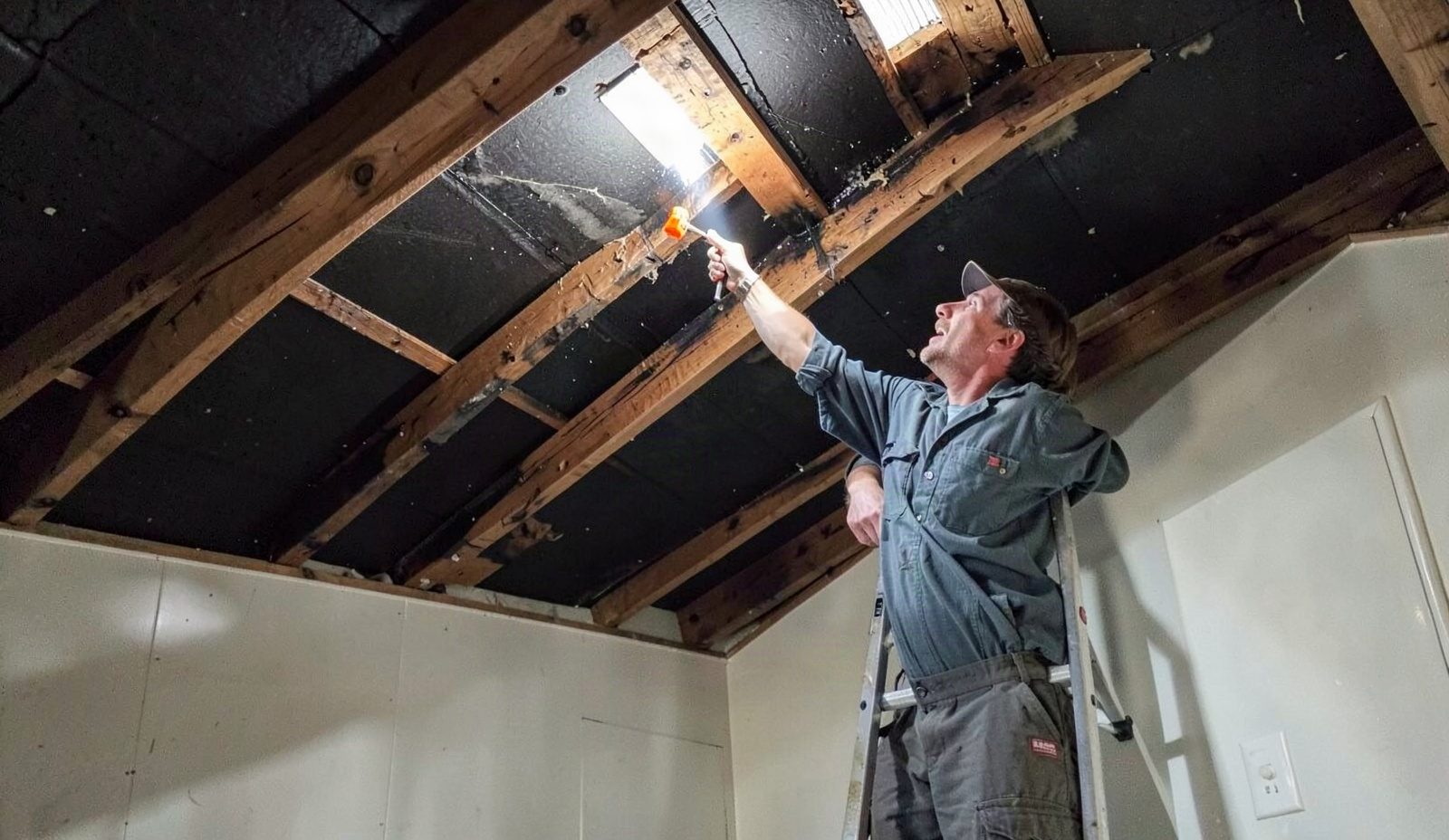
When you call, we ask what the stain looks like, how big it is, and whether it sits near a bathroom, kitchen, or exterior wall, details that help the technician arrive with the right tools already loaded. On site, the technician walks the affected room, checks the attic or crawlspace access nearest the stain, and looks at the ceiling or wall from both sides when access allows. You get a plain description of what they see and where they think the water is coming from before any cutting happens.
Once the source is confirmed, the technician writes up the scope, the materials needed, and the price, and you approve that quote before any drywall comes down. Floors and nearby furniture stay covered for the entire repair. Work then proceeds in order: shut off water to the affected line, cut the smallest opening that gives full access, replace the failed section of pipe, fitting, or drain joint, then pressure test before closing anything back up. Drywall and texture repair follow once the plumbing side is confirmed dry.
Before we call the job finished, we run water through the repaired line or fixture and confirm the surrounding area stays dry after several minutes of flow, with no new drips at the joint. We walk the repair with you, point out what was replaced and why, and photograph the completed work for your records, useful if you are filing an insurance claim on a sudden pipe failure. Any drywall patch gets primed to match, and we haul away the cut-out material before leaving.
Fort Worth plumbing repair falls under the City of Fort Worth plumbing code, based on the International Plumbing Code. That code governs how we tie a new supply line into an old system, including the pressure and venting details that keep a wall dry for the next ten years, not just how the finished patch looks from the hallway. A technician who does not work this code every week can rough in a repair that passes a glance and still fails those requirements within a season.
Pre-1970 neighborhoods across the metro were plumbed with galvanized steel supply lines and cast iron drains, both now at or past the end of their service life. Cutting into a galvanized line the same way you would cut PEX cracks the threaded joint and creates a new leak point inches from the old one. We carry the fittings for galvanized, cast iron, copper, and PEX transitions before we open the drywall, so the crew is not making a supply run mid-repair while your ceiling sits open.
Hiring an out-of-area crew unfamiliar with Fort Worth's mix of century-old bungalows and newer slab construction means guessing at pipe material until the wall is already open. We plan the repair route through the attic or crawlspace before the first cut, based on what era of construction we are dealing with, which keeps the opening in your wall as small as the diagnosis allows and avoids a second visit for a part nobody expected to need.
Our page on discolored or rusty water covers that side of the work in more depth.
Permit and inspection questions? Development Services is the office we coordinate with on every permitted Fort Worth job.
You call, describe what you are seeing, and we schedule a technician for a specific arrival window the same day or next, depending on how many bathroom-leak calls are already on the board that week. You get a call or text when the technician is on the way, with a realistic window instead of an all-day wait. If a prior job runs long, our dispatcher calls you before your window starts and offers the next available slot the same day when possible. Windows account for real drive time across the city, not a flat guess pulled from a booking screen.
Before we open any ceiling or wall, we lay drop cloths across the floor and furniture below the work area and tape plastic sheeting around the opening to contain insulation and drywall dust to that one spot. Cut drywall and wet insulation go straight into a trash bag as we go. We run a shop vacuum along the cut line during the work and wipe down nearby surfaces before packing up. When we leave, the work area is a small, clean opening ready for a drywall patch, with the surrounding room back to normal.
The price reflects the scope of the leak found behind the wall, how hard that spot is to access, and whether the drywall, insulation, or subfloor needs replacing. Access matters: a leak behind a tiled tub surround costs more labor to reach than one behind a plain drywall ceiling. Material choice matters too, matching copper, PEX, or older galvanized fittings already in the wall. A technician inspects first, writes the scope and price on a quote you can read before any cutting starts, and work begins only after you approve it.
Every technician passes a background check before working solo in a customer's home. New hires ride along with a lead technician on real calls until that lead signs off on both their diagnostic judgment and their repair work. Techs also complete refresher training whenever local code requirements update, keeping field practices current with what an inspector would check on a permitted job. That combination of supervised field time and code refreshers is how competence gets checked before anyone works a leak call alone.
The cost depends on the leak source, the extent of water travel, and how much drywall or framing needs replacing. A hairline pipe leak caught early might only need a drywall patch, while weeks of hidden moisture can mean replacing ceiling joists or subfloor. Shield Plumbing Fort Worth inspects the damage first, then provides a written quote before work starts, so you know the scope before anything gets cut open.
Water stains on a ceiling mean water is leaking from above and soaking into the drywall paper. The most common sources are a bathroom fixture above, a roof leak at a valley or flashing, or a clogged HVAC condensate line dripping onto the ceiling from an attic air handler. The stain's shape often gives it away: a tight circle usually means a pinhole leak directly above, while a spreading, irregular patch means water is running along a joist or duct before dripping through.
Call a plumber before a painter, since painting over a stain hides the leak instead of stopping it. A painter can cover the discoloration for a season, but the source keeps leaking behind the fresh coat. Shield Plumbing Fort Worth traces the leak to its source first, whether that means a supply line, drain, or roof penetration, then coordinates the drywall patch after the plumbing repair is confirmed dry. Call (817) 710-3766 to get a technician scheduled.
Insurance coverage usually depends on whether the leak was sudden or gradual. A burst supply line or a sudden appliance failure is often covered, while a slow leak from years of neglect typically is not. Adjusters look for evidence of when the leak started, so photograph the stain, note the date you noticed it, and keep any plumbing invoice describing the source and repair. That documentation matters more than the size of the stain when a claim gets reviewed.
Permit needs depend on the scope of the repair rather than the stain itself. Cutting out a small patch of drywall and swapping a fitting like-for-like usually does not require a permit, but a full re-pipe or new drain line typically does. The City of Fort Worth Development Services Department makes that call for any Fort Worth address, and we pull the permit ourselves when the scope crosses that line.
Estimates start with an on-site inspection rather than a phone quote based on guesswork. A technician traces the leak, checks the extent of the moisture damage, and puts the scope and price in writing before touching any drywall. You approve that quote before work begins, and the price reflects the actual scope found behind the wall or ceiling once the opening is made.
Repair is almost always the cheaper route for an isolated water stain with a single, findable leak source. Replacement of a full section of pipe or a full ceiling only makes sense when the damage spreads across multiple joists, the pipe material is galvanized steel at the end of its service life, or repeated leaks have already happened in the same wall. A technician measures the extent of damage on site and gives you both options in writing when replacement is genuinely on the table.
Fort Worth water runs moderately hard, and the scale it leaves inside a water heater's tank and heating element is a leading reason those units fail years before their rated life, often as a slow drip from a corroded tank seam rather than a sudden burst. When that water heater sits in an attic, standard construction in ranch-style neighborhoods like Wedgwood and Ridglea Hills built from the 1950s through the 1970s, a failing tank drips onto the attic floor and shows up as a ceiling stain long before anyone checks the unit itself. Scale also narrows the drain valve at the bottom of the tank, so sediment that should flush out during a routine drain instead packs in solid, and pressure inside the tank climbs until a seam gives way. Attic units in these neighborhoods need a drain pan and a secondary line at minimum, not an afterthought.
The Near Southside and the Cultural District mix century-old bungalows with new mid-rise construction going up block by block, and that mix means a plumber working this area needs to recognize a 1920s cast iron stack in the same afternoon as a modern PEX manifold three doors down. Getting that wrong on an older building risks opening a wall to find drain pipe that no longer matches anything sold today, turning a simple repair visit into a same-day parts hunt. We plan for that before the truck leaves, carrying transition fittings for cast iron, galvanized, copper, and PEX on every water stains on ceiling or walls call in this part of the city. Homeowners in these blocks often stick with the same plumber for years because the next leak, in a different wall, usually needs the same working knowledge of what the last owner's contractor actually installed.
Explore our service area and locate Shield Plumbing Fort Worth with ease. We're proudly local and serve the surrounding neighborhoods with fast response and honest pricing. Use the map to check our coverage area, or call us and we'll confirm in seconds.
Address:
Shield Plumbing Fort Worth, 210 W 7th St, Fort Worth, TX 76102
5 Signs Your Ridglea Hills Home Has a Slab Leak, practical local guidance from Shield Plumbing Fort Worth, Fort Worth's trusted plumbing tea…
Read More
What Wedgwood Residents Should Know Before a Whole-Home Repipe, practical local guidance from Shield Plumbing Fort Worth, Fort Worth's trust…
Read More
How Fort Worth's Hard Water Is Quietly Destroying Your Water Heater, practical local guidance from Shield Plumbing Fort Worth, Fort Worth's …
Read More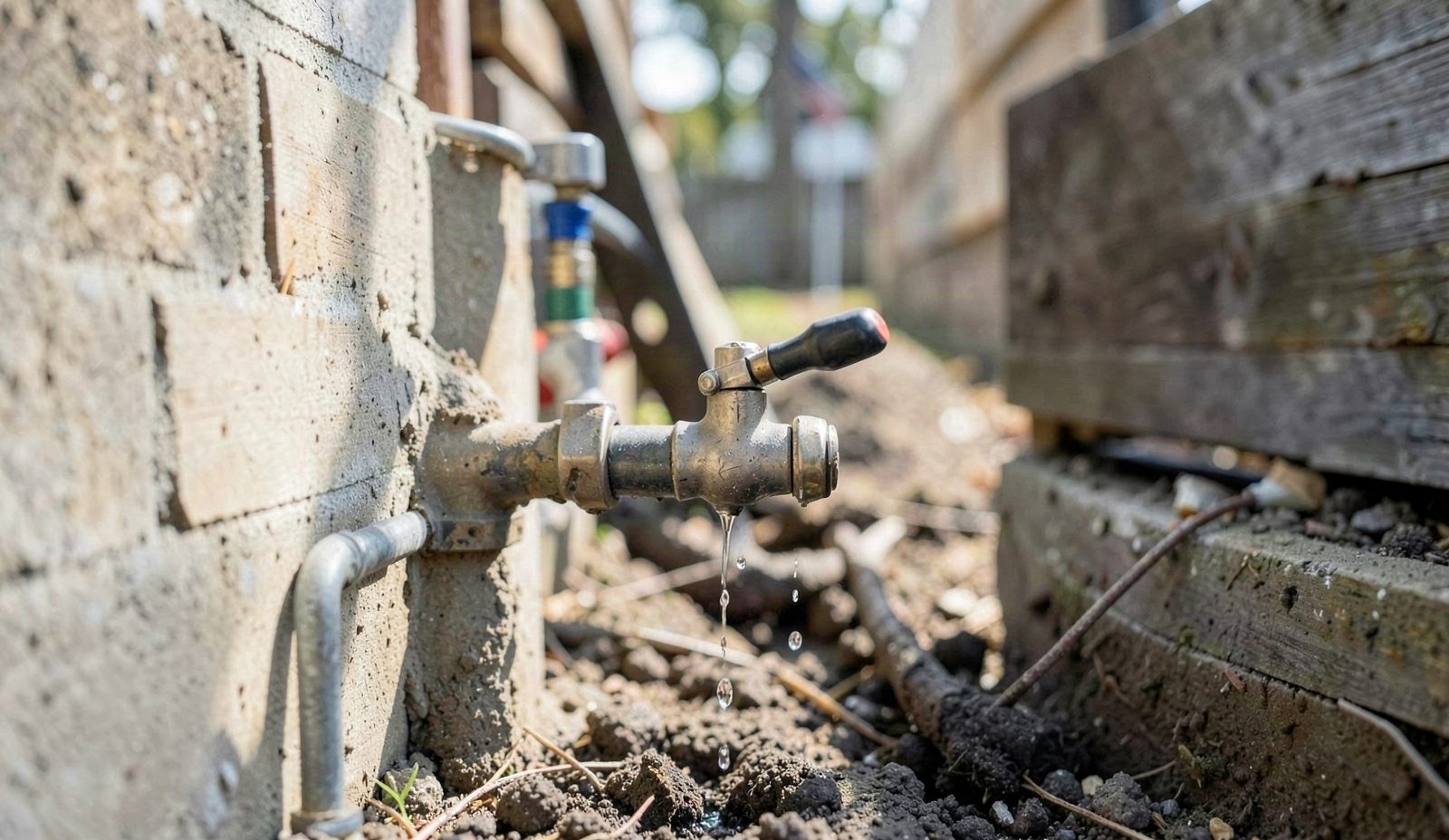
The Hidden Cost of Ignoring a Dripping Faucet in Fort Worth, practical local guidance from Shield Plumbing Fort Worth, Fort Worth's trusted …
Read More