
June 20, 2026
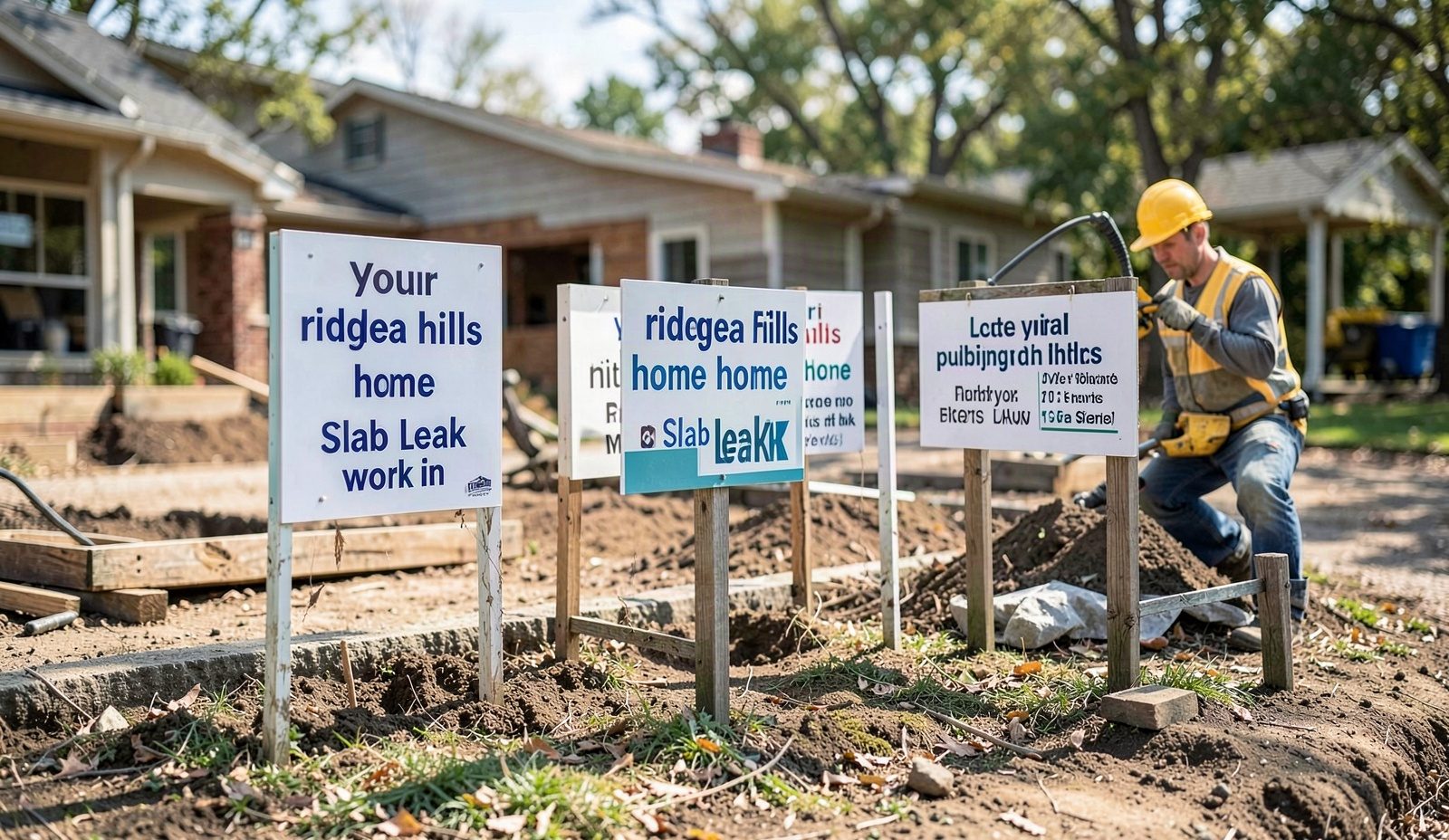
5 Signs Your Ridglea Hills Home Has a Slab Leak
5 Signs Your Ridglea Hills Home Has a Slab Leak, practical local guidance from Shield Plumbing Fort Worth, Fort Worth's trusted plumbing tea…
Read More




Rust colored water on the first flush, pressure that drops to a trickle when a toilet runs upstairs, and a metallic smell from the tap all point to pipe failure, not a fixture problem. Homeowners in Fairmount and Arlington Heights often notice the sound first, a knocking or ticking in the wall as galvanized pipe narrows internally and slams shut on water hammer. Pinhole leaks show up as a damp spot on drywall or a mineral ring near a slab crack, and by the time you see either, the pipe behind it has usually been failing for months.
North Texas expansive clay is the mechanism behind most of it. The soil under a slab foundation swells several inches after a wet spring and shrinks back hard during a dry summer, and that seasonal movement is enough to shear rigid copper supply lines and pull drain joints apart under the house. Near Southside homes on shifting slabs see this most, where a hairline crack under a hallway tile traces straight back to a sheared line, not a plumbing defect from the original install.
The February 2021 freeze exposed the other half of the problem. Pipes burst across Tarrant County by the tens of thousands that week, and most of the failures were supply lines run through attics and exterior walls with no insulation buffer, the same runs found in many homes built before central heating loads shaped modern design. A repeat freeze finds those same vulnerable runs unless they get replaced.
Waiting rarely holds a repiping job at the same size. Galvanized pipe corrodes from the inside out, and one confirmed leak usually means several more are close behind on the same run. Many homeowners are told they need to replace galvanized pipes only after the third leak in a single year. Every additional slab leak stresses the foundation further, every water heater strains against fluctuating pressure, and the eventual whole house repipe often costs less in materials than the drywall, flooring and foundation repair that follows a long delay.
If this sounds close but not quite your situation, backflow prevention & testing may be the better starting point.
The U.S. Department of Energy's water heating guide is a solid primer on operating costs if you want to dig into the numbers yourself.
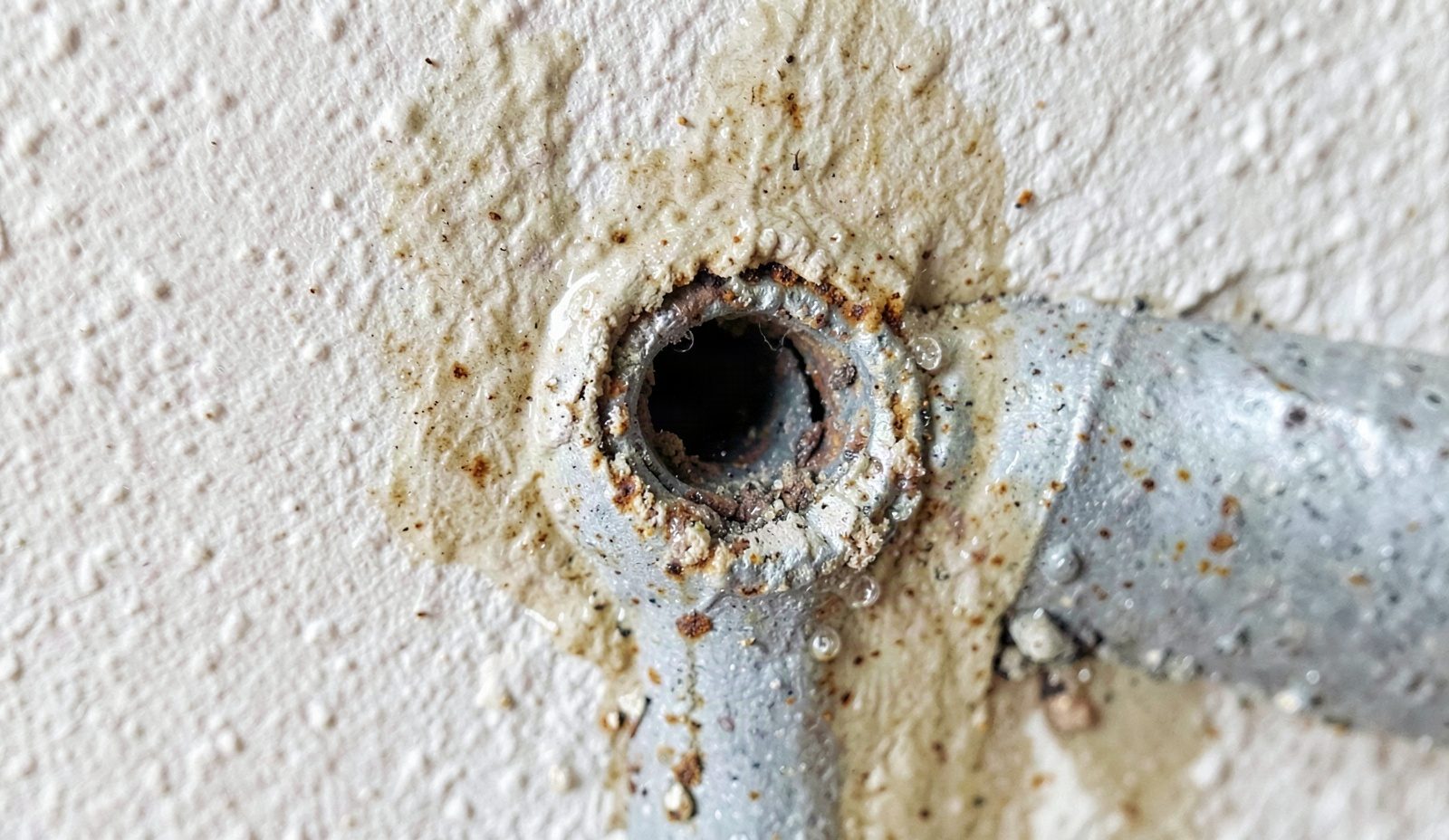
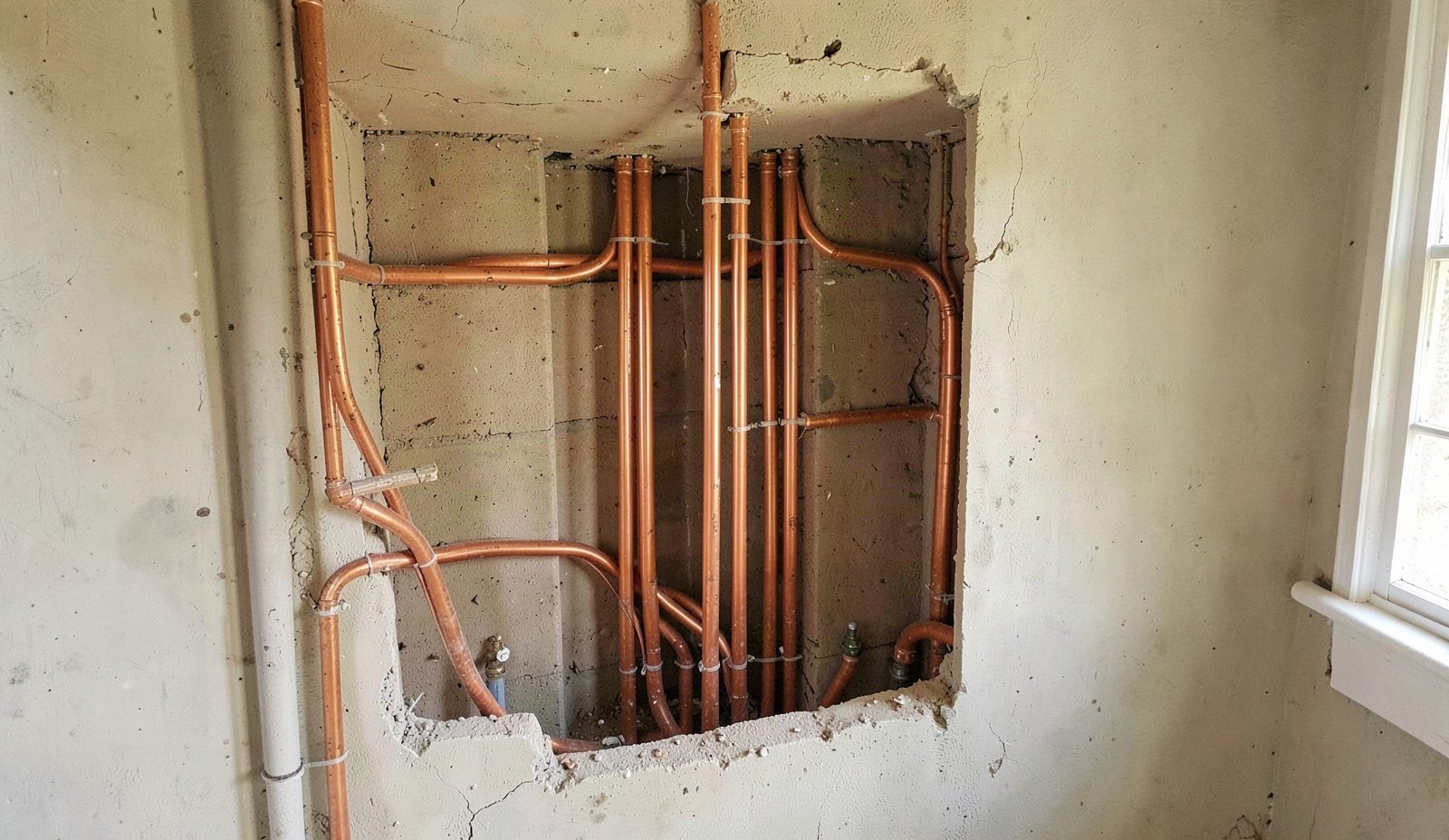
Every whole home repipe starts with a pressure and material assessment before any wall opens. We read static water pressure at an outdoor spigot with a calibrated gauge; a reading above 80 psi triggers a pressure reducing valve under Section 604.8 of the International Plumbing Code, and skipping that step is why some repipe jobs fail fixtures within a year. We also run a hydrostatic test on the existing system, isolating each zone and watching the gauge for pressure fall over time, which tells us exactly where a galvanized line has thinned before we open a single wall.
Material choice comes down to numbers, not preference. PEX-A tubing, the Uponor ProPEX system we spec most often for a pex repipe, expands over a cold fitting and contracts back to seal itself, which lets a line survive a freeze that would split rigid copper, and it runs in continuous coils so a manifold home run layout needs zero mid wall joints. Type L copper still outperforms PEX on UV exposure and open flame proximity and carries a longer documented service life, but copper repiping costs more in labor because every joint gets soldered and every run needs hangers at fixed intervals under code. PEX-B, the crimp or cinch ring version some shops use to save money, works but its fittings have a narrower expansion tolerance than PEX-A and a shorter track record under sustained freeze cycling, so we do not use it as our default on a full repipe.
We favor a home run manifold layout over branch and tee whenever attic or crawlspace access allows it, because isolation valves at the manifold let you shut off a single fixture without draining the whole house, and the reduced fitting count means fewer failure points under a slab or inside a wall cavity. Drain lines get evaluated separately with a sewer camera, since drain joints move on their own timeline independent from supply lines and often need different repair timing than the supply side.
See drain cleaning & rooter service for how the related work is scoped and priced.
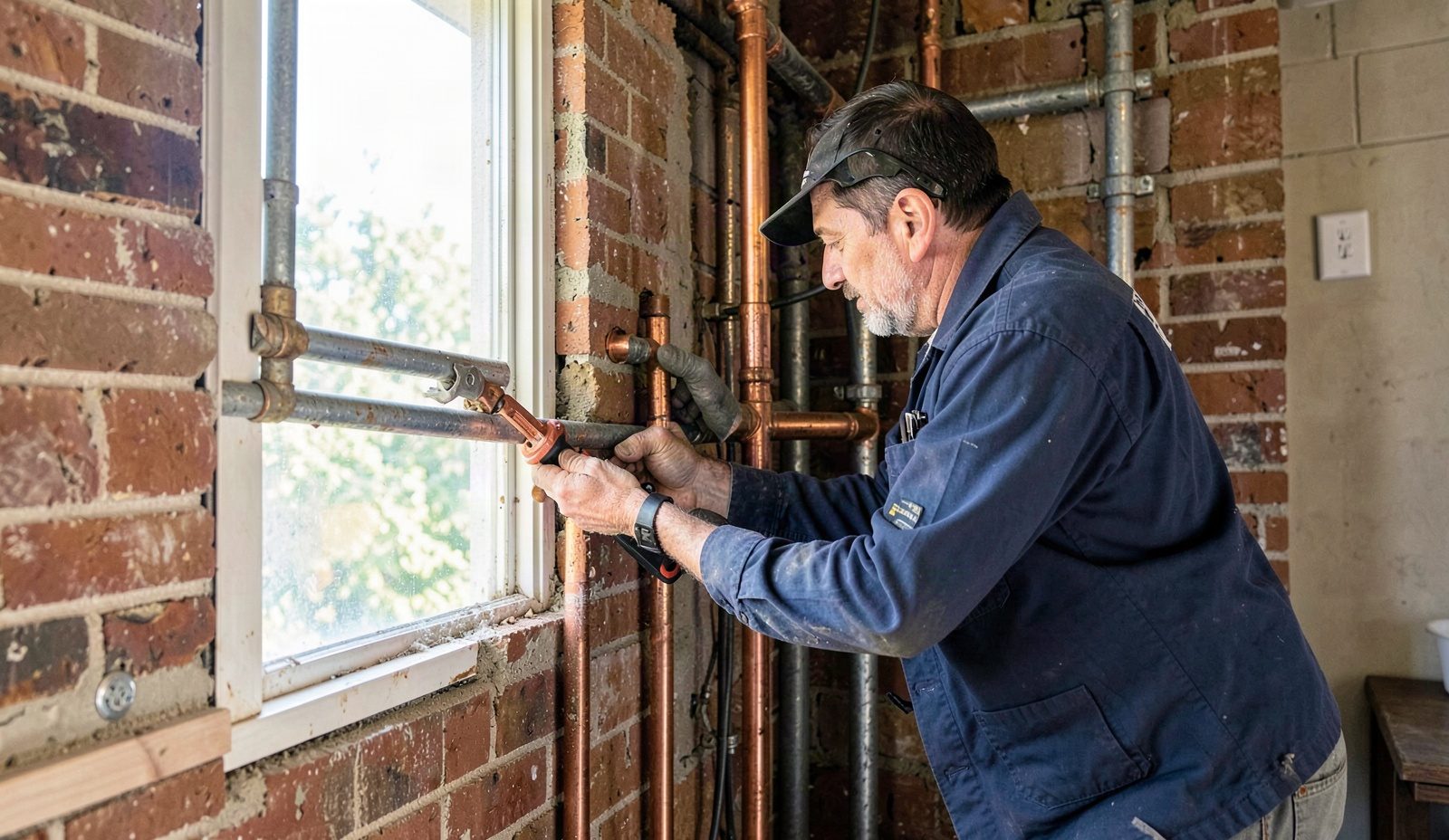
You call (817) 710-3766 and describe what you are seeing, discolored water, low pressure, a specific room with recurring leaks. We schedule a visit and the technician arrives with pressure gauges, a moisture meter and a sewer camera already loaded. On site, the technician checks the water heater connections and pipe under sinks for corrosion, and maps which runs are original galvanized or copper versus any prior partial repipe. You get a plain language explanation of what is failing and why, and a written scope follows before the visit ends.
Once you approve the written scope, the crew protects floors and furniture, shuts off the main, and opens the planned access points, whether attic runs, a crawlspace, or select drywall sections. New PEX or copper lines get run to a manifold or trunk line depending on the layout specified, with isolation valves placed at each fixture group. Any run through an exterior wall gets insulated and sleeved to reduce freeze exposure. You approve any change to the original scope, like an unexpected second galvanized branch found mid wall, before that change gets built.
Before the crew leaves, every new line gets pressure tested and held for a fixed duration to confirm no drop anywhere in the system. The technician runs every fixture in the house, checks for leaks at each new joint, and walks the home with you room by room. You receive the permit documentation and material list for your records, and any drywall patch work gets scheduled as its own follow up if it was not finished same day.
Fort Worth plumbing work falls under the City of Fort Worth plumbing code, based on the International Plumbing Code, and a whole home repipe counts as work that typically requires a permit and an inspection the city actively enforces during construction. An out of area crew unfamiliar with local permitting often skips the rough in inspection entirely, leaving a homeowner holding an uninspected system when they sell the house or file an insurance claim after a leak.
Foundation type changes the whole plan. A pier and beam home gives a crew crawlspace access to route new lines with fewer linear feet exposed to attic heat and winter cold, while a slab home with no crawlspace pushes more of the run through the attic. A crew that only knows one foundation type defaults to the wrong route on the other, adding unnecessary footage and freeze exposure that a locally experienced crew would avoid from the first walkthrough.
A crew working outside its normal service area often does not know how this city schedules a rough in inspection before drywall closes, and that gap shows up later as a failed inspection, a stop work order, or a redo of soldered joints already covered by insulation. Call (817) 710-3766 and ask what permit the job needs before a single pipe gets cut. A straight answer citing the correct code and process is the fastest way to tell a local specialist from a traveling crew.
Our page on commercial repiping services covers that side of the work in more depth.
Permit and inspection questions? Development Services is the office we coordinate with on every permitted Fort Worth job.
Whole home repiping gets scheduled around a two hour arrival window set when you book, confirmed the day before by phone. When you call (817) 710-3766, we ask about symptoms, home age and foundation type before setting the date, so the technician who shows up already has the right pipe and fittings loaded. If a prior job runs long, you get a call with a revised window before your window even starts. Multi day repipe work gets a fixed daily start time so you can plan around it, and the crew calls thirty minutes out on arrival day.
Floor runners go down from the entry to every work area before a single pipe gets cut, and furniture in the path gets moved or covered with plastic sheeting. Wall or slab openings get contained with a zip wall or drop cloth to keep dust out of the rest of the house. Cut drywall and old galvanized or copper pipe sections get bagged and hauled off the same day, not left in a driveway pile. Before the crew leaves for the day, floors get swept and vacuumed in every room they worked.
Your written quote reflects square footage, fixture count, pipe material chosen between PEX and copper, and how accessible the walls, attic and crawlspace are on your specific home. A slab home with no crawlspace runs longer lines through the attic, which changes the labor line item, while a pier and beam home with an open crawlspace usually costs less to access. We walk the whole house, write the scope and material list, and you approve it before any cutting starts.
Every technician passes a background check before working in your home. Field crews train on the plumbing code requirements currently in effect, including pressure regulation and material fastening rules, at scheduled intervals rather than once at hire. New technicians work alongside a senior plumber on repipe jobs until they can independently pass a pressure test, a manifold layout review and a code walkthrough without correction, and only then take a repipe job solo.
Whole house repipe cost depends mainly on square footage, pipe material and wall or slab access. A single story slab home with easy attic access costs less to repipe than a two story pier and beam house with finished ceilings below the crawlspace. Ask for a written scope walking your specific home before comparing any number, since two quotes for the same address can differ once access and fixture count get measured on site.
Yes, in many cases PEX can run through existing wall chases and attic or crawlspace paths without cutting drywall. A home with an open attic and accessible crawlspace often needs only small access holes at fixture connections, patched afterward, rather than opening whole wall sections. A two story home with no attic access above finished ceilings usually needs some drywall removal to route new lines, and the written scope tells you exactly where before work starts.
The job is done right when every new line passes a pressure test with zero drop. Ask to see the gauge reading yourself during the final test rather than take a verbal confirmation. A correctly finished repipe also comes with permit sign off documentation matching the work performed, and pressure should read steady at every fixture in the house, not only the ones tested first.
Estimates for whole home repiping start with a walked assessment of the entire house rather than a phone quote. The technician checks pipe material, fixture count, foundation type and access points, then writes a scope and price you review before anything gets cut. Call (817) 710-3766 to schedule that walkthrough, and expect the visit itself to take under an hour for a typical single family home.
Ignoring failing pipes leads to more frequent leaks and eventually structural water damage. Corrosion inside galvanized pipe accelerates once the first pinhole forms, so nearby sections fail within months, and each additional slab leak adds moisture that softens subfloor and drywall around it. A water heater fed by scaled, narrowing lines works harder to maintain pressure and tends to fail earlier as a result. The whole house repipe you delay usually ends up paired with drywall, flooring and possibly foundation repair.
Installation pricing depends on the toilet's rough-in match, whether the existing flange is sound, and how much floor protection or old-material removal the job needs. A straightforward swap onto a healthy flange runs less than an install where the flange needs an extender or repair. Fort Worth older homes, with cast iron hubs and shifted flanges from clay soil movement, often add scope a newer subdivision install wouldn't need. Shield Plumbing writes the scope out after the on-site diagnosis, before ordering parts, so you see what's driving the number.
Fort Worth's housing stock spans pier and beam construction from the early twentieth century through slab built additions from later decades, and each era brought a different supply line standard. Pre-1970 neighborhoods across the metro were plumbed with galvanized steel supply and cast iron drains, both now at or past the end of their service lives, with internal corrosion that narrows pipe diameter over decades. That narrowing is part of why low pressure complaints cluster in Wedgwood and Ridglea Hills, where many original supply lines have never been touched. Fort Worth water also runs moderately hard, and the scale it deposits on water heater elements is a leading reason those heaters fail years before their rated life, so a repipe planned around a failing heater often needs to account for scale buildup in the surrounding lines, not just the heater itself.
A whole home repipe in Fort Worth typically requires a permit through the City of Fort Worth Development Services Department, and that office schedules a rough in inspection before walls close and a final inspection before the job counts as complete. Homes near the Cultural District, with a mix of historic single family houses and newer infill construction, often draw closer scrutiny on that rough in step because inspectors are used to finding non conforming galvanized to PEX transitions left from prior unpermitted work. Working with a plumber who already knows that office's scheduling and documentation expectations means fewer delays between rough in and final sign off, and it means the permit record attached to your address reflects the work actually done.
Explore our service area and locate Shield Plumbing Fort Worth with ease. We're proudly local and serve the surrounding neighborhoods with fast response and honest pricing. Use the map to check our coverage area, or call us and we'll confirm in seconds.
Address:
Shield Plumbing Fort Worth, 210 W 7th St, Fort Worth, TX 76102
5 Signs Your Ridglea Hills Home Has a Slab Leak, practical local guidance from Shield Plumbing Fort Worth, Fort Worth's trusted plumbing tea…
Read More
What Wedgwood Residents Should Know Before a Whole-Home Repipe, practical local guidance from Shield Plumbing Fort Worth, Fort Worth's trust…
Read More
How Fort Worth's Hard Water Is Quietly Destroying Your Water Heater, practical local guidance from Shield Plumbing Fort Worth, Fort Worth's …
Read More
The Hidden Cost of Ignoring a Dripping Faucet in Fort Worth, practical local guidance from Shield Plumbing Fort Worth, Fort Worth's trusted …
Read More