
June 20, 2026
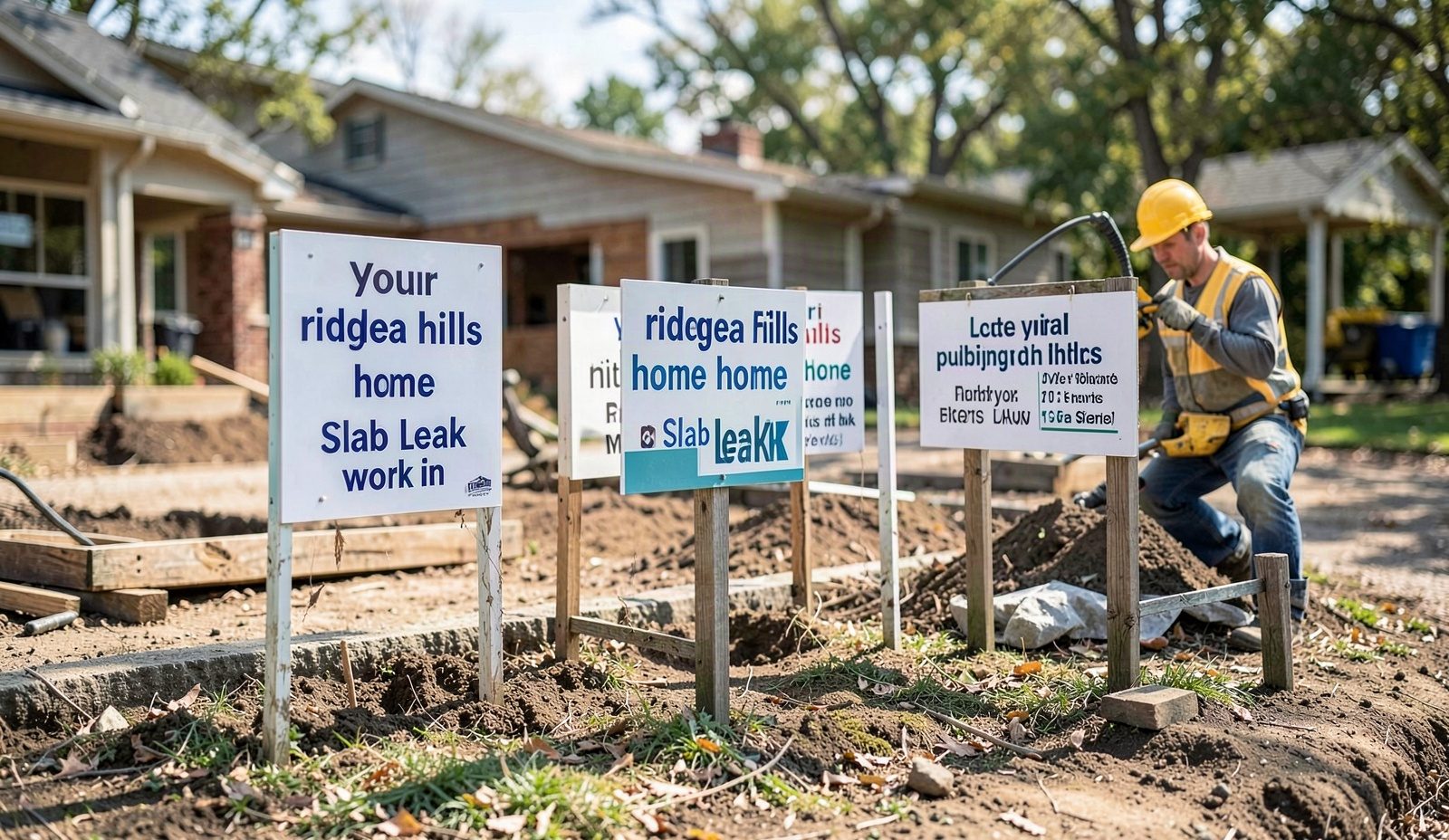
5 Signs Your Ridglea Hills Home Has a Slab Leak
5 Signs Your Ridglea Hills Home Has a Slab Leak, practical local guidance from Shield Plumbing Fort Worth, Fort Worth's trusted plumbing tea…
Read More




Shut off the water main if sewage is backing into a tub or shower. Keep kids and pets away from any standing water. Move rugs, baskets, and boxes off bathroom and laundry floors. Take photos of the backup for your insurance file. Call (817) 710-3766 and describe which drains are affected.
A whole house backed up call looks the same across Fort Worth. Water rises in the tub when someone flushes upstairs. The kitchen sink gurgles when the washer drains. Water sits an inch deep in a shower pan long after the water is off. The smell is not mildew or soap. It is raw sewage, sharp and sulfurous, and it gets stronger near the lowest drain in the house. In older sections of Fairmount and Arlington Heights, where cast iron drain lines still run under the slab, this pattern points to the main line, likely below the foundation.
Grease, wet wipes, and tree roots cause most main line clogs. Fort Worth adds a fourth cause: clay. North Texas expansive clay swells with rain and shrinks in drought, moving slab foundations enough to shear copper supply lines and separate drain joints under the house. A separated joint invites roots and soil into the pipe within weeks. A slow drain turns into a sewer clog emergency fast once that happens, and a severe drain blockage can form in a stretch of pipe that was clear a month earlier.
Waiting turns a simple clog into standing water in every low drain in the house. Next comes sewage backing up through a floor drain or shower pan instead of just a toilet. Left alone, the leaking joint under the slab keeps softening the soil beneath your foundation with every flush and every load of laundry. Emergency drain clearing still works at that stage, but the job has grown from a straightforward main line clog removal into cutting out and replacing a section of pipe.
If this sounds close but not quite your situation, emergency sewer backup cleanup may be the better starting point.
Permit and inspection questions? Development Services is the office we coordinate with on every permitted Fort Worth job.
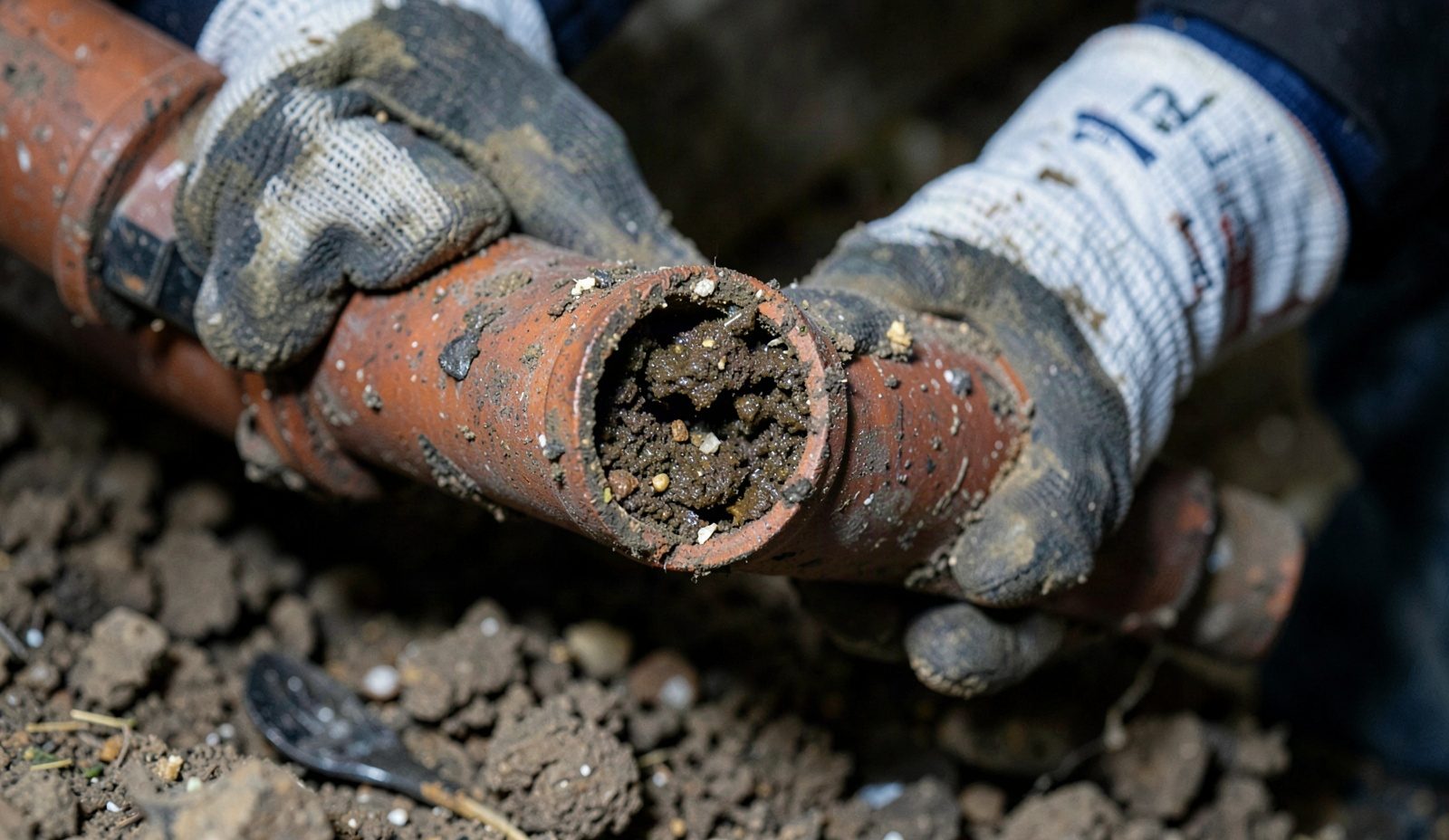
Every emergency drain clearing call starts with a camera, not a guess. We feed a self-leveling sewer camera through the nearest cleanout and walk the footage in real time, marking the blockage in feet from the access point so the crew knows how much cable or hose to run before cutting into anything. The footage on a severe drain blockage shows the difference between a grease mat sitting at twelve feet, a root ball pushing through a joint at forty feet, and a bellied section of pipe holding standing water the full length of the run. That distinction decides the tool.
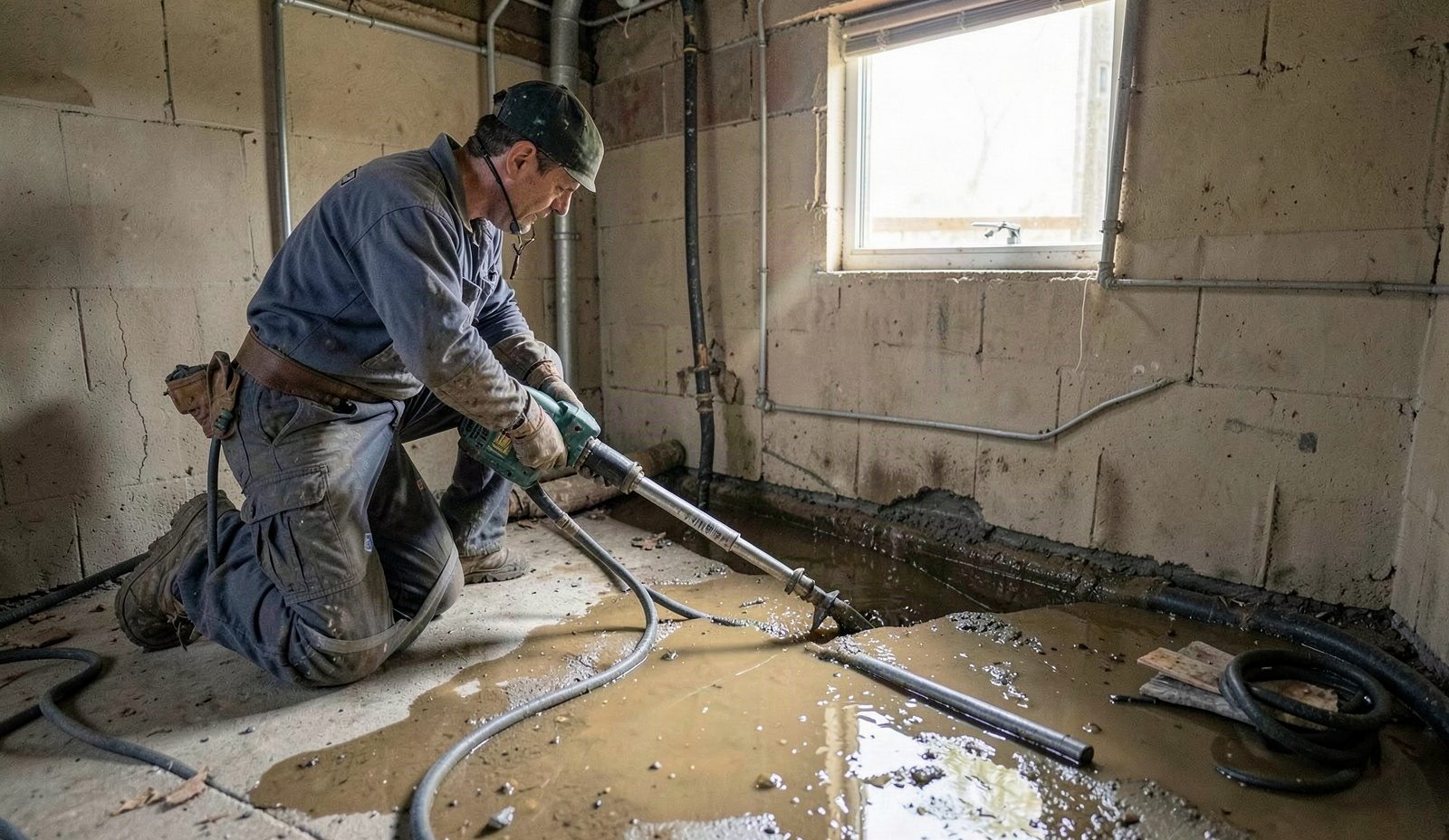
For grease and soft blockages, a cable machine running a cutting head sized to the pipe clears the channel fast and works well on a single clogged fixture. A true main line clog removal on a whole house backed up line calls for hydro-jetting instead. A trailer or truck-mounted jetter running roughly 3,500 to 4,000 PSI at 12 to 18 GPM scours the full pipe wall, not just a channel through the blockage, which matters when root hairs or grease coat several feet of pipe rather than plugging one spot. Cabling opens a path. Jetting restores the pipe's original diameter. On cast iron mains under pre-1970 slabs, we run the jetter at the lower end of that pressure range first and check the camera feed for wall thinning before opening it up, since scoured cast iron can perforate where a jetter at full pressure on newer PVC would not.
While the camera and jetter handle the blockage itself, we also read static water pressure at an outdoor spigot as part of the full diagnostic, since a pressure-reducing valve failure complicates any drain work that shares a wall with supply piping. A reading above 80 psi triggers a pressure-reducing valve requirement under Section 604.8 of the International Plumbing Code, the standard the City of Fort Worth has adopted. That single gauge check, taken before we ever touch the drain line, tells us whether the home has a second problem hiding behind the obvious one.
See 24/7 emergency plumbing services for how the related work is scoped and priced.
Price-checking is smart: marketplaces like Thumbtack publish typical cost ranges you can hold any quote against, including ours.
You describe what you are seeing, gurgling, standing water, which fixtures back up first, and the technician talks you through immediate steps while en route. On arrival, the technician runs a camera through the nearest cleanout to locate the blockage in feet and identify whether it is grease, roots, or a structural break. You see the footage on a tablet before any tool touches the line, so the diagnosis is not a guess relayed after the fact. This step usually takes twenty to thirty minutes depending on how far the camera has to travel.
Once the camera identifies the blockage, you get a written quote naming the method, cable or jetter, and the estimated time on site. Work does not start until you approve that number. Floors and access paths get covered before equipment comes off the truck. For grease or a single soft blockage, the cable machine clears the channel. For root intrusion or a coated pipe wall on a main line, the jetter runs at a pressure matched to the pipe's age and material, lower for older cast iron, higher for newer PVC.
After the line runs clear, the technician runs the camera through a second time to confirm the blockage is gone and to check the pipe wall for damage the jetter or cable might have caused. Every fixture on the affected line gets flushed and watched for backflow before the crew calls the job done. You get a short walkthrough showing what the camera found before and after, plus any recommendation for a section that is aging but not yet failed, so you know what to watch for next.
Pre-1970 neighborhoods across the metro were plumbed with galvanized steel supply lines and cast iron drains, both now at or past the end of their service lives. A technician who does not know that walks into a cast iron main expecting PVC-grade tolerances and can crack a joint that had another decade left in it. We treat every pre-1970 drain line as cast iron until the camera proves otherwise, and that assumption changes how hard we run the jetter and how we set the cable head's rotation speed.
The City of Fort Worth plumbing code, based on the International Plumbing Code, governs how drain and sewer work gets inspected here, and the City of Fort Worth Development Services Department is the permit authority for structural repair tied to a severe clog & backup removal call, such as replacing a collapsed section of main line. A cleared clog with no pipe replacement typically does not need a permit. A dug-up and replaced section usually does, and we tell you which side of that line your repair falls on before work starts, not after the invoice arrives.
An out-of-area crew unfamiliar with how Tarrant County's clay moves can misread a recurring backup as a simple grease clog and clear it three times in a year without ever finding the separated joint under the slab causing it. That pattern costs more in repeat emergency drain clearing calls than one proper camera inspection would have. Call (817) 710-3766 and ask what the camera found before you approve any repeat visit.
More detail on basement flooding pump-out is on its own page.
Your local utility, Payment options, publishes service and water-quality information every Fort Worth homeowner should know.
Call and a technician talks through what you are seeing before dispatch, then gives you a real arrival window, usually within a few hours for an active sewer clog emergency, not a vague morning-or-afternoon block. If the crew ahead of yours runs long because a main line needs jetting instead of cabling, we call and reset the window instead of leaving you guessing. Whole house backed up calls get priority scheduling ahead of routine drain cleaning, since standing sewage in the lowest bathroom cannot wait for tomorrow. You get a technician's name and a direct callback number, not a dispatch queue.
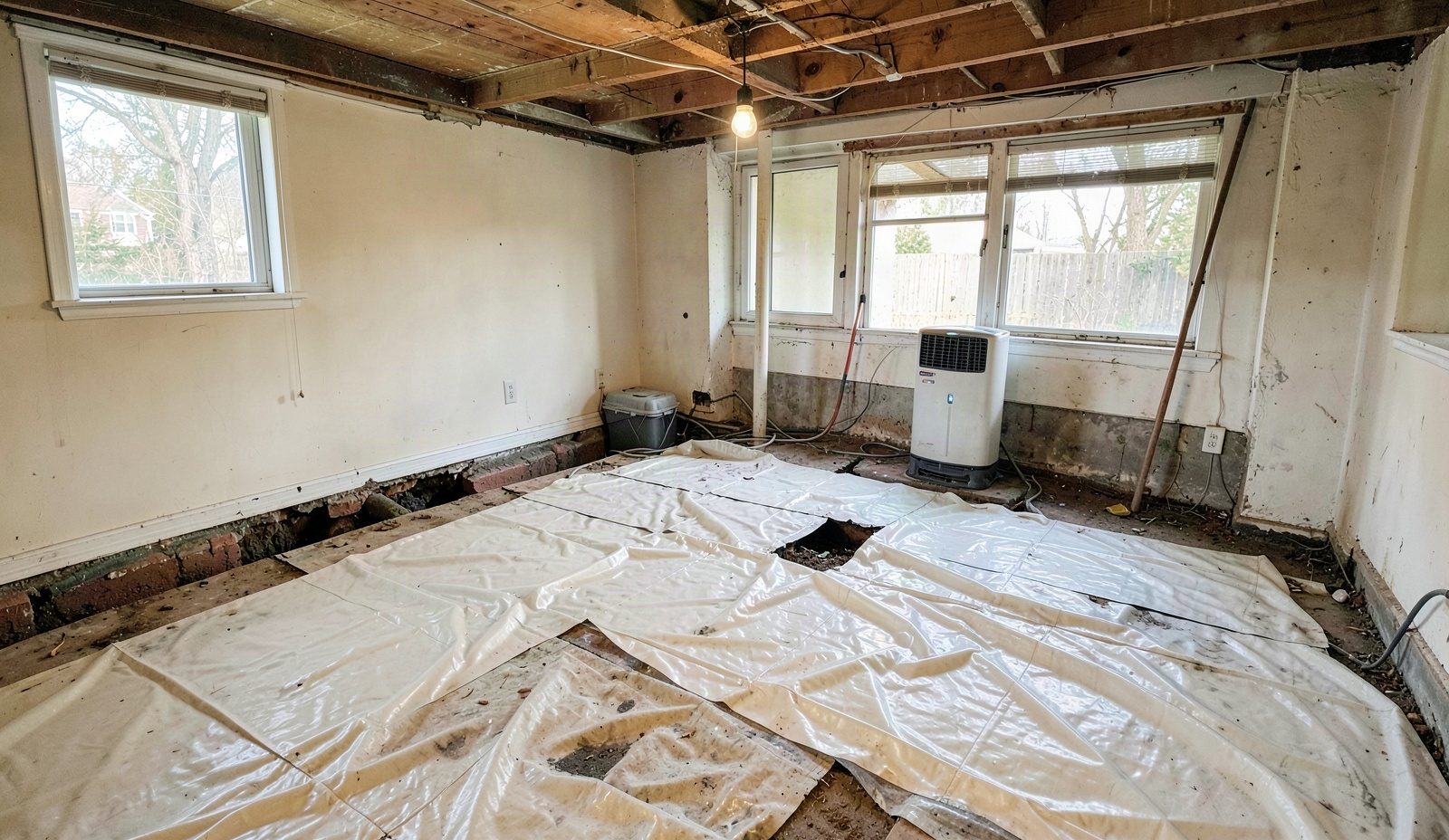
We lay runners from the door to the cleanout or access point before any equipment comes off the truck, and tarps go down under the work area itself. Cable and jetter hose get wiped between uses so grease and root debris do not track across your floor. Once the line runs clear, we bag and haul away anything pulled from the pipe, wipe down the work area, and check for spray-back near the cleanout. You should not be able to tell where the crew worked once the truck pulls away, aside from a drain that runs clear.
The estimate for severe clog & backup removal depends on what the camera finds: how far the blockage sits from the cleanout, whether it is a single mat of grease or a root system through a joint, and whether the pipe itself needs a section replaced. Access matters too, since a main line under a slab costs more to reach than one accessible from a yard cleanout. Once the camera pass is done, you get a written number for the specific repair the footage shows, and nothing starts until you approve it.
Every technician who works a solo call has passed a background check and logged supervised field hours on both cabling and hydro-jetting equipment before touching a job alone. We run internal refreshers whenever the City of Fort Worth updates its adopted plumbing code, so field decisions match the current standard instead of habits from years back. A senior technician reviews camera footage on any main line call before the crew commits to jetting pressure or a dig, a second set of eyes on the diagnosis itself.
A store-bought auger or chemical drain cleaner generally cannot reach or clear a true main line blockage. Those tools handle a single fixture trap, not a clog forty feet down a main line under a slab. Chemical cleaners can also sit against a cast iron wall long enough to worsen existing corrosion in the pre-1970 drain lines common across the metro. A camera-guided cable or jetter pass is the only reliable way to confirm the line is fully open.
Yes, same-day service is standard for active backups across the Fort Worth metro. Whole house backed up calls get priority scheduling ahead of routine drain cleaning appointments. Call (817) 710-3766, describe which drains are backing up, and a technician gives you a real arrival window rather than an open-ended promise.
Cost depends on how far the blockage sits from the cleanout, whether it is grease, roots, or a structural break, and whether the pipe needs a section replaced. Access plays a role too, since main lines under a slab cost more to reach than a yard cleanout. A written number comes after the camera diagnostic, specific to what your footage shows, not a flat rate quoted over the phone.
Permit need depends on the scope of the repair, not the fact that a clog occurred. Clearing a blockage with a cable or jetter typically needs no permit. Replacing a collapsed or dug-out section of main line typically does, and the City of Fort Worth Development Services Department makes the final call on any specific job.
Estimates follow the camera inspection, not a phone guess. The technician runs the camera, marks the blockage location and type, and writes a quote naming the method and materials before touching the line. You approve that number before any cable, jetter, or excavation work starts, and no exploratory charges get added once the job is underway.
Cost depends on the length and depth of the damaged run, the number of access points needed, and which repair method the pipe condition calls for. A short lateral with one clean break costs less to line than a long commercial main with multiple offset joints and root intrusion that needs pipe bursting instead. Call (817) 710-3766 to schedule a camera inspection and get a written scope with the specific factors driving your property's job.
Clay soil under homes near Ridglea Hills and the Cultural District moves with every wet and dry cycle, and that movement is not gentle on rigid drain pipe. A pipe that ran true for thirty years can develop a low belly or a separated joint over a single hard summer of drought followed by heavy rain. Add housing stock from the Near Southside and Wedgwood built before plastic drain pipe was standard, and you get cast iron mains with rough interior walls that catch grease and wipes far more readily than smooth PVC. Planning a main line clog removal here means assuming the pipe material and the ground around it are both working against a quick fix, and choosing jetting pressure and cable speed accordingly.
Fort Worth inspects drain and sewer work under the City of Fort Worth plumbing code, based on the International Plumbing Code, and any repair that goes beyond clearing the line, like cutting out and replacing a collapsed section, falls under the City of Fort Worth Development Services Department for permitting. Homeowners in these older neighborhoods often assume a cleared clog and a repaired pipe are the same job with the same paperwork, and they are not. Knowing which repairs trigger a permit and which do not keeps a straightforward backup call from turning into a compliance problem discovered later, during a sale or a refinance, when the missing paperwork is far harder to fix than the pipe was.
Explore our service area and locate Shield Plumbing Fort Worth with ease. We're proudly local and serve the surrounding neighborhoods with fast response and honest pricing. Use the map to check our coverage area, or call us and we'll confirm in seconds.
Address:
Shield Plumbing Fort Worth, 210 W 7th St, Fort Worth, TX 76102
5 Signs Your Ridglea Hills Home Has a Slab Leak, practical local guidance from Shield Plumbing Fort Worth, Fort Worth's trusted plumbing tea…
Read More
What Wedgwood Residents Should Know Before a Whole-Home Repipe, practical local guidance from Shield Plumbing Fort Worth, Fort Worth's trust…
Read More
How Fort Worth's Hard Water Is Quietly Destroying Your Water Heater, practical local guidance from Shield Plumbing Fort Worth, Fort Worth's …
Read More
The Hidden Cost of Ignoring a Dripping Faucet in Fort Worth, practical local guidance from Shield Plumbing Fort Worth, Fort Worth's trusted …
Read More