
June 20, 2026
5 Signs Your Ridglea Hills Home Has a Slab Leak
5 Signs Your Ridglea Hills Home Has a Slab Leak, practical local guidance from Shield Plumbing Fort Worth, Fort Worth's trusted plumbing tea…
Read More




White Settlement grew up fast alongside the air base through the 1940s and 1950s, and that growth spurt shaped the plumbing you have today. Houses built in that first wave went in with the materials of the day, not the materials a plumber would spec now. Unless a home has already been repiped, what runs behind the walls is often original to the build date, and that single fact drives more service calls here than any other.
The original townsite streets closest to the base gates carry the oldest stock, small frame houses on tight lots with supply lines and drains that have never been touched. Move outward to the ranch-style additions built through the 1960s and you find larger slabs, longer drain runs, and the first generation of copper supply lines, now well past the midpoint of their expected service life. Newer infill lots on the town's western edge skew younger, but even a home built in the 1990s is old enough for a water heater to be on its second or third unit and for shutoff valves to have never been exercised.
Soil and water compound the age problem. Tarrant County clay expands when it rains and pulls back hard during dry stretches, and that movement works on slab foundations year after year. Water pressure and hardness vary block by block depending on how close a property sits to a pressure-regulating station, which is why two houses on the same street can have very different service histories. Seasonal patterns follow the same logic: calls spike after the first hard freeze of the winter and again in August when demand on aging water heaters peaks during the hottest stretch of the year.
Need something specific? Our plumbing services page breaks down exactly how we handle it in White Settlement.
A plumbing company earns trust in a town this size one job at a time, not through a marketing budget. Shield Plumbing Fort Worth builds its reputation on referrals from homeowners who called once for a slab leak or a water heater and called back a year later for something unrelated, because the first visit held up. That kind of repeat business only happens when the diagnosis was right the first time and the invoice matched what was actually done.
Every job that comes off a truck goes through an internal review before it is closed out. A senior technician checks the photos, the pressure readings, and the parts list against the original complaint, not to second-guess the tech on site, but to catch the kind of small miss that turns into a callback six months later. New hires spend time paired with an experienced plumber on White Settlement calls specifically, because a technician who learned his trade in a newer Fort Worth subdivision does not automatically know what a 1950s cast iron stack sounds like when you tap it with a wrench.
Training here is ongoing, not a one-time certificate. Techs keep current on backflow prevention requirements, on water heater venting rules, and on the differences between repairing and replacing galvanized supply lines, because guessing wrong on any of those three costs a homeowner money and time. Call (817) 710-3766 and the person who answers can already tell you what a typical slab leak diagnostic looks like in this part of Tarrant County, before a truck ever leaves for your address.
One of our most-requested services here is shower & bathtub plumbing, see that page for pricing and process.
Most White Settlement calls placed before early afternoon get a technician out the same day, not a next-week appointment window. Dispatch logs the address, the symptom, and the fixture involved before routing the closest available tech, which cuts drive time and gets a diagnostic tool on the problem while the leak or clog is still fresh evidence, not a dried stain.
Every service call starts with a gauge screwed onto an outdoor spigot to read static water pressure, not a guess based on how the shower feels. A reading above 80 psi triggers a pressure-reducing valve recommendation, because Section 604.8 of the International Plumbing Code requires one past that threshold. That single number explains a surprising share of the water heater and fixture failures we see across White Settlement.
Techs work under a structured apprentice-to-journeyman path, not a weekend crash course. Backflow prevention, venting clearances, and trap arm requirements get reviewed on a rotating schedule so the crew stays current as code interpretations shift. That training shows up on site as fewer callbacks for the kind of code miss an inspector catches on a permit job.
Many White Settlement homes sit on slab foundations poured during the town's fastest growth years, and the crew knows roughly where a builder from that era ran the original supply lines before ever opening a wall. That familiarity with the town's mix of older frame houses and newer infill cuts diagnostic time on almost every call.
Residential plumbing service in White Settlement covers everything from a single leaking angle stop to a full repipe of a home still running on its original supply lines. Commercial work follows a different rulebook entirely, built around code compliance, backflow testing schedules, and keeping a business open while the work happens. Emergency dispatch sits apart from both, built for speed and containment rather than a planned scope of work.
Hiring a plumber in White Settlement usually means matching the job to one of these three tiers before the truck ever rolls. A slow drain is a residential repair call. A grease trap failure at a restaurant is a commercial compliance call. A supply line that lets go at midnight is an emergency call, and it gets treated like one from the first ring.
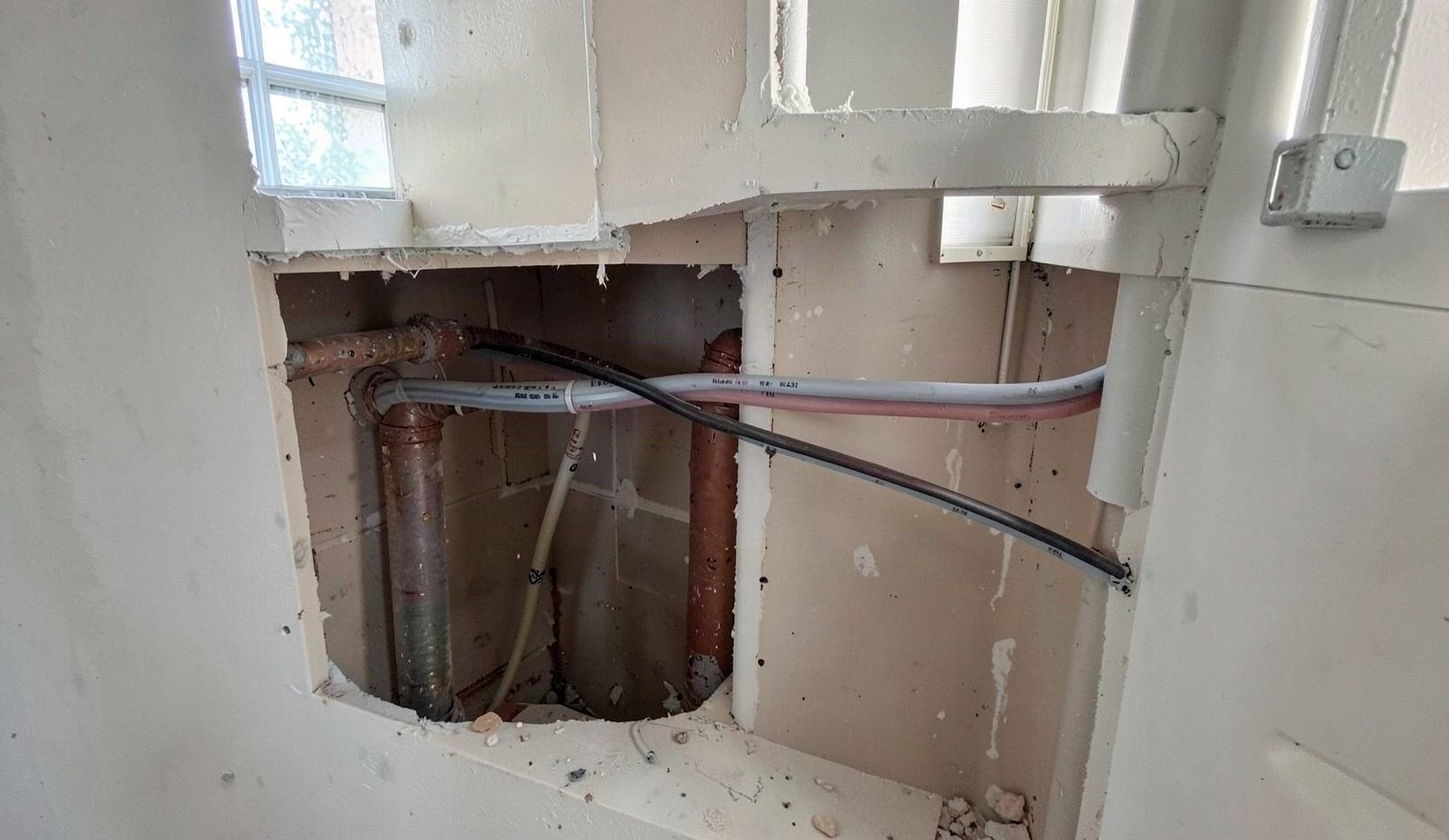
Whole-home repiping replaces galvanized steel or aging copper supply lines with PEX tubing rated to ASTM F876, run in a way that eliminates the low-flow and rust-colored water complaints that come with corroding original pipe. This service fits homeowners in White Settlement's older housing stock who have already patched two or three leaks in the same wall and are done chasing pinholes one at a time. A recent example: a house near the base gates with three failed unions in one crawlspace got a full repipe instead of a fourth patch, closing out the recurring leak calls for good.
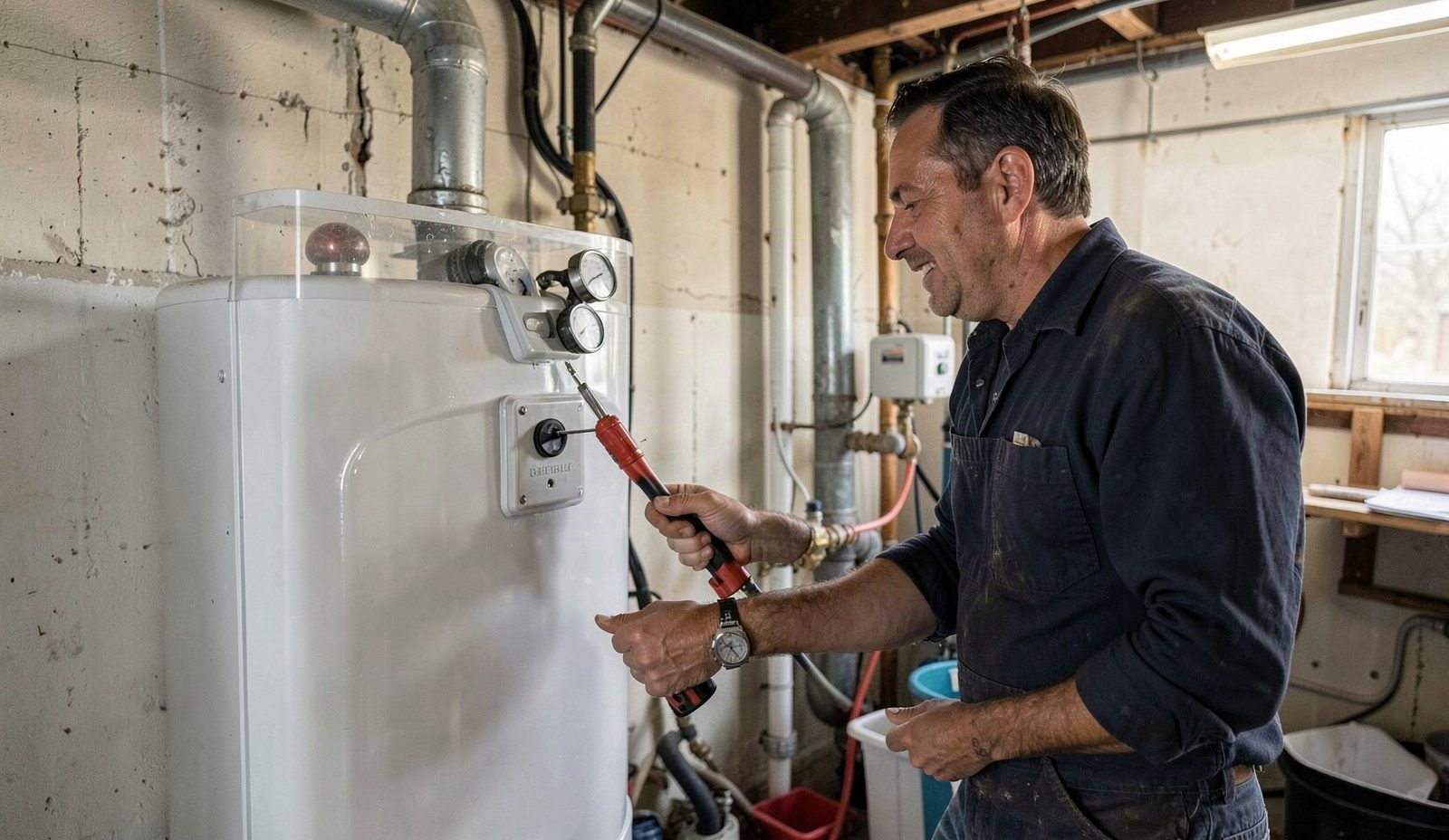
Commercial accounts need documented backflow prevention testing and code-compliant water heater installations that keep an inspector satisfied and a business open. This service targets property managers and business owners who cannot afford unplanned downtime or a failed inspection during a lease renewal. A small strip retail building on White Settlement Road with an undersized commercial water heater serving three tenant spaces is a typical scenario: the fix means sizing a new unit to actual simultaneous demand, not swapping in a like-for-like replacement that fails the same way again within a year.
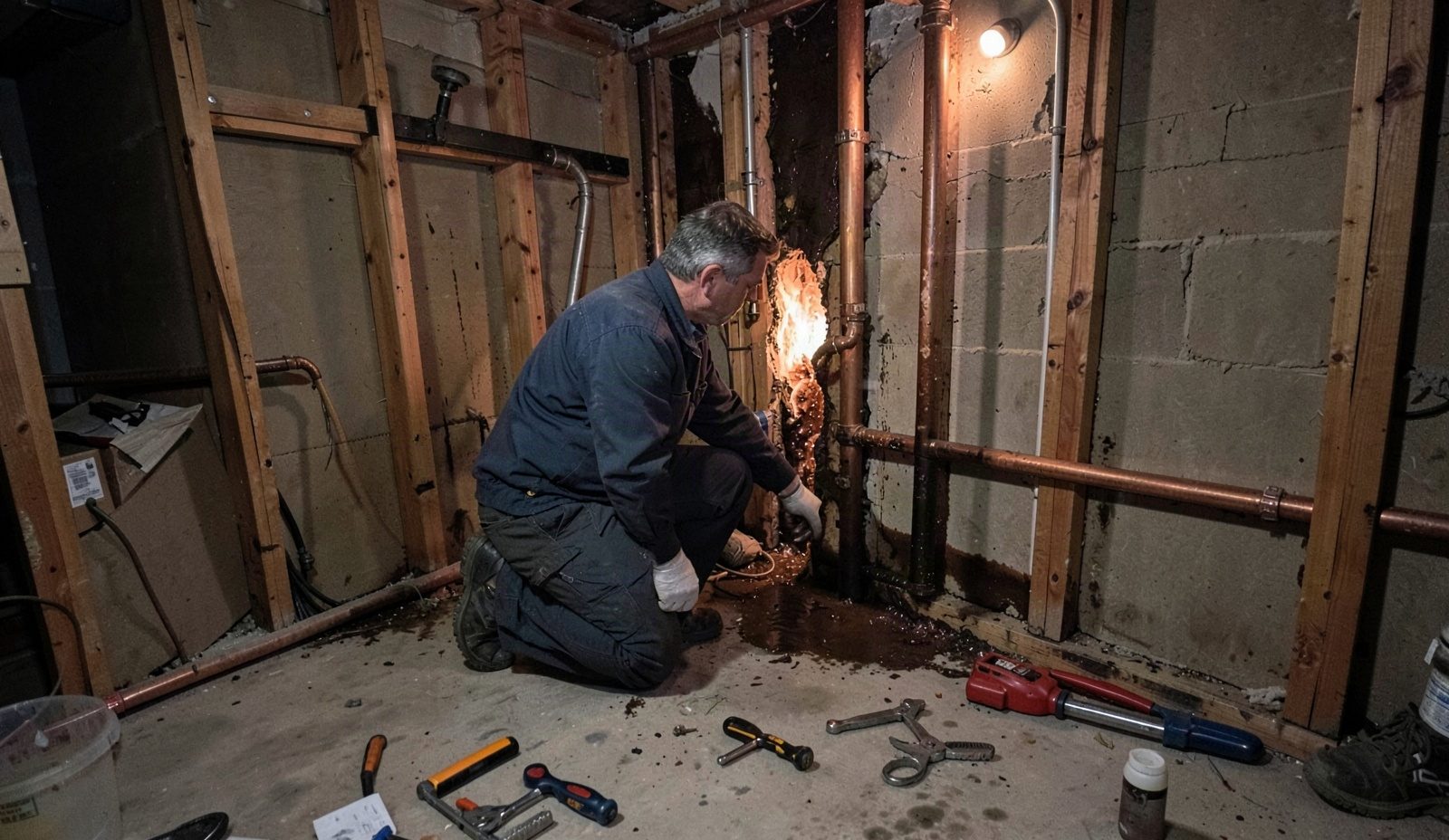
Emergency dispatch handles the calls that cannot wait for a morning appointment window, burst supply lines, sewage backups, and water heaters failing at the tank seam. Containment comes first, water is shut off at the main and damage is stopped before diagnosis even starts. A typical after-hours scenario is a copper line splitting behind a washing machine box at 2am, flooding a laundry room, where the first job on site is stopping the flow, not explaining the repair plan.
Four problems account for most of the service calls placed across White Settlement, and each one traces back to a specific local condition rather than random bad luck. Catching the early signal on any of these saves a homeowner from a bigger repair, and often from water damage that costs more to fix than the plumbing itself.
None of these four problems announce themselves the same way twice, which is why a phone description is never enough to quote a job. A technician on site with a gauge and a camera can tell in minutes which of the four is actually happening behind a wall or under a slab.
You can verify any contractor's credentials through Texas State Board of Plumbing Examiners before you hire, including ours.
The February 2021 freeze burst pipes across Tarrant County by the tens of thousands, and most failures were supply lines run through attics and exterior walls with no insulation protecting them from the cold. A ceiling stain that appears within a day or two of a hard freeze, or a sudden drop in water pressure at every fixture, means it is time to call before the leak spreads into insulation and drywall.
Homes plumbed before 1970 across the metro used galvanized steel supply lines and cast iron drains, and both are now at or past the end of their service life. Rust-colored water at first flush, or a slow-draining tub paired with a sewer-gas smell near the cleanout, signals internal corrosion that has narrowed the pipe. Call once you see either sign, because galvanized lines fail from the inside out with little outward warning.
North Texas expansive clay swells with rain and shrinks in drought, moving slab foundations enough to shear copper supply lines and separate drain joints under the house. A warm patch on the flooring, a spike in the water bill with no new usage, or foundation cracks appearing alongside a new drain smell all point to slab movement acting on the plumbing beneath it. Call as soon as any two of those signs show up together.
West-side water in White Settlement runs hard, and scale buildup on heating elements is a main reason water heaters in the area fail years before their rated life. A tank that takes noticeably longer to deliver hot water, or a rumbling or popping sound from the tank during heating, means scale has already coated the element. Call before the tank leaks at the seam and floods the closet or garage it sits in.
A first visit runs on a set sequence, not guesswork. The technician checks static water pressure, inspects the fixture or area in question, and asks when the problem started and whether it has gotten worse, all before opening a wall or pulling a toilet. Most diagnostic visits run 30 to 60 minutes depending on access. Have the water shutoff location handy and clear a path to the affected fixture before the truck arrives.
Independent standards matter too, the EPA's WaterSense program sets the efficiency benchmarks we use when recommending replacement fixtures.
Dispatch confirms the appointment window by phone or text after the initial call, then sends a heads-up when the technician is on the way with a realistic arrival estimate, usually within a 30-minute window rather than an all-day guess. If a job runs long ahead of yours, dispatch calls to reset expectations rather than leaving you checking the driveway. You can also reach the office directly at (817) 710-3766 if a window needs adjusting.
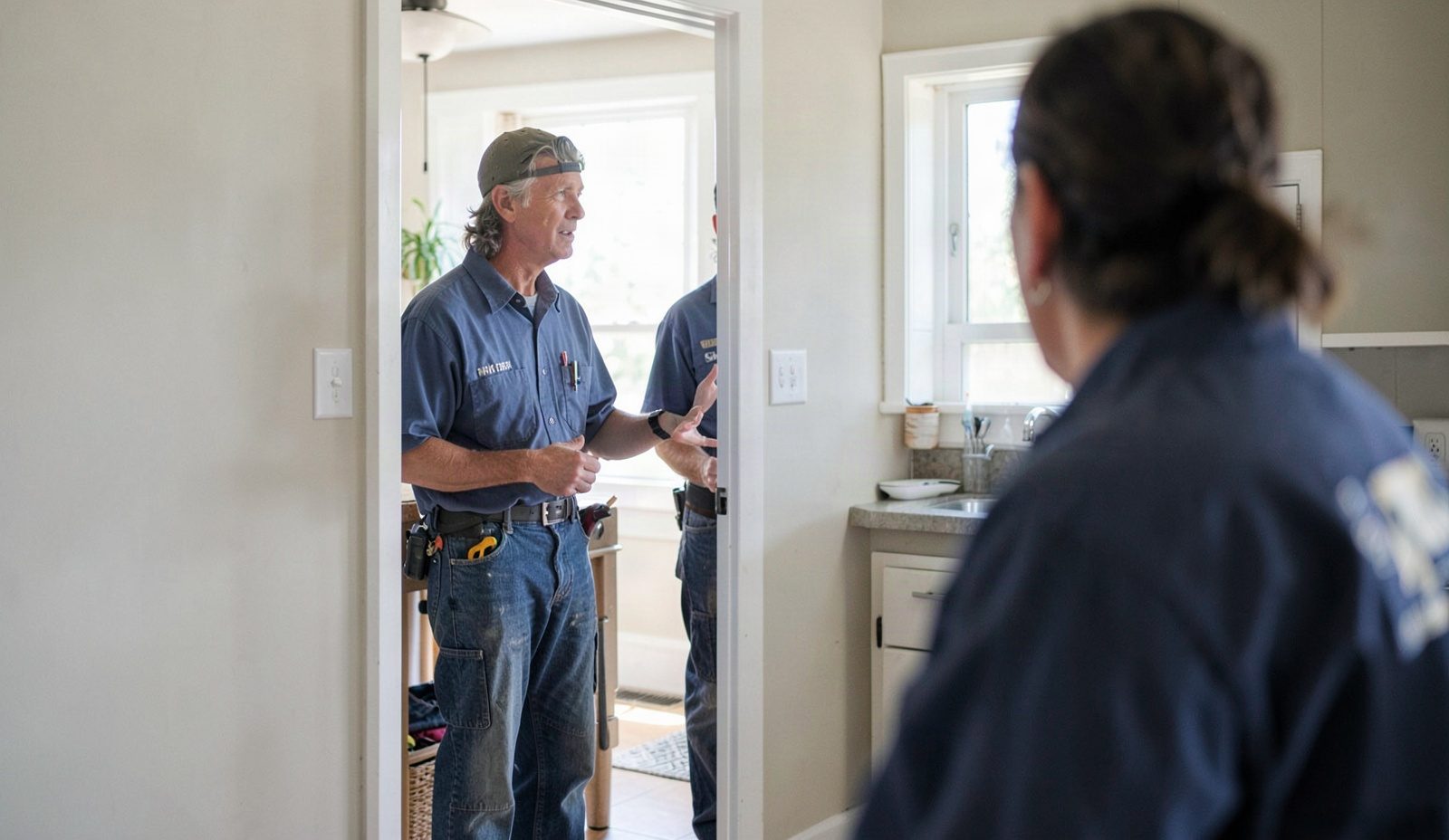
The technician introduces himself, confirms the address and the reported problem, and asks permission before bringing tools past the front door. Shoe covers and floor protection go down in any area the work will touch, especially near water heaters and under sinks where standing water is a risk. Before any tool comes out, the technician walks the affected area with you and points out exactly what he is seeing and why, so nothing gets opened up as a surprise.
The technician walks you through what was done, runs the fixed fixture or line to confirm the repair holds under normal use, and points out any related wear worth watching, like a second valve nearing the end of its life. Work areas get wiped down and any removed fixtures or old parts are shown to you before disposal. You get a written summary of the work performed before the technician leaves the property.
The process from first call to finished repair follows three stages, and knowing them ahead of time takes the guesswork out of scheduling around your day. Scheduling windows run in 2 to 3 hour blocks, and dispatch texts an update if the tech ahead of you runs long.
Nothing gets opened or replaced without a number attached to it first. A technician diagnoses, writes down the scope, and gets your sign-off before any part gets pulled, which keeps the invoice matched to the work rather than a surprise line item at the end.
Call (817) 710-3766 and describe the symptom, the fixture involved, and when it started. Dispatch logs the address and problem type and gives a realistic arrival window based on current call volume in the White Settlement area, then confirms the appointment by phone or text.
The technician runs the on-site diagnostic, pressure test, camera inspection, or fixture teardown depending on the symptom, then writes up the findings and a price for that specific scope. Work does not start until you approve it.
The technician completes the approved scope to the applicable plumbing code, tests the repair under normal water flow and pressure, and documents the fix with photos where relevant. You get a walkthrough and a written summary before the crew packs up.
Plumbing work in White Settlement falls under the City of Fort Worth plumbing code, based on the International Plumbing Code, which governs everything from pipe sizing to venting clearances to backflow prevention on both residential and commercial jobs. Materials matter as much as the code section: PEX tubing used in repipes carries an ASTM F876 rating, copper supply line replacements follow ASTM B88, and any component touching potable water is expected to meet NSF/ANSI 61 standards for material safety. None of that is optional on a permitted job, and skipping it is exactly what an inspector is trained to catch.
Compliance gets verified on site, not assumed. A technician pressure-tests a new line before it gets closed behind drywall, checks trap arm distances against code minimums on any new fixture, and confirms venting clearances before signing off on a water heater swap. On permitted jobs, that verification lines up with what a city inspector will check during a walkthrough, which is the whole point of doing it that way the first time.
Permitting authority depends on the address. Work inside Fort Worth city limits routes through the City of Fort Worth Development Services Department, while other jurisdictions in the area fall to the local city building department or Tarrant County directly. Full replacements and structural plumbing work typically require a permit, while minor like-for-like repairs often do not, but the final call always belongs to the permitting authority for that specific address, not to the contractor doing the work.
Communities like r/Plumbing are full of homeowners comparing notes on exactly this problem, worth a read before a major project.
Repairs under a slab call for either a targeted spot repair through a small access cut or a full reroute overhead through the attic, depending on how many failure points exist along the run. A technician camera-inspects the line first to decide which approach actually solves the problem instead of just moving it.
Scope, access, and material condition set the price more than anything else. A slab leak with easy crawlspace access costs less to reach than one under a poured patio, and a repipe on a home with existing galvanized lines takes longer than one where PEX is already partially installed.
A standard diagnostic visit runs under an hour, while a full repipe typically spans one to three days depending on the home's size and number of fixtures. Quality gets checked with a static pressure test after every closed-wall repair, confirming the line holds before drywall or flooring goes back.
Fort Worth addresses route permit applications through the City of Fort Worth Development Services Department, while White Settlement's own jurisdiction and other nearby areas fall to the local building department or Tarrant County. Structural repiping and water heater replacements typically need a permit and inspection; a single valve swap usually does not.
Texas plumbing regulation runs through the Texas State Board of Plumbing Examiners and through local adoption of the International Plumbing Code, updated on adoption cycles rather than through a single standalone new law. Cities including Fort Worth periodically adopt updated code editions, which shifts requirements like backflow prevention and venting clearances. Always confirm current requirements with the local permitting authority for a specific address rather than relying on a general statewide rule.
Plumbing costs in White Settlement depend on the scope of work, the pipe material involved, and whether the job needs slab or crawlspace access. A straightforward fixture repair costs far less than a repipe tied to failing galvanized lines. Call a technician to walk through your specific situation and get a written price tied to the actual diagnostic, not a phone guess.
A technician diagnoses the problem on site first, then presents a written price for that specific scope before any work starts. Nothing gets replaced or opened up based on a phone description alone, since fixture age, access, and pipe material all change the actual scope once a technician sees the job. You approve the written price before the technician moves past the diagnostic stage.
Fixing it starts with shutting the supply valve at the wall, then finding out whether the fault sits inside the tank or below the bowl. Lift the tank lid and check if the float or fill valve is stuck open, which keeps water climbing past the overflow tube. If the tank looks normal but the bowl rises after every flush, the block sits in the trapway or drain line further down, and a plunger won't reach it. A technician brings a closet auger and a pressure gauge to narrow that down in one visit.
Estimates start with an on-site diagnosis, since scope for kitchen plumbing varies too much for a phone quote to mean anything. A technician inspects the fixture or line, sometimes with a camera, and provides a written quote itemizing labor and materials before any billable work begins. You approve that quote before work proceeds, and any scope change discovered mid-job gets a revised quote before continuing.
Estimates get written after the diagnostic walk-through and pressure test locate the actual leak. The technician explains the scope in plain terms, covering material, access, and labor, and you approve the number before any cutting or fitting work starts. If the repair uncovers a second issue, like a corroded joint further down the line, you get a call and a revised number before that additional work begins. No repair proceeds on a phone quote alone.
Explore our service area and locate Shield Plumbing Fort Worth with ease. We're proudly local and serve the surrounding neighborhoods with fast response and honest pricing. Use the map to check our coverage area, or call us and we'll confirm in seconds.
Address:
Shield Plumbing Fort Worth, White Settlement, TX 76108
5 Signs Your Ridglea Hills Home Has a Slab Leak, practical local guidance from Shield Plumbing Fort Worth, Fort Worth's trusted plumbing tea…
Read More
What Wedgwood Residents Should Know Before a Whole-Home Repipe, practical local guidance from Shield Plumbing Fort Worth, Fort Worth's trust…
Read More
How Fort Worth's Hard Water Is Quietly Destroying Your Water Heater, practical local guidance from Shield Plumbing Fort Worth, Fort Worth's …
Read More
The Hidden Cost of Ignoring a Dripping Faucet in Fort Worth, practical local guidance from Shield Plumbing Fort Worth, Fort Worth's trusted …
Read More