
June 20, 2026
5 Signs Your Ridglea Hills Home Has a Slab Leak
5 Signs Your Ridglea Hills Home Has a Slab Leak, practical local guidance from Shield Plumbing Fort Worth, Fort Worth's trusted plumbing tea…
Read More




River Oaks was largely built out in the 1940s and 1950s, and that era shapes almost every plumbing call here. Builders ran galvanized steel supply lines through slab and pier-and-beam construction alike, and that steel corrodes from the inside out. The corrosion narrows the pipe's interior diameter year after year, which is why so many older River Oaks homes report water pressure that has quietly dropped over a decade without a single leak ever showing.
The pier-and-beam homes common to that construction era create their own access pattern. Supply lines run under the floor joists in an open crawl space rather than inside a slab, which is good for repair access but bad for insulation. Those exposed lines sit closer to outside air temperature than a slab-run line does, and that matters every time a hard freeze rolls through Tarrant County.
North Texas expansive clay adds a second stress no builder in the 1940s planned for. The clay under River Oaks swells when spring rain soaks it and shrinks hard during a dry August, and that cycle moves the foundation enough over the years to shear rigid copper supply runs and pull cast iron drain joints apart under the house. Homes on original slabs from that build-out era show this most, since the soil under them has had seventy-plus years of wet-dry cycles to work on the joints.
Newer infill built onto these same lots in later decades mixes modern PEX and PVC into a system still partly running on original steel and iron, which means two houses on the same block can have completely different failure points. A technician who does not know which era built which house is guessing. One who does can usually name the likely problem before touching a wrench, based on the age of the slab pour and the type of foundation alone.
Our technicians follow the workmanship standards promoted by the Plumbing-Heating-Cooling Contractors Association.
River Oaks homeowners call Shield Plumbing Fort Worth because the diagnosis matches what they actually find when the wall opens. That reputation gets built one accurate call at a time, not through advertising. A technician who tells a homeowner to expect a corroded galvanized tee behind the water heater, and then finds exactly that, earns the next call from that same street.
Internally, every job runs through the same sequence regardless of who is on the crew. The technician documents the problem with photos before touching anything, tests the affected line or fixture with the appropriate gauge or camera, and writes the scope down before any repair starts. That written record protects the homeowner and keeps the technician honest about what the job actually requires, rather than what is convenient to say on the spot.
Training runs on a defined ladder rather than on-the-job improvisation. New technicians work under a more experienced plumber on real River Oaks calls, learning the specific failure patterns of homes several decades past their original plumbing codes before they run a job alone. That structure matters more here than in a newer suburb, because a mistake on a seventy-year-old cast iron stack costs a homeowner far more than a mistake on ten-year-old PVC.
The work itself gets judged the same way a code inspector would judge it: pressure holds where it should hold, drains pitch correctly, and nothing gets buried behind drywall until it has been checked. That standard does not change based on whether the job is a same-day repair or a multi-day repipe. Call (817) 710-3766 to talk through a specific problem with a technician rather than a scheduler.
Independent standards matter too, the EPA's WaterSense program sets the efficiency benchmarks we use when recommending replacement fixtures.
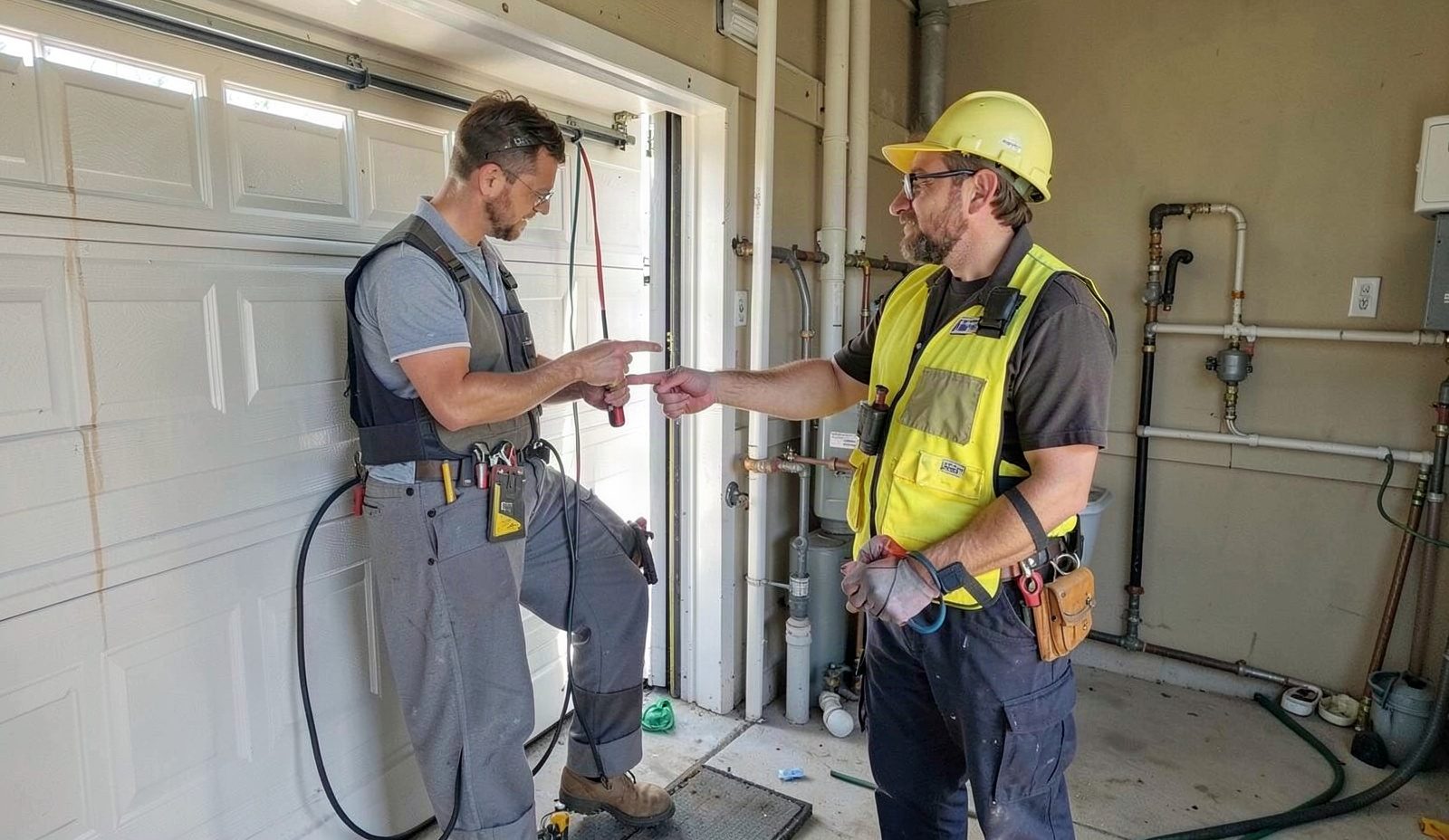
The plumber who diagnoses your problem is the one who completes the repair. That technician carries the job notes and photos from the first visit into the repair visit, which means you explain the problem once. No handoff between a diagnostic crew and a repair crew, and no repeating yourself to a second stranger.
Technicians check static water pressure at an outdoor spigot with a calibrated gauge on nearly every River Oaks call, since a reading above 80 psi under the plumbing code means a pressure-reducing valve is required. A reading well below normal points straight at galvanized corrosion narrowing the line, not a fixture problem.
Texas plumbers work through a defined ladder set by the Texas State Board of Plumbing Examiners, moving from apprentice to journeyman to master plumber, each tier requiring documented hours and exams. That structure means the person on your job has logged real field time on systems like the ones common in River Oaks before working unsupervised.
Many River Oaks homes from the 1940s and 1950s sit on pier-and-beam foundations with a low crawl space underneath, not a slab. Technicians who work this area regularly know to check that space first for exposed steel lines and insulation gaps, rather than assuming a slab leak the way they might in a newer Fort Worth subdivision.
Residential work in River Oaks covers everything from a single failed valve to a full repipe replacing galvanized steel with PEX or copper. Fixture replacement, water heater swaps, drain clearing and slab leak repair make up most day-to-day calls, with sewer camera inspection used to confirm what is actually happening inside older cast iron before anyone digs.
Commercial and emergency work follow different rules. Commercial jobs weigh code compliance and downtime against a business's operating hours, covering backflow prevention testing, grease trap service and water heater capacity upgrades. Emergency calls run on a different clock entirely, focused on containment and restoring service as fast as the failure allows. Each tier gets covered in more depth below.
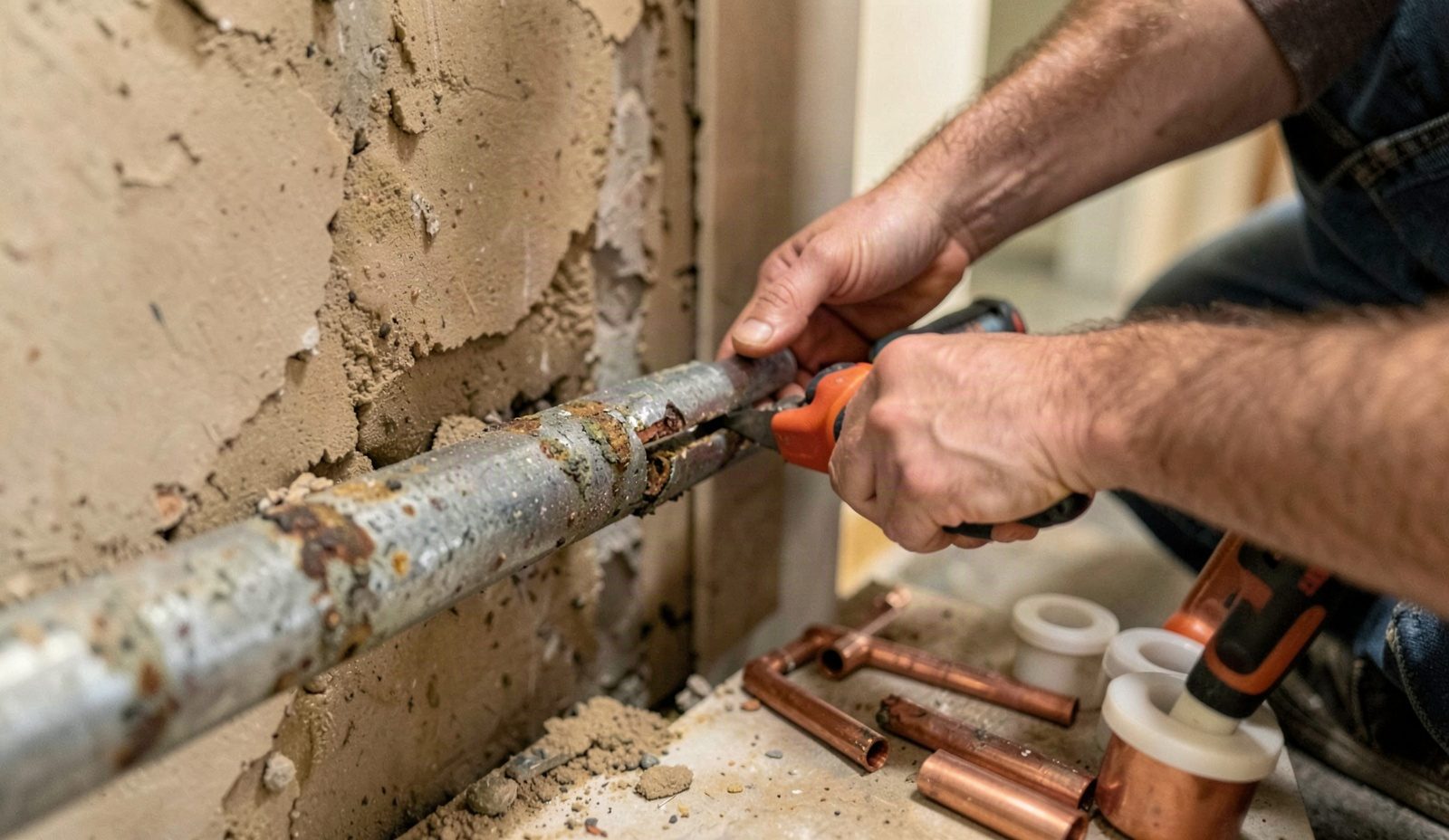
For homeowners still running original 1940s or 1950s steel supply lines, a full or partial repipe swaps corroded galvanized sections for PEX or copper, restoring flow to fixtures that have been running weak for years. This service fits homeowners who notice pressure dropping at the farthest bathroom first, since that fixture sits at the end of the longest run of narrowed pipe. One recent example involved a River Oaks home where the kitchen faucet ran fine but an upstairs shower had slowed to a trickle over several winters. Tracing the run back showed a galvanized section behind the water heater nearly closed off with rust scale, replaced with copper in a single day without opening a single wall upstairs.
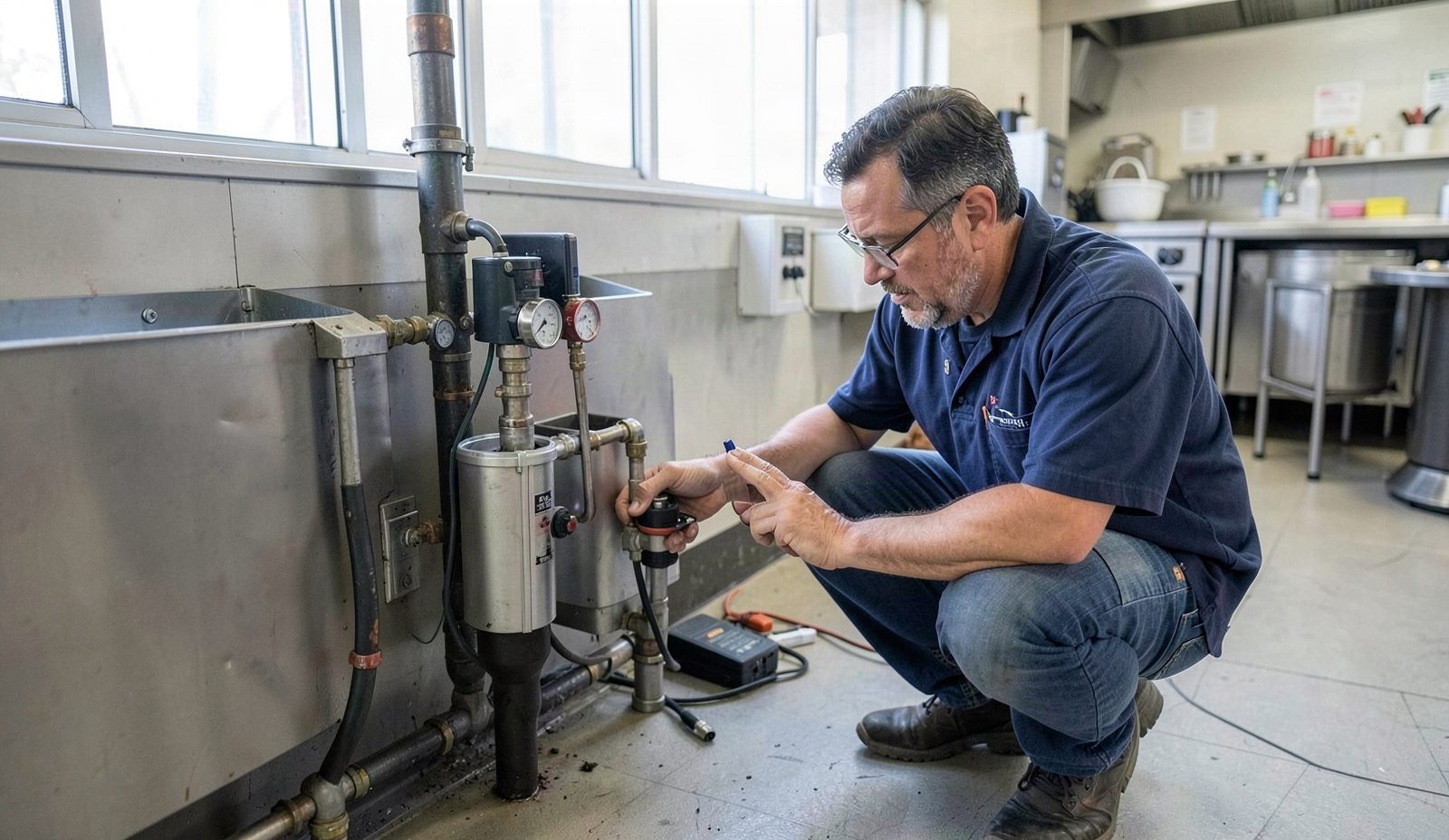
Commercial properties along River Oaks' business corridors need documented backflow prevention testing and grease trap service to stay in compliance and keep operating without interruption from a code violation. This work fits property managers and business owners who need paperwork ready for an inspector or insurer, not just a working sink. A small restaurant on a commercial lease recently needed its RPZ backflow assembly retested after a lapsed annual certification threatened its occupancy permit. Testing, documentation and a same-visit repair on a failed check valve cleared the requirement before the health inspection deadline, with zero closed hours during service.
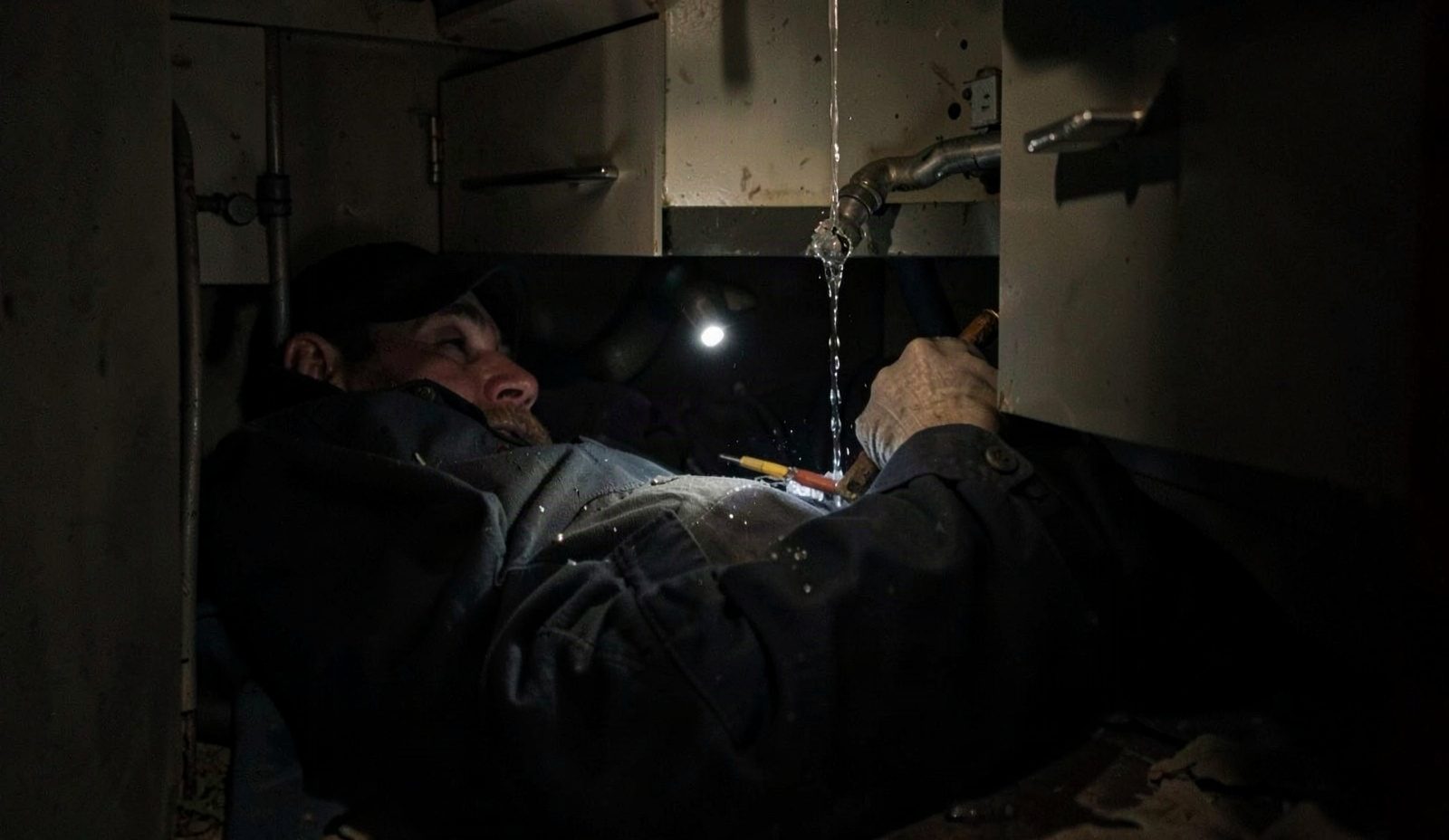
After-hours dispatch handles burst supply lines, failed water heaters flooding a utility closet, and sewer backups that cannot wait until morning. This service exists for the homeowner standing in ankle-deep water at midnight who needs the main shut off and the source found immediately, not a callback the next business day. One recent overnight call involved a slab leak under a hallway that had gone unnoticed until water started pooling near the baseboards. The technician located the shutoff, isolated the leak point with a listening device, and had the water main back on for the rest of the house within the hour.
Four problems account for most River Oaks service calls, and all four trace back to the same root cause: a housing stock built decades before modern plumbing materials existed, sitting on soil that never stops moving. Catching any of these early, before a slow leak becomes a foundation problem, is almost always cheaper and faster to fix.
The signals below are specific enough to act on. A homeowner who notices one of these does not need to diagnose it themselves, but knowing what it means is the difference between calling today and calling after real damage sets in.
The February 2021 freeze burst pipes across Tarrant County by the tens of thousands, and most failures were supply lines run through attics and exterior walls rather than deep underground. River Oaks' pier-and-beam crawl spaces carry the same exposure. A sudden loss of water pressure right after a hard freeze, or a wet ceiling stain, means a line has already split and needs a shutoff and inspection immediately.
Pre-1970 homes across the metro were plumbed with galvanized steel supply lines and cast iron drains, and both materials are now at or past the end of their service life. Rust-colored water at first draw or a slow, gurgling drain that a plunger cannot fix points to internal corrosion narrowing the pipe. Waiting usually means a pinhole leak forms before the full line gets replaced.
Lots near the West Fork of the Trinity River sit on soil that stays wetter longer after storms, and that moisture accelerates corrosion on buried metal supply and sewer lines. A soft, unusually green patch of yard, a spike in the water bill with no new usage, or water pressure that drops only when the irrigation or hose bib runs signals a buried line failing underground.
Fort Worth water is moderately hard, and the scale it leaves on heating elements is a leading reason local water heaters fail years before their rated life. A popping or rumbling sound from the tank, or water that never quite reaches full hot, means sediment has built up on the element and the unit is working harder than it should. Flushing helps early, but a rumbling tank past year eight or nine usually means replacement is closer than repair.
A first visit to a River Oaks home typically runs under an hour for a straightforward diagnostic. The technician checks the water heater's manufacture date, looks at any visible supply lines in the crawl space or utility closet, and asks when the problem started and whether it has changed. Having that crawl space or water heater closet accessible, and knowing roughly when the symptom began, speeds up the visit considerably.
Need something specific? Our plumbing services page breaks down exactly how we handle it in River Oaks.
After the first call, you get a confirmation with a scheduled arrival window, usually a two-hour block rather than an exact time. The technician or a dispatcher calls or texts twenty to thirty minutes before arrival so you are not waiting by a window all afternoon. If the technician runs into an earlier job that takes longer than expected, you get a call with an updated window rather than a no-show.
The technician arrives in a marked vehicle and can confirm identity by phone before you open the door if you want that extra step. Before touching anything, they walk the affected area with you, ask you to point to exactly where the problem shows itself, and lay down floor protection near any work area. Nothing gets cut, opened or removed until the scope has been discussed with you directly.
Once the repair is done, the technician runs the fixture or line under normal use to confirm the fix holds, then walks you through exactly what was replaced and why, showing you the old part where practical. The work area gets swept and any old materials get hauled off rather than left on the curb. You get a written record of the work performed before the technician leaves the property.
The process from first call to finished repair follows the same three stages on every River Oaks job, whether it is a same-day fix or a multi-day repipe. That consistency is what keeps a homeowner informed instead of guessing what happens next.
Scheduling runs on set arrival windows rather than vague all-day promises, and cleanup happens before the technician leaves rather than on a follow-up trip. The three stages below cover exactly what happens at each point.
Call (817) 710-3766 and describe the symptom: where it is, when it started, and whether water is actively leaking. That information gets logged with your address and used to schedule the right technician and bring the right equipment, whether that is a sewer camera, a pressure gauge, or leak detection gear.
On site, the technician tests the affected system, explains what they found in plain terms, and writes up a scope of work covering parts, labor and any access work needed. You review and approve that written quote before any repair begins, so there is no surprise once the wall or floor is opened.
Work proceeds to the standards set by the City of Fort Worth plumbing code, with a permit pulled through the proper authority when the scope requires one. Once finished, the technician pressure-tests or run-tests the repair, documents it with photos, and leaves you with a written record of what was done.
Plumbing work in River Oaks falls under the City of Fort Worth plumbing code, which is based on the International Plumbing Code. That code sets the baseline for pipe sizing, venting, fixture units and water pressure that every repair and installation has to meet, regardless of how old the existing system is. Section 604.8 of the International Plumbing Code specifically requires a pressure-reducing valve wherever static water pressure at a fixture exceeds 80 psi, which matters on any River Oaks street where the municipal main runs higher than a home's original 1940s or 1950s fixtures were built to handle.
Permitting authority for River Oaks work runs through the City of Fort Worth Development Services Department for Fort Worth addresses, with the local city building department or Tarrant County handling other jurisdictions nearby. As a general rule, full replacements and structural work, like a repipe or a sewer line replacement, typically require a permit and inspection. Minor like-for-like repairs, such as swapping a failed valve or replacing a single fixture, often do not, though the permit authority makes the final call on any specific job.
Compliance on site gets verified in a specific way, not assumed. A technician tests the finished line or fixture under normal water pressure before considering the job done, checks that drain slope meets the minimum fall the code requires, and photographs the completed work before any wall or floor covering goes back over it. When a permit applies, that inspection happens on the city's schedule, and the work has to pass before the job is considered closed. That sequence, test first, cover second, is what keeps a repair from becoming a callback six months later.
One of our most-requested services here is shower & bathtub plumbing, see that page for pricing and process.
Homes on original slabs need interior penetration or tunneling to reach a failed drain line, while pier-and-beam homes offer crawl space access but tighter working room. Each access type changes both the tools needed and the time a repair takes, and a technician determines which type a home has before quoting the job, not after starting.
Access difficulty, pipe material choice between PEX and copper, the number of fixtures affected, and whether a permit and inspection are required all shift the scope of a job. A single valve swap and a full repipe both start with the same diagnostic visit, but the labor and material scope diverge sharply from there.
A water heater swap or a single fixture repair usually finishes in a few hours on one visit. A full repipe replacing galvanized lines with copper or PEX typically spans several days, since it involves opening walls or crawl space runs in sections and pressure-testing each one before closing it.
Structural work like a repipe or sewer replacement requires a permit through the City of Fort Worth Development Services Department, or the applicable authority for addresses outside Fort Worth limits. That permit triggers a city inspection before the work can be closed up, which protects the homeowner as much as it satisfies the code.
Texas has no fixed statewide rate. A journeyman-level repair typically costs less per hour than an after-hours emergency call, since overnight and weekend dispatch carries added cost. Ask any River Oaks plumbing company for a written estimate that breaks out labor from parts before work begins, so you know exactly what the hourly portion covers.
River Oaks is a modest, working-class city in Tarrant County, not one of the region's wealthier suburbs. Its housing stock reflects that history: most homes date to the city's original 1940s and 1950s build-out, with smaller lots and older construction than newer master-planned developments elsewhere in the metro. That age is exactly why plumbing systems here need more frequent attention than homes built in the last twenty years.
Estimates start with an on-site diagnosis, since most plumbing problems cannot be priced accurately over the phone. The technician tests the affected system, identifies the cause, and writes up a scope covering parts, labor and any access work the repair needs. You review that scope and the price factors behind it before deciding whether to move forward, and nothing gets opened or cut until you approve it.
Timelines depend entirely on the scope of the repair. A single fixture replacement or a standard water heater swap often finishes in a few hours on one visit. A full repipe replacing old galvanized lines with copper or PEX usually spans several days, since each section gets opened, replaced and pressure-tested before the next section starts.
It depends on the scope of the work, not the fact that a backflow device is involved. Routine annual testing and like-for-like rebuilds of an existing device typically do not require a permit, but a new backflow preventer installation or a change in device location or classification usually does. The final call belongs to the City of River Oaks Development Services Department for River Oaks addresses, and a technician confirms which category your job falls into before starting.
Shut the cold water valve on top of the tank and cut power at the breaker or gas at the shutoff before doing anything else. Set a bucket or shallow pan under the leak and lay towels to slow water spreading toward drywall or carpet. Do not wrap tape or sealant around a leaking fitting under pressure, it rarely holds and can mask a bigger failure. A technician needs to find the actual source, whether it is the tank shell, a valve, or a fitting, before the unit runs again safely.
Explore our service area and locate Shield Plumbing Fort Worth with ease. We're proudly local and serve the surrounding neighborhoods with fast response and honest pricing. Use the map to check our coverage area, or call us and we'll confirm in seconds.
Address:
Shield Plumbing Fort Worth, River Oaks, TX 76114
5 Signs Your Ridglea Hills Home Has a Slab Leak, practical local guidance from Shield Plumbing Fort Worth, Fort Worth's trusted plumbing tea…
Read More
What Wedgwood Residents Should Know Before a Whole-Home Repipe, practical local guidance from Shield Plumbing Fort Worth, Fort Worth's trust…
Read More
How Fort Worth's Hard Water Is Quietly Destroying Your Water Heater, practical local guidance from Shield Plumbing Fort Worth, Fort Worth's …
Read More
The Hidden Cost of Ignoring a Dripping Faucet in Fort Worth, practical local guidance from Shield Plumbing Fort Worth, Fort Worth's trusted …
Read More