
June 20, 2026
5 Signs Your Ridglea Hills Home Has a Slab Leak
5 Signs Your Ridglea Hills Home Has a Slab Leak, practical local guidance from Shield Plumbing Fort Worth, Fort Worth's trusted plumbing tea…
Read More




Hurst splits between mid-century neighborhoods south of the Airport Freeway and later development north of it, two very different plumbing generations in one city. South of the freeway, ranch-style houses from the 1950s and 1960s sit on slabs poured before builders trenched for modern drain vents, and many still carry their original supply and drain runs. North of the freeway, subdivisions built from the 1970s onward went up with copper and later PEX, wider drain diameters, and vent placement the older side of town never had. A technician who knows which side of the freeway a house sits on already has a short list of likely failure points before touching a wrench.
The age gap changes more than pipe material. Older south-side homes often have a single main shutoff valve buried in a flower bed or under a slab access panel, no accessible cleanout, and branch lines feeding upstairs bathrooms added years after the original build. Newer north-side homes tend toward PVC and PEX with accessible cleanouts at the foundation line, irrigation systems tied into the domestic supply, and higher-capacity water heaters that draw more pressure than the smaller units common on the older streets.
Hurst summers push slab and attic temperatures high enough to stress older solder joints, and the swing between a wet spring and a dry August moves foundations under both eras of housing, just by different amounts depending on lot grading and slab age. A plumber working here reads the build year on sight, the same way an appraiser reads a roofline, and adjusts the diagnostic order instead of running the same checklist on every call. That local read is why service calls in Hurst rarely start with the same first question twice.
Permit and inspection questions? Development Services is the office we coordinate with on every permitted Fort Worth job.
Shield Plumbing Fort Worth built its process around one rule: diagnose first, quote second, and never guess at a repair that touches a Hurst family's water bill or a business's uptime. That habit shows up in small ways, like pulling the water heater's rating plate before recommending anything, and in bigger ways, like refusing to quote a whole-house repiping job without first running a pressure test on the existing lines.
Every technician who works a Hurst address carries the same field kit and follows the same repair order, so a call that starts with a diagnostic step in the morning and finishes with a different technician in the afternoon produces one continuous file. Senior technicians review job photos and material lists before parts get ordered, catching the difference between a fixture-level fix and a line that actually needs replacing before a truck rolls with the wrong parts.
Affordable plumbing in Hurst does not mean the cheapest bid on the call. It means a quote that matches the actual scope, built from a real inspection instead of a phone guess. Homeowners across Hurst keep calling this Hurst plumbing company back for the next repair after the first one holds, and because the technician on-site explains, in plain terms, why a slab leak repair costs more labor than a simple fixture swap. As a plumber in Hurst working the same streets call after call, that kind of consistency is the actual product, more than any single job.
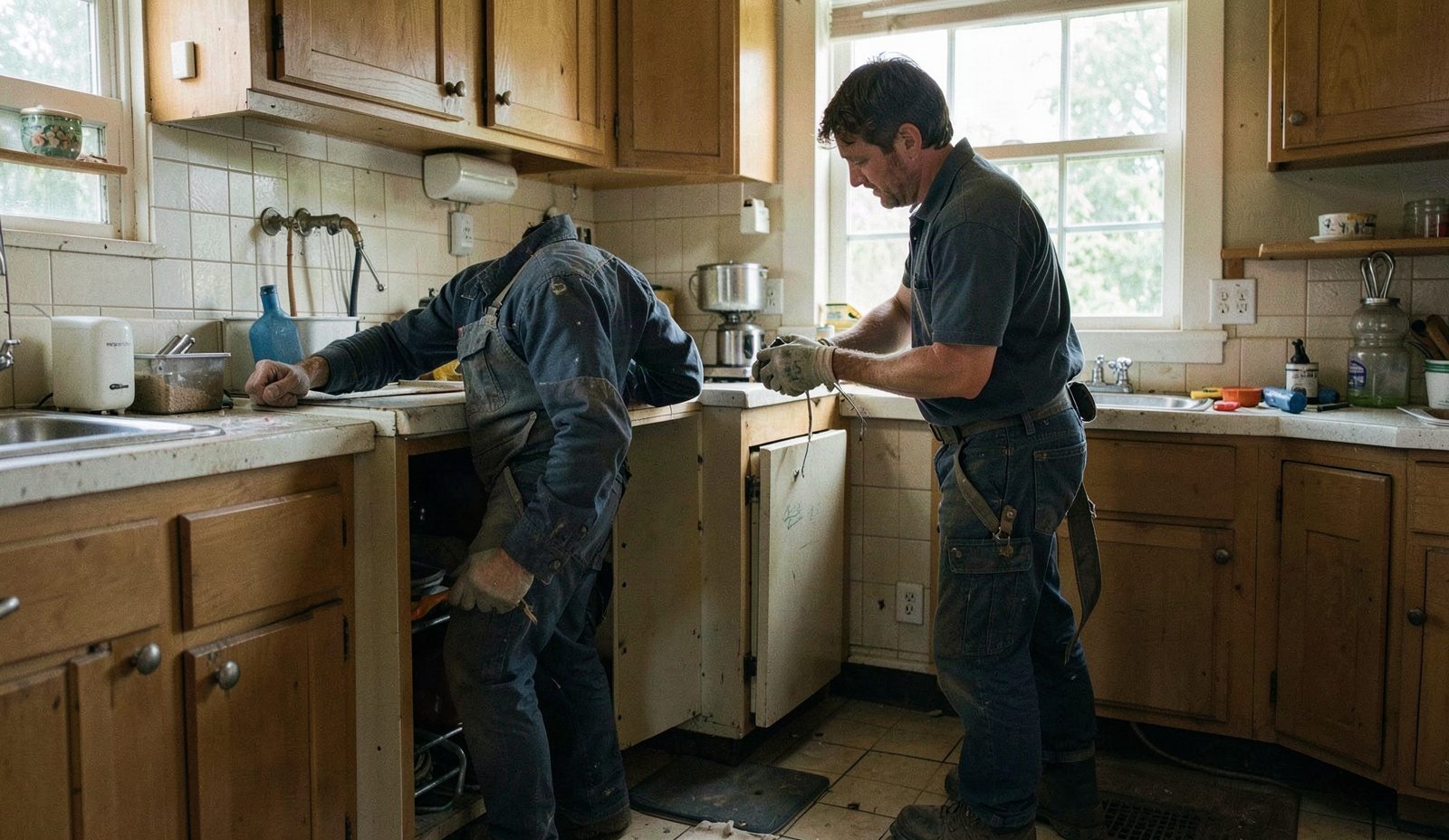
Call (817) 710-3766 and a technician takes your details directly, logging the fixture type, the symptom, and the approximate age of the home before anyone drives out. That means the tech who arrives in Hurst already has a working theory and the right parts loaded, instead of starting the diagnosis from zero on your doorstep.
Technicians carry a gauge that threads directly onto an outdoor spigot and reads static water pressure in seconds. Anything above 80 psi calls for a pressure-reducing valve under Section 604.8 of the plumbing code, and that single reading often explains a year of mystery leaks, hammering pipes, or a water heater that failed early.
Technicians move through a defined progression before working unsupervised, covering backflow testing, gas leak detection with a combustible gas detector, and drain camera interpretation. Checks happen on paper and on site, so the same standard applies whether the job is a fixture swap or a full repipe, and nothing gets signed off until the readings match the written scope.
Technicians who have worked Hurst calls for years recognize a slab leak by the sound of a running meter before they even walk the yard, and they know which local supply houses stock the fittings an aging cast iron stack needs on short notice. That familiarity cuts the guesswork out of parts runs and keeps a repair moving instead of stalling on a special order.
Shield Plumbing Fort Worth splits its Hurst plumbing services into three tiers: residential service for the houses and additions that make up most of the city, commercial service for the retail and office corridors that keep different hours and fixture counts, and emergency response for calls that cannot wait for a scheduled window. Each tier uses the same diagnostic-first approach, scaled to the stakes involved.
Residential work covers everything from a single leaking angle stop to a full repipe. Commercial work follows grease trap maintenance schedules, backflow testing cycles, and higher-volume water heating loads that a home water heater was never built to carry. Emergency work exists for the hours between a scheduled appointment and a flooded utility closet, when containment matters more than paperwork.
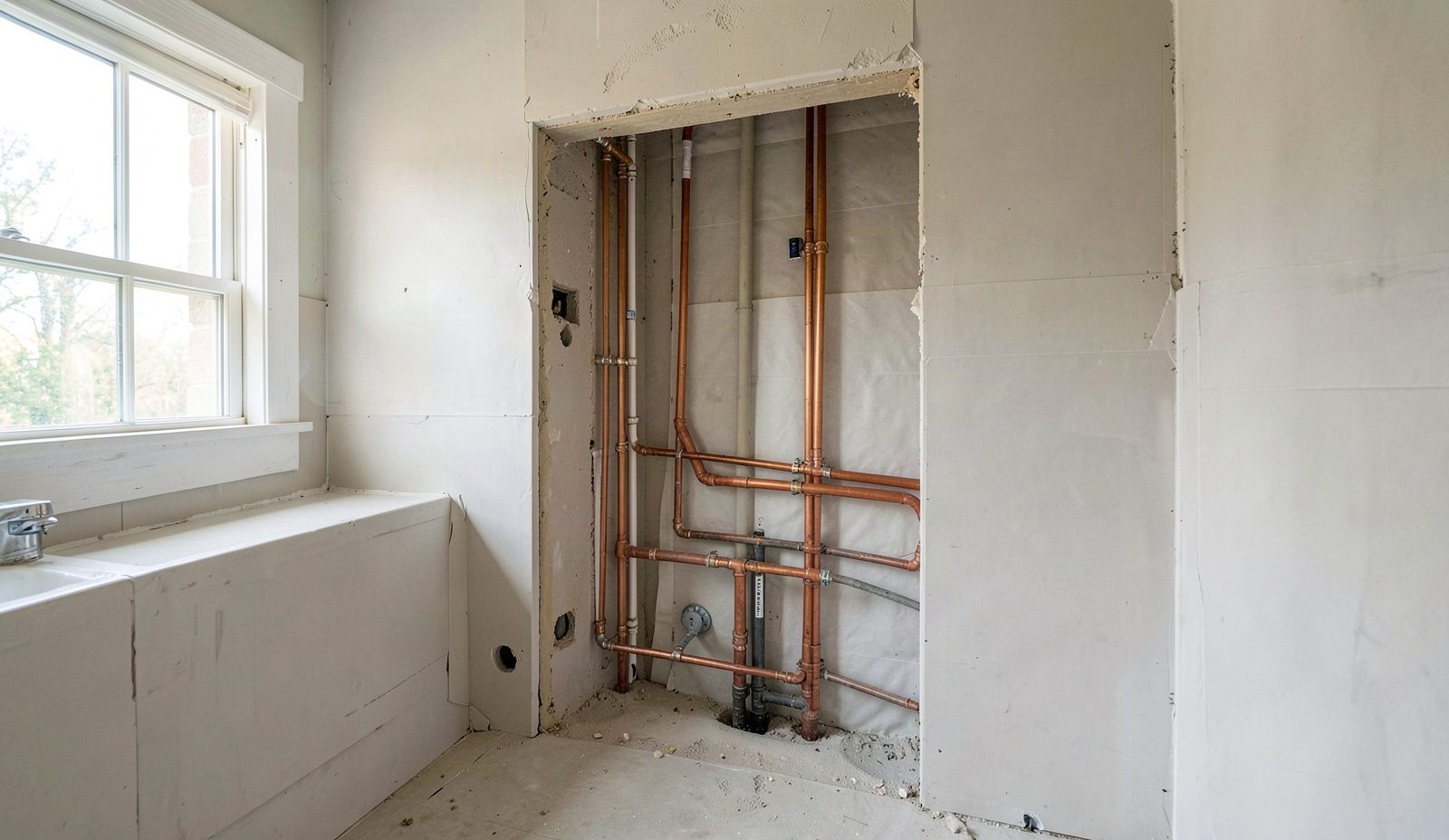
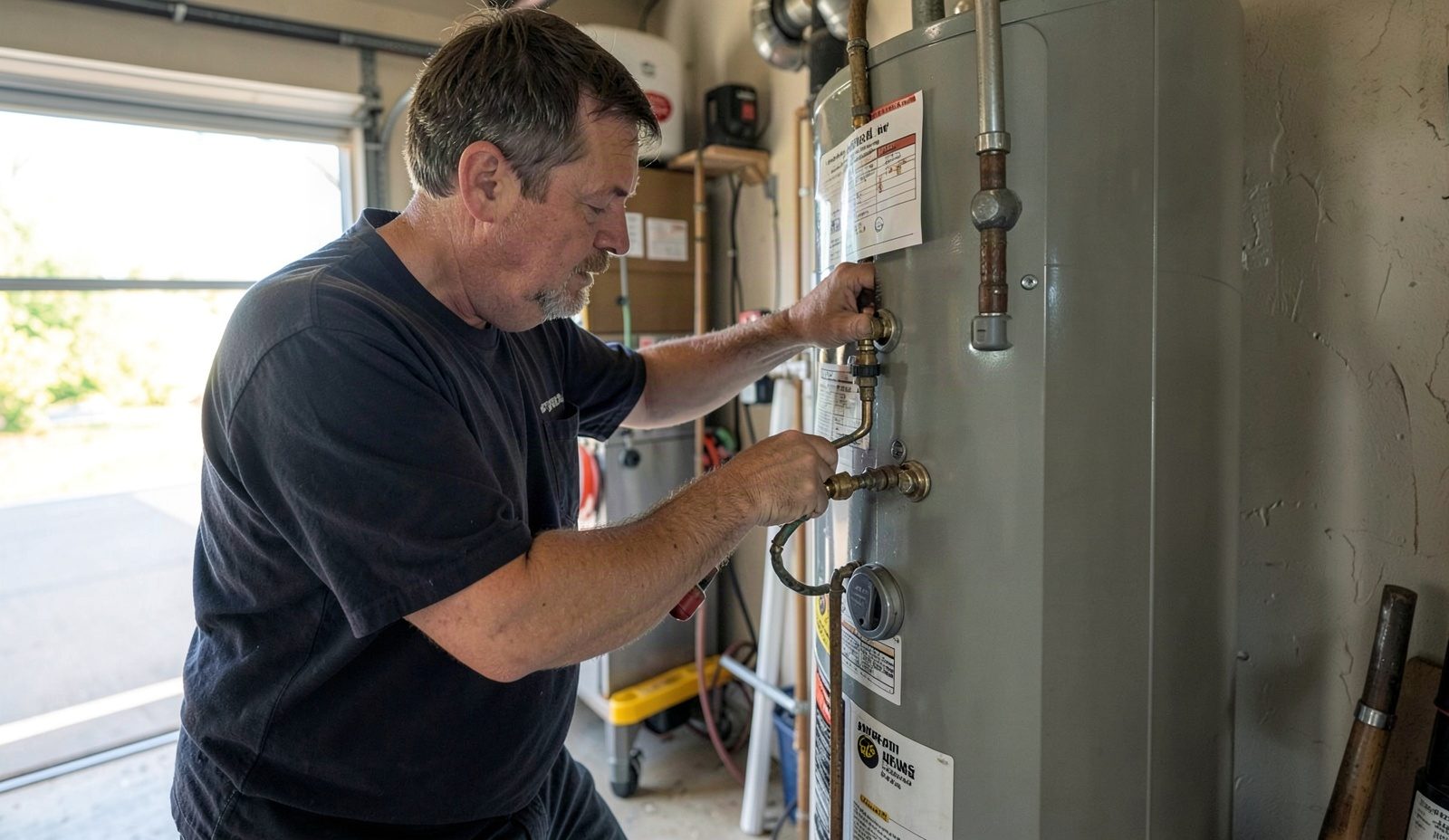
This covers the repairs that come up inside a Hurst house: a water heater that stops producing hot water after the second use of the morning, a toilet rocking on its wax ring, a kitchen faucet with a cracked supply line, or a slab leak showing up as a warm spot on the tile. It is built for homeowners who want the actual cause identified before any part gets replaced. A typical example: a two-story house reports a water heater tripping its thermostat every few days. The fix traces back to sediment buildup at the tank bottom from years without a flush, not a bad heating element, saving the homeowner a part he did not need.
Commercial plumbing demand around the North East Mall district runs on grease management and high-volume water heating, a different rhythm from the residential streets around it. Restaurants and food-service tenants need grease trap pump-outs on a schedule that keeps a health inspector satisfied, and retail buildings run tankless or multi-tank systems sized for restrooms that see hundreds of daily users instead of four. Example scenario: a strip retail space near the mall corridor reports slow drains at three sinks at once, a sign of a grease-clogged branch line, caught with a camera run down the main line before a backup shuts down a shift.
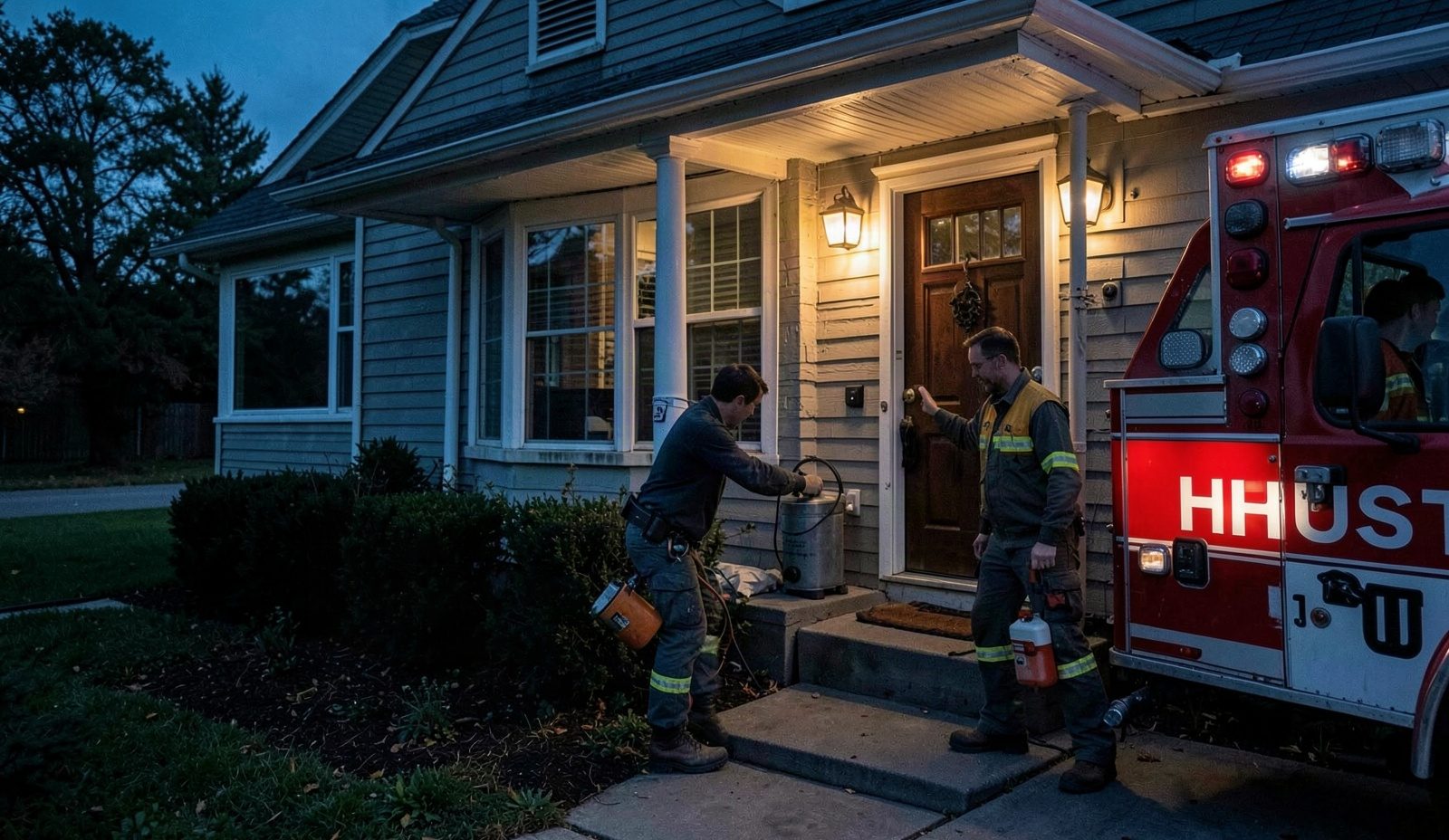
This is the emergency plumber Hurst, TX homeowners call when water is already moving somewhere it should not be. Containment comes first: shutting down the main, directing the technician to the exact fixture or wall over the phone, and getting a wet-vac running before further damage spreads into flooring or drywall. Example scenario: a supply line splits inside an exterior wall on a cold night and sprays into the wall cavity for an hour before anyone notices the ceiling stain. After-hours response means a technician isolates the line, drains the system, and stabilizes the site before a full repair gets scheduled in daylight.
Four problems account for most Hurst service calls, and each traces back to a specific local condition rather than bad luck. Catching the early signal on any of them costs less than waiting for the failure that follows, whether that is a ceiling stain, a spike in the water bill, or a drain that backs up during a holiday dinner.
None of these four problems fix themselves, and all four get more expensive the longer they run. A slow drain that gurgles today is a full backup in a month. A water heater popping and ticking today is a leaking tank in a year. The pattern repeats across the city regardless of which decade a house was built in.
The February 2021 freeze burst pipes across Tarrant County by the tens of thousands, and most of the failures were supply lines run through attics and exterior walls. Any hard freeze since has repeated a smaller version of that pattern. A ceiling stain after a cold snap, or no pressure at just one upstairs fixture, means a split line inside an unheated space. Call before running hot water through it.
Pre-1970 neighborhoods across the metro were plumbed with galvanized steel supply lines and cast iron drains, both now at or past the end of their service lives. Galvanized pipe corrodes from the inside, narrowing the passage until pressure drops at multiple fixtures at once. Cast iron drains crack and root-intrude from decades underground. Rust-colored water at a single tap, or a drain that backs up only on the ground floor, signals it is time to call.
North Texas expansive clay swells with rain and shrinks in drought, moving slab foundations enough to shear copper supply lines and separate drain joints under the house. The movement is slow, so the damage shows up as an unexplained rise in the water bill or a warm patch on flooring long before any visible leak. A meter that keeps spinning with every fixture off means the slab has already moved enough to matter.
Fort Worth water runs moderately hard, and the scale it leaves on heating elements is a leading reason local water heaters fail years before their rated life, especially without an annual flush. Scale insulates the element, forcing longer, hotter cycles to heat the same water volume. A popping sound during heating, or hot water that runs out faster than before, means it is time to call before the tank starts leaking.
A first visit starts with the same walkthrough every time: main shutoff location, water heater rating plate, and the specific fixture or area you called about. Most residential diagnostic visits in Hurst run 30 to 60 minutes before a technician has enough information to price the repair. Have the address of your water heater and any recent water bill handy.
None of this requires clearing out a closet or moving furniture in advance. The technician handles access, testing, and cleanup as part of the visit itself, and if the call involves an active leak, know where your main shutoff valve is before he arrives so you can act fast if the situation changes.
From routine maintenance to plumbing services, the same local crew handles every call.
Once you call (817) 710-3766, you get a scheduled arrival window with a defined start and end time. A confirmation call or text goes out the morning of the visit, and if the technician is running behind a prior job, you get a heads-up with a revised window rather than silence until the doorbell rings. For active leaks, describe the water flow so the technician knows whether to bring extra containment equipment before leaving for your address. That single extra step is why most active leaks get contained within minutes of the truck arriving.
The technician who arrives identifies the vehicle and introduces himself before stepping past the door. Shoe covers and floor protection go down in any area with flooring that can stain, especially around a water heater closet or under a kitchen sink. Before touching anything, he walks the problem area with you, asks when the symptom started, and points out what he is checking first and why, so you understand the diagnostic order instead of watching it happen without context. This usually takes five to ten minutes and sets the baseline for everything that follows.
Before the truck pulls away, the technician walks you back to the repair, shows you the completed work, and runs the fixture or system through a test cycle so you see it working. Photos of the before and after condition go into the job file, useful if you ever need documentation for an insurance claim. Any area disturbed during the repair, from an access panel to a section of drywall, gets left clean and swept before the technician leaves the property.
The process runs in three stages from the first ring to the final test. Most residential calls in Hurst get a same-day or next-day arrival window depending on when you call and how the schedule for that route is running. You get a call or text about thirty minutes out so you are not waiting by the window all afternoon.
After the repair, cleanup and a final test happen before the technician leaves, and you get a copy of the written scope for your records, useful if the work ever needs to be referenced during a home sale.
Call (817) 710-3766 and describe the symptom: where the water is, how long it has been happening, and the approximate age of the fixture or water heater involved. We log the address, the symptom, and any access issues, like a locked gate or a pier-and-beam crawlspace, so the technician arrives prepared instead of guessing at the driveway.
The technician runs the diagnostic steps for that specific complaint, a pressure test, a camera run, or a visual inspection depending on the symptom, and writes up what he finds in plain language. You get a written quote before any repair starts, itemized by scope. No work begins until you say go.
Work proceeds to the standard the plumbing code sets for that repair type, and the technician re-tests the fixed system before calling the job done, checking pressure, flow, or drainage depending on what failed. You get a final walkthrough, the paperwork for your file, and a clean site before the truck leaves your address.
Hurst plumbing work follows the plumbing code framework used across Tarrant County, anchored by the City of Fort Worth plumbing code, based on the 2021 International Plumbing Code, which most surrounding jurisdictions mirror with local amendments. That code governs everything from drain slope to venting distance to pressure-reducing valve thresholds, and it is the standard a technician measures against.
Verification on a real job means more than a single gauge reading. A rough-in inspection checks vent placement and cleanout access before drywall closes, and a final inspection confirms fixture count and flow. On repair work that never opens a wall, verification happens through the technician's own test, a pressure reading before and after work, a dye test on a drain joint, or a flow measurement at the affected fixture, documented in the job file.
Full replacements and structural changes, like a whole-house repipe or moving a drain line, typically need a permit pulled through the City of Fort Worth Development Services Department for Fort Worth addresses, or through the local city building department or Tarrant County for other jurisdictions, including Hurst. Minor like-for-like repairs, such as swapping a water heater in the same location or replacing a faucet, usually skip that requirement, though the final call always belongs to the permitting authority for the address in question.
Need something specific? Our shower & bathtub plumbing page breaks down exactly how we handle it in Hurst.
PEX-A tubing flexes under slab movement and expands slightly if it freezes solid, reducing split risk compared to rigid pipe. Copper Type L handles higher heat and pressure but solders at rigid joints that can shear when a slab shifts. Most repipe jobs in Hurst run PEX-A through the attic or walls and copper only at the water heater connections.
Access is the biggest variable: a slab leak under a pier-and-beam crawlspace costs less labor than one under a poured slab that needs to be cut and repoured. Pipe material, the number of fixtures affected, and whether a permit and inspection are required all shift the scope. Two houses with the same symptom can carry very different quotes once access is factored in.
A single fixture repair usually finishes in one visit. A whole-house repipe runs multiple days and includes a pressure hold test on the new lines before any wall closes back up, a watched gauge held over the test window. Quality gets measured against that gauge reading and against a flow test at every affected fixture, evaluating performance rather than appearance.
A permitted job cannot start until the permit is issued, which adds lead time a same-day repair does not carry. Structural changes and full replacements go through the permit process; a like-for-like swap in the same location usually skips it. Building an accurate schedule means knowing which category a repair falls into before quoting a start date.
Cost depends on pipe material, the number of fixtures, and how the house was built rather than a single flat number. A pier-and-beam house with crawlspace access runs a different scope than a slab home where lines run under concrete, and galvanized-to-copper conversions add more labor than a straight PEX repipe. Call and describe your home's age and foundation type for a scope-specific quote.
Coverage depends on the cause of the damage, more than the damage itself. Most homeowners policies pay for sudden, accidental events like a burst pipe flooding a room, but they typically exclude gradual leaks, corrosion, or damage tied to deferred maintenance, so a slow slab leak that ran for months often gets denied where a sudden pipe burst gets paid.
Same-day service is available for most Hurst calls, depending on when you call and the day's route schedule. Morning calls have the best odds of a same-day window, and active leaks or no-water situations get priority placement ahead of routine repairs. Call (817) 710-3766 to check the current schedule for your address.
Estimates follow an on-site diagnosis rather than a phone guess. A technician inspects the problem, explains what he finds, and writes an itemized quote you approve before any repair starts, so the number reflects your actual scope. There is no online form, only a direct call and a technician who prices what he actually sees at your address.
Cost depends on pipe material, run length, and how much wall, cabinet, or slab access the job requires. A single exposed-joint repair costs far less in labor than a new run threaded through finished walls for a stove or outdoor kitchen. Calling (817) 710-3766 gets you a specific, written number after a technician sees the actual line and appliance load involved.
Most single-run cured in place pipe jobs finish in one visit, with the liner curing in two to four hours once it is inverted into place. Pipe bursting takes longer, often a full day or more depending on run length and how many access pits the layout requires. Camera inspection findings determine the timeline before work starts, so there are no surprises once the crew is on site.
Explore our service area and locate Shield Plumbing Fort Worth with ease. We're proudly local and serve the surrounding neighborhoods with fast response and honest pricing. Use the map to check our coverage area, or call us and we'll confirm in seconds.
Address:
Shield Plumbing Fort Worth, Hurst, TX 76054
5 Signs Your Ridglea Hills Home Has a Slab Leak, practical local guidance from Shield Plumbing Fort Worth, Fort Worth's trusted plumbing tea…
Read More
What Wedgwood Residents Should Know Before a Whole-Home Repipe, practical local guidance from Shield Plumbing Fort Worth, Fort Worth's trust…
Read More
How Fort Worth's Hard Water Is Quietly Destroying Your Water Heater, practical local guidance from Shield Plumbing Fort Worth, Fort Worth's …
Read More
The Hidden Cost of Ignoring a Dripping Faucet in Fort Worth, practical local guidance from Shield Plumbing Fort Worth, Fort Worth's trusted …
Read More