
June 20, 2026
5 Signs Your Ridglea Hills Home Has a Slab Leak
5 Signs Your Ridglea Hills Home Has a Slab Leak, practical local guidance from Shield Plumbing Fort Worth, Fort Worth's trusted plumbing tea…
Read More




North Texas expansive clay under Everman swells when spring rain soaks in and shrinks hard during summer drought. That seasonal movement flexes the slab enough to shear rigid copper supply lines and pull drain joints apart under the house, often months before a homeowner notices anything on the surface. Tarrant County clay does not damage plumbing on a fixed schedule. It works on its own timeline, which is why a slab leak here rarely announces itself the dramatic way a burst pipe does.
Everman is a compact city of mostly mid-century homes, and the original supply lines and water heaters in most of them are already on their second or third replacement cycle. Streets near Everman Parkway carry a mix of 1950s and 1960s construction next to newer infill, so one block can have three generations of copper, galvanized steel, and PEX running under three different slabs. That mix matters when we diagnose a low-pressure complaint, because the correct fix in one house is often wrong for the house next door.
Temperature swings compound the soil movement. A hard freeze followed by a fast thaw stresses joints that spent the summer pulled apart by drought-shrunk clay, and that combination is why late winter and early spring bring the heaviest run of slab leaks and water heater failures across Everman. A technician who only knows textbook plumbing misses this pattern. A technician who has traced pipe under Everman's specific soil does not.
The result is a city where age and ground movement work together against the plumbing system. Original construction-era materials meet decades of clay expansion and contraction, and that combination decides which repairs are routine and which ones require opening a slab.
Permit and inspection questions? Development Services is the office we coordinate with on every permitted Fort Worth job.
Reputation in a city this size gets built one accurate diagnosis at a time, not through advertising volume. Homeowners in Everman talk to their neighbors before they call anyone, and the calls we get are frequently a referral from a repair we finished on the same street the season before. That word-of-mouth pattern only holds up if the second job on a block goes as well as the first.
Our operational philosophy starts with refusing to guess. Every technician runs the same sequence on arrival: check static pressure, check for sound and vibration at the meter, and walk the property before opening a single access panel. That sequence catches problems a rushed visual inspection misses, especially on slab homes where the visible symptom and the actual failure point can be ten feet apart.
Techs work under a senior plumber on slab leak diagnostics, water heater replacement, and drain line camera work before they run those job types solo, because a misread camera feed on a cast iron drain can send a crew digging in the wrong spot. That internal check costs us time upfront and saves the homeowner a second excavation.
Expertise in Everman specifically means recognizing what decade a house was built in from the fixtures alone, and knowing which materials from that era are still holding and which ones are due. A 1960s ranch home and a 1990s addition on the same lot do not fail the same way, and treating them identically is how homeowners end up paying twice for one problem.
Price-checking is smart: marketplaces like Thumbtack publish typical cost ranges you can hold any quote against, including ours.
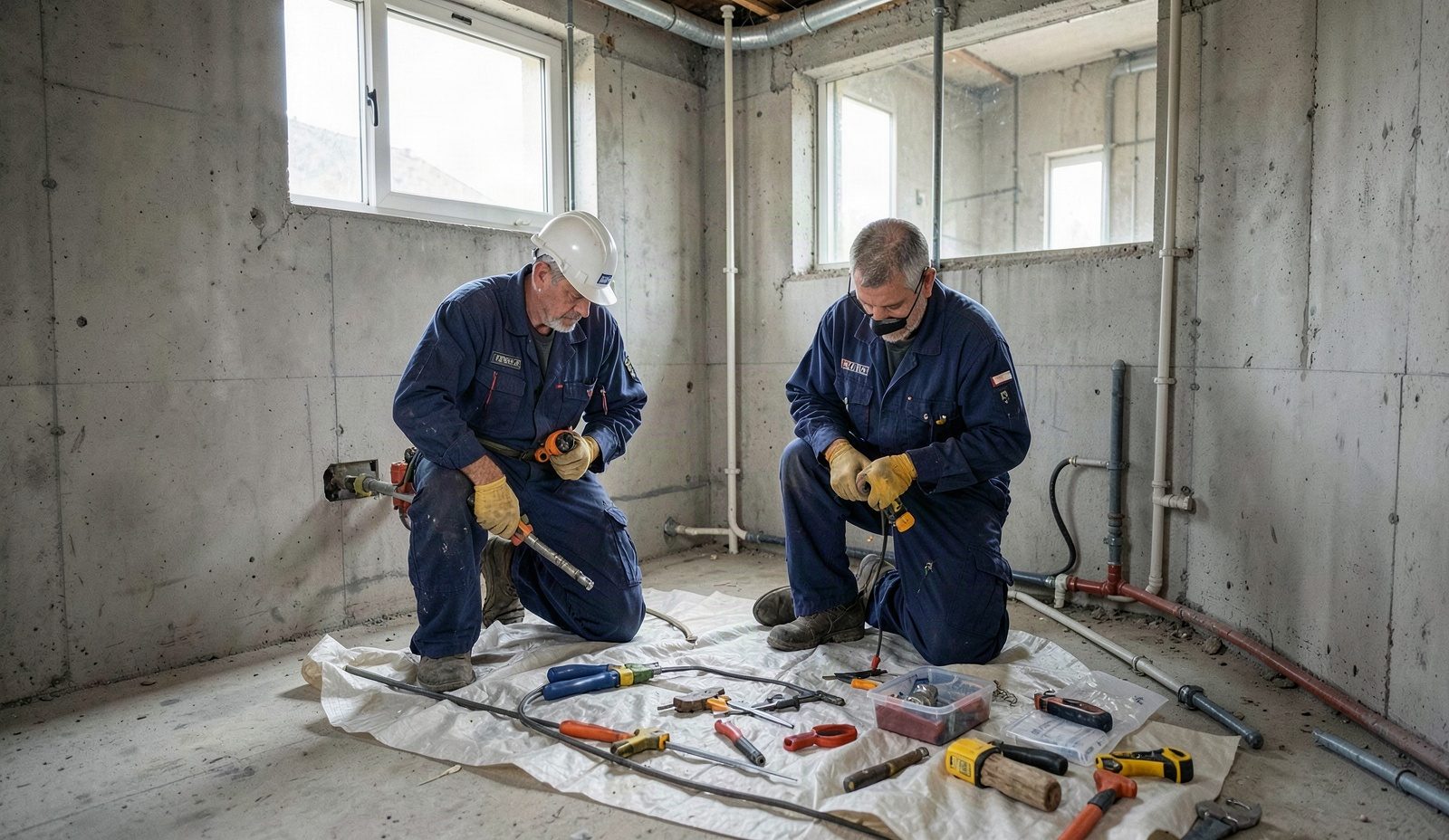
You talk to someone who knows Everman streets, not a national call center reading from a script. Appointment windows get set around your actual schedule, and the technician who diagnoses your problem is the one who calls you back with the plan. That continuity cuts down on repeated explanations and mismatched expectations between visits.
Every service visit includes a static pressure reading taken at an outdoor spigot with a calibrated gauge. A reading above 80 psi means the plumbing code calls for a pressure-reducing valve, and we show you the number on the gauge before we recommend anything. That same gauge check catches slow leaks that a visual inspection alone would miss for months.
Section 604.8 of the International Plumbing Code sets the 80 psi threshold that triggers a pressure-reducing valve requirement, and we apply that standard on every repipe and water heater swap in Everman. Materials, fitting methods, and venting follow the same code family, so the work passes inspection the first time it is checked.
We have worked enough Everman addresses to recognize the plumbing patterns tied to specific construction eras across the city, from original galvanized runs to later PEX retrofits. That pattern recognition shortens diagnostic time, because we already have a working theory before we open the first access panel.
Plumbing repair service in Everman splits into three practical tiers, and the right one depends on the property, the timeline, and the risk of the problem getting worse. Residential work covers the routine and the unexpected inside a single-family home. Commercial work covers the systems a business cannot operate without. Emergency work covers anything that is actively causing damage right now.
Each tier uses a different playbook. A residential fixture repair gets scheduled around your day. A commercial backflow test gets scheduled around business hours and code deadlines. An emergency call skips scheduling altogether and goes straight to containment. The three cards below break down what falls into each category and what a typical job looks like.
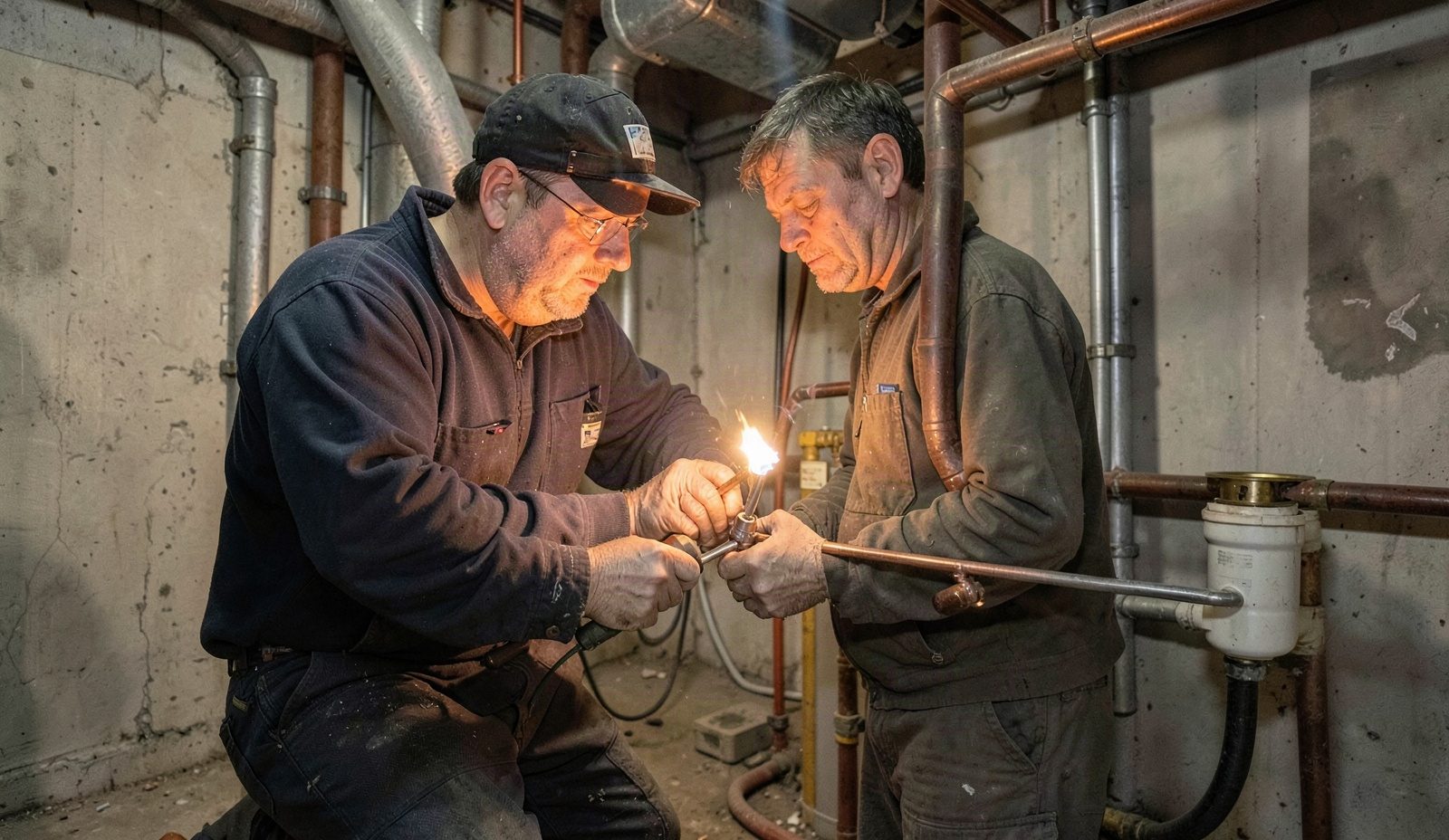
Residential plumbing repair service in Everman covers everything from a dripping faucet to a full repipe of an aging supply system. This tier is for homeowners dealing with corroded lines, failing water heaters, running toilets, or slow drains that keep coming back. A typical example: a 1960s home with a copper line that pinholed near a slab penetration gets a spot repair and a pressure check on the surrounding runs, so one leak does not turn into three separate service calls over the following year.
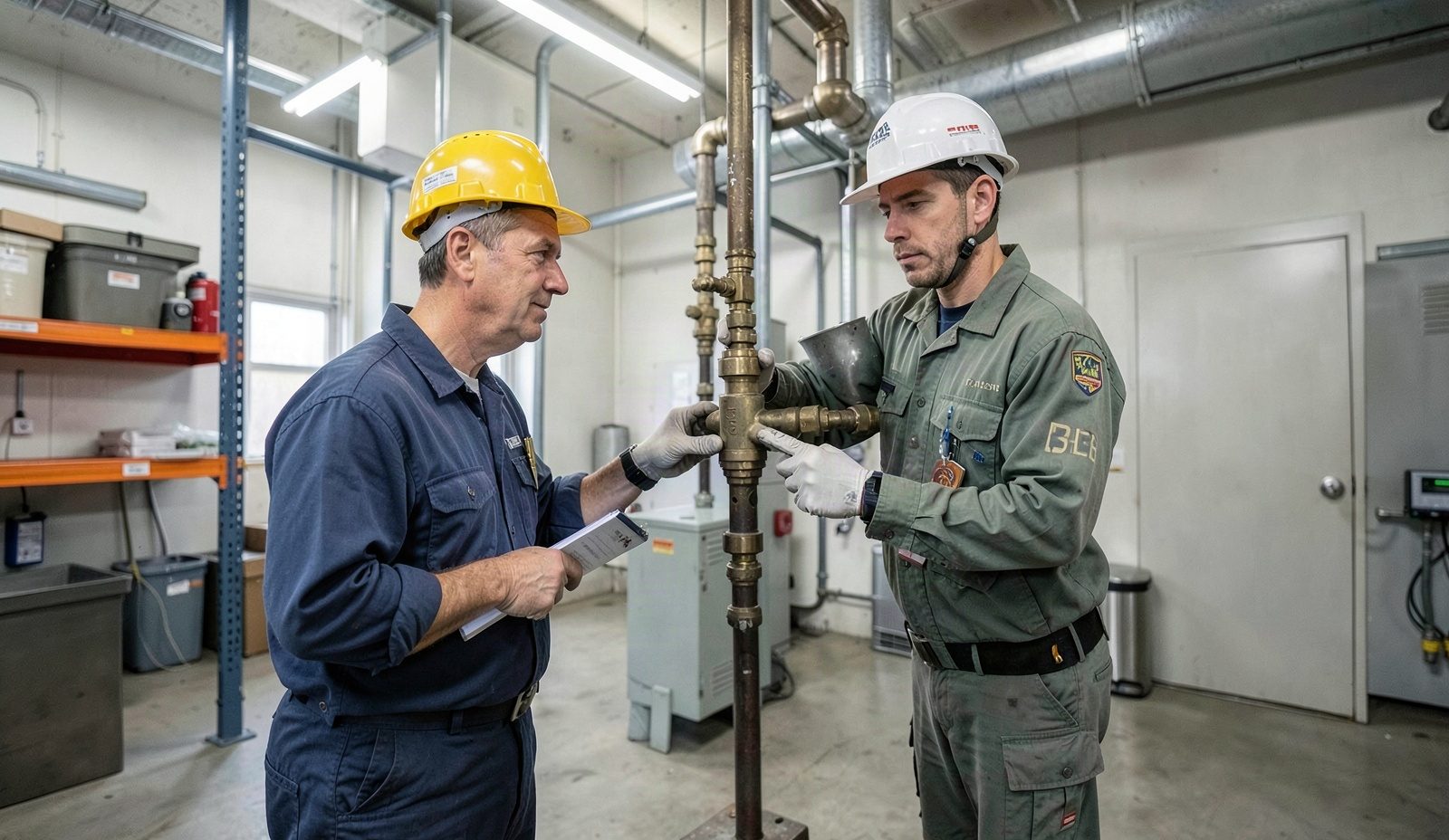
Commercial plumbing in Everman focuses on keeping a business open and its systems inspection-ready. This covers backflow prevention testing, grease trap service for food service tenants, multi-fixture restroom repairs, and water heater capacity planning for higher-occupancy buildings. A typical example: a strip retail space losing water pressure at peak hours gets a full pressure and demand assessment, because undersized supply lines under load create liability exposure that a single fixture repair will not solve.
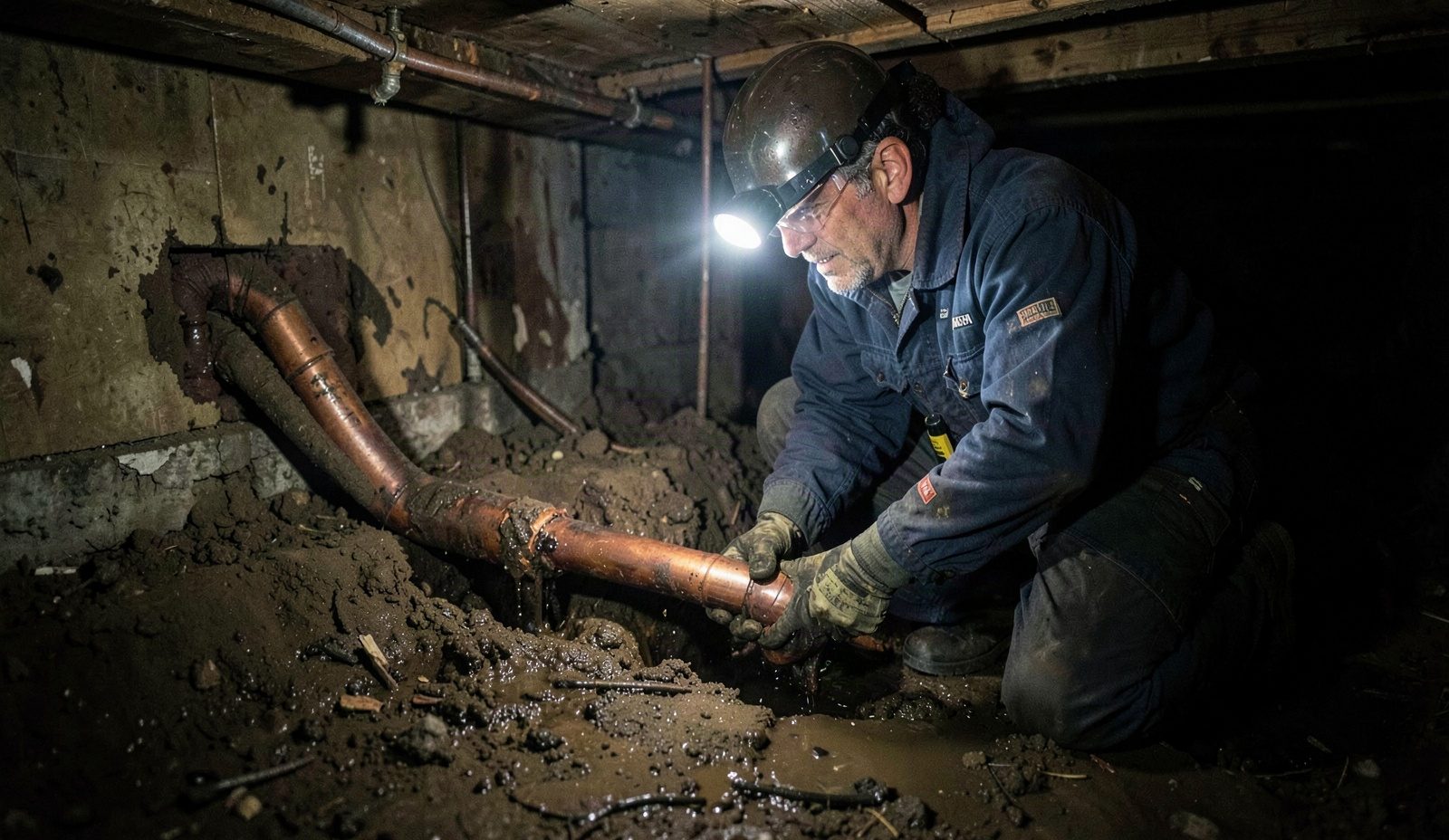
Emergency plumbing in Everman means active water intrusion, a burst supply line, or a sewer backup that cannot wait for a scheduled window. Dispatch readiness means a technician who can talk you through shutting off the main valve on the phone before arrival, then contain the damage on site. A typical example: a supply line bursts inside an exterior wall overnight during a freeze, and the priority on arrival is stopping the flow first, then diagnosing the failure point once the water is under control.
Four problems account for most of the service calls we run across Everman, and each one traces back to a specific local condition rather than random bad luck. Catching the early signal on any of these saves the homeowner from a repair that grows from a fixture-level fix into a slab-level project.
The pattern holds across the city regardless of which decade a house was built in. Climate stress, aging materials, ground movement, and deferred maintenance each show a distinct warning sign before the failure becomes obvious, and knowing which sign points to which cause is most of the diagnostic work.
You can verify any contractor's credentials through Texas State Board of Plumbing Examiners before you hire, including ours.
The February 2021 freeze burst pipes across Tarrant County by the tens of thousands, and most failures were supply lines run through attics and exterior walls, not underground. A repeat cold snap targets the same exposed runs. The signal to call immediately is no water pressure at a fixture right after a hard freeze, even if nothing looks wet yet.
Pre-1970 homes across the metro were plumbed with galvanized steel supply lines and cast iron drains, both now at or past the end of their service life. Galvanized pipe rusts from the inside out, narrowing the flow path years before it leaks. The signal is rust-colored water at the first draw of the morning or a slow, gritty drain that plunging will not fix.
Slab-on-grade construction dominates Everman, so a pinhole supply leak under the foundation shows up as a warm spot on the floor or an unexplained spike in the water bill long before standing water appears anywhere. The signal to call is a section of tile or flooring that feels warm underfoot with no obvious source.
Sediment builds inside a tank water heater every year it goes without a flush, insulating the burner or element from the water it is supposed to heat. That buildup shortens the unit's life and raises operating strain long before it fails outright. The signal is a popping or rumbling sound during heating cycles, or noticeably longer recovery time between showers.
The first visit runs on a set sequence: pressure check, visual inspection, and a conversation about symptoms before any tool touches a fixture. Most diagnostic visits take under an hour unless the problem is under the slab, in which case locating the failure point takes longer than fixing it once found. Have your last water bill and any recent repair history ready, since both help narrow the diagnosis faster.
Need something specific? Our plumbing services page breaks down exactly how we handle it in Everman.
You get a confirmed appointment window when you call, not a vague "sometime today" promise. The technician assigned to your job calls or texts when they are on the way, and again if anything upstream pushes the arrival time. If a job runs long at a previous address, you hear about it before your window closes, not after.
The technician introduces themselves, confirms the address and the problem you described on the phone, and asks you to walk them to the fixture or area in question. Floor protection goes down in high-traffic paths before any tools come out. You get a plain explanation of what they are checking first and why, before any access panel or fixture gets opened.
The technician walks you through what was found, what was repaired, and any reading that changed, like a pressure gauge number before and after a valve installation. Work areas get wiped down and any access panels get closed and reset. You get a written record of what was done, so you have documentation on hand if the issue relates to an insurance claim or a future repair.
Everman jobs move through the same three stages regardless of size, from a single fixture repair to a multi-day repipe. The call sets the appointment window and gets basic facts logged. The visit produces a diagnosis and a written number you approve before any work starts. The work itself gets verified against code before the technician leaves the property.
Scheduling runs on windows, not exact clock times, because slab and drain diagnostics can run long. You get a call ahead of arrival either way, and cleanup happens as part of the job, not as an afterthought tacked on at the end.
Call (817) 710-3766 and describe what you are seeing: pressure, sound, water location, or timing. We log the fixture type, the home's approximate age if known, and whether the issue is active or intermittent. That information sets which tools the technician brings and how the appointment window gets sized.
The technician runs the pressure and visual checks, identifies the failure point, and explains the finding in plain terms. You get a written quote covering parts, labor, and any code-required upgrade, like a pressure-reducing valve, before any repair begins. Nothing gets cut, opened, or replaced until you approve that number.
Work proceeds to the applicable plumbing code, with pressure and flow rechecked after the repair to confirm it holds. The technician documents the fix, resets any access points, and answers questions before leaving. You keep a written record for your files, useful for insurance or for a future buyer's inspection.
Plumbing work in Everman falls under the City of Fort Worth plumbing code, based on the International Plumbing Code, which governs everything from pipe sizing to venting to fixture spacing on any job pulled under permit. Compliance is not a paperwork exercise. It gets verified physically, through a pressure test held at a set line pressure while a technician watches the gauge for movement, and through a visual inspection of joints, supports, and cleanouts before any wall or slab access gets closed back up.
Material standards matter as much as the code sections that reference them. Copper supply lines are rated by wall thickness type, CPVC and PEX carry their own pressure and temperature ratings, and mixing incompatible materials at a joint is a common failure point in homes that have had multiple repairs over the decades. A technician who does not check what is already in the wall before adding new pipe risks creating a galvanic reaction between dissimilar metals that corrodes the joint from the inside within a few years.
Inspection protocol on a typical Everman job includes a pressure test log, photos of any concealed work before it gets covered, and a final walkthrough confirming fixture flow rates and drain slope. That documentation matters beyond the immediate repair. A homeowner selling a house benefits from a paper trail showing plumbing work was done to code, and a lender or insurer reviewing a claim benefits from the same record.
One of our most-requested services here is shower & bathtub plumbing, see that page for pricing and process.
Fort Worth water is moderately hard, and the scale it leaves on heating elements is a leading reason local water heaters fail years before their rated life. Scale insulates the element, forcing it to run longer and hotter to heat the same volume of water, which accelerates failure and raises the noise level of a heating cycle.
Access is the biggest cost driver on most Everman jobs, since a slab leak requires locating the failure before any repair can start, while an attic supply line is visible but awkward to reach. Material condition matters too. A single repair on a system already near failure elsewhere often turns into a broader conversation about repiping.
A straightforward fixture repair or water heater swap typically finishes within a single visit. A slab leak repair or partial repipe runs longer once locating the failure point is factored in. Every repair gets a pressure test held at line pressure with the gauge watched for drop over a set interval before the job is called complete.
Full plumbing replacements and structural changes typically require a permit, while minor like-for-like repairs, such as swapping a faucet or a wax ring, often do not. The final determination on any specific job belongs to the appropriate permitting authority, and that call gets made before work starts, not after.
Everman does not have widely documented celebrities tied to its name. It is a small, mostly residential city in Tarrant County known more for its close-knit school district and its position along the metro's southeast corridor than for any particular public figure.
A technician diagnoses the problem on site first, then presents a written quote covering parts and labor before any work begins. You review and approve that number before the technician opens a wall, cuts a pipe, or touches a fixture, so there is no surprise cost added mid-job.
It depends on the scope of the work.
An enzyme or bacteria-based drain cleaner is the safest option available. These formulas use live bacterial cultures that consume grease, soap film, and organic waste over an overnight dwell, without the heat reaction that damages pipe walls. Unlike sodium hydroxide gels, enzyme treatments stay close to a neutral pH, so they won't soften PVC cement joints or accelerate corrosion in galvanized or cast iron lines. Shield Plumbing Fort Worth uses enzyme-based products as the default first treatment on any drain that shows organic buildup rather than a structural break.
Cost depends on fixture count, access, and parts, not a flat rate. A single flushometer rebuild costs far less than replacing a wall-hung urinal with a shifted drain connection, and buildings with older galvanized supply lines often need more line work than newer construction. Shield Plumbing Fort Worth writes the scope out fixture by fixture before starting, so the price reflects the actual restroom bank being repaired rather than a generic per-visit charge.
Removing standing water starts with cutting power to any submerged outlets or the breaker feeding the basement, since water and live electricity don't mix. Next, identify the source, whether it's a burst supply line, a failed water heater, or a backed-up floor drain, and stop it if a shutoff valve is reachable. A submersible sump pump handles shallow seepage, while several inches of standing water needs a higher-volume trash pump to clear it before mop-up. A wet vac finishes the last inch neither pump can pick up.
Explore our service area and locate Shield Plumbing Fort Worth with ease. We're proudly local and serve the surrounding neighborhoods with fast response and honest pricing. Use the map to check our coverage area, or call us and we'll confirm in seconds.
Address:
Shield Plumbing Fort Worth, Everman, TX 76140
5 Signs Your Ridglea Hills Home Has a Slab Leak, practical local guidance from Shield Plumbing Fort Worth, Fort Worth's trusted plumbing tea…
Read More
What Wedgwood Residents Should Know Before a Whole-Home Repipe, practical local guidance from Shield Plumbing Fort Worth, Fort Worth's trust…
Read More
How Fort Worth's Hard Water Is Quietly Destroying Your Water Heater, practical local guidance from Shield Plumbing Fort Worth, Fort Worth's …
Read More
The Hidden Cost of Ignoring a Dripping Faucet in Fort Worth, practical local guidance from Shield Plumbing Fort Worth, Fort Worth's trusted …
Read More