
June 20, 2026
5 Signs Your Ridglea Hills Home Has a Slab Leak
5 Signs Your Ridglea Hills Home Has a Slab Leak, practical local guidance from Shield Plumbing Fort Worth, Fort Worth's trusted plumbing tea…
Read More




Benbrook's housing stock runs from 1970s ranch homes to builds finished in the 2000s, and that thirty-year spread matters more than most homeowners realize. A ranch home built in 1978 likely has copper supply lines run straight through a slab foundation with no access panel, while a 2005 build usually has PEX manifolds behind a wall you can actually open. The ground under both changes too. Soil here shifts from the heavier blackland clay common across Tarrant County toward rockier, more stable ground as you move southwest, and that shift changes how a yard line gets trenched, bedded, and backfilled on a repair.
Tarrant County felt the cost of aging supply lines directly during the February 2021 freeze, when burst pipes across the county numbered in the tens of thousands. Most of those failures happened in supply lines run through attics and exterior walls, the same construction detail found in a large share of Benbrook's ranch and split-level stock. A pipe in an attic has almost no thermal mass around it. When outdoor temperatures drop into the teens for more than a few hours, that copper or CPVC line loses heat faster than the ground ever would.
The older ranch neighborhoods closer to the lakefront tend to show pipe fatigue first, since decades of clay movement have already stressed the joints under those slabs. The newer subdivisions toward the edge of town, built on firmer ground with PEX distribution, see fewer slab leaks but more issues tied to fixture-level water pressure and irrigation backflow devices installed during construction. Knowing which era you're standing in changes where a technician looks first, before a single tool comes off the truck.
From routine maintenance to plumbing services, the same local crew handles every call.
Homeowners searching for a plumber in Benbrook, TX want someone who already knows how the ground moves under their slab and how that movement shows up as a slow leak years before it becomes a flood. Shield Plumbing Fort Worth built its process around that reality. Every technician logs static water pressure, water heater age, and pipe material on the first visit, whether the call is a running toilet or a full repipe, because those three data points predict most of what fails next in this part of Tarrant County.
Our internal quality check is simple and it happens before the truck leaves the driveway. A technician photographs the pressure gauge reading, the water heater's data plate, and any exposed pipe material, then reviews that record with a senior plumber before closing the job as complete. We diagnose with instruments, not guesswork, and that habit catches the pinhole leak or the undersized vent that a rushed visit would miss.
That progression matters in a market like Benbrook, where a single street can mix a 1970s slab home with a 2000s PEX build, and the right fix for one would be wrong for the other.
We answer calls to (817) 710-3766 directly rather than routing homeowners through a national scheduling line, and we keep our explanations in plain terms because a homeowner deciding between repair and replacement deserves to understand the reasoning, not just the invoice.
Need something specific? Our shower & bathtub plumbing page breaks down exactly how we handle it in Benbrook.
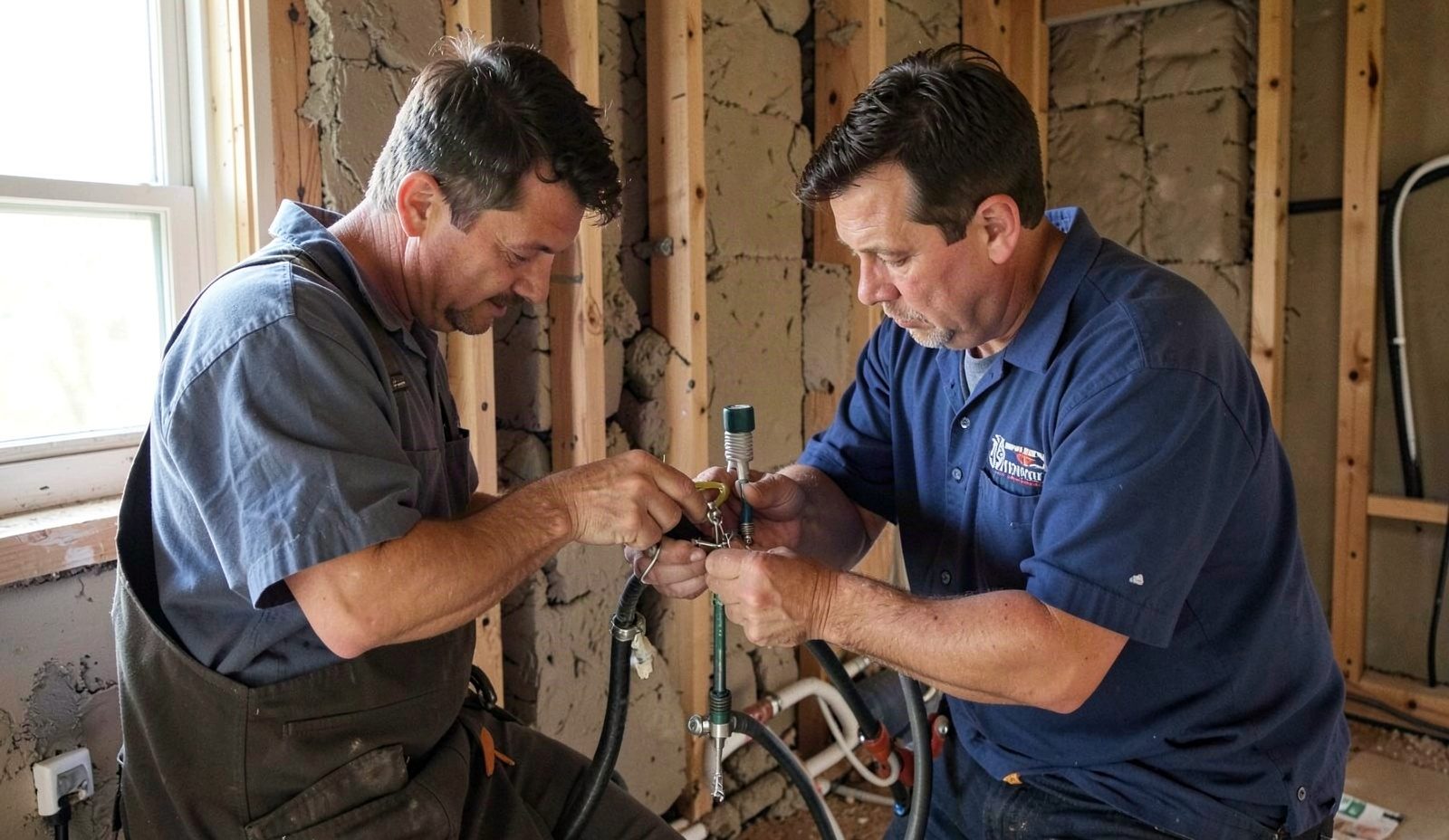
Calls to (817) 710-3766 connect to someone who logs your address, symptom, and access details before dispatch, not a hold queue. The technician who takes your call is briefed on the job before arrival, so you don't repeat your problem to three different people before a truck ever moves.
Our trucks carry a sewer inspection camera with a footage counter, a threaded pressure test gauge, and an acoustic leak detection disc that picks up the sound of water moving through a slab. These tools locate a problem's exact position instead of guessing at a general area and opening drywall on a hunch.
That training shows up in details like vent sizing and trap arm distances, not just the visible repair.
Years of Tarrant County service means we've seen how expansive clay shifts a slab enough to shear a copper joint two feet underground, and how that same movement looks completely different on rockier ground. That pattern recognition shortens diagnostic time on Benbrook calls compared to a crew unfamiliar with the region.
Plumbing services in Benbrook split into three practical tiers, and the right tier depends on where the failure sits and how much risk it carries. Residential work covers everything inside the home's supply and drain system, from a single fixture repair to a full repipe. Commercial work covers systems tied to occupancy and code compliance, where a shutdown affects revenue and liability, not just comfort.
Emergency response sits apart from both, defined by speed rather than scope. A burst line at 2 a.m. gets the same diagnostic rigor as a scheduled repipe, just compressed into a faster timeline. The three cards below break down what each tier actually includes for a Benbrook property.
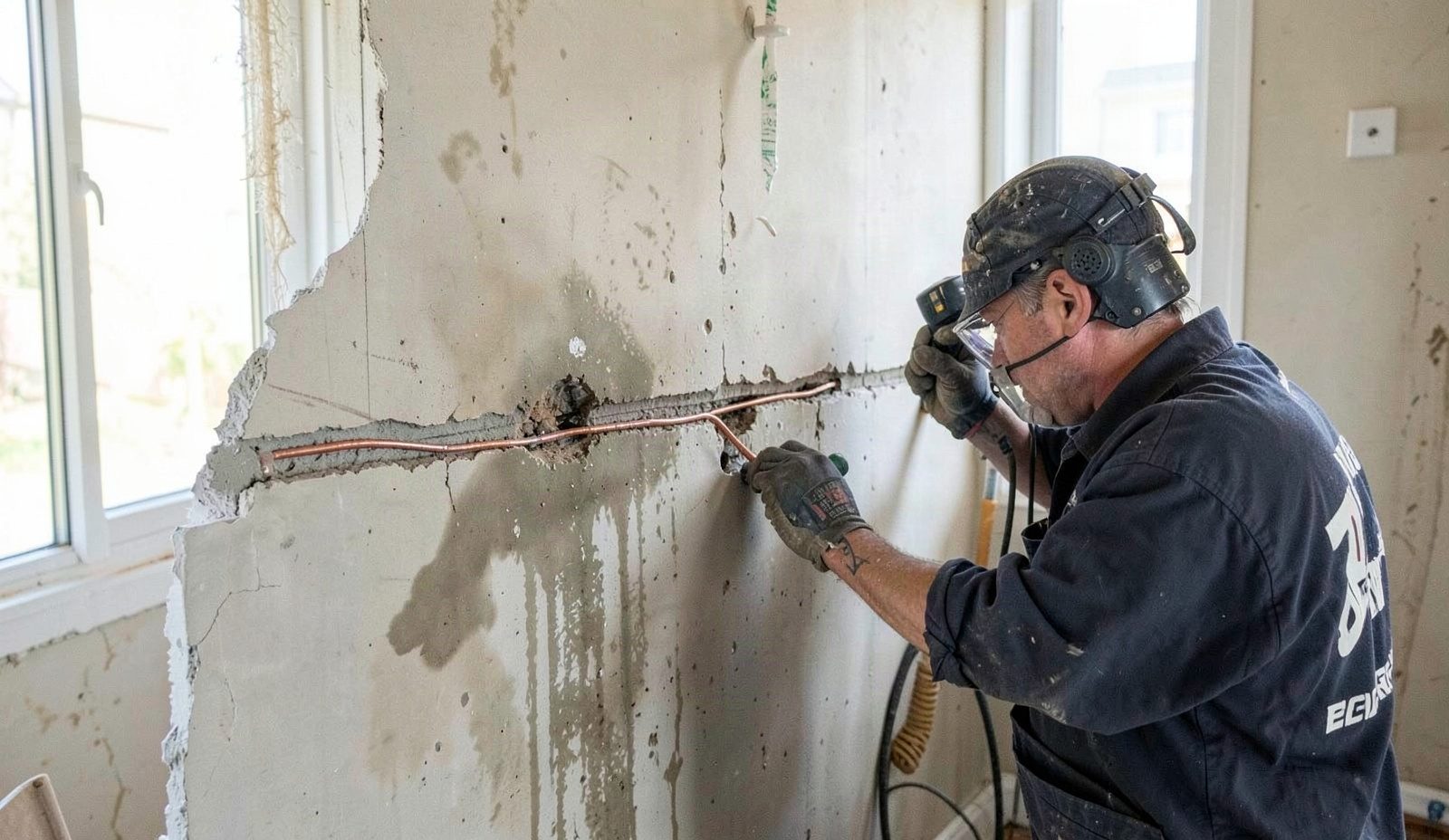
This covers slab leak detection, full or partial repiping, fixture supply line replacement, and drain line repair for single-family homes. It's built for homeowners dealing with a warm spot on the floor, a spike in the water meter, or a home old enough that the original copper is nearing the end of its service life. One typical job: rerouting a corroded slab supply line overhead through the attic instead of tunneling back under the foundation, which avoids breaking concrete and gets water restored the same day in most cases.
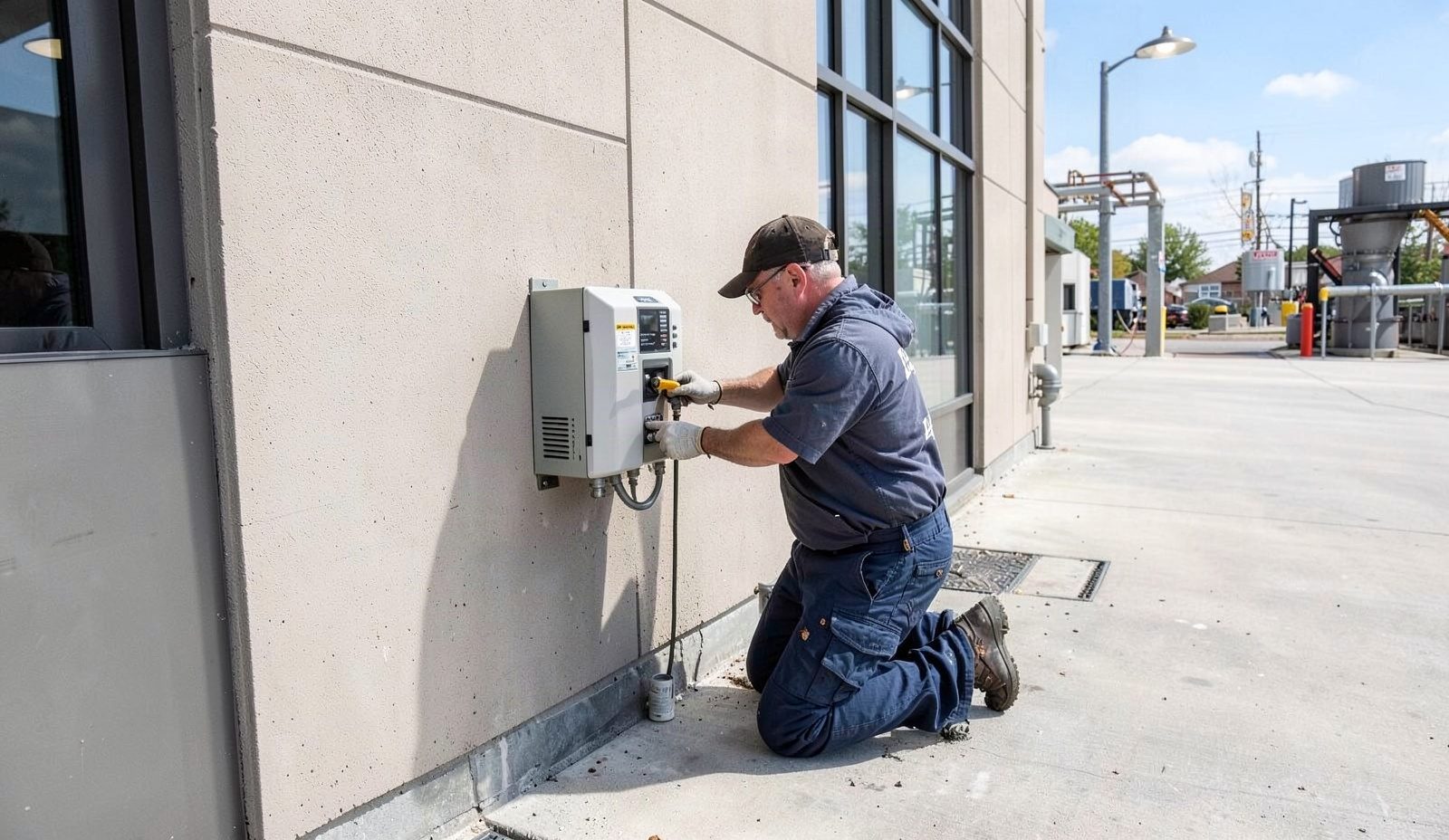
This covers backflow preventer testing, grease trap service, and drain line maintenance for businesses along the US-377 corridor and elsewhere in Benbrook, where a code violation or a clogged main line can shut down a kitchen mid-shift. It's built for property managers and business owners who need documented compliance, not just a working drain. One example: a strip-mall restaurant with a grease trap backing up into the dish pit gets a same-visit pump-out and a line inspection to confirm the blockage won't return within the week.
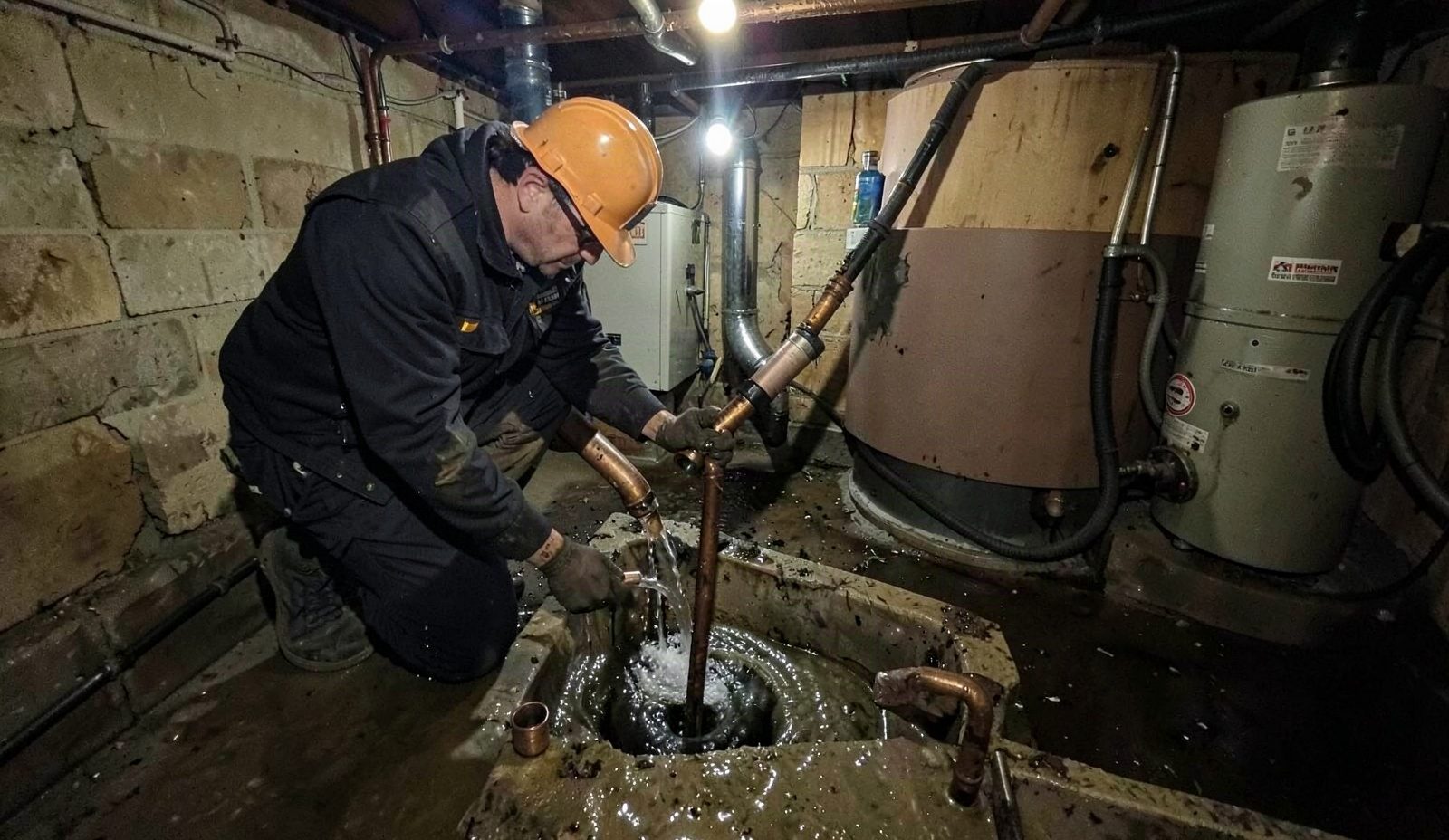
This covers after-hours dispatch for active leaks, water heater failures, and sewer backups, built for the homeowner who needs an emergency plumber in Benbrook at an hour when most companies send voicemail. It's built around containment first, repair second. One example: a water heater's tank seam splits overnight and floods a garage. The technician isolates the shutoff, drains the remaining tank water to stop the spread, and documents the failure before a replacement unit goes in.
Four problems account for most of the plumbing calls Shield Plumbing Fort Worth runs in Benbrook, and each one traces back to a specific local condition rather than bad luck. Catching the early signal on any of these costs far less time and disruption than waiting for the failure to become visible.
The pattern holds across the whole city, though the specific trigger changes by lot and construction era. What follows is what a technician actually looks for on each type of call.
Permit and inspection questions? Development Services is the office we coordinate with on every permitted Fort Worth job.
Homes near Benbrook Lake see irrigation systems and hose bibs freeze first in a cold snap because they sit exposed on open, wind-swept lots with little windbreak. The call-now signal is a hose bib that won't flow at all after a freeze, or a hissing sound from an irrigation valve box, both of which mean a split line is waiting to show itself the moment the ground thaws.
Ranch and split-level homes built through the late 1970s and 1980s typically ran soft copper supply lines directly through the slab, and decades of mineral exposure now leave those lines prone to pinhole corrosion. The call-now signal is a small, persistent wet spot on the floor that never fully dries, even between mopping.
North Texas expansive clay swells with rain and shrinks in drought, and that repeated movement flexes a slab enough to shear a copper joint or separate a drain fitting underneath the house. The call-now signal is a hot spot on the floor from a leaking hot line, or a sewer smell inside the home with no visible source.
Fort Worth-area water runs moderately hard, and the mineral scale it deposits on heating elements is a leading reason water heaters fail years before their rated life, especially in tanks that never get flushed. The call-now signal is a popping or rumbling sound from the tank, which means sediment has built up thick enough to insulate the burner from the water above it.
A standard diagnostic visit in Benbrook runs about the length of one confirmed problem check, meaning the technician verifies the reported symptom first, then checks the systems most likely connected to it before quoting any work. Have your water heater's age handy if you know it, and clear access to the water heater closet or under-sink area if that's the trouble spot.
The three stages below cover what actually happens from the first call to the final walkthrough.
After your call to (817) 710-3766, you get a confirmed arrival window rather than a vague all-day estimate. The technician assigned to your job calls or texts when they're on the way, typically giving a heads-up so you're not waiting by the window. If the job involves shutting off water to the home, we tell you the expected duration before we touch a valve, so you can plan around it.
The technician introduces themselves, confirms the problem you reported, and walks the affected area with you before opening a single tool bag. Shoe covers and floor protection go down in any interior work area. If the diagnosis reveals something beyond the original call, like a second leak found during a camera inspection, you hear about it on the spot, in plain terms, before any additional work starts.
The technician walks you through what was fixed, shows you the before-and-after pressure or camera readings when relevant, and points out anything worth watching, like a water heater nearing the end of its service life. Work areas get cleaned of debris and old parts, and you get a written summary of the work performed for your own records.
Most jobs in Benbrook move through the same three stages, whether it's a running toilet or a full repipe. The pace changes with the problem's urgency, but the sequence doesn't. Scheduling windows run in blocks rather than pinning you to an exact minute, and the technician handling your call communicates directly rather than through a rotating scheduling team.
Cleanup and final documentation happen at the end of every visit, not just the ones that go smoothly, so you always leave with a record of what was done and why.
You call (817) 710-3766 and describe the symptom, whether that's a slow drain, no hot water, or an active leak. We log your address, the fixture or system involved, and any prior repair history you can give us, then schedule a window matched to how urgent the problem sounds.
The technician runs the relevant diagnostic, whether that's a pressure gauge reading, a camera pass through a drain line, or a visual slab inspection, and explains what it means. You get a written quote covering scope and materials before any repair work begins, so there's no surprise line item at the end.
The repair goes in to the standards the City of Fort Worth plumbing code requires for that type of work, then gets pressure tested or camera verified before the technician calls it done. You get a final walkthrough, a cleaned work area, and a written record of the completed job for your files.
Plumbing work in Benbrook falls under the City of Fort Worth plumbing code, which is adopted from the International Plumbing Code and governs everything from pipe sizing to venting to backflow prevention on new and altered systems. That code sets specific numeric limits rather than general guidance. Trap arm length, vent diameter, and fixture unit load all come from tables in that code, not from a technician's habit or a homeowner's preference.
Materials matter just as much as layout. Copper tube used for supply lines follows ASTM B88 sizing standards, PEX tubing follows ASTM F876, and PVC drain, waste, and vent piping follows Schedule 40 DWV standards. Mixing an unrated fitting into any of these systems is one of the most common code failures a technician finds on an older Benbrook home that's had piecemeal repairs over the decades.
Compliance gets verified on site, not assumed. A newly repiped section holds under a sustained air or water test with zero pressure drop before any drywall closes over it, and a sewer line replacement gets a camera pass to confirm slope and joint integrity before backfill. That verification step is what separates a code-correct repair from one that merely looks finished.
A technician threads a test gauge onto an outdoor spigot and reads static water pressure directly. A reading above 80 psi triggers Section 604.8 of the International Plumbing Code, which requires a pressure-reducing valve on the main. High pressure left unaddressed shortens the life of every fixture and water heater fed by that line.
Access is the biggest scope driver on a Benbrook job. A slab leak may need saw-cutting through concrete or an overhead reroute through the attic instead, and each path carries a different labor and material load. Pipe material, home age, and how many fixtures share one damaged line all shift the final scope before work starts.
A single fixture repair typically finishes in one visit. A full repipe runs longer and includes a pressure test hold before drywall closes, because a repaired line that shows any drop under sustained test pressure gets reworked before it's considered finished, not patched over and hoped for.
Full replacements and structural repiping in Benbrook typically require a permit, while minor like-for-like repairs often don't.
Overcharging usually shows up as a missing written quote before work starts. Watch for a price that changes mid-job without a clear reason, a push toward full replacement without a diagnostic reading to support it, or a refusal to explain why one material or fitting was chosen over another. A straightforward Benbrook plumbing company should walk you through the reasoning, not just hand you a total.
Region and whether the work is residential or commercial both shift the range further.
Shield Plumbing Fort Worth is the strongest choice for Benbrook homeowners who want direct technician contact and code-verified repairs. The company keeps pricing straightforward for anyone searching for an affordable plumber in Benbrook, TX, explains every diagnostic reading in plain terms, and never routes a call through a national scheduling center before a technician ever hears the actual problem.
Permit requirements depend on the scope of the work, not the size of the bill. Full replacements and structural plumbing changes typically need a permit, while minor like-for-like repairs often don't.
Cost depends on scope, access, and material condition rather than a flat rate for every Benbrook home. A slab leak needing concrete access costs differently than a fixture swap, and a home with galvanized or aging copper often needs more work than one already on PEX. Call (817) 710-3766 and a technician can walk through the specific factors for your property.
Estimates come after the technician confirms the actual cause of the failure. Once the failed part is identified, whether that is a control valve, an element, or the tank itself, you get a written number covering parts and labor for that specific job. Work only starts once you approve that number. If the technician finds additional damage once panels or access covers come off, for example a corroded shutoff valve, you get a call with the updated number before anything more happens.
Explore our service area and locate Shield Plumbing Fort Worth with ease. We're proudly local and serve the surrounding neighborhoods with fast response and honest pricing. Use the map to check our coverage area, or call us and we'll confirm in seconds.
Address:
Shield Plumbing Fort Worth, Benbrook, TX 76126
5 Signs Your Ridglea Hills Home Has a Slab Leak, practical local guidance from Shield Plumbing Fort Worth, Fort Worth's trusted plumbing tea…
Read More
What Wedgwood Residents Should Know Before a Whole-Home Repipe, practical local guidance from Shield Plumbing Fort Worth, Fort Worth's trust…
Read More
How Fort Worth's Hard Water Is Quietly Destroying Your Water Heater, practical local guidance from Shield Plumbing Fort Worth, Fort Worth's …
Read More
The Hidden Cost of Ignoring a Dripping Faucet in Fort Worth, practical local guidance from Shield Plumbing Fort Worth, Fort Worth's trusted …
Read More