
June 20, 2026
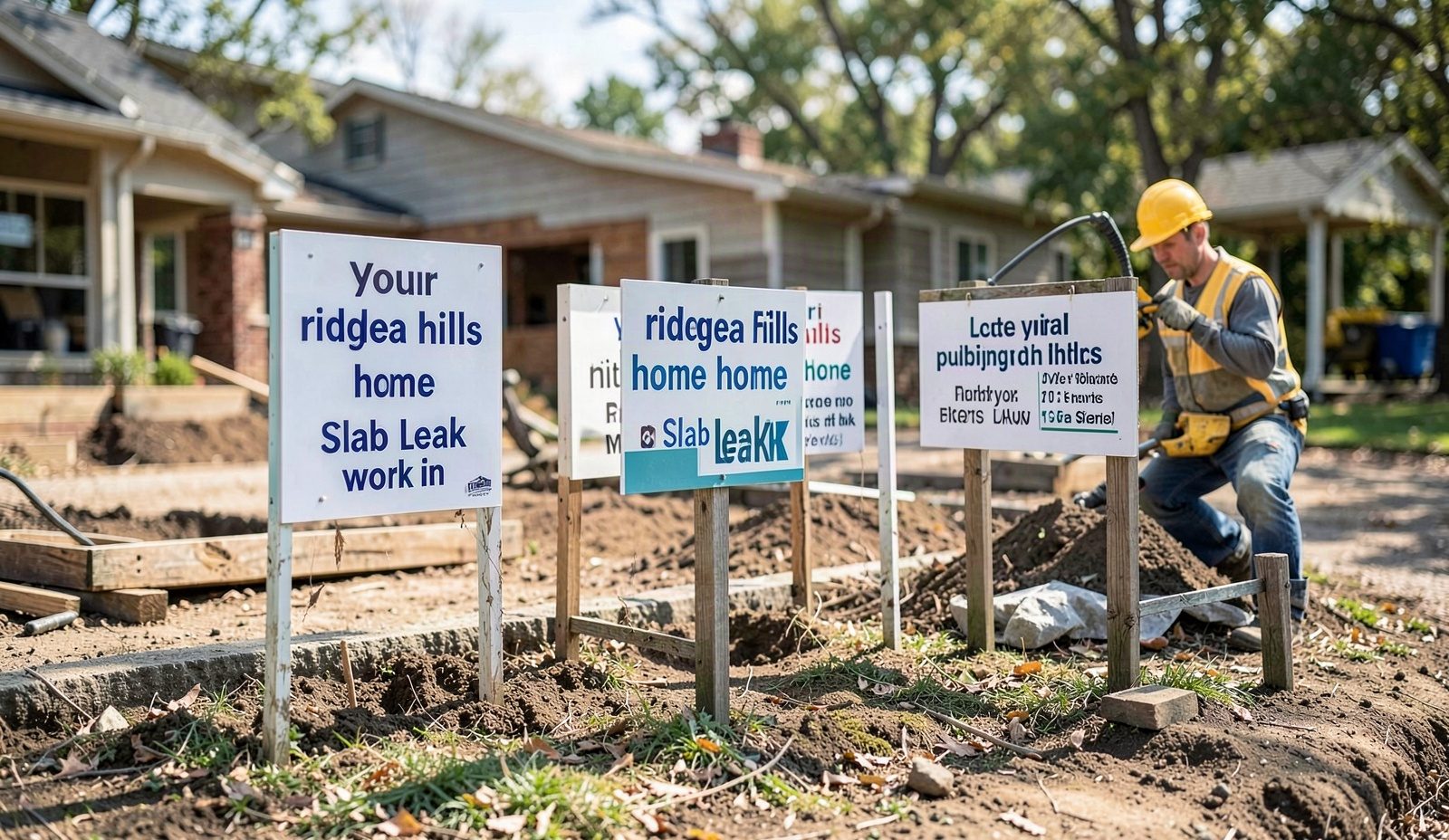
5 Signs Your Ridglea Hills Home Has a Slab Leak
5 Signs Your Ridglea Hills Home Has a Slab Leak, practical local guidance from Shield Plumbing Fort Worth, Fort Worth's trusted plumbing tea…
Read More




North Texas sits on expansive clay that swells when it rains and shrinks hard in drought. That movement flexes slab foundations by fractions of an inch each season, and over years it is enough to shear rigid copper supply lines and pull drain joints apart under the house. Homeowners notice it as a hairline crack near a slab seam, a damp spot that returns after cleaning, or a toilet that rocks slightly at the base.
Arlington spans sixty years of construction, from East Arlington mid-century slabs with cast iron drains to South Arlington builds on PEX, and the right repair depends on knowing which era a street was built in. A drain backup in an East Arlington home built before 1970 usually points to a cast iron line that has rusted down to a rough interior surface, a texture a camera inspection shows clearly and a snake alone will not fix. The same complaint in a newer South Arlington subdivision is more likely a low spot in a PEX run or a clogged cleanout, a completely different repair with a completely different price.
Summer heat adds another layer. Slab temperatures under un-shaded South Arlington rooftops can push supply lines running through attics well past normal operating range, breaking down rubber gaskets and compression fittings years before a technician would expect in a milder climate. Winter cold snaps do the opposite, shrinking pipe runs and stressing joints already weakened by that summer expansion.
Technicians who work Arlington regularly ask the age of the house before they ask what's wrong, because that single fact narrows the diagnosis before a tool leaves the truck. It shapes whether the truck needs a cast iron reaming head, a PEX crimp kit, or both on the same call.
From routine maintenance to shower & bathtub plumbing, the same local crew handles every call.
Shield Plumbing Fort Worth technicians spend enough time on Arlington streets to recognize a problem before the homeowner finishes describing it over the phone. That pattern recognition comes from repeatedly opening the same style of slab access panel or crawlspace across the metro, appointment after appointment.
Every job runs through the same internal checklist regardless of who is on the truck: confirm static pressure, check for visible backflow protection, and photograph the condition of any wall or slab before and after it's opened. That consistency matters because it means a Tuesday morning drain clean gets the same scrutiny as a weekend emergency call.
Technicians move through a structured progression, starting on service and drain work under a lead plumber before taking on gas line connections, water heater installs, and slab leak locates on their own. That progression keeps a second set of eyes on the harder calls until a technician has proven the skill on enough jobs to work them independently.
Trucks carry material for both older and newer construction, cast iron adapters and fittings for original drain runs alongside PEX crimp rings and manifolds for newer builds, because showing up without the right connector for an older line means a second trip that didn't need to happen. That kind of stocking decision comes directly from what gets found on Arlington service calls week after week.
Pricing gets presented in writing before work starts, broken into parts and labor rather than a single lump figure, so you can see what's driving the number. That transparency extends to the walkthrough at the end of the job, where the technician explains what failed and why in plain language instead of trade shorthand that leaves a homeowner guessing.
Many Arlington calls come from repeat addresses, whether that's a property manager handling several rental units across the city or a homeowner calling back years after an original repair for an unrelated issue elsewhere in the house. That kind of repeat business only happens when the first visit was handled honestly, since Arlington homeowners talk to their neighbors about who they called.
Need something specific? Our 24/7 emergency plumbing services page breaks down exactly how we handle it in Arlington.
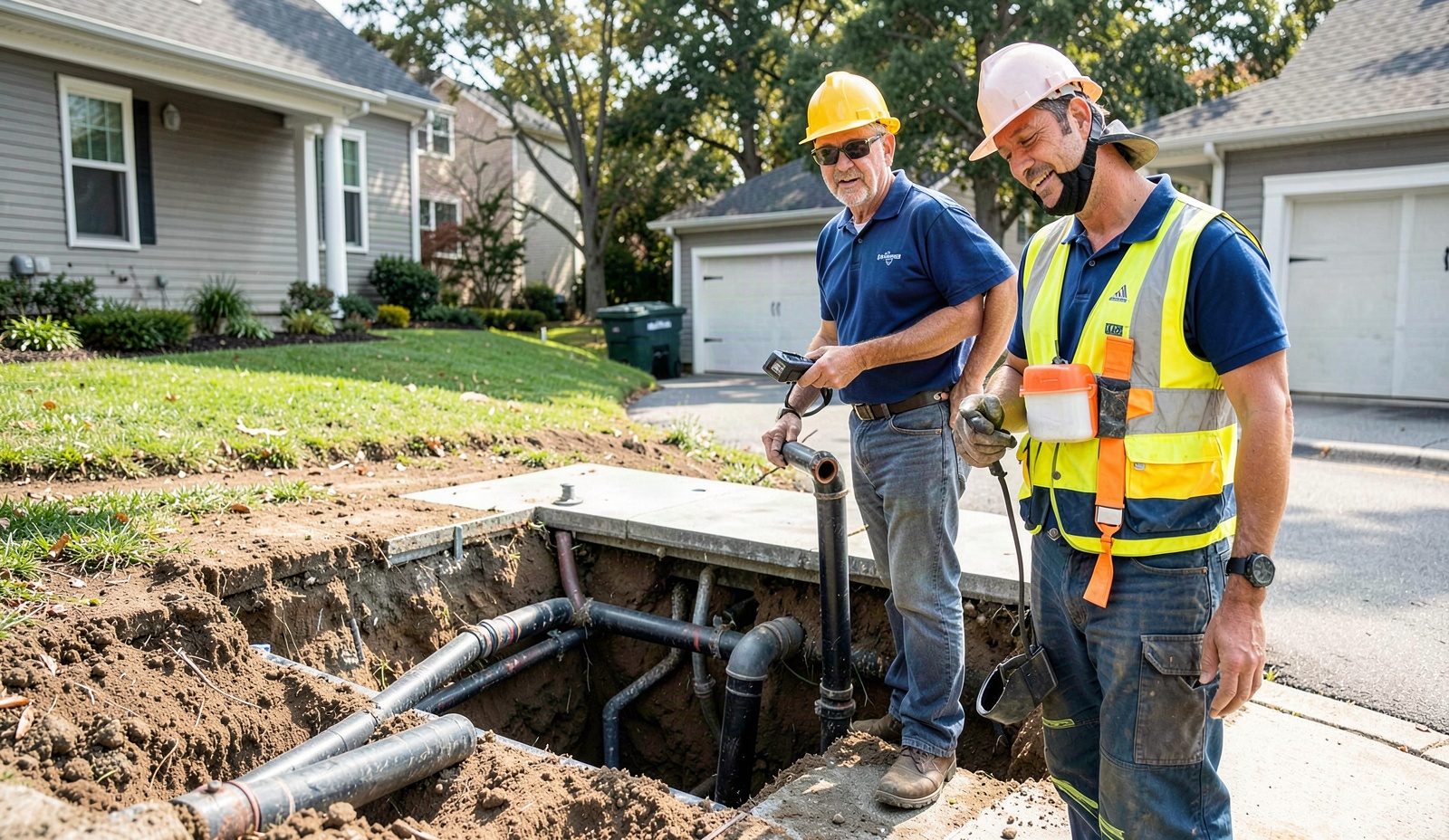
Calls to (817) 710-3766 go to a technician who can answer real plumbing questions on the spot. That technician can tell you what to check before help arrives, whether that's locating the main shutoff or clearing a floor drain, and can give a realistic arrival window based on current jobs across Arlington that same day.
Every service call starts with a static pressure reading off an outdoor spigot. A gauge reading above 80 psi means the fixture is under stress the plumbing code doesn't allow, and Section 604.8 of the International Plumbing Code requires a pressure-reducing valve at that threshold. A drain camera then confirms the actual condition of the pipe wall, something a snake alone can't show.
Every repair and installation follows the City of Fort Worth plumbing code, based on the 2021 International Plumbing Code, whether the address sits inside city limits or under a neighboring Tarrant County jurisdiction with its own adopted code. Fittings, venting and trap arrangements get sized to a documented standard rather than an assumption about what used to pass inspection decades ago.
Working Arlington calls day after day builds a working knowledge of local quirks, which streets flood first after a hard rain, which older subdivisions still run polybutylene supply lines, and which sections need a step stool just to reach a water heater tucked into the attic. That familiarity shortens the time between arrival and an accurate diagnosis on every visit.
Arlington plumbing work splits into three practical tiers: scheduled residential service, ongoing commercial maintenance, and after-hours emergency response. Each tier calls for different equipment and a different pace, from a routine water heater flush to a camera inspection of a main line running under a business parking lot.
Residential work covers fixture repair, drain cleaning, re-pipes and water heater replacement inside single-family homes. Commercial accounts need backflow testing, grease trap service and documentation that satisfies a property manager or health inspector. Emergency calls demand a technician who can isolate a failure, stop active water loss, and stabilize a property before full repair begins. The service tiers below break down what's actually included in each one.
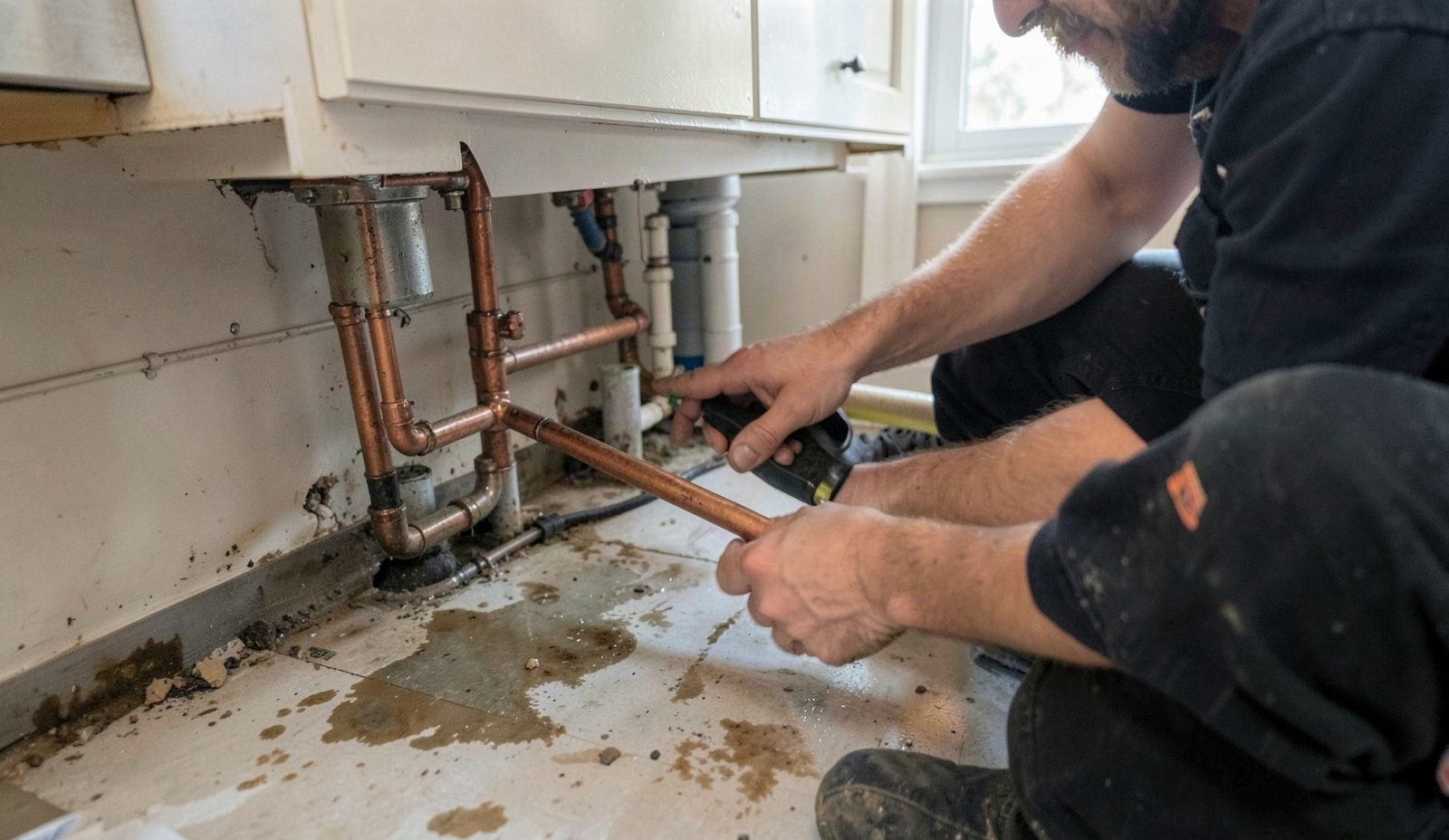
Residential service covers the calls homeowners actually make: a toilet that won't stop running, a water heater that quit overnight, a kitchen sink that backs up every few weeks. It's built for anyone who owns the property and wants a repair that holds up over time. We handle fixture swaps, drain clearing with a cable or camera as needed, gas line connections for stoves and dryers, and full or partial repipes when a system has aged past reliable repair. One recent example: a homeowner had a recurring kitchen clog that three store bought drain treatments hadn't fixed. A camera run found a low spot in the line collecting grease, cleared with hydro jetting instead of another chemical treatment that would have worn off in weeks.
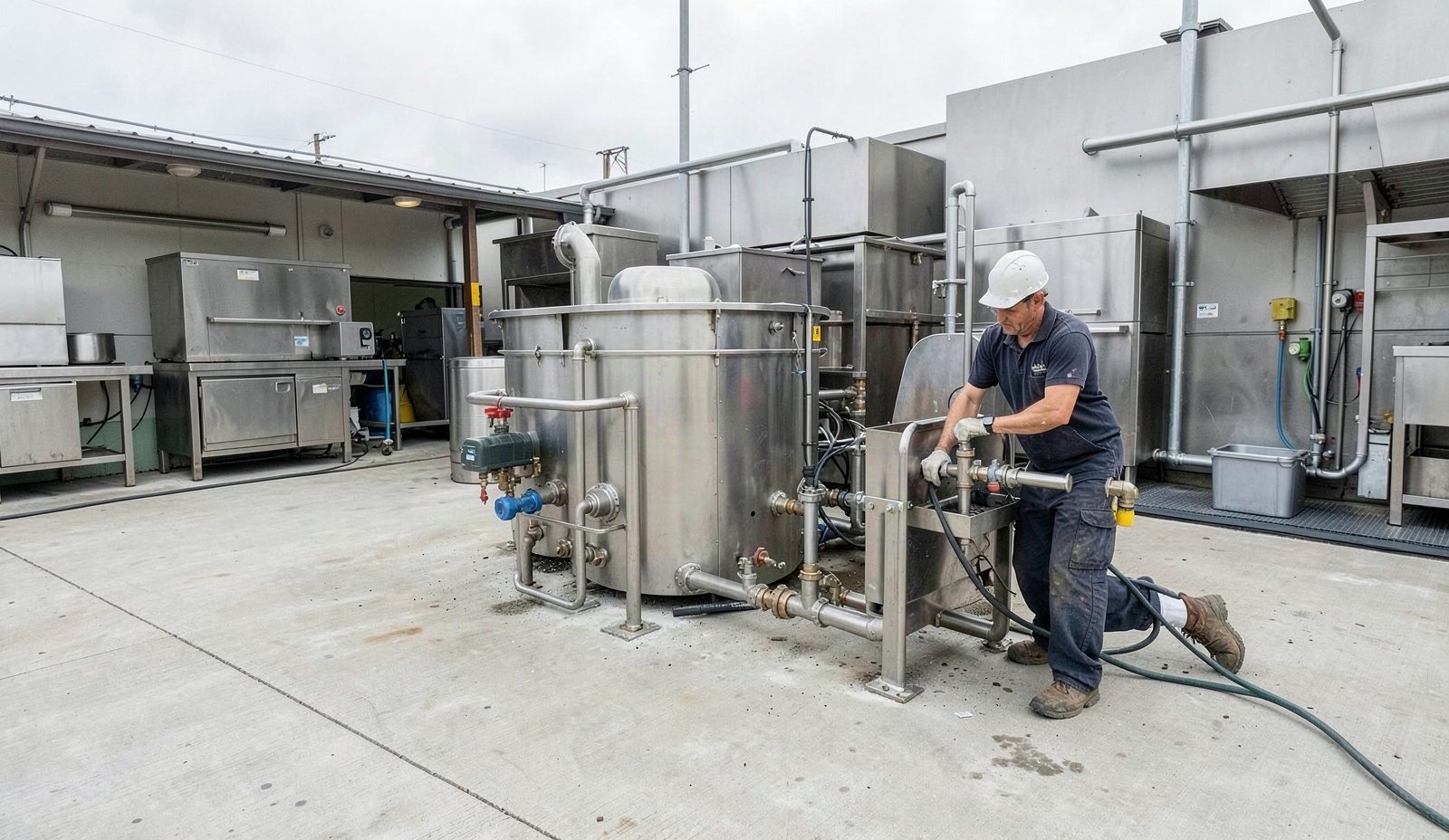
Commercial plumbing work runs on a different clock than residential service, because a shut down restroom or a failed grease interceptor stops revenue during business hours. We handle backflow preventer testing and certification, grease trap pumping and line jetting, water heater sizing for high demand fixtures, and repiping phased around business hours to avoid closing a location outright. Documentation matters as much as the repair itself, a compliance report a health inspector or insurance carrier can actually read. Example: a commercial kitchen with a grease interceptor backing up into the prep sink got jetted and inspected on a schedule that let the kitchen reopen for evening service instead of losing a full day of covers.
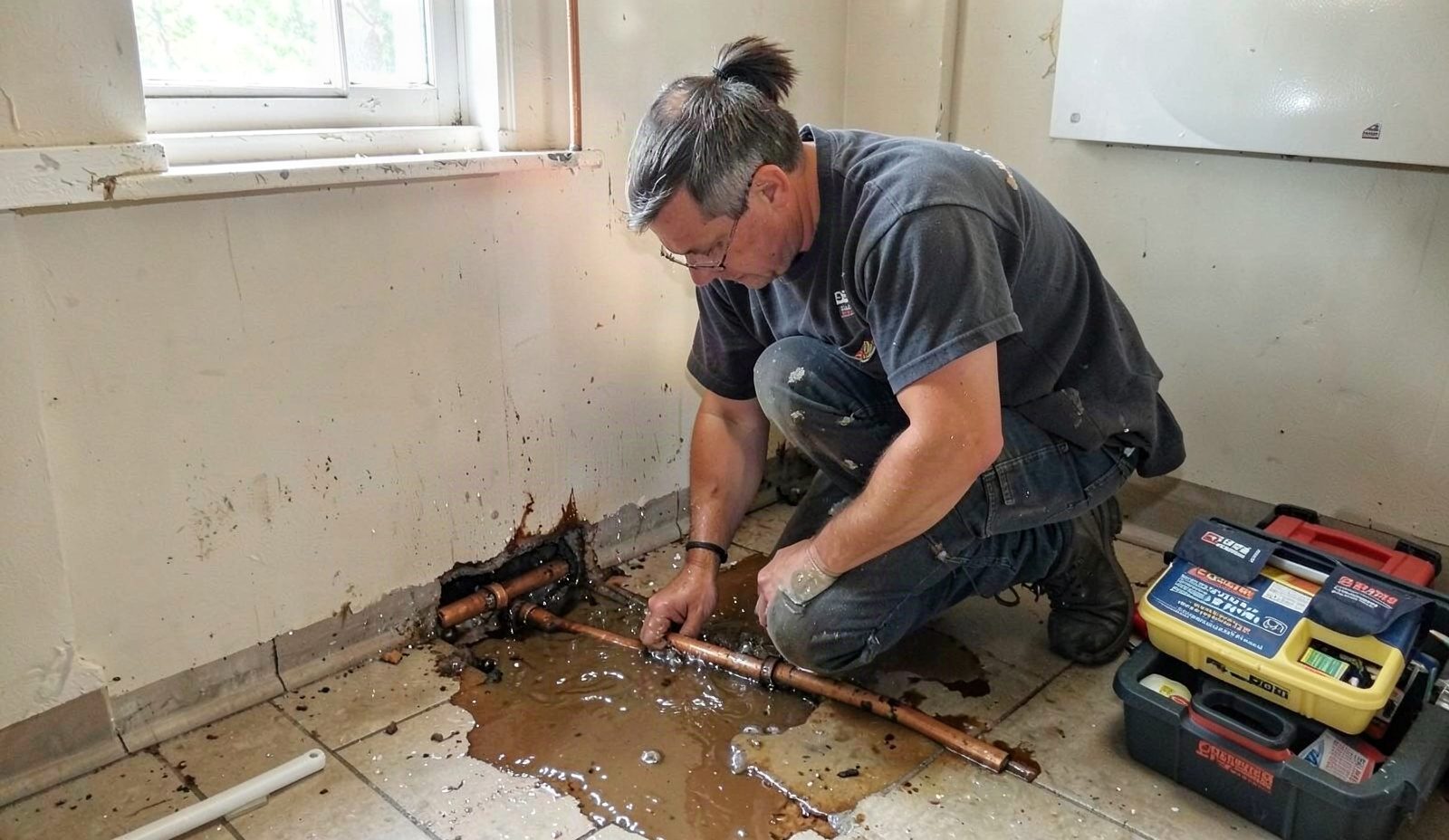
Emergency calls get triaged the moment the phone rings. We ask where the main shutoff is, whether water is still running, and what sits directly below the leak, because that determines how fast damage spreads. After-hours dispatch covers burst supply lines, sewage backups, failed water heaters actively flooding a closet, and gas leaks that need immediate isolation. Example: a call at 11 PM from a homeowner whose water heater tank split at the seam and was draining across a finished garage. The fix started with isolating the shutoff valve over the phone before a technician ever left, cutting the flood window down to whatever water was already in the tank.
Four problems account for most Arlington service calls, and each one has a distinct local cause rather than a generic explanation. Weather, pipe material, water table and plain deferred maintenance drive them, sometimes two at once in an older home.
Catching any of them early keeps a repair contained to a single fixture or line instead of spreading into slab work or a full repipe. A technician who knows the local pattern can usually name the likely cause from the symptom alone, before ever pulling a panel.
Permit and inspection questions? Development Services is the office we coordinate with on every permitted Fort Worth job.
The February 2021 freeze burst pipes across Tarrant County by the tens of thousands, and most of the failures were supply lines run through attics and exterior walls, the same locations exposed in nearly every Arlington home without insulated pipe chases. A hard freeze warning is the signal to open cabinet doors under sinks and let faucets drip. Any pipe frozen more than a few hours risks splitting along a seam.
Pre-1970 neighborhoods across the metro were plumbed with galvanized steel supply lines and cast iron drains, both now at or past the end of their service life. Galvanized pipe rusts from the inside out, so water pressure drops years before a visible leak appears. Rust colored water at just the hot side, or a drain that gurgles before it clears, means the pipe is closer to failure than the age of the house suggests.
High water tables near the Trinity floodplain on Arlington's north side keep sump and drainage questions in play that most of Tarrant County never thinks about. A sump pump that cycles constantly during a wet week, or a foundation drain that stays damp days after rain stops, signals groundwater pressure a standard drain line wasn't sized to handle.
Fort Worth water is moderately hard, and the scale it leaves on heating elements is a leading reason local water heaters fail years before their rated life. A tank that takes noticeably longer to reheat, or makes a popping or rumbling sound during a heating cycle, has sediment insulating the element from the water it's supposed to heat. Annual flushing prevents most of this buildup.
The first five minutes of any visit follow the same pattern: confirm the exact fixture or area involved, check the main shutoff location, and ask when the problem started. A straightforward drain clean or fixture repair usually wraps in under two hours; a slab leak locate or full repipe estimate takes longer because it involves testing multiple points before any wall or floor opens.
Have the water heater's age handy if that's the concern, and clear access to the water main, breaker panel, or attic hatch before the technician arrives. That prep alone can cut real diagnostic time by a noticeable margin.
Price-checking is smart: marketplaces like Thumbtack publish typical cost ranges you can hold any quote against, including ours.
After the call to (817) 710-3766, you get a scheduled arrival window instead of a vague same-day promise. A text or call confirms the window the morning of the appointment, and the technician calls again when on the way, typically fifteen to twenty minutes out. If a job ahead of yours runs long, the same technician calls to reset the window rather than leaving you guessing. That call also confirms the address and a brief description of the problem, so nothing gets re-explained from scratch at the door.
The technician arrives in a marked vehicle and introduces themselves before stepping past the threshold. Shoe covers and floor protection go down in any area work will touch, especially around a water heater closet or under a kitchen sink. Before opening anything, the technician walks the affected area with you, asks what's normal and what's changed, and points out anything already visible, a corroded fitting, a stained ceiling tile, standing water. That walkthrough sets the baseline for the diagnosis that follows.
Once the repair is done, the technician runs the fixture or system through a real functional test, flushing a toilet several times, running a faucet at full pressure, or cycling a water heater through a full heating cycle. Any opened wall, cabinet, or slab access gets reset and wiped down. You get a plain explanation of what failed, what was replaced, and photos of anything that was inside a wall or under the slab before it closed back up.
Most Arlington jobs move through the same three stages regardless of whether it's a dripping faucet or a full water heater swap. The call sets the appointment window, usually a two to three hour block rather than an all-day wait. Everything after that depends on what the technician finds on site.
A written quote comes before any work starts, so there's no surprise scope creep once a wall is already open. Cleanup and a final walkthrough close out the visit, and any parts pulled from the house, old water heaters, sections of failed pipe, leave with the crew unless you want to keep them.
Calling (817) 710-3766 gets the problem logged with specifics: which fixture, how long it's been happening, and whether water is actively running. That detail determines whether the call gets scheduled as routine service or bumped to the emergency queue, and lets the technician bring the right parts on the first trip instead of a second one.
On site, the technician tests before touching anything: pressure readings, camera runs, or a visual inspection depending on the complaint. That diagnosis turns into a written quote covering parts and labor, which you review and approve before any cutting, soldering, or excavation starts. If the scope changes once a wall or slab is opened, that gets flagged and priced separately before continuing.
Repairs follow the applicable plumbing code for fittings, venting, and trap arrangements, and get tested under normal water pressure before the technician calls the job done. The work area gets cleaned, debris hauled off, and you get a plain summary of what was done. For anything requiring a permit, that paperwork gets handled as part of the job.
Plumbing materials used in Arlington homes and businesses have to meet defined standards, not a visual check alone. PEX tubing is rated to ASTM F876, copper supply lines to ASTM B88, and any fixture touching drinking water needs an NSF/ANSI 61 rating for lead-free construction. A technician checking an existing system for a repair or a repipe verifies what's actually installed against these standards before matching new material to old, since mixing an incompatible fitting is a common cause of slow leaks that show up months after a repair.
Inspection protocol matters as much as the standard itself. A pressure test on a new supply line holds a target psi for a set duration, measured with a gauge left on the line rather than a quick check, so a slow leak shows up before drywall goes back up. Drain and vent work gets checked for proper slope, generally a quarter inch of fall per foot, and for adequate venting so trap seals don't get pulled dry by suction, a problem that shows up later as a sewer gas smell rather than a visible failure at the time of inspection.
Gas line work gets pressure tested with air or an inert gas at a target psi held for a set time before the line goes into service. Every gas fitting also gets checked with a bubble solution at each joint, a physical test that catches a pinhole leak a pressure gauge alone might read as normal within its margin of error.
Not every job needs a permit. Full replacements, new gas lines and structural changes to the drain and vent system typically do, while a minor like-for-like repair, swapping a faucet cartridge or replacing a section of supply line in the same location, usually doesn't. The final call on what triggers a permit belongs to the local permitting authority, and that answer can differ by a few blocks depending on which jurisdiction the address falls under.
Expansive clay under most of Tarrant County moves slabs enough each year to stress any rigid connection running through or under the foundation. The fix generally isn't a stronger pipe, it's a flexible connection or an accessible reroute that absorbs a small amount of shift without transferring stress into a joint. Technicians route new supply lines through walls and attics rather than back under the slab whenever the layout allows it.
Access is the biggest variable: a slab leak under a finished floor costs more in labor than the same leak in an open crawlspace, regardless of the pipe itself. Material choice adds another factor, since a full copper repipe generally outlasts a comparable PEX install in most direct comparisons. Condition of the surrounding system, old shutoff valves, corroded fittings nearby, often adds scope once a wall opens.
A single fixture repair or drain clean typically finishes in one visit. A water heater swap runs longer if the new unit needs a different vent configuration or a bigger gas line. A full repipe spans multiple days because it happens in phases, rough-in, pressure test, then wall or slab closure, with an inspection checkpoint before the final phase starts.
The City of Fort Worth Development Services Department issues permits for Fort Worth addresses, while the local city building department or Tarrant County handles the rest of the metro, including most Arlington jurisdictions. Which office applies depends on the exact address and the jurisdiction it falls under, and that office has final say on whether a given repair needs a permit at all.
Coverage depends on the cause, not just the damage. Most homeowners policies cover sudden and accidental damage, like a pipe that bursts without warning, but they typically exclude damage from a slow leak that went unaddressed or from ordinary wear on an aging fixture that finally gave out. Documentation from the technician, photos and a written explanation of the cause, is usually what your adjuster needs to make that call.
Time on site depends on what the technician finds once the job starts, not just the initial complaint. A stuck valve or a single drain clog often resolves in the same visit. Jobs that require ordering a specific part, like a water heater with an unusual vent configuration, or that need a permit inspection before the next phase can start, stretch across more than one visit through no fault of the crew on site.
It depends on the scope of the work, not on the size of the job. Full replacements, new gas lines and structural changes to drain and vent systems typically require a permit, while a minor like-for-like repair, such as swapping a fixture in the same location, generally doesn't. The local permitting authority for your specific address makes the final call, and that answer can vary depending on which jurisdiction your property falls under.
Estimates depend on a physical inspection of the problem, never a guess based on a phone description alone. The technician examines the actual fixture, line, or system on site and turns those findings into a written number covering parts and labor before any work begins. You approve that number first, and if the scope changes once work is underway, like finding additional corrosion behind an opened wall, that gets priced and confirmed separately rather than added to the final bill without notice.
Estimates start with an onsite assessment of your zones, outlets, and existing piping condition before any number gets written down. A technician walks the system, checks access and material needs, then issues a written quote itemized by scope. You review and approve that quote before cutting or brazing starts, so there are no surprises on the final invoice.
Coverage depends on the policy language and the cause of the failure, not the age of the pipe. Sudden pipe bursts are often covered as accidental damage, while gradual failure from corrosion or scale buildup is frequently excluded as a maintenance issue. A property manager should confirm specifics directly with the carrier before assuming either way applies to a given claim.
Explore our service area and locate Shield Plumbing Fort Worth with ease. We're proudly local and serve the surrounding neighborhoods with fast response and honest pricing. Use the map to check our coverage area, or call us and we'll confirm in seconds.
Address:
Shield Plumbing Fort Worth, Arlington, TX 76004
5 Signs Your Ridglea Hills Home Has a Slab Leak, practical local guidance from Shield Plumbing Fort Worth, Fort Worth's trusted plumbing tea…
Read More
What Wedgwood Residents Should Know Before a Whole-Home Repipe, practical local guidance from Shield Plumbing Fort Worth, Fort Worth's trust…
Read More
How Fort Worth's Hard Water Is Quietly Destroying Your Water Heater, practical local guidance from Shield Plumbing Fort Worth, Fort Worth's …
Read More
The Hidden Cost of Ignoring a Dripping Faucet in Fort Worth, practical local guidance from Shield Plumbing Fort Worth, Fort Worth's trusted …
Read More